
Orléans: The Complete Travel Guide (2026)
Orléans Travel Guide: Everything You Need to Know (2026)
Orléans sits on the Loire River at 118 metres elevation, roughly 120 kilometres southwest of Paris, and is home to 114,375 residents — making it the gateway city to the entire UNESCO-listed Loire Valley. It was here in 1429 that Joan of Arc broke the English siege, a moment that defines the city’s identity to this day. The medieval old town, Gothic cathedral, and easy TGV access from Paris make it one of France’s most underrated short-break destinations for 2026.
Top 3 Highlights at a Glance
- Cathédrale Sainte-Croix d’Orléans — A Gothic masterpiece rebuilt after Huguenot destruction in 1568, with one of France’s most ornate baroque organ cases.
- Fêtes de Jeanne d’Arc — France’s oldest civic festival, held every early May since 1430, fills the medieval streets with armour-clad processions.
- Musée des Beaux-Arts d’Orléans — Holds Velázquez’s ‘Saint Thomas’ and a rare Tintoretto — France’s finest regional fine-arts collection outside Lyon or Bordeaux.
Scroll down for our complete travel guide with tips on getting there, where to stay, costs and more.
Arrival & Airport
How do I get to Orléans from Paris or abroad?
Take the **Intercités train from Paris-Austerlitz — it reaches Orléans in roughly 65 minutes**. In my experience, this is by far the fastest and cheapest approach. Tickets via SNCF Connect start from **€8 booked early**, rising to €25 last-minute. From **Paris CDG airport**, take the RER B to Châtelet-Les-Halles, then the RER C to Austerlitz — allow **90 minutes total** to reach Orléans. The honest caveat: there is no direct TGV service, so travellers connecting from southern France must change at **Paris or Les Aubrais-Orléans**, which adds time.
Which airport is closest to Orléans?
**Paris Orly (ORY) is your best entry airport**, sitting approximately **110 kilometres north of Orléans** — closer than CDG by about 30 kilometres. From Orly, take the Orlyval shuttle to **Antony**, then RER B to Paris, then a train south to Orléans. Total journey: around **2 hours**. CDG (125 km away) also works but adds transit time across Paris. Orléans has its own small airfield, **Orléans–Bricy (ORE)**, but it handles no scheduled commercial flights — ignore it for travel planning purposes.
How long does the journey to Orléans take from Paris?
The direct **Intercités train takes 65 minutes** from Paris-Austerlitz to **Orléans station** — that’s the fastest option. Driving via the **A10 autoroute** takes about 90 minutes in light traffic but easily 2+ hours during Friday evening Paris exodus. My tip: always take the train. What most guides omit is that the **Les Aubrais-Orléans station**, 3 kilometres north of the city centre, sometimes serves as the terminus — check your ticket, as a free connecting tram or shuttle covers the gap in under **10 minutes**.
Do I need a rental car to explore Orléans?
No — you absolutely do not need a car for Orléans itself. The city centre is walkable in **20 minutes end to end**, and **TAO tram lines A and B** cover virtually every major sight. I recommend renting a car only if you plan day trips into the **Loire Valley châteaux corridor** toward **Chambord (45 km) or Blois (60 km)**, where bus connections are limited. The honest warning: parking in central Orléans is expensive at roughly **€2–3 per hour** in covered car parks near **Place du Martroi**, so driving into the city centre daily adds up fast.
City Transport
What are the best areas to stay in Orléans?
Stay within the **Vieux-Orléans historic centre**, specifically between **Rue de Bourgogne** and the Loire riverfront. This puts you within a 5-minute walk of the cathedral, the Joan of Arc museum, and the best restaurants. My tip: **Rue Sainte-Catherine** and the streets fanning north from the river are the most atmospheric. The area around **Place du Martroi** is central but noisier. Budget travellers can try the **Saint-Marceau** neighbourhood south of the Loire — it’s authentic and cheaper, but requires a tram ride back into the old town each evening.
What does accommodation in Orléans cost per night?
A solid **3-star hotel in central Orléans runs €80–120 per night** in 2026. The **Hôtel d’Arc** on Rue de la République, steps from Place du Martroi, sits around **€95–110** for a double and is consistently well-reviewed. Budget options like ibis Styles near the train station start from **€65**. Boutique guesthouses in the old town fetch **€130–160**. What surprised me: Orléans is noticeably cheaper than comparable Loire Valley bases like **Tours or Blois**, often by 15–20%, which makes it a smart financial hub for a regional trip.
How far in advance should I book accommodation in Orléans during high season?
Book at least **6–8 weeks ahead for the Fêtes de Jeanne d’Arc in early May** — hotels within walking distance of **Place du Martroi** sell out completely. For July and August, **3–4 weeks** is usually sufficient, though central options thin out quickly. Outside those windows, same-week bookings are realistic. The caveat most guides skip: Orléans hosts major Loire Valley wine trade events in **October**, which spikes demand for the **Vieux-Orléans** area specifically — check the **Région Centre-Val de Loire** events calendar before assuming October is a quiet booking period.
Are there special or unique accommodation types in Orléans?
Yes — several **troglodyte cave guesthouses** sit within a **30-minute drive** in the Loire Valley, near **Troo and Amboise**, offering a genuinely unique regional experience. In Orléans itself, a handful of **chambres d’hôtes** inside 15th-century townhouses near **Rue du Tabour** offer four-poster beds and breakfast included for around **€110–130** — far more characterful than chain hotels. My tip: search **Gîtes de France** for verified local listings rather than generic booking platforms, which under-represent these properties. The honest trade-off: these smaller places rarely have lifts or air conditioning.
Accommodation & Neighbourhoods
What are the must-see sights in Orléans?
Three are non-negotiable. First, **Cathédrale Sainte-Croix**, free to enter and arguably the finest Gothic nave in the Loire region, took over **300 years to complete**. Second, the **Maison de Jeanne d’Arc** on Place du Général de Gaulle — €4 entry — offers a well-produced multilingual history of the 1429 siege. Third, the **Musée des Beaux-Arts** holds a Velázquez and costs **€6**. My tip: walk the **Quai du Châtelet** at dusk when the cathedral façade is lit. The caveat: the **Hôtel Groslot** (city hall) is stunning outside but interior tours are limited to specific hours — check ahead.
What can I experience for free in Orléans?
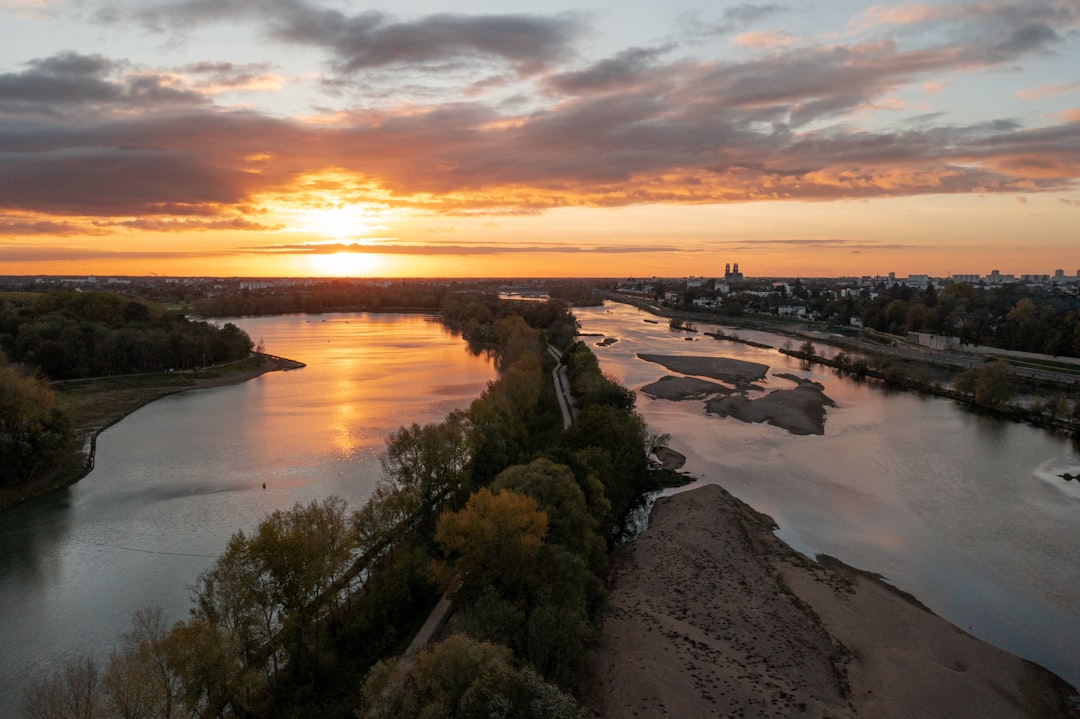
Quite a lot is genuinely free. The **Cathédrale Sainte-Croix** costs nothing to enter. The **Parc Floral de la Source**, 8 kilometres south of the centre, charges entry (**€7 adults**) but the adjoining university park is free. The **Loire riverbanks and Quais** are spectacular for an evening stroll at zero cost. What surprised me: Orléans has free **permanent collection access at the Musée des Beaux-Arts on the first Sunday of each month**. The **Place du Martroi** equestrian statue of Joan of Arc and the surrounding medieval streetscape cost nothing and take **45 minutes** to explore properly.
Which day trips from Orléans are worth doing?
**Château de Chambord (45 km, 50 minutes by car)** is France’s largest Renaissance château and unmissable — entry costs **€14.50**. **Blois (60 km)** makes a superb full day combining its royal château (**€14**) with a lovely old town. **Chartres Cathedral** sits **80 kilometres northeast** — the finest medieval stained glass in Europe and worth every minute of the drive. The honest caveat: without a rental car, **Chambord and Chartres are difficult to reach by public transport**. Bus service from Orléans to Chambord exists seasonally (**May–October only**) — verify schedules on the **Transbeauce** network before relying on it.
What local specialities should I eat in Orléans?
Orléans is France’s historic vinegar capital — **vinaigre d’Orléans** has IGP protection and has been produced here since the **17th century**. Use it to dress a **salade de Loire**, combining local goat’s cheese (**Crottin de Chavignol**) and river fish. **Tarte Tatin** originates from the Loire Valley region and appears on nearly every bistro menu. My tip: eat at **La Dariole d’Orléans** on Rue de la Chèvre for proper regional cooking at **€16–22 for a main course**. The hidden gem: **rillettes and rillons** (slow-cooked Loire pork preparations) available in any charcuterie for under **€5 per portion**.
Highlights & Must-Sees
What makes Orléans unique compared to other French cities?
Orléans is the only French city with a **500-year-old annual festival honouring a single historical figure** — the Fêtes de Jeanne d’Arc each May, running without interruption since 1430. It also sits at the Loire’s northernmost bend, making it the **natural gateway into the UNESCO Loire Valley** while remaining close enough to Paris (**120 km**) to be genuinely underused by tourists. In my experience, it offers more authentic daily French life than Tours or Amboise — real markets, local brasseries, and residents who outnumber tourists in every café. The trade-off: its nightlife and culinary scene is more muted than Bordeaux or Lyon.
How many days are worthwhile in Orléans?
**2 full days cover the city comfortably**; 3 days lets you add one Loire Valley day trip. Day 1: cathedral, Maison de Jeanne d’Arc, Musée des Beaux-Arts, evening on the quais. Day 2: morning market at **Les Halles Châtelet**, Parc Floral de la Source, afternoon cycling the **Loire à Vélo** trail toward **Châteauneuf-sur-Loire (30 km)**. Day 3: Chambord day trip. The honest caveat: Orléans doesn’t justify more than 3 nights on its own. If you’re building a Loire Valley itinerary, treat it as a **2-night base** before moving southwest toward **Tours or Chinon**.
When is the best time to visit Orléans?
**May and July are optimal**. May delivers the Fêtes de Jeanne d’Arc (early May), lush Loire riverside scenery, and temperatures around **18–22°C** without summer crowds. July sees the warmest and driest conditions for cycling the **Loire à Vélo** trail. I recommend avoiding August if you dislike crowds — French domestic tourism peaks then, and accommodation prices rise roughly **20%**. The shoulder period of **late September to mid-October** is genuinely underrated: Loire Valley vineyards are in harvest, temperatures sit at **15–18°C**, and hotels drop back to off-peak rates. January through March is cold and grey with limited outdoor appeal.
Are there local festivals in Orléans worth attending?
The **Fêtes de Jeanne d’Arc (first weekend of May)** is France’s oldest surviving civic festival — free street processions, medieval markets, and a solemn cathedral mass on **May 8th** marking the 1429 liberation. **Jazz à Orléans** in June draws 20,000+ attendees to **Place du Martroi** and the riverbanks with free outdoor concerts. In December, the **Marché de Noël** around the cathedral runs for **3 weeks** with around 80 local producers. My tip: the Joan of Arc festival is genuinely moving and not a tourist gimmick — locals participate in period costume with real civic pride, which surprised me completely.
Food & Drink
How does the weather in Orléans affect what activities I can do?
Summer (**June–August**) is the only reliable window for **Loire à Vélo cycling**, riverbank picnics, and outdoor café culture — expect **24–28°C** in July. Spring brings the festival season but also **unpredictable rain in April**. Winter temperatures drop to **3–7°C in January**, making outdoor sightseeing uncomfortable but the cathedral and museums more crowd-free. The honest warning: the **Loire floods periodically in late winter and early spring** — in 2021, the riverbank cycle paths were underwater for weeks. Check **VigiCrues** (the French flood alert app) if visiting between **February and April**, particularly if you plan waterside cycling routes.
How crowded does Orléans get in peak season?
Orléans remains **significantly less crowded than comparable Loire Valley cities** like Amboise or Chenonceau even at peak. The Fêtes de Jeanne d’Arc weekend (early May) is the single busiest moment — the area around **Place du Martroi and Cathédrale Sainte-Croix** becomes genuinely packed with 50,000+ visitors over the weekend. July and August see steady tourist traffic but nothing resembling the queues at Chambord. In my experience, even in July you can get a table at most **Rue de Bourgogne** restaurants without a reservation on a weekday. The hidden pressure point: hotel capacity in the old town is limited — around **800 beds total** — so accommodation feels scarcer than the city’s crowd levels suggest.
How safe is Orléans for tourists?
**Orléans is safe for tourists in all standard central areas**. The historic core around **Cathédrale Sainte-Croix, Place du Martroi, and the Loire quais** presents no meaningful risk day or night. The honest caveat most guides skip: the **Les Tarterets and La Source** social housing districts on the city’s southern periphery have higher crime rates and are worth avoiding after dark — but no tourist attraction sits there anyway. The **train station area (Gare d’Orléans)** warrants normal urban vigilance at night. Petty theft from bags is the main risk during the **Fêtes de Jeanne d’Arc festival** due to crowd density.
Is English widely spoken in Orléans?
**English is functional but not fluent in most of Orléans**. Staff at hotels, the **Maison de Jeanne d’Arc**, and the **Musée des Beaux-Arts** speak workable English. Restaurants along **Rue de Bourgogne** catering to tourists manage basic menu explanations. However, at local brasseries, markets, and neighbourhood shops, French is essential. In my experience, making any attempt at French — even a broken ‘*bonjour, parlez-vous anglais?*’ — shifts attitudes dramatically. Download **DeepL** rather than Google Translate for French — it handles regional phrasing far better. The honest caveat: Orléans has far fewer English-speaking tourists than Paris, so locals have less daily practice than you might expect.
Practical Tips
What is the daily travel budget for Orléans?
**Budget €80–100 per person per day** including mid-range accommodation, 2 restaurant meals, and entry fees. Breakdown: accommodation **€40–60 per person** (shared double room), lunch at a **Rue de Bourgogne bistro €14–18**, dinner **€22–30**, museums and sights **€10–15**, and tram/transport **€4–6**. A backpacker staying in the one hostel option near the station and self-catering can manage **€45–55 per day**. The hidden cost: Loire Valley day trips push the budget up sharply — **Chambord entry plus car rental adds €50–60 per person** on a day-trip day. Budget this separately rather than folding it into a daily average.
How does Orléans public transport work — trams, buses, bikes?
**TAO tram lines A and B are the backbone** — a single ticket costs **€1.60** and a 10-trip carnet **€13.50**. Tram A runs east-west through the centre past the **train station, Place du Martroi, and Saint-Jean-de-la-Ruelle**. Vélo+ bike-share stations cover the city with **130+ docking points** — a 30-minute ride costs **€1**, a full day **€5**. In my experience, the tram covers everything a tourist needs. Bus routes fill gaps but are harder to navigate without the **TAO app** (download before arrival). The honest caveat: trams stop running around **midnight**, so late-night returns from restaurants require a taxi via the **G7 app** or a 20-minute walk.
Which apps do you recommend for visiting Orléans?
Download these **5 apps before arriving**: **SNCF Connect** for all train tickets (Paris–Orléans and Loire Valley connections); **TAO** (the Orléans transit app) for tram routes and Vélo+ bike rentals; **DeepL** for French translation — far superior to Google Translate for actual conversation; **VigiCrues** for Loire River flood alerts if visiting February–April; and **Komoot** for the **Loire à Vélo** cycling route maps, which are far more detailed than Google Maps for the riverside trail. My tip: buy your **Chambord entry ticket** via the official château website app in advance — it saves **€1.50** on the gate price and skips a sometimes **20-minute queue**.