
Switzerland: The Complete Travel Guide (2026)
Last reviewed: August 2026 · key facts checked against Wikidata
Switzerland Travel Guide: Everything You Need to Know (2026)
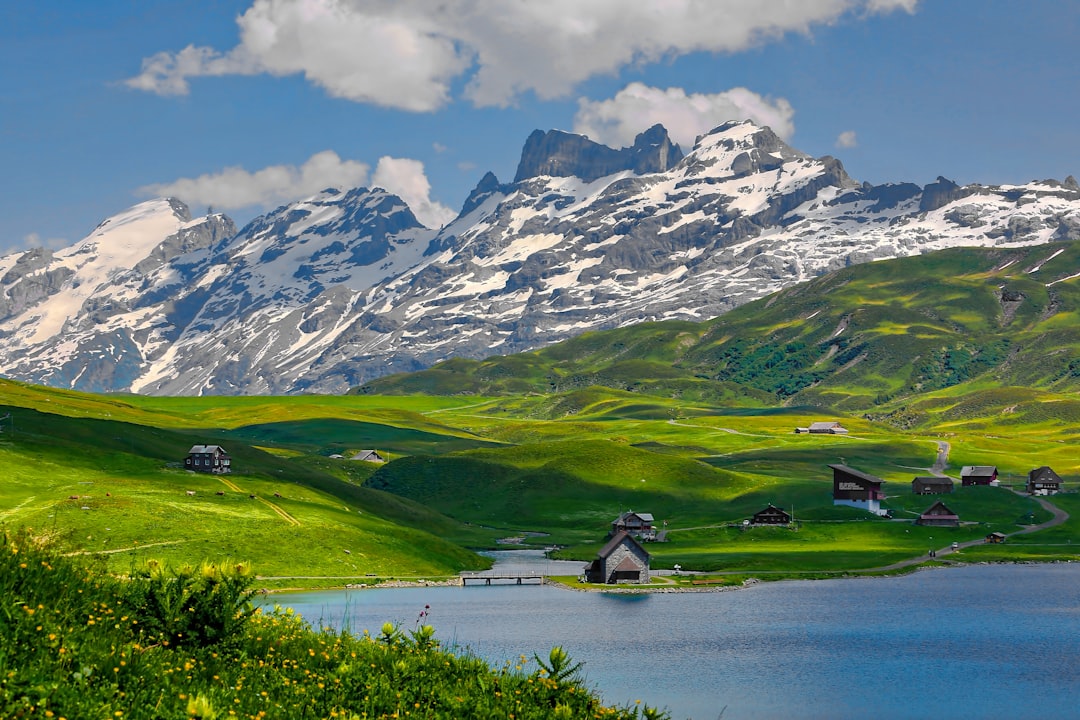
Switzerland, home to 9,104,063 people, packs the Alps, the Jura mountains, and one of Europe’s most efficient rail networks into a country roughly the size of the Netherlands. Founded as a confederation in 1291, it sits at the crossroads of German, French, Italian, and Romansh cultures — four national languages in one compact territory. At altitudes ranging from 193 m at Lake Maggiore to 4,634 m at the Dufourspitze, Switzerland delivers some of the most dramatic and accessible mountain scenery on the planet.
Three Things Not to Miss in Switzerland
- Jungfraujoch — Top of Europe — Europe’s highest railway station at 3,454 m delivers year-round glacier views that genuinely stop you in your tracks.
- Lauterbrunnen Valley — 72 waterfalls cascade through a single glacial valley — the landscape that inspired Tolkien’s Rivendell.
- Lugano Old Town & Lake — Italian-style piazzas meet Alpine lake swimming just 40 minutes from Milan — Switzerland’s most underrated corner.
Scroll down for our complete travel guide with tips on getting there, where to stay, costs and more.
Getting to Switzerland & Getting Around
Which airports are the best entry points into Switzerland?
Zurich Airport (ZRH) is the primary international hub — it handles over 30 million passengers annually and connects to 180+ destinations. Geneva Airport (GVA) is the second major gateway, ideal if you’re heading to the French-speaking west, the Alps around Chamonix, or the Valais. Basel-Mulhouse (BSL/MLH/EAP) is technically a Franco-Swiss airport and suits travelers exploring the northwest. In my experience, ZRH wins on long-haul connections and onward train convenience, but GVA is far better if your itinerary centers on Geneva, Zermatt, or Verbier. Caveat: Bern Airport handles limited European routes — don’t rely on it as a primary entry point unless you have a specific reason.
How do I get from the airport to my first accommodation in Switzerland?
Take the train — full stop. At Zurich Airport (ZRH), the S-Bahn S10 reaches Zurich Hauptbahnhof in 10 minutes for about CHF 6.80. At Geneva Airport (GVA), the CFF train delivers you to Geneva Cornavin station in 7 minutes — and arrivals receive a free 80-minute transit ticket at the baggage claim, which genuinely surprised me the first time. At Basel Airport, a shuttle bus connects to Basel SBB station in 15 minutes for around CHF 4. My tip: buy a Swiss Travel Pass before arrival if you plan to travel widely — it covers airport trains too. Warning most guides omit: taxi fares from ZRH to the city center run CHF 55–70, which is rarely worth it given how fast the train is.
What transport options are there within Switzerland?
Switzerland has one of the world’s densest and most punctual rail networks — 5,317 km of track served by Swiss Federal Railways (SBB). Trains, buses, boats, and cable cars are integrated into a single timetable at sbb.ch. The Swiss Travel Pass (from CHF 244 for 3 days) covers virtually all public transport including scenic routes like the Glacier Express and Bernina Express. PostBus reaches every mountain village the train misses. Lake ferries on Lucerne, Geneva, and Zurich count as public transport too. In my experience, the network is so reliable that a car becomes a liability in cities rather than an asset. One honest caveat: individual point-to-point rail tickets are expensive — a single Zurich–Geneva fare hits CHF 86 without a pass or advance discount.
Do I need a rental car in Switzerland?
For most itineraries, no. In my experience, the Swiss rail and PostBus system outperforms driving on convenience, speed, and cost in 90% of scenarios. A rental car genuinely pays off only if you’re exploring remote valleys like Safiental in Graubünden, wine roads in Valais, or the Jura region without fixed schedules. Car hire starts at around CHF 50–80 per day for a compact, but parking in cities like Zurich or Geneva costs CHF 4–6 per hour and hotel parking adds CHF 30–50 per night. The critical warning: mountain passes like Gotthard and Susten close in winter, and the Gotthard Road Tunnel regularly backs up by 2+ hours on summer weekends. Stick to trains unless your itinerary specifically demands flexibility in rural areas.
How good is the public transport network between regions of Switzerland?
Exceptional — and I use that word deliberately. The SBB timetable synchronizes so that trains, PostBuses, boats, and gondolas depart within minutes of each other at transfer points. Zurich to Geneva takes 2 hours 42 minutes by InterCity. Zurich to Lugano takes 2 hours 10 minutes through the Gotthard Base Tunnel, the world’s longest railway tunnel at 57.1 km. Interlaken to Zermatt involves a single change at Visp and takes about 2 hours. The PostBus network covers over 900 routes into Alpine terrain where no train goes. My honest caveat: scenic panoramic trains like the Glacier Express require seat reservations (CHF 13–49 supplement) and run slower than standard InterCity routes — they’re experiences, not commutes.
Where to Stay in Switzerland
Which regions of Switzerland should I stay in?
It depends entirely on your priorities, so I’ll be specific. Zurich is the best base for urban culture, nightlife in the Langstrasse district, and Lake Zurich swimming. Lucerne is the single best base for classic Alpine Switzerland — the lake, mountains, and Mt. Pilatus all within 30 minutes. Interlaken is the adventure hub for Jungfrau access and extreme sports, though it skews young and can feel transactional. Graubünden (Davos, St. Moritz, Chur) is for serious mountains and authenticity. Ticino (Lugano, Bellinzona) gives you Mediterranean warmth and Italian architecture. My tip: base yourself in Lucerne for 3 nights and Lugano for 2 — you cover the Alps and the Italian south without exhausting yourself.
What does good accommodation cost per night in Switzerland?
Budget honestly: a 3-star hotel in Zurich or Geneva runs CHF 150–220 per night for a double room. A solid 4-star property sits at CHF 250–380. In mountain resorts like Zermatt or Verbier, expect to pay 20–30% more for equivalent quality. Hostels in Lucerne offer dorm beds from CHF 45–65. The most underrated option in my experience is Airbnb in smaller towns like Thun or Aarau — you get private apartments for CHF 90–140 and genuinely local neighborhoods. The honest caveat most guides skip: Swiss hotels charge a city or spa tax of CHF 2–5 per person per night on top of the room rate, and many mountain properties add a mandatory half-board supplement in ski season.
When should I book hotels in Switzerland — how far in advance?
For summer (July–August) and ski season (late December–March), book accommodation 3–6 months in advance — particularly in Zermatt, Interlaken, and Lucerne, which sell out faster than most people expect. For the shoulder months of May, June, September, and October, 4–6 weeks is usually sufficient outside of major events. The critical warning: Zurich Street Parade (August) and Lucerne Carnival (February/March) fill every hotel within 40 km — book 6+ months ahead for those weekends or pay 3x inflated rates. In my experience, booking direct with the hotel beats OTA platforms in Switzerland — many properties offer free cancellation and small perks for direct reservations, whereas platforms add hidden service fees that push the total up by CHF 20–35.
When is the best time to travel to Switzerland?
Based on climate analysis, June through September delivers the most reliable combination of warm temperatures, open mountain passes, and long daylight hours — and this matches my own experience exactly. Late June and September are my personal favourites: fewer crowds, full Alpine flora, and clear skies without the August gridlock. July and August are peak season with maximum trail access but also maximum prices and tourists on the Jungfraujoch. December to March is ideal for skiing, particularly around Verbier, Saas-Fee, and Davos. The underrated option: late October brings golden larch forests in Engadin Valley and half-empty hotels — one of Switzerland’s genuinely secret seasons. Avoid November — most ski resorts aren’t open yet and the weather in the Plateau is grey and foggy.
How does peak season affect prices in Switzerland?
Peak season inflates costs significantly — typically 30–60% above shoulder-season rates. A hotel in Zermatt that costs CHF 180 per night in October can hit CHF 290–350 in late December or August. Ski lift passes in Verbier peak at CHF 70–85 per day. Jungfraujoch entry is CHF 225.60 year-round but cable cars and cogwheel trains in tourist areas add peak surcharges. Restaurants in resort towns like Grindelwald increase menu prices visibly in August. The honest trade-off most guides ignore: Swiss Travel Pass pricing also increases from May — a 15-day pass costs roughly CHF 40 more in peak months. My tip: arriving in early June or mid-September saves real money while sacrificing almost nothing in experience quality.
Best Time to Visit Switzerland
Which regions of Switzerland have different climate zones?
Switzerland has four distinct climate zones compressed into one small country. The Swiss Plateau (Zurich, Bern, Basel) has a temperate continental climate — cold winters with fog, warm summers around 24–26°C. The Alpine regions (Valais, Graubünden, Bernese Oberland) experience extreme altitude variation — sunny Zermatt sits in a rain shadow and averages 300 sunny days per year. The Ticino (south of the Alps) has a near-Mediterranean climate — Lugano averages 2,091 sunshine hours annually, more than Nice. The Jura region (northwest) is the wettest and windiest, regularly seeing fog when the rest of Switzerland is clear. In my experience, Valais and Ticino are the micro-climate winners — pack for sun, not just layers.
What are the rainy seasons in Switzerland?
Switzerland doesn’t have a dramatic wet season like tropical destinations, but precipitation patterns are clear. The Swiss Plateau and Prealps receive the most rain in May, June, and August — convective afternoon thunderstorms are common in summer. November to January brings heavy snowfall above 1,500 m but rain and fog in lowland cities like Zurich and Bern. The Ticino (Lugano area) receives intense rainfall in October and November, occasionally causing flooding. The Valais region around Zermatt is genuinely semi-arid — Sion averages only 600 mm of rain annually, the driest spot in Switzerland. My honest caveat: even in July, afternoon thunderstorms can shut down exposed Alpine trails for 2–3 hours — always carry a lightweight rain layer above 2,000 m.
What does a trip to Switzerland cost per person per day?
Switzerland is expensive — be clear-eyed about it. A budget traveller staying in hostels (CHF 55), cooking or eating at Migros/Coop supermarkets (CHF 15–20), and using a Swiss Travel Pass can manage CHF 130–160 per day. A mid-range traveller in a 3-star hotel, eating one restaurant meal daily, and doing 1 paid attraction hits CHF 250–320 per day. A comfort traveller in a 4-star property with cable cars, fondue restaurants, and a scenic train can easily spend CHF 450–600 per day. What surprises most visitors: a single Jungfraujoch excursion at CHF 225 can consume an entire day’s budget. My tip: the Swiss Travel Pass covers most transport but not top-of-mountain excursions — budget those separately.
How expensive is food in Switzerland?
Food is the single biggest shock for most first-time visitors. A sit-down lunch at a mid-range restaurant in Zurich or Bern runs CHF 22–38 per person including a drink. A traditional fondue dinner for two with wine costs CHF 80–120. A coffee at a café is CHF 4.50–5.50. The smart move: Swiss supermarket chains Migros and Coop have excellent deli counters and hot food sections — a full lunch costs CHF 8–12 and the quality genuinely rivals restaurants. Lidl and Aldi operate in Switzerland too and cut grocery costs by 20–30% versus Migros. Street food at weekly markets (like Zurich Bürkliplatz market on Tuesdays and Fridays) offers bratwurst and rösti plates for CHF 7–10. The honest caveat: restaurant prices include service — tipping CHF 1–3 is courteous but never mandatory.
What hidden costs should I expect when visiting Switzerland?
Several costs blindside first-time visitors to Switzerland. Mountain excursion surcharges: the Jungfraujoch (CHF 225.60), Mt. Pilatus round trip (CHF 72), and Schilthorn (CHF 100) are not covered by most rail passes. Baggage storage at major stations costs CHF 5–9 per locker per day. Museum entry: major institutions like the Kunsthaus Zurich charge CHF 26. Tap water is universally safe and free — never buy bottled water. Thermal baths: Zurich’s Thermalbad & Spa costs CHF 35–49. The big one most guides miss: Swiss motorway vignette — if you rent a car, a CHF 40 annual vignette is legally required and is usually not pre-attached; rental companies charge it separately. Budget CHF 30–50 per day beyond your headline estimates for incidental costs.
What a Trip to Switzerland Costs
How much cash should I bring to Switzerland?
Swiss francs (CHF) are the only currency — euros are occasionally accepted at tourist sites but at poor exchange rates, so don’t rely on it. In my experience, CHF 100–150 in cash per person per week is sufficient for most itineraries since Switzerland is overwhelmingly card-friendly. Mountain huts (SAC huts), rural PostBus stops, and some market stalls are cash-only. Withdraw cash from Swiss Post or UBS ATMs — they charge no foreign withdrawal fee beyond your own bank’s rate. Avoid airport exchange bureaus: Zurich Airport exchange desks charge spreads of 4–6%. The honest caveat: in Appenzell and Innerrhoden, where the weekly outdoor parliament (Landsgemeinde) still meets, local traditions extend to cash-only small businesses — bring notes if visiting rural German-speaking cantons.
Which credit cards are accepted in Switzerland?
Visa and Mastercard are accepted at virtually all hotels, restaurants, and shops in Switzerland. American Express is accepted at major chains and upscale restaurants but regularly declined at smaller establishments and mountain huts — I’ve been caught out in Graubünden specifically. Apple Pay and Google Pay work widely in Swiss cities and have become the dominant payment method at supermarkets like Migros and Coop. Contactless payments up to CHF 80 require no PIN since 2020. The important warning: dynamic currency conversion (DCC) is aggressively offered at tourist-area terminals — always pay in CHF, never in your home currency, as DCC adds a silent 3–5% surcharge. Cards issued by Revolut, Wise, or N26 avoid foreign transaction fees entirely and are genuinely worth loading before you travel.
Which regions of Switzerland must I not miss?
Four regions genuinely stand apart. Bernese Oberland (Interlaken, Lauterbrunnen, Grindelwald) is the Alpine Switzerland of every postcard — unmissable for first-timers. Graubünden is Switzerland’s largest and least-visited canton — the Engadin Valley around St. Moritz and Vals thermal baths reward travelers willing to go deeper. Ticino, specifically Lugano and Bellinzona (with its three UNESCO castles), delivers a completely different Switzerland — Italian piazzas, palm trees, and lake swimming at 26°C. Zurich itself, often skipped as a transit city, has a world-class art scene centered on Zurich West and lake swimming at Strandbad Mythenquai from June to September. My honest caveat: Bern, the federal capital, is frequently overlooked — its 6 km of covered arcades (Lauben) and bear park are genuinely charming and far less crowded than Lucerne.
What are the tourist highlights of Switzerland?
The headline draws are well-known for good reason. Jungfraujoch at 3,454 m is the most-visited high-Alpine destination in Europe — the views across the Aletsch Glacier, Europe’s largest at 23 km long, are legitimately spectacular. Matterhorn views from Zermatt (no cars allowed in the village) are iconic but free — you can photograph it without paying for a single cable car. Rhine Falls near Schaffhausen is Europe’s largest waterfall by volume at 700 cubic metres per second and costs nothing to view from the main platform. Château de Chillon on Lake Geneva has been visited since the 13th century. The highlight that surprised me most: Berne’s Zytglogge clock tower, built in 1218, still triggers mechanical figures every hour at 11 minutes before each hour — free, unhyped, and genuinely delightful.
What experiences in Switzerland are found nowhere else on Earth?
Switzerland holds several genuinely singular experiences. The Glacier Express between St. Moritz and Zermatt crosses 291 bridges and 91 tunnels in a single 7.5-hour journey — no other scenic rail journey covers such consistent Alpine drama. Appenzell Innerrhoden’s Landsgemeinde is one of the last outdoor direct democracies on Earth — citizens vote by raised hand in the town square each April. Swiss Army knife factory tour in Ibach (Victorinox headquarters) shows exactly how 1 million knives per year are assembled — tours cost CHF 0 and include a factory visit. The Therme Vals spa, designed by Peter Zumthor, is considered the world’s finest piece of spa architecture — a 2-hour soak costs CHF 40. These aren’t tourist traps — they’re experiences that simply don’t exist elsewhere.
Regions & Highlights of Switzerland
Which areas of Switzerland are overcrowded and what are the quieter alternatives?
Interlaken is genuinely overwhelmed in July and August — the main Höheweg promenade feels like a theme park. My alternative: base in Meiringen (30 minutes east by train), use the same Jungfrau railways, and return to a village with half the foot traffic. Lucerne’s Chapel Bridge is photographed by thousands daily — arrive before 8:00 am or visit Bremgarten, a medieval old town 30 minutes west with wooden bridges and zero tour groups. Zermatt is crowded but unavoidably so — the honest answer is to hike up to Zmutt hamlet (45 minutes on foot) where the Matterhorn view is identical and you’ll share it with almost nobody. The most underrated region in Switzerland: Ticino’s Verzasca Valley — turquoise river, Roman bridges, and cliff diving at Lavertezzo with perhaps 100 tourists on a summer weekday.
How many days do I need to see Switzerland properly?
A minimum of 7 days gives you one city, one mountain region, and one cultural detour — enough for a first impression. For a genuinely rounded experience across German, French, and Italian Switzerland, 12–14 days is ideal. In my experience, the most common mistake is over-scheduling: Switzerland’s topography means a single valley can fill 2 full days of hiking, swimming, and eating. My recommended structure for 10 days: 2 nights Zurich, 1 night Basel (train ride: 55 minutes), 3 nights Lucerne/Interlaken area, 2 nights Zermatt, 2 nights Lugano. The honest caveat: travel days eat time fast — the scenic trains are experiences worth lingering on, not rushing through. Budget at least one full unscheduled day to sit by a lake and do nothing. Switzerland rewards stillness.
Do I need a visa to enter Switzerland?
Switzerland is not an EU member but is part of the Schengen Area — this distinction catches many travelers off guard. Citizens of the EU, UK, USA, Canada, Australia, and New Zealand can enter visa-free for up to 90 days within any 180-day period. From 2025, travelers from these countries require ETIAS authorization (the EU travel authorization system, approximately €7) — check the current status before booking. Citizens of India, China, Thailand, and most African nations require a Schengen visa in advance — apply through the Swiss Embassy or VFS Global at least 4–6 weeks before travel. The practical warning: your 90 Schengen days are shared across all member states — if you’ve already spent 30 days in France and Spain, you have 60 days remaining for Switzerland, not 90.
What languages are spoken in Switzerland?
Switzerland has four official national languages: German (spoken by 63% of the population), French (23%, in the west including Geneva and Lausanne), Italian (8%, in Ticino), and Romansh (0.5%, in parts of Graubünden). The practical reality: English is widely spoken in cities, tourist regions, and by anyone under 45 — I’ve never had a communication problem in Switzerland with English. The nuance most guides miss: Swiss German (Schweizerdeutsch) is a spoken dialect incomprehensible even to standard German speakers — locals switch to High German when writing or speaking with foreigners. In rural Graubünden, some older residents still speak primarily Romansh. My tip: learning three words in each regional language (Merci, Grazie, Danke) is noticed and appreciated — Swiss people take their linguistic diversity seriously.
What cultural rules do I need to know before visiting Switzerland?
Several Swiss norms genuinely differ from what most Western travelers expect. Quiet hours (Ruhezeit) are enforced — no loud noise, laundry in communal machines, or DIY work on Sundays or after 10:00 pm on weekdays. Violating this in apartments or hotels draws real complaints. Jaywalking is technically illegal and fined — Swiss pedestrians genuinely wait at red lights even at 2:00 am with no cars in sight. Recycling is compulsory — PET bottles, glass, and cardboard go in specific bins; general waste requires purchase of official cantonal waste bags (CHF 1–3 each) in most cantons. In my experience, the most important cultural note: Swiss directness is not rudeness — a shop assistant who tells you your choice is wrong means it helpfully. Reciprocate with equal directness and you’ll get on fine.
Practical Tips for Switzerland
How safe is Switzerland for travelers?
Switzerland is among the safest countries in the world — Global Peace Index 2024 ranks it 11th globally. Violent crime against tourists is extremely rare in all major cities including Zurich, Geneva, and Lausanne. The practical risks are specific: Zurich Hauptbahnhof and the Langstrasse area have visible drug activity (legacy of Switzerland’s pragmatic harm-reduction policy) — it looks alarming but rarely involves tourists. Mountain safety is the genuine risk: 50–100 hikers are rescued in the Swiss Alps annually due to underestimating trail difficulty or afternoon thunderstorms. The SOS Rega rescue helicopter service (annual membership: CHF 30) covers emergency evacuation costs — I buy this every single trip. The honest warning: trail markings are color-coded — white-red-white means Alpine terrain requiring sure-footedness, not just fitness.
What health precautions should I take before visiting Switzerland?
Switzerland requires no vaccinations for entry, and tap water across the entire country — including mountain streams marked with a white fountain symbol on maps — is safe to drink. The primary health consideration is altitude: above 3,000 m (Jungfraujoch at 3,454 m, Gornergrat at 3,089 m), mild altitude sickness symptoms including headache and nausea affect roughly 25% of visitors who ascend quickly by train. My tip: spend a night at 1,000–1,500 m before going higher, and hydrate aggressively. Tick-borne encephalitis (TBE) is present in Swiss forests below 1,500 m from April to November — a vaccination is recommended if you plan forest hiking in Canton Zurich, Aargau, or Thurgau. European Health Insurance Cards (EHIC) are valid for EU citizens; non-EU travelers should carry comprehensive travel insurance — a single emergency room visit costs CHF 200–500 without coverage.
What SIM card or eSIM options are available in Switzerland?
Switzerland sits outside the EU, so EU roaming packages do not apply — this is the single most common telecom mistake I see travelers make. Your European carrier’s roaming deal stops at the Swiss border. Local SIM options: Sunrise, Salt, and Swisscom sell prepaid SIMs at airports and convenience stores — a 7-day data SIM with 10 GB costs CHF 20–30. Swisscom has the best coverage in mountain valleys and remote Alpine terrain; Salt is cheaper but has gaps above 2,000 m. For eSIM users: Airalo Switzerland eSIM offers 10 GB for approximately USD 11 and activates instantly before departure — my preferred option. The honest caveat: in deep Alpine valleys like Val Bregaglia or the Lötschental, even Swisscom loses signal entirely. Download offline maps on maps.me or Google Maps before entering mountain areas.
Which apps do you recommend for traveling Switzerland?
Six apps genuinely improve a Switzerland trip. SBB Mobile (Swiss Federal Railways) is essential — real-time timetables, ticket purchase, and disruption alerts for every train, bus, and boat in the country. SchweizMobil maps all 23,000 km of marked hiking, cycling, and canoe routes — indispensable for outdoor planning. MeteoSwiss gives hyper-local mountain weather forecasts by altitude — far more accurate than generic weather apps for Alpine conditions. Swisstopo is the official topographic map app with offline capability — precision mapping at 1:25,000 scale for CHF 0 for basic use. Twint is Switzerland’s dominant mobile payment app — you’ll need a Swiss number to register, but many market vendors now accept only Twint. Rega App (free) sends your GPS location to the Alpine rescue service in one tap — install it before your first hike, not after.
What are common traveller mistakes in Switzerland?
After many trips, I see the same errors repeatedly. Assuming EU roaming works — it doesn’t; buy a local SIM or eSIM immediately. Underestimating mountain weather — a sunny Interlaken morning becomes a 2,500 m thunderstorm by 2:00 pm; always carry a rain jacket above 1,500 m. Booking Jungfraujoch on a cloudy day — check jungfrau.ch for live summit camera before paying CHF 225; fog means zero visibility and a wasted day. Over-scheduling: trying to visit Lucerne, Zermatt, and Geneva in 3 days means spending your trip on trains, not at destinations. Using euros — widely accepted in tourist zones but always at unfavorable rates of 1 EUR = CHF 0.90–0.95 instead of the real rate. The biggest mistake: skipping Ticino to add another Alpine valley — the cultural and climatic contrast of Lugano is what makes Switzerland a genuinely diverse country, not just a mountain postcard.
Switzerland at a Glance
| Population | 9,104,063 |
|---|---|
| Currency | Swiss franc (Fr) |
| Official language | German, Italian, French |
| Time zone | UTC+01:00 |
Source: Wikidata, retrieved August 2026.
Essential Resources for Planning Your Trip to Switzerland
- Switzerland Tourism: Packages & Detailed Official Info [2026] — official visitor information, passes & events
- Wikipedia: Switzerland — history, geography & background
- Wikivoyage: Switzerland — community travel guide & practical tips
- Switzerland travel – Lonely Planet | Europe — expert itineraries & travel inspiration
- THE 15 BEST Things to Do in Switzerland (2026) — hotels, restaurants & traveller reviews
- Switzerland Travel & Vacation — how to get around
- Numbeo: Cost of Living in Switzerland — current prices & cost comparison
- Timeanddate: Switzerland Weather & Climate — forecasts & climate statistics
More Perspectives on Switzerland
- Switzerland Travel Tips: Advice for Your First Trip to …
- 30+ Switzerland Travel Tips for First Timers & Must Knows …
- [Guide] Introduction to travel in Switzerland (V3).
Switzerland Travel Videos
Watch these videos for a visual preview before your trip:
- Switzerland Travel Guide 2026 4K
- SWITZERLAND TRAVEL TIPS FOR 1ST TIMERS | 30+ Must-Knows Before Visiting Switzerland + What NOT to Do
- Switzerland travel guide 😍 | EVERYTHING to know before you go!🇨🇭
Switzerland Travel Discussions on Reddit
Real traveller experiences and community advice:
- For those who have traveled to Switzerland, what advice …
- [Guide] Introduction to travel in Switzerland (V3).
- visiting switzerland soon for the first time… any tips?
Data Sources
This page was compiled using data from Wikipedia, Wikidata, Open-Meteo (climate), Numbeo (cost of living) and REST Countries. Information is updated regularly.