
Bretagne: The Complete Travel Guide (2026)
Bretagne Travel Guide: Everything You Need to Know (2026)
Brittany (Bretagne) is France’s westernmost peninsula, stretching 400 km into the Atlantic with a coastline of over 2,700 km — the longest of any French region. Founded as an independent duchy in the 9th century, it retains a fiercely distinct Celtic identity, its own Breton language, and a megalithic heritage older than Stonehenge. With roughly 3.4 million residents and annual visitor numbers exceeding 9 million, this region punches well above its weight as one of France’s most compelling travel destinations.
Top 3 Highlights at a Glance
- Carnac Megalithic Alignments — Over 3,000 standing stones arranged in rows dating back 6,500 years — the largest megalithic site on Earth.
- Mont Saint-Michel Bay — Tidal island abbey with a 40-metre tidal variation, accessible from the Breton side via the Couesnon River.
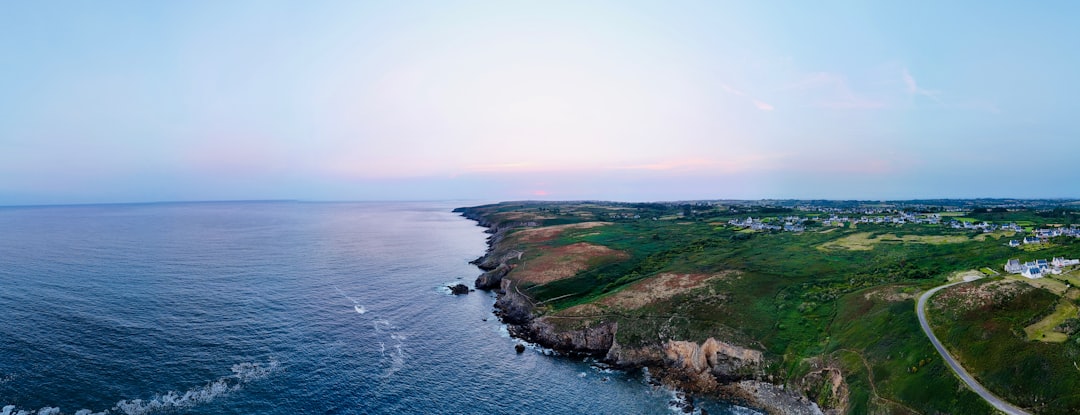
- Crozon Peninsula — Wild Atlantic cliffs and emerald coves with zero mass tourism — Brittany’s most dramatic coastal scenery in one compact loop.
Scroll down for our complete travel guide with tips on getting there, where to stay, costs and more.
Getting There
How do I best reach Bretagne?
Train from Paris is the fastest and most practical option — **TGV from Paris Montparnasse to Rennes takes 1h25**. My tip: book SNCF tickets 90 days in advance to lock in fares from **€19 each way**. If you’re coming from the UK, Brittany Ferries sails from **Portsmouth to Saint-Malo in 10h45 overnight**, which I’ve found brilliant for car travellers wanting to skip Paris entirely. Flying into **Rennes or Brest airports** from Paris or London works but rarely saves time once transfers are counted. The ferry option is genuinely underrated and I’d choose it every time with a family.
Which airport is closest to Bretagne?
There are two main airports: **Rennes Bretagne Airport (RNS)** serves the eastern region and **Brest Bretagne Airport (BES)** covers the far west. Rennes is the better hub with connections from Paris CDG (45 min), London, and Dublin. Brest is ideal if you’re heading straight to **Finistère or the Crozon Peninsula**, saving 2.5 hours of driving. What surprised me is how limited the flight schedules are outside summer — both airports have fewer than 10 international routes. If arriving mid-week in spring, the TGV almost always beats flying on total travel time.
How long is the journey to Bretagne from Paris?
By TGV it’s **1h25 to Rennes and 3h25 to Brest** from Paris Montparnasse — both are direct. Driving from Paris to Rennes is **350 km, roughly 3h30** via the A11 toll motorway, costing around **€25 in tolls** plus fuel. I’ve done both and the train wins for Rennes; the car wins if you’re continuing immediately to the coast. One honest caveat: trains to smaller Breton towns like **Quimper or Vannes** require onward TER regional connections that can add 45 minutes. Build buffer time into your first day rather than arriving and expecting to reach a coastal village the same evening.
Are there direct bus connections to Bretagne?
Yes — **FlixBus and BlaBlaBus run direct coaches from Paris to Rennes for as little as €9**, journey time around **4h30**. Within Brittany, the **BreizhGo regional bus network** connects major towns but operates on school-term schedules that confuse most visitors. My experience: buses between Rennes, Vannes, Quimper, and Brest are reliable but infrequent — typically **3–5 departures daily**. The honest caveat is that rural coastal areas like **Crozon, Presqu’île de Guérande, or Pointe du Raz** are essentially unreachable without a car or taxi. Don’t plan a coastal itinerary assuming buses will get you there.
Is a rental car necessary in Bretagne?
For coastal Brittany, yes — a rental car is essential. The **GR34 coastal path towns, Cap Fréhel, the Quiberon Peninsula, and Crozon** are all but inaccessible by public transport outside July–August. I recommend hiring from **Rennes or Brest airports** where rates start around **€35/day for a compact car** booked 3 weeks ahead. My tip: pick up Saturday morning and return Sunday evening to avoid the peak weekend surcharge. The one honest caveat: parking in **Saint-Malo old town** is a genuine nightmare in August — use the **Parking de la Madeleine** and walk in. If you’re staying exclusively in Rennes or Saint-Brieuc, you can skip the car.
Accommodation
Which towns make good bases in Bretagne?
**Rennes** is the smartest base for first-timers — excellent train links, a walkable medieval centre, and day-trip range to Mont Saint-Michel (**70 km**) and Saint-Malo (**60 km**). **Quimper** works brilliantly for exploring Finistère and the Crozon Peninsula. **Vannes** is my personal favourite for the Gulf of Morbihan — a walled medieval town with a working harbour and **Carnac just 35 km away**. For coastal immersion, **Perros-Guirec** on the Pink Granite Coast or **Concarneau** in the south are excellent. I’d avoid basing yourself in **Lorient** — rebuilt after WWII bombing, it lacks character compared to its neighbours.
Where should I stay in Bretagne?
My top recommendation is **Vannes for cultural richness** combined with Gulf of Morbihan access. Stay within or just outside the medieval ramparts — the **Rue des Vierges area** has charming gîtes and small hotels. For beach proximity, **La Baule or Carnac-Plage** have the widest accommodation variety including family apartments. In peak July–August, I strongly recommend **chambres d’hôtes (B&Bs)** over hotels — they’re typically **30–40% cheaper** and owners give hyper-local tips no hotel concierge can match. Camping is genuinely excellent in Brittany; sites like **Camping Mané Guernehué near Baden** are sophisticated and well-equipped.
What does accommodation cost in Bretagne?
Budget **€70–€110/night for a solid 3-star hotel** in peak season, less in shoulder months. In **Rennes**, good city hotels run **€85–€130**. Coastal towns spike sharply in July–August — a room in **Quiberon or Perros-Guirec** easily hits **€120–€160**. Gîtes and holiday cottages rented by the week offer the best value for families — a 4-person Morbihan gîte runs **€600–€1,000/week in June or September**, versus **€1,400–€2,000 in August**. What surprised me is how quickly prices drop after **August 25** — the same room that costs €140 in mid-August often falls to €75 in September, with identical weather.
How far in advance should I book accommodation in Bretagne?
For **July and August, book 4–6 months ahead** — coastal Brittany fills earlier than most French regions because domestic French tourism dominates and families book annually. For **the August 15 long weekend** (Assumption holiday), some popular gîtes in the Gulf of Morbihan are reserved **a year in advance**. June and September are far more flexible — **4–6 weeks ahead** is usually sufficient. My tip: if you want a sea-view room in **Saint-Malo** during the peak **Route du Rhum sailing race** years (2026 is not a race year, so you’re safe), the whole city sells out in hours. Always check the Breton festival calendar before booking any coastal town in summer.
When is the best time to visit Bretagne?
**June and September are the sweet spot** — crowd levels drop by 40%, prices fall significantly, and the weather remains excellent with average temperatures of **18–22°C**. July and August deliver the warmest weather (**up to 25°C**) but bring peak crowds and prices. What most guides don’t tell you: **Brittany receives 2,000 sunshine hours annually**, rivalling the Loire Valley, and September often outperforms August for settled weather. I personally visit in **early June** — rhododendrons are still flowering at Parc de Brest, beaches are quiet, and every restaurant has a table. Winter (November–February) is atmospheric but many coastal businesses close entirely.
Best Time to Visit
How does Bretagne’s weather affect activities?
Brittany’s Atlantic climate means **wind and rain can arrive within hours regardless of season** — pack a waterproof jacket even in August. The **Finistère coast (Pointe du Raz, Crozon)** is noticeably windier and wetter than the south Morbihan coast. Sailing, surfing, and kayaking peak **June–September** when sea temperatures reach **18–20°C**. My honest caveat: the **GR34 coastal hiking trail** is walkable year-round but clifftop sections near **Cap Sizun** become genuinely hazardous in winter gales. Inland Brittany (Rennes, Rennes, Fougères) is drier and more sheltered — save cities and châteaux for rainy days rather than losing beach time.
Are there local festivals in Bretagne worth attending?
Absolutely — Brittany’s festival calendar is exceptional. **Festival Interceltique de Lorient** every August (first 10 days) draws **750,000 visitors** and is the world’s largest Celtic gathering, with pipe bands, Breton pardons, and concerts from Galicia to Scotland. **Les Filets Bleus in Concarneau** (August) is a free sardine festival I’d travel specifically to attend. **Yaouank in Rennes** (November) is the world’s largest Breton dance event with **10,000 participants**. My tip: book accommodation **6 months ahead** for Lorient Celtic Festival week — hotels within **30 km** sell out completely. The **Pardon de Sainte-Anne-d’Auray** in July is a deeply moving religious procession that most tourists miss entirely.
When does Bretagne get most crowded?
**August 1–25 is peak saturation** — coastal roads like the D768 to Quiberon become parking lots, beach access to **Grande Plage in Carnac** feels urban, and restaurant queues in **Saint-Malo** exceed 45 minutes. French school holidays (mid-July to August 31) drive 90% of the congestion. The **August 15 holiday weekend** is the single worst 3-day window. My advice: if you must visit in August, stay inland in **Josselin or Dinan** and make early-morning (before 9am) day trips to the coast — beaches are genuinely pleasant before the crowds arrive. September weekends still draw day-trippers from Rennes and Nantes but nothing like peak August.
What does a daily budget cost in Bretagne?
Budget travellers can manage on **€70–€90/day** staying in hostels or camping, eating crêperies and markets. A comfortable mid-range day — hotel, two restaurant meals, sights, and driving — runs **€130–€180 per person**. Splurging at seafood restaurants and 4-star hotels pushes to **€250+**. My honest breakdown: accommodation is the biggest variable, while food is genuinely affordable if you eat like a local. A **crêpe complète costs €4–€6**, a **bowl of moules-frites €12–€16**, and a **set lunch menu (formule) €13–€18** at proper restaurants. Fuel costs around **€1.85/litre** — factor **€40–€60** for a week of coastal driving.
Is Bretagne cheaper or more expensive than other French regions?
Bretagne is **noticeably cheaper than Normandy, the Côte d’Azur, and Paris** for accommodation and dining. Compared to the Loire Valley, costs are broadly similar but seafood quality per euro is dramatically better. A **3-course restaurant meal with wine in Vannes costs €28–€38** versus €45+ in Bordeaux. The caveat: peak-season coastal Brittany — specifically **La Baule and Saint-Malo** — approaches Normandy prices in July–August. Supermarket shopping is identical to national French prices. My tip: eat your main meal at **lunch (déjeuner)** when the formule menu drops the cost of a 3-course meal by **30–40%** compared to evening à la carte.
Budget
What free highlights are there in Bretagne?
The **GR34 coastal trail (2,000 km total)** is completely free and I consider it Europe’s finest coastal walk — the stretch from **Pointe du Raz to Douarnenez** alone justifies the trip. **Carnac megalithic alignments** can be viewed for free from the road and surrounding fields (the enclosed sections require a **€8 ticket** but the exterior viewing is stunning). **Rennes’ medieval Parlement de Bretagne quarter**, the covered **Marché des Lices on Saturday mornings**, and the **old harbour at Douarnenez** cost nothing. Breton **pardons (religious processions)** are free public events with extraordinary traditional costume displays. Beaches, of course, are free — all French beaches are public by law.
What do local specialities cost in Bretagne?
A **galette-saucisse (Breton sausage in buckwheat crêpe) from a market stall costs €3–€4** — this is Brittany’s definitive street food and I eat one every visit. A **dozen Cancale oysters at the quayside market costs €6–€8** (bring your own lemon). A **bowl of kouign-amann (the region’s signature butter pastry) costs €2.50–€4** at a boulangerie. A full **crêperie dinner with cider (bolée) costs €18–€25 per person**. The one honest caveat: lobster and langoustine from **Audierne or Guilvinec** is a genuine luxury — expect **€35–€55 for a grilled lobster** at a dockside restaurant. Worth it once, but don’t make it your daily budget.
Which route do you recommend for 5–7 days in Bretagne?
My recommended 7-day loop starting from Rennes: **Day 1 — Rennes** (Saturday Marché des Lices + medieval quarter). **Day 2 — Saint-Malo and Cancale** (ramparts walk + oysters at the quayside, **14 km apart**). **Day 3 — Dinan** (medieval half-timber town, **30 km from Saint-Malo**). **Day 4 — Pink Granite Coast** (Perros-Guirec coastal walk, **120 km from Dinan**). **Day 5 — Quimper and Locronan** (cathedral + UNESCO stone village). **Day 6 — Crozon Peninsula** (Pointe de Pen-Hir cliffs). **Day 7 — Vannes and Gulf of Morbihan** boat trip (**130 km east**). Skip the northern coast between Saint-Brieuc and Paimpol — it’s pleasant but not essential on a first visit.
What are the must-see sights in Bretagne?
The **Carnac megalithic alignments** are non-negotiable — nothing in Europe compares. **Saint-Malo’s walled citadel** (intra-muros) is more intact than any comparable French rampart city. The **Gulf of Morbihan** — a near-enclosed sea with **40 islands** — deserves a full boat day from Vannes. **Dinan’s medieval old town** is better preserved than most Breton towns and far less crowded than Saint-Malo. **Locronan**, a Renaissance stone village near Quimper, appears unchanged since the 17th century. My honest caveat: **Brest** itself disappoints — rebuilt postwar, it’s a functional city. Visit it only as a gateway to the Crozon Peninsula, which 20 minutes west will genuinely take your breath away.
What natural highlights does Bretagne offer?
Brittany’s natural showpiece is the **Crozon Peninsula in Finistère**, where Atlantic swells carve red-cliff amphitheatres — the **Pointe de Pen-Hir** stands **70 metres above the ocean** and rivals any coastal scenery in France. The **Pointe du Raz** is Brittany’s Land’s End and genuinely dramatic in any weather. The **Pink Granite Coast (Côte de Granit Rose)** near Perros-Guirec has rosy boulders unlike anything else in Europe. The **Forêt de Paimpont** (the legendary Brocéliande forest of Arthurian legend) covers **8,000 hectares** of ancient woodland. The **Gulf of Morbihan’s tidal ecosystem** shelters migratory birds year-round. In my experience, the Crozon Peninsula is the single most undervisited natural area in all of western France.
Routes & Highlights
What local specialities should I try in Bretagne?
Start with **galettes de sarrasin** (savoury buckwheat crêpes) filled with ham, egg, and Comté — this is not a tourist invention but a daily staple since the Middle Ages. **Cancale oysters** grown in the bay below Mont Saint-Michel are among France’s finest; eat them at the quayside market for **€1 each**. **Kouign-amann** is a caramelised butter cake from **Douarnenez** that will ruin all other pastries for you. Drink **artisanal Breton cider (cidre bouché)** rather than wine — the apple orchards of **Fouesnant** produce exceptional bottles at **€4–€6**. My honest warning: avoid **industrial crêpe chains in tourist zones** — find a crêperie where the galettes are grey-brown (real buckwheat) not pale yellow (wheat flour disguised).
What activities are available in Bretagne?
Sailing is the region’s signature activity — **Brest, Lorient, and La Trinité-sur-Mer** are world-class sailing bases with rental options from **€80/half-day** for a skippered coastal sail. Surfing peaks at **La Torche beach (Finistère)** from September–November. The **GR34 coastal trail** offers walking from an hour to multiple weeks. Sea kayaking around the **Gulf of Morbihan islands** costs **€35–€50 for a guided half-day**. Cycling: Brittany has **4,000 km of véloroutes** and the **EuroVelo 4** runs coast to coast. Thalassotherapy (seawater spa treatments) is a genuine Breton tradition — **Quiberon’s Institut de Thalassothérapie** is France’s most famous and costs from **€80 for a single session**.
What distinguishes Bretagne from other French regions?
Brittany is the only French region with a living Celtic language (**Breton, spoken by roughly 200,000 people**), its own musical tradition (bombard and biniou instruments), and a pre-Roman megalithic landscape that predates Egyptian pyramids. It was an independent duchy until **1532** — longer than Scotland was independent from England — and that separatist pride is tangible today. The seafood culture is unmatched anywhere inland in France. What truly surprised me: **Breton identity is not performed for tourists** — locals genuinely speak Breton at markets, wear traditional costumes at pardons, and feel culturally distinct from ‘France.’ This is not Alsace cosplay. It’s a living culture, and that authenticity makes Brittany feel unlike anywhere else in Western Europe.
Which day trips are possible from Bretagne bases?
From **Rennes**, Mont Saint-Michel is **70 km (1h drive)** and easily done in a day — go early (before 9am) to beat tour groups. **Fougères castle** (**50 km northeast**) is France’s largest medieval fortress and wildly undervisited. From **Vannes**, the **Belle-Île-en-Mer ferry** takes **45 minutes** and the island deserves a full day. From **Quimper**, the **Île de Sein** (a flat Atlantic island, **22 km offshore**) is a surreal half-day — the entire island has fewer than **200 permanent residents**. My tip: the **Île de Bréhat** from Paimpol (**10-minute ferry**) is a car-free island of pink rock and sub-tropical vegetation that most visitors completely miss.
Are there language barriers in Bretagne?
French is the working language everywhere in Brittany. In tourist centres like **Saint-Malo, Quimper, and Vannes**, English is widely spoken in hotels, restaurants, and shops. Away from tourist circuits — rural crêperies, village markets, petrol stations — English drops off sharply. Breton (the Celtic language) appears on road signs alongside French but no practical knowledge is needed. My honest tip: learning **five French phrases** (bonjour, s’il vous plaît, merci, une table pour deux, l’addition) opens doors dramatically in rural Brittany — locals visibly relax when visitors make any effort. I’ve never encountered outright rudeness, but I’ve experienced a cool formality melt instantly with a simple French greeting.
Practical Tips
Which apps do you recommend for Bretagne?
**SNCF Connect** is essential for train bookings — buy tickets the moment the 90-day window opens for the best TGV fares. **BreizhGo** is the official app for regional buses in Brittany — free to download and covers the full BreizhGo network timetable. **Windy.com** (not a travel app but critical here) gives coastal wind and swell forecasts — I check it every morning when planning coastal drives or sailing days. **Maps.me** works offline for the GR34 trail in areas with no signal. **Visorando** has detailed Breton hiking routes with elevation profiles. For ferry bookings, use **Brittany Ferries directly** rather than aggregators — their own app runs sales that third parties don’t list.
Are there medical facilities in Bretagne?
Yes — Brittany has solid healthcare infrastructure. **Rennes CHU (University Hospital)** is one of France’s top regional hospitals. **Brest’s CHRU** handles the far west. Smaller coastal towns have either a **clinique (private clinic)** or a **cabinet médical** with general practitioners. The honest caveat: in rural western Finistère, the nearest A&E can be **30–45 minutes away** — for coastal activities like kayaking or cliff walking, bring a **basic first aid kit**. EU citizens should carry a valid **European Health Insurance Card (EHIC/S1)** for free or reduced treatment. Non-EU travellers need solid travel insurance — standard GP consultations cost **€25–€30** which EHIC covers but non-EU visitors pay out of pocket and claim back.
How safe is Bretagne?
Brittany is extremely safe — one of France’s lowest crime-rate regions. Violent crime is rare even in peak tourist season. The genuine risks are environmental: **Atlantic rip currents** at exposed beaches like **La Torche or Pentrez** claim lives every year from swimmers ignoring warning flags. Cliff paths near **Crozon and Pointe du Raz** are genuinely dangerous in wet conditions — I’ve seen people slip on wet granite paths. **Follow red and yellow beach flag systems rigorously** — red means closed for swimming, no exceptions. Petty theft exists around **Saint-Malo’s ramparts** in August crowds; keep bags zipped. Rural Brittany has near-zero street crime — I’ve left cars unlocked in inland villages without a second thought.
What are common traveller mistakes in Bretagne?
The biggest mistake: **underestimating driving distances on coastal roads**. What looks like **60 km on a map takes 90 minutes** on Brittany’s narrow, winding D-roads. Second mistake: visiting Carnac in July without the **€8 site ticket booked online** — the main enclosure closes when capacity is reached and I’ve seen visitors turned away. Third: eating at **crêperies on Place de la Cathédrale in Quimper** — tourist traps with pale wheat galettes and indifferent service. Walk **10 minutes inland** to find authentic buckwheat crêperies at half the price. Fourth mistake: assuming Mont Saint-Michel is ‘in Brittany’ — the abbey is technically in Normandy, though the Breton approach via **Dol-de-Bretagne** is superior and less crowded than the Normandy side.
Which accommodation types suit Bretagne best?
**Gîtes de France** (self-catering cottages) are my top recommendation — the Breton countryside has thousands of stone farmhouses converted to high standard, bookable at **gites.com** from **€400/week in June**. For families, they beat hotels on cost and flexibility. **Chambres d’hôtes** (B&Bs) suit couples wanting local context — hosts routinely organise boat trips, recommend fishermen selling direct, and share family recipes. **Thalasso hotel complexes** in **Quiberon and Roscoff** are uniquely Breton — spa treatments built around seawater, rates from **€130/night including half-board**. Budget travellers: Brittany’s **camping scene is genuinely excellent** — sites like **Camping de la Plage at Sauzon on Belle-Île** have direct beach access for **€20–€28/night** per pitch.