
Grenoble: The Complete Travel Guide (2026)
Grenoble Travel Guide: Everything You Need to Know (2026)
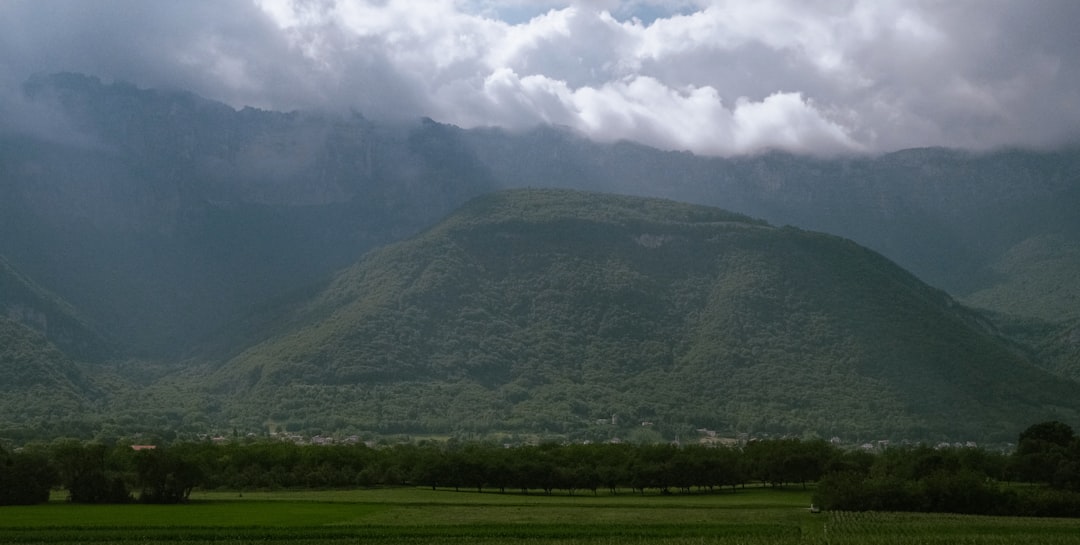
Grenoble, sitting at 212m elevation where the Drac meets the Isère river, is a city of 160,779 people that served as capital of the historic Dauphiné province and hosted the 1968 Winter Olympics. Surrounded on three sides by the Chartreuse, Vercors, and Belledonne massifs, it delivers both alpine adventure and a thriving university-driven cultural scene. The city is also home to one of Europe’s most concentrated research and tech corridors, which explains its unusually cosmopolitan energy for a mid-sized French city.
Top 3 Highlights at a Glance
- Bastille Fortress & Cable Car — A 19th-century hilltop fort reached by France’s oldest urban cable car, with panoramic views of three Alpine massifs.
- Musée de Grenoble — One of France’s top fine-arts museums outside Paris, housing over 900 works including Picasso, Chagall, and Matisse.
- Vercors Plateau Day Trip — A limestone plateau just 30 minutes from the city centre with 200km of hiking trails and WWII Resistance history.
Scroll down for our complete travel guide with tips on getting there, where to stay, costs and more.
Arrival & Airport
How do I get to Grenoble?
Fly into **Lyon-Saint-Exupéry (LYS)**, then take the **Ouibus or Flixbus coach** — **€10–20**, arriving at **Grenoble bus station** in about **1 hour 15 minutes**. The direct **Satobus shuttle** costs around **€26** and is faster at **1 hour**. My tip: avoid renting a car at Lyon airport unless you plan to tour the wider Rhône-Alpes region — parking in Grenoble’s city centre is genuinely painful and expensive. Grenoble also has its own airport (**GNB, Grenoble Alpes Isère**), but scheduled routes are limited mainly to seasonal UK and northern European flights, so London Stansted connections appear in winter ski season but are unreliable year-round.
Which airport is closest to Grenoble?
**Grenoble Alpes Isère Airport (GNB)** is the closest at roughly **45 km**, but **Lyon-Saint-Exupéry (LYS)** is the smarter choice. In my experience, GNB handles mainly seasonal ski charter flights and budget carriers — **Ryanair** operates routes from London Stansted and Bristol in winter, but summer options are sparse. LYS offers year-round connections to **50+ European destinations**, plus long-haul transatlantic routes with connections. The honest caveat: GNB can be very cheap in ski season (I’ve seen Ryanair fares under **€40** from London), but scheduling your entire trip around it is risky. Use LYS as your reliable default.
How long does the journey to Grenoble take from major hubs?
From **Paris Gare de Lyon**, the **TGV direct** reaches **Grenoble in 3 hours** — fares start at **€29** if booked weeks ahead. From **Lyon Part-Dieu**, regional trains run every hour and take **1 hour 10 minutes** for around **€15**. From **Marseille**, expect **3 hours 30 minutes** with a change in Valence. What surprised me: the Grenoble train station sits right at the edge of the old town, so you step off the platform and are inside the city immediately — no taxi needed. The caveat is that TGV seats sell out fast for Friday-evening departures; book at least **3 weeks ahead** in peak season.
Do I need a car in Grenoble?
No — **Grenoble’s TAG tram and bus network** covers everything you need in the city. I spent four days there without a car and reached every major sight on **tram lines A, B, C, D, or E**. The honest trade-off: if you want to explore the **Vercors plateau**, **Chartreuse massif**, or villages like **Villard-de-Lans** (30 km away), a rental car becomes genuinely useful. Expect **€35–50/day** from agencies at the train station. For a pure city-break, skip the car entirely — the **Bastille cable car**, city museums, and food markets are all walkable or tram-accessible from the **Presqu’île** and **Victor Hugo** neighbourhoods.
City Transport
What are the best areas to stay in Grenoble?
Stay in the **Presqu’île** district or just south in **Victor Hugo** — both put you within 10 minutes’ walk of the train station, the Musée de Grenoble, and the cable car to the **Bastille**. My tip: **Presqu’île** has the most atmospheric streets and the best evening restaurant density. The **Île Verte** neighbourhood to the northeast is cheaper and quieter but feels residential. Avoid booking in the university-heavy **Gières** or **Saint-Martin-d’Hères** suburbs — they’re fine areas but add a **20-minute tram ride** to everything interesting. If you want a boutique-hotel atmosphere, the pocket around **Place Grenette** offers the most character.
What does accommodation cost per night in Grenoble?
A clean, well-located economy hotel runs around **€75/night** based on current Numbeo data. Mid-range 3-star properties near **Victor Hugo** or **Place de Verdun** average **€100–130/night**. Design boutique hotels like **Le Grand Hôtel** on Boulevard Gambetta push to **€150–180/night**. My honest caveat: Grenoble’s hotel stock is heavily skewed toward business travellers, meaning prices spike sharply during trade fairs at the **Alpexpo convention centre** — check whether a congress is running during your dates before booking. Airbnb apartments in **Presqu’île** can undercut hotels by **30%** and give you kitchen access, which matters if you want to buy from the **Les Halles Sainte-Claire** market.
How far in advance should I book accommodation in Grenoble during high season?
Book at least **6–8 weeks ahead** for June through August. Grenoble fills unusually fast in summer because it acts as a gateway for both the **Vercors** and **Chartreuse** hiking regions, pulling in trekkers and cyclists alongside city visitors. What most guides omit: **late January to March** is equally constrained — the city sits near major ski resorts like **Chamroux** and **Les Deux Alpes**, and ski-weekend visitors absorb budget hotel inventory. For festival weekends like the **Grenoble Jazz Festival** (typically April) or the **Cabaret Frappé** music festival (July), you need **10–12 weeks** lead time if you want anything near the centre under **€100/night**.
Are there special or unique accommodation types in Grenoble?
Yes — several mountain refuges in the **Chartreuse massif** sit within **45 minutes’ drive** of the city and offer dormitory bunks for **€25–35/night** including breakfast. For a mid-range splurge, the restored **Château de la Commanderie** in nearby **Échirolles** (5 km south) is a proper Templar-era château converted into a hotel from around **€120/night**. In the city itself, the **Presqu’île** neighbourhood has a small cluster of design guesthouses. My tip: if you’re combining city culture with hiking, base yourself in Grenoble proper for 2 nights then shift to a Chartreuse gîte — the contrast is striking and the rural gîtes rarely cost more than **€70/night** for a private room.
Accommodation & Neighbourhoods
What are the must-see sights in Grenoble?
Three non-negotiables: the **Bastille fortress** reached by those iconic bubble cable cars called **les bulles** (€9.20 round-trip); the **Musée de Grenoble** on Place Lavalette, with one of France’s great fine-arts collections including Rubens and contemporary French painters (€8 entry); and the **Musée Dauphinois** inside a 17th-century convent on the Bastille hillside, covering Alpine history and free on the first Sunday of each month. What surprised me was the quality of the **Jardin de Ville** — a formal 17th-century garden that connects to the old town and costs nothing. Most visitors rush past it heading to the cable car, which is a genuine mistake.
What can I experience for free in Grenoble?
More than you’d expect. The **Musée Dauphinois** is free every first Sunday of the month. The **Magasin — Centre National d’Art Contemporain** on Cours Berriat (a former 19th-century industrial hall) offers free entry to its permanent collection. Walking the **Bastille hiking trail** (roughly **40 minutes** up through the Parc Guy Pape) costs nothing versus the cable car fee of **€9.20**. My tip: the **Les Halles Sainte-Claire** covered market on Place Sainte-Claire is completely free to browse and serves as a genuine food education — arrive before **11:00** on Saturday when local producers still have stock. The banks of the **Isère river** have been redesigned as a linear park and make for a perfect free evening stroll.
Which day trips from Grenoble are worth doing?
The **Vercors plateau** is the standout — take the D531 road to **Villard-de-Lans** (30 km, 40 minutes by car) for dramatic gorges and medieval villages. **Chambéry**, capital of the old Duchy of Savoy, is **50 minutes by train** (€12–18) and seriously underrated. The **Grande Chartreuse monastery** in the Chartreuse massif is **45 minutes by car** — the monks still produce the original **Chartreuse liqueur** there and allow exterior visits only, which makes it more authentic, not less. My honest trade-off: without a car, Vercors is difficult — the bus service to Villard-de-Lans from **Grenoble bus station** runs only a few times daily, so check the **VFD bus** timetable the night before.
What are the local specialities I should try in Grenoble?
**Gratin dauphinois** is the defining dish — creamy slow-baked potatoes that originated in this region and taste entirely different from every imitation you’ve eaten elsewhere. **Ravioles du Dauphiné** are tiny fresh pasta parcels filled with cheese and herbs, served in broth or gratin-style, and you can buy them fresh from market stalls for around **€4–6**. The **Chartreuse liqueur** (both green at 55% ABV and yellow at 40%) is made by monks **45 km away** and sold everywhere — a small bottle costs **€15–18** in supermarkets. My tip: eat at **Café de la Table Ronde** on Place Saint-André, claimed to be France’s second-oldest café (opened **1739**), which serves regional dishes in an atmosphere that no amount of interior design can replicate.
Highlights & Must-Sees
What makes Grenoble unique compared to other French cities?
The **mountain-encirclement** is genuinely unlike anything else in urban France — three separate Alpine massifs form a visual wall on three sides, visible from every street. Grenoble is also the most research-dense city in France per capita, home to **CNRS**, **CEA** nuclear research, and **MINATEC** nanotechnology campus, which gives it a cosmopolitan, intellectual energy that Annecy or Chambéry simply don’t have. In my experience, the combination of world-class contemporary art (the Magasin), cable-car access to a 19th-century fortress, and a 10-minute drive to ski resorts is a genuinely impossible combination elsewhere in Europe. The honest caveat: the city’s urban fabric is partly scarred by 1960s–70s development and lacks the postcard prettiness of Annecy — beauty here is vertical, not horizontal.
How many days are worthwhile in Grenoble?
**3 full days** is the right answer for the city itself. Day 1: Bastille, Musée Dauphinois, Presqu’île dinner. Day 2: Musée de Grenoble, Les Halles market, evening along the Isère. Day 3: half-day in the city (Place Saint-André, Cathédrale Notre-Dame), afternoon day-trip toward Chartreuse or Vercors. Add **1–2 extra days** if you plan serious hiking — the Vercors alone could consume a full day. My honest trade-off: 1 night is not enough and wastes your travel time; 5+ nights is excessive unless you’re using it as an Alpine hiking base. Grenoble also pairs well with a **Lyon–Grenoble–Annecy circuit** over 8–10 days, which is the most efficient use of the region.
When is the best time to visit Grenoble?
**June through September** gives the optimal combination of weather, hiking access, and city activity, based on verified climate data. July and August are peak summer — warm, sunny, and busy. My personal favourite is **late June** or **September**: crowds thin out, the Vercors and Chartreuse trails are snow-free, and temperatures are ideal for both city walking and mountain day-trips. What most guides omit: **February–March** is excellent for ski-and-city trips — you can ski **Les Deux Alpes** (60 km) in the morning and eat dinner in Grenoble by evening. Winter in the city itself is cold but functional, and the **Christmas market** around **Place Victor Hugo** in December is genuinely local rather than touristy.
Are there local festivals in Grenoble worth attending?
**Cabaret Frappé** in July is a free outdoor music festival held in the **Parc Paul Mistral** — it runs for roughly **10 days** and draws 100,000+ attendees, mixing electronic, world music, and experimental acts. The **Grenoble Jazz Festival** typically runs in **late April** across city venues including the **MC2 cultural centre**. **La Fête du Drac** in June celebrates the river culture of the Drac valley. My tip: the **Nuit Blanche** event in October, when museums including the Musée de Grenoble open until **2:00 AM** for free, is seriously underattended by tourists and one of the most rewarding nights I’ve spent in any French city. Book accommodation early for Cabaret Frappé week — the city fills completely.
Food & Drink
How does the weather affect activities in Grenoble?
The **mountain bowl geography** creates a unique microclimate: summers can be hot (regularly **30°C+**) with afternoon thunderstorms rolling in from the massifs, usually clearing by evening. Winter brings valley fog called **la brume** that can blanket the city while ski slopes 40 km away sit in pure sunshine. In my experience, the biggest weather trap is booking a summer Alpine hike without checking afternoon storm forecasts — the **Météo France** app is essential. Spring (April–May) brings heavy snow melt and trail closures above **1,500m**. The honest trade-off: Grenoble’s bowl traps pollution in winter inversions, and air quality alerts (called **épisodes de pollution**) occasionally restrict car use — check **atmo-auvergne-rhone-alpes.fr** before driving in.
How crowded does Grenoble get in peak season?
Grenoble never reaches the saturation of **Annecy or Chamonix** — even in August, the Bastille cable car queue rarely exceeds **20 minutes**. The main pressure points are summer weekends when Lyon day-trippers arrive, and February school-holiday ski weekends when transit hotels fill completely. What most guides omit: the **Musée de Grenoble** on a rainy Saturday in July can be genuinely busy with families seeking indoor options, so arrive before **10:00**. The **Les Halles Sainte-Claire** market is crowded by **10:30** on Saturdays — go at **8:30** for a relaxed experience. Overall, Grenoble is one of the most manageable mid-sized French cities in summer, largely because it lacks the fairy-tale lakeside aesthetic that drives Annecy to 3 million visitors annually.
How safe is Grenoble?
The city centre, **Presqu’île**, and **Victor Hugo** are safe for solo travellers including at night. The honest caveat: Grenoble has some of the highest per-capita crime statistics in France, concentrated in the **Villeneuve** and **Village Olympique** social housing districts to the south — these are genuine no-go zones after dark and offer nothing for tourists anyway. My tip: stay north of the **Drac river** and you will encounter no issues. The areas around **Place Grenette** and **Place Saint-André** have the usual petty theft risks of any French city — keep bags zipped in the Saturday market crowd. The city’s student population creates a lively but generally calm street culture, and I’ve always felt comfortable there.
Is English widely spoken in Grenoble?
Better than average for France, but not reliably. The international research community at **CNRS**, **CEA**, and the **Université Grenoble Alpes** means English is common in cafés around the **Presqu’île** and in tech-district restaurants. Hotel front desks in the centre speak workable English. My honest caveat: move outside the centre — to markets, boulangeries, or the **Musée Dauphinois** gift shop — and French becomes essential. I recommend learning 10–15 basic French phrases before arriving; Grenoblois genuinely appreciate the effort and respond with warmth. The **Google Translate** camera function handles French menus and museum signage perfectly, which removes 80% of the language friction instantly.
Practical Tips
What is the daily budget for Grenoble?
A realistic budget traveller spends around **€60–75/day** — economy hotel at roughly **€75/night** (split that figure if sharing), a cheap lunch around **€14**, and a mid-range dinner around **€25** based on current Numbeo data. Include a cable car trip (**€9.20**), a museum (**€8**), and a TAG day pass (**€5.20**) and you’re at **€130–140/day** for a comfortable solo experience. My tip: buy a **6-trip TAG transport carnet** for around **€9** rather than single tickets at **€1.70** each — it saves meaningfully over 3 days. The cheapest full day possible — free museum Sunday, hiking the Bastille on foot, market lunch — costs under **€30** excluding accommodation.
How does Grenoble’s public transport work?
The **TAG network** (Transports de l’Agglomération Grenobloise) runs **5 tram lines and 30+ bus lines** covering the city and inner suburbs. A single ticket costs **€1.70** and is valid for **1 hour** including transfers. The **TAG app** shows real-time arrivals and sells mobile tickets. Tram lines **A and B** are the most useful for tourists, connecting the station to **Presqu’île**, **Musée de Grenoble**, and the Bastille cable car base. What surprised me: the trams run until roughly **midnight** on weekdays and until **1:00 AM** on Friday and Saturday nights, which is unusually late for a French mid-sized city. The honest caveat: the night bus network after tram hours is skeletal — plan evening routes in advance.
Which apps do you recommend for visiting Grenoble?
**SNCF Connect** for train bookings and real-time train status — essential for Lyon day trips. **TAG mobile** for tram and bus tickets (buy before boarding — onboard inspectors are active). **Météo France** for Alpine weather and storm warnings — non-negotiable if you plan any hiking. **Komoot** for trail navigation in the Vercors and Chartreuse — offline maps work where mobile signal disappears at **1,800m+**. **TheFork (LaFourchette)** for restaurant reservations — top Grenoble restaurants like **Fantin Latour** on the Bastille hillside book up **2–3 weeks ahead** in summer. My tip: download **atmo-auvergne-rhone-alpes.fr** as a bookmark (not an app) — it shows real-time pollution alerts that occasionally restrict car access into the city centre.