
Piran: The Complete Travel Guide (2026)
Last reviewed: September 2026 · key facts checked against Wikidata
Piran Travel Guide: Everything You Need to Know (2026)
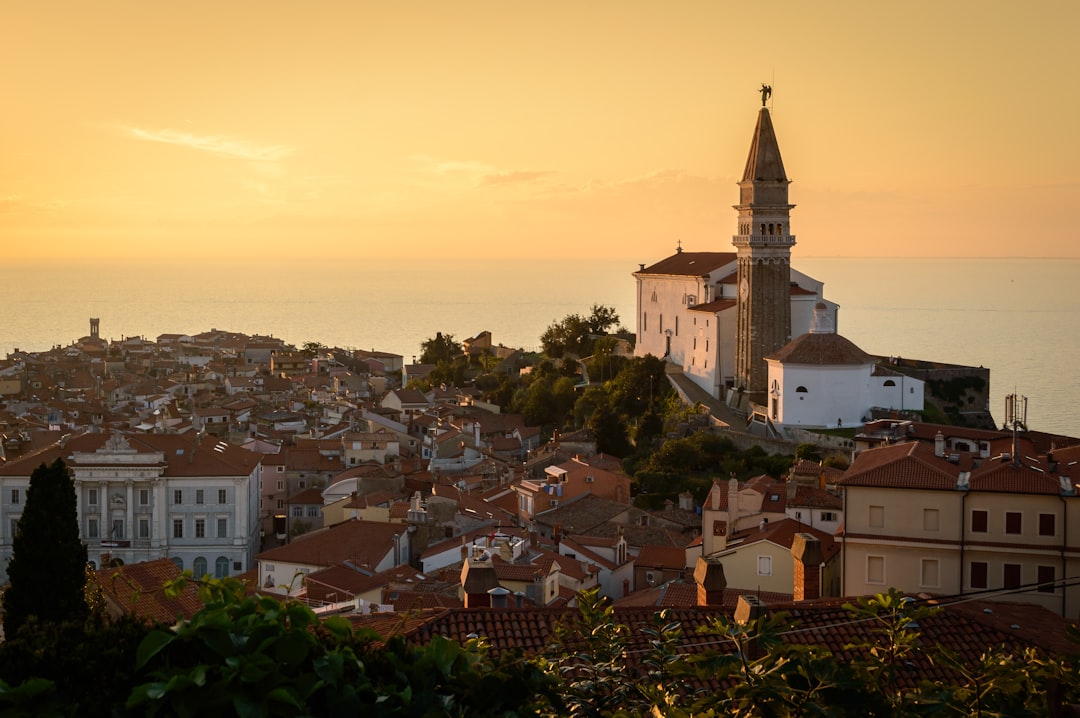
Piran is a Venetian-Gothic gem of 3,787 residents perched on a narrow peninsula jutting into the Adriatic at just 7 metres above sea level, making it Slovenia’s most photogenic coastal town. Founded under Byzantine rule and later shaped by centuries of Venetian dominance, its labyrinthine old town looks more like a miniature Venice than anything typically Slovenian. The drive from Ljubljana takes roughly 2 hours and 30 minutes, yet Piran feels like an entirely different world.
Three Things Not to Miss in Piran
- Tartini Square — Piran’s oval-shaped central piazza is ringed by Venetian Gothic facades and anchors the entire old town social scene.
- St. George’s Parish Church & Bell Tower — Climb the 16th-century bell tower for a 360-degree panorama over the Adriatic and Istrian coastline.
- Piran Town Walls — Walk the medieval fortifications stretching 200 metres above the rooftops for the best free view in Slovenian Istria.
Scroll down for our complete travel guide with tips on getting there, where to stay, costs and more.
How to Reach Piran
How do I get to Piran — by car, bus, or train?
By car is the fastest and most flexible option, taking 2 hours 30 minutes from Ljubljana via the A1/H5 motorway. In my experience, the Nomago or Arriva bus from Ljubljana’s main bus station to Portorož (the nearest bus hub, just 3 km from Piran) is surprisingly comfortable and costs around €12–€15 one way, running 3–5 times daily. There is no direct train to Piran — the nearest station is Koper, 40 km away, requiring a connecting bus. My tip: if you’re car-free, the bus is genuinely reliable. The caveat most guides skip: Piran’s old town is a traffic-restricted ZTC zone, so even if you drive, you park outside the walls.
Which airport is closest to Piran?
Trieste Airport (TRS) in Italy is the closest, sitting just 35 km from Piran — roughly 40 minutes by taxi or private transfer costing around €50–€70. In my experience, it is massively underused by English-speaking travellers who default to Ljubljana Airport (LJU), which is 140 km away. What surprised me: Venice Marco Polo (VCE) at 150 km actually opens up excellent low-cost flight options and is only 2 hours 15 minutes by shuttle bus or car. The honest trade-off is that Trieste has fewer international connections than Venice or Ljubljana, so check all three before booking your flights.
How long does the journey to Piran take from Ljubljana?
By car, it takes 2 hours 30 minutes on a clear day via the A1 motorway toward Koper, then the H5 coastal highway. By bus it is closer to 2 hours 45 minutes to Portorož, plus the 3 km onwards leg to Piran by local bus or a short taxi. In my experience, the drive is genuinely scenic once you descend toward the Karst plateau and glimpse the Adriatic for the first time. The caveat: July and August bring heavy weekend congestion on the H5 between Koper and Portorož, and the last stretch can add 40+ minutes on a Friday evening. I always recommend arriving mid-week or before 10 am.
Do I need a rental car to explore Piran?
No — inside Piran’s old town a car is a liability, not an asset. The entire medieval centre is pedestrian-only, and the outside parking lot Fornače charges €1.50–€2 per hour. In my experience, the town itself is walkable end-to-end in 15 minutes, and the local Nomago buses connect Portorož, Izola, and Koper every 20–30 minutes for around €2 per ride. My tip: only consider renting a car if you plan day trips into the Slovenian Karst or the Dragonja Valley wine region. The honest warning: parking fees in summer can easily add €15–€20 per day to your budget, which far exceeds bus costs.
Piran Public Transport Explained
What are the best areas to stay in Piran?
Stay inside the old town peninsula if nightlife and atmosphere matter — the streets around Tartini Square and toward Punta lighthouse put you within a 5-minute walk of everything. For a quieter night’s sleep, the neighbourhood of Strunjan, just 4 km north, offers guesthouses away from bar noise. In my experience, the most coveted position is along Prešernovo nabrežje, the waterfront promenade, where sunrise over the Adriatic from your window is a genuine wow moment. The trade-off no one mentions: rooms directly on the old town’s alleys can suffer from echoing late-night voices until midnight, as sound carries aggressively in those tight medieval streets.
What does accommodation in Piran cost per night?
Budget expect to pay €60–€90 per night for a decent private room or guesthouse in the old town during shoulder season. A mid-range boutique hotel like Hotel Tartini on the main square runs €110–€160 per night in summer. In my experience, self-catering apartments booked through direct platforms consistently beat Booking.com prices by 15–20%, especially for stays of 3+ nights. The honest caveat most guides omit: Piran levies a tourist tax of €3.13 per person per night, which is rarely included in the displayed rate, so always check the final checkout total. For a sea-view room in August, prices spike to €180–€220 at quality properties.
How far in advance should I book accommodation in Piran during high season?
For July and August, book at least 3–4 months in advance — Piran has only about 3,787 permanent residents and a very limited hotel stock. I recommend booking by March for a July trip and by April for August. What surprised me was how fast the handful of sea-view rooms on Prešernovo nabrežje sell out even for mid-week stays. The September shoulder season (my top pick for visiting) usually needs only 4–6 weeks notice, and prices drop by 20–30% versus August. The trade-off: last-minute deals exist in October and November but the swimming season is essentially over by then.
Are there special or unique accommodation types in Piran?
Yes — renting a converted Venetian townhouse apartment inside the old town walls is genuinely special and available on platforms like Airbnb and Booking.com for €80–€120 per night. Several apartments occupy the upper floors of 15th and 16th-century buildings with original stone arches and ceiling beams. In my experience, these out-experience any standard hotel room for atmosphere. My tip: look for properties on or near Adamičeva ulica, the alley that runs along the western seawall — the sunset light from those windows is unbeatable. The caveat: steep narrow staircases with no lift are standard, so these are not suitable for travellers with heavy luggage or mobility issues.
Neighbourhoods of Piran
What are the absolute must-sees in Piran?
Tartini Square, St. George’s Bell Tower, and the medieval town walls are non-negotiable. Tartini Square is the social and architectural heart, named after Piran-born violinist Giuseppe Tartini. Climb St. George’s Bell Tower (€2 entry) for the best 360-degree Adriatic view in Slovenia. Walk the 200-metre surviving section of town walls for free to see rooftops stacked like a terracotta mosaic below you. In my experience, the Sergej Mašera Maritime Museum on Cankarjevo nabrežje is a worthwhile €4 spend, revealing Piran’s salt-panning and fishing heritage in a handsome Baroque palace. My tip: visit the waterfront at 6 am — the light and silence are extraordinary.
What can I experience for free in Piran?
Walking the old town is entirely free and endlessly rewarding. The town walls, the exterior of Tartini Square, the lighthouse at Punta and the rocky swimming area at Promenade FKK (a free, popular local bathing spot) all cost nothing. In my experience, sunset from the hilltop terrace beside St. George’s Church is the single best free experience in all of Slovenian Istria. The fish market on the waterfront opens early morning on weekdays — watching fishermen unload catches at 6:30 am is a living piece of local culture. The honest caveat: the most scenic areas attract buskers and small vendors, so bring small change if you want to avoid awkward moments.
Which day trips from Piran are worth taking?
Portorož (3 km, 10 minutes by bus) is Piran’s livelier resort neighbour, worth an evening for its casino and beach bars. The Sečovlje Salina Nature Park (8 km) is a flat cycling or driving trip through working medieval salt pans — entry is €7 and genuinely unique. I recommend a day trip to Koper (25 km, 30 minutes), Slovenia’s only sea port with a beautiful Gothic cathedral square that most tourists skip entirely. Rovinj in Croatia (75 km, 1 hour 15 minutes by car) is the most rewarding full-day excursion — a more elaborate Venetian old town on a larger peninsula. My honest caveat: Trieste (35 km) rewards a longer stay and feels rushed as a day trip.
What are the local specialities I must try in Piran?
Piran salt — harvested from the Sečovlje salt pans just 8 km south — is the most iconic local product and genuinely superior to supermarket salt in flavour. Piran sea bass (brancin) grilled with local olive oil and herbs is the dish I always order first. In my experience, Piran Bay oysters from the nearby Strunjan inlet served at the old-town restaurants are among the finest in the Adriatic. Try fuži pasta with truffles — the Istrian truffle-hunting tradition extends into this corner of Slovenia. My tip: buy a 200g bag of fleur de sel from Sečovlje at the park shop for €4–€5 — it is a perfect, lightweight souvenir that no guide ever suggests.
What to See in Piran
What makes Piran truly unique compared to other Adriatic towns?
Piran is the only town in Slovenia with a fully preserved Venetian Gothic old town, meaning it is architecturally more Italian than Slovene — yet priced and crowded far less than comparable towns in Croatia or Italy. With just 3,787 permanent residents, it is tiny enough to feel like a living village rather than a museum. In my experience, the bilingual Slovene-Italian street signs and conversations give it a layered cultural identity found nowhere else on the Adriatic. The salt pans at Sečovlje operating continuously since the 14th century are a working medieval industry 8 km from the main square. The honest caveat: the small size means you can exhaust the sights in 2 full days if you are a fast-paced traveller.
How many days should I spend in Piran?
2 full days cover the old town completely; 3 days allow for the best day trips. On day 1, walk the walls, climb the bell tower, and eat dinner on Tartini Square. On day 2, cycle or drive to the Sečovlje Salina in the morning and visit Strunjan Nature Reserve in the afternoon. A third day for Koper or Trieste rounds out a well-balanced Istrian trip. In my experience, travellers who stay only 1 night always regret it — the magic of Piran is the early morning and late evening, when the day-trippers from Portorož have gone and the town belongs to you. The trade-off: more than 4 nights and you’ll exhaust the local restaurant circuit.
When is the best time to visit Piran?
September is the best month, based on verified climate data — the Adriatic is still warm enough to swim, crowds thin noticeably after the first week, and restaurant bookings are no longer an ordeal. July and August bring peak heat and the most visitors, while May and June offer pleasant temperatures and a lively local atmosphere. In my experience, late September into October is underrated — daytime temperatures of around 18–22°C suit walking and cycling far better than sweating through August. My honest warning: November through March can be quiet to the point of desolation, with several restaurants closing entirely and the bora wind making the waterfront genuinely uncomfortable.
What local festivals in Piran are worth attending?
The Tartini Festival (late August into early September) brings classical chamber music concerts to Tartini Square every evening for about 2 weeks — entry to outdoor performances is free or under €15 for seated concerts. In my experience, watching a string quartet perform under the stars in that oval Venetian square is one of the most atmospheric concert experiences on the Adriatic. The Piran Musical Evenings run throughout July in the courtyards of old-town palaces. My tip: the Sečovlje Salt Harvesting Festival in late September lets visitors rake salt with traditional tools — an oddly meditative and genuinely hands-on cultural experience costing €7–€10 including a bag of fresh salt. Book the Tartini Festival concerts 4–6 weeks ahead.
Piran Food Scene
How does the weather in Piran affect what activities I can do?
In summer (June–August), temperatures of 28–33°C make midday sightseeing exhausting — I structure those days with a 6–10 am walk, a long lunch break, and activities resuming after 4 pm. Swimming off the rocky Punta area is best June through September. The bora wind (cold northeast gale) can hit unpredictably between November and March, turning waterfront walks from pleasant to brutal in an hour. In my experience, September’s cooler mornings make the town wall walk and bell tower climb genuinely enjoyable without sweating through your clothes. The honest caveat: Piran has no sandy beach — the swimming is from concrete platforms and rocky coves, which surprises many first-timers expecting a classic beach holiday.
How overcrowded does Piran get in peak season?
Very crowded — Tartini Square and the main waterfront promenade become genuinely congested between 10 am and 6 pm in July and August, primarily with day-trippers bused in from Portorož hotels. In my experience, the narrow alleyways behind the square can feel claustrophobic at peak times, with two-way pedestrian traffic almost impossible. What surprised me: by 8 pm the day-trippers have mostly gone and the town is magically calm. My tip: book a restaurant for 7:30 pm rather than 6 pm to avoid the tourist rush. The honest fact: Piran with 3,787 residents is simply not designed to absorb thousands of visitors simultaneously, so shoulder season (September) is not just cheaper — it is a fundamentally better experience.
How safe is Piran for travellers?
Piran is extremely safe — petty crime is rare and violent incidents essentially unheard of. In my experience, the only realistic risk is leaving a bag unattended at a waterfront café table while taking photos, which can attract opportunistic theft in summer. The old town alleyways at night feel completely secure, and solo travellers including women report no issues in the forums I monitor regularly. The one caveat: pickpocketing on the Nomago buses between Portorož and Piran increases in August when buses are overcrowded — keep your phone and wallet in a front pocket. Emergency services are accessible via the European 112 number, and the nearest hospital is in Koper, 25 km away.
Is English widely spoken in Piran?
Yes — English fluency in Piran’s hospitality sector is high, covering effectively 100% of hotel staff, most restaurant servers, and tourist information staff. In my experience, younger locals (under 40) switch to English effortlessly, and many also speak Italian, which makes the bilingual atmosphere here genuinely charming. What surprised me: even at the fish market and small grocery shops, basic English gets you through without difficulty. The honest caveat: some older residents in the back streets speak primarily Slovene and Italian — learn hvala (thank you) and prosim (please) in Slovene, and locals light up noticeably. My tip: attempting even 3 words of Slovene at a restaurant consistently results in warmer service and sometimes a complimentary Slovenian schnapps.
Local Know-How for Piran
What is the daily budget for travelling in Piran?
Budget traveller: €70–€85 per day (hostel/private room, self-catered breakfast, one sit-down meal, one café stop). Mid-range: €120–€160 per day (boutique guesthouse, 2 restaurant meals, one paid attraction). Comfortable: €180–€250 per day (sea-view hotel, wine with dinner, boat trip). In my experience, food is the best-value category here — a seafood lunch for two with wine at a non-waterfront trattoria runs €35–€50 total. The hidden cost most budgets miss is the €3.13 per person per night tourist tax and €1.50–€2 per hour parking if you drove. My tip: picnic supplies from the morning market near Tartini Square cut lunch costs to under €8 per person without sacrificing quality.
What public transport options are available in and around Piran?
The Nomago bus line connecting Piran, Portorož, Lucija, Izola, and Koper runs every 20–30 minutes during summer and costs €1.80–€2.50 per ride. In my experience, the Portorož–Piran leg is so short (3 km, 8 minutes) that I sometimes walk it along the seafront promenade instead. A day pass for the coastal bus network costs around €8 and covers unlimited rides between Piran and Koper. The honest caveat: there is no bus service within Piran’s old town — it is entirely pedestrian. For late nights, taxis from Portorož to Piran cost €8–€12 and are booked via the Waze Carpool or local taxi dispatch rather than a dedicated app. Service drops to once per hour after 9 pm in low season.
Which apps do you recommend for visiting Piran?
Google Maps works accurately for Piran’s alleyways, though I cross-check with Maps.me offline maps in case of connectivity gaps in the old town’s thick stone buildings. For buses, the Nomago app shows real-time departures and lets you buy tickets digitally, saving the exact change hassle. In my experience, The Fork (TheFork) lists a handful of Piran restaurants for reservations, though many top spots still require a direct phone call or walk-in. XE Currency is useful since Slovenia uses the euro (€) but you will cross into Croatia and need kuna conversion. My honest tip: download Slovenian Tourism’s official Taste Slovenia app — it maps the Sečovlje salt pan walking routes accurately and includes updated festival schedules for 2026.
Piran at a Glance
| Population | 3,787 |
|---|---|
| Currency | EUR (€) |
| Official language | Slovene |
| Time zone | UTC+01:00 |
Source: Wikidata, retrieved September 2026.
Slovenia › Piran
Essential Resources for Planning Your Trip to Piran
- Wikipedia: Piran — history, geography & background
- Wikivoyage: Piran — community travel guide & practical tips
- Piran travel – Lonely Planet | Slovenia, Europe — expert itineraries & travel inspiration
- THE 15 BEST Things to Do in Piran (2026) — hotels, restaurants & traveller reviews
- How to get from Trieste Airport to Piran with luggage? — how to get around
- Numbeo: Cost of Living in Piran — current prices & cost comparison
- Timeanddate: Piran Weather & Climate — forecasts & climate statistics
More Perspectives on Piran
- A Local’s Guide to Piran, Slovenia
- 14 Best Things to Do in Piran, Slovenia
- Piran, Slovenia: Is It Worth Visiting? Full Guide
Piran Travel Videos
Watch these videos for a visual preview before your trip:
- Travel Guide to Piran, Slovenia
- Piran Travel Guide – Slovenia’s Gorgeous Istrian Coastline 🇸🇮 Best Things to Do, See & Eat!
- PIRAN Travel Guide | Best Things to Do and See in Slovenia’s Coastal Gem
Piran Travel Discussions on Reddit
Real traveller experiences and community advice:
- Is Piran and Trieste worth visiting? : r/travel
- r/travel – Piran, Slovenia Trip Report
- Piran, Slovenia – beautiful coastal town on the Adriatic Sea
Data Sources
This page was compiled using data from Wikipedia, Wikidata, Open-Meteo (climate), Numbeo (cost of living) and REST Countries. Information is updated regularly.