
Prague: The Complete Travel Guide (2026)
Last reviewed: September 2026 · key facts checked against Wikidata
Prague Travel Guide: Everything You Need to Know (2026)
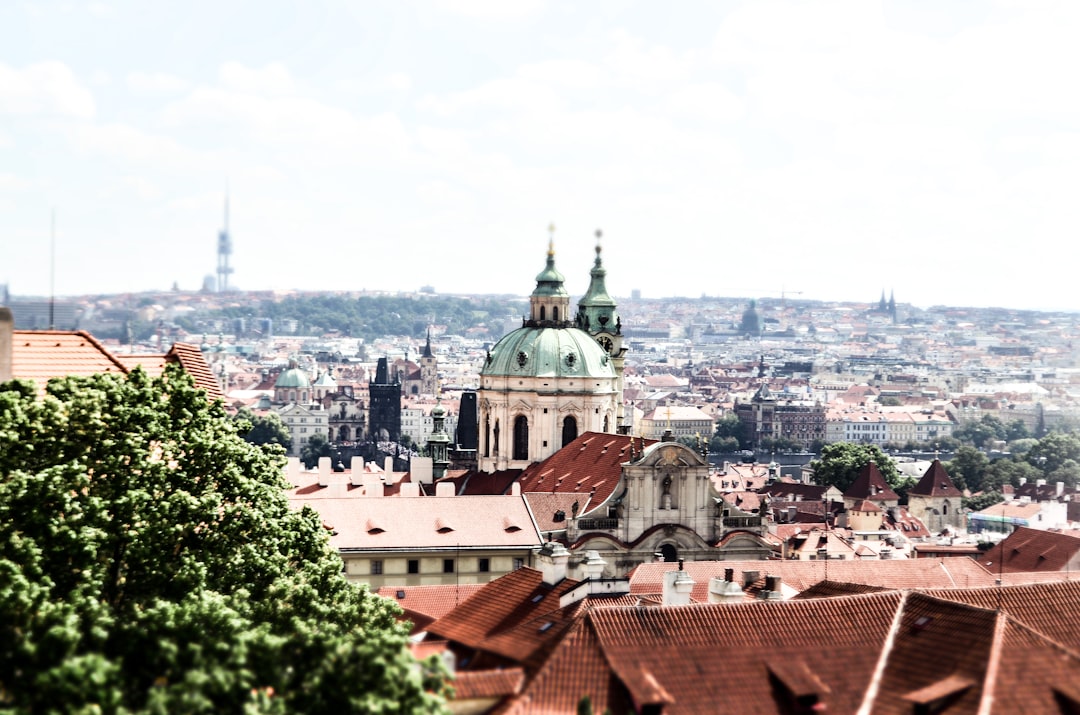
Prague, founded in the 9th century and home to 1.4 million residents, sits at 200 metres above sea level along the Vltava River and draws over 8 million international visitors annually — making it one of the most-visited capitals in Central Europe. Its UNESCO-listed Old Town survived WWII virtually intact, meaning you walk through genuinely medieval streets rather than postwar reconstructions. What most travellers don’t realise is that the city is geographically compact enough to cover most major sights on foot within a 5 km radius of Charles Bridge.
Arrival & Airport
Which airport serves Prague and what is the best way to get into the city?
Václav Havel Airport Prague (PRG) is your only realistic entry point — it handles all major international and budget carriers. In my experience, the Airport Express bus to Hlavní nádraží (main railway station) is the cleanest option at CZK 100 (~€4), running every 30 minutes and taking 35 minutes. Avoid the unmarked taxis outside arrivals — they are notorious for overcharging foreigners. My tip: pre-book Bolt or Liftago from the app before you land; a ride to Old Town costs roughly CZK 400–600 (~€16–24) with no surprises.
How long does the journey from Prague Airport to the city centre take?
The Airport Express bus reaches Hlavní nádraží in 35 minutes under normal traffic. From there, metro Line C drops you at Muzeum or Náměstí Republiky in under 5 minutes. By rideshare, expect 25–40 minutes to Old Town Square depending on rush hour. What surprised me: the stretch between 6 and 9 AM on weekdays can add 20 minutes due to highway congestion near the airport. If you land Friday evening, budget 60 minutes total. The metro option is the only time-guaranteed route.
Which transport options do you recommend from Prague Airport to the hotel?
I recommend the Airport Express bus to Hlavní nádraží for budget travellers — at CZK 100 it’s unbeatable. For comfort, use Bolt or Liftago pre-booked via app; expect CZK 400–600 to Old Town. The honest warning most guides skip: the yellow official airport taxis at the terminal doors routinely charge CZK 700–1,200 for the same ride. Public bus 119 connects to metro Nádraží Veleslavín (Line A) for CZK 40 but requires luggage navigation through a busy station. My tip: for first-timers with heavy bags, Bolt is worth every koruna.
Are there direct train connections into Prague from other European cities?
Yes — Prague Hlavní nádraží has direct connections to Vienna (4 hours, from €19 on Railjet), Berlin (4.5 hours, from €29 on ICE), and Budapest (6.5 hours). The Brno–Prague corridor runs hourly in under 2.5 hours via RegioJet and Czech Railways. What surprised me: there is no direct train to Warsaw — you must change in Ostrava or fly. Book via České dráhy (CD) or RegioJet’s website at least 2 weeks ahead for the cheapest fares; last-minute prices can triple. The Wien–Praha Railjet is genuinely comfortable and I use it over flying.
Which cities near Prague are worth a day trip?
Kutná Hora is my top pick — the Sedlec Ossuary alone justifies the 1-hour train ride from Hlavní nádraží (tickets from CZK 130). Český Krumlov is stunning but requires 3 hours by bus — doable but long. Karlovy Vary takes 2.5 hours by bus and combines spa architecture with the famous colonnades. What most guides omit: Kutná Hora’s Cathedral of Saint Barbara is as architecturally impressive as many Prague churches and crowds are a fraction of what you’ll find at St. Vitus. Avoid combining two day trips in one day — Prague itself deserves your evenings.
How does Prague’s public transport network work for getting around the city?
Prague’s DPP network covers metro (3 lines: A, B, C), trams, and buses with a single integrated ticket system. A 24-hour pass costs CZK 120 (~€5) and a 3-day pass CZK 330 (~€13). In my experience, tram line 22 is the most useful tourist route — it passes Malá Strana, Prague Castle, and Vinohrady on one line. The metro runs until midnight, with night trams covering gaps. The honest caveat: ticket inspectors board without warning and fines are CZK 1,500 — always validate before boarding. Buy tickets at yellow machines or via the PID Lítačka app.
City Transport
In Prague — taxi or public transport, which do you recommend?
Public transport wins for 90% of journeys inside the city. Metro plus tram covers every major sight within 20 minutes of Old Town. I use Bolt or Liftago (not street taxis) when it’s past midnight, raining, or I have luggage — expect CZK 80–150 for most short hops. The critical warning: never hail a yellow taxi on Wenceslas Square or near Old Town Square — overcharging is endemic and well-documented, with tourists paying 3–4x the fair rate. Street taxis near Václavské náměstí are Prague’s single biggest tourist scam in my experience.
Is Prague bike-friendly and is there a bike-share scheme worth using?
Prague is bike-friendly in Holešovice, along the Vltava riverbank cycle path, and in Vinohrady — but the cobblestones of Old Town and Malá Strana make cycling there genuinely uncomfortable and occasionally dangerous. Rekola is Prague’s main bike-share, charging CZK 30 per 30 minutes. The honest caveat: cobblestone streets around Charles Bridge have caused injuries to casual cyclists — use the river path instead. For leisure riding, the 17 km Vltava cycling route from Holešovice to Braník is flat and beautiful. My tip: e-scooters (Bolt and Tier) are often more practical than bikes for the hilly Žižkov and Vinohrady areas.
Which Prague neighbourhoods can I explore comfortably on foot?
Staré Město (Old Town), Josefov, Malá Strana, and Hradčany are all walkable and contain the highest density of sights within a 3 km stretch. I spend most of my time in Vinohrady — it’s residential, beautiful, and connecting to Náměstí Míru on foot from Old Town takes 20 minutes. Žižkov is walkable but hilly — wear proper shoes. The honest warning: Old Town Square pedestrian streets are extremely crowded 9 AM–8 PM year-round — budget extra walking time or route through the smaller alleys like Týnská ulička to move faster.
What does a public transport single ticket or day pass cost in Prague?
A 30-minute single ticket costs CZK 30 (~€1.20), a 90-minute ticket CZK 40 (~€1.60). A 24-hour pass is CZK 120 (~€5) and a 72-hour pass CZK 330 (~€13). In my experience, anyone spending more than 1 full day in Prague should buy the 3-day pass immediately — you’ll use trams and metro constantly. The hidden cost most guides skip: the Airport Express requires a separate CZK 100 ticket and is not covered by the standard zone passes. Buy via the PID Lítačka app to avoid machine queues at the airport.
Which Prague neighbourhood should I stay in for the best experience?
I recommend Vinohrady as the best all-round base — it’s 15 minutes from Old Town by tram, locally authentic, safe, and lined with Art Nouveau buildings and excellent restaurants. Malá Strana is beautiful and central but expensive and noisy on weekends. Žižkov is cheaper and creative but requires uphill walking. Holešovice suits the design-hotel crowd with a 15-minute metro ride to the centre. The honest trade-off: staying in Staré Město puts you on top of every sight but subjects you to 3 AM party noise on Dlouhá and Pařížská streets every night of the week.
Which areas of Prague are tourist-friendly for first-time visitors?
Staré Město, Nové Město, and Malá Strana are the most tourist-oriented areas with English-language menus, well-signed streets, and heavy police presence. The tram network connecting these districts is straightforward and colour-coded. My tip: Vinohrady around Náměstí Míru is just as easy to navigate and noticeably less crowded — first-timers staying there gain both convenience and authenticity. The caveat: English fluency drops sharply once you leave the tourist core into areas like Smíchov or Letňany, though basic communication is still manageable.
Accommodation & Neighbourhoods
Which areas of Prague should I avoid as a tourist?
Avoid the casino strip along Wenceslas Square after midnight — it’s not dangerous but the area attracts scammers, shell-game operators, and aggressive bar touts. Žižkov’s Seifertova Street corridor late at night is uncomfortable for solo travellers. The area around Hlavní nádraží after 10 PM has a visible drug scene — pass through quickly. What surprised me: Prague has virtually no violent no-go zones compared to other European capitals — my caution is less about safety and more about aggressive tourist scams concentrated in the 400-metre stretch between Václavské náměstí and Můstek metro.
What does a good hotel in Prague cost per night in 2026?
A solid 4-star hotel in Vinohrady or Malá Strana runs €80–130 per night in 2026. Boutique hotels in Staré Město like Hotel Maximilian or Iron Gate Hotel range €140–220. Budget-conscious travellers can find excellent 3-star options in Žižkov and Holešovice for €45–70. The honest caveat: Prague has significantly increased hotel prices since 2022 — what cost €60 three years ago now costs €90. Anything under €40 for a private room in a central location should prompt scrutiny of reviews. Hostels in Staré Město run €18–30 per dorm bed.
How far in advance should I book a hotel in Prague?
Book 3–4 months ahead for peak summer months (June–August) and the Christmas Markets period (late November–December 26). For shoulder season — March–May and September–October — 4–6 weeks is usually sufficient. The honest warning most guides skip: Prague Film Festival, Prague Spring Music Festival (May), and major football matches at Letná Stadium can sell out entire neighbourhoods with zero warning. I always check the Prague events calendar on GoOut.net before booking. Last-minute stays in summer typically cost 40–60% more than advance bookings for the same property.
Are there cheaper accommodation alternatives to Prague’s tourist districts?
Yes — Žižkov and Holešovice consistently offer prices 30–40% lower than Staré Město for equivalent quality. Smíchov is another underrated base — metro Line B puts you at Old Town in 12 minutes and hotel rates are €50–80 for 3-star quality. My tip: apartments on Airbnb and Booking.com in Vinohrady for 3+ nights often undercut hotels by €20–30 per night. The honest trade-off: Žižkov requires accepting steep streets and a 15-minute walk before hitting flat ground — not ideal if you have mobility concerns or heavy luggage.
What are the top sights in Prague that every visitor should see?
Prague Castle complex (the world’s largest ancient castle at 70,000 m²), Charles Bridge, Old Town Square with the Astronomical Clock, Josefov Jewish Quarter, and Vyšehrad fortress are non-negotiable. I always add Veletržní palác — Prague’s National Gallery of modern art — which is consistently undervisited. The honest warning: the Astronomical Clock’s hourly show lasts 45 seconds and is honestly underwhelming — the crowd crush to witness it is not worth the wait. Go to see the Gothic architecture around it instead and time your visit to accidentally catch the clock rather than planning around it.
Which Prague museums are genuinely worth it — and which are overrated?
Worth every koruna: DOX Centre for Contemporary Art in Holešovice (entry CZK 220), the Museum of Decorative Arts in Josefov, and the Franz Kafka Museum in Malá Strana (entry CZK 260). Overrated: the Sex Machines Museum on Melantrichova Street is pure tourist bait with nothing educational. The National Museum on Wenceslas Square is impressive architecturally but exhibits feel dated for its CZK 250 entry. What surprised me: the Jewish Museum complex — covering 6 synagogues and the Old Jewish Cemetery — at CZK 550 is one of the most historically profound 2-hour experiences in all of Central Europe.
Highlights & Must-Sees
What can I experience completely free in Prague?
Walking Charles Bridge at 6 AM before crowds arrive costs nothing and is one of Europe’s genuinely unmissable free experiences. Letná Park above the river offers a panoramic city view that beats any paid observation deck. The Vltava riverbank between Čechův most and Jiráskovo náměstí is a perfect free evening stroll. Vyšehrad fortress grounds are free to enter (the basilica charges CZK 50). My tip: the Old Jewish Cemetery can be partially viewed from the perimeter fence for free if budget is tight. The Nusle Valley viewpoint in Pankrác costs nothing and is visited by almost zero tourists.
What is the Prague evening scene like — what do you recommend doing after dark?
Prague’s evening scene runs from world-class classical music at the Estates Theatre (tickets CZK 400–1,200) to craft beer at Lokál Dlouhááá on Dlouhá Street. The Žižkov neighbourhood around Seifertova and Bořivojova has the most authentic local bar scene — a beer costs CZK 45–60 versus CZK 90–150 in tourist zones. I always spend at least one evening at Jazz Dock in Smíchov — live jazz on the riverbank for a CZK 150 cover charge. The honest warning: Old Town stag-party bars are aggressively marketed — some operate with no posted prices and deliver bills of CZK 3,000+ for a round of drinks.
What experiences in Prague are truly unique and found nowhere else in the world?
Sleeping in a converted railway carriage at Nano Hotel in Vinohrady is one of Europe’s strangest accommodation experiences. Attending a midnight organ concert inside St. George’s Basilica at Prague Castle — held a few times a year — is structurally unforgettable. The Speculum Alchemiae underground alchemist lab near Old Town Square (entry CZK 290) is genuinely peculiar. What surprised me most: Prague has Europe’s highest density of Cubist architecture — you can walk a self-guided 2-hour Cubist Prague route past buildings found nowhere else on Earth, starting at the House of the Black Madonna on Celetná Street (free exterior viewing).
Which Prague spots are not yet overcrowded — where can I find the real city?
Vinohrady’s Náměstí Míru and the surrounding streets feel like a local Prague neighbourhood that tourists simply haven’t discovered yet. Nusle Steps connecting Pankrác and Nusle is a neighbourhood staircase lined with gardens and cats — completely tourist-free. Holešovice Market (Holešovická tržnice) on weekends hosts locals, not tour groups. Braník along the southern Vltava riverbank has zero tourist infrastructure and beautiful waterside paths. My tip: walk Vršovice for authentic cafes and restaurants where menus still exist only in Czech — a 10-minute tram ride from I.P. Pavlova metro station delivers you there.
Which Prague neighbourhoods have the best restaurants?
Vinohrady is Prague’s best dining neighbourhood — Mánesova and Korunní streets have a genuine restaurant-per-10-metres density ranging from Czech bistros to Japanese and Georgian cuisine. Holešovice is the creative food hub — La Bottega Bistroteka and Café Sladkovský represent the new Prague. Malá Strana around Karmelitská Street has charming spots that avoid the worst tourist pricing. The honest warning: any restaurant with a photo menu, a tout outside, and a location within 100 metres of Charles Bridge will charge you CZK 350–600 for a main — the same dish costs CZK 180–280 in Vinohrady, 1.5 km away.
What are the local food specialities I must try in Prague?
Svíčková na smetaně — beef sirloin in cream sauce with bread dumplings — is Prague’s defining dish, best tried at Lokál Dlouhááá or U Fleků. Trdelník is sold everywhere on tourist streets but is a Slovak import, not a Czech tradition — don’t waste CZK 100 on it. Authentic Czech must-tries: vepřo-knedlo-zelo (roast pork, dumplings, sauerkraut) and smažený sýr (fried cheese). My tip: Naše Maso on Dlouhá Street does the best open-faced sandwiches (obložené chlebíčky) in the city for CZK 40–60 each — a completely authentic lunch under CZK 200.
Food & Drink
What does a typical local lunch cost in Prague?
A Czech daily lunch menu (polední menu) — typically soup plus a main dish — costs CZK 130–180 (~€5–7) at local restaurants in Žižkov, Vinohrady, or Holešovice. The same two-course meal in Staré Město costs CZK 280–400. In my experience, lunch menus are only served 11 AM–2 PM on weekdays — arrive after 2 PM and you’re paying full evening prices. A half-litre of Pilsner Urquell in a local pub costs CZK 45–65; the identical beer on Old Town Square costs CZK 120–160. The price gap is Prague’s defining food reality.
Where are the best markets and street food scenes in Prague?
Manifesto Market in Holešovice (open May–September, Thursday–Sunday) is Prague’s best street food market — containers converted into stalls serving everything from Korean bao to Czech goulash for CZK 130–200 per dish. Náplavka Farmers’ Market on the Vltava embankment runs Saturday 8 AM–2 PM year-round with local produce, open-faced sandwiches, and excellent coffee. Havelské tržiště in Old Town sells souvenirs and snacks but has become predominantly tourist-facing. My tip: the Jiřák market in Žižkov (Saturday mornings) is where Prague residents actually shop — zero tourist pricing, extraordinary local pastries for CZK 25–40.
Which bars and cafes in Prague do you personally recommend?
Kavárna Místo in Vinohrady is my go-to morning cafe — specialty coffee at CZK 75–95, relaxed local crowd, no queues. For beer, Zly Casy in Nusle has 50+ Czech craft taps with half-litres from CZK 55 — it’s a proper local institution. AnonymouS Bar on Lazarská does theatrical cocktails at CZK 250–350 — it’s themed around V for Vendetta and genuinely well-executed. The honest warning: Hemingway Bar on Karolíny Světlé is exceptional but costs CZK 400–600 per cocktail and requires a reservation weeks ahead in summer. Know which experience you’re paying for.
How many days do I need to see Prague properly?
4 full days covers the essential Prague without feeling rushed. Day 1: Castle district and Malá Strana. Day 2: Old Town, Josefov, and a Vinohrady evening. Day 3: Vyšehrad, Holešovice DOX gallery, Náplavka. Day 4: Kutná Hora day trip. The honest trade-off: Prague is so compressed that 2 days gives you the highlights, but you’ll miss the neighbourhoods that make it genuinely interesting. 7 days is the sweet spot for combining the city with Český Krumlov and Kutná Hora without feeling rushed. First-timers consistently underestimate how much time Charles Bridge alone consumes in their schedule.
When is the best time to visit Prague in 2026?
May and September are the optimal months — temperatures of 18–22°C, long daylight hours, and crowds 30–40% lighter than July–August. Late April is beautiful if Easter falls early. December 1–23 is magical for the Christmas Markets on Old Town Square and Náměstí Republiky — cold (2–6°C) but atmospherically unmatched. The honest warning: July and August deliver Prague at its most crowded and most expensive — Charles Bridge is shoulder-to-shoulder by 9 AM. January and February are the cheapest months (hotel prices drop 40%) but cultural life is rich and the city is eerily beautiful in frost.
How safe is Prague for tourists in 2026?
Prague is one of Europe’s safest capitals — violent crime against tourists is extremely rare. Pickpocketing is the dominant threat, concentrated on tram line 22 near the Castle, the Astronomical Clock crowd, and the metro at Můstek during rush hour. In my experience, a money belt for Staré Město tram journeys is not paranoia — it’s pragmatic. The scam ecosystem — fake police, shell games, overcharging taxis — is well-established on Václavské náměstí. Women travelling solo report Prague as overwhelmingly safe by night in Vinohrady, Žižkov, and Holešovice. The 112 emergency number reaches English-speaking operators.
Practical Tips
Is the Prague Card worth buying for tourists?
The Prague Card at €72 for 3 days includes Prague Castle, public transport, 60+ museums and attractions, and airport transfer. In my experience, it pays off if you visit Prague Castle, the Jewish Museum, the National Gallery at Veletržní palác, and use public transport daily — that combination alone covers the card’s cost. The honest caveat: it does not include some of the best experiences I recommend — Jazz Dock, Manifesto Market, Naše Maso lunch — because those require cash, not cards. Calculate your itinerary before buying rather than defaulting to it as a safety net. The 3-day public transport pass at CZK 330 may be all you actually need.
What are the most common tourist traps in Prague?
The top 5 Prague tourist traps I’ve personally encountered: (1) Trdelník sold as traditional Czech street food — it isn’t Czech. (2) Currency exchange booths on Václavské náměstí offering zero-commission deals but using crushing exchange rates — lose 10–15% versus your bank card. (3) Shell game operators near Charles Bridge — they are organised crime and you will not win. (4) Bar menus without listed prices in Old Town — always ask for a written menu before ordering. (5) Coach tour packages for Český Krumlov charging €60–80 for a trip you can do independently by Student Agency bus for CZK 200 each way. Prague’s traps are financial, not physical.
What SIM card or eSIM options are available for visitors to Prague?
Vodafone Czech Republic and T-Mobile CZ sell tourist SIMs at Prague Airport arrivals for CZK 299–499 (~€12–20) including 5–10 GB data valid for 30 days. In my experience, Airalo eSIM loaded before you land is the smoothest option — a 1 GB Czech eSIM costs ~€4.50 and activates instantly. The honest caveat: O2’s physical SIM from their Palladium Shopping Centre store consistently delivers the strongest signal in the underground metro tunnels — Vodafone drops in Line C’s deeper stations. EU roaming applies if you’re travelling from an EU country, making a local SIM potentially unnecessary if your plan includes roaming.
Tours & Activities in Prague
More Destinations in Europe
Explore our complete travel guides for more Europe destinations: Aquitaine Travel Guide (2026), Ajaccio Travel Guide (2026), Nancy Travel Guide (2026), Perpignan Travel Guide (2026), Vigo Travel Guide (2026).
Prague at a Glance
| Population | 1,397,880 |
|---|---|
| Currency | Czech koruna (Kč) |
| Official language | Czech |
| Time zone | UTC+01:00 |
Source: Wikidata, retrieved September 2026.
Useful Resources for Planning Your Trip to Prague
- Wikipedia: Prague — history, geography and background
- Lonely Planet: Prague — itineraries and travel inspiration
- TripAdvisor: Prague — hotels, restaurants and traveller reviews
🎥 Prague Travel Videos

38 Tips I Wish I Knew Before Visiting Prague
Camden David

15 Things I Wish I Knew Before Visiting Prague
Destination Well Known

PRAGUE TRAVEL TIPS FOR FIRST TIMERS | 20+ Must …
Happy to Wander (Travel Tips & Inspo)
You are currently viewing a placeholder content from Vimeo. To access the actual content, click the button below. Please note that doing so will share data with third-party providers.
More InformationYou are currently viewing a placeholder content from YouTube. To access the actual content, click the button below. Please note that doing so will share data with third-party providers.
More InformationYou need to load content from reCAPTCHA to submit the form. Please note that doing so will share data with third-party providers.
More InformationYou are currently viewing a placeholder content from GetYourGuide. To access the actual content, click the button below. Please note that doing so will share data with third-party providers.
More Information