
Biarritz: The Complete Travel Guide (2026)
Biarritz Travel Guide: Everything You Need to Know (2026)
Biarritz sits on the Bay of Biscay in the French Basque Country, 35 km from the Spanish border, with a resident population of just 24,993 — yet it draws surfers, royalty, and gourmets from across Europe. Napoleon III and Empress Eugénie turned it into a 19th-century imperial resort, and the Hôtel du Palais they built still dominates the Grande Plage today. Europe’s surfing capital since the 1950s, Biarritz hosts world-class competitions and combines Belle Époque grandeur with a genuinely laid-back Atlantic coast energy.
Top 3 Highlights at a Glance
- Grande Plage & Hôtel du Palais — The imperial palace-turned-hotel looms over Biarritz’s main beach, built for Empress Eugénie in 1854 — unmissable architectural drama.
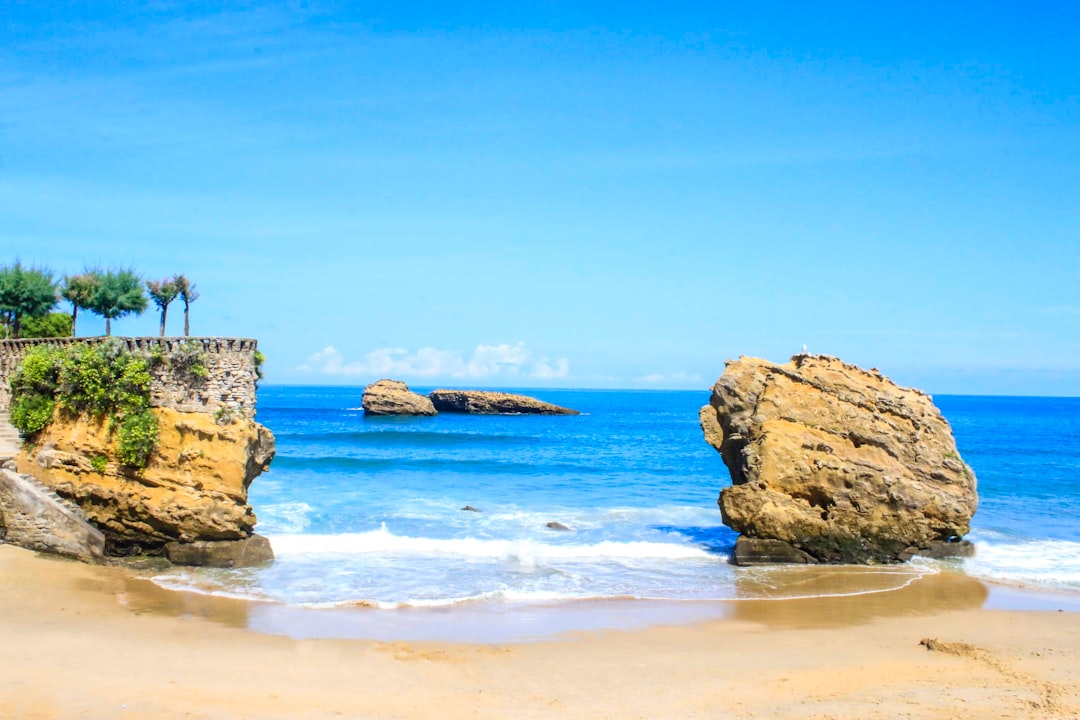
- Rocher de la Vierge — A sea-battered rock connected to the cliff by a footbridge, offering a 270-degree Atlantic panorama unlike anything else on the Basque coast.
- La Côte des Basques — The birthplace of European surfing since 1957, this crescent beach delivers legendary swells and one of France’s great sunset spectacles.
Scroll down for our complete travel guide with tips on getting there, where to stay, costs and more.
Arrival & Airport
How do I get to Biarritz?
Fly direct into **Biarritz Pays Basque Airport (BIQ)**, located just **3 km from the city centre**. In my experience, this is the easiest gateway — Ryanair, Volotea, and Air France operate seasonal and year-round routes. Alternatively, **TGV trains to Biarritz station** connect Paris Montparnasse in roughly **4 hours 40 minutes**, which I prefer for the luggage freedom. By car from Bordeaux, it’s about **2 hours on the A63 autoroute**. The honest caveat: budget flight schedules to BIQ thin out dramatically outside summer, so book early or plan a rail connection via **Bayonne** (8 km away, with far more frequent trains).
Which airport is closest to Biarritz?
**Biarritz Pays Basque Airport (BIQ)** is the closest, sitting just **3 km southwest of the city centre**. It’s a small, relaxed airport — you can be at your hotel in **15 minutes by taxi**. The trade-off: BIQ has limited year-round international routes, so travellers from outside France often connect via **Bordeaux-Mérignac (BOD)**, which is **190 km north** and about 2 hours by road. My tip: check BIQ first — when Ryanair operates your route, fares can drop to **under €40** one-way, making it easily the best option despite the small terminal.
How long does the journey to Biarritz take from major hubs?
From **Paris** by TGV, count on **4 hours 40 minutes** to Biarritz station — practical and scenic through the Landes pine forests. From **London**, a direct flight to BIQ takes around **2 hours**. From **Bordeaux** by car or train, allow **2 hours**. What surprised me: **Bayonne station**, just **8 km away**, receives far more TGV services than Biarritz’s own station, so I always check both when booking. The honest warning: summer weekend TGV seats sell out **6–8 weeks in advance**, and last-minute prices can triple — book early.
Do I need a rental car to get around Biarritz?
No — for the city itself, you absolutely do not need a car. Biarritz’s core — **Grande Plage, Rocher de la Vierge, the Port des Pêcheurs, and the market at Les Halles** — is walkable in under 20 minutes end to end. The **Chronoplus bus network** connects Biarritz with **Bayonne and Anglet for €1.80 per ride**. My tip: rent a car only if you plan day trips into the Basque mountains or to villages like **Sare or Ainhoa**. The genuine caveat: parking in Biarritz in July and August is a real ordeal — paid spots fill before 9am, and a car becomes a liability rather than an asset.
City Transport
What are the best areas to stay in Biarritz?
I recommend the **Centre Ville / Grande Plage area** as the best base — you’re steps from the beach, the casino, and the covered market. **Côte des Basques** suits surfers and younger travellers who want to be near the legendary break. The **Bellevue plateau** above the main beach offers quieter streets and slightly lower prices. Avoid booking in the **inland residential zones near the airport** unless you have a car — they’re dull and disconnected. What surprised me: the streets around **Rue Gambetta** are excellent for self-catering apartments and feel genuinely local rather than touristy, even in high season.
What does accommodation cost per night in Biarritz?
Budget on at least **€90/night for a basic economy hotel** based on verified Numbeo data. Mid-range hotels in the **Centre Ville** run **€130–€200/night** in summer. The iconic **Hôtel du Palais** starts at **€450/night** in peak season — it’s a bucket-list splurge, but I wouldn’t stay there more than one night unless budget is irrelevant. My tip: self-catering apartments around **Côte des Basques** often undercut hotels by 30% and give you kitchen access, which matters when eating out adds up. The honest caveat: Biarritz is unambiguously expensive by French standards — this is a luxury resort town, not a budget destination.
How far in advance should I book accommodation in Biarritz during high season?
Book at least **8–10 weeks ahead for July and August** — the town has only 24,993 residents but absorbs a disproportionate flood of summer visitors. For the **Biarritz Surf Festival** (typically mid-July), I’d extend that to **3 months minimum**. What surprised me: even shoulder-season weekends in **June and September** sell out quality mid-range properties fast, because European weekenders from Bordeaux and Toulouse treat Biarritz as an easy escape. My tip: **Booking.com’s free cancellation filter** is your safety net — lock in a room early, then keep watching prices. The caveat: last-minute deals essentially don’t exist here in summer.
Are there special or unusual accommodation types in Biarritz?
Yes — Biarritz genuinely rewards going beyond standard hotels. **Surf camps and surf houses** around **Côte des Basques** offer dormitory and private rooms with board storage, daily lessons, and a social atmosphere from around **€50/night per person**. Several **Belle Époque villas** near the **Phare de Biarritz** have been converted into boutique chambres d’hôtes where a night feels like stepping into 1890s aristocratic France. For longer stays, **apartment rentals on Rue Mazagran** give you market access and local rhythm. The honest trade-off: surf camps are loud and communal — wonderful if you’re 25 and single, exhausting if you need sleep after 10pm.
Accommodation & Neighbourhoods
What are the must-see sights in Biarritz?
In my experience, these four are non-negotiable. **Rocher de la Vierge** — walk the iron footbridge at sunset for the Atlantic panorama that defines the town. **Grande Plage** — the main beach flanked by the Hôtel du Palais and the **Casino Municipal**, best experienced early morning before crowds arrive. **Musée de la Mer** (entry **€15**) — an Art Deco aquarium built in 1933 with a spectacular shark tank and a rooftop terrace overlooking the ocean. **Les Halles market** on **Rue du Centre** — every morning except Monday, for Basque cheese, jambon de Bayonne, and the best piment d’Espelette in France. Don’t skip the lighthouse, **Phare de Biarritz**, for a 360-degree coast view.
What can I experience for free in Biarritz?
Plenty — Biarritz’s best assets cost nothing. **Côte des Basques beach** is free, the surf show is free, and watching professionals train there on any given morning is genuinely world-class entertainment. **Rocher de la Vierge** and its coastal path are free and open all day. The **Plateau de l’Atalaye** viewpoint above the old port costs nothing and rivals any paid panorama in the region. My tip: the **Biarritz coastal path (Sentier du Littoral)** stretches **13 km** and is entirely free — it’s the single best way to understand the town’s geography. The caveat: even ‘free’ Biarritz tempts you into €6 coffees and €12 ice creams, so budget discipline is needed.
Which day trips are possible from Biarritz?
**Saint-Jean-de-Luz** is my favourite — a working fishing port **18 km south**, reachable in **25 minutes by TER train for under €5**, with fresher seafood and fewer tourist crowds than Biarritz. **Bayonne** is just **8 km away** and home to the best chocolate tradition in France, plus a fine arts museum. **San Sebastián (Donostia)** in Spain is only **50 km** — **40 minutes by car** — and arguably has better pintxos bars than anywhere in France. The **Basque village of Sare**, a UNESCO-listed commune, is **25 km inland** and requires a rental car. The honest caveat: public transport to inland Basque villages is sparse — plan any mountain day trip around a hire car.
What local specialities should I try in Biarritz?
Start with **gâteau basque** — a dense pastry filled with either black cherry jam or almond cream, made properly at **Pâtisserie Dodin on Rue Gambetta**. **Jambon de Bayonne**, the local salt-cured ham, appears on every serious menu and costs around **€12–€15** as a starter. **Ttoro**, a Basque fish stew, is the dish to order at a proper restaurant — budget **€20–€25** for a main course portion. Don’t leave without buying **piment d’Espelette** powder at Les Halles — it’s the defining spice of the region, protected by AOC status since 2000. What surprised me: the Basque culinary identity here is more distinctive than most French regional cuisines — this is not generic French food.
Highlights & Must-Sees
What makes Biarritz unique compared to other French coastal cities?
Three things set Biarritz completely apart. First, it’s the birthplace of **European surfing** — Peter Viertel surfed here in **1957** and the culture never left, creating a rare fusion of imperial elegance and board-shorts cool. Second, it sits inside the **French Basque Country**, giving it a distinct culinary and cultural identity that has nothing to do with Provence or Brittany. Third, the **Belle Époque architecture** — the Hôtel du Palais, the Casino, the Musée de la Mer — gives the seafront a theatrical grandeur you won’t find in Nice or La Rochelle. The honest caveat: this uniqueness comes at a price premium — Biarritz is **30–40% more expensive** than comparable French Atlantic towns like Arcachon.
How many days should I spend in Biarritz?
**3 full days is the ideal minimum** to cover the city properly without rushing. Day 1: the coastal path, Rocher de la Vierge, and Musée de la Mer. Day 2: **Côte des Basques** morning surf session or lesson (**€40 for a group lesson**), afternoon at Les Halles, evening along the **Port des Pêcheurs**. Day 3: day trip to **Saint-Jean-de-Luz or San Sebastián**. I’ve done Biarritz in a weekend and felt satisfied, but 4–5 days allows you to slow down and appreciate the rhythm of the place. The caveat: a single day is genuinely not enough — you’ll spend most of it walking between attractions without time to absorb anything.
When is the best time to visit Biarritz?
**June, July, August, and September** are the verified best months based on climate data — warm, predominantly dry, and ideal for beach and surf activities. My personal preference is **late June or September**: the Atlantic light is magnificent, temperatures sit comfortably around **24–26°C**, and the summer crowds have either not arrived or have gone home. July and August are peak season — vibrant but expensive and packed. **October** is underrated for surfers — swells increase as summer fades and prices drop sharply. The honest caveat: Biarritz winters are mild by French standards but genuinely rainy and Atlantic-grey — not unpleasant for a weekend city break, but don’t plan a beach holiday before May.
Are there local festivals in Biarritz worth attending?
Yes — **Biarritz Surf Festival** in mid-July is one of Europe’s oldest longboard competitions, held at **Côte des Basques** and completely free to watch from the beach. It draws professionals from 30+ countries and the atmosphere is exceptional. **Biarritz en Fête** in early August brings free concerts and markets to the **Grande Plage esplanade**. For film lovers, **Biarritz Amérique Latine** (October) is a respected Latin American film festival with screenings at the **Gare du Midi** venue. My tip: even if you don’t track surf competitions, being in town during the Surf Festival gives the entire town an electric, celebratory energy worth experiencing once.
Food & Drink
How does the weather in Biarritz affect activities throughout the year?
The Atlantic climate means **reliable surf year-round** — winter swells at **Côte des Basques** are actually larger and more powerful than summer ones, which experienced surfers prefer. Summer temperatures average **22–26°C** with occasional Atlantic rain even in August — pack a light layer. The **Basque mountains inland** can experience storms that push rain onto the coast within hours, so flexible itineraries matter. In my experience, a Biarritz summer day can start grey and become glorious by noon — don’t cancel plans based on a cloudy morning. The honest caveat: **UV levels on the exposed Atlantic coast are deceptively high** — sunburn happens faster than you’d expect even in overcast conditions.
How crowded does Biarritz get in peak season?
Extremely crowded — **Grande Plage in August is shoulder-to-shoulder** and parking is effectively impossible without arriving before 8am. The town’s permanent population of just **24,993** is overwhelmed by summer visitor volumes that push the de facto population many times higher. **Côte des Basques** is marginally less packed than Grande Plage but still very busy by midday. My tip: visit beaches at **7–9am** — the light is better for photography anyway, the water is uncrowded, and you’ll understand why people love this place before the noise arrives. The honest trade-off: if crowds genuinely stress you, **Saint-Jean-de-Luz 18 km south** offers a nearly identical experience with noticeably fewer tourists.
How safe is Biarritz for travellers?
Very safe — Biarritz is one of the more secure resort towns in France. Violent crime is rare and the town’s affluent tourist demographic means street-level safety feels high even at night. The main risks are **petty theft on crowded beaches** — never leave valuables unattended on **Grande Plage** in August, when bags disappear in minutes. The **Plateau de l’Atalaye** and port area are safe to walk at night. In my experience, solo female travellers report feeling comfortable here. The practical caveat: **rip currents at Côte des Basques** are serious — the beach has a strong Atlantic swell and drownings do occur; always swim within the **flagged zones supervised by lifeguards**.
Is English widely spoken in Biarritz?
Better than most French cities of comparable size. The surf culture and international tourism have pushed English proficiency noticeably higher than the French average — staff at **surf shops, most hotels, and the Musée de la Mer** speak confident English. In restaurants along **Rue du Port-Vieux**, you’ll generally be understood without French. That said, **Les Halles market vendors and local boulangeries** operate primarily in French, sometimes with Basque. My tip: learning three phrases — *bonjour*, *merci*, and *un café s’il vous plaît* — earns immediate goodwill and often unlocks warmer service than a straight-to-English approach delivers. The honest note: younger Biarrots under 35 speak better English than older generations.
Practical Tips
What is the daily budget for travelling in Biarritz?
Budget realistically for **€120–€150 per person per day** on a mid-range trip, covering accommodation (from **€90/night for economy**), a cheap meal at **~€14**, one mid-range dinner, entry to one attraction, and transport. A genuine budget day — self-catering from Les Halles, free beaches, coastal path walking — can come in under **€50 excluding accommodation**. A splurge day including the Hôtel du Palais terrace lunch, Musée de la Mer, and a seafood dinner can easily hit **€200+**. The honest warning: Biarritz’s resort pricing means a ‘quick coffee and croissant’ at a beachfront café costs **€8–€10** — budget leakage adds up faster than anywhere else on the Atlantic coast.
How does public transport work in Biarritz?
The **Chronoplus network** serves Biarritz, Bayonne, and Anglet with buses costing **€1.80 per single journey**. Line **A** connects the city centre to Bayonne in **20 minutes** and runs frequently from early morning to late evening. **TER regional trains** from Biarritz station connect to Bayonne (**8 minutes, ~€3**) and the Spanish border at Hendaye (**35 minutes**). For the airport, take **Bus 14** to the city centre in **15 minutes**. My tip: buy a **10-trip Chronoplus carnet** for better value if you’re staying more than 3 days. The honest caveat: bus frequency drops significantly after **9pm** and is sparse on Sundays — evening plans outside the centre require a taxi or the **Uber app**, which works reliably in Biarritz.
Which apps do you recommend for visiting Biarritz?
These are the apps I actually use. **SNCF Connect** for TGV and TER train booking — essential for the Paris route and Saint-Jean-de-Luz day trips. **Chronoplus app** for real-time bus tracking on the local network. **Windy.app** for surf and weather conditions — serious surfers at **Côte des Basques** check it every morning. **Google Maps** works accurately for walking routes along the coastal path. **TheFork (LaFourchette)** for restaurant reservations — mandatory for dinner in August when quality places book out by noon. The honest caveat: **mobile data coverage is excellent** throughout central Biarritz on all major French carriers, but patchy on the remote sections of the **Sentier du Littoral** coastal path south toward **Bidart** — download offline maps before you walk.