
Ajaccio: The Complete Travel Guide (2026)

Last reviewed: October 2026 · key facts checked against Wikidata
Ajaccio Travel Guide: Everything You Need to Know (2026)
Ajaccio, the capital of Corsica and birthplace of Napoleon Bonaparte in 1769, sits at just 38 metres above sea level on the island’s sun-drenched west coast, roughly 390 km southeast of Marseille. With a population of 76,320, it punches well above its weight as Corsica’s largest city and administrative hub, blending Italianate architecture with French sophistication. The harbour views alone justify the trip, but the combination of mountain backdrops, white-sand beaches, and serious Corsican cuisine makes this one of the Mediterranean’s most underrated mid-sized capitals.
Top 3 Highlights at a Glance
- Maison Bonaparte — Napoleon’s actual birthplace, open since 1967, with original 18th-century family furnishings intact.
- Réserve Naturelle de Scandola — UNESCO-listed volcanic coastline accessible only by boat from Ajaccio, with no road access whatsoever.
- Marché du Cours Napoléon — Ajaccio’s daily covered market sells raw charcuterie, brocciu cheese, and chestnut flour under one roof.
Scroll down for our complete travel guide with tips on getting there, where to stay, costs and more.
Arrival & Airport
How do I get to Ajaccio?
Fly directly into Ajaccio Napoléon Bonaparte Airport (AJA) — that is by far the easiest option. In my experience, Air France, easyJet, and Corsair all run seasonal direct routes from Paris Orly in under 2 hours. Alternatively, take the overnight ferry from Marseille with La Méridionale or Corsica Ferries, which takes roughly 10–12 hours and costs from €50 per person with a basic cabin. The ferry is a genuine experience, not just a transfer — arriving by sea with the Gulf of Ajaccio opening up in front of you is unforgettable. Warning most guides skip: ferry schedules cut back sharply outside June–September, so verify availability if traveling in winter.
Which airport is closest to Ajaccio?
Ajaccio Napoléon Bonaparte Airport (AJA) is the closest airport, sitting just 7 km east of the city centre — a genuinely short transfer. I recommend taking the TCA bus Line 8 for around €1.80, which drops you near the train station in 20 minutes. A taxi costs roughly €25–30 and takes the same time in light traffic. The honest caveat: AJA is a small regional airport, so international connections outside of France are limited. If you’re flying from the UK or Germany outside peak season, you’ll likely connect through Paris CDG or Nice. Book early — seats on Corsican routes sell out fast for July and August.
How long does the journey to Ajaccio take from the mainland?
From Paris, a direct flight to AJA takes approximately 2 hours. From Marseille by ferry, plan on 10–12 hours overnight. My tip: the ferry from Toulon with Corsica Ferries sometimes shaves 30 minutes off the crossing. If you’re driving from Nice to the port and then crossing, door-to-door from the French Riviera is realistically 8–10 hours total. What surprised me: there is no fixed rail link from the French mainland to Corsica — the island’s own Chemins de Fer de la Corse narrow-gauge train only runs internally, connecting Ajaccio to Bastia and Corte. That internal journey to Bastia takes around 3.5 hours and costs approximately €15.
Do I need a car in Ajaccio?
For Ajaccio city itself, no — the historic centre, harbour, and main beaches like Plage de Trottel are all walkable. However, if you want to explore Calanques de Piana, Porto, or the Col de Bavella, a rental car becomes essential. In my experience, renting from AJA airport with Europcar or Hertz costs around €45–70 per day in peak season for a compact — book weeks ahead for July. The honest trade-off: Corsican mountain roads are genuinely narrow and winding, and some inland routes require confident driving. If you plan to stay in Ajaccio only for 2–3 days, skip the car and use day-trip boat excursions to reach places like Scandola without driving stress.
City Transport
What are the best areas to stay in Ajaccio?
I recommend the Vieux Port (Old Port) neighbourhood as the prime base — you’re within 5 minutes’ walk of the market, Napoleon’s birthplace, and ferry departures. Cours Napoléon, the main commercial boulevard, is a solid second choice: central, lively, and serviced by all bus lines. For quieter nights, the Les Sanguinaires road area along the Gulf offers apartment rentals with sea views about 4 km west of centre. Avoid booking in the generic blocks around the train station — it’s functional but charmless. The honest caveat: Ajaccio is compact enough that no area is truly inconvenient, but the Vieux Port fills with noise from restaurant terraces until midnight in summer.
What does accommodation cost per night in Ajaccio?
Budget travellers can find an economy hotel room from around €85/night — that’s the Numbeo-verified baseline for 2025. Mid-range 3-star hotels near the Vieux Port, such as those on Rue Cardinal Fesch, run €120–160/night in shoulder season. In July–August, expect the same rooms to hit €200–250. My tip: self-catering apartments on Airbnb or Abritel in the Ajaccio Sud coastal strip offer better value than hotels if you’re staying more than 3 nights — around €90–130/night for a sea-view studio. The trade-off: the best-located apartments book out by February for peak summer, so don’t delay. Breakfast is rarely included in Corsican hotels, add roughly €12 per person if you eat in.
How far in advance should I book accommodation in Ajaccio during high season?
For July and August, book at least 4–5 months in advance — this is non-negotiable for anything decent near the Vieux Port or beachfront. In my experience, the best mid-range options along Route des Sanguinaires vanish by March for summer. Shoulder months — May, June, and September — allow bookings 4–6 weeks out with reasonable choice. For the Ajaccio Carnival in February or Assumption Day on August 15 (a major Corsican celebration), treat those weekends like peak season. The caveat most booking sites skip: Corsica has a significant second-home market, meaning many quality apartments are privately listed and only found through local rental agencies rather than mainstream platforms.
Are there special or unique accommodation types in Ajaccio?
Yes — maquis gîtes on the fringes of Ajaccio, particularly in the Cuttoli-Corticchiato valley about 15 km inland, offer traditional Corsican farmhouse stays with included dinner featuring island produce. These cost around €100–140/night for half-board and are genuinely unlike any hotel experience. Some historic buildings in the Vieux Port have been converted into chambres d’hôtes with exposed stone and original tile floors. My tip: the Hôtel Fesch on Rue Cardinal Fesch is a consistently reliable mid-range choice with good location and honest pricing. The trade-off: boutique inland gîtes require a car and add 20–30 minutes to your daily commute into the city.
Accommodation & Neighbourhoods
What are the must-sees in Ajaccio?
Three are non-negotiable. First, Maison Bonaparte on Rue Saint-Charles — Napoleon’s actual birthplace, admission €7, and the original 18th-century interiors are remarkably intact. Second, the Musée Fesch, which holds the most important collection of Italian paintings in France outside the Louvre, with over 16,000 works — budget at least 2 hours. Third, a boat excursion to Réserve Naturelle de Scandola — inaccessible by road, the UNESCO-listed volcanic coastline is otherworldly and costs around €55–65 for a half-day boat trip from the port. My tip: the Citadelle d’Ajaccio is visible but not fully open to tourists — don’t waste time seeking entry. The Chapelle Impériale in the Fesch complex is included in the museum ticket and worth the extra 20 minutes.
What can I experience for free in Ajaccio?
More than most Mediterranean capitals. The Marché du Cours Napoléon is free to browse and runs every morning until around 1pm — the Saturday version is the most atmospheric. The Place du Diamant with its Napoleon statue and Gulf panorama costs nothing and offers one of the island’s best viewpoints. Walking the Jetée de la Citadelle at sunset is a local ritual that zero guidebooks mention. In my experience, the Cathédrale Sainte-Marie where Napoleon was baptised is open and free. The Plage de Trottel, just south of the port, is a free urban beach usable from May through October. The caveat: free parking near the old town is essentially nonexistent in summer — factor in €2–3/hour at paid lots if driving.
What day trips are possible from Ajaccio?
The best day trips from Ajaccio span three directions. North by boat: Scandola and Girolata via a full-day excursion (~€65). Northeast by car or bus: Corte, Corsica’s mountain capital, is 80 km away via the N193 and takes 1.5 hours — the Citadelle and Gorges du Tavignano justify the trip. South by car: the Calanques de Piana near Porto are 75 km north (confusingly northwest), taking 1.5 hours — arguably the most spectacular coastal scenery in the western Mediterranean. My tip: the Sanguinaires Islands boat trip runs daily from Ajaccio port in summer for around €25 and takes only 2 hours total — ideal if time is short. Warning: don’t attempt both Piana and Corte in one day; the mountain roads will exhaust you.
What local specialities should I try in Ajaccio?
Corsican cuisine is distinct from mainland French cooking and Ajaccio is the best place to try it properly. Order charcuterie corse — specifically lonzu (cured pork loin) and figatellu (liver sausage) — at any serious restaurant. Brocciu, the island’s PDO sheep-milk cheese, appears in everything from pasta to fritters called beignets au brocciu. For mains, veau aux olives (veal with Corsican olives) and agneau de lait (milk-fed lamb) are exceptional. My tip: pair everything with Ajaccio AOC wines from the Clos d’Alzeto or Domaine Peraldi estates — the Vermentino whites are underrated. Avoid any restaurant on the port front that displays photos of food in the window — quality drops sharply and prices inflate by 30–40%.
Highlights & Must-Sees
What makes Ajaccio unique compared to other French cities?
Three things set Ajaccio genuinely apart. First, it is the only French city to have produced a French Emperor — Napoleon’s presence is woven into every street name, square, and institution, not performed for tourists but structurally built into the city’s identity. Second, Corsica’s distinct legal and cultural autonomy means Ajaccio feels more Italian-Corsican than generically French — the dialect, architecture, and food reflect centuries of Genoese rule before 1768. Third, nowhere else in France can you walk 5 minutes from a city centre market to a working harbour with maquis-covered mountains rising immediately behind — the density of experiences within a small urban footprint is exceptional. What surprised me: the Corsican independence movement gives the city a political edge you feel in graffiti and local conversation that no other French capital has.
How many days should I spend in Ajaccio?
3 full days covers the city itself well. Day 1: Maison Bonaparte, Musée Fesch, Vieux Port market, evening on Cours Napoléon. Day 2: boat excursion to Scandola or Sanguinaires Islands. Day 3: road trip to Calanques de Piana or Corte. If you have 5 days, add a drive south to Filitosa (prehistoric menhirs, €8 entry, 50 km away) and an afternoon at Plage du Verghia. In my experience, one week based in Ajaccio with daily excursions is the sweet spot for first-time visitors to Corsica. The caveat: don’t try to use Ajaccio as a base for the entire island — Bastia in the north and Bonifacio in the south are each 3+ hours away and deserve their own overnight stays.
When is the best time to visit Ajaccio?
June and July are the verified optimal months based on climate data — warm, sunny, and less brutally crowded than August. In my experience, mid-June is the sweet spot: sea temperature reaches 22°C, beaches are open, boat excursions run daily, and you avoid the August crush when Ajaccio’s population effectively doubles. September is an excellent second choice — cheaper accommodation, warm water, and the maquis smells extraordinary after summer heat. Avoid August 15 as a travel day — it’s Ajaccio’s biggest annual festival (Assumption of Mary / Napoleon’s birthday) and while spectacular to attend, every transport option is packed. Winter (November–February) is quiet, some restaurants close, but the city is genuinely charming and mild at this low elevation.
Are there local festivals in Ajaccio worth attending?
Yes — August 15th is the headline event: a combination of the Feast of the Assumption and Napoleon Bonaparte’s birthday turns the entire city into a pageant with free outdoor concerts, fireworks over the Gulf, and military parades. It is genuinely spectacular and unlike anything on the French mainland. The Ajaccio Carnival (Carnaval d’Ajaccio) in February is one of the oldest in France, running for nearly 2 weeks with street processions. For music, the Calvi on the Rocks festival in July is a 45-minute drive north and draws international electronic acts. My tip: book accommodation 6 months ahead for August 15 — seriously. The honest warning: Ajaccio’s August 15 crowds mean restaurants run out of tables by 7pm — reserve 2 days before.
Food & Drink
How does the weather in Ajaccio affect activities throughout the year?
Ajaccio sits at just 38 metres and faces southwest, giving it one of the warmest winter climates in France — January averages are mild enough for coastal walks in a light jacket. Summer heat peaks in July–August and combined with the libecciu wind off the sea, beach days can occasionally be interrupted by choppy surf. Mountain hiking in the Parc Naturel Régional de Corse, starting from Ajaccio’s immediate hinterland, is best from May to October — snow closes higher trails in winter. In my experience, October is the most underrated month: stable weather, empty beaches, and the harvest season brings new chestnut and wine products to market. The caveat: the mistral-like tramontane can hit in spring, making boat excursions uncomfortable for 2–3 days at a stretch.
How crowded does Ajaccio get in peak season?
August is genuinely overwhelming — Ajaccio’s resident population of 16,351 is dwarfed by summer visitors, with the port area and Plage de Trottel packed by 10am. Restaurants in the Vieux Port run 45-minute waits without reservations. The positive flip side: the energy is festive rather than hostile, and the city’s layout means 5 minutes inland finds you on quiet residential streets. In my experience, arriving in Ajaccio by 7am ferry from Marseille means you have the market and old town to yourself before the day-tripper crowds from cruise ships arrive — typically 2–3 ships dock weekly in summer, each disgorging 2,000+ passengers for 6 hours. My tip: schedule Maison Bonaparte for opening time at 9am to avoid the cruise-ship rush.
How safe is Ajaccio?
Ajaccio is safe for tourists by any European standard. Petty theft around the port and market area is the primary risk — keep bags zipped in the Marché du Cours Napoléon crowd. The historical Corsican clan-related violence that generated headlines is almost entirely between local political factions and has zero impact on visitors. In my experience walking the city at night, the Vieux Port and Cours Napoléon feel lively and secure until midnight. The one area I’d avoid late at night is around the Ajaccio train station — it’s not dangerous by mainland French standards, but it attracts a rougher crowd after dark. Emergency number is 15 (SAMU) or 17 (police). Hospital: Hôpital de la Miséricorde is the main facility, 2 km from the centre.
Is English widely spoken in Ajaccio?
Less than you’d expect for a tourist destination. In my experience, hotel staff and tour operators near the port speak functional English, but market vendors, local restaurants, and taxi drivers often operate in French or Corsican only. The city is far more oriented toward French and Italian-speaking tourists than Anglophone ones. My tip: learning 10 basic French phrases makes a tangible difference to your reception — Corsicans respond warmly to effort with French, even broken French. Google Translate’s camera function is genuinely useful for menus. The honest trade-off: language barriers are part of what keeps Ajaccio authentic and unpolished — the moment everyone speaks English, the charm erodes. Don’t let it stop you; confident pointing and smiling gets you further than you’d think.
Practical Tips
What is the daily budget for travelling in Ajaccio?
A budget traveller can survive on €70–85/day — economy accommodation (~€85), one cheap meal (~€13), groceries and market snacks, and local bus transport (~€1.80/ride). A mid-range traveller should budget €150–200/day — a decent hotel, two restaurant meals including the mid-range dinner benchmark of ~€23 for two split equally, plus one paid activity. A comfortable traveller spending on boat excursions (~€65), wine dinners, and a sea-view room should plan €250–300/day. My tip: buying charcuterie and brocciu at the Cours Napoléon market for a picnic lunch cuts daily food costs dramatically versus restaurants. The hidden cost most miss: car rental adds €50–70/day and is essential for anything beyond the city — factor it in from day one.
How does public transport work in Ajaccio?
The TCA (Transports en Commun de l’Agglomération) bus network covers Ajaccio city and surrounding communes with 15 lines. A single ticket costs €1.80, making it genuinely affordable. The most useful lines for visitors: Line 8 connects the airport to the city centre, Line 5 runs along Route des Sanguinaires toward the western beaches. Buses run from roughly 6am to 8pm — there is no night service. The Chemins de Fer de la Corse narrow-gauge train departs Ajaccio station for Corte and Bastia — a beautiful journey through mountain scenery, costing around €15 to Bastia. The honest caveat: bus frequency outside summer drops to once per hour on suburban routes, so check the TCA website before planning timed connections. Ride-hailing apps like Uber do not operate in Ajaccio — it’s taxis or buses.
Which apps do you recommend for visiting Ajaccio?
Five apps genuinely earn their place. Windy (wind and sea conditions) is critical before booking any boat excursion — the Corsican coast turns rough fast. SNCF Connect for booking Corsican train tickets to Corte or Bastia in advance. Google Maps works well in Ajaccio itself but loses accuracy on mountain roads — download Maps.me with the Corsica offline map as backup. Too Good To Go has started appearing in Ajaccio bakeries and delis — I’ve grabbed unsold market products for €3–4 at closing time. For restaurant discovery, TheFork (LaFourchette) lists Ajaccio’s best tables with real-time availability and occasional 50% discount deals on shoulder season nights. The caveat: mobile coverage drops in Corse-du-Sud mountain valleys — download everything before leaving the city.
More Destinations in Europe
Explore our complete travel guides for more Europe destinations: Île aux Oiseaux Travel Guide (2026), Mulhouse Travel Guide (2026), Île Bono Travel Guide (2026), Lanzarote Travel Guide (2026), Amsterdam Travel Guide (2026).
Ajaccio at a Glance
| Population | 76,320 |
|---|---|
| Currency | EUR (€) |
| Official language | French |
| Time zone | UTC+01:00 |
Source: Wikidata, retrieved October 2026.
Useful Resources for Planning Your Trip to Ajaccio
- Wikipedia: Ajaccio — history, geography and background
- Lonely Planet: Ajaccio — itineraries and travel inspiration
- TripAdvisor: Ajaccio — hotels, restaurants and traveller reviews
🎥 Ajaccio Travel Videos

Corsica Travel Diary: Ajaccio’s Ports, Churches & Hidden Gems
Sod it we’re retired
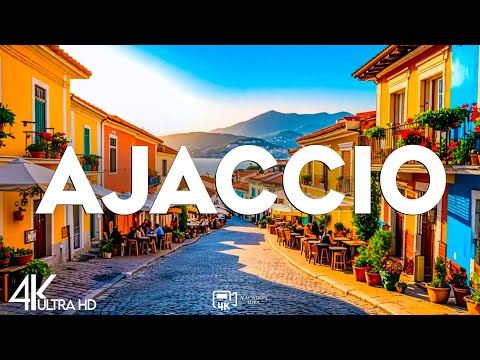
Top 10 Best Things to Do in Ajaccio, France [Ajaccio Travel …
Vacation Idea
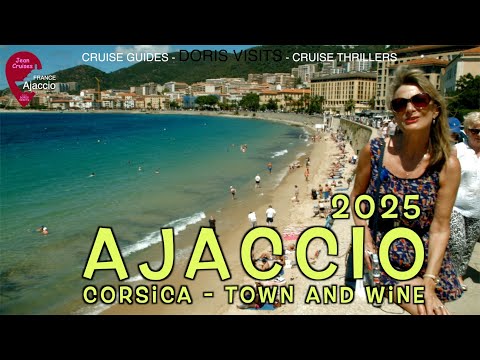
Ajaccio 2025 4K – Small but Charming – Town Guide and …
Cruise Doris Visits
You are currently viewing a placeholder content from Vimeo. To access the actual content, click the button below. Please note that doing so will share data with third-party providers.
More InformationYou are currently viewing a placeholder content from YouTube. To access the actual content, click the button below. Please note that doing so will share data with third-party providers.
More InformationYou need to load content from reCAPTCHA to submit the form. Please note that doing so will share data with third-party providers.
More InformationYou are currently viewing a placeholder content from GetYourGuide. To access the actual content, click the button below. Please note that doing so will share data with third-party providers.
More Information