
Cameroon: The Complete Travel Guide (2026)
Last reviewed: October 2026 · key facts checked against Wikidata
Cameroon Travel Guide: Everything You Need to Know (2026)
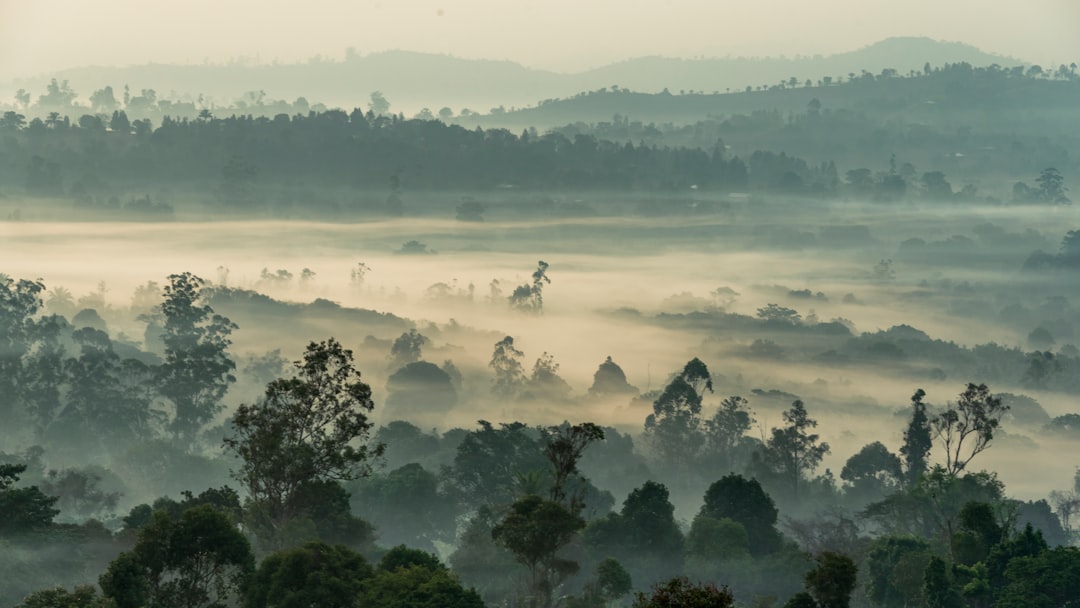
Cameroon is a Central African nation of 5,361,367 people often called ‘Africa in Miniature’ because its 475,442 km² encompass rainforest, savannah, desert, coast, and volcanic mountains — all within one border. Mount Cameroon, the country’s highest peak at 4,040 metres, is an active volcano that last erupted in 2012. French and English are both official languages, a colonial legacy that makes Cameroon unusually accessible for Anglophone travellers compared to its neighbours.
Top 3 Highlights at a Glance
- Mount Cameroon Trek — West Africa’s highest active volcano at 4,040m offers a 2-day summit climb with views across the Gulf of Guinea.
- Waza National Park — Cameroon’s premier wildlife reserve hosts lions, elephants, and giraffes across 1,700 km² of Sahelian floodplain.
- Dja Faunal Reserve — This UNESCO-listed rainforest shelters western lowland gorillas and is encircled by the Dja River for 90% of its boundary.
Scroll down for our complete travel guide with tips on getting there, where to stay, costs and more.
Getting There & Transport
Which airports are the best entry points into Cameroon?
Douala International Airport (DLA) is your primary entry point — full stop. It handles the overwhelming majority of international flights and sits inside Cameroon’s commercial capital. Yaoundé Nsimalen Airport (NSI) is the second option, serving the political capital about 25 km south of the city centre, with fewer intercontinental connections. In my experience, flying into Douala gives you far more airline options including Air France, Ethiopian Airlines, Turkish Airlines, and RwandAir. The honest caveat most guides skip: both airports have limited luggage handling infrastructure, so budget an extra 30-45 minutes for baggage claim even on smooth days.
How do I get from the airport to my first accommodation in Cameroon?
Take a pre-negotiated taxi from the official rank — this is the only safe option from Douala DLA. I recommend: agree on a price before you get in; the standard fare to the Akwa or Bonanjo hotel districts runs 5,000–8,000 CFA francs (roughly $8–13 USD). Ride-hailing apps like Yango now operate in Douala and can be cheaper and safer than street taxis — download it before you land. From Yaoundé NSI, the same Yango tip applies; the ride to Bastos or Centre-Ville costs approximately 3,000–5,000 CFA. Warning: unlicensed touts inside the terminal will quote triple the real price.
What transport options are there within Cameroon?
Your realistic options are intercity buses, shared bush taxis, domestic flights, and private car hire. Express Union and Garantie Express run comfortable coach services between major cities — Douala to Yaoundé costs around 3,000–4,000 CFA and takes 3.5 hours. Bush taxis (benskins for motorbikes, clando for shared saloons) fill the gaps to smaller towns. Camair-Co operates domestic flights between Douala, Yaoundé, Garoua, and Maroua, but schedules are unreliable — I’d only rely on it for the far north. My tip: for the Douala–Yaoundé corridor, the express bus is genuinely comfortable and far safer than the notoriously accident-prone road taxis.
Do I need a rental car in Cameroon?
For most of northern Cameroon and the Ring Road circuit, yes — a 4WD rental is essentially mandatory. In my experience, roads between Ngaoundéré and Maroua deteriorate badly in rainy season and a standard saloon will leave you stranded. Avis and Hertz operate from Douala DLA; expect to pay $80–140 USD per day for a 4WD with driver, which I strongly recommend over self-drive — navigating checkpoints and unmarked roads is genuinely complex. The honest trade-off: a driver adds cost but eliminates the stress of 30+ police checkpoints on routes north of Ngaoundéré, which can consume hours if you’re unfamiliar with the protocols.
How good is the public transport network between regions in Cameroon?
It covers the main corridors adequately but fails badly at regional penetration. The Douala–Yaoundé–Bafoussam triangle is well-served by competing bus companies running every hour. The Transcam railway connects Yaoundé to Ngaoundéré in the Adamawa Region — a 15-hour overnight journey costing around 15,000–20,000 CFA in second class, which I found atmospheric and worthwhile. What surprises most travellers: once you leave paved highways, transport becomes bush-taxi-only, frequency drops to once or twice daily, and journey times triple due to road conditions. The far north around Maroua is reachable by bus but border-region security advisories make independent travel inadvisable.
Accommodation
Which regions should I stay in when travelling Cameroon?
Base yourself in Douala for the coast and business access, Yaoundé for museums and central travel logistics, Limbe for beaches and Mount Cameroon access, and Bafoussam as your hub for the Western Highlands Ring Road. For wildlife, Maroua is the gateway to Waza National Park. I recommend the Western Highlands as the most rewarding region for first-timers — the scenery around Foumban and the Bamileke chieftaincies is extraordinary and genuinely undervisited. Honest caveat: the Northwest and Southwest Regions around Bamenda have experienced anglophone separatist conflict since 2017 — check current FCO/State Department advisories before including them in your itinerary.
What does good accommodation cost per night in Cameroon?
Budget guesthouses run $15–30 USD per night; mid-range hotels with air conditioning and reliable Wi-Fi cost $50–90 USD; international-standard hotels like Hilton Yaoundé or Douala’s Hotel Sawa charge $150–250 USD. In my experience, the mid-range category offers the best value — locally-owned hotels in Limbe and Kribi at the $50–70 range often include breakfast and are genuinely clean and well-run. The caveat most guides ignore: generator noise and power cuts are common even at $100+/night properties, so pack earplugs and a portable charger regardless of what you pay.
When should I book hotels in Cameroon — how far in advance?
Book Douala and Yaoundé hotels at least 3–4 weeks ahead year-round due to consistent business travel demand. For peak dry season — November through February — book 6–8 weeks ahead if you want quality mid-range options, especially in Kribi and Limbe which fill with domestic beach tourists over Christmas and New Year. What surprised me: Cameroon has almost no mainstream online booking infrastructure for guesthouses outside major cities — Booking.com coverage is thin. I recommend calling ahead directly or using a local travel agent like Cameroon Hike for anything in the Western Highlands or far north.
When is the best time to travel to Cameroon?
Travel in December, January, or February — these are the verified best months based on climate analysis. The country-wide dry season peaks during this window, roads are passable, wildlife concentrates around water sources in Waza, and Mount Cameroon is climbable. In my experience, January is the sweet spot: the harmattan dust haze hasn’t fully set in yet and temperatures in the north are tolerable at around 28–32°C rather than the brutal 40°C+ of April. The honest caveat: the far south and coastal rainforest around Kribi receives rain almost year-round, so ‘dry season’ is relative — expect occasional showers even in December.
How does peak season affect prices in Cameroon?
Peak season adds 20–40% to accommodation costs in beach destinations. Kribi and Limbe hotels raise rates sharply from mid-December through early January when Cameroonian urban families take holidays — a room that costs 30,000 CFA in October hits 45,000 CFA at Christmas. Safari camps near Waza are more stable in price but availability tightens dramatically in January–February when European overlanders and birdwatchers descend. My tip: domestic flights on Camair-Co don’t surge as dramatically as hotels because Cameroonians prefer buses, so flying north in peak season can actually save you time without the price shock. Book accommodation first, then flights.
Best Time to Visit
Which regions of Cameroon have different climate zones?
Cameroon has five distinct climate zones in one country. The southern rainforest zone (Dja Reserve, Sangha River) is hot and wet year-round, averaging 1,500–2,000 mm of annual rainfall. The coastal zone around Debundscha near Mount Cameroon receives up to 10,000 mm annually — one of the wettest places on Earth. The Western Highlands (Bamenda plateau) are cooler at 1,400–1,600m altitude with a clearly defined dry season. The Adamawa Plateau is temperate and pleasant most of the year. The Sahel and Lake Chad Basin around Maroua is arid, with temperatures exceeding 45°C in April. Plan your itinerary around these zones, not just calendar months.
What are the rainy seasons in Cameroon?
The south experiences two rainy seasons: a major one from mid-March to June and a shorter one from September to November. The north has one rainy season from June to September. The coastal belt around Limbe is wet from April to October with July and August being almost continuously rainy — 400–600 mm per month. What most guides understate: the rainforest road network in the East and South Regions becomes genuinely impassable during heavy rains even with a 4WD, cutting off destinations like Lobéké National Park entirely. I recommend treating June through September as off-limits for any road-heavy itinerary in the south.
What does a trip to Cameroon cost per person per day?
Budget travellers using guesthouses and bush taxis can manage $35–50 USD per day. Comfortable mid-range travel — decent hotel, restaurant meals, occasional taxi — costs $80–120 USD per day. A fully guided safari-and-highlands itinerary with a driver runs $150–250 USD per day. In my experience, food and local transport are genuinely cheap but accommodation quality is the budget wildcard — you pay a premium for reliable electricity and hot water. My tip: the biggest hidden cost is the guided access fees for national parks; entry to Waza costs 10,000 CFA ($16) plus mandatory guide fees of another 5,000–10,000 CFA, which adds up across a two-week itinerary.
How expensive is food in Cameroon?
Local food is excellent value. A full plate of ndolé (bitter leaf stew) with plantain and fish at a neighbourhood restaurant in Douala’s Akwa district costs 1,500–2,500 CFA ($2.50–4 USD). A mid-range restaurant meal with a beer runs 6,000–10,000 CFA. Supermarket-standard restaurants in Yaoundé’s Bastos quarter targeting expats charge 15,000–25,000 CFA for a main course. Street food like grilled brochettes and fried plantain costs 200–500 CFA per portion. What surprised me: fresh seafood in Kribi — grilled barracuda, lobster — is absurdly cheap by international standards, around 3,000–5,000 CFA for a whole grilled fish with sides. Don’t skip the local grilled fish shacks along the Kribi beach road.
What hidden costs should I expect in Cameroon?
Expect police checkpoint fees on northern routes — these are rarely official but a 500–1,000 CFA ‘facilitation payment’ is the practical reality that every overlander and driver knows but guidebooks sanitise. National park mandatory guide fees add 5,000–15,000 CFA per park visit. Visa-on-arrival processing at Douala DLA occasionally attracts unofficial ‘assistance’ fees of $10–20 from airport staff — politely decline and use the official counter. Yellow fever vaccination certificate is mandatory entry requirement — getting one last-minute abroad costs $30–80. In my experience, budget an extra $15–20 USD per day as a contingency for checkpoint realities, park fees, and the inevitable price negotiations for shared taxis.
Budget & Costs
How much cash should I bring to Cameroon?
Bring enough cash to cover your first 3 days entirely — I recommend arriving with at least $150–200 USD in CFA francs exchanged before landing or at the airport. The currency is West African CFA franc (XAF); $100 USD = approximately 61,000 CFA at current rates. ATMs in Douala and Yaoundé (Société Générale and Ecobank are most reliable) work with Visa but routinely fail — I’ve had machines reject foreign cards 3 times in a row before finding a working one. Outside major cities, cash is the only option — Kribi, Limbe, Bafoussam have ATMs but with lower reliability. Never rely on ATMs as your primary funding strategy here.
Which credit cards are accepted in Cameroon?
Visa is accepted at upmarket hotels and large supermarkets in Douala and Yaoundé — that’s essentially the full extent of card infrastructure. Mastercard has even less penetration. American Express is functionally useless outside the Hilton Yaoundé. In my experience, 95% of all transactions in Cameroon are cash-based — markets, restaurants, taxis, guesthouses, park fees, and transport all require CFA. The honest trade-off: Orange Money and MTN Mobile Money are widely used for local-to-local transfers and some vendors accept them, but as a tourist without a Cameroonian SIM linked to a local account, you cannot use them. Carry CFA cash in small denominations; 10,000 CFA notes are often refused at markets because change is scarce.
Which regions of Cameroon must I not miss?
The Western Highlands Ring Road circuit is non-negotiable — the volcanic crater lakes, Bamileke palaces, and highland scenery around Lake Barombi Mbo and Foumban’s Sultan’s Palace are unlike anything else in West/Central Africa. The Littoral coast between Kribi and Limbe offers Atlantic beach access with the surreal backdrop of Mount Cameroon. The far north Sahel zone around Maroua and Waza National Park completes the ‘Africa in Miniature’ experience with a completely different landscape and culture. My honest caveat: the East Region rainforest hosting the Baka pygmy communities is extraordinary but requires a minimum 5 extra days and a specialised guide — don’t tack it onto a short itinerary.
What are the tourist highlights of Cameroon?
Mount Cameroon (4,040m, West Africa’s highest active volcano) is the headline adventure. Waza National Park offers lion, elephant, and giraffe sightings in the Sahel. Dja Faunal Reserve is a UNESCO World Heritage Site with western lowland gorillas. Foumban’s Royal Palace Museum is the finest example of Bamoun architecture in the continent. Kribi’s beaches with adjacent Lobe Waterfalls — the only place in Africa where a major river falls directly into the Atlantic — are spectacular. In my experience, the Lobe Falls alone justify the coastal detour: you can kayak under the waterfall into the ocean, an experience I’ve found nowhere else in 10 years of African travel.
What experiences in Cameroon are found nowhere else on Earth?
Three experiences are genuinely unique. First: the Lobe Waterfalls at Kribi — the only point on the African continent where a river cascades directly into the Atlantic Ocean. Second: climbing Mount Cameroon and witnessing its active lava fields within 25 km of the Gulf of Guinea coastline — the proximity of volcano and ocean is extraordinary. Third: the Ngondo Festival on the Wouri River in December, a Sawa people ceremony where the community communicates with ancestors through water — it is not staged for tourists and access requires local connections. In my experience, the Ngondo is one of the most authentically spiritual public ceremonies I’ve witnessed anywhere in Africa.
Regions & Highlights
Which areas of Cameroon are overcrowded — and what are the quieter alternatives?
Kribi beach is genuinely overcrowded on December–January weekends when Douala families arrive en masse — parking lots overflow and beach space is packed. The quiet alternative is Londji village, just 18 km south of Kribi, where the beach is pristine, local pirogues launch at dawn, and tourist infrastructure is almost zero. Waza National Park sees the bulk of northern safari visitors — instead, consider Benoué National Park near Ngaoundéré, which has excellent lion and buffalo sightings and receives a fraction of the visitors. For the Ring Road, Bafoussam as a base gets busy — Dschang offers a calmer alternative with its own crater lake and a functioning university town atmosphere.
How many days do I need for Cameroon?
Minimum 10 days to cover three distinct zones meaningfully. My recommended structure: 3 days on the coast (Douala, Limbe, Kribi); 3 days in the Western Highlands (Bafoussam, Foumban, Ring Road); 4 days in the far north (Maroua, Waza). Add 2 days if you want to climb Mount Cameroon — the summit trek is a 2-day commitment minimum from Buea. Add 5 days if you’re targeting the East Region rainforest for gorilla tracking near Lomié. In my experience, travellers who rush Cameroon into 7 days leave frustrated — the road distances and transport reliability mean you need buffer days built into every regional transition.
Do I need a visa for Cameroon?
Most nationalities require a visa — apply before you travel. Citizens of ECOWAS member states are exempt. US, UK, EU, and Australian passport holders all need a visa. In my experience, applying through the Cameroon e-Visa portal (available online) is the most reliable route — processing takes 5–10 business days and costs approximately $80–100 USD for a single-entry 30-day visa. Visa-on-arrival technically exists at Douala DLA but is inconsistently granted and processing can take 2–3 hours — do not count on it. Yellow fever vaccination certificate is mandatory regardless of visa type; carry the physical Carnet de Vaccination card.
What languages are spoken in Cameroon?
French and English are both official languages, but French dominates — approximately 80% of the population lives in French-speaking regions. The Northwest and Southwest Regions are officially anglophone, making Bamenda, Limbe, and Buea comfortable for English-only speakers. In Douala and Yaoundé, English gets you through hotels and upmarket restaurants but French is essential for markets, transport negotiations, and rural areas. In my experience, learning 20 key French phrases transforms your trip — particularly for police checkpoints and taxi haggling north of Yaoundé. Cameroonian Pidgin English (Kamtok) is widely understood in the south and coast — simpler than standard English and worth a few phrases.
What cultural rules do I need to know before visiting Cameroon?
Greet before any transaction or request — skipping the greeting is considered rude and will actively slow down your service. A handshake plus ‘Bonjour/Good morning’ and ‘comment ça va?’ is the minimum for any interaction. In the Muslim far north around Maroua, dress conservatively — shoulders and knees covered for both men and women in the medina and mosques. Never photograph people, military installations, or government buildings without explicit permission — I’ve seen cameras confiscated at Douala port for casual photography. In traditional Bamileke chieftaincy compounds, remove shoes before entering reception halls and accept any offered kola nut as a sign of respect even if you don’t eat it.
Practical Tips
How safe is Cameroon for travellers?
Cameroon requires zone-specific safety assessment — it is not uniformly safe. The Northwest and Southwest Regions (anglophone zone including Bamenda) have been under armed conflict since 2017 — UK FCO and US State Department advise against all travel there. The Far North Region border areas with Nigeria and Lake Chad carry kidnapping risk from Boko Haram activity — stay within Maroua city and Waza Park only with guided groups. Douala, Yaoundé, Kribi, Limbe, Western Highlands, and Adamawa are manageable with standard urban precautions. In my experience, the biggest practical risk in Douala is opportunistic phone theft in markets — use a cheap secondary phone and keep your passport in the hotel safe.
What health precautions should I take before visiting Cameroon?
Yellow fever vaccination is mandatory — carry your physical Carnet card or you will be denied entry. Malaria prophylaxis is essential throughout Cameroon; I use doxycycline daily and recommend starting 2 days before arrival. Hepatitis A and B, typhoid, and meningococcal vaccines are strongly recommended — consult a travel clinic 6 weeks before departure. Tap water is not safe anywhere in Cameroon — drink only sealed bottled water or Sawyer-filtered water. In my experience, the main health issue travellers underestimate is gastric illness from street food hygiene — stick to freshly grilled items you can see cooked and peel all fruit yourself. The nearest high-standard medical facility to most tourist areas is the Yaoundé Central Hospital, though medical evacuation insurance is essential.
What SIM card or eSIM options are available in Cameroon?
Buy an MTN or Orange Cameroon SIM at Douala DLA airport immediately on arrival — both have kiosks in the arrivals hall. A SIM costs 1,000 CFA and a 5 GB data bundle runs approximately 3,000–5,000 CFA. MTN has better coverage in the north toward Maroua; Orange edges ahead in coastal and Yaoundé coverage. In my experience, mobile data is the only reliable internet — hotel Wi-Fi is consistently slow or absent outside 4-star properties. eSIM options: Airalo and Holafly both offer Cameroon data eSIMs at roughly $15 for 3 GB — useful as a backup but no local number for WhatsApp communication with hotels and drivers, which is essential logistics in Cameroon.
Which apps do you recommend for travelling in Cameroon?
Yango (ride-hailing, essential in Douala and Yaoundé) is my top recommendation — it shows fixed fares and eliminates taxi haggling. WhatsApp is non-negotiable — every hotel, guide, and driver communicates via WhatsApp voice notes rather than calls. Maps.me with offline Cameroon maps downloaded before arrival covers roads that Google Maps misses, particularly the Ring Road circuit. XE Currency for live CFA conversion. Google Translate with French downloaded offline for checkpoint and market interactions. What most guides omit: download Orange Money or MTN Mobile Money app even if you can’t fund it as a tourist — showing a driver you have it occasionally unlocks digital-payment options. Also: the Camair-Co app is non-functional; book domestic flights via their website only.
What are the most common traveller mistakes in Cameroon?
Underestimating road travel times is the single biggest mistake — Google Maps shows Yaoundé to Maroua as 12 hours; the real time is 18–22 hours with checkpoints and road conditions. Second: visiting the Northwest or Southwest regions without checking security advisories updated within 48 hours of travel — the situation evolves weekly. Third: not bringing sufficient small CFA note denominations — a 10,000 CFA note will cause problems at markets and in taxis. Fourth: booking accommodation with no confirmation call — I recommend calling the hotel the day before via WhatsApp. Fifth: skipping travel insurance with medical evacuation cover — the nearest facility capable of treating serious trauma is often hours away, and evacuation to South Africa or Europe costs $30,000–80,000 USD without cover.
Cameroon at a Glance
| Population | 28,372,687 |
|---|---|
| Currency | Central African CFA franc (XAF) |
| Official language | French, English |
| Time zone | West Africa Time |
Source: Wikidata, retrieved October 2026.
Essential Resources for Planning Your Trip to Cameroon
- Cameroon 🇨🇲 Is One Of Africa’s Best Tourism Destination … — official visitor information, passes & events
- Wikipedia: Cameroon — history, geography & background
- Wikivoyage: Cameroon — community travel guide & practical tips
- Cameroon travel – Africa — expert itineraries & travel inspiration
- THE 15 BEST Things to Do in Cameroon (2026) — hotels, restaurants & traveller reviews
- Cameroon — Transportation — how to get around
- Numbeo: Cost of Living in Cameroon — current prices & cost comparison
- Timeanddate: Cameroon Weather & Climate — forecasts & climate statistics
- UNESCO promotes sustainable tourism and community …
More Perspectives on Cameroon
- Cameroon Tour Guide: Best Places, Costs & Travel Tips
- Cameroon travel guide – Responsible Travel
- Essential Travel Tips to Cameroon! – Andy Roams
Cameroon Travel Videos
Watch these videos for a visual preview before your trip:
- WONDERS OF CAMEROON – 16 Best Places to Visit in Cameroon | Cameroon Travel Guide.
- The Most Amazing Places in CAMEROON 🇨🇲: Top Destinations You Must Visit (Cameroon Travel Guide)
- Top 10 Places to visit in Cameroon 🇨🇲 – 4k Travel Video
Cameroon Travel Discussions on Reddit
Real traveller experiences and community advice:
- American traveling to Cameroon🇺🇸 Need some advice …
- Advice for Tourist : r/Cameroon
- Advice in travelling to Cameroon
Data Sources
This page was compiled using data from Wikipedia, Wikidata, Open-Meteo (climate), Numbeo (cost of living) and REST Countries. Information is updated regularly.