
Ethiopia: The Complete Travel Guide (2026)
Last reviewed: August 2026 · key facts checked against Wikidata
Ethiopia Travel Guide: Everything You Need to Know (2026)
Ethiopia, home to 22,151,218 people, is one of the world’s oldest civilizations — the Aksumite Empire dates back over 2,000 years and the country was never colonized. Sitting at an average altitude of 1,800 meters above sea level, Addis Ababa is one of Africa’s highest capitals. With 9 UNESCO World Heritage Sites and a calendar that runs 7-8 years behind the Gregorian one, Ethiopia is genuinely unlike anywhere else on Earth.
Top 3 Highlights at a Glance
- Lalibela Rock-Hewn Churches — 11 medieval churches carved entirely from solid rock in the 12th century, still used for active Orthodox Christian worship daily.
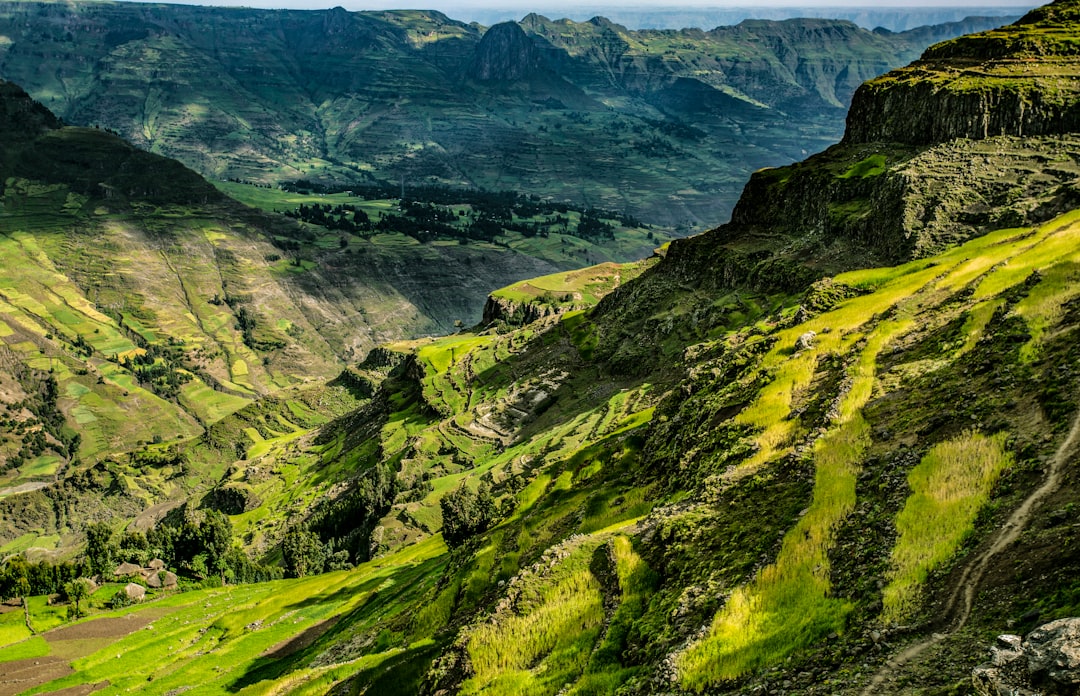
- Simien Mountains National Park — UNESCO-listed highland plateau reaching 4,550 meters, home to the endemic Gelada baboon found nowhere else on Earth.
- Danakil Depression — The hottest permanently inhabited place on Earth at -116 meters elevation, featuring neon-yellow sulfur fields and active lava lakes.
Scroll down for our complete travel guide with tips on getting there, where to stay, costs and more.
Getting There & Transport
Which airports are the best entry points into Ethiopia?
Addis Ababa Bole International Airport (ADD) is overwhelmingly your best entry point — full stop. It handles 95% of all international arrivals and is the Ethiopian Airlines hub, offering direct connections from 60+ countries. In my experience, flying Ethiopian Airlines into ADD is often cheaper than routing through Dubai or Doha, sometimes by $150-300 round-trip from Europe. Dire Dawa Airport (DIR) exists as a secondary entry for eastern Ethiopia, but international connections are extremely limited. My tip: ADD’s new Terminal 2, opened in 2019, is genuinely impressive for Africa — immigration queues move faster early morning arrivals before 6:00 AM. Warning most guides omit: Ethiopian Airlines frequently oversells connecting flights, so reconfirm domestic legs within 48 hours of arrival.
How do I get from Addis Ababa airport to my first accommodation?
Take a pre-booked hotel transfer or a metered taxi — it is the safest and most reliable option. Bole International Airport sits only 6 km from the Bole neighborhood, where most mid-range hotels cluster. A legitimate metered taxi costs roughly 150-250 ETB (about $2.50-4.00 USD) to central Bole, but negotiate firmly before entering — unmetered touts at arrivals will quote $20+. In my experience, the Ride app (Ethiopia’s equivalent of Uber) works directly from the arrivals hall and costs 80-120 ETB with transparent pricing. What surprised me: there is no direct airport train or metro link as of 2026. The Addis Ababa Light Rail technically has a nearby stop at Ayat, but it requires a 20-minute walk from the terminal with luggage — impractical.
What transport options are there within Ethiopia?
Ethiopian Airlines dominates domestic travel — book domestic flights first, everything else second. The domestic network connects 18 cities including Lalibela, Gondar, Axum, Mekelle, and Dire Dawa, with one-way fares from $50-120 USD booked in advance. Long-distance buses operated by Selam Bus and Sky Bus are reliable for routes like Addis Ababa to Hawassa (275 km, 4 hours) and cost under $5 USD. I recommend avoiding public minibuses (shared taxis) for intercity travel unless you speak Amharic — they have no fixed schedules. The Addis Ababa-Djibouti railway is operational but slow and unreliable for tourists. Honest caveat: road conditions outside major highways deteriorate sharply in the June-September rainy season, adding hours to journey times.
Do I need a rental car in Ethiopia?
For most itineraries, no — fly domestically and hire a driver locally. Renting and self-driving in Ethiopia is genuinely risky: road signage is minimal, livestock crossings are constant, and traffic rules in cities like Addis Ababa are loosely enforced. If you need ground transport between sights, hire a driver through your hotel or a licensed agency for $60-100 USD per day including fuel. In my experience, this is the single best travel investment in Ethiopia — a good local driver doubles as guide, translator, and problem-solver. The exception: the Omo Valley in southern Ethiopia genuinely requires a 4WD vehicle and an experienced local operator, as roads flood entirely between June and September. International licenses are technically required but rarely checked.
How good is the public transport network between regions of Ethiopia?
Ethiopian Airlines’ domestic network is excellent — ground-based public transport is patchy. Flights connect the major heritage circuit (Lalibela, Gondar, Axum) efficiently. For ground routes, Selam Bus covers the Addis Ababa to Bahir Dar route (565 km) in roughly 10 hours for under $8 USD — the bus is air-conditioned and punctual. What surprises most travelers: the Addis Ababa Light Rail covers 34 km within the capital across two lines and costs under $0.30 USD per ride — genuinely useful for getting between Merkato and Bole. My warning: outside the main northern circuit, public transport to destinations like Harar or the Danakil Depression is not practical for independent travelers without significant time, Amharic, and patience.
Accommodation
Which regions of Ethiopia should I stay in?
Stay in Addis Ababa (Bole area), Lalibela, and Gondar as your three anchors. The Bole neighborhood in Addis offers the best mid-range hotels, restaurants, and transport links. Lalibela has basic but characterful guesthouses within 1 km of the rock churches — staying close saves crucial early-morning access before tour groups arrive. Gondar is your base for the Simien Mountains, with comfortable hotels in the town center around Fasilides Castle. For southern Ethiopia, Arba Minch is the gateway to the Omo Valley and Nechisar National Park. In my experience, Harar in the east is the most underrated overnight stop in the country — the old walled city (Jugol) is a genuine living medieval town. Avoid basing yourself in Dire Dawa unless connecting.
What does good accommodation cost per night in Ethiopia?
Budget guesthouses run $10-20 USD, solid mid-range hotels $40-80 USD, and top-end lodges $120-250 USD. In Addis Ababa, the Jupiter International Hotel in Bole charges around $80-100 USD per night and represents genuine value — pool, reliable WiFi, and good security. In Lalibela, decent accommodation like Ben Abeba costs $40-60 USD and includes a memorable clifftop setting. The real premium is in the Danakil Depression where all-inclusive expedition camps charge $150-200 USD per night — unavoidable, as the area has no independent infrastructure. What surprises most visitors: five-star standards are largely absent outside Addis Ababa. My tip: negotiate directly with guesthouses outside peak season (outside January and September) for 20-30% discounts.
When should I book hotels in Ethiopia — how far in advance?
Book Lalibela accommodation at least 3 months ahead for January — Ethiopian Christmas (Genna) falls on January 7th. This is not an exaggeration: every guesthouse within 5 km of the rock churches sells out for the January 6-8 period, and prices double. For the Timkat festival in Gondar (mid-January), 6-8 weeks advance booking is sensible. For shoulder months like April, May, or October, booking 2-3 weeks ahead is usually sufficient outside Lalibela. In my experience, Addis Ababa hotels rarely sell out except during African Union summits (typically January or February), when even the Hilton on Menelik II Avenue charges surge rates. My honest caveat: many smaller guesthouses do not appear on Booking.com — email directly using contact details from TripAdvisor.
When is the best time to travel to Ethiopia?
October, November, April, and May are the best months — dry, green, and not peak-crowded. October and November immediately follow the main rainy season (Kiremt, June-September), so landscapes are extraordinarily lush and green while roads are dry and passable. The Omo Valley tribal ceremonies concentrate in September and October, making this the prime window for cultural travelers. April and May offer perfect Simien Mountains trekking conditions with stable temperatures of 15-20°C at altitude. In my experience, January is spectacular for Orthodox Christian festivals but draws the largest crowds. What surprises most visitors: December is genuinely pleasant — dry, clear skies, and 15-20% cheaper than January. Avoid July and August for the Lalibela circuit if road travel is involved.
How does peak season affect prices in Ethiopia?
Prices in Lalibela spike by 50-100% during Ethiopian Christmas (January 7th) and Timkat (January 19th). Outside these specific festival dates, Ethiopia does not operate on dramatic Western-style peak/off-peak pricing — the difference is more about availability than cost. Addis Ababa hotels are the exception: corporate and AU summit demand drives prices year-round unpredictably. Tour operators running Danakil Depression expeditions charge a flat $200-300 USD per person regardless of season. In my experience, the least crowded and often cheapest window is April to early June — between the Orthodox Easter period and the start of the rains. My honest warning: festival crowds at Lalibela genuinely affect the spiritual atmosphere — if you want quiet access to the churches, come in October or November.
Best Time to Visit
Which regions of Ethiopia have different climate zones?
Ethiopia has three distinct zones: the cool highlands, the hot lowlands, and the extreme Danakil. The central and northern highlands (Addis Ababa, Gondar, Lalibela) sit above 2,000 meters and stay at 15-25°C year-round — genuinely pleasant. The western lowlands bordering South Sudan are tropical and humid, exceeding 35°C in dry season and largely inaccessible. The eastern Afar region and Danakil Depression are extreme: average annual temperatures exceed 34°C and the depression itself, at -116 meters, regularly hits 50°C in summer. The Omo Valley in the south is semi-arid, hot (30-38°C) but more manageable. In my experience, altitude variation within a single day trip from Addis Ababa — say, descending to the Awash Valley — is a jarring 20°C temperature swing.
What are the rainy seasons in Ethiopia?
**Ethiopia has two rainy seasons: the short rains (Belg) in March-April and the long rains (Kiremt) from June to September. The Kiremt season is the one that genuinely affects travel — roads to Lalibela become impassable by 4WD, the Simien Mountains trails turn muddy and dangerous, and the Omo Valley** floods cut off villages entirely. The Belg rains (March-April) are lighter, usually falling as afternoon showers rather than all-day downpours, and rarely disrupt travel. In my experience, August is the worst month for ground travel in northern Ethiopia — avoid planning road-dependent itineraries. What surprises visitors: the Danakil Depression receives under 200mm of rain annually and is accessible almost year-round — the limiting factor is heat, not rain. Always check road conditions through your tour operator before any overland leg.
What does a trip to Ethiopia cost per person per day?
Budget travelers spend $35-50 USD per day; mid-range travelers $80-130 USD; Danakil expeditions add a flat $200-300 USD. A realistic mid-range daily budget covers a guesthouse at $50 USD (e.g., in Lalibela), meals at local restaurants for $15-20 USD total, a hired driver for shared cost of $20-30 USD, and entry fees averaging $10 USD. The Historic Northern Circuit (Lalibela, Gondar, Axum, Bahir Dar) costs roughly $700-1,000 USD per person for 8 days excluding international flights, including domestic air. My honest caveat: solo travel in Ethiopia is notably more expensive than group travel because driver and vehicle costs cannot be split. In my experience, traveling with one other person cuts your daily ground transport cost by nearly 50%.
How expensive is food in Ethiopia?
Food in Ethiopia is among the cheapest in Africa — a full local meal costs $1-3 USD. A plate of injera (the spongy sourdough flatbread that underpins every meal) loaded with tibs (spiced beef) or shiro (chickpea stew) at a local restaurant in Merkato or Piazza neighborhoods of Addis costs 20-50 ETB ($0.35-0.90 USD). A coffee ceremony — genuinely the world’s finest coffee, given Ethiopia is its birthplace — costs 15-30 ETB ($0.25-0.50 USD) and is an experience, not just a drink. Tourist-facing restaurants in Bole charge $5-12 USD per main, which is still cheap by global standards. My tip: eat at least one meal at Yod Abyssinia in Addis for the full cultural dinner-and-dance experience for around $15 USD — it is touristy but genuinely well-executed.
What hidden costs should I expect when traveling in Ethiopia?
Mandatory armed scouts in the Simien Mountains and Danakil add $10-20 USD per day to your budget. Government-required scout fees are non-negotiable and rarely mentioned upfront in tour quotes. Church entrance fees in Lalibela have risen sharply: the combined Lalibela church ticket now costs $50 USD per person — significant and not mentioned on most travel blogs written before 2022. Photography permits in some sites add another $5-10 USD. In my experience, tipping culture in Ethiopia is strong: guides expect $10-15 USD per day, drivers $5-10 USD per day. SIM card and data costs are genuinely cheap ($3-5 USD for 10GB), but visa on arrival at ADD costs $52 USD if not pre-arranged online. What surprises visitors: porters in the Simien Mountains charge $8-12 USD per day and are culturally expected, not optional.
Budget & Costs
How much cash should I bring to Ethiopia?
Bring $300-500 USD in cash and plan to exchange to Ethiopian Birr (ETB) on arrival. ATMs in Addis Ababa (particularly at Commercial Bank of Ethiopia branches in Bole) work reliably with Visa and Mastercard, but outside the capital, ATMs are scarce and frequently empty. In Lalibela, there is exactly 1 functional ATM — I have personally seen it out of service for 3 consecutive days. Exchange USD at the airport or at Dashen Bank in Addis for competitive rates. My honest warning: as of 2025, Ethiopia has a parallel exchange rate — the official bank rate may differ from street rates, and using unofficial exchange is illegal and risky. Carry small USD denominations ($1, $5, $10) as backup since large notes are harder to break in rural towns.
Which credit cards are accepted in Ethiopia?
Visa is accepted at major Addis Ababa hotels and supermarkets — Mastercard less reliably, Amex almost nowhere. Card acceptance is limited almost entirely to Addis Ababa: the Edna Mall, Sheraton Addis, and Bole International Airport duty-free accept Visa. Outside the capital, assume 100% cash economy. Lalibela, Gondar, Axum, and Harar are almost entirely cash-only as of 2026. In my experience, even hotels that list card acceptance sometimes have broken terminals — always carry enough ETB for a full day’s spend. My tip: withdraw a 3-4 day cash float at Addis Ababa before any domestic flight, because replenishing cash in highland towns is genuinely unreliable. Notify your bank before travel — Ethiopian transactions frequently trigger fraud alerts and card blocks.
Which regions of Ethiopia must I not miss?
The Historic Northern Circuit and the Omo Valley are non-negotiable — everything else is a bonus. The Northern Circuit links Lalibela (rock churches), Gondar (castles and Simien trekking base), Axum (ancient obelisks and supposed Ark of the Covenant), and Bahir Dar (Lake Tana monasteries, Blue Nile Falls). This circuit alone justifies the entire trip. The Omo Valley in the south is one of the last places on Earth where tribal communities like the Mursi, Hamar, and Karo maintain traditional ways of life. In my experience, Harar — Ethiopia’s fourth-holiest Islamic city with a walled old town listed as UNESCO — is criminally undervisited and pairs perfectly with the Danakil. My honest caveat: the Tigray region around Axum requires checking current safety advisories as of 2026 due to ongoing post-conflict sensitivities.
What are the tourist highlights of Ethiopia?
The rock-hewn churches of Lalibela are Ethiopia’s single greatest sight — arrive at dawn before tour groups. Built in the 12th century under King Lalibela, the 11 churches are carved entirely from living volcanic rock and remain active places of worship. The Simien Mountains offer world-class trekking at altitudes up to 4,550 meters with Gelada baboon encounters along the trail. The Danakil Depression — the hottest place on Earth — features the Dallol sulfur fields, a surreal alien landscape of yellow, green, and orange mineral formations. Fasil Ghebbi (Royal Enclosure) in Gondar contains 6 castles built between the 16th and 17th centuries. In my experience, the Hamar bull-jumping ceremony in the Omo Valley — a male coming-of-age ritual — is the most viscerally memorable cultural experience I have had anywhere in Africa.
What experiences in Ethiopia are found nowhere else on Earth?
**Three experiences are genuinely unreplicable: a Lalibela Christmas dawn service, a Danakil lava lake night, and a Hamar ceremony. At Lalibela on January 7th, thousands of white-robed pilgrims fill the rock-hewn courtyards at 4:00 AM for Ethiopian Orthodox Christmas — it is among the most spiritually overwhelming scenes I have witnessed anywhere. The Erta Ale volcano in the Danakil hosts one of Earth’s only permanent lava lakes, visible on overnight treks arriving by 2:00 AM**. The Ethiopian coffee ceremony — performed three times daily in homes across the country, with fresh-roasted beans ground by hand — is the origin of global coffee culture. What surprises visitors: Ethiopia uses its own calendar (13 months) and clock system (6 hours offset from international time) — genuinely disorienting and fascinating in equal measure.
Regions & Highlights
Which areas of Ethiopia are overcrowded — and what are the quieter alternatives?
Lalibela is heavily overcrowded in January — visit the rock churches in October or November instead. The main Bete Medhane Alem church can have 200+ tourists simultaneously during January peak. In October, I walked through the same church complex with fewer than 20 visitors. For an alternative to the Northern Circuit crowds, the Tigray rock churches (Abuna Yemata Guh requires a 15-minute cliff climb) are architecturally comparable to Lalibela but see a fraction of the visitors. The Bale Mountains in southeastern Ethiopia offer better big-cat sightings (Ethiopian wolf, the world’s rarest canid) than the more famous Simien range, with 80% fewer trekkers. My tip: Harar’s Jugol walled city is the most overlooked major site in the country — the hyena-feeding ceremony at the Harar Hyena Men compound draws only small groups.
How many days do I need in Ethiopia?
Minimum 10 days for the Northern Circuit; 14-16 days to add the Omo Valley or Danakil. A tight 10-day itinerary covers Addis Ababa (2 days), Lalibela (2 days), Gondar (2 days) including a Simien day hike, Axum (1 day), and Bahir Dar (2 days) with Blue Nile Falls, returning to Addis. Adding the Danakil Depression requires a minimum 3-day expedition from Mekelle. The Omo Valley needs at least 4-5 days to reach the deep south and witness ceremonies. In my experience, travelers who allocate only 7 days rush the Northern Circuit and leave frustrated. What surprises most visitors: domestic flight connections are not always daily — Axum, for example, has flights only 3-4 times per week, so build buffer days. I recommend 14 days as the sweet spot for first-time visitors.
Do I need a visa for Ethiopia?
Most nationalities need a visa — apply online via the e-visa portal before arrival. The Ethiopian e-visa costs $52 USD for a single-entry 30-day visa and is processed in 3-5 business days at evisa.gov.et. On-arrival visas are available at Addis Ababa Bole Airport for $52 USD but queues can take 60-90 minutes — the e-visa lane is dramatically faster. Citizens of Kenya, Djibouti, and several other African Union nations enter visa-free. In my experience, the e-visa system works reliably but occasionally crashes — apply 2 weeks before departure as a buffer. My honest warning: as of 2026, Israeli passport holders face entry complications due to diplomatic tensions — verify current status before booking. Extensions beyond 30 days are handled at the Immigration Office on CMC Road, Addis Ababa.
What languages are spoken in Ethiopia?
Amharic is the official language — English is widely spoken in Addis Ababa and tourist sites. Ethiopia has over 80 languages across ethnic groups: Oromo (Afaan Oromo) is actually spoken by the largest population group, and Tigrinya dominates the north. In Lalibela, Gondar, and Axum, English-speaking guides are plentiful and high quality. In rural Omo Valley communities, your guide is non-negotiable — local tribal languages like Mursi and Hamar have no English overlap whatsoever. In my experience, learning 5 Amharic phrases — especially ‘ameseginalehugn’ (thank you) and ‘selam’ (hello) — generates extraordinary warmth from locals. What surprises visitors: educated Ethiopians often speak 3-4 languages including Italian (colonial-era legacy) and Arabic in border regions. Menus in tourist towns are reliably bilingual.
What cultural rules do I need to know before visiting Ethiopia?
Remove shoes before entering any Orthodox church or mosque — this is non-negotiable and will be enforced. Women should carry a headscarf (widely sold for $1-2 USD near church entrances) and cover shoulders and knees at religious sites. In the Omo Valley, asking permission before photographing tribal individuals is both respectful and required — a tip of 10-20 ETB per photo is standard and appreciated. Ethiopia’s Orthodox Christian calendar means fasting days on Wednesdays and Fridays when meat disappears from most local menus — plan accordingly. In my experience, accepting coffee or food offered by locals is a genuine act of friendship — refusing without explanation is considered rude. My honest warning: the Timkat festival crowds include pickpockets targeting tourists — use a money belt and leave valuables at the hotel.
Practical Tips
How safe is Ethiopia for travelers?
The main tourist circuit is safe — the Tigray and Afar border regions require current advisory checks. The Historic Northern Circuit (Addis Ababa, Lalibela, Gondar, Bahir Dar) has a strong track record and I have traveled it without incident multiple times. Addis Ababa’s Bole neighborhood feels as safe as any African capital at night; Merkato (the largest open-air market in Africa) warrants heightened bag awareness. As of 2026, the Tigray region is post-conflict but sensitive — check your government’s travel advisory within 1 week of departure. The Somali region and Benishangul-Gumuz are genuinely high-risk and off-limits for independent travel. My honest warning: the Danakil Depression requires licensed operators and mandatory armed escorts — this is not bureaucracy, it is a genuine security measure in a contested border zone.
What health precautions should I take before visiting Ethiopia?
Yellow fever vaccination is mandatory if arriving from a yellow fever endemic country — carry your certificate. Recommended vaccinations include hepatitis A, typhoid, and rabies (given proximity to stray dogs in Addis). Malaria prophylaxis is essential below 2,000 meters — the highlands are generally safe, but the Omo Valley, Gambela, and Danakil require medication. Start prophylaxis 1-2 weeks before departure; consult your doctor about Malarone vs. Doxycycline. Altitude sickness is a real risk in the Simien Mountains above 3,600 meters — ascend slowly and carry Diamox if prone to AMS. In my experience, stomach issues from food and water are the most common traveler complaint — drink only bottled water (widely available for $0.50 USD per 1.5L) and avoid raw salads outside quality Addis restaurants. Travel insurance covering medical evacuation is non-negotiable in Ethiopia.
What SIM card or eSIM options are available in Ethiopia?
Ethio Telecom is the only domestic provider — buy a SIM at the airport kiosk immediately after customs. Ethiopia has a state telecom monopoly: Ethio Telecom is your only domestic option. A tourist SIM with 10GB data costs approximately 200-300 ETB ($3.50-5 USD) and can be purchased at the Ethio Telecom desk inside Bole Airport arrivals hall — bring your passport. 4G coverage is reliable in Addis Ababa and major towns; Lalibela, Gondar, and Axum have 3G-4G. In my experience, coverage drops completely in the Danakil Depression and deep Omo Valley — download offline maps (Maps.me with Ethiopia loaded) before leaving Addis. International eSIMs (Airalo, Holafly) now offer Ethiopia coverage as a backup option for about $12 USD per 5GB, useful if the Ethio Telecom desk has a queue. Top-up credit is sold at roadside kiosks nationwide.
Which apps do you recommend for traveling in Ethiopia?
Download Ride, Maps.me, and Google Translate with Amharic offline before landing in Addis. The Ride app is Ethiopia’s dominant ride-hailing platform — significantly safer and cheaper than hailing street taxis in Addis Ababa, with fares averaging 80-150 ETB ($1.40-2.60 USD). Maps.me with the Ethiopia map downloaded offline is critical — Google Maps has poor coverage outside Addis. Google Translate with the Amharic offline pack handles menus, signs, and basic communication in rural areas. In my experience, WhatsApp is the universal communication tool for coordinating with guides and hotels — nearly every guesthouse owner uses it. XE Currency helps track the USD/ETB rate daily given periodic fluctuations. My honest caveat: the Ethio Telecom app for managing your SIM credit is glitchy — buy physical top-up scratch cards from roadside vendors instead.
What are the most common traveller mistakes in Ethiopia?
The biggest mistake is underestimating how long domestic travel actually takes — double every estimated journey time. A flight listed as 1 hour 10 minutes from Addis to Lalibela becomes a half-day with airport check-in, delays, and ground transfer. Travelers frequently skip Axum due to time pressure — this is a mistake, as the Aksumite obelisks and St. Mary of Zion church (alleged home of the Ark of the Covenant) are among Africa’s most extraordinary sites. In my experience, booking a Danakil tour through the cheapest operator is a false economy — safety standards vary enormously and the temperature makes equipment failures life-threatening. My honest warning: photographing military installations, government buildings, or people without permission can result in camera confiscation or detention — ask before pointing any lens. Finally, ignoring the Ethiopian time system (clocks start at 6:00 AM = hour 1) causes missed connections constantly.
Ethiopia at a Glance
| Population | 128,691,692 |
|---|---|
| Currency | bir (Br) |
| Official language | Amharic |
| Time zone | UTC+03:00 |
Source: Wikidata, retrieved August 2026.
Essential Resources for Planning Your Trip to Ethiopia
- Ethiopian Resumes Flights to Axum a UNESCO World … — official visitor information, passes & events
- Wikipedia: Ethiopia — history, geography & background
- Wikivoyage: Ethiopia — community travel guide & practical tips
- Ethiopia travel – Africa — expert itineraries & travel inspiration
- THE 15 BEST Things to Do in Ethiopia (2026) — hotels, restaurants & traveller reviews
- Ethiopia targets tourism takeoff with Africa’s largest airport — how to get around
- Numbeo: Cost of Living in Ethiopia — current prices & cost comparison
- Timeanddate: Ethiopia Weather & Climate — forecasts & climate statistics
- Practical traveller’s information note
More Perspectives on Ethiopia
- Travel to Ethiopia: Everything you need to know
- Ultimate Ethiopia Travel Guide
- tips for travelling to ethiopia? – Addis Ababa
Ethiopia Travel Videos
Watch these videos for a visual preview before your trip:
- Top 10 Places To Visit in Ethiopia – Travel Guide
- Top 10 Best Things to Do in Ethiopia [Ethiopia Travel Guide 2026]
- 10 Things You Must Know Before Traveling to Ethiopia
Ethiopia Travel Discussions on Reddit
Real traveller experiences and community advice:
- What are your thoughts on travel as an American to Addis …
- So I’m coming to Ethiopia for the first time…need some …
- How safe is Ethiopia for a traveler? – Addis Ababa
Data Sources
This page was compiled using data from Wikipedia, Wikidata, Open-Meteo (climate), Numbeo (cost of living) and REST Countries. Information is updated regularly.