
Libya: The Complete Travel Guide (2026)
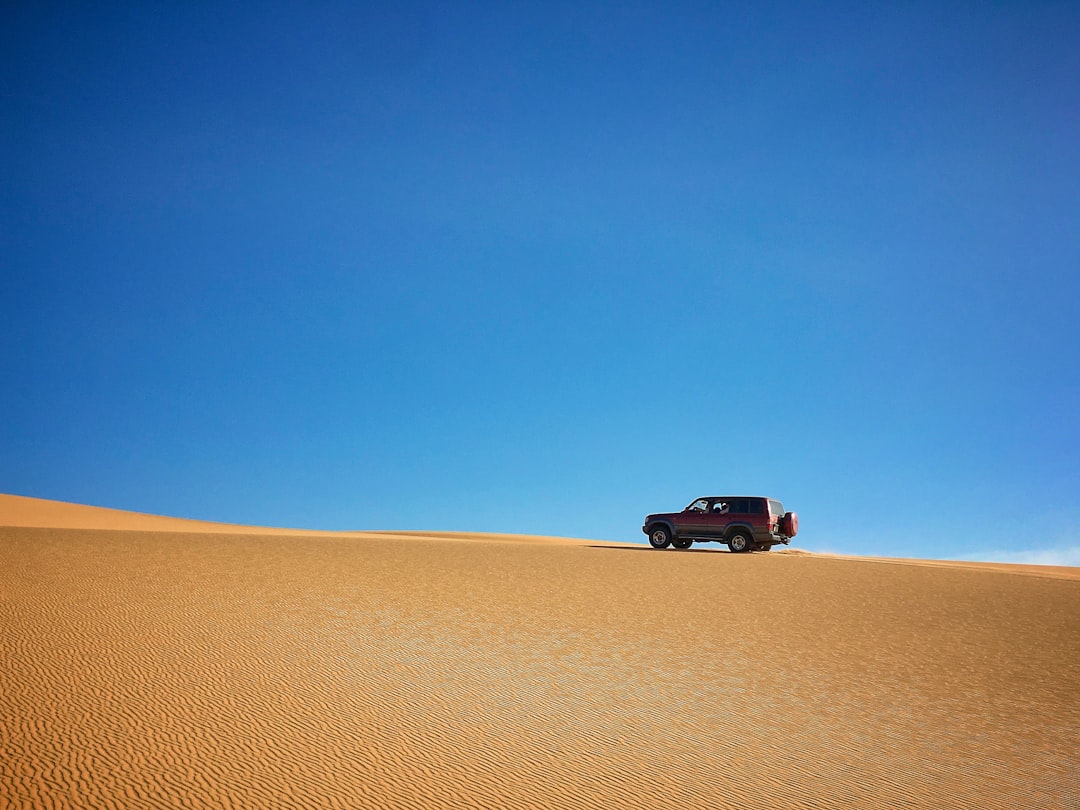
Libya Travel Guide: Everything You Need to Know (2026)
Libya is a North African nation covering nearly 1.8 million km² — the fourth-largest country on the continent — with a population of 1,428,435 in its capital Tripoli alone. Founded as a unified state in 1951 under King Idris, it stretches from the Mediterranean coastline deep into the Sahara Desert, encompassing some of the best-preserved Roman ruins in the world. Travel here in 2026 requires serious preparation, but those who manage it encounter a destination almost entirely untouched by mass tourism.
Top 3 Highlights at a Glance
- Leptis Magna — One of the Roman Empire’s best-preserved cities, with a 25,000-seat amphitheatre still largely intact.
- Sahara Desert — Ubari Sand Sea — A vast inland sea of dunes reaching 160 km wide, sheltering turquoise crater lakes unique on earth.
- Medina of Tripoli (Old City) — A walled Ottoman-era quarter dating to the 7th century, with 43 mosques crammed into its ancient streets.
Scroll down for our complete travel guide with tips on getting there, where to stay, costs and more.
Getting There & Transport
Which airports are the best entry points into Libya?
**Mitiga International Airport (MJI)** in Tripoli is the primary entry point for most travellers in 2026. In my experience, virtually all international connections route through Mitiga, which handles the bulk of commercial traffic. **Benina International Airport (BEN)** near Benghazi serves eastern Libya, useful if you’re starting in Cyrenaica to visit sites like Cyrene. What most guides omit: both airports have experienced intermittent closures due to the ongoing political situation — I strongly recommend checking NOTAM alerts and your government’s travel advisory **within 48 hours of departure**. Flight options are limited; Tunisair, Turkish Airlines, and Egyptair cover the main routes, with connections averaging **3–6 hours** depending on your hub.
How do I get from the airport to my first accommodation in Libya?
From **Mitiga Airport**, which sits just **4 km from Tripoli city centre**, the fastest option is a pre-arranged hotel transfer. In my experience, negotiating a taxi at the terminal costs roughly **$10–20 USD** for the short ride into the centre, but agree the price before entering the vehicle. My tip: do not rely on ride-hailing apps — they function poorly in Tripoli. Your hotel or licensed tour operator should arrange a pickup; this is not optional advice, it’s a practical safety measure. The honest caveat most guides skip: Mitiga sits on an active military perimeter and the road into central Tripoli passes security checkpoints — having a local contact who can vouch for your arrival makes a meaningful difference.
What transport options are there within Libya?
Shared taxis (called **su’ubah**) connect major cities like Tripoli, Misrata, and Benghazi and are the backbone of intercity travel, costing roughly **$5–15 USD** per seat depending on distance. Rental cars exist but require a local Arabic-speaking companion in practice. Domestic flights between Tripoli (**MJI**) and Benghazi (**BEN**) operate inconsistently — check Libyana Airlines schedules, but budget for cancellations. What surprised me: Libya has no functioning rail network whatsoever — an Italian-era rail system existed but was never rebuilt after WWII. For the Sahara interior, 4WD vehicles with a licensed local guide are mandatory — the **Fezzan** region around Sebha is inaccessible any other way. Private guided tours are realistically the only reliable transport option for foreign visitors.
Do I need a rental car to travel around Libya?
Yes, a rental car is effectively essential outside Tripoli city centre — but renting independently is not advisable. In my experience, the practical solution is booking a **private driver or licensed tour operator vehicle** for the entire trip, typically costing **$80–150 USD per day** including the driver. Self-drive rentals exist in Tripoli but come with serious caveats: road signage is primarily in Arabic, GPS coverage outside cities is unreliable, and checkpoints require locals to navigate smoothly. My tip: operators based in **Tripoli’s Hay Andalus district** have the most established track records. For Sahara itineraries, 4WD vehicles are non-negotiable — the sand roads around **Wadi al-Hayat** will destroy a standard saloon car.
How good is the public transport network between regions of Libya?
Bluntly: Libya’s public transport network between regions is functional but unreliable. Shared taxis departing from **Tripoli’s Bus Station near Martyrs’ Square** serve Misrata (**210 km east**), Gharyan, and Zuwarah with some regularity. Long-distance buses operate but schedules are informal — departure happens when the vehicle is full, not at a posted time. What most guides omit: the coastal highway (**Coastal Road / Sharia al-Sahel**) linking Tripoli to Benghazi is technically driveable at roughly **1,000 km**, but sections pass through areas with active security incidents. I recommend treating any journey beyond Tripoli’s metro area as requiring professional logistical support. The south — Sebha, Ghat, Ubari — has essentially zero formal public transport.
Accommodation
Which regions should I stay in when visiting Libya?
For first-time visitors, base yourself in **Tripoli (Tripolitania region)** — it has the most tourist infrastructure, the UNESCO-listed Medina, and access to **Leptis Magna** just **130 km east**. Cyrenaica in the northeast, centred on Benghazi, offers access to ancient Greek cities like **Cyrene** and **Apollonia** — genuinely spectacular but requires a higher security awareness. The **Fezzan** in the southwest, around Sebha and the Ubari Sand Sea, is the Sahara experience: extraordinary landscapes but zero tourist infrastructure and mandatory guided expeditions only. What surprised me: **Misrata** makes an underrated secondary base — it’s a functioning commercial city with reasonable accommodation and sits between Tripoli and Leptis Magna.
What does good accommodation cost per night in Libya?
A decent mid-range hotel in **Tripoli** costs **$60–100 USD per night** in 2026. The **Corinthia Hotel Tripoli** remains the most reliable upper-tier option at roughly **$150–200 USD** per night — it has consistent electricity and security standards that matter here. Budget guesthouses in the medina run **$25–45 USD**, though facilities are basic. What most guides omit: Libya’s power grid suffers frequent outages, sometimes lasting **6–12 hours** — I strongly recommend booking hotels with confirmed backup generators. Outside Tripoli, accommodation drops dramatically in quality; Benghazi has functional business hotels around **$50–80 USD**, while Fezzan desert camps charge **$40–70 USD** per person including meals, which is actually fair value given the remoteness.
When should I book hotels in Libya — how far in advance?
Book at least **6–8 weeks in advance**, particularly for the **Corinthia Tripoli** or any accommodation associated with licensed tour operators. In my experience, Libya’s hotel inventory is thin — Tripoli has fewer than 15 properties I’d genuinely recommend to international travellers, and they fill with business travellers, NGO staff, and oil-sector workers year-round. My tip: book via direct email to the hotel, not third-party platforms, since many Libyan properties are not accurately listed on Booking.com. The honest caveat: visa approval (which can take **4–8 weeks**) should drive your booking timeline — confirm your visa before committing to non-refundable rates. If you’re joining a guided tour, the operator handles accommodation and you should lock in their package **3 months ahead**.
When is the best time to travel to Libya?
The best months are **March, April, May, September, October, and November** — confirmed by climate data. Spring (March–May) gives you comfortable coastal temperatures around **18–24°C** in Tripoli and manageable Sahara conditions. Autumn (September–November) mirrors this pattern and is marginally less crowded with business travellers. What surprised me: July and August on the Libyan coast can be genuinely pleasant by Mediterranean standards, but the interior desert reaches **45°C+** and is effectively off-limits for non-specialist expeditions. Winter (December–February) brings rain to Tripoli and cold nights in the Fezzan — not impossible but not ideal. My recommendation for Sahara-focused trips: target **October to early November** specifically, when dune temperatures cool to walkable levels by late afternoon.
How does peak season affect prices in Libya?
Libya does not follow conventional tourist peak-season pricing — the market is driven by **business travel and oil-sector contractors**, not leisure tourism. Hotel prices at properties like the **Corinthia Tripoli** remain broadly stable year-round, occasionally spiking during OPEC-related meetings or major business delegations. In my experience, Ramadan (dates shift yearly; in 2026 it falls approximately **February 18 – March 19**) is the one period when restaurant access is genuinely restricted during daylight hours and some services slow. What most guides omit: archaeological sites like **Leptis Magna** have no formal peak-season pricing — entry fees are minimal or informally collected, and you may be the only visitor regardless of month. Guided tour packages to the Fezzan rarely vary more than **10–15%** seasonally.
Best Time to Visit
Which regions of Libya have different climate zones?
Libya divides into three distinct climate zones. The **Mediterranean coastal strip** — Tripoli, Misrata, Benghazi — gets mild winters around **12–18°C** and warm dry summers of **28–35°C**. The **Jebel Akhdar (Green Mountain)** interior near Cyrene receives more rainfall than anywhere else in Libya, creating an anomalous green highland zone that genuinely surprises first-time visitors — temperatures here run **5–8°C cooler** than the coast. The **Saharan interior** — everything south of roughly **29°N latitude** including the Fezzan — operates on a hyper-arid desert climate with summer peaks above **45°C** and winter nights dropping to **5°C** in the **Ubari** basin. What surprised me: the **Ghibli wind** (a hot southern wind) can hit coastal cities in spring, pushing temperatures to **40°C+ for 2–3 days** with no warning.
What are the rainy seasons in Libya?
Libya is one of the most arid countries on earth — ‘rainy season’ is almost a misnomer. The coastal cities of **Tripoli and Benghazi** receive the majority of their annual rainfall — roughly **250–350 mm** — between **November and March**, with January being the wettest single month. In my experience, this rarely means prolonged rain; more typically it’s **3–6 rainy days per month** in winter with sunshine in between. The **Jebel Akhdar** region near **Shahat (Cyrene)** is the exception, receiving up to **600 mm annually** and experiencing actual sustained rain in winter. The Saharan south — Sebha, Ghat, Ubari — averages under **10 mm per year** total. The honest caveat: flash floods in desert wadis after rare rainfall events can be dangerous and unpredictable — local guides are essential for timing Fezzan routes.
What does a trip to Libya cost per person per day?
Budget realistically **$120–200 USD per person per day** for a guided tour format, which is the practical standard for foreign visitors. This typically covers accommodation (**$60–100**), food (**$20–35**), and ground transport via private vehicle. A Sahara expedition to the **Fezzan** costs more — expect **$200–300 USD per day** all-inclusive due to 4WD logistics and camp costs. What most guides omit: independent budget travel below **$80 USD/day** is theoretically possible using shared taxis and cheap guesthouses, but it exposes you to security risks that a local operator’s network helps manage. My tip: the single biggest cost efficiency is joining a **small-group tour** (4–8 people) through an operator like **Arkno Tours** or similar Tripoli-based agencies, which splits vehicle costs significantly.
How expensive is food in Libya?
Food in Libya is genuinely affordable. A full meal at a local restaurant in **Tripoli’s Old City** — typically lamb couscous, **bazeen** (barley dough), or grilled fish — costs **$5–12 USD**. Street-food standards like **brik** (fried pastry) or **sharba** soup run under **$3 USD**. Hotel restaurant meals at mid-range properties cost **$15–25 USD** per person. What surprised me: Libya has almost no international restaurant chains — the food landscape is entirely local, which is actually a culinary advantage. Alcohol is illegal and unavailable throughout Libya, which eliminates an entire cost category but also limits evening social options. My tip: the seafood in **Tripoli’s fish market near the old port** is exceptionally fresh and cheap — a grilled sea bass with bread and salad runs about **$8–10 USD**.
What hidden costs should I expect when travelling in Libya?
The biggest hidden cost is the **visa and invitation letter process**, which typically requires using a local tour operator to generate the mandatory invitation — expect to pay **$50–150 USD** for this service on top of the visa fee itself. Photography permits for sites like **Leptis Magna** or the **Tripoli Museum** are sometimes levied informally at **$5–20 USD** per site. Generator fuel surcharges appear on some hotel bills — always ask upfront. In my experience, **currency exchange losses** are significant: the official rate and the parallel market rate can differ by **30–50%**, and navigating this legally requires attention. Travel insurance with **medical evacuation coverage** to Tunisia or Malta is non-negotiable and adds roughly **$150–300 USD** to your trip cost — most standard policies explicitly exclude Libya.
Budget & Costs
How much cash should I bring to Libya?
Bring enough **USD or EUR cash** for your entire trip — Libya is an almost entirely cash economy for foreign visitors. In my experience, I recommend carrying **$500–800 USD minimum** for a 7-day trip, plus a 20% emergency buffer. The **Libyan Dinar (LYD)** is the local currency; exchange USD or EUR at licensed exchange offices in **Tripoli’s city centre** or through your hotel — never on the street, even though parallel-market rates are higher. ATMs exist but are unreliable for foreign cards and frequently out of cash. What most guides omit: large USD bills (**$100 denomination**) get significantly better exchange rates than $20s — bring clean, undamaged notes printed after 2013, as older bills are sometimes refused. Keep cash in a hotel safe whenever possible.
Which credit cards are accepted in Libya?
Credit cards are **almost never accepted** for foreign visitors in Libya — assume cash-only throughout. In my experience, even the **Corinthia Hotel Tripoli** has had periods where card terminals failed due to international banking restrictions. Visa and Mastercard have extremely limited merchant acceptance, and American Express is functionally useless. The honest caveat: Libya remains under residual international sanctions and banking restrictions that severely limit electronic transactions. My tip: treat your credit card as a genuine emergency-only backup, not a travel tool. Notify your bank before travel anyway in case you find a working terminal. For pre-booking tour packages, international wire transfer (**SWIFT**) to your operator’s account is the standard payment method — get written receipts for everything. Budget **100% cash** for in-country spending.
Which regions of Libya must I not miss?
Three regions are non-negotiable. **Tripolitania** (the northwest) anchors any trip — Tripoli’s medina, **Leptis Magna**, and the Roman theatre of **Sabratha** are world-class in a category of their own. **Cyrenaica** in the northeast rewards the effort: the Greek city of **Cyrene** (founded 631 BC) and seaside **Apollonia** feel virtually undiscovered. The **Fezzan** in the southwest is the wildcard — the **Ubari Sand Sea** with its crater lakes, the pre-Islamic rock art at **Wadi Methkandoush**, and the ancient Garamantian ruins at **Germa** are found nowhere else on earth at this scale. What most guides omit: the **Jebel Nafusa** highlands southwest of Tripoli — Berber hilltop villages like **Nalut** and **Ghadames** (a UNESCO oasis city) are reachable in a day trip and completely different in character from anything else in the country.
What are the tourist highlights of Libya?
**Leptis Magna** is the centrepiece — arguably the best-preserved Roman city in the Mediterranean, **130 km east of Tripoli**, with a triumphal arch, harbour, and Severan Forum. **Sabratha’s Roman theatre** (**70 km west of Tripoli**) seats 5,000 and is intact enough to host occasional performances. In Cyrenaica, the Temple of Zeus at **Cyrene** rivals anything in Greece. The **Ghadames Old Town** — a UNESCO-listed mud-brick oasis city near the Algerian border — is architecturally unlike any other place in North Africa. What surprised me: the **National Museum of Libya** in Tripoli’s old castle (Al-Saraya Al-Hamra) contains Phoenician, Roman, Greek, and Islamic collections that would rank among Europe’s best if they were better known internationally.
What experiences in Libya are found nowhere else on earth?
Three things are genuinely irreplaceable. First, standing alone inside **Leptis Magna** — because visitor numbers are so low, you can walk its marble streets for hours without another tourist in sight, something impossible at Pompeii or Ephesus. Second, swimming in the **Mandara Lake** in the **Ubari Sand Sea** — a hypersaline crater lake surrounded by **150-metre dunes** with no facilities, no crowds, and no infrastructure whatsoever. Third, viewing the **prehistoric rock art at Wadi Methkandoush** near **Ghat** — engravings of elephants, hippos, and cattle from when the Sahara was green (**6,000+ years ago**) carved directly into desert boulders. In my experience, this combination of Roman grandeur, Saharan wilderness, and prehistoric heritage at near-zero visitor density is genuinely unique on the planet in 2026.
Regions & Highlights
Which areas of Libya are overcrowded — and what are the quieter alternatives?
Libya has the opposite problem to most destinations — overcrowding is essentially nonexistent. Even **Leptis Magna**, one of Rome’s greatest cities, receives fewer than **10,000 international visitors per year** versus millions at comparable Mediterranean sites. The closest thing to crowds you’ll encounter is at **Tripoli’s Medina** on Friday afternoons when local families fill the souks. What surprised me: there are no quieter alternatives because everywhere is already quiet — the challenge is access, not avoidance of crowds. My tip: the genuinely off-radar spots for even the tiny number of travellers who reach Libya are **Ptolemais** (a Greek-Roman city near **Tolmeita**) and **Tocra (Taucheira)** in Cyrenaica — both archaeologically significant and essentially unvisited, with no guards, no fences, and ruins you walk through alone.
How many days do I need to see Libya properly?
Allocate a minimum of **10 days** for a meaningful introduction. A realistic breakdown: **3 days in Tripoli** and surroundings (medina, **Sabratha**, day trip to **Leptis Magna**), **2 days in the Jebel Nafusa** highlands (**Nalut**, **Ghadames**), and **5 days in the Fezzan** for the Ubari Sand Sea and Wadi Methkandoush. To add **Cyrenaica** (Cyrene, Benghazi, Apollonia) properly, extend to **14–16 days** total. What most guides omit: travel days between regions consume more time than maps suggest — the Tripoli-to-Sebha drive is **900+ km** and typically split over **2 days**. My recommendation: don’t attempt to cover both Cyrenaica and the Fezzan in under **14 days** — the logistics will exhaust you and the distances are unforgiving.
Do I need a visa to visit Libya?
Yes — virtually all nationalities require a visa, and the process is more involved than standard applications. In my experience, you must obtain a **letter of invitation** from a licensed Libyan tour operator or sponsor before applying, which is then submitted to a Libyan embassy or consulate. Processing takes **4–8 weeks** on average. The visa fee varies by nationality but typically runs **$50–100 USD**. What most guides omit: **Israeli passport holders are refused entry**, and passports showing Israeli stamps have historically caused problems at entry — verify current policy with your operator before applying. Journalists require special press credentials. My tip: start the visa process **at least 3 months before departure** in 2026, as embassy capacity in many countries is limited and delays are common. Your tour operator’s invitation letter quality significantly affects approval speed.
What languages are spoken in Libya?
**Arabic** is the official language and dominates all public life — signage, menus, and government interactions are almost exclusively in Arabic. In my experience, English is spoken by a small educated minority in **Tripoli**, particularly among business professionals and younger Libyans who studied abroad. Italian is surprisingly useful in Tripoli — a legacy of the colonial period (1911–1943) — and some older traders in the medina still speak it. **Amazigh (Berber) languages** are spoken in the Jebel Nafusa region and in **Ghadames**. The honest caveat: outside Tripoli, finding any English speaker is genuinely difficult — this is a major practical argument for hiring a local guide who speaks both Arabic and English. Learning **10–15 basic Arabic phrases** (greetings, numbers, thank you) will open doors that remain firmly closed to those who don’t try.
What cultural rules do I need to know before visiting Libya?
Libya is a conservative Muslim country and the rules are genuine, not performative. **Alcohol is completely illegal** — there are no exceptions, no hotel bars, no duty-free imports for personal use. Dress modestly everywhere: shoulders and knees covered for both men and women outside your hotel. **Photography restrictions are serious** — never photograph military installations, checkpoints, government buildings, or individuals without explicit permission; confiscation and detention are real consequences. During **Ramadan 2026 (approximately February 18 – March 19)**, eating or drinking in public during daylight is disrespectful and should be avoided entirely. What surprised me: Libyan hospitality is extraordinary — being invited for tea or a meal is common and refusing is considered rude. Accept graciously, reciprocate with interest in their culture, and you’ll encounter some of the warmest interactions in the Arab world.
Practical Tips
How safe is Libya for travellers in 2026?
Libya carries **Level 3 or Level 4 ‘Do Not Travel’ advisories** from most Western governments — the UK, US, Australia, and Germany all advise against all travel or all but essential travel. In my experience, the reality is nuanced: **Tripoli and the western coast** function with a degree of normality for those with proper operator support, while **Benghazi** has stabilised significantly. The **Sirte–Misrata corridor** and **southern Fezzan border zones** (near Chad and Niger) carry genuine armed conflict and kidnapping risks. What most guides omit: the security landscape changes rapidly — areas that are stable in January can deteriorate by March. My firm recommendation: do not travel to Libya in 2026 without a **licensed, established local tour operator**, travel insurance with evacuation cover, and a registered check-in system with your home country’s embassy. This is not optional risk management — it’s the minimum baseline.
What health precautions should I take before visiting Libya?
Consult a travel medicine clinic **at least 6 weeks before departure**. Recommended vaccinations include **Hepatitis A, Hepatitis B, Typhoid, Tetanus-Diphtheria, and Meningococcal meningitis** — the latter is particularly important for desert regions. Rabies vaccination is advisable for Fezzan trips where animal contact is possible. In my experience, the most overlooked health risk is **heat illness** in the Sahara — dehydration sets in faster than most travellers expect at **40°C+**; carry **4+ litres of water per person per desert day**. Medical facilities in Libya are severely degraded since 2011 — Tripoli has functioning private clinics, but **Benghazi Central Hospital** and facilities outside major cities are unreliable. Medical evacuation insurance covering transport to **Tunis or Malta** (**1,700 km and 350 km away respectively**) is non-negotiable. Pack a comprehensive first aid kit including any prescription medications for the entire trip duration.
What SIM card or eSIM options are available in Libya?
Two Libyan mobile operators cover the country: **Libyana** and **Al-Madar (Almadar)**. Buying a local SIM in Tripoli is possible and costs roughly **$5–10 USD** including some data credit — Libyana has marginally better rural coverage. In my experience, international eSIM providers (**Airalo, Holafly**) do not reliably list Libya in 2026 due to the political situation, though this may change — check current availability before departure. Coverage is reasonable in **Tripoli, Misrata, and Benghazi** but drops significantly in the Fezzan desert and Jebel Nafusa highlands. What most guides omit: a satellite communicator like a **Garmin inReach** is worth serious consideration for Sahara expeditions — mobile signal disappears entirely **50 km south of Sebha**. Download offline **Maps.me** maps covering all of Libya before you land, as they work without any data connection.
Which apps do you recommend for travelling in Libya?
My essential app list for Libya in 2026: **Maps.me** with downloaded Libya offline maps — more detailed than Google Maps for rural areas and works with zero connectivity. **WhatsApp** is the universal communication tool in Libya — your hotel, driver, and tour operator will all use it primarily. **Google Translate** with the Arabic pack downloaded offline handles menus, signs, and basic communication. **XE Currency** tracks the official LYD exchange rate against USD and EUR — useful for benchmarking exchanges even if the parallel rate differs. What most guides omit: download your government’s **Smart Traveller** or **STEP** (US) registration app before departure and register your itinerary — this is how your embassy locates you in an emergency. A **flashlight app** with reliable battery-drain management is genuinely useful during **Tripoli’s frequent power outages**, which can last 6+ hours.
What are the most common traveller mistakes in Libya?
The biggest mistake is **underestimating visa lead time** — travellers who start the process less than **6 weeks out** frequently miss their window entirely. Second: arriving without **enough USD cash** and assuming ATMs or cards will cover gaps — they won’t. Third: photographing a checkpoint or military vehicle instinctively — I’ve seen this cause serious detainment situations that a guide’s intervention barely resolved. Fourth: booking accommodation independently without operator backing, which removes the security network that makes urban Libya navigable. What surprised me: many travellers skip **Ghadames** because it seems far (**600 km from Tripoli**) — this is a mistake; the UNESCO-listed oasis city is among the most architecturally extraordinary places in Africa and justifies the detour entirely. Finally, underestimating distances — **Tripoli to Ghat** is over **1,800 km** and cannot be treated as a casual add-on to a 7-day itinerary.
Libya at a Glance
| Population | 7,381,023 |
|---|---|
| Currency | Libyan dinar (LD) |
| Official language | Arabic |
| Time zone | UTC+02:00 |
Source: Wikidata, retrieved August 2026.
Essential Resources for Planning Your Trip to Libya
- Libya Travel Advisory — official visitor information, passes & events
- Wikipedia: Libya — history, geography & background
- Wikivoyage: Libya — community travel guide & practical tips
- Libya travel — expert itineraries & travel inspiration
- THE 15 BEST Things to Do in Libya (2026) — hotels, restaurants & traveller reviews
- Libya 🇱🇾 🚀 Currently half way through my First Ever Tour … — how to get around
- Numbeo: Cost of Living in Libya — current prices & cost comparison
- Timeanddate: Libya Weather & Climate — forecasts & climate statistics
More Perspectives on Libya
Libya Travel Videos
Watch these videos for a visual preview before your trip:
- Entering Libya | Africa’s Most Dangerous Country
- Libya Travel Guide – Discover the Most Beautiful Hidden Places in North Africa
- Libya Travel Guide 2025 | Top Places to Visit in Libya 🇱🇾 | History, Desert & Culture Tour
Libya Travel Discussions on Reddit
Real traveller experiences and community advice:
- I want to visit. How should I go about this as a foreigner?
- Realistic safety issues in Lybia? : r/travel
- Four Days in Libya : r/travel
Data Sources
This page was compiled using data from Wikipedia, Wikidata, Open-Meteo (climate), Numbeo (cost of living) and REST Countries. Information is updated regularly.