
South Africa: The Complete Travel Guide (2026)
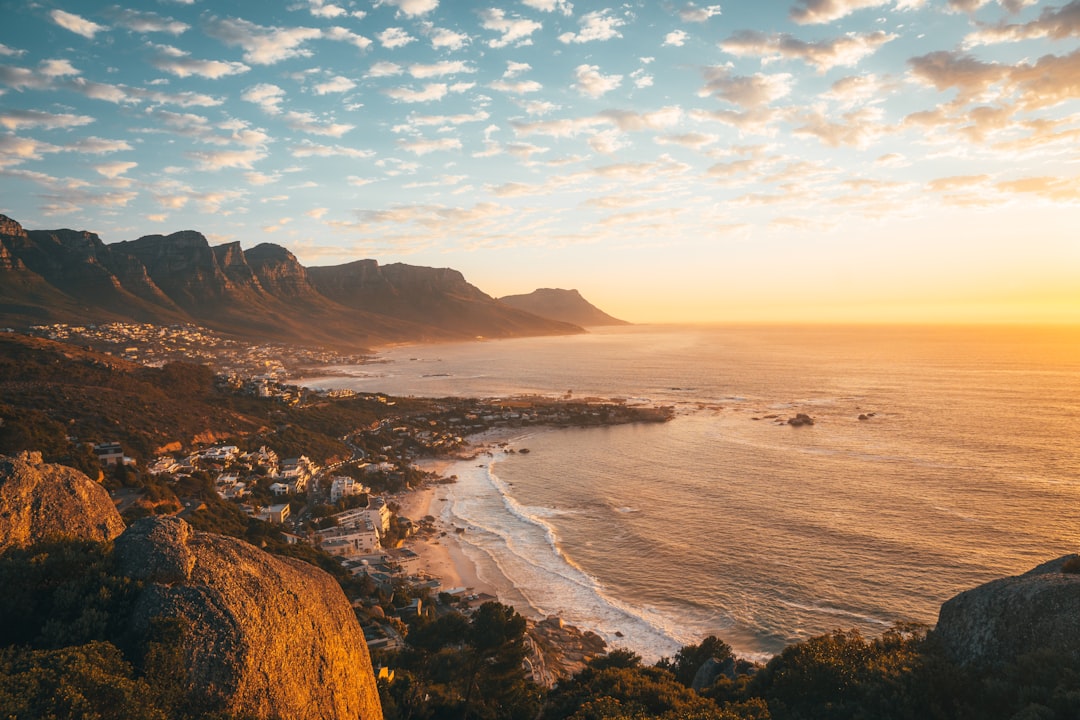
Last reviewed: August 2026 · key facts checked against Wikidata
South Africa Travel Guide: Everything You Need to Know (2026)
South Africa, home to 62,027,503 people across 9 provinces, sits at the southern tip of Africa with a coastline stretching 2,798 kilometres along both the South Atlantic and Indian Oceans. Founded as a unified nation in 1910, it spans dramatic landscapes from the Drakensberg mountains at over 3,400m to the Kalahari desert. In my experience, no single country on earth packs this density of wildlife, scenery, wine culture, and urban energy into one itinerary.
Top 3 Highlights at a Glance
- Kruger National Park — Africa’s most accessible Big Five reserve covers nearly 20,000 km² with self-drive safari at a fraction of private lodge costs.
- Cape Town & Table Mountain — The cable car whisks you 1,086m to a flat-topped summit with 360° views across two oceans in under 5 minutes.
- Garden Route — A 300km coastal stretch between Mossel Bay and Storms River packs bungee jumping, whale watching, and ancient forests into one drive.
Scroll down for our complete travel guide with tips on getting there, where to stay, costs and more.
Getting There & Transport
Which airports are the best entry points into South Africa?
OR Tambo International (JNB) in Johannesburg is South Africa’s primary gateway and handles the vast majority of long-haul international flights. Cape Town International (CPT) is the best entry point if your itinerary is Western Cape-focused, saving you a 2-hour domestic flight. My tip: fly into JNB and out of CPT (or vice versa) to avoid doubling back — open-jaw tickets are widely available and often cost no more than a return. What surprised me: King Shaka International (DUR) in Durban is dramatically underused by international travellers, yet it opens direct access to the KwaZulu-Natal coast and Drakensberg without the Joburg connection. Watch out: OR Tambo is enormous — allow at least 90 minutes for connections.
How do I get from the airport to my first accommodation in South Africa?
Use the Gautrain from OR Tambo to Sandton in 15 minutes for R215 — it is the fastest, safest, and most reliable option into Johannesburg’s business district. For Cape Town, the MyCiti Airport Bus runs to the city centre for around R89 but takes 40–60 minutes depending on traffic. In my experience, metered taxis from both airports are legitimate but negotiate the fare before departure — Uber is active at both airports and typically 30–40% cheaper than metered cabs. The honest caveat most guides omit: do not accept lifts from unofficial ‘taxi’ drivers who approach you inside the terminal at OR Tambo — this is a known scam. Pre-book your first transfer if arriving after dark.
What transport options are there within South Africa?
Domestic flights are the backbone of inter-city travel, with FlySafair and Cemair connecting Johannesburg, Cape Town, Durban, George, and Port Elizabeth from as little as R600 one-way booked in advance. The Baz Bus hop-on-hop-off service is popular among backpackers along the Garden Route and KwaZulu-Natal coast. Long-distance buses like Intercape and Greyhound connect major cities overnight for R200–R450. The iconic Blue Train and Rovos Rail are luxury rail experiences, not practical transport — expect to pay R12,000+ per person for the Pretoria–Cape Town route. My honest caveat: South Africa’s Metrorail commuter rail in cities is unreliable and not tourist-safe — skip it entirely.
Do I need a rental car in South Africa?
Yes — a rental car is essential for the Garden Route, Winelands, Drakensberg, and any self-drive safari. South Africa has left-hand traffic, well-signposted national roads, and a mature rental industry anchored by Avis, Budget, and Europcar at all major airports. Expect to pay R450–R900 per day for a standard sedan with unlimited kilometres. My tip: always book a vehicle with full insurance cover — excess waiver fees of R200/day are worth every rand given potholed secondary roads. The trade-off: if you are staying exclusively in Cape Town or Johannesburg, a car is unnecessary and parking is a headache. For Kruger, a standard sedan is fine on tarred park roads — a 4×4 is only needed for remote concessions.
How good is the public transport network between regions in South Africa?
Frankly, inter-regional public transport is poor by international standards — budget travellers need to manage expectations. The Baz Bus is the best structured option for backpackers, connecting Cape Town to Johannesburg via the Garden Route and Durban for a set-route pass of around R5,500. Intercape buses cover major hubs reliably but journey times are long — Cape Town to Johannesburg is 19 hours by bus. In my experience, the absence of a functional passenger rail network between cities is South Africa’s biggest infrastructure gap for independent travellers. What surprised me: minibus taxis are how 70% of South Africans travel between towns but are not recommended for tourists due to safety and overcrowding concerns.
Accommodation
Which regions of South Africa should I stay in?
Base yourself in the Western Cape for wine, scenery, and coast; Mpumalanga/Limpopo for wildlife. The V&A Waterfront area in Cape Town suits first-timers wanting walkability and safety. Stellenbosch is my preferred wine country base — 45 minutes from Cape Town with world-class restaurants on your doorstep. For safari, stay inside or immediately adjacent to Kruger National Park in Mpumalanga — the private reserves of Sabi Sand offer the best leopard sightings on earth. If you have a week in KwaZulu-Natal, base yourself in Durban’s Umhlanga district for beach access and then head north to iSimangaliso Wetland Park. Avoid basing yourself in Johannesburg city centre — Sandton or Rosebank are far safer and more pleasant neighbourhoods.
What does good accommodation cost per night in South Africa?
Expect to pay R1,200–R2,500 per night for a solid mid-range guesthouse or boutique hotel. A comfortable en-suite room at a Cape Winelands guesthouse in Franschhoek runs about R1,800/night including breakfast. Safari lodges are the outlier — a night at a mid-range lodge near Kruger’s Orpen Gate starts at R3,500 per person sharing, while premium private concessions in Sabi Sand exceed R25,000 per person per night. Budget travellers can find clean, safe backpacker rooms in Long Street, Cape Town for around R400/night in a dorm. The honest caveat: rates in Cape Town double in December–January peak season — the same R1,800 room becomes R3,500 with a minimum 3-night stay.
When should I book hotels in South Africa — how far in advance?
Book Cape Town December–January at least 6 months ahead — it fills completely. South African school holidays (mid-June and late September) cause a second wave of domestic demand that catches foreign visitors off-guard. For Kruger National Park SANParks rest camps, book the moment reservations open — 12 months in advance for peak July school holidays. My tip: shoulder season bookings (March–April, October–November) can be made 4–8 weeks out and will net you 20–35% lower rates. What surprised me: Airbnb in Cape Town’s Atlantic Seaboard is often cheaper than guesthouses at equivalent quality and books up just as fast in peak season. For the Garden Route, 2–3 months ahead is sufficient outside South African school holidays.
When is the best time to travel to South Africa?
January, March, October, and November are the optimal travel months based on verified climate data. October–November is my personal favourite — the Cape is green after winter rains, flowers carpet Namaqualand, whale-watching season peaks around Hermanus, and Kruger game-viewing is excellent as animals congregate at waterholes before rains. March is ideal if you want Cape Town sun without December crowds — temperatures average 26°C and accommodation rates drop sharply. January is summer beach season on the Garden Route and KwaZulu-Natal coast, though Cape Town is at peak pricing. The caveat most guides skip: July is the most popular month for Kruger (dry season, thinned vegetation, excellent sightings) but it is also the coldest, dropping to near 0°C overnight.
How does peak season affect prices in South Africa?
Cape Town December–January sees hotel prices surge 80–120% above annual average. The South African school calendar creates 3 peak waves: December 15–January 10 (summer coast), late June to mid-July (Kruger safari high season), and late September to early October (spring wildflower season, Cape). In my experience, a guesthouse in Franschhoek that costs R1,800 in April jumps to R3,500 in December with a mandatory minimum stay. Kruger SANParks camps add a 30% surcharge during school holidays. The under-reported trade-off: Cape Town’s best weather and highest prices coincide exactly — there is no cheap-and-perfect window. Flying into George Airport and starting the Garden Route rather than Cape Town in peak season saves significant accommodation cost.
Best Time to Visit
Which regions of South Africa have different climate zones?
South Africa spans 6 distinct climate zones across its 9 provinces. The Western Cape is the only region with a Mediterranean climate — cool wet winters (June–August) and hot dry summers. The KwaZulu-Natal coast around Durban is subtropical, humid year-round, with warm Indian Ocean water above 22°C from October through April. The Highveld (Johannesburg and Pretoria sit at 1,750m and 1,339m respectively) has a summer rainfall pattern with dramatic afternoon thunderstorms from November to March. Namaqualand in the Northern Cape is semi-arid but explodes in wildflowers August–September. What surprised me: the Drakensberg in the eastern interior receives snow in winter — a fact that astonishes most first-time visitors to Africa.
What are the rainy seasons in South Africa?
South Africa has two separate rainy seasons in different regions — a critical planning distinction. The Highveld (Johannesburg, Kruger, Mpumalanga) gets summer rain from November through March, with intense afternoon thunderstorms that rarely last more than 2 hours. The Western Cape (Cape Town, Winelands, Garden Route) receives its rain in winter from June through August — the opposite of most of Africa. My tip: this means there is almost always a dry, pleasant region somewhere in South Africa regardless of month. The caveat: Kruger in November–February has lush vegetation that makes game-spotting harder, and malaria risk is elevated during summer rains in Limpopo and Mpumalanga. Pack a light rain jacket year-round for the Garden Route, which can receive rain in any month.
What does a trip to South Africa cost per person per day?
Budget R800–R1,200/day; mid-range R2,500–R4,000/day; safari-focused R8,000+/day. A realistic mid-range day in Cape Town — guesthouse, 2 restaurant meals, wine tasting, and Uber — costs around R2,800 per person. Add a private safari lodge and costs balloon fast. My suggested benchmark: plan R3,500 per person per day for a balanced itinerary mixing urban Cape Town, Garden Route driving, and 3 nights in a mid-range Kruger lodge. The hidden cost that devastates budgets: national park entry fees at Kruger are R232 per person per day for foreign visitors, on top of accommodation. Budget travellers staying in hostels along the Garden Route can survive on R700–R900/day including petrol and food.
How expensive is food in South Africa?
South Africa is genuinely affordable for food compared to Western Europe or Australia. A sit-down lunch at a local restaurant in Long Street, Cape Town costs R120–R180 per person including a drink. A steakhouse dinner at a mid-range restaurant in Melrose Arch, Johannesburg — South Africa’s beef quality is outstanding — runs R300–R450 per person with wine. Street braai and bunny chow (hollowed-out bread loaf filled with curry, a Durban speciality) cost under R60. The caveat: tourist-facing restaurants on the V&A Waterfront in Cape Town charge European prices — R220 for a main course is not unusual. My tip: buy wine directly from Stellenbosch estates at cellar-door prices — R80–R150 for bottles that sell in London restaurants for R800.
What hidden costs should I expect in South Africa?
Park entry fees, tipping culture, and fuel costs are the three budget-killers most guides ignore. Kruger National Park charges R232 per person per day just to enter, before accommodation. South Africa has a strong tipping culture — 10–15% at restaurants, R20–R50 for petrol attendants (all South African stations are full-service), and R100–R200/day for safari guides is considered standard. Fuel costs: driving the Garden Route from Mossel Bay to Storms River (300km) costs around R500–R600 in a standard vehicle at current petrol prices around R22/litre. What surprised me: load shedding (rolling power outages) can shut restaurant kitchens, ATMs, and accommodation Wi-Fi — budget extra time for disruptions, especially in smaller towns.
Budget & Costs
How much cash should I bring to South Africa?
Bring R2,000–R3,000 in cash for your first 48 hours, then use ATMs throughout. South Africa has a dense Absa, FNB, Nedbank, and Standard Bank ATM network in cities and tourist towns, with R3,000–R5,000 daily withdrawal limits. My tip: withdraw at bank-branded ATMs inside shopping centres like Cavendish Square in Cape Town or Sandton City in Johannesburg — these are safer than street ATMs. The critical warning most travel sites omit: card skimming at ATMs is a real problem — shield your PIN, and use contactless payment wherever possible. Rural areas like the Drakensberg foothills and remote Karoo towns have limited ATM coverage — carry R1,500–R2,000 cash before leaving any major town heading into the interior.
Which credit cards are accepted in South Africa?
Visa and Mastercard are universally accepted at hotels, restaurants, and supermarkets. American Express is accepted at larger hotels and Safari lodges but rejected at smaller guesthouses and petrol stations — do not rely on it exclusively. In my experience, contactless payments via tap-and-go are standard at every Woolworths, Pick n Pay, Checkers, and most restaurants — South Africa adopted this technology faster than most European countries. The caveat: smaller craft markets, township tour operators, and rural accommodation are cash-only — never assume card acceptance outside major towns. My tip: notify your bank before travel — South African transactions trigger fraud alerts on cards from the US, UK, and Germany routinely. Apple Pay and Google Pay work at most point-of-sale terminals in urban centres.
Which regions of South Africa must I not miss?
The Western Cape, Mpumalanga, and KwaZulu-Natal form the unmissable triangle for a first visit. The Western Cape delivers Cape Town, the Winelands, the Garden Route — three world-class experiences within 6 hours’ drive. Mpumalanga gives you Kruger National Park and the Blyde River Canyon, the third-largest canyon on earth at 26km long. KwaZulu-Natal is criminally undervisited — the iSimangaliso Wetland Park is a UNESCO World Heritage Site where hippos, crocodiles, and leatherback turtles coexist 200 metres from the Indian Ocean. My honest caveat: Gauteng province (Johannesburg/Pretoria) is often treated as a transit hub — but the Apartheid Museum in Gold Reef City is one of the most powerful museums I have visited anywhere on earth and deserves half a day.
What are the tourist highlights of South Africa?
**Table Mountain, Kruger National Park, the Cape Winelands, the Garden Route, and Robben Island are the defining highlights. Table Mountain’s cable car carries you 1,086 metres** to a plateau with views of both oceans — book online and go at opening time to beat cloud cover. Kruger is the world’s most accessible Big Five wildlife destination, covering 19,485 km² with self-drive access. The Cape Winelands, centred on Stellenbosch and Franschhoek, produce internationally awarded Chenin Blanc and Pinotage. Robben Island — where Nelson Mandela spent 18 of his 27 prison years — is a 30-minute ferry from the V&A Waterfront and costs R750 for adults. My tip: Boulders Beach near Simon’s Town has a colony of 3,000 African penguins — impossibly photogenic and 45 minutes from Cape Town.
What experiences in South Africa are found nowhere else on earth?
**Self-driving a Big Five safari, walking a penguin beach, and a Cape to Cape wine route — all in 10 days — is uniquely South African. The ability to self-drive through Kruger National Park** in your own hired car — no guide required, no group tour — is an experience available nowhere else in Africa at this scale. Cage diving with great white sharks off Gansbaai puts you 50cm from the ocean’s apex predator for around R2,500 — I have done it twice and nothing compares. The Namaqualand flower season (August–September) transforms 50,000 km² of arid Northern Cape into a carpet of orange daisies — a natural spectacle with no equal. What surprised me: South Africa’s Cape Fold Mountains produce fynbos, a plant kingdom found nowhere else on earth, with more plant species per square kilometre than the Amazon.
Regions & Highlights
Which areas of South Africa are overcrowded — and what are the quieter alternatives?
The V&A Waterfront in Cape Town and Kruger’s main Skukuza rest camp are the two most congested tourist zones. The V&A is genuinely crowded year-round — swap it for De Waterkant neighbourhood, 10 minutes’ walk away, for local restaurants and zero tour-bus crowds. Kruger’s Skukuza camp feels like a small town at peak season — instead, book Pafuri camp in the far northern Limpopo section, where elephant sightings are guaranteed and tourist density is a fraction. The Garden Route’s Knysna gets overwhelmed in December — Paternoster on the West Coast offers the same whitewashed fishing village atmosphere with 90% fewer visitors. My tip: the entire Eastern Cape is South Africa’s most underrated province — Addo Elephant Park has the world’s densest elephant population and rarely has queues.
How many days do I need in South Africa?
A minimum of 12 days is needed to do South Africa justice — 18–21 days is the sweet spot. A 12-day itinerary works as follows: 3 nights Cape Town, 2 nights Winelands, 2 nights Garden Route, 3 nights Kruger, 2 nights Johannesburg/transit. This is tight but covers the core. With 18 days you can add 3 nights KwaZulu-Natal (Durban plus iSimangaliso) and spend more time in the Drakensberg. The trade-off I wish someone told me before my first visit: South Africa is bigger than France, Germany, and the UK combined — underestimating driving distances is the most common mistake. The drive from Cape Town to Kruger is 1,700km — you need to fly, not drive, between those two anchors.
Do I need a visa for South Africa?
Citizens of the USA, UK, EU, Australia, Canada, and most Western nations receive a free 90-day visa on arrival. Passport must be valid for at least 30 days beyond your departure date and have 2 blank pages — South African immigration is strict on this and will turn you away. My tip: check the official South African Department of Home Affairs website for your specific nationality before travel — the list changes and some countries require advance visas. The critical warning most travellers miss: if you are travelling with children under 18, South Africa requires an unabridged birth certificate for each child and, for single parents, a consent affidavit from the absent parent — failing to carry these will result in being denied boarding.
What languages are spoken in South Africa?
English is an official language and spoken in virtually every tourist context — you will never need a local language to travel comfortably. South Africa has 11 official languages, with Zulu (24%), Xhosa (16%), and Afrikaans (12%) the most widely spoken by population. In Cape Town, Afrikaans is the first language of much of the coloured community and you will hear it constantly in the Cape Flats and Bo-Kaap. In my experience, learning even 5 Zulu words — Sawubona (hello), Ngiyabonga (thank you) — generates extraordinary warmth from locals in KwaZulu-Natal. The honest caveat: in very rural areas of the Eastern Cape or Limpopo, you may encounter situations where English is limited — accommodation hosts will always manage, but spontaneous conversations can be harder.
What cultural rules do I need to know in South Africa?
Tipping, racial sensitivity, and township photography etiquette are the three non-negotiables. Tipping is expected: 10–15% at restaurants, R20–R50 per fill-up for petrol attendants, R100–R200/day for safari guides. South Africa’s apartheid history means racial conversations carry specific weight — the term ’coloured’ is an official census category in South Africa (for mixed-heritage communities) and not considered offensive in context, unlike in other countries. My honest tip: never photograph people in townships without explicit permission — it is deeply disrespectful. The cultural surprise most guides miss: South Africa’s braai (barbecue) culture is the true national religion, transcending race and class — accepting an invitation to a braai is the highest form of local hospitality, and you should never arrive empty-handed. Bring wine or beer, not food.
Practical Tips
How safe is South Africa for travellers?
South Africa requires constant situational awareness but is safe for well-prepared travellers. Johannesburg’s CBD, Cape Town’s Cape Flats, and township areas at night are genuinely high-risk — stay out. The tourist circuits (V&A Waterfront, Stellenbosch, Kruger, Garden Route) are low-risk with basic precautions. My concrete rules: never walk with your phone visible, use Uber not street taxis, and leave jewellery at home. Smash-and-grab vehicle theft at traffic lights is real — keep bags out of sight and windows up. What surprised me: the Garden Route towns (George, Knysna, Plettenberg Bay) are as safe as provincial European towns in daytime. The honest caveat: South Africa’s murder rate of 45.6 per 100,000 (2023 government data) is among the world’s highest — but the vast majority of violence occurs in specific communities far from tourist zones.
What health precautions should I take before travelling to South Africa?
Malaria prophylaxis is essential if visiting Kruger, Limpopo, or KwaZulu-Natal coastal reserves. Consult your GP at least 4 weeks before departure — Malarone (atovaquone/proguanil) is the most commonly prescribed prophylactic for South Africa and costs approximately £80–£100 for a 2-week course. Cape Town, the Winelands, and the Garden Route are malaria-free — no medication needed there. My tip: pack a DEET-based repellent (50%+ concentration) for evenings in any game reserve. Tap water is safe to drink in all major cities — I drink it routinely in Cape Town and Johannesburg. The caveat most guides underplay: sun intensity at South Africa’s altitude (Johannesburg sits at 1,753m, Pretoria at 1,339m) is severe — SPF50 is non-negotiable even in winter. Bring prescription medications in original packaging with a doctor’s letter.
What SIM card or eSIM options are available in South Africa?
Buy a Vodacom or MTN prepaid SIM at any airport arrival hall for R39–R75 — this is my recommended approach. Both networks offer excellent 4G coverage in all cities and along the Garden Route. Data bundles are remarkably affordable: 10GB from Vodacom costs around R149 and lasts 30 days. eSIM users can pre-activate an Airalo or Holafly South Africa eSIM before departure — prices start at $8 for 1GB but top-up costs make them more expensive than a local SIM for stays over 7 days. The honest caveat: Kruger National Park has very patchy mobile coverage — Vodacom performs best in the park’s central region around Skukuza but drops entirely in northern and western sections. Download offline Google Maps for Kruger before you enter the park gates.
Which apps do you recommend for travelling in South Africa?
Uber, Google Maps offline, and the SANParks app are the three essential installs before landing. Uber operates in Cape Town, Johannesburg, Durban, and Pretoria — reliable, safe, and consistently cheaper than metered taxis. The SANParks app lets you book Kruger camp accommodation and check gate opening times (sunrise to sunset, typically 5:30am–6:30pm). Gumtree South Africa is where locals find last-minute apartment rentals at prices 40% below Airbnb. For safety: Namola is South Africa’s emergency response app connecting you to private security and emergency services faster than 10111. My bonus tip: download WhatsApp before arrival — it is the universal communication platform in South Africa; every guesthouse, tour operator, and restaurant communicates via WhatsApp, not email.
What are the most common traveller mistakes in South Africa?
Underestimating distances, over-scheduling Cape Town, and skipping the Eastern Cape are the top three. South Africa is 1.22 million km² — planning to drive Cape Town to Kruger instead of flying costs 2 full travel days. In my experience, first-timers spend 5 nights in Cape Town and rush Kruger into 2 nights — that ratio should be reversed if wildlife is your priority. Never book safari at the last minute: Kruger’s SANParks camps sell out 12 months ahead for July. The financial mistake: exchanging currency at Waterfront tourist bureaux which charge 8–12% commission — use an FNB branch ATM instead. The security mistake I see constantly: carrying a DSLR camera openly on a Cape Town street — use a phone or keep the camera in a bag until you are in a secure location.
South Africa at a Glance
| Population | 62,027,503 |
|---|---|
| Currency | rand (R) |
| Official language | English, Afrikaans, Southern Ndebele |
| Time zone | UTC+02:00 |
Source: Wikidata, retrieved August 2026.
Essential Resources for Planning Your Trip to South Africa
- South Africa | Travel and Tourism Information — official visitor information, passes & events
- Wikipedia: South Africa — history, geography & background
- Wikivoyage: South Africa — community travel guide & practical tips
- Complete guide to South Africa — expert itineraries & travel inspiration
- THE 15 BEST Things to Do in South Africa (2026) — hotels, restaurants & traveller reviews
- South Africa | Travel and Tourism Information — how to get around
- Numbeo: Cost of Living in South Africa — current prices & cost comparison
- Timeanddate: South Africa Weather & Climate — forecasts & climate statistics
- Logistical Information Note
More Perspectives on South Africa
- First Timer’s Travel Guide to South Africa
- South Africa Travel Advice: Safety, Visa, Currency, Tipping …
- South Africa Travel Advisory | Travel.State.gov
South Africa Travel Videos
Watch these videos for a visual preview before your trip:
- Everything You NEED to KNOW Before Visiting SOUTH AFRICA!
- SOUTH AFRICA TRAVEL (2026) | The 10 BEST Places To Visit In South Africa (+ Travel Tips)
- South Africa Travel Guide – The Best in Two Weeks
South Africa Travel Discussions on Reddit
Real traveller experiences and community advice:
- Impressions of South Africa as an American tourist
- Visiting South Africa for first time; safety concerns? : r/travel
- What don’t I know about going to South Africa? : r/travel
Data Sources
This page was compiled using data from Wikipedia, Wikidata, Open-Meteo (climate), Numbeo (cost of living) and REST Countries. Information is updated regularly.