
China: The Complete Travel Guide (2026)
Last reviewed: August 2026 · key facts checked against Wikidata
China Travel Guide: Everything You Need to Know (2026)
China spans 9.6 million square kilometers across East Asia, making it the third-largest country on Earth by area, with a population of 1,375,198,619 spread across 33 province-level divisions. Founded as the People’s Republic in 1949, it contains everything from Himalayan peaks above 8,000 meters to subtropical coastlines, ancient Silk Road deserts, and megacities of 20+ million people. In my decade of traveling here, no single country has demanded more planning — or rewarded it more richly.
Top 3 Highlights at a Glance
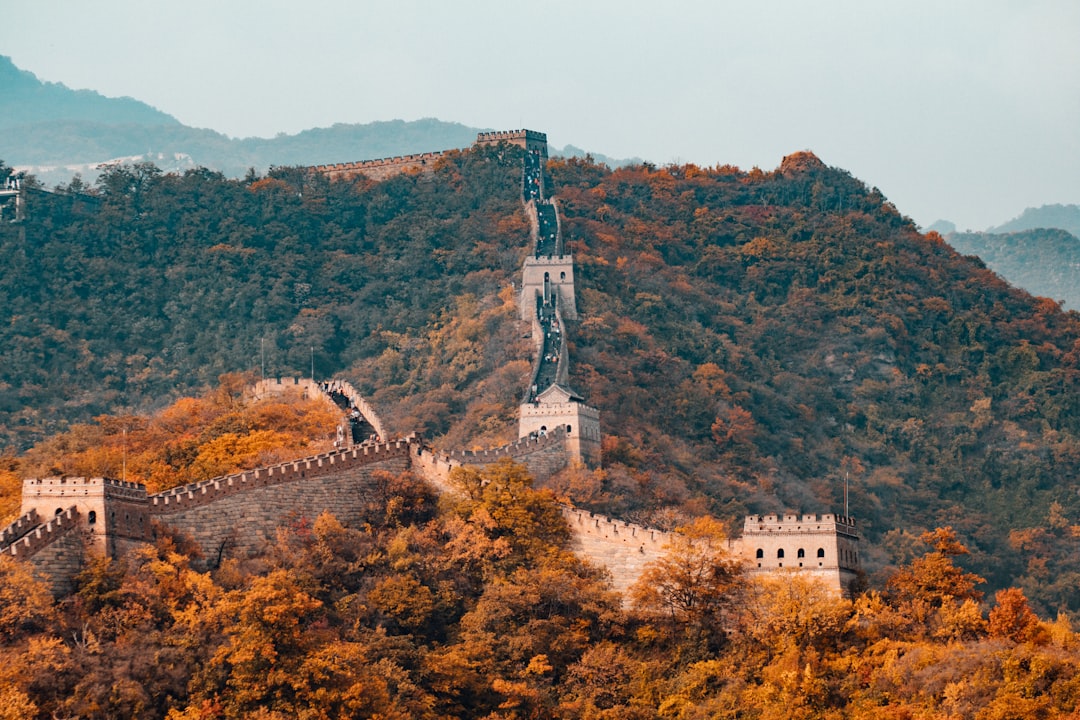
- The Great Wall at Jinshanling — Jinshanling’s 10.5 km stretch offers crumbling, unrestored sections that Badaling’s 80,000 daily visitors never see.
- Karst Landscape of Zhangjiajie — Over 3,000 sandstone pillars rise up to 243 meters, the direct inspiration for the floating mountains in Avatar.
- Terracotta Army, Xi’an — More than 8,000 individually sculpted soldiers buried since 210 BC, still only partially excavated after 50 years.
Scroll down for our complete travel guide with tips on getting there, where to stay, costs and more.
Getting There & Transport
Which airports are the best entry points into China?
Beijing Capital (PEK) and Shanghai Pudong (PVG) are China’s two dominant international hubs. In my experience, PVG handles the widest range of intercontinental routes and connects fastest to the high-speed rail network. Guangzhou Baiyun (CAN) is your best gateway for southern China and Southeast Asia connections. Chengdu Tianfu (TFU), opened in 2021, is rapidly expanding as the western hub with over 100 international routes already active. My tip: if your itinerary covers southwest China — Yunnan, Sichuan, Tibet — flying into Chengdu saves you at least 6 hours of overland travel versus routing through Beijing. One caveat most guides omit: international arrivals at smaller hubs like Kunming Changshui (KMG) can have significantly slower immigration queues — budget 90 minutes minimum for clearance there.
How do I get from the airport to my first accommodation in China?
Take the Airport Express train wherever available — it’s the fastest and cheapest option. In Beijing, the Capital Airport Express costs ¥35 (~$5 USD) and reaches Dongzhimen station in 16 minutes. In Shanghai, the Maglev from Pudong Airport to Longyang Road takes just 8 minutes at 431 km/h for ¥55 (~$8 USD), then transfer to Metro Line 2. In my experience, taxis from Chinese airports are legitimate but the queues at PEK and PVG can run 45-60 minutes during peak hours. Ride-hailing via Didi is faster — set it up before landing using a VPN. Warning most guides omit: Didi requires a Chinese phone number for full functionality; register your overseas number in advance or it won’t accept international cards without workarounds.
What transport options are there within China?
China’s high-speed rail (HSR) network is the world’s largest at over 45,000 km of track — it is your single best tool for intercity travel. Trains routinely run at 350 km/h, meaning Beijing to Shanghai in 4.5 hours for around ¥553 (~$77 USD) in second class. Domestic flights are necessary for Tibet, Xinjiang, and Yunnan’s remoter areas. Long-distance buses still connect smaller towns HSR misses. In my experience, the 12306 app books HSR tickets but requires a workaround for foreign passport holders — use Trip.com instead, which accepts international Visa cards with a small service fee. One honest caveat: domestic flights in China have a historically poor on-time rate — only about 70% depart on schedule, so never book a tight connection after a domestic flight.
Do I need a rental car to travel around China?
No — for 90% of travelers, a rental car is unnecessary and actively problematic. China requires a Chinese driving license — your international driving permit is not valid here. Road signs outside tourist corridors are predominantly in Mandarin only. In my experience, the HSR and domestic flight network covers virtually every major destination efficiently. The genuine exception is rural Yunnan, the Tibetan Plateau (where you legally need a licensed local vehicle and permit anyway), and Guizhou’s village-hopping routes — for these, hire a private driver with guide for roughly ¥600-900 (~$83-125 USD) per day, which is far safer and includes local knowledge. Renting a car is technically possible in major cities for foreigners with a temporary license, but I’d recommend against it — city traffic in Shanghai or Guangzhou is genuinely overwhelming.
How good is China’s public transport network between regions?
China’s inter-regional public transport is world-class on the main corridors, genuinely patchy elsewhere. The Beijing-Shanghai-Guangzhou HSR spine is flawless — trains run every 5-15 minutes during daytime hours. My tip: the G-class trains (top speed 350 km/h) are worth the small premium over D-class trains. However, reaching western provinces like Qinghai, Gansu, or Xinjiang still involves journeys of 10-20+ hours by rail or expensive flights. Tibet requires a special Tibet Travel Permit in addition to a Chinese visa, and you cannot enter Tibet independently — all travel must be through a licensed agency. What surprised me: even remote areas like Zhangjiajie now have dedicated HSR stations, dramatically cutting journey times compared to just five years ago.
Accommodation
Which regions of China should I stay in?
This depends entirely on your focus. Beijing (Dongcheng district for history, Sanlitun for nightlife) is the political and cultural core. Shanghai’s Jing’an and Former French Concession districts give you cosmopolitan China at its most polished. For natural landscapes, Yunnan Province — specifically Lijiang and Dali — offers minority cultures and mountain scenery with better infrastructure than most comparable destinations. Sichuan (base in Chengdu’s Jinli area) puts you within reach of pandas, spicy food culture, and Tibetan borderlands. My honest trade-off: Guilin and Yangshuo are breathtakingly beautiful but have become heavily touristed — stay in Yangshuo village rather than the main strip to retain authenticity. For the Silk Road experience, Xi’an’s Muslim Quarter neighborhood is essential and still genuinely absorbing.
What does good accommodation cost per night in China?
A solid mid-range hotel in China’s major cities costs ¥400-800 (~$55-110 USD) per night. In Beijing’s Dongcheng district, a well-reviewed 4-star property runs about ¥600 (~$83 USD). In Shanghai’s Jing’an, expect ¥700-900 (~$97-125 USD) for a comparable standard. Budget travelers can find clean, foreigner-registered hostels for ¥120-180 (~$17-25 USD) per dorm bed in most cities. Important caveat most guides omit: not every Chinese hotel is legally permitted to accept foreign guests — always look for properties that specify ’foreign guest registration’ on booking platforms. In rural areas and smaller towns, options drop sharply in both price and quality — ¥200-350 (~$28-48 USD) will get you a perfectly acceptable guesthouse in Yangshuo or Dali.
When should I book hotels in China — how far in advance?
Book at least 6-8 weeks ahead for travel during China’s three Golden Week holidays. National Day Golden Week (October 1-7) and Chinese New Year (January or February, 7-day window) are the two absolute crunch periods — popular hotels in Beijing, Xi’an, and Zhangjiajie sell out 3-4 months ahead. Labor Day Golden Week (May 1-5) has become equally congested in recent years. In my experience, for shoulder months like March, June, or September, booking 2-3 weeks out is sufficient for most cities. My tip: use Ctrip (now Trip.com) for domestic hotel inventory — it often carries properties that don’t appear on international platforms. One honest trade-off: last-minute deals in China are rare because domestic tourism demand is enormous — over 6 billion domestic trips were taken in 2023 alone.
When is the best time to travel to China?
Based on climate data, June through September offers the most reliable travel conditions across the broadest range of regions. My specific breakdown: April-May is ideal for Beijing and Xi’an — temperatures around 18-25°C, cherry blossoms in Ritan Park, and pre-Golden Week crowds. September-October is China’s finest travel window overall — summer heat breaks, harvest landscapes in Yunnan are stunning, and the first half of October predates the National Day crowds normalizing. I recommend avoiding July-August in Shanghai — humidity regularly hits 85%+ and temperatures exceed 37°C. For Tibet, the window is narrow: May to October, with July-August being the clearest but also coinciding with monsoon rains on the southern approaches. Yunnan and Sichuan are genuinely year-round destinations given their altitude-moderated climates.
How does peak season affect prices in China?
During National Day Golden Week (October 1-7) and Chinese New Year, hotel prices in top destinations spike 50-150% above standard rates. A ¥600 Beijing hotel routinely becomes ¥1,200-1,500 during Golden Week. Train tickets on popular routes — especially Beijing-Shanghai — sell out within minutes of opening (tickets go on sale 15 days before departure on 12306). Domestic flight prices surge equally dramatically. What surprised me: theme parks and major attractions like the Forbidden City (which caps at 40,000 visitors daily) require tickets booked weeks ahead during these periods, or you simply cannot enter regardless of price. My honest tip: if your dates overlap with any Golden Week, build 3 extra hours into every transit day — stations and airports operate at extraordinary capacity.
Best Time to Visit
Which regions of China have different climate zones?
China spans five major climate zones across its 9.6 million km². Northeast China (Heilongjiang, Jilin) has a subarctic continental climate — Harbin regularly hits -30°C in January, making it home to the world’s largest ice festival. Central and Eastern China (Beijing, Shanghai, Xi’an) experience four distinct seasons with hot, humid summers. South China (Guangdong, Hainan) is subtropical — Hainan Island has a genuine tropical climate with year-round beach season. Yunnan Province is unique: its altitude diversity creates simultaneous tropical valleys and alpine meadows within 150 km of each other — Xishuangbanna is tropical while Shangri-La sits at 3,300 meters with cool summers and freezing winters. Xinjiang in the northwest is arid continental — scorching summers, frigid winters, with the Turpan Depression being one of the hottest places in Asia at 47°C+.
What are the rainy seasons in China?
China’s rainy patterns are highly regional — there is no single national rainy season. The Meiyu (Plum Rain) season hits the Yangtze River basin — Shanghai, Nanjing, Hangzhou — in mid-June through mid-July, bringing persistent grey drizzle for 3-4 weeks. Southern China (Guangdong, Fujian) sees its heaviest rain from April through September, with Guangzhou averaging 180mm in June alone. Southwest China (Sichuan, Yunnan) has a monsoon season running June through September — Chengdu is famously overcast, averaging only 1,100 sunshine hours per year. North China (Beijing, Xi’an) concentrates 70% of its annual rainfall in July and August. One caveat: Yunnan’s rainy season is often dramatic afternoon thunderstorms followed by clear mornings — perfectly manageable for travel, unlike the persistent damp of the Yangtze basin Meiyu.
What does a trip to China cost per person per day?
Budget travelers can manage on ¥250-350 (~$35-48 USD) per day using hostels, local restaurants, and HSR second class. A comfortable mid-range traveler — private hotel room, sit-down meals, entry fees, and occasional taxis — should budget ¥600-900 (~$83-125 USD) per day. Upmarket travel with 4-star hotels, guided experiences, and business-class trains runs ¥1,500-2,500+ (~$208-347 USD) per day. In my experience, the biggest daily variable is intercity transport — a single HSR ticket from Beijing to Chengdu costs ¥860 (~$119 USD) in second class, which can blow a budget day’s accommodation budget in one move. My honest trade-off: China is extraordinarily affordable for food and local transport but expensive for entrance fees to major sites — the Jiuzhaigou Valley ticket alone costs ¥169 (~$23 USD).
How expensive is food in China?
Food in China is one of the great travel bargains globally. A proper sit-down meal at a local Chinese restaurant costs ¥25-60 (~$3.50-8 USD) per person including tea. Street food benchmarks: Jianbing (Chinese crêpe) in Beijing costs ¥8-12 (~$1.10-1.65 USD); a bowl of Lanzhou-style beef noodles runs ¥18-25 (~$2.50-3.50 USD). In Shanghai’s Former French Concession, Western-style café brunches start at ¥120+ (~$17 USD) — more than a full Chinese banquet nearby. My tip: eat where the construction workers eat — look for laminated menus with photos and prices posted outside; these spots almost always serve better food than tourist-facing restaurants at one-third the price. Honest caveat: food hygiene standards vary enormously — I’ve had some of my finest meals from street stalls and some of my worst from hotel restaurants.
What hidden costs should I expect when traveling in China?
VPN service is your first hidden cost — budget $3-12 USD per month for a reliable provider like ExpressVPN or Astrill, purchased before you enter China (you cannot download most VPN apps once inside the firewall). Without it, Google Maps, WhatsApp, Instagram, and Gmail are all blocked. Visa fees for most Western passport holders run $140-185 USD through official channels. Attraction entrance fees add up fast — the Forbidden City is ¥60-80 (~$8-11 USD), the Summer Palace ¥30-60 (~$4-8 USD), and Zhangjiajie National Park ¥225 (~$31 USD). In Tibet, mandatory guided tour packages typically add ¥1,500-3,000+ (~$208-416 USD) to your base costs. What surprised me: luggage storage at HSR stations charges by the hour — budget ¥15-30 (~$2-4 USD) per item per session.
Budget & Costs
How much cash should I bring to China?
Bring ¥500-1,000 in cash (~$70-140 USD) as emergency backup, but in practice China runs on mobile payments — specifically Alipay and WeChat Pay. As of 2024, foreign visitors can now link international Visa and Mastercard directly to Alipay’s international version without needing a Chinese bank account — a massive improvement. Many street vendors, local markets, and small restaurants are cash-free, which surprised me deeply on my first visit. ATMs accepting foreign cards exist but are concentrated in cities — the ICBC and Bank of China networks are most reliable, charging roughly ¥25-35 (~$3.50-5 USD) per withdrawal. My honest warning: in rural areas of Gansu, Guizhou, or inland Yunnan, mobile payment infrastructure works perfectly but ATMs can be scarce — withdraw cash before leaving provincial capitals.
Which credit cards are accepted in China?
Visa and Mastercard are accepted at 4-and-5-star hotels, international chains, and airport shops, but are essentially useless in daily life outside these contexts. UnionPay is China’s dominant card network — if your bank issues a UnionPay card, it works almost universally. The practical reality: Alipay and WeChat Pay handle the overwhelming majority of transactions. My tip: set up Alipay International before departure — link your Visa or Mastercard and use it everywhere like a local. American Express is rarely accepted outside luxury hotels. Honest caveat: even with Alipay international working, some government-run ticketing systems (including the Forbidden City booking portal) require a Chinese bank-linked account or WeChat Pay with Chinese ID verification — buy these tickets through Trip.com or Klook with your international card instead.
Which regions of China must I not miss?
Beijing is non-negotiable — the Forbidden City, Temple of Heaven, and Jinshanling Great Wall alone justify the trip. Xi’an gives you the Terracotta Army and the Muslim Quarter’s Huimin Street, one of China’s most atmospheric food strips. Yunnan Province — specifically the Dali-Lijiang-Shangri-La corridor — offers ethnic minority cultures, Tiger Leaping Gorge trekking, and landscapes unlike anywhere else in Asia. Sichuan with Chengdu as your base covers panda conservation, Tibetan border towns, and the spiciest cuisine on Earth. My honest trade-off: Shanghai is spectacular but feels the least distinctly ‘Chinese’ of the major cities — I’d prioritize it for architecture and dining but not as your only stop. Guilin and Yangshuo’s karst river scenery is genuinely unmissable — the Li River cruise from Guilin to Yangshuo costs ¥210-498 (~$29-69 USD) depending on class.
What are the tourist highlights of China?
The Great Wall (best at Jinshanling, Mutianyu, or the truly wild Simatai section) is China’s defining monument — 8,851 km of total length surveyed in 2009, though the full system with all branches exceeds 21,000 km. The Terracotta Army outside Xi’an remains one of archaeology’s greatest discoveries. Zhangjiajie National Forest Park (the Avatar mountains) has 3,000+ sandstone pillars — allow 3 full days. Jiuzhaigou Valley in Sichuan has turquoise lakes at 2,000-4,500 meters altitude that look digitally enhanced but are completely real. The Potala Palace in Lhasa sits at 3,767 meters and requires acclimatization before visiting. What surprised me: the West Lake in Hangzhou — just 75 minutes by HSR from Shanghai — is perhaps China’s most serene and underappreciated major sight.
What experiences in China are found nowhere else on Earth?
Taking the world’s highest railway to Tibet — the Qinghai-Tibet Railway climbs to 5,072 meters at Tanggula Pass, the highest railway point on Earth — is genuinely irreplaceable. Eating hot pot in Chengdu at a local institution like Haidilao at midnight, surrounded entirely by Chinese families, is a cultural experience no museum can replicate. Attending Harbin’s International Ice and Snow Sculpture Festival (January-February) where structures exceed 50 meters tall is otherworldly. In my experience, cruising the Yangtze through the Three Gorges (embark at Chongqing, disembark at Yichang) over 3 nights on a river cruise shows you a China that’s simultaneously ancient and rapidly vanishing. One honest caveat: the Three Gorges Dam, completed in 2006, permanently altered the landscape — the gorges are real but the riverside towns you’d have seen 20 years ago are now 140 meters underwater.
Regions & Highlights
Which areas of China are overcrowded — and what are the quieter alternatives?
Badaling Great Wall section receives up to 80,000 visitors daily in peak season — go to Jinshanling instead, which sees a fraction of that volume and has genuinely wild, unrestored sections. Lijiang Old Town in Yunnan has become severely over-commercialized — base yourself in Shuhe Ancient Town, just 4 km north, for the same Naxi architecture with 70% fewer souvenir shops. West Lake in Hangzhou is crowded on weekends — visit the Meijiawu Tea Plantation hills to the west instead. Huangshan (Yellow Mountain) sees queues of 2+ hours for cable cars in July — hike the western steps at dawn to beat them. What surprised me: Guizhou Province — particularly Zhenyuan Ancient Town and Xijiang Miao Village — offers minority culture, rice terraces, and carved wooden architecture with a fraction of Yunnan’s tourist volume, despite being equally spectacular.
How many days do I need to see China properly?
14 days is the absolute minimum for a meaningful trip covering 3-4 regions. A genuinely satisfying first-time itinerary needs 21 days. My recommended 14-day structure: Beijing (4 days) → Xi’an (2 days) → Chengdu (2 days) → Zhangjiajie (2 days) → Shanghai (2 days) with 2 transit days built in. For Yunnan justice, add 7 more days minimum. In my experience, China’s scale destroys under-planned itineraries — the country is 4,000 km wide and the temptation to tick too many destinations results in spending half your trip in transit. My honest caveat: even a 30-day trip leaves major regions — Tibet, Xinjiang, the Northeast — completely untouched. Treat your first visit as Chapter One of an ongoing relationship with the country, not a comprehensive survey.
Do I need a visa to visit China?
Most Western passport holders require a visa — apply at least 4-6 weeks before departure through the Chinese embassy or a licensed visa agency. The standard L-tourist visa costs approximately $140-185 USD for US citizens and allows a 60-day single or double-entry stay. However, China has dramatically expanded its visa-free transit policy in 2024: citizens of 54 countries (including most EU members, UK, US, Canada, and Australia) can enter without a visa for 144 hours (6 days) through designated ports including Beijing, Shanghai, Guangzhou, and Chengdu. This is genuinely useful for short trips. My honest warning: the 144-hour exemption requires you to be transiting to a third country — it’s not available if China is your final destination. For stays exceeding 6 days, a full visa is mandatory. Check your country’s current status as this policy updated repeatedly through 2024-2025.
What languages are spoken in China?
Mandarin Chinese (Putonghua) is the official language, spoken by the majority of the population as a first or second language. However, China has 56 officially recognized ethnic groups with their own languages — in Yunnan alone, over 26 languages are spoken. Cantonese dominates Guangdong Province and Hong Kong. English proficiency is concentrated in Shanghai, Beijing, and major tourist infrastructure — hotel staff, airport personnel, and HSR ticket counters in big cities usually manage basic English. In my experience, beyond major city centers, English communication drops to near-zero — download Pleco (offline Chinese dictionary) and Google Translate’s offline Chinese pack before your trip. My tip: carry a card with your destination address written in Chinese characters — taxi drivers and local helpers can read it even when verbal communication fails completely.
What cultural rules do I need to know before visiting China?
Avoid discussing Taiwan, Tibet, Xinjiang, or Tiananmen Square publicly or with people you’ve just met — these topics carry genuine social and legal sensitivity that guidebooks consistently understate. At Buddhist temples and Taoist shrines, remove hats, dress modestly, and don’t point feet toward altars. Tipping is not customary in China — leaving cash at a restaurant table can cause confusion, though it’s now accepted in Shanghai’s international restaurant scene. Loud phone calls in any setting are completely socially normal in China — don’t be surprised. What surprised me: punctuality is taken very seriously for business but more loosely interpreted for social engagements. In Tibetan Buddhist areas, always walk clockwise around monasteries and prayer wheels — walking counterclockwise is considered deeply disrespectful. Photographing military installations, police, or government buildings carries real legal risk — ¥5,000+ fines and camera confiscation are documented outcomes.
Practical Tips
How safe is China for travelers?
China is extremely safe for tourists in terms of violent crime — street robbery, assault, and scams targeting foreigners physically are rare compared to most major travel destinations. In my experience across 15+ visits over 10 years, I’ve never felt physically threatened. The genuine risks are different: elaborate scams targeting tourists in Shanghai’s Nanjing Road and Beijing’s Wangfujing areas involve being invited to ‘tea ceremonies’ or ‘art student shows’ that end in bills of ¥2,000-5,000 (~$278-694 USD) — these are ongoing and well-documented. Petty theft in crowded tourist areas and on overnight trains exists — use the luggage locks on overnight sleepers. One honest caveat: legal risk for political expression is real and qualitatively different from safety concerns in Western destinations — exercising caution online (use a VPN) and in public conversation about sensitive topics is not paranoia, it’s practical.
What health precautions should I take before visiting China?
Hepatitis A and B vaccinations are strongly recommended — consult a travel clinic 6-8 weeks before departure as some vaccines require multiple doses. Typhoid is recommended for travelers venturing outside major cities. For Tibet, discuss altitude sickness (AMS) medication with your doctor — Acetazolamide (Diamox) is the standard prophylactic, starting 24-48 hours before ascent. Air quality is a significant health consideration: Beijing’s PM2.5 frequently exceeds 150 μg/m³ in winter (WHO safe limit is 15 μg/m³) — bring N95 masks and download the AQI (Air Quality Index) app to monitor daily conditions. Tap water is not safe to drink anywhere in China — bottled water costs ¥2-3 (~$0.28-0.42 USD) per 500ml at convenience stores. What surprised me: food poisoning risk is relatively low at established restaurants but higher at unlicensed street stalls — trust your eyes and choose busy stalls with fast turnover.
What SIM card or eSIM options are available for China?
Purchase an eSIM before departure — this is my strongest practical recommendation for any China trip. Airalo’s China plan costs approximately $8-15 USD for 3GB and works immediately on arrival without hunting for a SIM vendor. Crucially, many eSIMs routing through Hong Kong or international networks bypass the Great Firewall partially, giving limited access to blocked apps. For longer stays, China Unicom’s Tourist SIM (available at major airports for ¥99-199 (~$14-28 USD)) includes calls and data valid for 30 days. Honest caveat: no Chinese SIM gives you unfiltered internet — Google, WhatsApp, Instagram, and all Meta services remain blocked regardless of your SIM. You need a VPN installed and tested before you land (Astrill and ExpressVPN have the best China track records in 2025). Do not try to download VPN apps inside China — they are removed from the Chinese App Store.
Which apps do you recommend for traveling in China?
Install and test all of these before landing: Alipay International (payments everywhere), DiDi Global (ride-hailing, English interface available), Trip.com (trains, flights, hotels — accepts international cards), Pleco (offline Chinese dictionary, essential), Maps.me or MAPS.me with offline China maps downloaded (Google Maps is blocked), and a reliable VPN — I use Astrill for China specifically, at $10/month. WeChat is worth installing — many local businesses, guesthouses, and guides communicate exclusively through it. What surprised me: Baidu Maps (China’s Google Maps equivalent) is actually more accurate for Chinese addresses but requires basic Mandarin reading ability to navigate. My tip: download the AQI app (air quality monitor) and 12306 (official train app, cumbersome but useful for seeing real-time availability) as supplemental tools. Set everything up at home — the firewall makes downloading apps inside China genuinely difficult without a VPN already working.
What are the most common traveler mistakes made in China?
Underestimating distances is the single biggest mistake — China’s map looks manageable until you realize Beijing to Kunming is the same distance as London to Cairo. Packing an itinerary of 8 cities in 14 days is a rookie error that turns the trip into an exhausting transit marathon. Not setting up Alipay before arrival leaves you fumbling with cash in a society that’s moved almost entirely to mobile payment. Booking hotels that can’t accept foreign guests — always verify the property lists foreign-guest registration capability. Visiting the Forbidden City without booking online first — it caps at 40,000 visitors daily and sells out weeks ahead during peak periods. In my experience, the most painful mistake I see repeatedly: not getting a VPN before arrival means losing access to all your standard apps for the entire trip. Finally, underestimating jet lag — China runs on a single time zone (UTC+8) despite spanning what would naturally be 5 zones, meaning western China sees sunrise at 10am in winter.
China at a Glance
| Population | 1,404,890,000 |
|---|---|
| Currency | renminbi (¥) |
| Official language | Putonghua |
| Time zone | China Standard Time |
Source: Wikidata, retrieved August 2026.
Essential Resources for Planning Your Trip to China
- CNTO: Home — official visitor information, passes & events
- Wikipedia: China — history, geography & background
- Wikivoyage: China — community travel guide & practical tips
- China Travel 2026 – Lonely Planet | Asia — expert itineraries & travel inspiration
- THE 15 BEST Things to Do in China (2026) — hotels, restaurants & traveller reviews
- Travel / Tourist Office of the People’s Republic of China — how to get around
- Numbeo: Cost of Living in China — current prices & cost comparison
- Timeanddate: China Weather & Climate — forecasts & climate statistics
- World Heritage and Sustainable Tourism Programme
More Perspectives on China
- Visiting China Tips and advice : r/travelchina
- China Travel Guide (Updated 2026)
- China Travel Tips: Because China is Not the Easiest Place …
China Travel Videos
Watch these videos for a visual preview before your trip:
- Travel to China in 2026? WATCH THIS FIRST!
- China Travel Guide 2026: Everything You NEED to Know Before You Go
- Wonders of China | The Middle Kingdom’s Treasures | Most Amazing Places in China | 4K Travel Guide
China Travel Discussions on Reddit
Real traveller experiences and community advice:
Data Sources
This page was compiled using data from Wikipedia, Wikidata, Open-Meteo (climate), Numbeo (cost of living) and REST Countries. Information is updated regularly.