
Bhutan: The Complete Travel Guide (2026)
Bhutan Travel Guide: Everything You Need to Know (2026)
Bhutan, the Kingdom of Bhutan in the Eastern Himalayas, covers 38,394 square kilometres and is home to 787,424 people — one of the least-visited countries on Earth by deliberate government policy. The capital Thimphu sits at 2,334 metres altitude, making it one of the highest capital cities in the world. Bhutan is the only country that measures success by Gross National Happiness rather than GDP, a philosophy that shapes every aspect of how visitors experience it.
Three Things Not to Miss in Bhutan
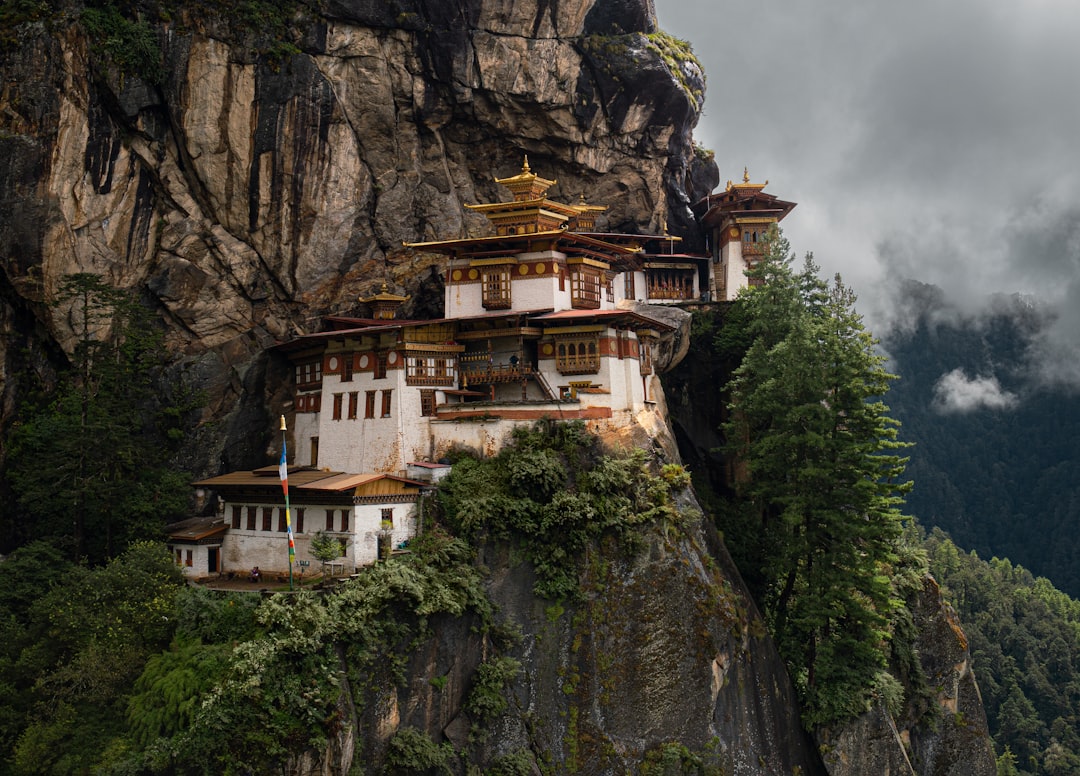
- Tiger’s Nest Monastery (Paro Taktsang) — Bhutan’s most iconic sight — a 17th-century monastery clinging to a 900-metre cliff face above Paro Valley.
- Punakha Dzong — The 17th-century fortress-monastery at the confluence of two rivers is the most photogenic dzong in the country.
- Haa Valley Festival — A remote, rarely visited cultural festival showcasing traditional nomadic Bhutanese life at 2,670 metres altitude.
Scroll down for our complete travel guide with tips on getting there, where to stay, costs and more.
Arriving in Bhutan: Airports & Transport
Which airports are the best entry points into Bhutan?
**Paro International Airport (PBH)** is the only international airport in Bhutan — full stop. There is no alternative. It sits at **2,235 metres** in a narrow valley, making it one of the most technically demanding approaches in the world, certified for only a handful of pilots globally. Druk Air and Bhutan Airlines are the two national carriers operating it. In my experience, flying in from **Kathmandu, Delhi, or Kolkata** gives the most route options and competitive pricing. What surprises most travellers: flights from Bangkok and Singapore are available but less frequent than you’d expect. Book early — PBH has limited slots per day.
How do I get from Paro Airport to my first accommodation in Bhutan?
Your licensed Bhutanese tour operator handles this — no exceptions. Under Bhutan’s tourism rules, a registered guide and driver must collect you at **Paro Airport**. The drive from Paro to **Thimphu** takes approximately **1.5 hours** and covers **54 km** on a winding mountain road. In my experience, this transfer is included in your daily Sustainable Development Fee package. The honest caveat: you have zero freedom to jump in a random taxi or arrange your own transfer independently — the system is entirely operator-managed, which feels rigid but is actually seamless in practice.
What transport options are there within Bhutan?
Private vehicle with a licensed driver is the primary way to move between regions in Bhutan. Public buses exist between major towns like **Thimphu, Paro, Punakha, and Wangdue Phodrang**, but independent travellers cannot freely use them without a guide. The **Lateral Road** connecting east to west spans roughly **1,600 km** and is the country’s main highway artery. My tip: internal flights between **Bumthang** and **Yongphula** exist on paper but operate irregularly. For serious east Bhutan exploration, budget an extra **4-5 driving days** — roads are narrow, mountain passes like **Thrumshingla at 3,750 metres** can close in winter.
Do I need a rental car in Bhutan?
No — and you legally cannot self-drive as a foreign tourist in Bhutan. All transport is arranged through your licensed tour operator, who assigns a driver for the entire trip. In my experience, this actually removes considerable stress on the mountain roads. The honest trade-off: you lose spontaneity entirely. If you want to stop at a random viewpoint for 20 minutes, you can — your driver expects it — but detouring to an unplanned village requires rescheduling with your operator. Budget for a **vehicle and driver** as part of your package; this is non-negotiable under **Bhutan’s Tourism Policy**.
How good is the public transport network between regions of Bhutan?
Technically functional but practically off-limits for most international visitors. Bhutanese citizens use buses connecting **Thimphu, Paro, Punakha, Trongsa, and Bumthang**, with tickets costing roughly **BTN 150–500** per leg. However, Bhutan’s tourism regulations require foreign tourists to travel with a licensed guide, which means hopping on a public bus independently puts you in a grey legal area. What surprised me: even long-term visitors report the buses are slow, infrequent, and not air-conditioned. For a self-designed itinerary, your operator’s private vehicle is the only realistic option.
Accommodation Across Bhutan
Which regions of Bhutan should I stay in?
**Paro** and **Thimphu** are the twin anchors of any first visit — Paro for Tiger’s Nest, Thimphu for cultural immersion in the capital. **Punakha**, just **77 km** from Thimphu, is essential for Punakha Dzong and the Himalayan views. For a deeper experience, **Bumthang Valley** in central Bhutan is where traditional culture feels most alive — the four sub-valleys host the oldest temples in the country. My tip: do not skip **Haa Valley** if you visit in July during the festival — it is the least-touristed accessible region. Avoid spreading across too many regions in under **10 days**; the drives are long.
What does good accommodation cost per night in Bhutan?
Accommodation in Bhutan ranges from **USD 80** per night for a standard 3-star tourist-class hotel to **USD 500+** for luxury lodges like **Amankora** or **Six Senses Thimphu**. Mid-range heritage farmhouse stays in **Paro** run roughly **USD 120–200** per night including breakfast and dinner. The critical caveat: accommodation costs are technically bundled inside your daily **Sustainable Development Fee (SDF)** of **USD 100 per person per day**, which funds tourism infrastructure. In practice, your operator quotes a total package price that packages hotel, guide, transport, and meals together — isolating the pure accommodation cost is difficult.
When should I book hotels in Bhutan — how far in advance?
Book your licensed tour operator **at least 3 months ahead** for peak season visits. For the **Paro Tsechu Festival** in spring (typically March–April), **6 months minimum** is not an exaggeration — quality hotels in **Paro** sell out entirely. In my experience, operators like **Bhutan Swallowtail** or **Etho Metho Tours** confirm hotel availability before locking your itinerary. The warning most guides omit: Bhutan has a limited hotel bed count nationwide — roughly **3,000 licensed tourist beds** in the entire country — so last-minute availability is genuinely rare, unlike almost every other destination.
When is the best time to travel to Bhutan?
**March to May** and **September to November** are the two golden windows. Spring brings blooming rhododendrons above **3,500 metres** and the famous Paro Tsechu festival. Autumn delivers the clearest mountain views and the Thimphu Tshechu in September. Based on climate analysis, **June through September** is technically listed as best for warm temperatures, but June–August overlaps with monsoon season — trails turn muddy and mountain views disappear behind cloud. In my experience, **October is the single best month**: skies are razor-sharp, temperatures in Thimphu hover around **18°C**, and the post-monsoon landscape is brilliant green.
How does peak season affect prices in Bhutan?
Peak season in Bhutan runs **March–May and September–November**, and the **USD 100 per person per day Sustainable Development Fee** applies year-round without seasonal variation — that is the honest reality of Bhutan’s pricing model. However, hotel surcharges during **Paro Tsechu** (March/April) add **USD 50–100 per night** above normal rates at popular lodges like **Zhiwa Ling Heritage Hotel**. My tip: the SDF is non-negotiable regardless of season, so the real cost difference comes from accommodation premiums and flight prices into **PBH**, which spike by roughly **30–40%** during festival weeks.
Bhutan Season by Season
Which regions of Bhutan have different climate zones?
Bhutan compresses extraordinary climate diversity into **38,394 square kilometres**. The southern foothills bordering India — **Phuentsholing and Gelephu** — are subtropical, reaching **30°C+** in summer and receiving heavy monsoon rainfall. The central valleys — **Thimphu at 2,334 m, Paro at 2,200 m, Punakha at 1,200 m** — have a temperate climate with cold winters. **Punakha** is notably warmer than Thimphu year-round, earning it the role of Bhutan’s winter capital historically. Northern Bhutan above **4,000 metres** in **Laya and Lunana** has an alpine-arctic climate, accessible only to trekkers in narrow seasonal windows.
What are the rainy seasons in Bhutan?
The monsoon hits Bhutan from **late June through mid-September**, with the heaviest rainfall in the southern districts and progressively less in the central valleys. **Thimphu receives roughly 650 mm annually**, most of it during these months. The honest warning: the famous **Snowman Trek** in the north is completely impassable during monsoon due to swollen rivers and landslides. Even popular routes like **Druk Path Trek** become slippery and leechy in July–August. If you must travel in monsoon season, **Paro and Punakha** are manageable — the dzongs look dramatically misty — but abandon any serious trekking ambitions.
What does a trip to Bhutan cost per person per day?
Budget a minimum of **USD 250 per person per day** as a realistic floor for 2026. This breaks down as: **USD 100 SDF**, roughly **USD 65–80** for accommodation in a 3-star property, **USD 40** for a guide and driver share, and **USD 20–30** for personal expenses. Luxury travellers at **Six Senses** or **Amankora** should budget **USD 700–1,000 per day**. In my experience, the SDF alone filters out budget travellers — Bhutan is structurally expensive by design. The caveat: solo travellers pay a **USD 40 surcharge per day** over the group rate under current regulations, making group travel significantly cheaper per head.
How expensive is food in Bhutan?
Food is generally included in your tour package, which removes most daily decision-making. When eating independently, a local restaurant meal in **Thimphu’s Chang Lam** area costs **BTN 150–300** (roughly **USD 1.80–3.60**). A mid-range restaurant dinner runs **BTN 800–1,500**. The national dish **Ema Datshi** — chilli and cheese stew — is the cheapest and most satisfying meal at **BTN 120** in local canteens. What surprises most visitors: alcohol is cheap — a bottle of local **Red Panda Beer** costs **BTN 180** (about **USD 2.15**). Imported food and coffee at Thimphu’s trendy **Mojo Park** area costs closer to Western cafe prices.
What hidden costs should I expect when travelling in Bhutan?
The **USD 40 per day solo traveller surcharge** is the biggest surprise for independent travellers — it is rarely flagged upfront by booking agents. Trekking permits add **BTN 500–1,000 per day** depending on route. Hiring camping gear for the **Druk Path Trek** costs an additional **USD 20–30 per day**. Tips for guides are culturally expected but not mandatory — **USD 10–15 per day** for your guide and **USD 8–10** for your driver is standard. Entry fees to major dzongs like **Rinpung Dzong in Paro** are included in the SDF, but specialty cultural performances like **Thanka painting classes** cost extra at around **BTN 2,000 per session**.
Budgeting Your Bhutan Trip
How much cash should I bring to Bhutan?
Bring **USD 200–300 in cash** as backup, but convert to **Bhutanese Ngultrum (BTN)** at **Paro Airport or Bank of Bhutan in Thimphu** for daily use. The exchange rate is pegged **1:1 with Indian Rupee**, and Indian Rupees (in denominations of **INR 100 and below**) are widely accepted across Bhutan. The honest caveat: **ATMs exist in Thimphu and Paro** but frequently run out of cash or experience network errors — I have personally been turned away from 3 consecutive machines. Outside major towns, cash is the only option. Do not rely solely on your card for anything.
Which credit cards are accepted in Bhutan?
**Visa and Mastercard** are accepted at upmarket hotels in **Thimphu and Paro** and at some restaurants along **Norzin Lam (Thimphu’s main street)**. American Express is largely unaccepted. In my experience, roughly **60% of transactions** — including souvenir shops, local restaurants, and rural guesthouses — are cash-only. A **3–5% foreign transaction fee** applies on most international cards. My tip: notify your bank before travelling and use a fee-free travel card like **Wise or Revolut** for hotel payments where cards are accepted. In eastern Bhutan (Bumthang, Trashigang), assume cash-only for virtually everything.
Which regions of Bhutan must I not miss?
**Paro Valley** is non-negotiable — Tiger’s Nest alone justifies the trip. **Punakha** at **1,200 metres** is warmer, greener, and less visited than Thimphu despite being only **77 km away**. **Bumthang Valley** is Bhutan’s cultural heartland, home to **Jakar Dzong** and the sacred **Jambay Lhakhang temple**, reportedly built in the 7th century. If you have **10+ days**, push east to **Trongsa**, where the massive dzong overlooks a gorge visible for 10 kilometres. The region most guides skip: **Haa Valley**, accessible but rarely programmed, offers an authentic look at traditional Bhutanese village life without a tourist in sight.
What are the tourist highlights of Bhutan?
**Tiger’s Nest Monastery (Paro Taktsang)** is the defining image of Bhutan — a **4-hour round-trip hike** gains **900 metres** and rewards with a 17th-century monastery plastered to a sheer cliff. **Punakha Dzong**, built in 1637 at the confluence of **Mo Chhu and Pho Chhu rivers**, is architecturally Bhutan’s finest. The **Thimphu Tshechu festival** in September draws mask dances performed in the **Tashichho Dzong** courtyard. The **Dochula Pass at 3,100 metres** on the Thimphu–Punakha road offers a panorama of **108 chortens** with Himalayan peaks behind — on a clear October morning, this view alone is worth the airfare.
What experiences in Bhutan are found nowhere else on Earth?
The **Hot Stone Bath** — a traditional Bhutanese therapy where river stones heated in fire are dropped into a wooden tub infused with **artemisia herb** — is something I have experienced nowhere else. It costs **BTN 1,500–2,500** at farmhouses in **Paro and Haa**. Witnessing a **Tsechu festival mask dance (Cham)** in a dzong courtyard, performed by monks in costumes unchanged for **400 years**, is genuinely otherworldly. The **Snowman Trek** — 25 days crossing **11 passes above 5,000 metres** — is considered the world’s hardest trek. And being in a country where **plastic bags have been banned since 1999** and tobacco sales are illegal shapes daily experience in subtle but profound ways.
Which Part of Bhutan to Choose
Which areas of Bhutan are overcrowded — and what are the quieter alternatives?
**Paro during Tsechu festival** (March/April) is genuinely overwhelmed — the **Tiger’s Nest trail** sees **500+ hikers daily**, parking is chaotic, and hotels charge peak surcharges. **Thimphu on weekends** also feels crowded around **Tashichho Dzong**. My recommendation: substitute Paro’s busy trail days with the **Chele La Pass hike at 3,988 metres** — stunning rhododendron forests, near-zero crowds, **45 minutes from Paro**. For a quieter alternative to Thimphu’s weekend crowds, head to **Wangdue Phodrang** — a pleasant small town with its own dzong and virtually no tour groups. Eastern Bhutan generally receives **fewer than 5%** of total visitor numbers.
How many days do I need to visit Bhutan?
**7 days is the practical minimum** for a meaningful trip covering Paro, Thimphu, and Punakha. In my experience, **10–14 days** is the sweet spot — add Bumthang and you cross a threshold from tourist to traveller. The honest truth: Bhutan rewards slow travel, and rushing the **Paro–Thimphu–Punakha loop** in 5 days leaves you feeling like you scratched the surface. For trekkers, the **Druk Path Trek** alone requires **5–6 days**. The **Snowman Trek** needs **25 days**. Budget the **USD 100 SDF per day** into your planning — every extra day costs real money, which naturally shapes itinerary length.
Do I need a visa to enter Bhutan?
**Yes — all visitors except Indian, Bangladeshi, and Maldivian nationals require a visa.** The Bhutan visa costs **USD 40** and is only issued through a licensed Bhutanese tour operator — you cannot apply independently online or at an embassy. Your operator submits your application and receives clearance before you fly; the actual visa stamp is issued at **Paro Airport** on arrival. Processing takes **3–5 working days** typically. The caveat most guides omit: Indian nationals technically need no visa but must carry a **valid passport or Voter ID card** — a driving licence is no longer accepted at **PBH** as of recent updates.
What languages are spoken in Bhutan?
**Dzongkha** is the official national language, but **English** is the medium of instruction in schools and is widely spoken in **Thimphu, Paro, and Punakha** — including by most hotel staff, guides, and government officials. In my experience, communicating in English in tourist areas is effortless. However, in rural eastern districts like **Trashigang or Lhuentse**, English proficiency drops sharply and local dialects (there are **19 recognized languages** in Bhutan) dominate. Your licensed guide acts as a cultural and linguistic bridge — which is one genuine practical argument for the mandatory guide system beyond government revenue.
What cultural rules do I need to know before visiting Bhutan?
**Dress modestly when entering dzongs** — long sleeves and trousers or skirt below the knee are mandatory, and a **kabney (men) or rachu (women) sash** is required, provided at the entrance. Smoking is banned in public spaces and tobacco sales require a customs duty declaration for personal import. Photography inside **lhakhangs (temples)** requires permission and sometimes a fee of **BTN 500–1,000**. In my experience, Bhutanese people are warm but quietly conservative — loud behaviour, public displays of affection, and photographing monks without asking are all considered disrespectful. Circling **chortens and prayer wheels** clockwise is the correct direction — going anti-clockwise is an offence to locals.
Before You Go to Bhutan
How safe is Bhutan for travellers?
**Bhutan is one of the safest countries in Asia** — petty crime targeting tourists is virtually unheard of. Thimphu’s **crime index is among the lowest of any Asian capital** and I have never felt unsafe at any hour. The honest risks are environmental, not human: altitude sickness above **3,000 metres** is real (the **Dochula Pass is 3,100 m**), mountain roads have sheer drop-offs and no guard rails on older sections, and the **Snowman Trek** has genuine wilderness danger. The mandatory guide system ironically functions as a safety net — you are never navigating alone. Solo female travellers consistently report feeling completely safe throughout Bhutan.
What health precautions should I take before travelling to Bhutan?
**Acclimatize before arriving** if you are flying directly from sea level — Thimphu at **2,334 metres** causes mild altitude sickness in roughly **25% of visitors**. Drink **3–4 litres of water daily** for the first 48 hours and avoid alcohol on day one. Carry **acetazolamide (Diamox)** prescribed before travel — most pharmacies in Thimphu stock it but supply is not guaranteed. Vaccinations for **Hepatitis A, Typhoid, and Tetanus** are recommended by most travel health clinics. Tap water in Thimphu is not reliably safe — drink bottled or filtered water. The nearest major medical facility for serious emergencies is **Jigme Dorji Wangchuck National Referral Hospital in Thimphu**, but evacuations to India are common for complex cases.
What SIM card or eSIM options are available in Bhutan?
**TashiCell and Bhutan Telecom (B-Mobile)** are the two carriers. A tourist SIM costs **BTN 99–200** at **Paro Airport** or shops in **Thimphu’s Norzin Lam**. Data packages of **5 GB cost roughly BTN 300**. In my experience, coverage in Thimphu, Paro, and Punakha is solid — **4G** works reliably. Outside these centres, signal drops to **2G or nothing** across large stretches of the lateral highway. eSIM support is limited — I recommend purchasing a physical SIM at arrival. The warning most guides omit: WhatsApp calling, FaceTime, and VoIP services have historically been restricted in Bhutan — check current status before relying on them for communication.
Which apps do you recommend for travelling in Bhutan?
**Maps.me** with offline Bhutan maps downloaded before arrival is essential — Google Maps has poor coverage outside main towns. **XE Currency** for BTN/USD/INR conversions is genuinely useful daily. **iNaturalist** is my personal recommendation for Bhutan specifically — the biodiversity is extraordinary and identifying plants and birds along hikes adds a layer of engagement. Your operator will likely use **WhatsApp** to coordinate daily logistics. For altitude tracking, **Altimeter GPS** is worth installing before the **Dochula Pass** or any trekking. The honest caveat: internet access is patchy enough that apps requiring live data are unreliable outside **Thimphu and Paro**.
What are the most common traveller mistakes in Bhutan?
The biggest mistake: **underestimating drive times** between regions. The **Thimphu to Bumthang** drive is **197 km but takes 6–8 hours** — travellers who schedule morning departures and afternoon arrivals for activities arrive exhausted. Second mistake: booking the cheapest operator without checking licensing status — unlicensed operators exist and using one creates legal complications at checkpoints. In my experience, rushing **Tiger’s Nest** on day one of arrival causes altitude-related exhaustion — acclimatize for **24 hours** in Paro first. Third mistake: not budgeting for the **solo supplement** — it adds **USD 40 per day**, which over a **10-day trip** is an extra **USD 400** that blindsides budget planners.
Bhutan at a Glance
| Population | 787,424 |
|---|---|
| Currency | ngultrum (Nu) |
| Official language | Dzongkha |
| Time zone | UTC+06:00 |
Source: Wikidata, retrieved August 2026.
Essential Resources for Planning Your Trip to Bhutan
- Tourism in Bhutan — official visitor information, passes & events
- Wikipedia: Bhutan — history, geography & background
- Wikivoyage: Bhutan — community travel guide & practical tips
- Bhutan travel – Lonely Planet | Asia — expert itineraries & travel inspiration
- THE 15 BEST Things to Do in Bhutan (2026) — hotels, restaurants & traveller reviews
- Visit | Bhutan — how to get around
- Numbeo: Cost of Living in Bhutan — current prices & cost comparison
- Timeanddate: Bhutan Weather & Climate — forecasts & climate statistics
More Perspectives on Bhutan
- What’s it Really Like to Travel to Bhutan?
- Bhutan Travel Guide & Expert Tips
- Travel tips for visiting Bhutan with tour guide
Bhutan Travel Videos
Watch these videos for a visual preview before your trip:
- Visiting Bhutan: Everything You Need To Know!
- Bhutan Travel Guide: 11 Places to Visit in Bhutan (& Best Things to Do)
- I Spent 7 Days in BHUTAN | Here’s What Shocked Me! Bhutan Travel Guide!
Bhutan Travel Discussions on Reddit
Real traveller experiences and community advice:
- r/travel – Bhutan, the country that changed my perspective …
- Just returned from Bhutan and it was truly amazing : r/travel
- r/BhutanTravels
Data Sources
This page was compiled using data from Wikipedia, Wikidata, Open-Meteo (climate), Numbeo (cost of living) and REST Countries. Information is updated regularly.