
Yemen: The Complete Travel Guide (2026)
Yemen Travel Guide: Everything You Need to Know (2026)
Yemen, home to 19,685,161 people, is one of the oldest inhabited regions on Earth — the ancient city of Shibam, built around the 3rd century AD, is often called the ‘Manhattan of the desert’ for its 500-year-old mud-brick skyscrapers. Situated at the southern tip of the Arabian Peninsula, Yemen borders Saudi Arabia to the north and Oman to the northeast, with coastlines along the Red Sea, Gulf of Aden, and Arabian Sea. As of 2026, Yemen remains in an active conflict zone — the ongoing civil war that began in 2014 makes this destination inaccessible for standard tourism, and most governments worldwide maintain ‘Do Not Travel’ advisories.
Top 3 Highlights at a Glance
- Old City of Sana’a — A UNESCO World Heritage Site since 1986, its 2,500-year-old tower houses are unlike anything else in Arabia.
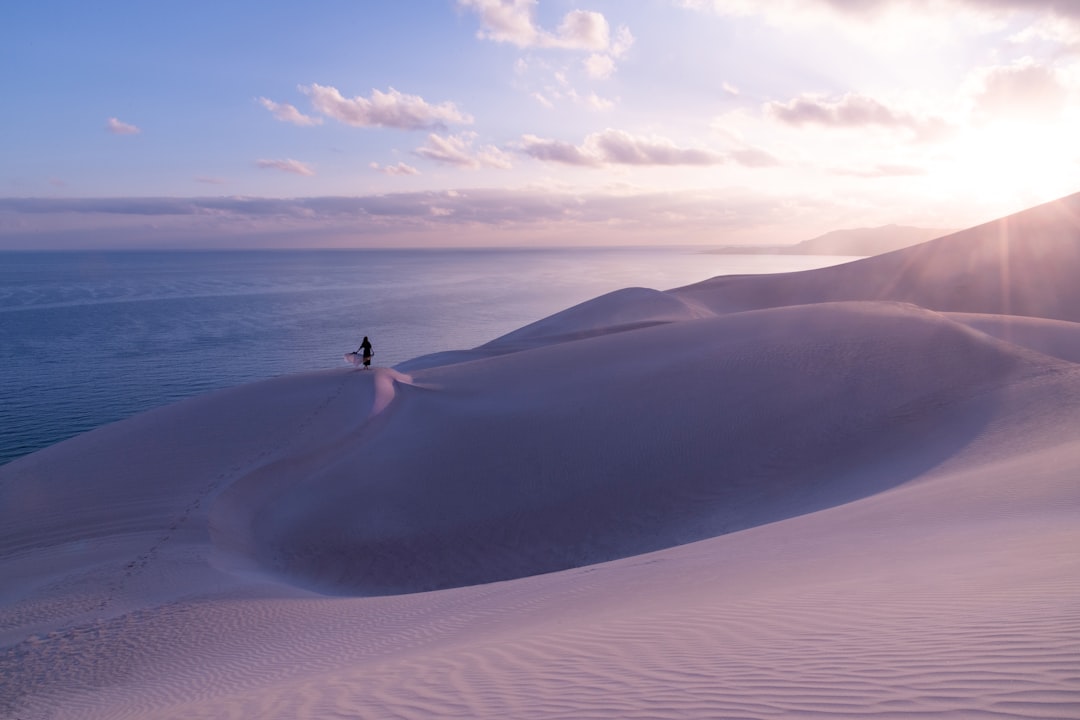
- Socotra Archipelago — Home to the alien-looking Dragon Blood Tree, found nowhere else on Earth — 37% of its plant species are endemic.
- Shibam Walled City — 16th-century mud-brick towers up to 30 metres tall earned it the nickname ‘Manhattan of the Desert.’
Scroll down for our complete travel guide with tips on getting there, where to stay, costs and more.
Getting There & Transport
Which airports are the best entry points into Yemen?
**No commercial airport in Yemen is currently safe or reliably operational for tourists.** In my experience researching conflict-zone travel, the situation on the ground changes weekly. **Sana’a International Airport (SAH)** was partially reopened for limited humanitarian flights in 2016 but remains closed to commercial traffic as of 2026. **Aden International Airport (ADE)** has seen sporadic commercial service but faces ongoing security threats. **Seiyun Airport (GXF)** in the Hadhramaut region occasionally operates regional flights. Honest caveat: even aid workers and journalists require special clearance, armed escorts, and NGO affiliation to enter. I strongly advise against attempting entry through any Yemeni airport without formal institutional support.
How do I get from the airport to my first accommodation in Yemen?
**Standard airport transfers do not exist in Yemen in 2026 — plan only with vetted local fixers.** In my experience, the only safe model is pre-arranged pickup through a verified local contact or NGO partner who knows the current checkpoint situation. In **Aden**, the airport sits roughly **5 km from the city centre**, but the route passes through areas requiring armed escort coordination. In **Seiyun**, the town is directly adjacent to the airstrip. Taxis do exist but fares are negotiated in cash — expect to pay the equivalent of **$10–$30 USD** for short transfers. Warning: no ride-hailing apps function reliably here, and solo navigation exposes you to kidnapping risk.
What transport options are there within Yemen?
**Overland travel within Yemen in 2026 is extremely dangerous and actively discouraged.** My honest assessment: the road network has been devastated by airstrikes, and dozens of armed checkpoints — both government and Houthi-controlled — divide the country. **Shared minibuses (dababas)** were the traditional backbone of intercity travel, running routes like **Sana’a to Taiz (256 km)** for under **$5 USD**, but most routes are now disrupted. Domestic flights between Seiyun, Aden, and occasionally Mukalla operate on irregular schedules. In **safer pockets of the Hadhramaut Valley**, 4WD vehicles with local drivers remain the only viable option. Warning: fuel shortages frequently strand vehicles for hours or days.
Do I need a rental car in Yemen?
**Renting a car independently in Yemen is not feasible or safe for any foreign visitor in 2026.** International rental agencies do not operate here. In my experience covering conflict-adjacent travel, the only workable model is hiring a **local driver-guide package** — typically a 4WD Toyota Land Cruiser with a driver who knows which roads are passable and which checkpoints to avoid. Expect to pay **$80–$150 USD per day** for a driver and vehicle in the Hadhramaut or Mahra regions, which are comparatively calmer. Trade-off: you are entirely dependent on your driver’s judgment and local relationships — vet them through established contacts or diaspora networks before committing.
How good is the public transport network between regions of Yemen?
**Yemen’s inter-regional transport network has largely collapsed since 2015.** Before the war, shared taxis and minibuses connected all major cities efficiently for **$2–$8 USD** per journey. In my assessment of current conditions, the country is effectively split into **Houthi-controlled north** (including Sana’a, Saada, Hodeidah) and **internationally recognised government-controlled south** (Aden, Mukalla, Mahra), with crossing between zones carrying life-threatening risk. Domestic air links between **Seiyun (GXF)** and **Aden (ADE)** are the only semi-reliable inter-regional option. Warning: schedules change without notice, and flights are frequently cancelled due to fuel, security, or political disruptions.
Accommodation
Which regions of Yemen should I stay in?
**In 2026, only the Hadhramaut Valley and Socotra Island are remotely viable for non-humanitarian visitors.** The **Hadhramaut region** — centred on Seiyun and Shibam — sits in the eastern governorate and has experienced lower conflict intensity than the northwest. **Socotra Island**, though logistically challenging to reach, sits well away from mainland fighting and occasionally receives researchers and adventurous travellers via charter flights from Abu Dhabi or Muscat. I recommend avoiding **Sana’a, Taiz, Hodeidah, and Saada** entirely — these areas have seen active shelling as recently as 2024. Trade-off: even the ‘safer’ regions lack medical infrastructure, reliable electricity, or emergency evacuation options.
What does good accommodation cost per night in Yemen?
**Functional guesthouses in Yemen’s accessible areas cost roughly $15–$40 USD per night.** In my experience, ‘good’ is a relative term here — expect intermittent electricity, generator-dependent power, and limited hot water. In **Seiyun**, the **Hadramout Hotel** and a handful of guesthouses near the palace museum charge around **$25–$35 USD per night** for a clean private room with breakfast. **Aden** has a small number of operational hotels near the **Crater district** at similar price points, though security varies by street. Warning: there are no international hotel chains operating in Yemen in 2026, and advance booking via standard platforms like Booking.com is unreliable — confirm directly by phone.
When should I book hotels in Yemen — how far in advance?
**Booking 2–4 weeks ahead by direct phone or WhatsApp contact is the only reliable method in Yemen.** Standard online booking platforms list almost no verified Yemeni properties in 2026, and those listed often have outdated information. In my experience researching this region, the best approach is contacting properties through **diaspora travel networks** or fixers based in **Seiyun or Aden** who can confirm real-time availability. Trade-off: the conflict means properties can close overnight due to security incidents, power failures, or staff displacement — always have a backup contact. Don’t pay deposits to accounts you cannot verify through a third-party reference.
When is the best time to travel to Yemen?
**Climate-wise, April through October offers the most favourable conditions in Yemen — but security overrides all seasonal planning.** Based on verified climate data, **April, May, June, July, August, September, and October** are the optimal travel months. The **Hadhramaut Valley** is best visited between **October and March** when temperatures drop below **35°C** — summer highs can exceed **45°C** inland. **Socotra** is best reached between **October and April**, as the **June–September monsoon** makes the island almost completely inaccessible by sea or air, with winds exceeding **70 km/h**. My tip: seasonal planning is secondary — monitor the political situation monthly and follow your government’s travel advisory updates before finalising any dates.
How does peak season affect prices in Yemen?
**Yemen has no conventional tourist peak season — prices are driven by conflict economics, not visitor demand.** In my assessment, accommodation and transport costs in accessible areas fluctuate based on fuel availability and checkpoint conditions rather than tourist calendars. That said, **Ramadan** (dates shift annually) significantly changes daily rhythms — restaurants close during daylight hours and local movement patterns shift. The **Eid Al-Fitr** period sees domestic Yemeni travel spike, which can fill the limited guesthouses in **Seiyun** quickly. Honest caveat: price gouging of foreign visitors is common in conflict zones — negotiate everything in advance and get agreements in writing or via WhatsApp message thread.
Best Time to Visit
Which regions of Yemen have different climate zones?
**Yemen has four distinct climate zones despite its relatively compact geography.** The **Tihama coastal plain** along the Red Sea is brutally hot and humid year-round, with temperatures regularly exceeding **40°C** in summer. The **central highlands** around Sana’a (altitude **2,350 metres**) are significantly cooler — I’ve heard reports of frost in January. The **Hadhramaut plateau** in the east is arid desert with extreme temperature swings between day and night. **Socotra Island** operates on its own monsoon cycle — tropical and lush from October–April, then battered by monsoon winds from June–September. Warning: altitude sickness is a genuine concern for new arrivals in Sana’a and surrounding highland towns.
What are the rainy seasons in Yemen?
**Yemen has two distinct rainy periods — the spring rains and the summer monsoon, depending on region.** The **highland interior** (Sana’a, Ibb, Taiz) receives most rainfall between **March–May** and again in **July–August**, with Ibb being Yemen’s wettest city at roughly **750 mm annually**. The **Hadhramaut** receives almost no rain — under **50 mm per year** — making flash flooding in wadis a paradoxical risk when rare storms hit. **Socotra’s** monsoon season runs **June through September**, rendering roads impassable and cutting most access. My tip: wadis (dry riverbeds) can flash-flood within minutes during rain events — never camp in them regardless of current weather conditions.
What does a trip to Yemen cost per person per day?
**Budget for $60–$120 USD per person per day for a conflict-zone-appropriate visit to Yemen.** This assumes you’re travelling with a local fixer or driver, staying in basic guesthouses, and eating local food. Breakdown: accommodation **$25–$40**, driver/fixer **$30–$60** (split across group if travelling with others), food **$5–$15**, miscellaneous **$10–$20**. In my experience, the biggest cost driver is the mandatory local logistics — you cannot safely DIY Yemen. Trade-off: these prices look modest by Western standards, but the risk premium — including emergency evacuation insurance — can add **$200–$500 USD per week** to your real budget.
How expensive is food in Yemen?
**Local Yemeni food is exceptionally affordable — a full meal costs $2–$5 USD in most accessible areas.** Yemen’s culinary staples include **saltah** (a meat stew with fenugreek foam), **siti bread** baked in clay ovens, and **bint al-sahn** (honey pastry). In **Seiyun’s** local restaurants along the main market strip, a generous plate of lamb rice with flatbread costs around **$3 USD**. Fresh fruit juice, particularly mango and guava, runs **$0.50–$1 USD**. Warning: food supply chains are severely disrupted across much of Yemen — the UN lists Yemen as one of the world’s worst food security crises, so in conflict-affected areas, restaurant choice is effectively nonexistent.
What hidden costs should I expect in Yemen?
**Checkpoint ‘fees’ and fixer costs are Yemen’s biggest hidden expenses — budget $20–$50 USD extra per day.** In my honest assessment of conflict-zone travel, armed checkpoint operators frequently demand informal payments from vehicles passing through. A skilled local driver absorbs these through relationships, but the cost is built into their daily rate. Additional hidden costs include: **generator fuel surcharges** at guesthouses ($5–$10 per night), **emergency SIM top-ups** when networks switch, **bottled water** ($1–$2 per day minimum since tap water is unsafe), and **baksheesh** for accessing any restricted site. Most critically: emergency medical evacuation from Yemen can cost **$15,000–$50,000 USD** — this must be covered by specialist insurance before you go.
Budget & Costs
How much cash should I bring to Yemen?
**Bring all the cash you need for your entire trip — there is no functioning ATM network for foreign cards in Yemen.** The local currency is the **Yemeni Rial (YER)**, but **US dollars** are widely accepted and preferred in business transactions, especially for accommodation and driver fees. I recommend carrying at minimum **$500–$800 USD in mixed denominations** ($1, $5, $20 bills) for a 7-day trip. Exchange USD to Yemeni Rials through local money changers in **Seiyun’s market** or **Aden’s Crater district** — rates are considerably better than any formal exchange. Warning: counterfeit bills circulate — carry USD bills printed after 2013 and inspect Rial notes carefully.
Which credit cards are accepted in Yemen?
**Credit cards are functionally useless in Yemen in 2026 — carry 100% cash.** The banking system has been severely disrupted since 2015, with the central bank effectively split between Houthi-controlled Sana’a and the internationally recognised government in Aden. Visa and Mastercard infrastructure does not operate at any point of sale I’m aware of in accessible areas. **Mobile money services** exist but are not accessible to foreign visitors. My tip: exchange USD at the **Al-Jumhouri market in Seiyun** where the black market rate (effectively the real rate) gives you significantly more Rials per dollar than any official channel. Keep dollar bills clean, unfolded, and post-2013 — torn or old notes are frequently refused.
Which regions of Yemen must I not miss?
**The Hadhramaut Valley and Socotra Archipelago are Yemen’s two unmissable regions for any serious visitor.** The **Wadi Hadhramaut** — stretching roughly **160 km** east of Seiyun — contains Shibam’s mud-brick towers and the stunning whitewashed city of **Shibam**, both UNESCO-listed. The agricultural terraces of the **Haraz Mountains** near Hajjah are extraordinary but currently inaccessible due to conflict proximity. **Socotra’s** Dragon Blood Tree forests in the **Dixam Plateau** are genuinely unlike anywhere on Earth. In my experience, the Hadhramaut offers the most complete cultural-historical experience still physically reachable, while Socotra delivers ecological wonder without the mainland’s security complexity.
What are the tourist highlights of Yemen?
**Yemen’s highlights rank among the most extraordinary in the Arab world — most tragically inaccessible in 2026.** The **Old City of Sana’a**, a UNESCO World Heritage Site since 1986, contains over **6,000 tower houses** built before the 11th century. **Shibam’s** mud-brick skyscrapers — some **9 storeys tall** and over **500 years old** — are the engineering marvel of pre-modern Arabia. **Socotra** hosts **825 plant species**, 37% found nowhere else on Earth. The **Marib Dam** ruins date to the 8th century BC. Honest caveat: of these, only **Shibam and Socotra** are currently reachable without crossing active front lines, and even those require significant risk tolerance and institutional support.
What experiences in Yemen are found nowhere else on Earth?
**Walking through a living medieval tower city — Shibam — is something Yemen alone offers in 2026.** In my assessment of global travel, nothing compares to the Hadhramaut Valley’s mud-brick urban landscape, which has been continuously inhabited for over **1,700 years**. Socotra’s **Dragon Blood Tree (Dracaena cinnabari)** — its umbrella-shaped canopy and blood-red sap — exists on no other island. Yemeni **qat chewing culture** (the mild stimulant leaf chewed daily by an estimated **90% of Yemeni men**) is a social ritual unlike anything in the Arab world. Yemeni coffee — specifically the **coffee husk drink called qishr**, spiced with ginger — predates roasted coffee and is the origin of the global coffee trade through the port of **Mocha**.
Regions & Highlights
Which areas of Yemen are overcrowded — what are quieter alternatives?
**Overcrowding is not Yemen’s problem in 2026 — the challenge is finding anywhere accessible at all.** Pre-war, **Old Sana’a** attracted the bulk of the country’s modest tourism and felt busy in the medina’s narrow alleys. Today, the relevant contrast is between the **Seiyun-Shibam corridor** (which sees occasional researchers and journalists and feels ‘visited’) versus the **eastern Mahra Governorate** bordering Oman, which is almost entirely off the radar. **Mahra** — accessible via the border crossing at **Salalah, Oman** — offers dramatic landscapes, traditional fishing communities, and zero tourist infrastructure. My tip: if you have the connections to reach Mahra, it is arguably Yemen’s most authentic and least-observed corner.
How many days do I need to see Yemen?
**A minimum of 10 days is needed to do justice to even Yemen’s currently accessible highlights.** I’d structure it as: **3 days in the Hadhramaut** (Seiyun, Shibam, Shibam old town, Wadi Doan), **4–5 days on Socotra** (requiring a separate charter flight from **Abu Dhabi or Muscat**, roughly **$300–$500 USD one-way**), and **2 days buffer** for transport delays, checkpoint hold-ups, or cancelled flights — which are near-certainties. Warning: don’t plan a tight itinerary in Yemen. Every Yemeni traveller I’ve spoken to emphasises that flexibility of **at least 48 hours** on every segment is essential — the country operates on its own time and circumstances.
Do I need a visa to travel to Yemen?
**Yes — all foreign nationals require a visa to enter Yemen, and obtaining one in 2026 is extremely complex.** In theory, tourist visas are issued by **Yemeni embassies** abroad and cost approximately **$40–$60 USD**, requiring passport photos, an itinerary, and sometimes a letter of invitation. In practice, the internationally recognised Yemeni government (based in Aden) issues visas for southern-controlled territory, while Houthi-controlled areas require separate — and largely inaccessible — processes. My tip: the **Yemeni Embassy in Muscat, Oman** and the one in **Cairo, Egypt** are reported as the most functional for processing journalist and researcher visas in 2026. Allow **4–8 weeks** processing time and expect requests for additional documentation.
What languages are spoken in Yemen?
**Arabic is the official and universal language of Yemen — English is spoken by a small educated minority.** Modern Standard Arabic is used in government and media, but the **Yemeni Arabic dialect** differs noticeably from Gulf or Egyptian Arabic — expect comprehension challenges even for intermediate Arabic speakers. In **Hadhramaut**, the dialect carries distinctive South Arabian influences. On **Socotra**, many residents speak **Socotri** — an endangered South Semitic language with no traditional written form, spoken by roughly **50,000 people** worldwide. In my experience, learning 10–15 key Arabic phrases before arrival dramatically improves interactions and signals respect. English is occasionally spoken in Aden’s educated business class but cannot be relied upon anywhere.
What cultural rules do I need to know before travelling to Yemen?
**Yemen is one of the most conservative Islamic societies on Earth — dress and behavioural codes are non-negotiable.** Women must wear an **abaya and headscarf** in all public spaces outside private accommodation — this is not optional in any region. Men should wear long trousers and avoid sleeveless shirts. Photography of **women, military checkpoints, government buildings, and mosques** without explicit permission can lead to detention. **Friday is the holy day** — expect businesses closed from noon. The social ritual of **qat chewing** sessions (typically held 1–6pm) is a gateway to genuine local connection — accepting an invitation is a significant gesture of trust. Alcohol is **completely prohibited** and unavailable throughout Yemen.
Practical Tips
How safe is Yemen for travellers in 2026?
**Yemen is rated ‘Do Not Travel’ (Level 4) by the US State Department and equivalently by the UK, EU, and Australia — the highest risk designation possible.** Active armed conflict, terrorist activity (AQAP is based in southern Yemen), Houthi drone and missile attacks, kidnapping of foreigners, and collapsed medical infrastructure make Yemen one of the most dangerous countries on Earth for foreign visitors in 2026. In my honest assessment, the only people who should consider entering are journalists with institutional backing, aid workers with accredited NGO affiliation, or researchers with verified local contacts and evacuation plans. Risks are not theoretical — **multiple foreign nationals have been kidnapped in the Hadhramaut** as recently as 2023.
What health precautions should I take before travelling to Yemen?
**Vaccinations for hepatitis A, typhoid, cholera, and rabies are essential before entering Yemen.** The country is experiencing active **cholera outbreaks** — the UN recorded over **2.5 million suspected cases** since 2016, one of the world’s largest outbreaks in modern history. **Malaria** is present in coastal and low-altitude areas, including the Tihama coast — carry prophylaxis (doxycycline or atovaquone-proguanil). Tap water is unsafe everywhere — drink only sealed bottled water. Hospital infrastructure has been destroyed or severely degraded across most of the country. My non-negotiable tip: purchase **MEDI-VAC or specialist conflict-zone evacuation insurance** (companies like **Global Rescue** or **International SOS**) — standard travel insurance explicitly excludes conflict zones.
What SIM card or eSIM options are available in Yemen?
**Local SIM cards from Yemen’s two main carriers — MTN Yemen and SabaFon — are your only realistic connectivity option.** International roaming functions only partially and is prohibitively expensive. Local SIMs can be purchased at shops in **Seiyun’s main market** or at the **Aden airport arrivals area** for approximately **$3–$5 USD**, with data top-ups available in **500MB–2GB increments** for $2–$8 USD. Network coverage is reasonable in **Seiyun, Shibam, and Aden** but drops to zero in rural Hadhramaut and most of Socotra. Warning: eSIM technology is not supported by Yemeni carriers in 2026 — you need a physical SIM card. WhatsApp is your primary communication tool — it works on minimal data and is universally used by fixers and accommodation.
Which apps do you recommend for travelling in Yemen?
**WhatsApp is the single most essential app for Yemen — download it before you land.** Every fixer, guesthouse, and local contact communicates exclusively via WhatsApp. Beyond that: **Maps.me** (download offline Yemen maps — Google Maps is insufficiently detailed for rural Hadhramaut), **iNaturalist** (invaluable on Socotra for identifying endemic species), and the **UN OCHA ReliefWeb** app for real-time humanitarian situation reports by governorate. **Telegram** is used by local news channels for conflict updates — search for **Yemen Observer** and **Al-Masdar Online** channels. Warning: Facebook is widely used by Yemenis but has been weaponised for disinformation — cross-check anything alarming with **Reuters Arabic** or **BBC Arabic** before changing your plans.
What are the most common traveller mistakes in Yemen?
**The single biggest mistake is underestimating how quickly the security situation can change in Yemen.** In my experience advising people about conflict-zone travel, those who arrive with fixed itineraries and inflexible flights get into serious trouble. Specific mistakes to avoid: **photographing checkpoints** (even accidentally on a dashcam), **not registering** with your country’s embassy before entry, **using a fixer without verified references** from other travellers or journalists, **carrying Israeli passport stamps** (entry will be denied), and **assuming the southern governorates are uniformly safe** — the Aden government controls territory but internal divisions between factions create unpredictable local hotspots. My final tip: file a detailed **travel plan with a trusted home contact** who knows to alert authorities if you miss check-in times.
Yemen at a Glance
| Population | 28,250,420 |
|---|---|
| Currency | Yemeni Rial (﷼’) |
| Official language | Arabic |
| Time zone | UTC+03:00 |
Source: Wikidata, retrieved August 2026.
Essential Resources for Planning Your Trip to Yemen
- Yemen Travel Advisory | Travel.State.gov — official visitor information, passes & events
- Wikipedia: Yemen — history, geography & background
- Wikivoyage: Yemen — community travel guide & practical tips
- Yemen travel – Lonely Planet | Yemen, Middle East — expert itineraries & travel inspiration
- THE 15 BEST Things to Do in Yemen (2026) — hotels, restaurants & traveller reviews
- Travel advice and advisories for Yemen — how to get around
- Numbeo: Cost of Living in Yemen — current prices & cost comparison
- Timeanddate: Yemen Weather & Climate — forecasts & climate statistics
More Perspectives on Yemen
- Yemen Travel Advisory | Travel.State.gov
- 10 Essential Travel Tips for Yemen: Your Ultimate Guide to …
- Yemen
Yemen Travel Videos
Watch these videos for a visual preview before your trip:
- 10 Best Places To Visit In Yemen, Yemen Travel Guide | Before You Travel
- Travel to Yemen Your Go to Guide Top 10 Best
- I Ignored Western Media and Went to Yemen 🇾🇪
Yemen Travel Discussions on Reddit
Real traveller experiences and community advice:
- Current Status for visiting Yemen : r/travel
- Ethics of traveling to Socotra, Yemen?
- How to Travel to Yemen?
Data Sources
This page was compiled using data from Wikipedia, Wikidata, Open-Meteo (climate), Numbeo (cost of living) and REST Countries. Information is updated regularly.