
Amalfi: The Complete Travel Guide (2026)
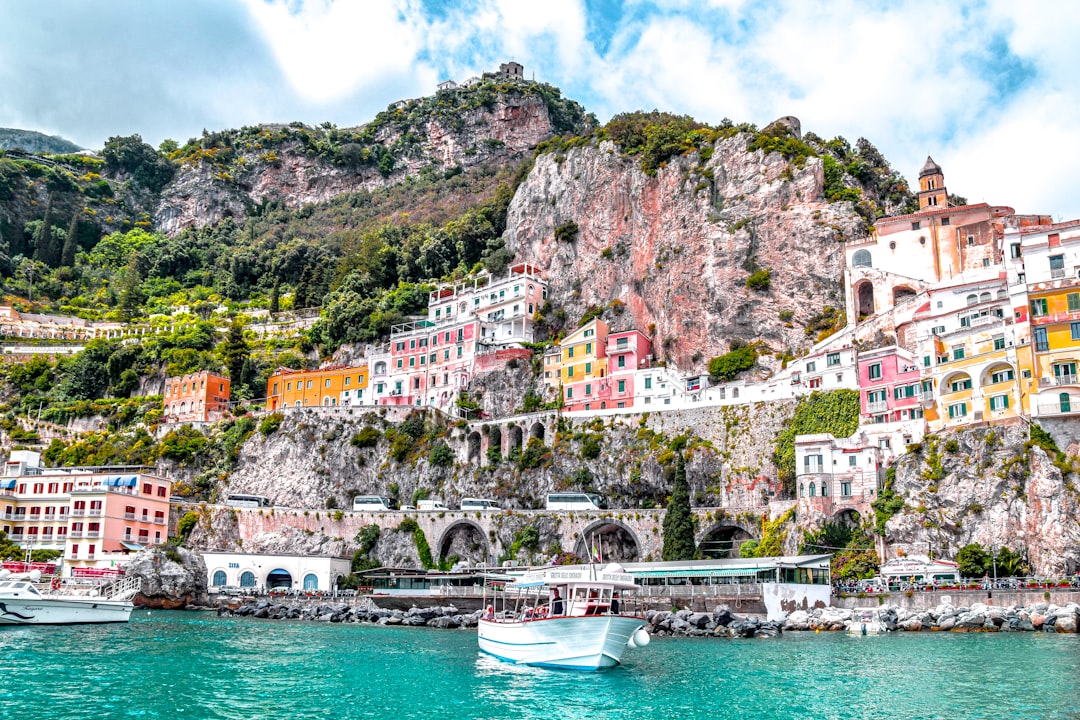
Amalfi Travel Guide: Everything You Need to Know (2026)
Amalfi, a town of just 4,729 residents clinging to cliffs above the Gulf of Salerno, was once the capital of the powerful Duchy of Amalfi — a maritime republic that dominated Mediterranean trade in the 9th and 10th centuries. Sitting at just 6 metres above sea level at the ravine’s mouth, the entire town is dramatically vertical, with staircases replacing streets in most directions. The drive along the SS163 coastal road is one of Italy’s most legendary stretches of asphalt, and Amalfi earns every superlative thrown at it.
Three Things Not to Miss in Amalfi
- Cathedral of Sant’Andrea — The Arab-Norman facade rising above 57 steps is the visual heart of Amalfi, housing the crypt of the apostle Andrew.
- Valle delle Ferriere Nature Reserve — A 6 km hiking trail through ancient paper mills leads to rare ferns found almost nowhere else in Europe.
- Grotta dello Smeraldo — A sea cave just 4 km west of Amalfi glows electric green from submerged stalactites — accessible only by rowboat.
Scroll down for our complete travel guide with tips on getting there, where to stay, costs and more.
How to Reach Amalfi
How do I get to Amalfi — by car, ferry, or bus?
Take the SITA bus from **Salerno** — the fastest, cheapest ground option at roughly **€2.50** per ticket. In my experience, driving yourself is a trap: the SS163 is single-lane in places, parking in Amalfi is almost nonexistent, and the few garages charge **€5 per hour**. Ferries from Salerno run seasonally (April–October) and cost around **€8 one-way** — this is my preferred arrival method because the sea approach is spectacular and avoids road stress entirely. What surprised me: the road from Positano to Amalfi frequently closes after heavy rain, so always have a backup plan.
Which airport is closest to Amalfi?
**Naples International Airport (NAP)** is your gateway, sitting roughly **65 km** from Amalfi. My tip: from NAP, take the Alibus to **Napoli Centrale** station (**€5**, 20 minutes), then a Trenitalia train to **Salerno** (**€12–€15**, 40 minutes), followed by the SITA bus or ferry to Amalfi. The total journey takes about **2.5 hours** door-to-door. Taxis from Naples airport direct to Amalfi cost a punishing **€120–€150** and are only worth it if you have heavy luggage or are travelling as a group of 4. The honest caveat: avoid renting a car at Naples airport — returning it to Amalfi-area depots adds complexity and cost.
How long does the journey to Amalfi take from Naples or Rome?
From **Naples** by ferry-plus-train combination: budget **2.5 hours**. From **Rome Termini** by high-speed Frecciarossa to Salerno then ferry: around **3.5 hours** total, with train tickets starting at **€29** if booked in advance. My tip: book Italo or Trenitalia trains at least **3 weeks ahead** during summer to lock in lower fares. What surprised me: the final 30-minute stretch by SITA bus or ferry always takes longer than expected because summer traffic on the SS163 can add **45 minutes** on a bad day. I always build a buffer into arrival plans.
Do I need a rental car to explore Amalfi and the surrounding coast?
No — a rental car in Amalfi itself is actively counterproductive. The town has virtually zero parking, and the coastal road is genuinely stressful for unfamiliar drivers. In my experience, the SITA bus network connects **Positano, Ravello, Praiano**, and Salerno efficiently for under **€3 per leg**. Ferries link the major coastal towns seasonally. The honest trade-off: if you want to explore inland villages like **Scala** or **Tramonti**, a car becomes useful — but rent it from **Salerno**, drive out for the day, then return it. Never base a car in Amalfi itself.
Amalfi Public Transport Explained
Which are the best areas to stay in Amalfi?
The **historic centre** near Piazza del Duomo puts you inside the action — ideal for first-timers who want walkable access to the cathedral, restaurants, and ferry dock. My tip: rooms on the upper floors of the ravine, around **Via Supportico Ferrari**, are quieter and surprisingly affordable compared to seafront hotels. The seafront itself is beautiful but noisy until midnight in July and August. For a quieter base with coast access, **Atrani** — a 10-minute walk east — is a genuine alternative with the same scenery at **20–30% lower prices**. What surprised me: Atrani has its own tiny beach and feels like a completely different town.
What does accommodation cost per night in Amalfi?
Budget travellers can find a basic double room at a **B&B in Atrani** for **€80–€110** in shoulder season. Mid-range hotels in Amalfi’s historic centre average **€150–€220** per night in July and August. Boutique cliff-side properties like **Hotel Luna Convento** — a converted 13th-century monastery — charge **€280–€450** in peak season. The honest caveat: nearly all prices listed online are per-room without breakfast, and many Amalfi hotels add a **€3–€5 per person per night** tourist tax at checkout that booking platforms do not include. My tip: book direct with the hotel — many waive the tourist tax or include breakfast as an incentive.
How far in advance should I book accommodation in Amalfi during high season?
Book **at least 4–5 months ahead** for July and August — the Amalfi Coast is one of Italy’s most oversubscribed destinations and quality rooms genuinely sell out. In my experience, waiting until 6 weeks before July means choosing between overpriced last-minute slots or staying in **Salerno** and commuting in daily. For late September or early October, **6–8 weeks** lead time is usually sufficient. My tip: search **Atrani** simultaneously with Amalfi on any booking platform — the same coastal setting with a fraction of the demand. What surprised me: even November weekends near **All Saints’ Day** sell out fast among Italian domestic travellers.
Are there special or unique accommodation types in Amalfi?
Yes — and they are genuinely one of Amalfi’s standout experiences. **Converted monastery hotels** are the headline act: Hotel Luna Convento, founded in 1222, has original cloister walls and a sea-level saltwater pool carved into the rock. Several farms in the hills above town, particularly around **Pogerola**, offer agriturismo stays with lemon groves and homemade limoncello for **€90–€130** per night — far better value than the seafront. My tip: search for **case vacanze** (holiday apartments) on local Italian platforms like **Idealista** or directly via the Amalfi tourism office — these often run **€100–€150 per night** for a full apartment with kitchen, saving significantly on food costs.
Neighbourhoods of Amalfi
What are the absolute must-sees in Amalfi?
Three are non-negotiable. First, the **Cathedral of Sant’Andrea** (entry to the crypt and museum: **€3**) — the Arab-Norman facade is unlike anything else in southern Italy. Second, the **Museo della Carta** on Via delle Cartiere, where Amalfi invented the first Western paper-making technique in the 13th century — entry is **€4** and the demonstration is genuinely fascinating. Third, the boat trip to **Grotta dello Smeraldo**, a sea cave 4 km west where the light turns the water electric green — operators charge around **€5** for the rowboat inside, separate from the **€5** elevator or stairs entry fee. In my experience, the cave is best visited before 11am when tour groups arrive.
What can I experience for free in Amalfi?
More than you’d expect. The **cathedral facade and Piazza del Duomo** are free to admire — the square itself is the social heartbeat of the town and worth an hour of sitting with a coffee. The **Valle delle Ferriere** hike (free entry, **6 km** round trip) through lemon groves and ancient paper mill ruins costs nothing and beats most paid experiences. **Atrani’s beach** is free and far less crowded than Amalfi’s main Spiaggia Grande. My tip: the evening **passeggiata** along the seafront between 6pm and 8pm is the most authentically Italian free experience Amalfi offers — locals reclaim the waterfront from tourists as the day trippers head home.
Which day trips from Amalfi are most worthwhile?
**Ravello** is the single best day trip — perched **350 metres** above the coast, with Villa Rufolo’s gardens overlooking the sea. The SITA bus from Amalfi costs **€1.30** and takes **25 minutes**. **Positano** by ferry (**€8**, 20 minutes) is worth half a day for the iconic stacked-house photography, though it is significantly more expensive than Amalfi. Inland, **Scala** — the oldest town on the Amalfi Coast, largely ignored by tourists — is a **40-minute** bus ride and gives you the coast’s medieval history without a single selfie stick in sight. My honest caveat: Pompeii is **75 minutes** each way from Salerno and works as a full-day excursion, but it exhausts the day entirely.
What are the local food specialities I must try in Amalfi?
Start with **scialatielli ai frutti di mare** — a thick, hand-cut pasta unique to the Amalfi Coast, served with clams, mussels, and local catch. The **sfogliatella** pastry from a bar near the ferry terminal is the best breakfast for **€1.50**. Amalfi’s **sfusato amalfitano** lemons are extraordinary — longer and sweeter than standard lemons — and the limoncello made from them is a genuine regional product worth buying direct from a local producer like **Aceto** in town. My tip: the **colatura di alici** (anchovy essence from nearby **Cetara**) is what serious cooks carry home — a **100ml bottle** costs around **€8** at the Amalfi market and transforms pasta at home.
What to See in Amalfi
What makes Amalfi unique compared to other Italian coastal towns?
Amalfi is one of the only Italian towns where the medieval street plan survives completely intact because the cliffs made expansion physically impossible — what you walk today is what 10th-century merchants walked. The **Duchy of Amalfi** created the **Tavola Amalfitana**, one of the earliest maritime law codes in the Western world, and the town’s seafaring identity still shows in the architecture and culture. What surprised me: despite having fewer than **5,000 permanent residents**, Amalfi was once a rival to Venice and Genoa as a Mediterranean superpower. No other town this small carries that historical weight with this much physical evidence still standing.
How many days do I need to properly experience Amalfi?
**3 full days** gives you the town itself plus two meaningful day trips. Day 1: cathedral, Museo della Carta, Grotta dello Smeraldo. Day 2: Ravello day trip. Day 3: Valle delle Ferriere hike in the morning, Atrani beach in the afternoon. My honest caveat: if Amalfi is part of a wider Campania trip including Naples and Pompeii, **2 nights** is the minimum — arriving late afternoon, full day exploring, leaving mid-morning. What surprised me: most visitors treat Amalfi as a 3-hour day trip from Sorrento and miss the town completely at night, when the crowds evaporate and the cathedral square becomes genuinely magical.
When is the best time to visit Amalfi?
**September** is the sweet spot — water temperatures are still **24°C**, summer crowds have thinned, and accommodation prices drop **20–30%** from August peaks. July and August are peak season: beautiful but crowded with ferry queues and restaurant waits exceeding **45 minutes**. May and early June offer pleasant warmth (**20–24°C**), open businesses, and manageable crowds. My honest warning: avoid the **last two weeks of August** specifically — Italian domestic holiday season means every coastal road, restaurant, and beach reaches maximum capacity simultaneously. October is genuinely underrated: most facilities remain open, hiking conditions are excellent, and you will often have the Valle delle Ferriere trail to yourself.
Are there local festivals in Amalfi worth timing a visit around?
The **Regatta of the Ancient Maritime Republics** (Regata delle Antiche Repubbliche Marinare) is Amalfi’s premier event — a rowing race between Amalfi, Venice, Genoa, and Pisa, hosted in rotation every 4 years. Amalfi last hosted in **2024**, so the next home edition will be **2028**. Annually, the **Feast of Sant’Andrea** on **November 30** and **June 27** fills the cathedral square with processions and fireworks — June 27 is the more atmospheric of the two. My tip: the **Easter procession** through Amalfi’s narrow staircases at night is one of southern Italy’s most dramatic religious spectacles and completely free to witness.
Amalfi Food Scene
How does Amalfi’s weather affect what activities I can do?
Summer heat (July averages around **28°C**) pushes most activity to early morning or evening — the Valle delle Ferriere hike becomes punishing between 11am and 4pm in July. Boat trips and swimming dominate midday. Spring hiking (April–May) is exceptional: the lemon groves are flowering, trails are cool, and coastal panoramas are uncrowded. My honest warning: **November through February** brings rain, rough seas that cancel ferries regularly, and many smaller restaurants close entirely. The SS163 coastal road occasionally closes after landslides in winter — I have been caught in **Positano** unable to reach Amalfi because of a rockfall closure, so always check local road conditions (anas.it) in the off-season.
How crowded does Amalfi get in peak season, and is it manageable?
July and August are genuinely overwhelming — day-tripper buses deposit thousands of visitors into a town designed for fewer than **5,000 residents**, and Piazza del Duomo becomes shoulder-to-shoulder by 10:30am. The honest truth most guides skip: the town essentially belongs to day-trippers from 10am to 5pm, then transforms after 6pm when they leave. My strategy: use mornings (before 9am) for the cathedral interior and boat trips, spend midday at the less-visited **Atrani beach**, and return to Amalfi for dinner. Staying overnight rather than day-tripping is the single most effective way to experience the town properly — you get the magical evening light and empty streets for free.
How safe is Amalfi for tourists?
Amalfi is extremely safe by any objective measure — petty crime is minimal and violent crime is essentially absent. The real safety concerns are physical: the staircased streets are **genuinely steep**, and falls from wet stone steps send a surprising number of visitors to the **Ospedale di Polla** (the nearest A&E, **50 km** inland). Wear shoes with grip, not sandals or flip-flops. My tip: the coastal road driving is the highest-risk activity — if you rent a scooter, the road’s blind corners and tourist pedestrians are a serious hazard. Bag snatching occasionally occurs on crowded ferry docks in peak season — keep camera straps short and bags front-facing.
Is English widely spoken in Amalfi?
Yes — more so than almost anywhere in southern Italy. The volume of international tourism means restaurant staff, hotel receptionists, and ferry operators all speak functional to fluent English. In my experience, even shopkeepers in the covered market speak enough English to negotiate. The honest caveat: **once you leave the tourist core** — heading up to Pogerola or into Atrani’s residential streets — English disappears almost entirely. My tip: learning **5 Italian phrases** (buongiorno, grazie, un tavolo per due, il conto, permesso) earns disproportionate goodwill from Amalfi locals who are occasionally weary of tourists who never attempt Italian.
Local Know-How for Amalfi
What is a realistic daily budget for visiting Amalfi?
Budget traveller (hostel in Salerno + day trips): **€60–€80** per day including transport, street food, and one paid attraction. Mid-range (B&B in Atrani, sit-down meals, boat trip): **€150–€200** per day. Comfortable (historic centre hotel, restaurant dinners, private boat): **€300–€400** per day. My honest warning: Amalfi has almost no budget food options on the seafront — a pasta dish at a harbour restaurant starts at **€18–€22**, and a beer costs **€6–€8**. The savings hack: buy lunch from a **rosticceria** (takeaway rotisserie) or the market, eat on the sea wall, and save restaurant money for one quality dinner.
How does public transport work in and around Amalfi?
**SITA Sud buses** are the backbone — they run the SS163 coastal route connecting Amalfi to Positano (**€2.50**, 50 minutes), Ravello (**€1.30**, 25 minutes), and Salerno (**€2.50**, 75 minutes). Tickets must be bought **before boarding** at tabacchi shops or the SITA office near the ferry terminal — boarding without a ticket risks a **€50 fine**. Ferries (April–October) connect Amalfi to Positano, Capri, and Salerno — faster and more scenic than buses. My tip: the **Unico Campania** travel card covers buses and some ferries for **€10–€14 per day** and pays off quickly if you make more than 3 journeys. What surprised me: buses stop running around **10pm**, so plan evening returns carefully.
Which apps do you recommend for visiting Amalfi?
**Trenitalia** or **Italo** apps for booking Naples–Salerno trains in advance — prices jump significantly without pre-booking. **SITA Sud** does not have a reliable app, so screenshot the timetable from their website before you lose signal on the coast. **Maps.me** (offline maps) is essential because **Google Maps** dramatically underestimates walking times on Amalfi’s vertical staircases — a route shown as 8 minutes often takes **20 minutes** with steps and slope. **Windy.com** tells you whether ferry services will be cancelled due to sea conditions. My tip: download the **Trenitalia app** and the offline map of **Campania** before leaving home — the coastal mobile signal is patchy and unpredictable.
Amalfi at a Glance
| Population | 4,729 |
|---|---|
| Currency | EUR (€) |
| Official language | Italian |
| Time zone | Europe/Rome |
Source: Wikidata, retrieved September 2026.
Italy › Amalfi
More Destinations in Italy
Essential Resources for Planning Your Trip to Amalfi
- Discover the Amalfi Coast’s natural beauty and cultural … — official visitor information, passes & events
- Wikipedia: Amalfi — history, geography & background
- Wikivoyage: Amalfi — community travel guide & practical tips
- Amalfi travel – Lonely Planet | Campania, Italy, Europe — expert itineraries & travel inspiration
- THE 15 BEST Things to Do in Amalfi (2026) — hotels, restaurants & traveller reviews
- Italy Itinerary: How to See All of Italy’s UNESCO Sites — how to get around
- Numbeo: Cost of Living in Amalfi — current prices & cost comparison
- Timeanddate: Amalfi Weather & Climate — forecasts & climate statistics
- Costiera Amalfitana
More Perspectives on Amalfi
- My Travel Guide to the Amalfi Coast, Italy
- Amalfi Coast Travel Guide (2026): Towns, Hotels, Tips & …
- A Local’s Favorite Things to Do on the Amalfi Coast
Amalfi Travel Videos
Watch these videos for a visual preview before your trip:
- Italy’s AMALFI COAST Travel Guide 🇮🇹 All Towns of the Amalfi Coast
- 4 Perfect Days on the Amalfi Coast (What to See, Eat & Experience)
- Amalfi Coast: The Don’ts of Visiting the Amalfi Coast
Amalfi Travel Discussions on Reddit
Real traveller experiences and community advice:
- Is the Amalfi Coast worth the vacation? : r/travel
- 8 days on the Amalfi Coast: my honest review : r/ItalyTravel
- Amalfi Coast Recommendations : r/travel
Data Sources
This page was compiled using data from Wikipedia, Wikidata, Open-Meteo (climate), Numbeo (cost of living) and REST Countries. Information is updated regularly.