
Florence: The Complete Travel Guide (2026)

Last reviewed: September 2026 · key facts checked against Wikidata
Florence Travel Guide: Everything You Need to Know (2026)
Florence, founded by Julius Caesar in 59 BC, sits at 50m elevation along the Arno River and packs a population of 360,930 into a compact historic core that contains more UNESCO-listed Renaissance art per square kilometre than anywhere else on earth. The city’s Uffizi Gallery alone holds over 3,000 artworks, and the iconic Brunelleschi dome — completed in 1436 — remains the largest brick dome ever constructed. In my experience, no other mid-sized Italian city delivers this density of world-class culture, food, and walkable beauty.
Top 3 Highlights at a Glance
- Brunelleschi’s Dome (Cattedrale di Santa Maria del Fiore) — The world’s largest brick dome, completed 1436, with a 463-step climb rewarding you with the finest rooftop panorama in Tuscany.
- Uffizi Gallery — Home to Botticelli’s Birth of Venus and over 3,000 Renaissance masterworks — the single greatest collection of Italian art on earth.
- Oltrarno neighbourhood — Florence’s artisan quarter, where family-run leather workshops and wine bars have operated for generations, still largely untouched by mass tourism.
Scroll down for our complete travel guide with tips on getting there, where to stay, costs and more.
Arrival & Airport
How do I get to Florence — by train, plane, or car?
Train is the best way to reach Florence. Trenitalia’s high-speed Frecciarossa connects Rome to Santa Maria Novella station in 1h 30min and Milan in 1h 45min, with tickets from €19 if booked early. In my experience, the train drops you directly into the city centre — far more practical than flying. The closest airport is Amerigo Vespucci Airport (FLR), just 4km from the centre, but flight options are limited compared to Pisa’s Galileo Galilei Airport (PSA), 80km away. Warning most guides omit: last-minute Frecciarossa tickets can spike to €80+, so book at least 2 weeks ahead.
Which airport is closest to Florence?
Florence Amerigo Vespucci Airport (FLR) is the closest, just 4km from the city centre — a €25 taxi or €6 Volainbus shuttle gets you to Santa Maria Novella in under 20 minutes. In my experience, FLR is small and easy to navigate, which is a genuine pleasure. However, the honest caveat: FLR serves far fewer international routes than Pisa’s PSA airport, which handles most budget carrier flights. From PSA, the Pisa Mover train-bus combo to Florence takes around 1 hour 20 minutes and costs €15. My tip: if flying from outside Italy, check PSA fares first — they’re almost always cheaper.
How long does the journey to Florence take from major Italian cities?
Rome to Florence takes 1 hour 30 minutes by Frecciarossa high-speed train; Milan takes 1 hour 45 minutes. From Bologna it’s a fast 37 minutes. In my experience, these are some of the most punctual intercity rail connections in Italy. Santa Maria Novella station puts you within a 10-minute walk of the Duomo. The caveat most guides ignore: Venice to Florence by high-speed train takes 2 hours 10 minutes, but the indirect route through Bologna means delays compound quickly — build in buffer time. My tip: buy Italo or Trenitalia tickets via their apps for the best fares.
Do I need a rental car to explore Florence?
No — a rental car in Florence is actively counterproductive. The historic centre is a ZTL (Zona Traffico Limitato), and entering without a permit triggers an automatic fine of €80–€160 per infraction. In my experience, tourists rack up multiple fines without ever realising it, only discovering the charges months later. The entire historic core is walkable — the Duomo to the Uffizi is just 400m. A rental car only makes sense if you plan to explore Chianti, Siena, or the Mugello hills on day trips. If so, pick up the car at FLR airport on your last day to avoid city driving entirely.
City Transport
What are the best areas to stay in Florence?
Centro Storico (the historic centre) puts you within walking distance of every major sight, but expect street noise until midnight. Oltrarno, south of the Arno, is my top recommendation — it’s quieter, more authentic, and home to the best aperitivo bars. Santa Croce neighbourhood suits travellers who want nightlife nearby. San Frediano, within Oltrarno, offers the best balance of location and local atmosphere with accommodation from €75/night. What surprised me: the Gavinana district, just 2km south-east of the centre, cuts hotel prices by 30% while remaining on the tram line — almost no guidebook mentions it.
What does accommodation cost per night in Florence?
A solid economy hotel in Florence runs €75/night based on current Numbeo data. Mid-range 3-star hotels in Oltrarno or Santa Croce average €110–€150/night. Design boutiques near the Ponte Vecchio start at €200/night. In my experience, apartments on Airbnb or Booking.com in San Frediano offer the best value at €80–€120/night for a full flat. The caveat most guides skip: Florence charges a city tax of €5–€7 per person per night, which is never included in listed prices. A couple staying 5 nights adds €50–€70 in unavoidable taxes on top of the room rate.
How far in advance should I book accommodation in Florence during high season?
Book at least 3 months ahead for July and August. Easter week and the Maggio Musicale Fiorentino festival (May–June) fill central hotels even faster — I’ve seen Centro Storico properties sell out 5 months in advance. In my experience, waiting until 6 weeks out during peak season means choosing between overpriced rooms or inconvenient locations. September is the sweet spot: still warm at roughly 24°C, crowds thin after the first week, and prices drop 15–20% from August peaks. My tip: set a price alert on Booking.com for Oltrarno in early September — you’ll often find 4-star hotels at 3-star prices.
Are there special or unique accommodation types in Florence?
Florence has genuine standout options beyond standard hotels. Agriturismo farms in the surrounding Chianti hills, just 20–30km from the city, offer wine estate stays from €90/night with breakfast included — I recommend the cluster around Greve in Chianti. Historic palazzo apartments in buildings dating to the 15th century can be rented for €120–€180/night and are listed on local agencies like Florence and Abroad. What surprised me: several convents and religious houses — including Istituto Oblate dell’Assunzione near Santa Croce — offer clean, central rooms from €60/night, a completely overlooked option that books out fast among savvy travellers.
Accommodation & Neighbourhoods
What are the must-see sights in Florence?
The Uffizi Gallery and Brunelleschi’s Dome are non-negotiable — skip either and you’ve missed the point of Florence. The Accademia Gallery houses Michelangelo’s original David (the one in Piazzale Michelangelo is a copy). Boboli Gardens offers a free-feeling escape for €10 entry. In my experience, the Bargello Museum — Florence’s sculpture museum holding Donatello’s bronze David — is visited by one-tenth the crowds of the Uffizi despite being equally extraordinary. My honest caveat: the Ponte Vecchio itself is just a bridge lined with overpriced gold jewellery shops; it’s worth a 10-minute look but not the hour most tourists dedicate to it.
What can I experience for free in Florence?
Significant free experiences exist in Florence if you know where to look. The Baptistery of San Giovanni exterior, the Piazza della Signoria with its open-air sculpture gallery, and the view from Piazzale Michelangelo cost nothing. Every first Sunday of the month, state museums including the Uffizi and Accademia are free — but queues start forming 2 hours before opening. In my experience, walking Oltrarno’s Via dei Serragli and browsing family leather workshops costs nothing and reveals a Florence untouched by tour groups. The San Miniato al Monte basilica, a 20-minute uphill walk from the Arno, is arguably more beautiful than the Duomo interior and entirely free.
Which day trips from Florence are most worthwhile?
Siena is the best day trip from Florence — 75km south, reachable by SITA bus in 1 hour 15 minutes for €9 each way, and it delivers a medieval hilltop rival city that justifies the journey completely. San Gimignano (56km) pairs well with Siena on a single day. Lucca, 80km west, is undervisited and has intact Renaissance walls you can cycle the full 4km perimeter. In my experience, the Chianti wine route by rental car — stopping at Panzano, Radda, and Castellina — is the single best half-day escape from Florence’s crowds. Skip the day trip to Pisa unless the leaning tower is specifically on your list; the city beyond it is underwhelming.
What are the local food specialities of Florence?
Order bistecca alla Fiorentina — a T-bone steak from Chianina cattle, priced by weight at €4–€6 per 100g, typically served as a 600g–1kg cut for two people. Lampredotto (tripe sandwich) from a trippaio street cart costs €4–€5 and is the definitive Florentine street food; the best stand is Nerbone inside Mercato Centrale. Ribollita (bread and vegetable soup) and pappa al pomodoro are the essential primi. In my experience, the wine to order is Chianti Classico DOCG, available by the glass from €4 at an enoteca. Honest warning: any restaurant within 200m of the Uffizi inflates prices by 40–60% — walk to Oltrarno instead.
Highlights & Must-Sees
What makes Florence unique compared to other Italian cities?
Florence is unique because it is the city where the Renaissance was invented — not borrowed, not inherited, but originated here between the 14th and 16th centuries under Medici patronage. No other city of 360,930 people holds this concentration of original-location masterworks: the David, the Birth of Venus, Brunelleschi’s dome are all still exactly where they were created. In my experience, what truly distinguishes Florence is the living craft tradition in Oltrarno — leather guilds, bookbinding workshops, and gold-beaters operating in the same streets since the Renaissance. What surprised me: Florence’s food identity — bistecca, lampredotto, schiacciata — is completely distinct from Roman or Milanese cuisine and fiercely protected by locals.
How many days do I need to properly see Florence?
3 full days cover the essential Florence without feeling rushed. Day 1: Duomo complex and Uffizi. Day 2: Accademia, San Marco, Mercato Centrale. Day 3: Oltrarno, Pitti Palace, Boboli, San Miniato. In my experience, travellers who spend only 1–2 days leave having ticked boxes without absorbing the city’s atmosphere. 5 days allows a Chianti day trip and proper time in the Bargello and Santa Croce. The honest caveat: Florence is compact enough that after 5 days you’ve genuinely seen the core — unlike Rome or Paris, a week here risks repetition unless you build in regional day trips to Siena or Lucca.
When is the best time to visit Florence?
July and September are the best months based on verified climate analysis. July is hot — expect 28–32°C — but post-school-holiday crowds thin in the last two weeks. September is my top pick: temperatures settle around 24°C, the Uffizi queue drops by roughly 40% from August, and the harvest season makes Chianti wine country spectacular. In my experience, May and early June are also excellent — warm, pre-peak, with the Maggio Musicale festival adding cultural programming. The honest warning: August 15th (Ferragosto) is a national holiday when half of Florence shuts down and the other half fills with Italian domestic tourists — avoid that specific week.
Are there local festivals in Florence worth timing a visit around?
Maggio Musicale Fiorentino (May–June) is Florence’s most prestigious event — an opera and classical music festival running since 1933 at the Teatro del Maggio, with tickets from €15. Calcio Storico (historic football) takes place in Piazza Santa Croce on June 24th, Saint John’s Day, and is genuinely unlike anything else in Italy — violent, medieval, and extraordinary. In my experience, the Festa della Rificolona on September 7th — a lantern procession through the streets — is the most underrated Florentine tradition, completely ignored by guidebooks yet attended enthusiastically by locals. White Night (Notte Bianca) in October opens museums free until 3am.
Food & Drink
How does Florence’s weather affect what activities are possible?
Florence gets genuinely hot in summer — July and August regularly hit 34°C with high humidity in the Arno valley, making outdoor sightseeing exhausting between noon and 3pm. In my experience, the smart strategy is museums in the afternoon heat, outdoor exploration in the morning before 10am and after 5pm. November through February is cold and grey at 7–10°C, but crowds drop dramatically and museum queues disappear — the Uffizi in January takes 20 minutes to enter vs. 2 hours in July. The caveat: Boboli Gardens and Piazzale Michelangelo lose much of their appeal in winter. Spring and autumn are the genuinely all-round pleasant windows for outdoor and indoor activities equally.
How crowded does Florence get in peak season?
Florence in August is brutally crowded — the Uffizi receives over 2 million visitors per year, with daily queues of 2–3 hours for walk-up tickets in peak season. Ponte Vecchio becomes shoulder-to-shoulder impassable at sunset. In my experience, the Accademia to see the David is slightly worse than the Uffizi because the space is smaller. The honest reality: Florence is one of the most tourist-dense cities in Europe per square kilometre — the entire historic core is listed, so crowds concentrate in a tiny area. My tip: pre-book timed entry tickets for the Uffizi (€26) and Accademia (€16) at least 30 days ahead in July and August, or you simply won’t get in.
How safe is Florence for travellers?
Florence is fundamentally safe for tourists — violent crime is rare. The primary risk is pickpocketing, concentrated around Santa Maria Novella train station, the Ponte Vecchio, and the Uffizi queue. In my experience, the standard techniques apply: front pockets, a zip-close bag, and ignoring strangers who approach you near the Duomo offering rose-selling or friendship bracelets. The honest caveat: motorbike bag-snatching on Lungarno riverside roads is an underreported issue — keep bags on the wall side, not the road side. The San Jacopino area west of Santa Maria Novella warrants more caution after dark, but the rest of the city centre is fine at midnight.
Is English widely spoken in Florence?
English is widely spoken in tourist-facing Florence — hotel staff, museum workers, and restaurant servers in the centro storico handle English confidently. In my experience, Oltrarno’s local trattorias and neighbourhood bars are where English drops away, which is part of their charm. The honest caveat: menus in tourist-heavy restaurants are almost always in English, but this is a warning sign, not a convenience — it usually signals inflated prices. Learning 5 basic Italian phrases — especially ’un lampredotto per favore’ and ’il conto’ — earns genuine warmth from Florentines, who are notably more reserved than Romans and appreciate the effort. Younger staff at Mercato Centrale food stalls reliably speak solid English.
Practical Tips
What is the daily budget for visiting Florence?
A realistic Florence daily budget breaks down as follows: €75/night for an economy hotel, €15 for a cheap lunch (Numbeo-verified), €20 for dinner, €26 entry to the Uffizi, and €1.70 for local transport. That totals roughly €138/day on a lean budget. In my experience, €170–€200/day is more comfortable, covering one sit-down restaurant meal at €40 for two plus a museum or two. The hidden costs: city tax adds €5–€7 per person per night, pre-booked timed museum tickets add €4 booking fees, and a single bistecca alla Fiorentina dinner for two runs €60–€80. Budget travellers using Mercato Centrale for lunch can hold food costs to €12–€15/day.
How does public transport work in Florence?
Florence’s public transport is run by ATAF/Autolinee Toscane, with trams and buses covering the city. A single ticket costs €1.70 and is valid for 90 minutes. The T1 tram line connects Santa Maria Novella station to the Scandicci suburb; the T2 line links the station to FLR airport in 25 minutes for €1.70 — the best airport transfer deal in Italy. In my experience, the historic centre is so compact (1.5km across) that you’ll walk almost everywhere. The honest caveat: buses within the ZTL do not penetrate the pedestrian core, so they’re mainly useful for reaching Fiesole (bus 7) or the Piazzale Michelangelo (bus 12). Buy tickets at tabacchi shops — onboard machines are unreliable.
Which apps do you recommend for visiting Florence?
Trenitalia and Italo apps are essential for booking intercity trains — use them before you arrive to lock in cheap fares. Firenze Card app (€85 for 72 hours) is worth downloading and activating only if you plan to visit 5+ museums in 3 days — run the numbers first. Google Maps works reliably for Florence navigation. In my experience, TheFork (LaFourchette) gets you restaurant discounts up to 50% at legitimate non-tourist restaurants in Oltrarno and Santa Croce — genuinely underused by visitors. Moovit handles local bus routes clearly. The Uffizi official app provides audio guides for €5.99 that outperform most hired in-venue devices. Download offline maps via Maps.me as a backup — the ZTL streets confuse GPS constantly.
More Destinations in Europe
Explore our complete travel guides for more Europe destinations: Provence Travel Guide (2026), Île Sainte-Marguerite Travel Guide (2026), Budapest Travel Guide (2026), Rennes Travel Guide (2026), Amiens Travel Guide (2026).
Florence at a Glance
| Population | 360,930 |
|---|---|
| Currency | EUR (€) |
| Official language | Italian |
| Time zone | Europe/Rome |
Source: Wikidata, retrieved September 2026.
Useful Resources for Planning Your Trip to Florence
- Wikipedia: Florence — history, geography and background
- Lonely Planet: Florence — itineraries and travel inspiration
- TripAdvisor: Florence — hotels, restaurants and traveller reviews
🎥 Florence Travel Videos

43 Tips I Wish I Knew Before Visiting Florence, Italy
Camden David
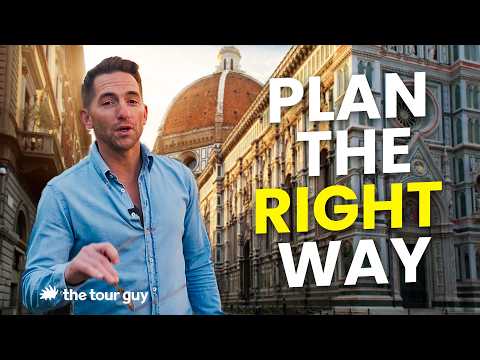
Skip the Tourist Traps in Florence—Here’s What to Do Instead
the tour guy

13 Tips for a FANTASTIC Trip to Florence
Matt’s Travel Tips
You are currently viewing a placeholder content from Vimeo. To access the actual content, click the button below. Please note that doing so will share data with third-party providers.
More InformationYou are currently viewing a placeholder content from YouTube. To access the actual content, click the button below. Please note that doing so will share data with third-party providers.
More InformationYou need to load content from reCAPTCHA to submit the form. Please note that doing so will share data with third-party providers.
More InformationYou are currently viewing a placeholder content from GetYourGuide. To access the actual content, click the button below. Please note that doing so will share data with third-party providers.
More Information