
Albanian Riviera: The Complete Travel Guide (2026)
Last reviewed: September 2026 · key facts checked against Wikidata
Albanian Riviera Travel Guide: Everything You Need to Know (2026)
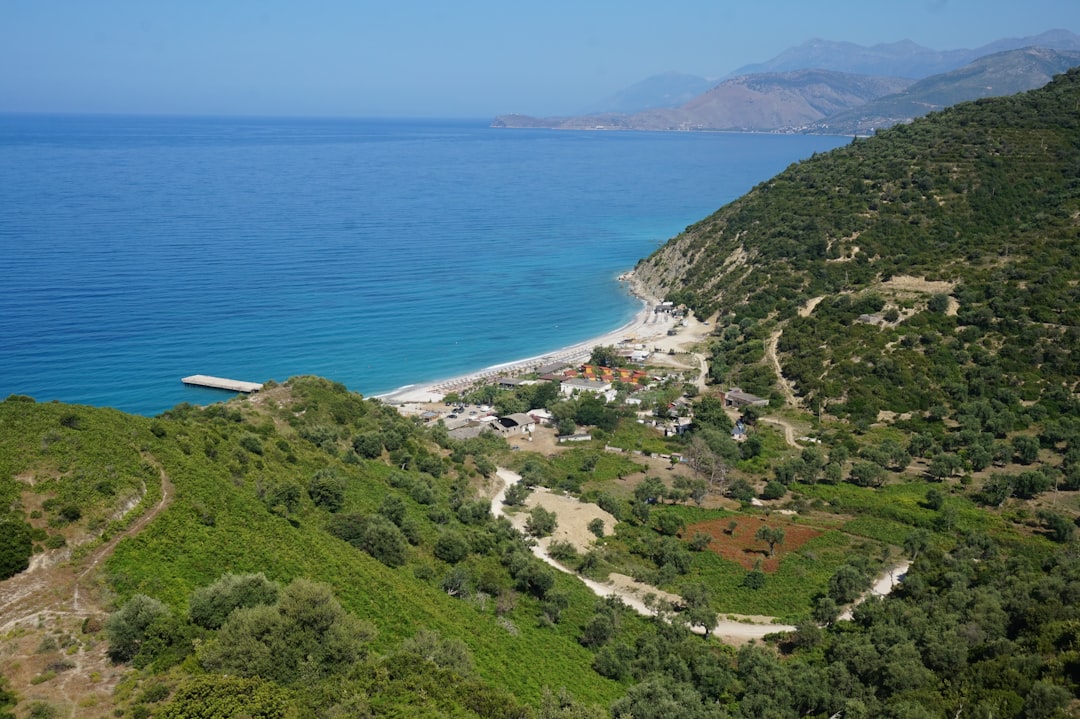
The Albanian Riviera stretches roughly 170 km along the Ionian Sea in southwestern Albania, encompassing the districts of Sarandë and Vlorë — two of the country’s most visited coastal zones. Villages like Dhërmi, Himara, and Palasë sit at altitudes between sea level and 400 metres, carved into dramatic limestone cliffs that drop straight into turquoise water. Albania as a whole welcomed over 10 million visitors in 2023, and the Riviera accounts for the majority of beach tourism, yet it still feels startlingly undiscovered compared to its Greek and Croatian rivals.
Three Things Not to Miss in Albanian Riviera
- Dhërmi Beach — A 2 km crescent of white pebbles backed by citrus groves, with some of Albania’s clearest Ionian water.
- Lëkurësi Castle, Sarandë — 16th-century Ottoman fortress offering a panoramic 180-degree view over Sarandë Bay and Corfu, just 3 km from town.
- Blue Eye (Syri i Kaltër) — A natural spring of electric-blue water that pumps 18,000 litres per second from an unmeasured depth — genuinely otherworldly.
Scroll down for our complete travel guide with tips on getting there, where to stay, costs and more.
How to Reach Albanian Riviera
How do I best reach the Albanian Riviera?
Fly into Tirana and drive south — it’s the most reliable entry route. The drive from Tirana to Sarandë via the SH4 coastal road takes roughly 3.5 to 4 hours covering approximately 280 km. In my experience, renting a car in Tirana gives you the most freedom on the Riviera’s winding coastal roads. Alternatively, a bus from Tirana’s Kombinat terminal to Sarandë departs daily and costs around L 1,200–1,500 one way. The caveat most guides skip: the final stretch along the Llogara Pass (at 1,027 metres altitude) can be foggy or icy in winter, making driving genuinely dangerous between November and March.
Which airport is closest to the Albanian Riviera?
Tirana International Airport Nënë Tereza (TIA) is the primary entry point, located approximately 280 km north of Sarandë. My tip: there is no commercial airport in the Riviera itself, so every visitor faces a significant transfer. A smarter option I recommend for the southern Riviera is flying into Corfu Airport (CFU) in Greece and taking the 35-minute ferry to Sarandë — it cuts transfer time dramatically and costs roughly €20 per person. The caveat: Corfu flights are seasonal (March–October), so this option disappears in winter.
How long is the journey to the Albanian Riviera from Tirana?
By car, expect 3.5–4 hours from Tirana to Sarandë under normal conditions. What surprised me is how dramatically journey time increases in July and August: the coastal road through Vlorë backs up badly, adding 45–90 minutes. The bus journey takes 5–6 hours because of stops in towns like Fier and Vlorë. I recommend leaving Tirana before 7:00 AM to beat summer traffic. If you’re heading specifically to Dhërmi or Himara, factor in an additional 30–40 minutes of mountain switchbacks beyond Vlorë — beautiful but slow.
Are there direct bus connections to the Albanian Riviera?
Yes — direct buses run daily from Tirana’s Kombinat bus station to Sarandë, costing L 1,200–1,500 one way. I recommend booking your seat the morning of travel at the station; there’s no reliable online booking system. From Vlorë, minibuses (furgons) connect to Himara and Sarandë for L 300–600 depending on destination. The honest caveat: furgons run on no fixed schedule — they leave when full, which in low season means waits of 1–2 hours. For Dhërmi specifically, ask the Vlorë furgon driver to drop you at the Dhërmi junction, then walk 2 km downhill to the beach.
Is a rental car necessary on the Albanian Riviera?
Yes — a rental car is strongly recommended for anyone wanting to explore beyond one village. In my experience, the Riviera’s best beaches (like Gjipe Canyon beach, reachable only via a 45-minute hike from an unmarked turnoff) and hilltop villages are inaccessible by bus. Rental prices start at L 3,500–5,500 per day for a small car from Tirana agencies. My tip: pick up the car at Tirana Airport to avoid surcharges and get a vehicle with decent ground clearance — several access roads are unpaved. The caveat: Albanian drivers are aggressive on mountain roads, and road markings are often absent.
Sleeping in Albanian Riviera
Which towns make good bases on the Albanian Riviera?
Sarandë is the best all-rounder base: it has the widest choice of accommodation, ATMs, restaurants, and ferry connections to Corfu. Himara suits travellers who want a quieter town with a real local community and proximity to both Dhërmi (15 km north) and Borsh beach (10 km south). Dhërmi itself works as a base only in June–August when services are open — outside that window it’s a ghost village. My recommendation for first-timers: spend 3 nights in Sarandë, then 2 nights in Himara. What surprised me is how few services exist between these anchors — plan meals and fuel stops carefully.
Where should I stay on the Albanian Riviera?
Stay in Sarandë for convenience, Himara for authenticity, or Dhërmi for beach immersion. In my experience, the best-value accommodation cluster is along Himara’s Spile beach road, where small family-run guesthouses offer sea-view rooms with breakfast for L 4,000–6,500 per night. In Sarandë, the Boulevard Ismail Qemali strip has mid-range hotels but charges a premium for the promenade location. I recommend avoiding the apartments advertised on Booking.com in Palasë — photos frequently misrepresent the road access. For a splurge, Rapo’s Resort Hotel in Himara has a genuine clifftop pool overlooking the Ionian Sea.
What does accommodation cost on the Albanian Riviera?
Budget guesthouses cost L 2,800–4,500 per night for a double room. Mid-range hotels with air conditioning and sea views run L 6,000–9,500. Boutique hotels and well-positioned apartments peak at L 12,000–18,000 per night in July and August. I recommend self-catering apartments in Sarandë’s Lagja 1 neighbourhood for families — they offer kitchen access at around L 5,000–7,000 per night. The caveat most guides skip: many Albanian properties on Booking.com charge a cash-only supplement of L 500–1,000 per night for card payments, so always ask upfront. Breakfast is rarely included at the budget end.
How far in advance should I book accommodation on the Albanian Riviera?
Book at least 8–10 weeks ahead for July and August. What surprised me is how fast Dhërmi and Himara’s limited good-quality stock sells out — by May, the best-reviewed guesthouses for July are already full. For June or September, 3–4 weeks is usually sufficient. In my experience, direct booking via WhatsApp with guesthouses (numbers listed on Google Maps) gets you 10–15% lower rates than Booking.com — Albanian hosts prefer avoiding the platform commission. For shoulder months (May, October), walk-in rates are available and negotiable. The warning: cancellation policies are often informal and non-refundable.
When is the best time to visit the Albanian Riviera?
June is the single best month based on climate data — sea temperatures hit 23–24°C, crowds are manageable, and prices sit 20–30% below peak. My personal recommendation is the first three weeks of June before the Italian and Kosovan summer rush arrives. September is an excellent second choice: water stays warm at 25°C, the beach bars are still open, and accommodation drops back to mid-range pricing. July and August deliver guaranteed sunshine but brutal heat above 35°C and severely congested roads. I recommend avoiding the Llogara Pass road entirely between 11:00 AM and 3:00 PM in August — traffic jams are a serious problem.
When to Travel to Albanian Riviera
How does the weather affect activities on the Albanian Riviera?
Summer weather (June–August) is reliably dry and hot, perfect for swimming and hiking the coastal trails — but temperatures exceeding 35°C make inland hikes dangerous between 10:00 AM and 5:00 PM. My tip: hike to Gjipe Canyon before 8:00 AM in July. Spring (April–May) brings the most dramatic cliff scenery but occasional rain showers can make the Llogara National Park trails slippery. Winter (November–February) sees most beach businesses closed and the mountain road above Palasë occasionally impassable. Watersports — particularly sea kayaking around Himara’s sea caves — are best between mid-May and late September when sea conditions are calm.
Are there local festivals worth attending on the Albanian Riviera?
Festivali Folklorik Kombëtar (National Folklore Festival) in Gjirokastër, 60 km inland from Sarandë, runs every 5 years (next in 2028), but local summer festivals in Himara celebrate Greek-Albanian cultural heritage every August with music and traditional food. In my experience, the most authentic local event is the Himara Cultural Week in mid-August — free entry, live traditional music, and no tourist staging. Sarandë hosts a modest Summer Festival along the promenade in July with outdoor concerts. What surprised me is how few events are reliably scheduled year to year — always verify locally via the Bashkia Himara Facebook page before planning your trip around a festival.
When does the Albanian Riviera get crowded?
Peak crowding hits between July 10 and August 20, driven primarily by Kosovo Albanian and Italian tourists. Dhërmi beach is shoulder-to-shoulder during this window — I walked 20 minutes past the main strip to find uncrowded sand at Gjipe beach even on a busy August weekend. Sarandë’s promenade becomes genuinely unpleasant in peak heat. The border crossing at Kakavijë (from Greece) backs up to 3-hour waits in August. My strong recommendation: arrive by June 25 or after September 1. The Riviera is almost eerily quiet in October — tavernas are open, weather is 24°C, and you’ll have Borsh beach (Albania’s longest at 7 km) almost to yourself.
What does a daily budget cost on the Albanian Riviera?
A realistic daily budget for one person: L 4,500–6,500 covers a guesthouse bed, two local meals, a beach sunbed, and transport. Budget backpackers in dormitories and eating from bakeries can survive on L 2,500–3,000. Mid-range travellers spending on a private room, restaurant dinners, and a boat trip to sea caves should budget L 8,000–12,000. What surprised me is how sharply prices rise on the beach: a sunbed-and-umbrella combo at Livadhi beach costs L 800–1,200 per day — unavoidable if you want shade. Alcohol inflates budgets fast; a beer at a beachfront bar costs L 250–400 versus L 120 at a village shop.
Is the Albanian Riviera cheaper or more expensive than other Albanian regions?
The Riviera is 30–50% more expensive than inland Albania in peak season. A meal that costs L 600 in Berat or Gjirokastër costs L 900–1,200 in Dhërmi. Accommodation in Tirana’s mid-range is often cheaper than Himara in July. In my experience, the Riviera still delivers extraordinary value compared to comparable coastlines — a taverna dinner for two with fish, salad, and wine costs L 2,500–3,500 in Himara versus €80–120 for equivalent quality in Corfu or Montenegro. The honest caveat: the tourist-beach economy is catching up fast with European pricing, and 2026 prices will be noticeably higher than 2023 levels.
Daily Costs in Albanian Riviera
What free highlights are there on the Albanian Riviera?
The Blue Eye (Syri i Kaltër) nature reserve charges a small entry fee of only L 200 — essentially free. Hiking the Riviera Coastal Trail from Dhërmi to Vuno (approximately 8 km) costs nothing and delivers views that rival any paid attraction in the Mediterranean. Lëkurësi Castle in Sarandë is free to enter at the gate. Swimming at Borsh beach (7 km long) has no sunbed obligation — bring your own towel. What surprised me is that several of the Riviera’s best viewpoints, including the cliff outlook above Palasë village, have no signage whatsoever — you simply drive up and park. The Old Bazaar in Himara is free to explore and largely tourist-free.
What do local specialities cost on the Albanian Riviera?
A grilled whole sea bream (çipura) at a local taverna in Himara costs L 800–1,200 depending on weight. Byrek (savory pastry) from a bakery costs L 100–150 per slice — one of the best budget meals on the coast. Fresh grilled octopus runs L 600–900 at beachside restaurants in Sarandë’s old port area. Local Skrapar raki is L 150–200 per shot at village bars. What surprised me is the quality of the seafood given the price: a full fish dinner for two with wine at Taverna Marika in Himara regularly runs under L 3,000 total — roughly €28. Albanian olive oil from roadside stands near Vlorë costs L 700–900 per litre and is excellent quality.
Which route do you recommend for 5–7 days on the Albanian Riviera?
I recommend this sequence: Day 1–2 in Sarandë — Lëkurësi Castle, Blue Eye day trip (35 km), ferry afternoon to Corfu optional. Day 3 in Ksamil — 4 km south of Sarandë, snorkel the islets, then drive north. Day 4 in Himara — arrive via Borsh (stop 20 minutes at the 7 km beach), explore the Old Himara kastro hilltop. Day 5–6 in Dhërmi — morning hike to Gjipe Canyon beach, afternoon at Livadhi beach, evening at cliffside bars. Day 7: Vlorë — Kaninë Castle, lunch in town, then depart. The caveat: don’t rush the Llogara Pass section — the 10 km mountain road between Palasë and Vlorë deserves a 45-minute stop for panoramic photos.
What are the must-see sights on the Albanian Riviera?
The Blue Eye (Syri i Kaltër) is non-negotiable — a freshwater spring of electric-blue clarity 18 km from Sarandë that pumps an astonishing 18,000 litres per second. Gjipe Canyon beach, accessible only on foot or by boat, is a hidden arc of sand between two 200-metre cliffs — the most dramatic beach setting in Albania. Lëkurësi Castle above Sarandë gives the best sunset view on the entire coast, looking across to Corfu just 27 km away. In my experience, the drive over Llogara Pass at 1,027 metres is itself a sight — the drop from pine forest to turquoise sea in under 10 km is genuinely spectacular. Allow a full day for each of the Blue Eye and Gjipe.
What natural highlights does the Albanian Riviera offer?
The Riviera’s natural assets are exceptional: Llogara National Park covers 1,010 hectares of black pine forest starting at 1,000 metres, with marked trails and wolves still present in the upper zone. Gjipe Canyon cuts through 200-metre limestone cliffs to a beach reachable only by a 45-minute hike. The Blue Eye spring near Muzinë is one of the deepest unmapped water sources in Europe. Borsh beach stretches 7 km — the longest beach in Albania — backed by an ancient olive grove of over 1.7 million trees. What surprised me is the snorkelling quality around Ksamil’s four islets, just 4 km south of Sarandë, where visibility regularly exceeds 15 metres in June.
What Not to Miss in Albanian Riviera
What local specialities should I try on the Albanian Riviera?
Start with tavë kosi (baked lamb with yoghurt and egg custard) — the definitive Albanian dish, available at family restaurants in Himara for around L 600–800. Fresh Ionian sea urchin (riccio) is served cracked open on the spot at fish markets in Sarandë’s port for L 200–300 each — extraordinary if you’ve never tasted them raw. Fergëse (peppers, tomatoes, and cottage cheese baked in clay) is a coastal staple costing L 400–600. My tip: buy Riviera olive oil directly from producers near Vlorë — it’s cold-pressed from 100-year-old trees and costs L 700–900 per litre. Albanian white wine from Çobo Winery (Berat, 120 km away) pairs perfectly with any Riviera seafood meal.
What activities are available on the Albanian Riviera?
Sea kayaking to the sea caves between Himara and Dhërmi is the standout activity — half-day guided tours cost L 3,000–4,500 per person. Snorkelling around Ksamil’s islets and Gjipe Canyon requires no guide and is genuinely world-class. Hiking the Coastal Trail from Palasë to Vuno covers 22 km of cliff-top terrain with zero tourist infrastructure — carry water. Boat trips from Sarandë to Butrint National Park (UNESCO World Heritage site, 18 km south) cost L 1,500–2,000 return including entry. What surprised me is the paragliding scene above Dhërmi: tandem flights launching from the 400-metre clifftop cost L 7,000–9,000 and land directly on Livadhi beach below.
What distinguishes the Albanian Riviera from other Mediterranean coastlines?
The Albanian Riviera is the last major Mediterranean coastline with minimal mass-tourism infrastructure — no international hotel chains, no marina megaprojects, and beaches like Gjipe that remain genuinely wild. In my experience, the combination of Ottoman hilltop villages (Himara kastro, Palasë), pine-forested mountains plunging to turquoise sea, and food at 30–40% of Greek prices creates something genuinely irreplaceable. The proximity to Corfu (27 km by sea from Sarandë) means you can compare directly — and the Albanian side wins on authenticity every time. The honest caveat: infrastructure is still developing, and unreliable electricity, patchy roads, and limited English in villages are real daily challenges, not minor inconveniences.
Which day trips from the Albanian Riviera are possible?
Butrint National Park is the essential day trip — a UNESCO site 18 km south of Sarandë with Greek, Roman, Byzantine, and Venetian ruins; entry costs L 700 and takes half a day. Gjirokastër (60 km inland from Sarandë) is a UNESCO-listed Ottoman city with a castle that rewards a full day — hire a car or join a tour from Sarandë for L 2,500–3,500 per person. The Corfu ferry from Sarandë takes 35 minutes and costs L 1,800–2,200 return — a legitimate Greece day trip from Albania. My personal favourite: the drive to Bënçë thermal baths near Përmet (90 km from Sarandë) through the Vjosa river valley — natural hot springs at 37°C with almost no tourists.
Are there language barriers on the Albanian Riviera?
English is spoken adequately in hotels and tourist restaurants in Sarandë and Dhërmi, but drops sharply in villages like Vuno, Pilur, and Borsh. In my experience, Italian is more useful than English in Himara and along the southern Riviera — many locals worked in Italy during the 1990s emigration wave. Young Albanians under 30 typically speak functional English. The practical tip: download Albanian on Google Translate for offline use before you arrive — mobile data coverage in the mountains near Llogara is inconsistent. Learning 5 Albanian phrases (mirëdita = good day, faleminderit = thank you, sa kushton = how much) opens doors immediately and visibly delights locals.
Before You Go to Albanian Riviera
Which apps do you recommend for the Albanian Riviera?
Maps.me with the Albania offline map downloaded is essential — Google Maps has gaps on minor roads and hiking trails. Komoot covers the Coastal Trail and Llogara hiking routes with GPS tracks. For transport, FlixBus covers the Tirana–Vlorë corridor but not the southern Riviera — use it only to reach Vlorë, then switch to furgons. Revolut is my top recommendation for currency exchange: withdraw Albanian lek from Raiffeisen Bank ATMs in Sarandë at live exchange rates with zero fees. Windy.com is genuinely useful for sea conditions before booking a kayak or boat trip. The caveat: 4G coverage disappears between Dhërmi and Himara on the coastal road — download everything before leaving town.
Are there medical facilities on the Albanian Riviera?
Sarandë Regional Hospital is the main public facility, with a 24-hour emergency department — it handles fractures and acute issues but has limited equipment for serious conditions. Himara has a small polyclinic (open 8:00 AM–4:00 PM weekdays) for minor issues. My strong advice: carry a comprehensive travel insurance policy that includes helicopter evacuation to Tirana — the nearest fully equipped hospital is Mother Teresa University Hospital in Tirana, 4 hours away. Private clinic Hygeia in Sarandë (near the ferry port) is cleaner and faster for non-emergencies, charging L 1,500–3,000 per consultation. Bring prescription medications from home; pharmacy stock in smaller villages is unreliable.
How safe is the Albanian Riviera?
The Albanian Riviera is very safe for tourists — petty theft is rare and violent crime targeting foreigners is essentially unheard of. In my experience travelling through Sarandë, Himara, and Dhërmi at night, I felt safer than in most Western European resort towns. The genuine risks are different: road accidents on the Llogara Pass road (inadequate guardrails, oncoming vehicles crossing the centre line) are a real hazard, and I saw 2 minor accidents in a single week. Swimming safety is another concern — Gjipe beach has no lifeguards and a strong lateral current. Avoid leaving valuables visible in rental cars; break-ins at trailhead parking spots (especially near Blue Eye) are occasionally reported on travel forums.
What are common traveller mistakes on the Albanian Riviera?
The biggest mistake: underestimating road time — 50 km on the coastal road can take 90 minutes due to switchbacks and slow trucks. My tip: never schedule a morning activity the same day you drive the Llogara Pass in July. Second mistake: arriving in Dhërmi without cash — the one ATM there runs out regularly in August; withdraw in Sarandë or Himara. Third mistake: booking accommodation based on Booking.com photos that show ‘sea views’ which are actually partial views through a neighbouring building. Fourth: ignoring the jellyfish calendar — in late August, jellyfish blooms hit several beaches including parts of Livadhi; ask locals before swimming. Fifth: dismissing Borsh in favour of more famous beaches — it’s quieter, longer, and more beautiful.
Which accommodation types suit the Albanian Riviera best?
Family-run guesthouses (bujtina) are the standout accommodation type — they offer home-cooked breakfast, local knowledge, and genuine hospitality for L 3,500–6,000 per night that no hotel can match. In Himara, guesthouses run by local families on the Spile beach road consistently outperform chain-style hotels on every measure except WiFi reliability. Self-catering apartments work brilliantly in Sarandë for stays of 4+ nights — supermarkets are accessible and you save L 800–1,200 daily on breakfast. Boutique hotels like Rapo’s Resort offer the cliff-pool experience at L 12,000–16,000 per night. I recommend avoiding unnamed ‘villa’ rentals on Facebook groups without verified reviews — deposit scams targeting tourists are an emerging problem.
Albanian Riviera at a Glance
| Currency | Albanian lek (L) |
|---|---|
| Official language | Albanian |
| Time zone | UTC+01:00 |
Source: Wikidata, retrieved September 2026.
Albania › Albanian Riviera
Destinations in Albanian Riviera
Essential Resources for Planning Your Trip to Albanian Riviera
- Everything you need to know about visiting the Albanian … — official visitor information, passes & events
- Wikipedia: Albanian Riviera — history, geography & background
- Wikivoyage: Albanian Riviera — community travel guide & practical tips
- The best beaches of the Albanian Riviera — expert itineraries & travel inspiration
- THE 15 BEST Things to Do in Albania (2026) — hotels, restaurants & traveller reviews
- 7-Day Albania UNESCO and Riviera Tour with Butrint and … — how to get around
- Numbeo: Cost of Living in Albanian Riviera — current prices & cost comparison
- Timeanddate: Albanian Riviera Weather & Climate — forecasts & climate statistics
More Perspectives on Albanian Riviera
- Ultimate Albanian Riviera travel guide (2026)
- The Albanian Riviera Travel Guide
- A guide to the Albanian Riviera
Albanian Riviera Travel Videos
Watch these videos for a visual preview before your trip:
- 5 Most Beautiful Places in the Albanian Riviera 🇦🇱 | 4K Travel Guide
- ALBANIAN RIVIERA | The New Mediterranean Hotspot | Travel Guide
- 17 Things I Wish I knew Before Travelling To Albania
Albanian Riviera Travel Discussions on Reddit
Real traveller experiences and community advice:
- Where to go in Albanian Riviera: Saranda, Dhermi, Himare, …
- Where to go in the Albanian riviera without a car? : r/travel
- Created a little guide to the Albanian Riviera for backpackers
Data Sources
This page was compiled using data from Wikipedia, Wikidata, Open-Meteo (climate), Numbeo (cost of living) and REST Countries. Information is updated regularly.