
Angra do Heroísmo: The Complete Travel Guide (2026)
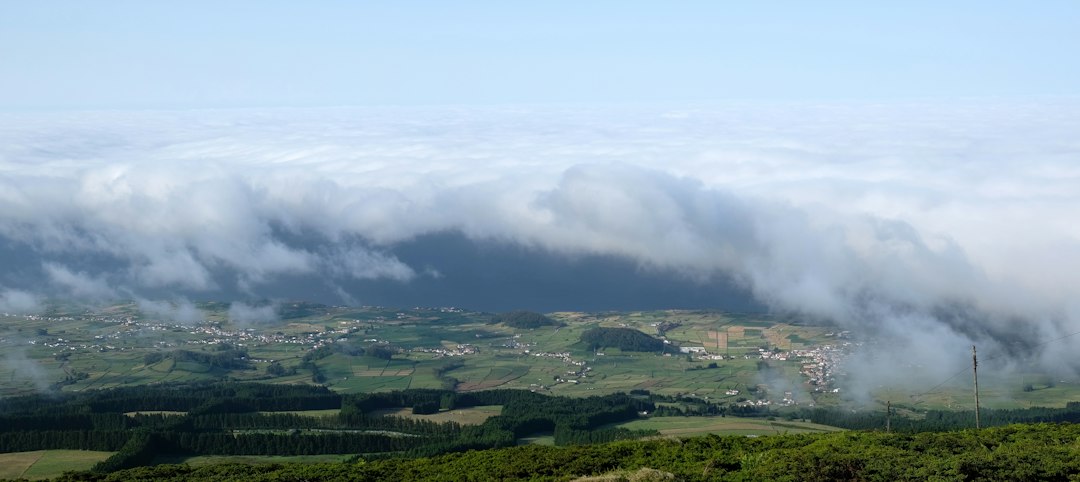
Angra do Heroísmo Travel Guide: Everything You Need to Know (2026)
Angra do Heroísmo sits on Terceira Island in the Azores at just 26 metres above sea level, yet its skyline is dominated by the twin volcanic cones of Monte Brasil rising dramatically from the Atlantic. Founded in 1478 with a current population of 34,774, it holds UNESCO World Heritage status for its remarkably intact 16th-century urban grid — one of only a handful of entire city centres to earn that distinction in the Atlantic world. The city served for centuries as the mandatory stopover for ships crossing between Europe and the Americas, which explains why so much imperial-era architecture survived in one concentrated place.
Three Things Not to Miss in Angra do Heroísmo
- Sé Cathedral of Angra do Heroísmo — The oldest cathedral in the Azores, built in 1618, anchors the UNESCO-listed historic centre with its striking twin towers.
- Fortaleza de São João Baptista — A 16th-century fortress on Monte Brasil peninsula, among the best-preserved Atlantic military complexes in the world.
- Biscoitos Natural Swimming Pools — Volcanic lava-rock tidal pools just 20 km from the city, offering some of the clearest Atlantic swimming in the Azores.
Scroll down for our complete travel guide with tips on getting there, where to stay, costs and more.
Getting to Angra do Heroísmo from the Airport
How do I get to Angra do Heroísmo?
Fly directly into **Lajes Airport (TER)** on Terceira Island — that is your only practical entry point. SATA/Azores Airlines and TAP Air Portugal serve Lajes from **Lisbon (LIS)** in roughly **2 hours**, and there are seasonal direct flights from several European cities including London and Frankfurt. Inter-island connections from Ponta Delgada (**PDL**) take about **35 minutes**. In my experience, booking through Azores Airlines gives the most flexible inter-island options if you are island-hopping. There is no ferry service to Terceira from mainland Portugal — the Atlantic crossing makes that impractical. My tip: book early for summer departures because Terceira has far fewer seats than São Miguel, and prices spike sharply after April.
Which airport is closest to Angra do Heroísmo?
**Lajes Airport (TER)** is the only airport on Terceira Island and sits approximately **13 km northeast** of the city centre — roughly a **20-minute drive**. It is a mid-sized regional airport with a single terminal, so baggage collection is fast. What surprised me: despite its modest size, Lajes has a long military-grade runway originally built for US Air Force operations, which means even wide-body aircraft can land here. Taxis from the airport to Angra cost around **€15–€20**, and there is no direct bus connection timed to flight arrivals, so factor a taxi or pre-arranged rental car pickup into your arrival plan. Car rental desks are open inside the terminal.
How long does the journey from the airport to Angra do Heroísmo take?
The drive from **Lajes Airport (TER)** to the historic centre of Angra do Heroísmo takes **15–25 minutes** depending on traffic. The **EN1-1A highway** connects airport to city directly and is straightforward to navigate. In my experience, traffic is only a factor during weekday morning rush hours near the city’s commercial zone on **Rua de São João**. A taxi covers the distance in around **20 minutes** and costs approximately **€15–€20**. The honest caveat most guides skip: there is no airport bus with reliable scheduling, so if you arrive on a late flight, pre-book your taxi or rental car pickup. The road itself is well-maintained and well-signed in Portuguese and English.
Do I need a car to explore Angra do Heroísmo and Terceira Island?
For the city centre itself, no — you do not need a car. The **UNESCO historic centre** is entirely walkable within a **15-minute radius** on foot. However, to explore Terceira Island beyond Angra — including the **Algar do Carvão lava tube**, the **Biscoitos wine region**, and the volcanic calderas — a rental car is essential. Public bus coverage outside Angra is sparse and timed for local commuters, not tourists. I recommend renting from **Autatlantis** or **Ilha Verde** at Lajes Airport for **€30–€50 per day** depending on season. My honest warning: Terceira’s rural roads are narrow, often fog-covered in the highlands, and GPS sometimes routes you onto unpaved tracks — download offline **maps.me** as a backup.
Moving Around Angra do Heroísmo
What are the best areas to stay in Angra do Heroísmo?
Stay in the **historic centre** — specifically within walking distance of **Praça Velha** (the old main square) and **Rua Direita**. This puts you inside the UNESCO zone with the best restaurants, cafes, and evening atmosphere within a **10-minute walk** in any direction. The **Jardim Duque da Terceira** area just west of the cathedral is particularly pleasant — quieter streets, local bakeries, and no tour-bus crowds. I would avoid booking accommodation out near **Lajes** or the airport unless you are simply overnighting before an early flight. What surprised me: the historic centre is genuinely compact and flat near the waterfront, making it easy to navigate on foot even with luggage. Avoid upper hillside streets if you have mobility concerns — they are steep and cobbled.
What does accommodation cost per night in Angra do Heroísmo?
Budget travellers can find clean guesthouses and **Airbnb apartments** for **€50–€80 per night** in the historic centre. Mid-range boutique hotels — including the well-regarded **Hotel Beira Mar** on the waterfront — run **€90–€140 per night** in summer. The top-end option, **Pousada de Angra do Heroísmo** inside the 16th-century **Castelo de São Sebastião**, charges **€160–€220 per night** in peak season and is genuinely one of the most atmospheric places to sleep in the entire Azores. In my experience, self-catering apartments offer the best value for stays longer than **3 nights**. The honest caveat: Terceira has far fewer beds than São Miguel, so availability tightens fast after May — do not expect last-minute deals in July or August.
How far in advance should I book accommodation in Angra do Heroísmo during high season?
Book at least **3–4 months ahead** for July and August travel. Angra do Heroísmo has a relatively small accommodation stock for a UNESCO city, and the **Sanjoaninas festival** in late June fills virtually every bed on the island for an entire week — if you want to attend that, book **6 months out**. In my experience, the **Pousada de Angra** sells out by March for peak summer dates. Shoulder months of May, October, and November allow **4–6 weeks** advance booking with reasonable availability. My tip: if your preferred hotel is full, search along **Rua do Rego** and **Rua do Galo** in the historic centre for small family-run guesthouses that do not list on major booking platforms — a direct email in Portuguese gets you far.
Are there special or unique accommodation types in Angra do Heroísmo?
The standout is the **Pousada de Angra do Heroísmo** — a state-run heritage hotel converted from the 16th-century **Castelo de São Sebastião** overlooking the bay. Sleeping inside a functioning fortress with ocean views is an experience unavailable anywhere else in the Azores. Beyond that, several **Solar** mansions (historic noble houses) in the UNESCO centre have been converted into boutique guesthouses with original azulejo tilework and exposed stone walls — look for **Solar de Santa Luzia** as a starting point. Rural **quinta** farmhouses exist within **15 km** of the city for those wanting countryside stays with easy city access. What surprised me: a handful of local families rent traditional Terceiranstyle **casas de campo** with hydrangea-lined gardens that never appear on international booking sites — ask at the Angra tourism office on **Rua da Rocha**.
Choosing a Neighbourhood in Angra do Heroísmo
What are the absolute must-sees in Angra do Heroísmo?
Three sights are non-negotiable. First, the **Fortaleza de São João Baptista** on Monte Brasil — a perfectly preserved Atlantic military complex dating to the 1590s with panoramic views across the bay, free to enter and rarely crowded before 9am. Second, the **Sé Cathedral** on **Praça Velha**, the oldest active cathedral in the Azores, with a surprisingly austere interior that rewards slow exploration. Third, walk the entire **UNESCO historic centre grid** systematically — the 16th-century street plan is itself the attraction, with azulejo-fronted churches, baroque civic buildings, and basalt-paved lanes unchanged in layout for **400 years**. I recommend the **Museu de Angra do Heroísmo** inside the former Franciscan convent for context — entry is just **€2** and the collection of navigational instruments and colonial maps is genuinely excellent.
What can I experience for free in Angra do Heroísmo?
Considerable amounts — Angra rewards walkers who simply wander. The entire **UNESCO historic centre** is free to explore on foot. **Monte Brasil** — the volcanic peninsula — has free hiking trails with 360-degree Atlantic views reachable in a **40-minute walk** from the city centre. The **Jardim Duque da Terceira** public garden near the cathedral is free and lovely in the morning. The **Fortaleza de São João Baptista** grounds are free to walk (interior areas are military and restricted). The waterfront promenade from **Praça do Almirante Canário** east to the marina costs nothing and takes about **30 minutes** at a leisurely pace. In my experience, the best free experience is attending Sunday morning mass at the **Sé Cathedral** — the choir and architecture together are extraordinary, and respectful tourists are welcomed.
Which day trips from Angra do Heroísmo are most worthwhile?
The best day trip is **Algar do Carvão** — a drive-through volcanic lava tube accessible from the island’s centre, about **25 km** from Angra, with a subterranean lake inside a dormant volcano. Entry costs **€6**. The **Biscoitos natural lava pools** on the north coast are **20 km** away and excellent for swimming in calm Atlantic waters. The entire island circumference is only **120 km**, making a full loop by car in one day entirely feasible — I recommend the route via **Serra do Cume** for its patchwork-quilt green valley views. For inter-island day trips, a **35-minute SATA flight** reaches **Faial Island (HOR)** and its famous **Horta marina**. The honest caveat: inter-island flights are frequently cancelled in winter due to fog — build in flexibility.
What local specialities should I try in Angra do Heroísmo?
Start with **Cozido das Furnas-style stew** — Terceira’s version is **Alcatra**, a slow-braised beef stew cooked in clay pots with wine, spices, and bacon fat, unique to this island. Do not leave without trying it at **Restaurante O Pescador** near the marina or at **Bairro da Sé** taverns. **Dona Amélia** cakes — small pastry rounds made with honey, cinnamon, and molasses — were invented in Angra in 1932 and are sold only here at the original **Fábrica de Dona Amélia** on **Rua da Rocha**. Local **Biscoitos wine** (a volcanic white from the north coast) pairs beautifully with fresh limpets grilled in butter and garlic. In my experience, the fish at the Tuesday and Friday market on **Rua do Marquês da Praia** is the freshest on the island and costs a fraction of restaurant prices.
Top Sights in Angra do Heroísmo
What makes Angra do Heroísmo unique compared to other Azorean cities?
Angra do Heroísmo is the only city in the Azores — and one of very few in the entire Atlantic world — whose complete historic urban grid holds **UNESCO World Heritage status**, inscribed in 1983. Unlike Ponta Delgada on São Miguel, which has expanded and modernised heavily around its historic core, Angra’s 16th-century layout of streets, fortifications, and religious buildings survives almost entirely intact within a **walkable 1 km radius**. The city was the first European settlement in the mid-Atlantic and for **two centuries** served as the obligatory refuelling and administrative stop for ships crossing between Lisbon, Brazil, and the Americas. That geopolitical role explains the extraordinary concentration of Renaissance and Manueline architecture for a city of just 34,774 people. In my experience, it feels like a living outdoor museum that locals actually inhabit — no theme-park quality.
How many days should I spend in Angra do Heroísmo?
**3 full days** is the minimum to do Angra and Terceira Island justice. Day 1: walk the entire UNESCO centre, visit the **Sé Cathedral** and **Museu de Angra do Heroísmo**. Day 2: hike **Monte Brasil** in the morning and drive to **Biscoitos** in the afternoon. Day 3: interior island circuit via **Algar do Carvão** and **Serra do Cume**. If you have **5 days**, add a full day for relaxed eating and exploring neighbourhoods like **Sé** and **Santa Luzia** without agenda, plus a day trip to **Graciosa Island** by SATA (a remarkable and uncrowded island **30 minutes** by air). The honest caveat: if you are island-hopping across the Azores, many travellers shortchange Terceira with just 2 nights — this is a mistake for a UNESCO city of this depth.
When is the best time to visit Angra do Heroísmo?
**June through September** are the optimal months based on verified climate data. July and August deliver the warmest, driest weather with Atlantic temperatures around **22–25°C** and minimal rain. June is excellent because the legendary **Sanjoaninas festival** (late June) transforms the city with bullfights, street parties, and processions — one of the most authentic urban festivals in the Portuguese Atlantic. September offers warm weather with noticeably smaller crowds and lower prices than peak July-August. In my experience, **June and September are the sweet spot** — warm enough to swim at **Biscoitos**, dry enough for hiking **Monte Brasil**, but without the accommodation scarcity of August. I would avoid January through March for Terceira specifically — the island receives Atlantic fronts frequently and fog can ground inter-island flights for days.
What are the local festivals in Angra do Heroísmo worth attending?
The **Sanjoaninas festival** in the last week of June is the unmissable event — a week-long celebration combining traditional Azorean bullfighting (tourada à corda, where bulls are controlled by rope-handlers rather than killed), street concerts, fireworks over the bay, and the **cortejo das festas** (historic parade). It has been running since the 16th century and draws visitors from across the Portuguese diaspora. Book accommodation **5–6 months in advance** if attending. The **Festas do Espírito Santo** occur across the island on Sundays from Easter to Pentecost — small neighbourhood celebrations with free bread and soup distributions that are deeply local and genuinely moving to witness. In my experience, attending even one **Impérios do Espírito Santo** procession in a village like **Biscoitos** or **Praia da Vitória** gives more cultural insight than any museum.
Where to Eat in Angra do Heroísmo
How does the weather in Angra do Heroísmo affect what activities I can do?
Terceira’s weather is famously changeable year-round — the Azores sit in the mid-Atlantic and can receive four seasons in one day, especially in spring and autumn. This directly affects hiking on **Monte Brasil** (fog can reduce visibility to near zero) and swimming at **Biscoitos** (Atlantic swells make the pools rough in winter). Summer months reduce but do not eliminate sudden rain — always carry a light waterproof jacket regardless of the forecast. The **Algar do Carvão lava tube** is unaffected by weather and is a reliable activity on rainy days — temperatures inside stay a constant **11°C**. In my experience, morning weather on Terceira is almost always better than afternoon — plan outdoor hikes before noon and save museum visits and eating for the afternoon if clouds build. The **Serra do Cume** viewpoint is frequently cloud-covered; arrive at dawn for guaranteed views.
How crowded does Angra do Heroísmo get in peak season?
Far less crowded than you would expect for a UNESCO city. Even in peak **July and August**, Angra does not experience the overwhelming tourist saturation of Sintra or Dubrovnik. The **historic centre** fills with visitors between 10am and 6pm but quiets dramatically after dinner — evenings belong almost entirely to locals. The main pressure point is accommodation availability, not street crowding. The **Sanjoaninas festival** week in late June is the one genuine exception — the city fills completely and restaurants run waiting lists. In my experience, arriving at major sights like **Monte Brasil fortress** before 9am guarantees you will have them almost to yourself even in August. The honest caveat: tourism on Terceira has grown significantly since **2019** and the UNESCO label brings increasing attention — this uncrowded window will not last indefinitely.
How safe is Angra do Heroísmo for travellers?
Angra do Heroísmo is exceptionally safe — among the safest destinations in southern Europe. Violent crime is virtually nonexistent and petty theft (the main risk in Lisbon or Porto) is rare in the compact historic centre. In my experience walking the city at midnight, the biggest hazard is the uneven **basalt cobblestone** pavement, which is genuinely slippery when wet — wear shoes with grip, not flip-flops. The waterfront area around the **marina** and **Rua Direita** is lively and well-lit until around 1am. My honest caveat: rural roads on **Monte Brasil** and in the island interior can be narrow, poorly lit, and genuinely hazardous in fog — drive slowly and do not assume oncoming vehicles can see you. Standard travel insurance covering medical evacuation is advisable given the island’s distance from mainland Portugal.
Is English widely spoken in Angra do Heroísmo?
English is spoken adequately in tourist-facing businesses — hotels, airport, main restaurants along **Rua Direita**, and the tourism office on **Rua da Rocha**. However, outside the UNESCO centre core, particularly in neighbourhood bakeries, markets, and family-run taverns, Portuguese is essential. The **official language** is Portuguese and the Azorean accent differs notably from mainland Portuguese, which even fluent speakers sometimes find challenging at first. In my experience, learning five phrases — *obrigado/a* (thank you), *faz favor* (please), *quanto custa* (how much), *uma mesa para dois* (table for two), *a conta, se faz favor* (the bill, please) — unlocks a warmth from locals that English alone never achieves. Younger Terceirans (under 35) in Angra typically speak functional English, often influenced by the historic **US military presence** at Lajes Air Base.
Before You Go to Angra do Heroísmo
What is a realistic daily budget for Angra do Heroísmo?
Budget travellers managing their own cooking or eating at local **tascas** can survive on **€60–€80 per day** including a hostel or cheap guesthouse. A mid-range day — boutique hotel, two restaurant meals, one paid attraction, and a rental car share — runs **€130–€180 per person**. Comfortable travel with the **Pousada de Angra**, dinner at a proper restaurant, and car rental totals **€220–€280 per day**. Food costs less here than in Lisbon — a full **Alcatra** lunch with wine at a local restaurant runs **€14–€18 per person**. My tip: the biggest variable is the rental car at **€30–€50 per day** — split between two people it becomes very reasonable. The honest caveat: inter-island flights to **Faial** or **Graciosa** add **€80–€150 per person** per day trip and inflate budgets fast if you island-hop aggressively.
How does public transport work in and around Angra do Heroísmo?
Within the UNESCO historic centre, public transport is irrelevant — everything is within a **15-minute walk**. Beyond the centre, **Rodoatlanticense** operates bus lines connecting Angra to **Praia da Vitória** (the island’s second town, **18 km** away) roughly every **60–90 minutes** on weekdays, with reduced weekend service. A single ticket costs approximately **€2–€3**. There is no bus timed to flight arrivals at **Lajes Airport**. The bus to **Biscoitos** runs infrequently and is not practical for tourists on a tight schedule. In my experience, the bus network is designed for islanders commuting between towns, not for visitors exploring flexibly. My honest recommendation: if you are not renting a car, focus your entire stay on the city centre and nearby walking trails on **Monte Brasil** — do not rely on buses to reach the island’s natural highlights.
Which apps do you recommend for visiting Angra do Heroísmo?
Download these before you board the plane. **Maps.me** with the Azores offline map loaded — Google Maps has coverage gaps in rural Terceira, especially near **Serra do Cume** and the north coast. **Visit Azores** (official regional tourism app) has updated opening hours for **Algar do Carvão** and other managed natural sites. **Uber** does not operate on Terceira — use **Táxis de Angra** via local call or ask your hotel to book one. **Revolut** or **Wise** for fee-free **€** spending, since ATMs in Angra charge foreign card fees of approximately **€3–€5** per withdrawal. **Windy.com** is invaluable for checking Atlantic swell forecasts before heading to **Biscoitos** pools. In my experience, downloading the **SATA airline app** for inter-island flight management is essential — schedule changes happen with little notice and mobile check-in saves time at the small **Lajes** terminal.
Angra do Heroísmo at a Glance
| Population | 34,774 |
|---|---|
| Currency | EUR (€) |
| Official language | Portuguese |
| Time zone | UTC±00:00 |
Source: Wikidata, retrieved September 2026.
Portugal › Angra do Heroísmo
More Destinations in Portugal
Essential Resources for Planning Your Trip to Angra do Heroísmo
- Visit Angra do Heroísmo, on Terceira Island, Azores, and … — official visitor information, passes & events
- Wikipedia: Angra do Heroísmo — history, geography & background
- Wikivoyage: Angra do Heroísmo — community travel guide & practical tips
- Angra do Heroísmo | Portugal | Attractions — expert itineraries & travel inspiration
- THE 15 BEST Things to Do in Angra do Heroísmo (2026) — hotels, restaurants & traveller reviews
- Angra do Heroísmo: Terceira’s UNESCO City Guide — how to get around
- Numbeo: Cost of Living in Angra do Heroísmo — current prices & cost comparison
- Timeanddate: Angra do Heroísmo Weather & Climate — forecasts & climate statistics
- Central Zone of the Town of Angra do Heroismo in the Azores
More Perspectives on Angra do Heroísmo
- Visiting Angra do Heroismo in Terceira, Azores with my wife
- Angra: Today and in Bygone Days
- Best things to do in Angra do Heroísmo
Angra do Heroísmo Travel Videos
Watch these videos for a visual preview before your trip:
- Angra do Heroísmo (Azores) – Complete Guide to the UNESCO World Heritage City (EN)
- TRAVEL AZORES | Açores | 5 TOP PLACES TO VISIT IN THE CITY OF ANGRA, TERCEIRA ISLAND, PORTUGAL Ep. 2
- Top 15 Things To Do In Angra do Heroismo, Portugal
Angra do Heroísmo Travel Discussions on Reddit
Real traveller experiences and community advice:
- Secrets of Terceira? : r/azores
- How much time do I need to see Angra do Heroisma?
- How should I spend one day on Terceira Island, Portugal …
Data Sources
This page was compiled using data from Wikipedia, Wikidata, Open-Meteo (climate), Numbeo (cost of living) and REST Countries. Information is updated regularly.