
Fira: The Complete Travel Guide (2026)
Last reviewed: September 2026 · key facts checked against Wikidata
Fira Travel Guide: Everything You Need to Know (2026)
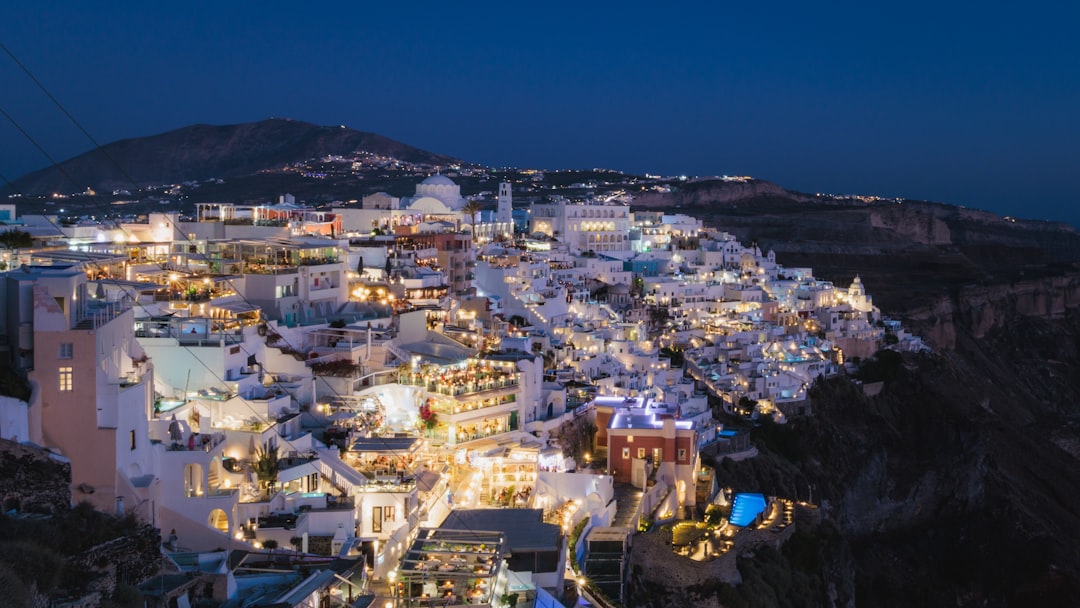
Fira is the dramatic clifftop capital of Santorini, perched at 260 metres above sea level on the rim of one of the world’s largest volcanic calderas. With a resident population of just 1,346, this compact town punches far above its weight — hosting millions of visitors annually drawn to its white-cubic architecture cascading down sheer volcanic cliffs. The settlement takes its name directly from an alternative pronunciation of ‘Thíra,’ the ancient name of Santorini itself, tying modern tourism to a civilisation stretching back over 3,500 years.
Three Things Not to Miss in Fira
- Caldera Edge Walkway — A 10-kilometre clifftop path between Fira and Oia offers the most spectacular volcanic panorama in the Mediterranean.
- Museum of Prehistoric Thera — Houses Minoan frescoes and artefacts from the 3,600-year-old Akrotiri eruption, rivalling Pompeii in archaeological detail.
- Cable Car Descent to Ammoudi — The 1892 funicular drops 220 metres in under 3 minutes, revealing a caldera perspective impossible from the clifftop.
Scroll down for our complete travel guide with tips on getting there, where to stay, costs and more.
How to Reach Fira
How do I get to Fira — by flight, ferry, or both?
Fly into Santorini Thira Airport (JTR), located just 5 km southeast of Fira — the fastest and most practical entry. In my experience, flying directly to JTR beats any ferry combination for first-time visitors. A taxi from JTR to Fira costs €12–€15 and takes under 10 minutes. Ferries arrive at Athinios Port, about 10 km south of Fira, where a bus or taxi into town adds €2 (bus) or €15–€20 (taxi). The caveat most guides skip: JTR has a notoriously short runway, so budget carriers sometimes cancel in strong winds — always have a Piraeus ferry backup if your schedule is tight.
Which airport is closest to Fira?
Santorini Thira Airport (JTR) is the only airport and sits 5 km from Fira’s centre. My tip: it handles direct flights from major European hubs including Athens (ATH), London, Amsterdam, and Frankfurt. The drive from JTR to Fira takes 8–12 minutes by taxi. What surprised me is that car rental desks at JTR get completely overwhelmed in July and August — I recommend booking your rental at least 6 weeks ahead or pre-arranging an airport pickup with your hotel. There is no rail link and no express shuttle, so factor in €12–€20 for every airport transfer.
How long does the journey to Fira take from Athens or other major hubs?
From Athens Eleftherios Venizelos (ATH), the flight to JTR is 45 minutes, then 10 minutes by taxi to Fira — under 1 hour door-to-door from the Athens terminal. The high-speed ferry from Piraeus Port in Athens takes 5–6 hours to Athinios; a slow ferry stretches to 8 hours. In my experience, the ferry makes sense only if you’re island-hopping from Mykonos (2 hours by fast ferry) or Naxos (1.5 hours). The honest caveat: Aegean Ferries and SeaJets frequently adjust timetables seasonally — always check Ferryhopper.com within 4 weeks of travel for the most accurate schedule.
Do I need a rental car to explore Fira and Santorini?
No — Fira itself is entirely walkable and cars are banned on the central caldera path. My recommendation: skip the car for 2–3 days focused on Fira, Oia, and Perissa, and rely on the KTEL bus network instead. A day rental of an ATV costs €25–€40 and covers most of Santorini’s 76 km² efficiently. If you plan to reach Akrotiri Archaeological Site, Red Beach, or Pyrgos village independently, a car or ATV genuinely saves time. The trade-off: parking in Fira is brutal in July and August — the single public lot on 25th Martiou Street fills by 9 a.m., leaving rental cars stranded expensively.
Fira Public Transport Explained
What are the best areas to stay in Fira?
Stay in Firostefani or Imerovigli for the caldera views without Fira’s party noise — both are a 10–15 minute walk from Fira’s centre. The Caldera-edge strip in central Fira suits nightlife lovers who want bars and restaurants at their doorstep. I recommend Firostefani for couples — it’s quieter, cheaper by roughly 20%, and the caldera views are arguably superior. Karterados, the inland village 1.5 km east of Fira’s centre, offers the best budget options with zero caldera views but easy bus access. The honest warning: ‘Fira town centre’ accommodations listed on booking sites sometimes mean a 20-minute uphill walk from the main square — always check the pin on the map.
What does accommodation in Fira cost per night?
Budget guesthouses in Karterados start at €50–€80 per night in shoulder season. Mid-range hotels with caldera views in Firostefani run €150–€250. Expect to pay €400–€900+ per night for iconic cliff-edge cave hotels like those on Agiou Mina Street in peak July–August. In my experience, the sweet spot is a €180–€220 room in Firostefani — you get partial caldera views, a pool, and a 10-minute walk to Fira’s restaurants without the premium of a full cliff-face suite. The caveat: most cave hotels charge a €30–€50 non-refundable cleaning fee that doesn’t appear until checkout.
How far in advance should I book accommodation in Fira during high season?
Book at least 4–6 months ahead for July and August — the caldera-view cave hotels on Santorini sell out by February for peak season. In my experience, the best mid-range rooms at properties like those on Agiou Mina or Ipapantis Street in Fira disappear by March. For June or September, 8–10 weeks ahead is realistic. My tip: if you find your preferred hotel sold out, check Booking.com’s free cancellation filter — hotels often release rooms 60 days out when non-refundable bookings fail to be paid. The trade-off: last-minute deals in Fira are essentially a myth in summer; you’ll pay inflated rates for inferior inland rooms.
Are there special or unique accommodation types in Fira?
Yes — cave hotels carved into the volcanic caldera cliff are Fira’s defining accommodation type, and they exist nowhere else on Earth in this exact form. The pumice-stone walls maintain a natural 18–22°C interior temperature year-round, reducing the need for heavy air conditioning. I stayed in a cave suite off Erythrou Stavrou Street and the silence and cool darkness at noon were genuinely extraordinary. Many properties also feature private infinity plunge pools cantilevered over the 300-metre drop to the sea — budget €350+ per night for this experience. The honest warning: cave rooms are often windowless on one side and can feel claustrophobic; request a room with a terrace door opening toward the caldera, not the hillside.
Neighbourhoods of Fira
What are the absolute must-sees in and around Fira?
Three non-negotiables: the caldera rim walk to Oia (10 km, 3 hours), the Museum of Prehistoric Thera (€6 entry, houses world-class Minoan frescoes), and a sunset from Skaros Rock in Imerovigli — a 35-minute hike from Fira that beats Oia’s famous sunset for uncrowded drama. In my experience, the Archaeological Museum of Thera on Mitropoleos Street is criminally undervisited — it costs just €3 and explains the island’s eruption history better than any guided tour. What surprised me: the Orthodox Metropolitan Cathedral in Fira’s centre is free and architecturally stunning, but 90% of visitors walk past it focused solely on the caldera edge.
What can I experience for free in Fira?
Walking the caldera path from Fira toward Oia is completely free and delivers the best views on the island. The Fira central square (Theotokopoulou Square) and its surrounding blue-domed churches cost nothing to photograph. I recommend the free sunset viewpoint at Agios Theodoros Chapel, a 10-minute walk north of Fira’s main street, which most tourists bypass entirely in favour of pricier Oia. The cable car base station area at Fira Skala is free to access and gives you a ground-level view of the port activity and ferry tenders below. The caveat: ‘free’ beaches near Fira don’t exist — the closest decent swimming is Monolithos (7 km), a €10–€15 taxi ride each way.
Which day trips from Fira are most worthwhile?
The Akrotiri Archaeological Site (12 km south) is Santorini’s most underrated day trip — a €14 entry fee grants access to a Minoan Bronze Age city preserved under volcanic ash since 1627 BC. Oia village (11 km north), reachable by the caldera walk or a €12–€15 taxi, is essential but go on a weekday morning before 11 a.m. to avoid the worst crowds. I recommend the volcanic island boat trip to Nea Kameni — tours depart Fira Skala and cost €15–€25 including the hot springs stop. The honest caveat: the famous Oia sunset now draws 3,000+ people to one viewpoint — arrive 90 minutes early or you’ll see nothing but camera screens.
What local specialities should I try while in Fira?
Order tomatokeftedes (Santorini cherry tomato fritters) and fava (yellow split pea purée from Santorini’s unique soil) at every opportunity — they taste genuinely different here than anywhere in Greece due to the volcanic mineral content in the earth. In my experience, Naoussa restaurant near the Catholic quarter in Fira serves the most honest version of both dishes for around €7–€9 per meze. Drink the local Assyrtiko white wine — Santorini’s mineral, high-acid volcanic white is world-class; a glass at a non-caldera-view wine bar costs €6–€10. Avoid the ’Santorini salad’ listed at tourist traps on the main drag — it’s a rebadged Greek salad at a €4 premium.
What to See in Fira
What makes Fira unique compared to other Greek island capitals?
Fira is the only island capital in Greece built on the rim of an active submarine volcano — the caldera drops 300 metres directly below the town’s cafés and boutiques. The entire geological setting is a consequence of one of history’s largest eruptions, around 1627 BC, which may have contributed to the collapse of Minoan civilisation on Crete. What surprised me is how the architecture itself is volcanic — buildings are constructed from pumice and volcanic stone quarried from the caldera walls, giving walls a texture you won’t find in Mykonos or Paros. The combination of extreme geology, Cycladic architecture, world-class wine, and a functioning town of 1,346 residents who actually live here year-round makes Fira irreplaceable.
How many days should I spend in Fira?
2 full days in Fira itself is sufficient; budget 4–5 days total to cover Fira alongside Oia, Akrotiri, Perissa, and a boat trip. In my experience, one day devoted purely to Fira — the caldera walk, museums, and evening dinner — is deeply satisfying. The second day pairs perfectly with a morning at Akrotiri and an afternoon at Red Beach (1.5 km from Akrotiri). The honest trade-off: Santorini has a ‘done it’ quality after 5 days — the island is only 76 km² and repeats itself. If you’re considering 7+ nights, I’d split time between Santorini and nearby Folegandros (1.5-hour ferry) for a completely different pace.
When is the best time to visit Fira?
June, September, and October are the sweet spot — warm enough for beaches and swimming, but 30–40% fewer visitors than the July–August peak. Climate data confirms June through November as the best travel window. In my experience, late September is the single best week: sea temperature holds at 24–25°C, the light is golden for photography, and caldera-view restaurants actually have tables without reservations. October brings occasional rain but offers 20–30% lower hotel rates and almost no queues at Akrotiri or the museums. The caveat: many caldera-edge bars and boutiques close from November through March, leaving Fira quieter than a village.
Are there local festivals in Fira worth attending?
Ifestia Festival is Fira’s most spectacular event — held annually in August, it recreates the volcanic eruption with fireworks launched from Nea Kameni island as seen from the caldera rim. In my experience, watching from the Firostefani caldera path gives the best unobstructed angle without the crushing Oia crowds. Easter on Santorini is genuinely moving — the Anastasis midnight service at Fira’s Metropolitan Cathedral draws the entire local community and runs from 11 p.m. to 1 a.m. with candlelit processions. The Santorini Jazz Festival in July is a smaller, underrated event held at various caldera-edge venues — tickets run €15–€35 and sell out fast.
Fira Food Scene
How does the weather in Fira affect what activities are possible?
July and August bring near-zero rain, temperatures of 27–32°C, and the meltemi wind — a strong northerly that makes boat trips rough and can shut down ferry routes for 1–2 days. In my experience, the meltemi actually improves hiking comfort on the caldera path, keeping temperatures bearable. November through March is largely off-season: most caldera-view restaurants close, beaches are inaccessible, and the island returns to a population of under 10,000 year-round residents. For the caldera walk to Oia, start before 8 a.m. in summer to avoid both heat and crowds — the path has zero shade for 4 of the 10 kilometres.
How crowded does Fira get in peak season?
Extremely crowded — in July and August, the caldera-edge walkway in Fira fills by 10 a.m. and cruise ships deposit up to 10,000 additional day visitors on busy days via the Fira Skala cable car. In my experience, the main commercial street (Erythrou Stavrou) becomes nearly impassable between 6–9 p.m. in peak season. What surprised me: Fira actually handles crowds better than Oia because it’s larger and the streets are slightly wider. My tip — book restaurants in the back streets behind the Catholic quarter rather than the caldera rim; the food is better, prices are 15–20% lower, and you’ll actually get a table. Visit the Museum of Prehistoric Thera before 10 a.m. to have it entirely to yourself.
How safe is Fira for tourists?
Fira is very safe — Greece consistently ranks among Europe’s lowest crime-rate countries for tourists. In my experience, the primary physical hazards are the steep, uneven caldera-path steps (dangerous at night or in wet conditions) and the cable car queue crush in August, where waits exceed 45 minutes and pickpocketing occasionally occurs. Keep belongings in front-facing bags on the cable car and at Theotokopoulou Square during festival nights. The honest warning most guides omit: donkey rides down the 587 steps to Fira Skala are widely criticised on welfare grounds and the steps are coated in animal waste — take the cable car (€6 round trip) or walk down and up for free.
Is English widely spoken in Fira?
Yes — English is effectively the working language of Fira’s tourism industry. Every restaurant, hotel, tour operator, and shop in the caldera zone operates seamlessly in English. In my experience, even the local KTEL bus drivers and port staff at Athinios speak functional English. Greek is appreciated but never necessary for a standard visit. The nuance: venture into Karterados or Messaria villages inland and you’ll find older residents who prefer Greek — carrying a translation app like Google Translate with Greek downloaded offline is useful in local kafeneions (traditional cafés). Menu items are always listed in both languages at tourist-facing establishments, and road signs throughout Santorini are bilingual.
Local Know-How for Fira
What is the daily budget for visiting Fira?
Budget traveller: €80–€100 per day (hostel bed in Karterados at €35, gyros lunches at €4, KTEL buses, 1 museum). Mid-range: €180–€250 per day (cave hotel in Firostefani, sit-down caldera dinners, wine, a boat trip). Luxury: €500–€900+ per day (cliff-edge cave suite, private sunset sailing, fine dining). In my experience, food is the biggest variable — a caldera-view restaurant dinner for two with wine runs €80–€120, while the same meal quality costs €35–€50 at a taverna on Danezi Street two blocks back from the edge. The hidden cost: sunset cocktails at any caldera bar average €14–€18 per drink — budget for 2 rounds minimum if that’s your plan.
What public transport is available in and around Fira?
KTEL Santorini buses connect Fira to all major island destinations from the central bus terminal on 25th Martiou Street. A single fare costs €1.80–€2.50 depending on destination — Perissa beach is €2.50, Oia is €2.50, and Akrotiri is €2. Buses run every 20–40 minutes in summer (June–September) and every 1–2 hours off-season. In my experience, the Fira–Oia bus is reliably packed by 4 p.m. as sunset-chasers head north — take the 3:00 p.m. bus minimum. Taxis queue at the main square but surge prices apply after midnight. The caveat: there are no ride-hailing apps like Uber operating on Santorini — Santorini Taxi (tel. +30 22860 22555) is the only dispatch option.
Which apps do you recommend for visiting Fira?
Ferryhopper for ferry bookings and real-time schedule changes — essential if you’re island-hopping. Google Maps works reliably across Santorini including offline mode, though it slightly misroutes the caldera path in 2–3 places; trust the physical trail markers. Booking.com for accommodation with the crucial free-cancellation filter. The Fork (TheFork) lists Fira restaurant availability and occasionally offers 50% discounts at mid-range tavernas during shoulder season — I saved €22 on one dinner using it in October. For weather, Windy.com specifically tracks the meltemi wind patterns that affect boat trips far better than standard weather apps. Download Google Translate with Greek offline before you arrive — you’ll need it for pharmacy labels and inland menus.
Fira at a Glance
| Population | 1,346 |
|---|---|
| Currency | EUR (€) |
| Official language | Greek |
| Time zone | UTC+02:00 |
Source: Wikidata, retrieved September 2026.
Greece › Fira
More Destinations in Greece
Essential Resources for Planning Your Trip to Fira
- World Heritage and Sustainable Tourism Programme — official visitor information, passes & events
- Wikipedia: Fira — history, geography & background
- Wikivoyage: Fira — community travel guide & practical tips
- Fira travel – Lonely Planet | Greece, Europe — expert itineraries & travel inspiration
- THE 15 BEST Things to Do in Fira (2026) — hotels, restaurants & traveller reviews
- Travel without leaving a trace – how to tackle overtourism I … — how to get around
- Numbeo: Cost of Living in Fira — current prices & cost comparison
- Timeanddate: Fira Weather & Climate — forecasts & climate statistics
- World Heritage and Sustainable Tourism Programme
More Perspectives on Fira
- Domes and donkeys: The best things to do in Fira Santorini
- My Guide to 48 Hours in Fira, Santorini
- Exploring Oia, Imerovigli, and Fira, best restaurants, sunset …
Fira Travel Videos
Watch these videos for a visual preview before your trip:
- Fira Santorini Travel Guide 2026 🇬🇷 (Best Things to Do)
- Santorini Beginner’s Guide [ALL THE BASICS in 5 min]
- Santorini Travel Guide: What It’s Really Like (Honest Tips for 2026)
Fira Travel Discussions on Reddit
Real traveller experiences and community advice:
- Fora Travel Agency? : r/travelagents
- Is Fora worth it as a side gig for people who travel a lot?
- Reasons to not go with Fora? : r/travelagents
Data Sources
This page was compiled using data from Wikipedia, Wikidata, Open-Meteo (climate), Numbeo (cost of living) and REST Countries. Information is updated regularly.