
Hauts-de-France: The Complete Travel Guide (2026)
Last reviewed: October 2026 · key facts checked against Wikidata
Hauts-de-France Travel Guide: Everything You Need to Know (2026)
Hauts-de-France is France’s northernmost region, created on 1 January 2016 from the merger of Nord-Pas-de-Calais and Picardy, with a population of 6,006,156 spread across cities like Lille, Amiens, and Arras. The region shares borders with Belgium and sits just 50 km from London via the Channel Tunnel, making it one of Europe’s most strategically connected corners. What surprises most visitors is the sheer depth of history here — from WWI battlefields to Gothic cathedrals — packed into a region most travellers only glimpse through a train window.
Top 3 Highlights at a Glance
- Amiens Cathedral — France’s largest Gothic cathedral, completed in 1270, with a nave soaring 42.3 metres — UNESCO-listed and genuinely breathtaking.
- Louvre-Lens Museum — A satellite of the Paris Louvre opened in 2012, displaying 200+ masterpieces in a former coal-mining town for just €10 entry.
- WWI Battlefields of the Somme — The Thiepval Memorial bears 72,195 names of the missing — the most moving war commemoration site in Europe.
Scroll down for our complete travel guide with tips on getting there, where to stay, costs and more.
Getting There
How do I best reach Hauts-de-France?
The fastest option is Eurostar or TGV to Lille-Europe station, taking 80 minutes from Paris and 80 minutes from London St Pancras. In my experience, the train is far superior to flying for this region. From Brussels, Thalys takes just 35 minutes to Lille. If you’re coming from southern France, TGV trains run directly to Lille from Lyon in 3 hours. My tip: avoid driving from Paris — the A1 motorway tolls add up to €25-30 each way, and Lille’s city centre parking is expensive and confusing. The warning most guides omit: regional trains within Hauts-de-France to smaller towns like Arras or Amiens depart from Lille-Flandres, not Lille-Europe — don’t mix them up.
Which airport is closest to Hauts-de-France?
Lille-Lesquin Airport (LIL) is the primary regional airport, located just 10 km southeast of Lille city centre. In my experience, flight connections here are limited — mostly budget routes on Transavia and occasional charter flights. For international arrivals, Brussels Airport (BRU) at 120 km is a far better-connected hub with direct rail links into Lille via Brussels-Midi in about 1 hour 45 minutes total. Charles de Gaulle (CDG) at 200 km connects to Lille by TGV in 50 minutes and is my top recommendation for intercontinental travellers. The honest caveat: Lille-Lesquin has a shuttle bus to the city costing €8, but it runs infrequently — a taxi costs €25-30.
How long is the journey from the capital to Hauts-de-France?
From Paris Gare du Nord, the TGV to Lille-Europe takes exactly 62 minutes — one of the shortest capital-to-regional-capital rail connections in France. I recommend booking via SNCF’s app at least 2 weeks ahead to catch Ouigo fares as low as €10. Standard TGV tickets run €35-80 depending on booking date. What surprises most travellers: once in Lille, regional TER trains to Amiens take 1 hour 10 minutes and to Arras just 25 minutes — so you can cover significant ground without a car. The caveat: last TGV back to Paris departs around 21:30, which limits evening flexibility if you’re day-tripping from the capital.
Are there direct bus connections into Hauts-de-France?
Yes — FlixBus and BlaBlaBus run direct coaches from Paris to Lille for as little as €5-15, departing from Bercy Seine station and arriving at Lille’s Porte de Valenciennes bus terminal in about 2 hours 30 minutes. In my experience, these are only worthwhile if you’re on an extremely tight budget, as the time saving of the TGV is enormous. Eurolines connects Lille to Brussels, Amsterdam, and London Victoria with fares from €15. My honest warning: the Porte de Valenciennes terminal is 3 km from Lille’s old town and requires a metro connection — not walkable with luggage. Regional bus routes within Hauts-de-France are sparse and unreliable for tourist purposes.
Is a rental car necessary in Hauts-de-France?
For Lille, Amiens, and Arras specifically — no. For WWI battlefields, the Opal Coast beaches, or the Bay of the Somme — absolutely yes. In my experience, the region splits cleanly into two travel styles: urban visitors who never need a car, and countryside explorers for whom a rental is essential. Rental cars from Lille-Lesquin start at €35/day with Europcar or Sixt. My tip: pick up the car at the airport rather than the city centre to avoid €20-30/day in parking fees. The caveat most guides omit: Berck-sur-Mer beach, Cap Blanc-Nez, and the Somme marshlands are either unreachable or impractical by public transport — plan at least one car day if those interest you.
Accommodation
Which towns make good bases in Hauts-de-France?
Lille is the undisputed base for most visitors — a walkable, vibrant city with excellent onward rail connections. Amiens works well as a secondary base for exploring the Somme and Oise departments, with lower hotel prices and a stunning cathedral on your doorstep. Arras is my personal favourite underrated base — compact, beautiful Flemish baroque architecture, direct trains to Lille in 25 minutes and to Paris in 50 minutes, and a thriving restaurant scene around Place des Héros. Dunkirk suits those focused on the coast, though it’s more industrial than picturesque. The honest warning: Roubaix and Valenciennes are promoted as cultural destinations but lack the accommodation quality and restaurant density of Lille or Arras for a multi-night stay.
Where should I stay in Hauts-de-France?
In Lille, stay in the Vieux-Lille (Old Town) neighbourhood for walkability to restaurants and nightlife — hotels on Rue de la Monnaie or near Place du Général de Gaulle are ideally positioned. In Amiens, the Quartier Saint-Leu along the canal puts you within 5 minutes of the cathedral and the floating gardens. In Arras, any hotel within the historic centre keeps you near both grand squares. I recommend Hôtel de la Paix in Arras for character at reasonable rates. The caveat: Vieux-Lille hotels charge a €20-40 premium per night over equivalent hotels just 10 minutes away in the Wazemmes neighbourhood, which is also more authentic and locally-oriented.
What does accommodation cost in Hauts-de-France?
Budget travellers can find clean 2-star hotels in Amiens or Arras from €55-70/night. Mid-range 3-star hotels in Lille’s Vieux-Lille run €90-140/night for a double room. Design boutiques like Hôtel Clarance in Lille charge €180-250/night. In my experience, Hauts-de-France accommodation is noticeably cheaper than Paris equivalents for the same quality — roughly 30-40% less for a comparable 3-star property. Airbnb apartments in Lille’s Gambetta neighbourhood average €70-100/night for a one-bedroom. The warning most guides skip: during Lille’s Grande Braderie flea market in early September, prices triple and rooms sell out 6 months in advance — book immediately if that’s your travel window.
How far in advance should I book accommodation in Hauts-de-France?
For standard travel outside major events, 3-4 weeks ahead secures good options at normal prices. For the Grande Braderie de Lille (first weekend of September — Europe’s largest flea market with 2 million visitors), book 6 months minimum in advance. During WWI commemoration events in November near Thiepval and Vimy Ridge, accommodation in Arras books out 2-3 months early. In my experience, Amiens and smaller towns rarely require more than 2 weeks’ notice outside summer. My honest tip: check both Booking.com and the hotel’s direct website — Hauts-de-France independent hotels frequently offer 10-15% discounts for direct bookings not advertised on aggregators.
When is the best time to visit Hauts-de-France?
Based on verified climate data, June and September are the optimal months. June delivers long days, temperatures around 18-22°C, and the region before peak holiday crowds arrive. September combines the warmth of summer with harvest festivals and the extraordinary Grande Braderie de Lille on the first weekend. In my experience, May is an underrated third choice — spring flowers in the Bay of the Somme, fewer tourists, and excellent light for photography. The honest caveat: Hauts-de-France has a genuinely northern European climate — even June can deliver 3-4 grey days in a row with light rain. Pack a waterproof layer regardless of month, and don’t build an itinerary that depends entirely on sunshine.
Best Time to Visit
How does the weather affect activities in Hauts-de-France?
Rain doesn’t derail a Hauts-de-France trip the way it might in Provence — the region’s best assets are largely weatherproof. Amiens Cathedral, the Louvre-Lens museum, Arras’ underground Boves tunnels, and Lille’s covered market halls are all ideal rainy-day activities. What does suffer in poor weather: the Opal Coast clifftop walks at Cap Blanc-Nez and Cap Gris-Nez, cycling the Scarpe-Escaut regional park, and wildlife-watching in the Bay of the Somme for seals and migratory birds. My tip: build your outdoor activities on days 1 and 2 when motivation is highest, leaving museum days for whenever clouds roll in. Summer temperatures rarely exceed 25°C, so heat is never an issue — this is refreshing for active travellers.
Are there local festivals in Hauts-de-France worth attending?
Absolutely — the Grande Braderie de Lille (first weekend of September) is non-negotiable for flea market enthusiasts, drawing 2 million visitors over one weekend to 100 km of open-air stalls. Carnaval de Dunkerque (February-March) is one of France’s wildest and most authentic pre-Lenten carnivals, entirely local in character. The Fête de la Victoire commemorations at Vimy Ridge (11 November) draw thousands of Canadian and British veterans’ families to the most moving ceremony I’ve attended anywhere in Europe. Les Géants de Douai parade in July features 6-metre papier-mâché giant figures paraded through the streets — a 400-year-old tradition on UNESCO’s Intangible Heritage list. Book accommodation immediately for any of these events.
When does Hauts-de-France get crowded?
The peak crowds concentrate in two windows: July-August along the Opal Coast beaches (particularly Le Touquet-Paris-Plage, which fills with Parisian weekenders), and the Grande Braderie de Lille weekend in early September. Outside these periods, Hauts-de-France is genuinely uncrowded by French standards — the WWI battlefield sites around Thiepval and Vimy see steady but never overwhelming visitor numbers year-round. In my experience, even Amiens Cathedral is crowd-free on weekday mornings in May or October. The warning: Le Touquet becomes nearly inaccessible by car on August weekends — roads back up 15 km from town, and parking lots fill by 10:00. Go midweek or take the train from Étaples.
What does a daily budget cost in Hauts-de-France?
A realistic daily budget breaks down as follows: budget traveller €60-80/day (hostel dorm at €22-28, market lunch at €10-12, one paid sight at €10, dinner at a brasserie for €15-18). Mid-range traveller €120-160/day (3-star hotel, two restaurant meals, transport, one museum). Comfortable €200+/day includes a boutique hotel, wine with dinner, and private battlefield tour. In my experience, Hauts-de-France is 20-25% cheaper than Paris for equivalent experiences. The honest caveat: entrance fees to the major WWI battlefield museums like the Historial de la Grande Guerre in Péronne (€9) and Notre-Dame de Lorette museum (€9) add up quickly if you’re doing a dedicated battlefield circuit — budget €40-50 extra for a two-day WWI itinerary.
Is Hauts-de-France cheaper or more expensive than other French regions?
It is meaningfully cheaper than Paris, Provence, and the Côte d’Azur. A 3-course dinner in Lille’s Vieux-Lille costs €25-35, versus €45-60 for comparable quality in Paris’s Marais. Hotel prices run roughly 35% lower than equivalent Paris arrondissement hotels. Compared to Normandy (a similar northern region), prices are broadly comparable, though Hauts-de-France has more genuine urban culture in Lille to justify spending more days. The caveat: Le Touquet-Paris-Plage is an exception — it’s a wealthy Parisian resort town where restaurant prices match Paris levels and hotel rates peak at €200+/night in August. Steer toward Berck-sur-Mer just 20 km south for the same coastline at half the price.
Budget
What free highlights are there in Hauts-de-France?
The region has outstanding free experiences. Vimy Ridge Canadian National Memorial — the most powerful WWI monument in France — is completely free to visit, including the preserved trenches. Arras’ Grande Place and Place des Héros are two of the finest Flemish baroque squares in France, entirely free to admire. The Louvre-Lens permanent collection is free (only temporary exhibitions charge €10). Walking the Opal Coast clifftops at Cap Blanc-Nez costs nothing and delivers views across to England on clear days — the White Cliffs of Dover are visible at just 34 km distance. In my experience, Lille’s Wazemmes Sunday market is the most authentic free experience in the entire region — arrive by 9:00 before the best produce disappears.
What do local specialities cost in Hauts-de-France?
A bowl of carbonnade flamande (Flemish beef and beer stew) at a traditional estaminet in Lille costs €14-18. A portion of moules-frites (mussels and fries — the regional staple) runs €16-22 in a sit-down restaurant, or €9-12 at harbour-side stalls in Boulogne-sur-Mer. Maroilles cheese (the region’s pungent, washed-rind classic) costs €8-12 per wheel at the Roubaix market. A glass of Ch’ti beer (the beloved local amber ale) is €4-5 in a Lille brasserie. My tip: the best-value regional meal is lunch at an estaminet in Vieux-Lille — a €14-18 plat du jour includes starter, main, and often a small beer. Avoid the tourist-facing terraces on Place du Général de Gaulle, which charge 30% more for the same dishes.
Which route do you recommend for 5-7 days in Hauts-de-France?
Days 1-2: Lille — Vieux-Lille streets, Palais des Beaux-Arts (France’s second-largest fine arts museum), Wazemmes market on Sunday morning, estaminet dinner. Day 3: Arras and Vimy Ridge — morning in Arras’ two squares and underground Boves, afternoon at the Vimy Ridge Canadian Memorial (free, unmissable), overnight in Arras. Day 4: Somme Battlefields — Thiepval Memorial, Ulster Tower, Lochnagar Crater, overnight in Albert or return to Arras. Day 5: Amiens — morning at the cathedral, afternoon in Hortillonnages floating gardens boat tour (€7, April-November). Days 6-7: Opal Coast — Cap Blanc-Nez, Cap Gris-Nez coastal walk (6 km loop), lunch in Boulogne-sur-Mer fish market, afternoon in Le Touquet. This requires a rental car from Day 3 onward.
What are the must-see sights in Hauts-de-France?
Amiens Cathedral — France’s largest Gothic interior, a UNESCO World Heritage Site since 1981, and genuinely more impressive than Notre-Dame de Paris at ground level. Thiepval Memorial — bears the names of 72,195 Commonwealth soldiers with no known grave from the Somme — the emotional weight is unlike anything else in France. Louvre-Lens — the satellite museum opened in 2012 in the former Lens coalfields, displaying rotating masterpieces in a stunning Sanaa-designed building. Arras’ Boves — 22 km of medieval underground tunnels used in WWI, toureable for €8. Cap Blanc-Nez — a 134-metre chalk headland with views to England on clear days. In my experience, travellers who skip Hauts-de-France for Normandy are missing a more diverse and less-visited alternative.
What natural highlights does Hauts-de-France offer?
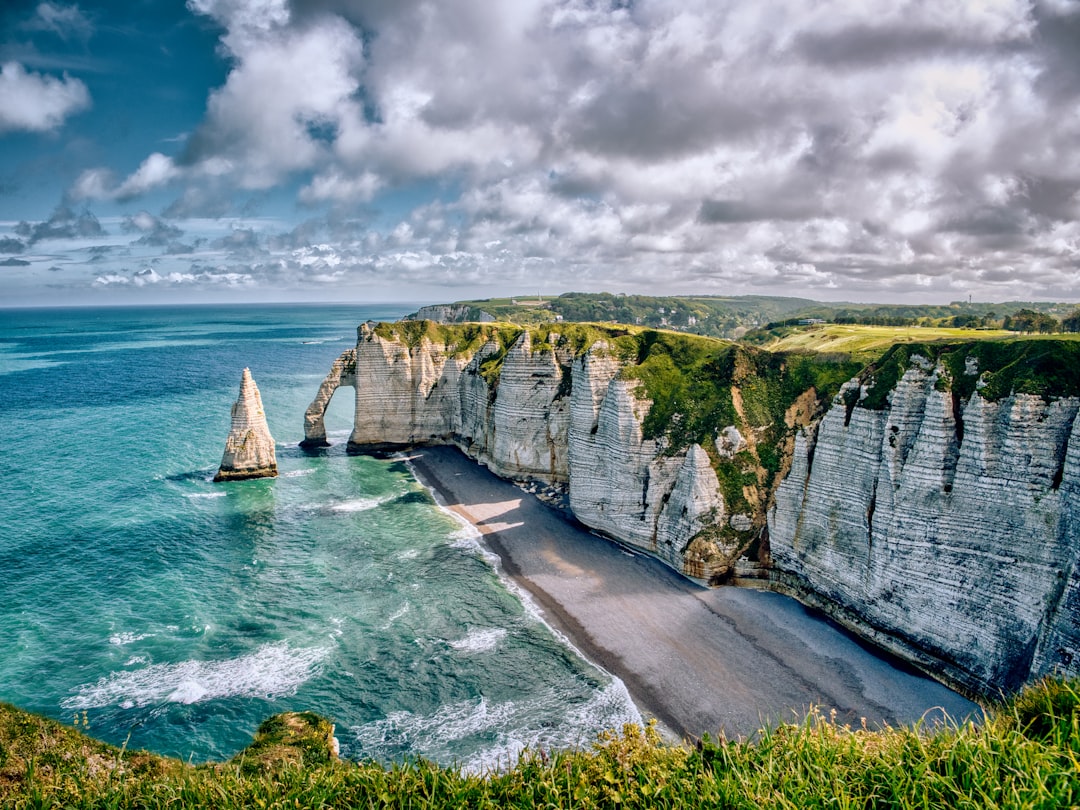
The Bay of the Somme is the region’s greatest natural asset — a 7,200-hectare estuary and nature reserve where grey seals haul out on sandbanks (best viewed October-March) and 350+ bird species migrate through. The Opal Coast between Calais and Le Touquet delivers dramatic chalk cliff walks at Cap Blanc-Nez and Cap Gris-Nez with Channel views. The Hortillonnages of Amiens — 300 hectares of market gardens on islands in the Somme River, accessible by flat-bottomed boat — feel unlike anywhere else in northern France. The Scarpe-Escaut Regional Natural Park east of Valenciennes offers 60 km of cycling trails through wetlands and ancient forests. My honest warning: the region’s beaches are cold and windswept even in summer — water temperatures barely reach 18°C in August.
Routes & Highlights
What local specialities should I try in Hauts-de-France?
Maroilles is the non-negotiable starting point — a pungent washed-rind cheese with AOC protection, best eaten on a flamiche (hot pastry tart) rather than raw if you’re not a hardcore cheese lover. Carbonnade flamande — beef slow-cooked in dark beer with pain d’épices — is the definitive regional dish. Moules-frites from Boulogne-sur-Mer is a ritual: Boulogne handles 80% of France’s fish landings and the harbour-side restaurants serve mussels pulled from the sea that morning. Gaufrettes de Lille (thin waffle biscuits) and Bêtises de Cambrai (striped mint hard candies invented in Cambrai in 1850) are the authentic sweet souvenirs. My tip: drink Ch’ti Ambree or 3 Monts blonde ale — both brewed within the region and far superior to Paris’s generic draft options.
What activities are available in Hauts-de-France?
WWI battlefield guided tours from Arras or Amiens (€45-65 per person for a half-day group tour) are the most historically significant activity in the region. Cycling the Vélomaritime coastal route — part of EuroVelo 4 — runs from Boulogne-sur-Mer to Dunkirk along 120 km of dedicated paths. Land yacht racing on Berck-sur-Mer’s flat beach is a bizarre and thrilling northern French tradition — hire sessions run €25-35/hour. Seal-watching boat trips in the Bay of the Somme from Le Crotoy cost €12-18 and guarantee sightings October-February. In my experience, the Louvre-Lens combined with a morning in the Lens Cité des Électriciens heritage site (a restored miners’ village, free entry) makes the single best cultural half-day in the region.
What distinguishes Hauts-de-France from other French regions?
Three things set it apart from every other French region. First, its Flemish identity — the architecture, beer culture, estaminet café tradition, and even dialect (Ch’ti Picard) feel distinctly non-French, making it culturally unlike anywhere else south of Belgium. Second, the density of WWI history — no region on Earth has a higher concentration of Commonwealth war cemeteries, memorials, and preserved battlefield landscape within driving distance. Third, the Louvre-Lens gamble — placing a world-class art museum in a former mining town of 36,000 people as a post-industrial regeneration project is a uniquely French experiment that actually worked. What I tell every traveller: Hauts-de-France rewards curiosity far more than the average visitor expects from a region most people only cross at 300 km/h on the Eurostar.
Which day trips are possible from Hauts-de-France?
From Lille, Brussels is 35 minutes by Thalys (€25-45) — the EU capital’s Grand Place, Atomium, and Belgian beer bars make it an effortless and outstanding day trip. Ghent is 1 hour by train (€15-20) and in my opinion more rewarding than Brussels for first-timers. Within the region, Arras to Vimy Ridge is a 10-minute drive or taxi ride — the memorial deserves 3-4 hours. Le Touquet from Étaples train station is 10 minutes by regional TER. The honest caveat: day-tripping to Paris from Lille (62 minutes each way) is technically feasible but results in a rushed, expensive day — €60-100 return TGV plus Parisian prices means you’ll spend €150+ for a partial day. Better to allocate Paris its own trip.
Are there language barriers in Hauts-de-France?
In Lille and Arras, English is spoken adequately in hotels, tourist offices, and most restaurants — better than the French average, partly due to proximity to the UK and Belgium. At battlefield visitor centres, particularly Vimy Ridge (managed by Veterans Affairs Canada) and the Historial de la Grande Guerre in Péronne, English is the dominant language and all materials are bilingual. The honest challenge: in rural villages, smaller restaurants, and markets in towns like Cambrai, Saint-Omer, or Laon, French is essential — or at minimum, enthusiastic pointing. My tip: learning four phrases transforms the experience — Un verre de Ch’ti, s’il vous plaît, C’est quoi le plat du jour?, L’addition, s’il vous plaît, and Maroilles — pas trop fort (not too pungent) gets you through 80% of interactions with goodwill.
Practical Tips
Which apps do you recommend for Hauts-de-France?
SNCF Connect is non-negotiable for booking all TGV and TER regional trains — set up an account before arrival and download tickets offline. ilévia is the official Lille metropolitan transport app covering metro, tram, and bus with real-time tracking and contactless payment. Géoportail (French national mapping service) is vastly better than Google Maps for navigating battlefield sites and rural areas — it overlays historical WWI trench maps onto modern satellite imagery, which is extraordinary. RDV Nature from the Somme department is underrated for planning Bay of the Somme wildlife visits with tide tables and seal-watching calendars. My honest warning: Google Maps routes in the Somme countryside regularly suggest roads that are unpaved farm tracks — always cross-check with Géoportail before committing to a rural route.
Are there medical facilities in Hauts-de-France?
Yes — the region has strong healthcare infrastructure. CHU de Lille (Centre Hospitalier Universitaire) is one of France’s largest university hospitals with 3,200 beds and 24-hour emergency services. Amiens University Hospital and Arras General Hospital both handle emergencies reliably. Pharmacies (marked with a green cross) are common in every town and can treat minor ailments without an appointment — useful for travellers needing antihistamines, blister treatment, or travel sickness medication. EU citizens with a European Health Insurance Card (EHIC) receive covered emergency treatment. Non-EU travellers should carry travel insurance — a GP consultation costs €25-30 without coverage. My tip: for non-emergency prescription needs, any French pharmacy can often recommend an equivalent over-the-counter substitute to save a doctor visit.
How safe is Hauts-de-France?
The region is generally safe. Arras, Amiens’ tourist centre, the Opal Coast, and rural areas are very low-risk environments. Lille requires standard urban awareness — particularly around Gare de Lille-Flandres at night, in the Moulins neighbourhood, and on the metro Line 2 after midnight, where petty theft and minor confrontations occur. In my experience, Lille’s Vieux-Lille and Wazemmes neighbourhoods feel entirely safe at any hour for attentive travellers. The honest warning: the Grande Braderie weekend in September concentrates 2 million people into central Lille — pickpocketing incidents spike sharply, and the city’s emergency services are stretched. Use a money belt, keep phones in front pockets, and avoid the press of the main Rue Nationale corridor after dark on that weekend specifically.
What are common traveller mistakes in Hauts-de-France?
Mistake 1: Treating Lille as a half-day stopover on the way to Paris — the city deserves 2 full days minimum and rewards slower exploration. Mistake 2: Skipping the Louvre-Lens because Lens sounds unglamorous — the museum and its post-industrial setting are more interesting than its marketing suggests. Mistake 3: Attempting the WWI battlefields without a car or guide — Thiepval and Vimy are 60 km apart and completely disconnected by public transport, turning a profound experience into a logistics nightmare. Mistake 4: Eating on Place du Général de Gaulle in Lille — those terraces charge tourist prices for average food; walk 3 minutes to Rue de Gand for the same quality at 25% less. Mistake 5: Underestimating the emotional weight of the battlefield sites — first-time visitors frequently find themselves unexpectedly overwhelmed at Thiepval or Vimy, so allow recovery time in the itinerary.
Which accommodation types suit Hauts-de-France best?
For Lille, boutique hotels in Vieux-Lille are the top choice — the neighbourhood’s 17th-century Flemish townhouses have been converted into characterful properties with features you won’t find in chain hotels. For WWI battlefield exploration, B&Bs (chambres d’hôtes) near Albert or Pozières put you in the landscape itself — many are run by history enthusiasts who add enormous context to your visit, typically €65-90/night with breakfast included. For the Opal Coast, self-catering apartments in Boulogne-sur-Mer’s Haute-Ville offer the best base at €70-100/night. In my experience, the Logis de France network of independently-owned regional hotels delivers the best value-to-quality ratio across the region — their 2-chimney rated properties consistently outperform equivalently-priced chain hotels on breakfast quality and local knowledge.
More Destinations in Europe
Explore our complete travel guides for more Europe destinations: Alcalá de Henares Travel Guide (2026), Île de Porquerolles Travel Guide (2026), Île Rouzic Travel Guide (2026), Ibiza Travel Guide (2026), Colmar Travel Guide (2026).
Hauts-de-France at a Glance
| Population | 5,992,194 |
|---|---|
| Currency | EUR (€) |
| Official language | French |
| Time zone | UTC+01:00 |
Source: Wikidata, retrieved October 2026.
Useful Resources for Planning Your Trip to Hauts-de-France
- Wikipedia: Hauts-de-France — history, geography and background
- Lonely Planet: Hauts-de-France — itineraries and travel inspiration
- TripAdvisor: Hauts-de-France — hotels, restaurants and traveller reviews
🎥 Hauts Travel Videos

HSP-Travel-Survival Guide: 10 Tips to Make Travelling Less …
UNDERSTANDABLE
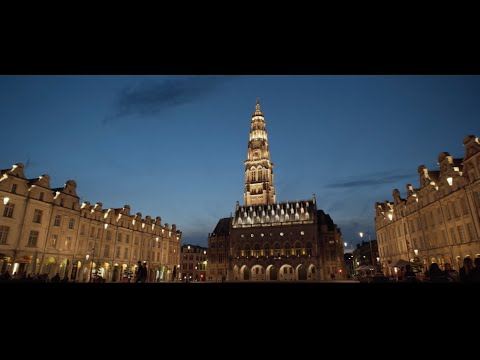
"Haut & Fort"- Northern France Hauts-de-France region
I love Northern France – Hauts-de France region
Top Ten Tourist Places to Visit in Hauts de France Region …
Rashid Edayur
You are currently viewing a placeholder content from Vimeo. To access the actual content, click the button below. Please note that doing so will share data with third-party providers.
More InformationYou are currently viewing a placeholder content from YouTube. To access the actual content, click the button below. Please note that doing so will share data with third-party providers.
More InformationYou need to load content from reCAPTCHA to submit the form. Please note that doing so will share data with third-party providers.
More InformationYou are currently viewing a placeholder content from GetYourGuide. To access the actual content, click the button below. Please note that doing so will share data with third-party providers.
More Information