
Kastoria: The Complete Travel Guide (2026)
Last reviewed: September 2026 · key facts checked against Wikidata
Kastoria Travel Guide: Everything You Need to Know (2026)
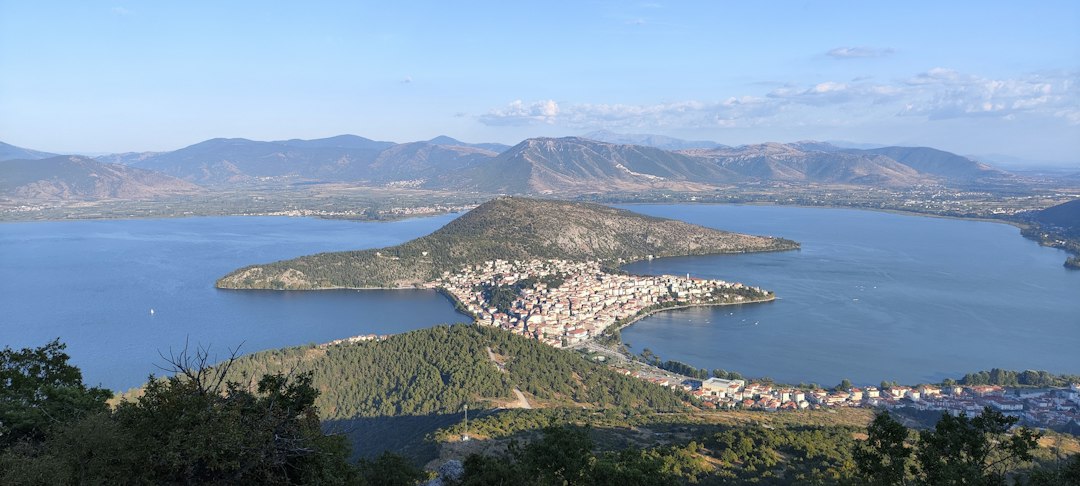
Kastoria sits on a dramatic peninsula jutting into Lake Orestiada at 630 metres above sea level in northern Greece, a city of 12,548 residents that has been a global centre of the fur trade since the Byzantine era. Founded on a site inhabited since prehistoric times, it harbours over 70 Byzantine and post-Byzantine churches packed into a compact historic core — more than almost any other Greek city its size. What surprises most visitors is how few foreign tourists actually make it here, leaving one of Greece’s most atmospheric lakeside towns almost entirely to Greeks.
Three Things Not to Miss in Kastoria
- Doltsas House Byzantine Museum — A perfectly preserved 18th-century fur-merchant mansion housing Byzantine icons and frescoes spanning 900 years of local history.
- Lake Orestiada Waterfront Promenade — A 7-kilometre loop around the peninsula with mirror-flat reflections of Ottoman mansions and forested hills at dawn.
- Panagia Koumbelidiki Church — An 11th-century Byzantine church with a rare cylindrical drum dome, considered one of the finest in all of northern Greece.
Scroll down for our complete travel guide with tips on getting there, where to stay, costs and more.
Arriving in Kastoria: Airport & Transfers
How do I get to Kastoria?
Fly directly into Kastoria National Airport (KSO), which is the most practical entry point. In my experience, Aegean Airlines and its regional partner operate seasonal routes from Athens (ATH), with the flight taking roughly 55 minutes. Alternatively, drive from Thessaloniki — it is a 2.5-hour journey of approximately 230 km on the Egnatia Odos motorway. A direct KTEL bus from Thessaloniki takes about 3 hours and costs roughly €18. What most guides omit: direct flights to KSO are seasonal and thin on frequency in winter, so always have a road backup plan if you visit between November and March.
Which airport is closest to Kastoria?
Kastoria National Airport (KSO) is the obvious answer — it sits just 8 km south of the city centre. In my experience, it is a tiny regional airport with limited services, so do not expect lounges or multiple car-hire desks. Thessaloniki Airport (SKG) is the major alternative at 230 km, offering far more international connections and cheaper fares if you are willing to drive. My tip: book KSO flights well in advance because the few seats sell fast, especially in July and August. The honest caveat is that KSO has no public bus service to the city, so you will need a taxi — around €15 — or a pre-booked transfer.
How long does the journey to Kastoria take from Thessaloniki?
By car it takes approximately 2.5 hours covering 230 km via the Egnatia Odos (E90). The KTEL intercity bus from Thessaloniki’s Macedonia Bus Station takes closer to 3 hours and runs 3–4 departures daily, costing around €18. What surprised me is how scenic the final 40 km through the Aliakmonas river valley are — do not rush it. If you are flying into Athens (ATH) first, factor in a 55-minute connecting flight to KSO or a 7-hour drive that makes no practical sense. My recommendation: Thessaloniki is your realistic gateway, and the drive is genuinely enjoyable in good weather.
Do I need a rental car to explore Kastoria?
No — the historic centre of Kastoria is entirely walkable within a 3 km radius. In my experience, you can cover every Byzantine church, the lakeside promenade, and the Apozari fur district entirely on foot. You only need a car if you plan day trips to Prespa Lakes National Park (70 km away) or the ski resort of Vitsi (30 km). Rental cars are available from Hertz and local agencies near the central square, starting around €35 per day. The caveat: parking in the old peninsular neighbourhood is genuinely painful — narrow Ottoman-era streets were not designed for cars, so even if you rent one, leave it at the hotel.
Getting Around Kastoria
What are the best areas to stay in Kastoria?
I recommend staying in or directly adjacent to the Apozari neighbourhood on the southern tip of the peninsula — this is where the Ottoman mansions, Byzantine churches, and lake views converge. Doltsas Street and the area near Omonoia Square put you within a 5-minute walk of the main waterfront promenade. Budget travellers often stay near the main commercial street (Mitropoleos) where smaller guesthouses cluster. What most guides do not say: avoid the northern, newer part of the city entirely — it is suburban sprawl with zero character and no practical advantage. The peninsula is compact enough that any accommodation on it is, effectively, central.
What does accommodation cost per night in Kastoria?
Expect to pay €55–€80 per night for a solid mid-range hotel with lake views in 2026. Budget guesthouses and rooms start around €35. The best-positioned boutique option is Archontiko Vergoulas, a renovated mansion where doubles run roughly €90–€110 in peak season. What surprised me is how genuinely good value Kastoria is compared to Thessaloniki, where equivalent lake-view properties would cost 40% more. The honest warning: the total number of quality beds in the city is limited — fewer than 15 hotels operate year-round — so even modest properties fill up during the Kastoria Carnival in February and the summer lakeside festival weeks.
How far in advance should I book accommodation in Kastoria during high season?
Book at least 6–8 weeks ahead for July and August visits. In my experience, the lakeside-facing rooms at quality properties like Archontiko Vergoulas or Hotel Kastoria sell out within days of opening their booking windows for peak summer. For the Kastoria Carnival in February — a major regional event drawing crowds from across northern Greece — book 3 months in advance minimum. The caveat most travellers ignore: Kastoria has fewer than 15 hotels, so unlike Athens or Thessaloniki, there is no overflow inventory. Arriving and hoping to find something decent last-minute in August is a genuine gamble I would not take.
Are there special accommodation types worth trying in Kastoria?
Yes — stay in a restored archontiko (Ottoman-era fur-merchant mansion). These multi-storey stone houses with wooden-latticed upper floors and painted ceilings are unique to Kastoria and give you a living sense of the city’s 18th-century peak wealth. Archontiko Vergoulas is the benchmark, with doubles from €90. Several families have converted ground floors into self-catering apartments for under €60 per night. What most guides skip: some archontiko properties sit on streets so narrow that delivery trucks cannot pass — confirm your arrival logistics and whether the host can meet you on foot with the key. In my experience, it is part of the charm, not an inconvenience.
Where to Stay in Kastoria
What are the must-sees in Kastoria?
First, the Byzantine Museum of Kastoria in the Doltsas House — 18th-century mansion packed with icons from the 9th century onward. Second, the church of Panagia Koumbelidiki, whose cylindrical drum dome from the 11th century is architecturally unique in Greece. Third, walk the full 7 km lakeside loop around the peninsula at sunrise when the mist sits on Lake Orestiada. Fourth, the Fur Market district (Apozari) — still actively traded, smelling of leather and pelts, unchanged in atmosphere since the Ottoman period. My honest caveat: Kastoria has over 70 Byzantine churches but most are locked; the Byzantine Museum staff can often arrange access, so ask directly.
What can I experience for free in Kastoria?
The 7 km lakeside promenade around the peninsula costs nothing and is arguably the city’s single best experience. Walking through the Apozari neighbourhood among Ottoman mansions is free. The exteriors of 50-plus Byzantine churches are fully accessible and impressive without entering. The municipal beach on the lake’s eastern bank is free and swimmable from June to September. In my experience, you could spend a genuinely fulfilling day in Kastoria spending under €10 on coffee at a waterfront café. The caveat: the Byzantine Museum charges around €4 entry and is worth every cent — do not skip it to save money.
Which day trips from Kastoria are worth doing?
Prespa Lakes National Park is the unmissable day trip — 70 km west, it straddles the borders of Greece, Albania, and North Macedonia and hosts pelicans, rare raptors, and a Byzantine hermitage carved into a cliff face. Vitsi ski resort is 30 km east and worthwhile from December to March with day-lift passes around €20. The village of Dispilio on the lake’s southern shore is only 7 km away and has a reconstructed Neolithic lake-dwelling settlement. What most guides omit: none of these are accessible by public transport — you need a rental car or a local taxi for the day, which costs roughly €60–€80 for a 5-hour round trip.
What local specialities should I try in Kastoria?
Kastoria’s defining dish is trachanas soup — a fermented wheat-and-sour-milk porridge that northern Greek grandmothers have been making for centuries, warming and deeply savoury. Order freshwater crayfish (karavides) from Lake Orestiada itself — grilled simply with lemon — at any taverna on the waterfront. Smoked trout from Prespa Lake appears on menus as a starter and is outstanding. Local tsipouro (grape marc spirit) from Western Macedonia distilleries is rougher and earthier than the Thessaloniki version. In my experience, the taverna To Steki near the fur market serves the most honest local cooking without tourist pricing — a full meal with wine runs about €18 per person.
Kastoria Highlights & Must-Sees
What makes Kastoria truly unique compared to other Greek destinations?
Three things exist nowhere else in Greece at this concentration: a working fur trade that has operated continuously for over 600 years, 72 Byzantine and post-Byzantine churches inside a single small peninsula, and a lakeside setting at 630 metres altitude that gives the city four distinct seasons including real snowfall. What surprised me most is the archontiko architecture — these Ottoman-era fur-merchant mansions with painted interiors represent a distinct local vernacular not found in the Cyclades, Crete, or even Thessaloniki. Kastoria is also one of the very few Greek cities where the primary economic driver is not tourism — the fur industry still employs thousands — which preserves an authenticity that resort towns have long abandoned.
How many days in Kastoria are worthwhile?
2 full days covers the city itself comprehensively. Day one: the Byzantine Museum, the Panagia Koumbelidiki church, the Apozari fur district, and the lakeside promenade. Day two: the Dispilio Neolithic settlement (7 km) and an afternoon at the waterfront cafés. Add a third day if you want to drive to Prespa Lakes National Park (70 km), which I strongly recommend — it rivals the city itself in impact. In my experience, a 3-night stay hits the sweet spot. The honest caveat: Kastoria is not a place to stretch to a week unless you are renting a car and using it as a base for the wider Western Macedonia region.
When is the best time to visit Kastoria?
July, August, and September are the best months based on climate data — warm and mostly dry, with lake swimming viable and all outdoor sights fully accessible. In my experience, early September is the sweet spot: summer crowds have thinned, temperatures are comfortable at around 25°C, and the lake is still warm enough to swim. February is unexpectedly worthwhile if you catch the Kastoria Carnival (Apokries), one of the most raucous in northern Greece. Winter brings genuine snow to this 630 m elevation city, which is atmospheric but limits outdoor exploration. I actively avoid the first two weeks of August when Greek domestic tourism peaks and the waterfront gets genuinely crowded by local standards.
What local festivals in Kastoria are worth attending?
The Kastoria Carnival (Apokries) in February is the headline event — a multi-day street festival with costumed processions, live music, and satire performances that draws visitors from across northern Greece. It predates the modern Greek state and has a raw, community-driven energy that polished Patras Carnival lacks. The International Fur Fair typically happens in May at the Kastoria Exhibition Centre — genuinely fascinating even for non-buyers, showcasing global fur fashion industry trends. Summer brings the Kastorian Cultural Summer programme with open-air concerts near the lake. My tip: book accommodation 3 months ahead for Carnival — the city’s limited 15 hotels fill completely within days of dates being announced.
Eating & Drinking in Kastoria
How does weather affect activities in Kastoria throughout the year?
At 630 metres elevation, Kastoria has a proper continental climate unlike coastal Greece. Summers (June–August) are warm around 28–30°C but rarely oppressive — the lake moderates temperature. Winters bring genuine snow, typically 10–15 snowfall days between December and February, making the Byzantine churches and Ottoman mansions look extraordinary but limiting hiking. Spring (April–May) is green and mild but rainy — the Prespa wetlands are at their most dramatic for birdwatching. The honest warning most guides omit: the lakeside promenade becomes genuinely cold and windy from October onward, and the evening temperatures can drop to 5°C even in late September — pack a proper layer regardless of the month.
How crowded does Kastoria get in peak season?
By international standards, Kastoria is never crowded. In July and August, Greek domestic tourists fill the waterfront cafés and the better restaurants book out by 8pm, but there are no queues at churches, no timed entry systems, and no tour-group buses choking the old lanes. What surprised me is that the Byzantine Museum — one of the finest in northern Greece — rarely has more than 10 visitors at any given time, even in August. The honest caveat: peak season does inflate hotel prices by roughly 30–40% and the lakeside promenade on summer evenings has a lively local crowd that some travellers find energetic rather than tranquil. If you want total solitude, May or October deliver it completely.
How safe is Kastoria for travellers?
Kastoria is exceptionally safe — in my experience one of the most relaxed cities in Greece. Petty crime is negligible in a city of 12,548 people where locals know each other. The waterfront promenade is busy until midnight in summer and perfectly safe to walk alone. There are no no-go neighbourhoods. The main practical safety consideration is not crime but traffic on the narrow peninsula streets — the lanes around the Apozari district have poor visibility at corners and cars move faster than you expect. Night driving on the mountain road toward Prespa Lakes deserves respect in winter when ice forms. Standard European travel insurance covering health and theft is all you need.
Is English widely spoken in Kastoria?
Moderately, but less so than in Athens or Thessaloniki. In my experience, staff at hotels and the Byzantine Museum speak functional-to-good English. Younger café and restaurant staff manage well. The honest challenge: in the Apozari fur district and at traditional tavernas favoured by locals, Greek is the working language and menus are often Greek-only. My tip: download Google Translate with Greek offline — the camera translation function handles menus perfectly. Learning five Greek words (efharisto = thank you, parakalo = please/you’re welcome, ena kafé = one coffee) creates a warmth in Kastoria that foreign-tourist-weary cities like Santorini no longer give back.
Practical Tips for Kastoria
What does a daily budget cost in Kastoria?
Budget traveller spending carefully: €55–€70 per day covering a guesthouse bed (€35), two taverna meals (€12 combined), coffees, and museum entry. A comfortable mid-range day — decent hotel, sit-down lunches, a boat trip on the lake — runs €100–€130 per person. In my experience, Kastoria is 20–25% cheaper than Thessaloniki for equivalent quality. The unavoidable costs: a taxi from KSO airport (€15), and a rental car day (€35+) if you want Prespa Lakes. Food is the genuine bargain — a grilled lake trout with salad and local tsipouro at a waterfront taverna costs around €16–€18 total. Budget one extra €20–€30 for impulse fur-market browsing.
How does public transport work within Kastoria?
The city itself needs no public transport — the entire historic peninsula is walkable within 30 minutes end to end. For the wider area, KTEL Kastorias operates the regional bus network from the central bus station on Athinas Street. Buses run to Thessaloniki (3–4 daily, €18, 3 hours) and to the village of Dispilio (2 daily, €2). There is no urban bus network worth using. Taxis are available from the rank near Davaki Square and are inexpensive — a cross-city ride costs €5–€7. The honest gap: Prespa Lakes, Vitsi ski area, and most surrounding villages have zero bus service — for those you need a car or negotiate a private taxi for the day at around €70–€80.
Which apps do you recommend for visiting Kastoria?
Google Maps works reliably for navigation, though some peninsula alleyways are not fully mapped — supplement with your eyes. Google Translate with offline Greek downloaded is essential for menus and church information plaques. OpenTable has minimal listings for Kastoria, so use e-table.gr — the dominant Greek restaurant reservation platform — which covers the city’s better tavernas. For weather, Meteoblue gives more accurate mountain forecasts than generic apps given Kastoria’s 630 m elevation. Skyscanner is your tool for monitoring the thin route between ATH and KSO. In my experience, the Visit Greece official app has passable information on Byzantine sites but is not updated frequently — cross-reference with the Byzantine Museum directly for church access schedules.
Kastoria at a Glance
| Population | 12,548 |
|---|---|
| Currency | EUR (€) |
| Official language | Greek |
| Time zone | UTC+02:00 |
Source: Wikidata, retrieved September 2026.
Greece › Kastoria
More Destinations in Greece
Essential Resources for Planning Your Trip to Kastoria
- Kefalogianni plans four-season tourism for Kastoria — official visitor information, passes & events
- Wikipedia: Kastoria — history, geography & background
- Wikivoyage: Kastoria — community travel guide & practical tips
- Byzantine Museum of Kastoria | Greece | Attractions — expert itineraries & travel inspiration
- THE 15 BEST Things to Do in Kastoria (2026) — hotels, restaurants & traveller reviews
- Kastoria, Greece Travel Guide — how to get around
- Numbeo: Cost of Living in Kastoria — current prices & cost comparison
- Timeanddate: Kastoria Weather & Climate — forecasts & climate statistics
More Perspectives on Kastoria
- KASTORIA, GREECE TRAVEL GUIDE • How to Get There …
- What to do in Kastoria, Greece for elderly couples?
- 12 Things to Do in Kastoria, a Hidden Gem in Northern …
Kastoria Travel Videos
Watch these videos for a visual preview before your trip:
- Kastoria Travel Guide: Must-Visit Attractions and Tips
- How to Plan a Trip to KASTORIA, GREECE • Travel Guide PART 1 • The Poor Traveler ENGLISH
- Exploring the Greek city of Kastoria (#020)
Kastoria Travel Discussions on Reddit
Real traveller experiences and community advice:
- Kastoria, Greece (2020) : r/travel
- Kastoria, Greece. One of the most beautiful lake cities in …
- Anyone have thoughts on my loose itinerary draft? 2 adults …
Data Sources
This page was compiled using data from Wikipedia, Wikidata, Open-Meteo (climate), Numbeo (cost of living) and REST Countries. Information is updated regularly.