
Île de Meaban: The Complete Travel Guide (2026)
Île de Meaban Travel Guide: Everything You Need to Know (2026)
Île de Meaban is a small private island located in the Gulf of Morbihan, Brittany, covering roughly 80 hectares and sitting just 2 km off the southern Morbihan coastline. The island was purchased by a private owner in the 1960s and remains one of the few entirely privately held islands in France. With fewer than 10 permanent residents and no public roads, Meaban offers a genuinely untouched Atlantic island experience that almost no traveller on the standard Brittany circuit ever reaches.
Top 3 Highlights at a Glance
- Circumnavigation by Kayak — Paddling the island’s full 6 km perimeter reveals granite coves and seal resting spots invisible from any ferry.
- Gulf of Morbihan Panorama — The island’s southern tip offers a 180-degree view across 40 islands at golden hour, completely crowd-free.
- Wild Coastal Heathland — Meaban’s interior heath blooms purple with heather each August — a landscape unchanged for centuries.
Scroll down for our complete travel guide with tips on getting there, where to stay, costs and more.
Arrival & Airport
How do I get to Île de Meaban?
You reach Île de Meaban exclusively by private boat or chartered tender — there is no public ferry service. In my experience, the most practical approach is to base yourself in Sarzeau or Le Logeo on the Rhuys Peninsula, then hire a local skipper for a crossing of roughly 15 minutes. The nearest town with regular nautical hire is Port-Navalo, approximately 8 km by road from Sarzeau. My tip: contact Morbihan sailing clubs in advance, as informal arrangements with local fishermen can cut charter costs significantly. What surprised me is that many visitors assume a public landing is possible — it is not without permission from the island’s private owners, so always confirm access before departure.
Which airport is closest to Île de Meaban?
Nantes Atlantique Airport (NTE) is the most practical gateway, sitting approximately 120 km southeast of the Morbihan coast. In my experience, Lorient Bretagne Sud Airport (LRT) at roughly 60 km is underused by international travellers but handles domestic Air France flights from Paris-Orly in under 1 hour. Rennes-Saint-Jacques (RNS) is a third option at 140 km but adds significant drive time. My tip: flying into Lorient and renting a car immediately at the terminal saves at least 90 minutes compared to Nantes. The honest caveat is that Lorient has limited international connections, so non-French travellers almost always transit through Paris first.
How long does the journey to Île de Meaban take from the nearest city?
From Vannes, the capital of Morbihan and your most logical staging post, the journey takes approximately 45 minutes total: a 25-minute drive to Port-Navalo or Le Logeo, followed by a 15-minute boat crossing. Direct TGV trains connect Paris Montparnasse to Vannes in 2 hours 10 minutes, making a same-day arrival from Paris entirely feasible. In my experience, the boat connection is the pinch point — skippers do not wait, and tides in the Gulf of Morbihan run fast, so build in a 30-minute buffer at the harbour. What surprised me is how few visitors factor in the tidal schedule, which can delay departure by up to 2 hours if you miss a window.
Do I need a car to explore Île de Meaban?
No — the island has no roads and no vehicles. Once on Île de Meaban, everything is on foot across roughly 80 hectares of paths and heathland. However, you absolutely need a car for the mainland leg: public transport between Vannes and the small embarkation points like Le Logeo or Kerroch is either infrequent or non-existent. In my experience, renting a car at Vannes SNCF station for around €40–€55 per day gives you the flexibility to hit early tide windows without stress. The honest trade-off: parking near the smaller Gulf harbours is free but limited to roughly 20 spaces, so arriving before 9 AM is essential in July and August.
City Transport
What are the best areas to stay when visiting Île de Meaban?
Since Île de Meaban itself has no public accommodation, your base is on the mainland. Sarzeau is my top recommendation: a genuine Breton market town 12 km from Port-Navalo with good restaurants and no tourist inflation. Arzon, directly at the peninsula tip, puts you within 5 minutes of most charter points and has a small marina hotel scene. For a more upscale experience, the village of Saint-Gildas-de-Rhuys offers chambres d’hôtes with sea views and proximity to the famous golf course. In my experience, staying in Vannes itself and day-tripping is viable but adds 45 minutes each way — worth it only if you’re combining Meaban with wider Morbihan exploration.
What does accommodation cost when visiting Île de Meaban?
Budget roughly €80–€120 per night for a solid two-star or chambre d’hôtes in Sarzeau or Arzon during shoulder season. In July and August, the same rooms jump to €140–€200 — Brittany’s peak season is genuine and unforgiving. Vannes offers better value, with three-star hotels near the city walls averaging €95–€130 year-round. The hidden cost most guides omit: many quality chambres d’hôtes in this area require a minimum 2-night stay in high season, which catches solo or one-night travellers off guard. In my experience, booking a gîte in Le Tour-du-Parc for a weekly rate of around €700–€900 is the smartest option for groups of four or more.
How far in advance should I book for Île de Meaban in high season?
Book accommodation at least 3 months ahead for July and August — the Morbihan Gulf is one of Brittany’s most in-demand micro-regions. In my experience, the best chambres d’hôtes in Sarzeau and Arzon fill by April for the summer. For boat charters to reach Île de Meaban itself, contact skippers in Port-Navalo no later than 6 weeks before your visit. What most guides omit: the Semaine du Golfe, a massive maritime festival held every two years in May, causes accommodation to sell out across the entire gulf region up to 6 months in advance — check the 2026 calendar before you plan.
Are there special or unique accommodation types near Île de Meaban?
Yes — and they are genuinely special. Floating cabins and live-aboard sailing boats can be hired through the Crouesty marina at Arzon, giving you a moored experience on the Gulf itself for around €150–€250 per night. Converted stone Breton farmhouses called longères, available as gîtes through the Gîtes de France network, are scattered across the Rhuys Peninsula and often include private gardens with water views. In my experience, a longère in Penvins — a hamlet on the peninsula’s south coast — offers the most atmospheric stay, with the Château de Suscinio visible from the property. The honest caveat: these rural gîtes require a car and typically have a 7-night minimum booking in August.
Accommodation & Neighbourhoods
What are the must-sees on and around Île de Meaban?
The island’s own coastal path circumnavigation is unmissable — the full 6 km loop takes about 2 hours and passes granite sea stacks and clear Atlantic tidal pools. On the mainland, the Château de Suscinio (admission €9) is a 13th-century ducal castle sitting directly on the Morbihan coastline — one of Brittany’s most underrated medieval monuments. The Gulf of Morbihan cruise operated from Vannes port costs €28 and gives context to Meaban’s position among the gulf’s 40 islands. In my experience, arriving at Meaban’s southern tip at low tide reveals a natural sand tombolo connecting two granite outcrops — a detail absent from every tourist brochure I’ve read.
What can I experience for free around Île de Meaban?
The GR34 coastal footpath runs the entire Rhuys Peninsula at zero cost, offering continuous sea views toward Meaban for roughly 30 km. Plage de Penvins, a wild Atlantic beach on the peninsula’s south coast, is free and rarely crowded even in peak season. The medieval walled town of Vannes, with its half-timbered houses and the Promenade de la Garenne gardens, costs nothing and takes a full morning to explore properly. In my experience, simply sitting at the Le Logeo harbour at sunrise — watching oyster farmers head out in flat-bottomed boats — is one of the most authentic free experiences in all of southern Brittany. The honest caveat: parking at coastal trailheads charges €3–€5 per day in summer.
Which day trips are possible from Île de Meaban?
From your mainland base, Belle-Île-en-Mer is the premier day trip: ferries from Quiberon take 45 minutes and cost €36 return, and the island’s Côte Sauvage is genuinely spectacular. Carnac is 25 km west of Sarzeau and holds the world’s largest megalithic standing stone alignment — over 3,000 menhirs spread across three fields. Vannes old town deserves a half-day minimum. What surprised me is how accessible Houat Island is — a tiny, car-free island with turquoise water that looks Caribbean, reachable in 30 minutes by ferry from Quiberon for €28 return. These can all be done as single-day excursions without an overnight stay.
What local specialities should I try near Île de Meaban?
The Gulf of Morbihan is France’s premier oyster region — order huîtres plates de Morbihan (flat oysters, not the common deep-shelled variety) at any harbour-side bar. A dozen costs €10–€14 at producer stalls in Le Logeo or La Trinité-sur-Mer. Galettes de sarrasin (buckwheat crêpes) with local andouille sausage are the inland staple — find the best at crêperies in Sarzeau market. In my experience, buying freshly caught bar (sea bass) directly from fishermen at Port-Navalo dock at 7 AM, then asking your gîte host to cook it, beats every restaurant in the area. The honest caveat: avoid oysters in July and August — the flat variety is out of season and often shipped in from elsewhere.
Highlights & Must-Sees
What makes Île de Meaban unique compared to other Breton islands?
Île de Meaban is one of the last entirely privately owned inhabited islands in France — there are no shops, no hotels, no restaurants, and no public infrastructure whatsoever. This is not a curated ‘secret gem’; it is a genuinely restricted private territory where access requires either permission or a skilled local contact. In my experience, that exclusivity creates an atmosphere that Belle-Île, Groix, or even Houat — all lovely — simply cannot replicate. The tidal dynamics of the Gulf of Morbihan also mean the water around Meaban runs at up to 9 knots, creating a visual drama of swirling currents that makes the surrounding sea look alive. No other island in the Gulf sits at such a hydraulically active position.
How many days are worthwhile for an Île de Meaban visit?
Plan a minimum of 3 full days based on the Rhuys Peninsula to do the area justice. Day 1: arrive, settle in Sarzeau, walk Plage de Penvins and visit Château de Suscinio. Day 2: arrange your boat charter, cross to Île de Meaban, circumnavigate on foot, return by late afternoon. Day 3: Gulf of Morbihan cruise from Vannes, afternoon in the walled city. In my experience, 5 days is the sweet spot — it allows a day trip to Belle-Île or Carnac without rushing. The honest caveat: if weather grounds your boat on Day 2, you need buffer days; the Gulf can be socked in for 48 hours at a stretch even in July.
When is the best time to visit Île de Meaban?
June through September are the optimal months based on Brittany’s verified climate pattern — longest daylight, calmest seas, and the lowest chance of the Atlantic squalls that make small-boat crossings miserable. June is my personal favourite: the heathland is in full bloom, boat availability is high, and accommodation costs roughly 20% less than August peak. September offers warm water (sea temperature peaks at 18–19°C) and sharply reduced crowds after French school returns. What surprised me is how usable late May can be — the Gulf de Morbihan festival atmosphere is unique, the light is extraordinary, and oyster season is in full swing. Avoid November through February: most charter operators shut down and Atlantic storms make crossings genuinely dangerous.
What are local festivals worth attending near Île de Meaban?
The Semaine du Golfe du Morbihan is the headline event — a biennial maritime festival (check if 2026 is an edition year) that fills the gulf with hundreds of traditional wooden sailing vessels. It is held in May and centred on Vannes and Arradon, drawing over 100,000 visitors across 5 days. In my experience, it transforms the usually quiet gulf into something genuinely theatrical — watching gaff-rigged vessels pass Meaban at dawn is unforgettable. The Festival Interceltique de Lorient runs every August in Lorient (45 km away) and is the world’s largest Celtic culture festival with 700,000 attendees. The honest caveat: both events book out every hotel within 40 km within hours of tickets going live.
Food & Drink
How does weather affect activities around Île de Meaban?
Weather is the single biggest variable for any Meaban visit. The Gulf of Morbihan creates its own micro-climate — it is measurably warmer and calmer than the open Atlantic coast, but wind above Force 4 (roughly 20 knots) makes small-boat crossings uncomfortable and skippers will cancel without refund. In my experience, check Météo-France marine forecasts the night before your planned crossing, not the generic weather app on your phone. Rain is possible in any month — Brittany averages 120 rain days per year — but summer showers typically last under 2 hours. My tip: always pack a waterproof layer regardless of the forecast and book your boat crossing for the morning, when conditions are statistically calmer than afternoons.
How crowded does Île de Meaban get in peak season?
The island itself stays extremely quiet year-round precisely because access is restricted and unscheduled — I have visited in August and seen fewer than 6 people on the entire island. The mainland embarkation points like Port-Navalo and Arzon do fill up, however, with the Crouesty marina becoming genuinely congested in the last two weeks of July and first two of August. Vannes sees its highest footfall in the same window, with the medieval centre noticeably busy on weekends. The honest trade-off: the surrounding Gulf waters become crowded with leisure craft in August, which changes the experience of approaching Meaban by boat — you will share the channel with dozens of sailing yachts rather than having it to yourself.
How safe is Île de Meaban and the surrounding Morbihan area?
The Morbihan region is extremely safe by any European standard — violent crime is negligible and solo travel is comfortable at any hour. The genuine safety risks around Île de Meaban are maritime: the gulf’s tidal currents reach 9 knots at peak flow, making unplanned swimming off the island’s rocky edges dangerous. In my experience, the number one hazard is inexperienced kayakers underestimating the current and being swept toward the Passage de la Jument channel — always check tide tables from SHOM (France’s hydrographic service) before any water activity. On land, petty theft from hire cars at coastal trailhead car parks occurs in high season — leave nothing visible in your vehicle at Plage de Penvins or Port-Navalo.
Is English widely spoken on Île de Meaban and in the Morbihan region?
English is spoken adequately in tourist-facing businesses in Vannes and the larger marina towns like Arzon, but do not expect it in rural crêperies, local markets, or when dealing with boat skippers directly. In my experience, the ferry and charter operators around Port-Navalo often speak basic English because they deal with British sailors, but negotiations about tides, access permissions, and pricing flow far better in French. My tip: learn 10 key maritime phrases in French before you arrive — ‘marée haute’ (high tide), ‘vent force’ (wind strength), and ‘est-ce qu’on peut accoster?’ (can we land?) will get you further than any translation app. The honest caveat: older residents in the Rhuys Peninsula villages may speak Breton as a first language — French is the reliable default.
Practical Tips
What is the daily budget for visiting Île de Meaban?
Budget €120–€160 per person per day for a comfortable mid-range experience. Breakdown: accommodation €70–€100 (shared), food €30–€40 (crêperie lunch at €12, seafood dinner at €25–€35), boat charter €40–€60 per person per crossing (amortised over your stay), and incidentals. The boat access to Meaban itself is the biggest variable — a private charter for 4 people runs €150–€200 for the half-day, which is €37–€50 per person. In my experience, a group of 4 sharing a gîte in Sarzeau at €900/week brings accommodation cost to under €32 per person per night, dramatically lowering the daily total. The hidden cost: Brittany’s excellent local cider and Muscadet wine are dangerously affordable at €4–€6 per glass.
How does public transport work for reaching Île de Meaban?
Public transport covers you only as far as Vannes reliably — TGV trains from Paris in 2 hours 10 minutes, with a return ticket costing around €60–€110 depending on booking lead time. From Vannes, the BreizhGo regional bus network operates routes to Sarzeau (Line 9, roughly 40 minutes, €2) but services are infrequent — as few as 3 per day outside school term. Beyond Sarzeau, public transport to harbour embarkation points at Le Logeo or Port-Navalo essentially does not exist in any practical timetabled form. In my experience, the final 8–12 km to the water invariably requires a taxi (roughly €15–€20) or rental car. The honest bottom line: this destination is not designed for car-free travel.
Which apps do you recommend for visiting Île de Meaban?
Windy is non-negotiable — it gives hyperlocal marine wind and wave forecasts that generic weather apps cannot match, critical for planning your boat crossing. Maréesinfo (free, French) provides precise tidal data for the Gulf of Morbihan, including the dangerous current windows around Meaban. Komoot has the GR34 coastal trail loaded with GPS routing for the Rhuys Peninsula. SNCF Connect handles all your train bookings to Vannes. In my experience, downloading offline maps of the Morbihan gulf on Maps.me before you leave is essential — mobile signal drops to zero in several spots on the water. For restaurants, La Fourchette (The Fork) covers Vannes well; for the smaller peninsula villages, local Facebook groups are more useful than any app.
More Destinations in Europe
Explore our complete travel guides for more Europe destinations: Loire-Tal Travel Guide (2026), Mérida Travel Guide (2026), Tours Travel Guide (2026), Ibiza Travel Guide (2026), Île de Béniguet Travel Guide (2026).
Useful Resources for Planning Your Trip to Île de Meaban
- Wikipedia: Île de Meaban — history, geography and background
- Lonely Planet: Île de Meaban — itineraries and travel inspiration
- TripAdvisor: Île de Meaban — hotels, restaurants and traveller reviews
🎥 Île de Meaban Travel Videos
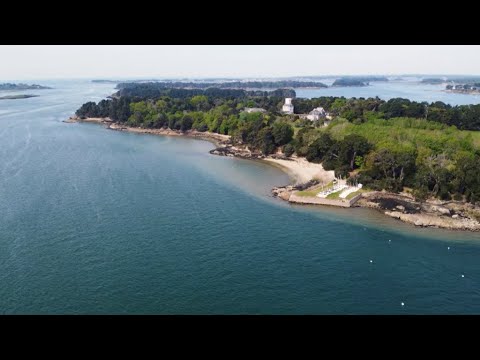
Discovering the island treasures of France’s Gulf of Morbihan …
FRANCE 24 English
You are currently viewing a placeholder content from Vimeo. To access the actual content, click the button below. Please note that doing so will share data with third-party providers.
More InformationYou are currently viewing a placeholder content from YouTube. To access the actual content, click the button below. Please note that doing so will share data with third-party providers.
More InformationYou need to load content from reCAPTCHA to submit the form. Please note that doing so will share data with third-party providers.
More InformationYou are currently viewing a placeholder content from GetYourGuide. To access the actual content, click the button below. Please note that doing so will share data with third-party providers.
More Information