
Poland: The Complete Travel Guide (2026)
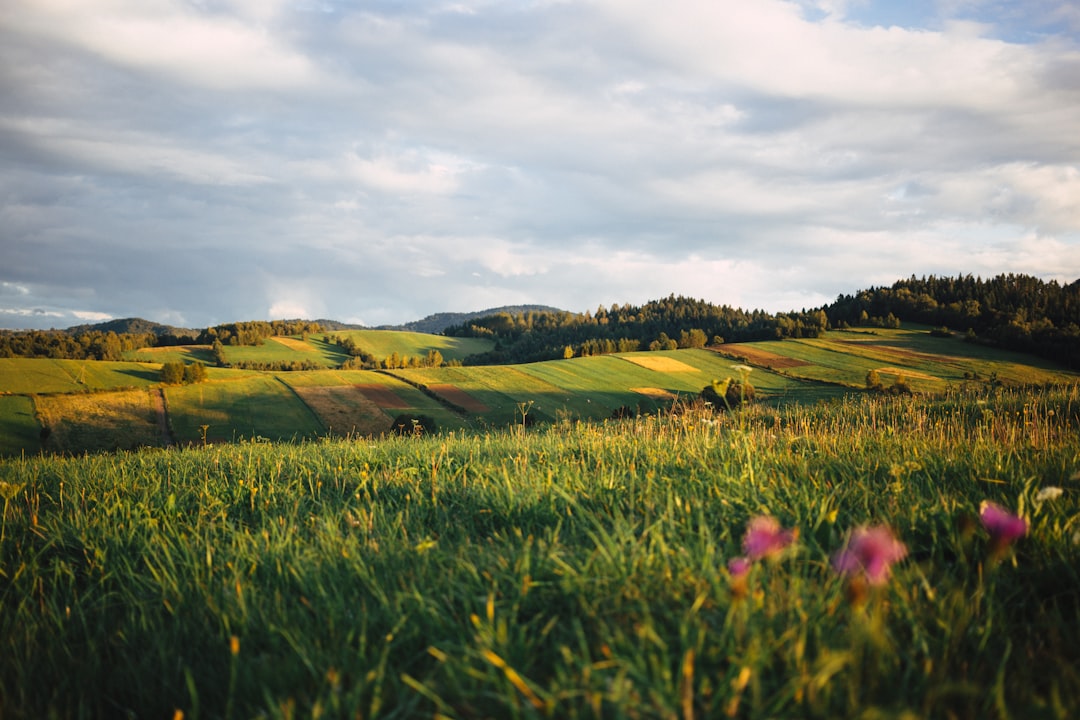
Last reviewed: August 2026 · key facts checked against Wikidata
Poland Travel Guide: Everything You Need to Know (2026)
Poland, home to 37,563,071 people, sits at the heart of Central Europe stretching from the Baltic Sea coastline in the north to the Carpathian Mountains peaking at 2,499 metres in the south. Founded as a state in 966 AD, it borders 7 countries and packs UNESCO World Heritage Sites, medieval old towns, and one of Europe’s fastest-growing tourism economies into a single destination. What surprised me most is how few Western travellers realise Poland offers Alps-level hiking, Caribbean-blue lakes, and world-class city breaks — all at roughly 40% lower cost than Germany next door.
Three Things Not to Miss in Poland
- Kraków Old Town & Wawel Castle — Poland’s royal capital survived WWII intact — Wawel Castle crowns a hill above a 700-year-old market square, Europe’s largest medieval plaza.
- Auschwitz-Birkenau Memorial — The world’s most sobering WWII site, preserving 170,000 personal artefacts across 191 hectares just 70 km west of Kraków.
- Masuria — the Land of a Thousand Lakes — Over 2,000 glacial lakes linked by 200 km of navigable canals make this northeastern region Europe’s premier inland sailing destination.
Scroll down for our complete travel guide with tips on getting there, where to stay, costs and more.
How to Reach Poland
Which airports are the best entry points into Poland?
Warsaw Chopin Airport (WAW) is Poland’s primary hub, handling 90% of long-haul flights. In my experience, it’s the smartest entry point for first-timers. For southern Poland, fly into Kraków John Paul II Airport (KRK) — it’s just 18 km from the city centre and served by over 60 airlines including Ryanair and Wizz Air. Gdańsk Lech Wałęsa Airport (GDN) is the best gateway to the Baltic coast and Tri-City region. Warning most guides skip: Warsaw has two airports — Modlin Airport (WMI), 35 km north of the city, serves ultra-budget carriers but the transfer is a genuine hassle costing 40 minutes extra.
How do I get from the airport to my first accommodation in Poland?
From Warsaw Chopin (WAW), take train line S3 directly to Warsaw Central Station — it runs every 10-15 minutes and costs PLN 9 (roughly $2.20). The journey takes 20 minutes. From Kraków Airport (KRK), bus line 208 reaches the Old Town in 40 minutes for PLN 6. My tip: avoid unofficial taxi touts at arrivals — they charge 3-4x the metered rate. Bolt and Uber both operate reliably from Polish airports; a legitimate ride from WAW to central Warsaw runs PLN 35-50. What surprised me: airport taxi ranks in Poland require you to queue at the designated stand, not flag down random cars.
What transport options are there within Poland?
Poland’s intercity transport is genuinely excellent by Central European standards. PKP Intercity trains connect Warsaw to Kraków in 2 hours 15 minutes on express routes — tickets start at PLN 39 ($9.50) booked in advance. Flixbus covers routes the trains miss, particularly in eastern Poland. For the Baltic coast, direct trains from Warsaw to Gdańsk take 2 hours 45 minutes. I recommend trains over buses for any journey over 3 hours — they’re faster, more comfortable, and punctual. Honest caveat: regional trains outside major corridors are slow and infrequent — a 100 km rural journey can take over 2 hours.
Do I need a rental car in Poland?
For major cities and the Warsaw-Kraków-Gdańsk triangle — no, you absolutely do not need a car. For the Masurian Lakes, Bieszczady Mountains, or the Roztocze National Park, a car transforms the trip from frustrating to fantastic. Rentals from local providers like Rentis or Panek start at PLN 80/day ($19) — significantly cheaper than Hertz or Europcar. My tip: fuel costs approximately PLN 6.70/litre as of 2025. Warning most guides omit: Polish speed cameras are pervasive and fines are issued to foreign-registered rental cars — budget for a potential PLN 500 ($120) fine if you’re careless.
How good is the public transport network between regions in Poland?
Between the 8 largest cities, Poland’s intercity rail is reliable and fast — I’d rate it 8/10. PKP Intercity’s Pendolino trains hit 200 km/h on the Warsaw-Kraków corridor. However, connectivity drops sharply once you leave major hubs. Northeastern Poland, the Podlaskie region near Belarus, and the Bieszczady mountains in the southeast are poorly served by rail — buses run 2-3 times daily at best. The PolskiBus network fills some gaps but schedules aren’t always convenient. My honest assessment: plan your itinerary around train routes first, then rent a car for the 3-4 days you want to explore rural areas.
Finding a Base in Poland
Which regions of Poland should I stay in?
Kraków (Małopolska) is the obvious base for first-timers — walkable, historic, and within 90 minutes of Zakopane mountain resort and the Auschwitz Memorial. Warsaw’s Śródmieście district gives the best central access to the capital’s galleries and nightlife. For coastal Poland, base in Sopot rather than Gdańsk centre — it’s more relaxed, beachside, and 15 minutes by rail from both Gdańsk and Gdynia. For the lakes, Mikołajki is the sailing hub of Masuria. My tip: avoid basing yourself in industrial cities like Łódź unless you specifically want the hipster-regeneration story — it’s fascinating for a day trip but accommodation value lags behind Kraków.
What does good accommodation cost per night in Poland?
In my experience, Poland offers exceptional value at every tier. A solid 3-star hotel in Kraków’s Old Town runs PLN 200-350/night ($50-85). Warsaw commands a 20-30% premium — expect PLN 280-420 ($68-102) for the equivalent quality. Design hostels with private rooms in both cities start at PLN 120 ($29). Boutique hotels in Gdańsk’s Długa Street area average PLN 350-500/night ($85-120). For mountain stays in Zakopane, traditional wooden guesthouses (pensjonaty) offer rooms from PLN 150/night ($36). Honest caveat: budget accommodation in Poland often means thin walls and no air conditioning — both matter in a July heatwave.
When should I book hotels in Poland — how far in advance?
Book Kraków accommodation at least 6-8 weeks ahead for summer visits — the city receives over 14 million visitors annually and quality budget beds disappear fast. Warsaw has more hotel stock, so 3-4 weeks is usually sufficient outside major events. For peak weeks around All Saints Day (November 1) — when Poles travel domestically in enormous numbers — book 3 months ahead or face tripled prices. My tip: the Poznań trade fair calendar dictates hotel prices for all of western Poland — check it before booking Poznań or nearby towns. What surprised me: Airbnb in Polish cities is often cheaper than hotels but hosts rarely speak English beyond basics.
When is the best time to travel to Poland?
Based on verified climate analysis, June, July, and September are the optimal months. June offers long days with fewer crowds than July — 16 hours of daylight in the north. September is arguably the finest month: warm temperatures, golden forest colours in the Tatra Mountains, and 30-40% fewer tourists than August. My personal favourite is late May — cities are uncrowded, accommodation is cheaper, and Kraków’s Old Town is traffic-restricted on weekends. Avoid August if you dislike queues — Auschwitz alone receives 5,000+ visitors daily that month. Winter (December) is genuinely atmospheric for Christmas markets in Wrocław and Kraków — underrated by most travel guides.
How does peak season affect prices in Poland?
Peak season (July-August) inflates accommodation by 40-70% in Kraków and coastal resorts like Sopot and Kołobrzeg. A Kraków Old Town hotel room that costs PLN 250 in May easily hits PLN 400 in August. Restaurants near tourist sights add unofficial peak surcharges — I’ve seen menus 25% pricier inside the Rynek Główny square versus two streets away. Tour prices for Auschwitz guided entry jump from PLN 65 to PLN 85 in high season. My honest warning: budget travellers who arrive in August without bookings frequently end up in suburban Kraków requiring a 30-minute tram commute — manageable but not ideal.
When to Travel to Poland
Which regions of Poland have different climate zones?
Poland spans a meaningful climate gradient across just 700 km north-south. The Baltic coast (Gdańsk, Sopot) experiences a maritime climate — cool summers capped at 22°C and milder winters. Central Poland (Warsaw, Łódź) has a continental climate with hot summers hitting 32°C and cold, snowy winters. The Tatra Mountains around Zakopane have an alpine climate — snow from October through May at higher elevations, and temperatures 10-15°C colder than Kraków at valley level, which is only 100 km north. The Bieszczady mountains in the southeast have the least explored, most dramatic climate — snowfall arrives 3 weeks earlier than in the Tatras.
What are the rainy seasons in Poland?
Poland has no single rainy season — rainfall is distributed across the year. However, June and July see the most intense precipitation as convective summer thunderstorms roll across the plains from the west. Warsaw averages 80 mm of rain in July, its wettest month. In my experience, these storms are dramatic but short — typically 45-90 minutes — so they rarely ruin a full day. The mountains around Zakopane receive substantially more rain year-round — plan for afternoon clouds daily in summer. Autumn (October-November) brings persistent drizzle across central and northern Poland — not ideal for outdoor sightseeing. A packable rain jacket is non-negotiable from May through September.
What does a trip to Poland cost per person per day?
Poland is one of Europe’s best-value destinations in 2026. A budget traveller (hostel dorm, street food, public transport) can manage comfortably on PLN 150-200/day ($36-48). A mid-range traveller (3-star hotel, sit-down restaurants, 1-2 paid attractions) should budget PLN 350-500/day ($85-120). I personally spend around PLN 450/day ($108) including a private hotel room, 2 restaurant meals, transport, and one paid sight. A comfortable/luxury day in Warsaw or Kraków runs PLN 700-1,200 ($168-290). Honest caveat: Zakopane in ski season (January-February) or Sopot in August run 30% above these averages — factor that in specifically.
How expensive is food in Poland?
Polish food is a genuine bargain by European standards. A traditional lunch at a milk bar (Bar Mleczny) — the government-subsidised canteens that still operate in every Polish city — costs PLN 18-30 ($4.40-7.30) for a full hot meal. At a mid-range restaurant, expect PLN 45-70 ($11-17) per main course. In Kraków’s tourist zone, restaurant prices climb — a basic pierogi plate near Rynek Główny can hit PLN 55. My tip: walk 3 streets off the main square and prices drop 35% instantly. A half-litre of local Żywiec or Tyskie beer costs PLN 9-14 ($2.20-3.40) in a bar outside tourist areas.
What hidden costs should I expect in Poland?
The biggest surprise for most travellers: paid toilets are everywhere — train stations, highway rest stops, and old town squares charge PLN 2-5 per use. Budget PLN 20-30/day just for restroom access on a busy sightseeing day. Museum cloakrooms often charge PLN 3-5 and are mandatory when your bag exceeds a certain size. Auschwitz requires a guided tour at PLN 85 in peak season — many travellers don’t discover this until arrival. My honest warning: dynamic pricing on PKP trains means a Warsaw-Kraków ticket can triple in price if you book day-of versus 2 weeks ahead. Luggage storage at Warsaw Central costs PLN 15/day — not signposted clearly.
Daily Costs in Poland
How much cash should I bring to Poland?
Poland uses the Polish Złoty (PLN) — not the euro — and this catches travellers off guard at border crossings and smaller towns. I recommend arriving with PLN 200-300 cash ($50-75) for the first 24 hours. Urban Poland (Warsaw, Kraków, Gdańsk) is overwhelmingly card-friendly — I went 4 days in Warsaw without touching cash. However, rural markets, mountain trail huts (schroniska), small pensjonaty, and traditional milk bars are frequently cash-only. ATMs (bankomats) are ubiquitous in cities — use Euronet machines with caution, as they apply unfavourable dynamic currency conversion. PKO Bank Polski and Santander ATMs give the best exchange rates with no hidden conversion fees.
Which credit cards are accepted in Poland?
Visa and Mastercard are accepted in virtually every hotel, supermarket, and restaurant in Polish cities. American Express is accepted in perhaps 40% of upscale venues — don’t rely on it. Contactless payment (zbliżeniowe) is almost universal in urban Poland — I rarely needed to insert my card anywhere in Warsaw. What most guides miss: some restaurants in Kraków’s Old Town advertise card acceptance but have a PLN 50 minimum for card payments — a real inconvenience for a single coffee or beer. Revolut and Wise cards work excellently in Poland with zero currency conversion fees — I use Revolut as my primary card throughout Central Europe.
Which regions of Poland must I not miss?
Małopolska (Lesser Poland) — anchored by Kraków — is non-negotiable for any first visit. It packs Wawel Castle, the Wieliczka Salt Mine, Auschwitz, and Zakopane into a 50 km radius. Pomerania on the Baltic coast, centred on Gdańsk’s amber-coloured Hanseatic old town, represents a completely different Poland — seafood-heavy, maritime, and architecturally distinct. For something genuinely off most itineraries, Podlaskie in the northeast holds Białowieża Forest — Europe’s last primeval forest and home to wild European bison. My honest opinion: travellers who only do Warsaw and Kraków miss 70% of what makes Poland extraordinary.
What are the tourist highlights of Poland?
Poland’s top draws include Kraków Old Town (a UNESCO site preserved through WWII), the Wieliczka Salt Mine with 287 km of underground corridors, the Auschwitz-Birkenau Memorial, Wrocław’s Market Square with its 300 bronze dwarf figurines hidden across the city, and Malbork Castle — the world’s largest Gothic castle by land area at 21 hectares. In my experience, Malbork is the most underrated sight in the country — fewer than 500,000 visitors annually versus Kraków’s 14 million, yet it’s arguably more impressive in scale. Białowieża National Park and the Masurian Lakes complete a diverse roster that genuinely suits every type of traveller.
What experiences in Poland are found nowhere else on Earth?
Three things stand apart. First: walking through the Wieliczka Salt Mine’s Cathedral of St. Kinga — a 54-metre-long chapel carved entirely from salt, 101 metres underground, complete with chandeliers made of salt crystals. Nothing else in Europe comes close. Second: spotting wild European bison (żubr) in Białowieża Forest — Poland and Belarus share the last wild population of 6,000 animals, and guided walks through the strict reserve zone (costing PLN 80/person) bring you within metres of them. Third: the Bar Mleczny culture — eating PLN 20 communist-era canteen meals alongside Warsaw pensioners remains an unrepeatable sociological and culinary experience.
Poland Region by Region
Which areas of Poland are overcrowded — and what are quieter alternatives?
Kraków’s Rynek Główny in July and August is genuinely overwhelming — I counted 12 tour groups simultaneously in one corner in peak week. My alternative: Wrocław, 260 km west, offers an equally beautiful Flemish-Gothic old town with half the crowds and 20% cheaper accommodation. Zakopane’s main Krupówki street in August is a tourist circus — instead, hike 30 minutes up to Dolina Strążyska valley where crowds thin to almost nothing. Sopot beach on a July weekend is packed — take the commuter rail 3 stops north to Gdynia Orłowo for a quieter beach with the same Baltic water. Poland rewards travellers willing to move just slightly off the standard circuit.
How many days do I need to see Poland properly?
A minimum of 10 days does Poland justice at a non-exhausting pace. My recommended structure: 3 days in Kraków (including Auschwitz and Wieliczka day trips), 2 days in Warsaw, 2 days in Gdańsk/Sopot, and 3 days in either Masuria or the Tatra Mountains depending on your interests. A 7-day trip covering only Warsaw and Kraków is doable but leaves you feeling you’ve only scratched the surface. For Białowieża Forest, Wrocław, or the Bieszczady mountains, add 5 more days minimum. Honest caveat: Polish distances are deceptive — Warsaw to Gdańsk looks short on a map but is 340 km and 3+ hours by the fastest train.
Do I need a visa to visit Poland?
Poland is a Schengen Area member, so EU/EEA and Swiss citizens enter freely with a national ID card — no passport required. US, Canadian, Australian, UK, and most South American passport holders receive 90 visa-free days within any 180-day period. From May 2025, the ETIAS pre-travel authorisation applies to all previously visa-free non-EU visitors — costing €7 and valid for 3 years. My tip: apply for ETIAS at least 72 hours before travel — the system processes most applications in minutes but can take up to 30 days in complex cases. Citizens of Ukraine, Georgia, and Moldova have specific bilateral agreements — check current Polish consulate guidance for 2026 updates.
What languages are spoken in Poland?
Polish (Polski) is the sole official language, spoken by nearly all 37,563,071 residents as a first language. In tourist areas of Warsaw, Kraków, Gdańsk, and Wrocław, English is spoken comfortably by anyone under 45 working in hospitality — I’ve never had a communication problem in a hotel or restaurant in these cities. Outside tourist zones, English drops off sharply — particularly in eastern Poland, where Russian is sometimes a more useful second language than English among older residents. My honest tip: learning 5 Polish phrases — especially “dziękuję” (thank you) and “przepraszam” (excuse me/sorry) — generates enormous goodwill disproportionate to the effort. Google Translate with offline Polish downloaded is genuinely essential in rural areas.
What cultural rules do I need to know before visiting Poland?
Poland is predominantly Catholic — 87% of the population identifies as Catholic — and this shapes social norms in important ways. Dress modestly when entering any church: covered shoulders and knees are expected, particularly in smaller towns. Tipping etiquette: 10% in restaurants is standard and genuinely appreciated — Poles don’t tip as reflexively as Americans, so tipping signals respect. What most guides miss: name days (imieniny) are celebrated more enthusiastically than birthdays by older Poles — if a local mentions their name day, a small gift or flowers is culturally appropriate. Never put flowers on a table with an even number of stems — that’s reserved for funerals. Punctuality is valued for formal meetings but not expected at casual social gatherings.
Local Know-How for Poland
How safe is Poland for travellers?
Poland is genuinely one of Europe’s safest countries for tourists. Kraków, Warsaw, Gdańsk, and Wrocław all have low violent crime rates — I’ve walked home at 2 AM through Kraków’s Old Town without any concern. Pickpocketing exists around Warsaw Central Station and on Kraków’s trams line 1 and 3 in tourist season — keep phone and wallet in front pockets. What most guides understate: drink spiking in nightclubs has been reported in Warsaw’s Mazowiecka Street bar district — don’t leave drinks unattended. Road safety is a genuine caveat: Polish roads outside motorways have a higher-than-EU-average fatality rate — drive defensively, particularly on single-lane national roads in rural areas.
What health precautions should I take before visiting Poland?
No vaccinations are required for Poland. Standard EU-level healthcare applies — bring a European Health Insurance Card (EHIC) if you’re an EU citizen, as it covers emergency treatment at Polish public hospitals. Non-EU travellers absolutely need travel health insurance — a single emergency room visit at a Warsaw private clinic costs PLN 300-600 ($72-145). My tip: tick-borne encephalitis (TBE) vaccination is worth considering if you plan hiking in forested areas like Białowieża or Bieszczady between April and October — ticks are prevalent and TBE is endemic in eastern Polish forests. Tap water in Polish cities is safe to drink — one of Europe’s better urban water systems, and a genuine money-saver.
What SIM card or eSIM options are available in Poland?
Poland has excellent mobile infrastructure — 4G coverage reaches 98% of the populated territory. On arrival at Warsaw Chopin Airport, Play, Orange, T-Mobile, and Plus all have kiosks in the arrivals hall. A tourist SIM with 15 GB of data costs PLN 25-40 ($6-10) and lasts 30 days — the best value I’ve found in Central Europe. For eSIM, Airalo’s Europe package at approximately $5 for 1 GB works reliably, though I prefer buying a local Play SIM for longer trips. What most guides skip: roaming within the EU is included on most Polish SIM plans, so a Polish SIM bought in Warsaw works without extra cost in Germany, Czechia, or Slovakia — useful if you’re doing a multi-country trip.
Which apps do you recommend for travelling in Poland?
My essential Poland app list: jakdojade.pl — the definitive public transport planner for every Polish city, more accurate than Google Maps for tram and bus times. PKP Intercity app — buy and store train tickets without printing, and real-time delay tracking is reliable. Bolt — cheaper and more reliable than local taxis in every Polish city I’ve visited. Revolut — for fee-free PLN currency conversion. maps.me — offline maps that include hiking trails in the Tatra and Bieszczady mountains where data signal drops. SkyCash — for paying tram and bus tickets via phone in Warsaw without needing exact change. Honest caveat: Google Maps bus times in smaller Polish towns are consistently 5-10 minutes off — always cross-check with jakdojade.
What are the most common traveller mistakes made in Poland?
The biggest mistake: assuming Poland uses the euro. It doesn’t — the Złoty (PLN) is the currency, and currency exchange offices near tourist sights offer rates 15-20% worse than ATMs. Second mistake: underestimating travel times. Kraków to Zakopane looks like 100 km on a map but takes 2 hours minimum by bus due to mountain roads and the single-lane approach to the resort. Third: booking Auschwitz without pre-purchasing timed entry — in peak season, tickets sell out 3-4 weeks in advance online. I recommend booking the moment you know your travel dates. Fourth mistake: ignoring eastern Poland entirely — Białowieża, Zamość (a perfect Renaissance city), and the Roztocze highlands reward travellers willing to venture beyond the Warsaw-Kraków-Gdańsk triangle.
Poland at a Glance
| Population | 37,563,071 |
|---|---|
| Currency | złoty (zł) |
| Official language | Polish |
| Time zone | UTC+01:00 |
Source: Wikidata, retrieved August 2026.
Essential Resources for Planning Your Trip to Poland
- Visit Poland — official visitor information, passes & events
- Wikipedia: Poland — history, geography & background
- Wikivoyage: Poland — community travel guide & practical tips
- Poland travel – Lonely Planet | Europe — expert itineraries & travel inspiration
- THE 15 BEST Things to Do in Poland (2026) — hotels, restaurants & traveller reviews
- travel.pl: Poland Travel Guide, Regions, Itineraries, and … — how to get around
- Numbeo: Cost of Living in Poland — current prices & cost comparison
- Timeanddate: Poland Weather & Climate — forecasts & climate statistics
- Poland
More Perspectives on Poland
- Poland Travel Guide by Rick Steves
- Last minute tips and advice you’d give to a tourist coming …
- Poland Travel Guide (Updated 2026)
Poland Travel Videos
Watch these videos for a visual preview before your trip:
- Rick Steves Poland
- Top 10 Places To Visit In Poland – 4K Travel Guide
- Amazing Places to visit in Poland – Travel Video
Poland Travel Discussions on Reddit
Real traveller experiences and community advice:
- Last minute tips and advice you’d give to a tourist coming …
- My trip to Poland, and my thoughts about it.
- Planning trip to Poland – which cities are worth visiting
Data Sources
This page was compiled using data from Wikipedia, Wikidata, Open-Meteo (climate), Numbeo (cost of living) and REST Countries. Information is updated regularly.