
Uzbekistan: The Complete Travel Guide (2026)
Last reviewed: August 2026 · key facts checked against Wikidata
Uzbekistan Travel Guide: Everything You Need to Know (2026)
Uzbekistan, home to 34,915,100 people, sits at the heart of the ancient Silk Road — a doubly landlocked nation in Central Asia bordered by five countries, making it one of only two such countries in the world. Samarkand alone draws travellers from 150+ nations annually, with the Registan dating to the 15th century. In my experience, no other destination in the region delivers this density of UNESCO World Heritage architecture per square kilometre.
Top 3 Highlights at a Glance
- Registan, Samarkand — Three 15th–17th century madrasas framing a single square — the most photogenic Islamic ensemble in Central Asia.
- Itchan Kala, Khiva — A fully intact walled medieval city, UNESCO-listed, with over 50 monuments packed into 26 hectares.
- Chorsu Bazaar, Tashkent — Central Asia’s oldest trading hub, still operating under a Soviet-era dome spanning 120 metres in diameter.
Scroll down for our complete travel guide with tips on getting there, where to stay, costs and more.
Getting There & Transport
Which airports are the best entry points into Uzbekistan?
Tashkent International Airport (TAS) is the undisputed main entry point for Uzbekistan. It handles the majority of international routes, including connections from Istanbul, Dubai, Moscow, and Frankfurt. Samarkand Airport (SKD) is increasingly useful for European charter flights, especially in spring and autumn. My tip: if your itinerary runs Khiva–Bukhara–Samarkand, consider flying into Urgench Airport (UGC) and out of Samarkand — this saves 4+ hours of backtracking. What surprised me: Tashkent’s airport has improved dramatically since its 2023 renovation, but international departure queues can still stretch to 60 minutes during peak evening slots. Arrive early.
How do I get from the airport to my first accommodation in Uzbekistan?
From Tashkent TAS, the city centre is 12 km away — roughly a 20-minute drive. In my experience, the Yandex Go app (Uber equivalent) gets you there for around 15,000–25,000 UZS (roughly $1.20–$2), which is far cheaper than any taxi tout inside arrivals. My tip: download Yandex Go before landing — it works on Wi-Fi at the airport. The honest caveat most guides skip: there is no direct metro connection from TAS to the centre, only buses that are difficult to navigate with luggage. At Samarkand SKD, the centre is just 4 km away — a 10-minute Yandex ride for under 10,000 UZS.
What transport options are there within Uzbekistan?
Uzbekistan’s backbone transport options are high-speed Afrosiyob trains, shared taxis, and domestic flights. The Afrosiyob train between Tashkent and Samarkand covers 344 km in 2 hours 10 minutes and is genuinely world-class — book on the uzrailpass.com portal. Shared taxis (called ‘marshrutkas’ or simply shared Daewoo sedans) connect every city for 30,000–80,000 UZS depending on distance. Domestic flights link Tashkent to Urgench in 1 hour 20 minutes for around $40–70. The caveat: the Bukhara–Khiva stretch has no direct train — you must go via shared taxi (4–5 hours) or fly via Tashkent, which adds a full day.
Do I need a rental car in Uzbekistan?
No — for the classic Silk Road route, you do not need a rental car in Uzbekistan. Tashkent–Samarkand–Bukhara–Khiva is fully manageable by train and shared taxi. In my experience, the only scenario where renting makes sense is exploring Nuratau Mountains, the Aral Sea, or Fergana Valley villages on your own schedule. Rental cars cost around $40–80 per day through agencies in Tashkent, but international driving licences are mandatory and road signage is primarily in Uzbek. The warning most guides omit: fuel stations thin out dramatically outside major cities — carry extra fuel if heading toward Karakalpakstan or the Kyzylkum Desert.
How good is the public transport network between regions in Uzbekistan?
Between the four main Silk Road cities, public transport in Uzbekistan is genuinely good. The Afrosiyob high-speed rail is reliable, air-conditioned, and punctual. For Bukhara, the Sharq express train from Tashkent takes 5 hours and costs around $12–20. The problem starts beyond these corridors. Reaching Khiva requires either a flight to Urgench ($50) or a 12-hour overnight train — comfortable but slow. Regional buses are cheap at under 5,000 UZS but I wouldn’t rely on timetables. My honest assessment: public transport covers 80% of what most travellers want, but the remaining 20% — remote historical sites, desert fortresses — demands a hired driver or shared taxi.
Accommodation
Which regions should I stay in when visiting Uzbekistan?
Base yourself strategically across four anchor cities: Tashkent for arrival/logistics, Samarkand for Silk Road grandeur, Bukhara for medieval atmosphere, and Khiva for the best-preserved old city. If you have extra time, Fergana Valley is underrated — the city of Margilan holds Uzbekistan’s finest ikat silk workshops and feels untouched by mass tourism. Karakalpakstan (Nukus region) rewards adventurous travellers with the Soviet-era Savitsky Museum and Aral Sea remnants. My caveat: Tashkent is modern and sprawling — it’s a logistics hub, not a highlight. Limit yourself to 1–2 nights there and spend the saved nights in Bukhara, which has the most atmospheric evening scene.
What does good accommodation cost per night in Uzbekistan?
Good mid-range accommodation in Uzbekistan runs $40–80 per night for a double room in a traditional guesthouse or boutique hotel. In Bukhara, staying inside the old city at a converted merchant’s house with courtyard costs $50–75 — exceptional value. Samarkand boutique hotels near the Registan start at $60. Budget guesthouses in family homes (the best cultural experience, in my opinion) go for $15–25 including breakfast. The honest caveat: Tashkent’s business hotels charge $100–180 because they cater to regional business travellers — skip the expensive chains and book a boutique option in the Yunusabad or old city districts instead.
When should I book hotels in Uzbekistan — how far in advance?
Book Uzbekistan accommodation at least 6–8 weeks in advance for April–May and September–October. The best boutique riads and courtyard guesthouses in Bukhara and Khiva have 8–15 rooms maximum — they sell out fast. In my experience, Khiva’s Itchan Kala guesthouses (the ones actually inside the walled city) disappear within days of opening their booking calendar for peak spring dates. For summer (June–August) and winter, 2 weeks notice is usually sufficient. My tip: book directly with guesthouses via email — they often offer 10–15% discounts over Booking.com rates and will hold rooms with no credit card. What most guides omit: registration with local police is legally required — reputable guesthouses handle this automatically.
When is the best time to travel to Uzbekistan?
April, May, and September are objectively the best months to visit Uzbekistan — verified by climate data and confirmed by my own experience. Spring brings blooming apricot trees across Fergana Valley and comfortable temperatures of 18–25°C in Samarkand and Bukhara. September delivers golden light, grape and melon harvests, and the same pleasant temperatures after summer’s brutal heat. The honest warning most guides soften: July and August see temperatures regularly hitting 40–45°C in Bukhara and Khiva — outdoor sightseeing becomes genuinely punishing by 11am. I recommend visiting Samarkand in early May specifically, when the Registan is lit dramatically in the late afternoon sun without crushing tourist crowds.
How does peak season affect prices in Uzbekistan?
Peak season (April–May and September–October) pushes Uzbekistan accommodation prices up by 30–60% compared to low season. A Bukhara guesthouse that costs $30 in January easily reaches $50–55 in May. Domestic flights — especially Tashkent–Urgench — sell out 3–4 weeks ahead in peak months, and prices jump from $40 to $90+. Tour group density is the bigger problem: the Registan in Samarkand receives busloads from 9am–2pm every day in peak season. My tip: visit major monuments before 8:30am or after 5pm — you’ll have them nearly to yourself. What surprised me: even in peak season, restaurant prices barely move — a full plov lunch stays 25,000–35,000 UZS regardless of season.
Best Time to Visit
Which regions in Uzbekistan have different climate zones?
Uzbekistan spans multiple distinct climate zones across its territory. Tashkent and Fergana Valley in the northeast sit at 400–500m altitude and experience cooler winters with occasional snowfall and milder summers than the south. Samarkand and Bukhara occupy the central semi-arid zone — hot, dry, and extreme. Khiva and Karakalpakstan in the northwest are full desert climate — the Kyzylkum Desert dominates, with temperatures swinging from -10°C in January to 45°C in July. The Nuratau and Chimgan mountains near Tashkent receive genuine snowfall and offer skiing between December and February. My caveat: within a single itinerary, you can experience 55°C temperature swings between Chimgan in winter and Bukhara in summer — pack accordingly.
What are the rainy seasons in Uzbekistan?
Uzbekistan’s rainy season is March–April, concentrated in the north and centre of the country. Annual rainfall is very low by global standards — Bukhara receives just 150mm per year total, mostly in winter and spring. Tashkent gets around 350mm annually, making it significantly wetter. In my experience, rain in Uzbekistan is rarely a trip-ruiner — showers are short and the landscape dries quickly. What surprises travellers: late October can bring brief but heavy downpours in Samarkand, occasionally flooding the unpaved lanes of the old city. Summer (June–September) is almost completely dry across the entire country. The Aral Sea region in Karakalpakstan is classified as hyper-arid — expect near-zero precipitation year-round.
What does a trip to Uzbekistan cost per person per day?
A realistic daily budget for Uzbekistan breaks down as follows: Budget traveller: $25–35/day (family guesthouse, local canteen meals, public transport). Mid-range: $60–90/day (boutique hotel, restaurant dinners, private transfers). Comfort: $120–180/day (top boutique hotels, guided tours, domestic flights). In my experience, $75/day is the sweet spot for a genuinely comfortable, culturally rich trip — boutique guesthouse ($55), two proper restaurant meals ($12), local transport ($5), and entrance fees ($3 average). The caveat most guides skip: entrance fees at major monuments are now charged in USD or equivalent at Uzbek tourist sites, adding $3–8 per site — budget $15–20 per day for sightseeing in Samarkand specifically.
How expensive is food in Uzbekistan?
Food in Uzbekistan is extraordinarily affordable — and genuinely delicious. A bowl of lagman noodle soup at a local choyxona (teahouse) costs 8,000–12,000 UZS (under $1). A full plov lunch (the national dish of rice, lamb, and carrots) runs 20,000–35,000 UZS at a local restaurant. Sit-down dinner at a mid-range restaurant in Samarkand or Bukhara with wine: 80,000–150,000 UZS per person. My tip: Besh Qozon restaurant in Tashkent’s Yunusabad district serves arguably the city’s best plov for under 30,000 UZS — avoid the tourist-facing places near Chorsu. The honest warning: imported wine and beer are expensive relative to local standards — 70,000–120,000 UZS per bottle in restaurants. Local vodka is cheap at 15,000 UZS per shot.
What hidden costs should I expect when travelling in Uzbekistan?
Uzbekistan has several costs that catch travellers off guard. First: tourist registration fees — guesthouses sometimes charge $2–5 extra per night to handle mandatory police registration, which is legally required for every foreign visitor. Second: monument photography fees — some sites charge an additional $2–5 for camera permits beyond the entrance ticket. Third: baggage fees on domestic flights — Air Uzbekistan charges for bags over 10kg on internal routes, easily adding $15–25. Fourth: the Aral Sea trip from Nukus costs $80–120 per person for a mandatory 4WD hire — there’s no public transport. My biggest surprise: ATMs in Khiva’s old city regularly run out of cash — withdraw in Urgench before arriving.
Budget & Costs
How much cash should I bring to Uzbekistan?
Bring $200–300 USD cash per week as a baseline for Uzbekistan travel. The Uzbek som (UZS) is the only usable currency locally — exchange USD at official banks or licensed exchange booths for the best rates. In my experience, exchanging $50–100 at a time is practical; larger USD notes (especially $100 bills in pristine condition) get slightly better exchange rates. ATMs are widely available in Tashkent, Samarkand, and Bukhara but unreliable in Khiva and non-existent in remote desert areas. My tip: carry small UZS denominations — market vendors and teahouses rarely have change for 50,000 UZS notes. The warning most guides skip: counterfeit USD notes are aggressively rejected — bring only crisp, post-2009 bills.
Which credit cards are accepted in Uzbekistan?
Credit card acceptance in Uzbekistan is limited but growing. Visa and Mastercard work at upmarket hotels in Tashkent and Samarkand, and at larger supermarkets. In my experience, roughly 60% of mid-range restaurants and 80% of budget guesthouses operate cash-only. The local Humo and UzCard payment system is dominant domestically but inaccessible to foreign visitors without a local bank account. American Express is not accepted anywhere I encountered. The honest caveat: international card transaction fees add 2–4% per use, and some Uzbek hotel card terminals have a surcharge of 3%. My recommendation: treat Uzbekistan as a cash-first country and use cards only as a backup at larger establishments. Download Yandex Go — it links to international cards and works reliably.
Which regions of Uzbekistan must I not miss?
The non-negotiable regions of Uzbekistan are Samarkand province (Registan, Shah-i-Zinda, Gur-e-Amir), Bukhara province (Poi Kalyon, Ark fortress, Chor Minor), and Khiva’s Khorezm region (Itchan Kala walled city, desert fortresses of ancient Khorezm). Beyond the classic trio, Fergana Valley is the region I recommend most enthusiastically to travellers willing to go off-script — specifically Margilan for silk production and Rishtan for its unglazed blue pottery traditions. The Nuratau Mountains offer a completely different Uzbekistan: Tajik-speaking villages, walnut forests, and homestays at $15–20/night through the community-based tourism network. Most guides overlook Termez in the south — it holds pre-Islamic Buddhist ruins unique in the region.
What are the tourist highlights of Uzbekistan?
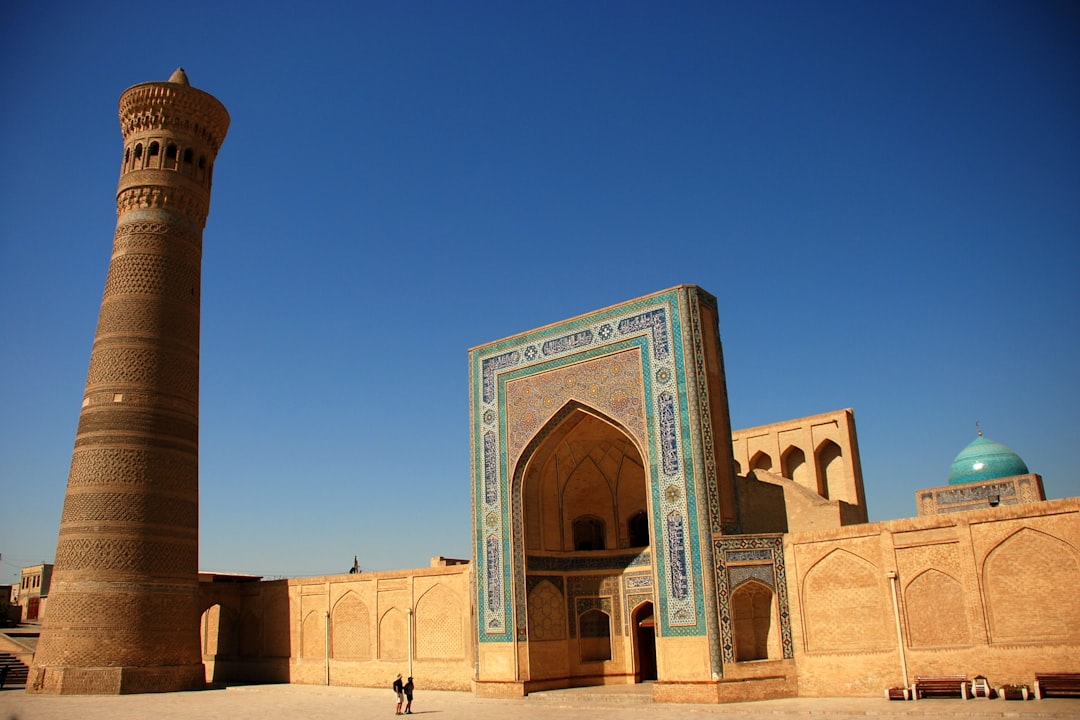
Uzbekistan’s undisputed highlights start with the Registan in Samarkand — three madrasas forming the most spectacular Islamic square in Central Asia, constructed between 1417 and 1660. Shah-i-Zinda (also Samarkand) is a necropolis of 11 mausoleums with tilework of extraordinary brilliance. Bukhara’s Kalon Minaret has stood since 1127 — even Genghis Khan reportedly ordered it spared. Khiva’s Itchan Kala is the most photogenic walled city I’ve visited anywhere in the world. On a less architectural note: a plov ceremony lunch on a Sunday in any Uzbek city, where locals gather around massive iron kazan pots from 7am onwards, is as culturally unmissable as any monument.
What experiences in Uzbekistan are found nowhere else on earth?
Three experiences are genuinely unique to Uzbekistan. First: sleeping inside Khiva’s Itchan Kala walled city at night after the day-trippers leave — the illuminated minarets and empty 11th-century lanes are otherworldly. Second: visiting the Savitsky Museum in Nukus — dubbed the ‘Louvre of the Steppes,’ it holds the world’s second-largest collection of Russian avant-garde art, secretly assembled by one man during the Soviet era to protect it from Stalin. Third: riding the Afrosiyob train at dawn from Tashkent through the steppe as the light hits the mountains — the 344km journey in 2 hours 10 minutes feels like science fiction against the ancient landscape outside. No equivalent train experience exists in Central Asia.
Regions & Highlights
Which areas of Uzbekistan are overcrowded — and what are the quieter alternatives?
The Registan in Samarkand is the most overcrowded site — tour groups from China, Russia, and Europe converge between 10am and 2pm daily in April, May, and September. My alternative: visit Shah-i-Zinda necropolis at 8am instead — equally stunning tilework, a fraction of the crowds, and entry is $3 less. Bukhara’s Poi Kalyon square is busy but manageable; the real overcrowding is in the souvenir street of Khodja Nurabad where vendors are aggressive. Alternative: the Samanids Mausoleum park 10 minutes away is tranquil and architecturally superior. For a completely crowd-free Silk Road experience, base yourself in Shahrisabz — Timur’s birthplace, just 80km from Samarkand, with comparable monuments and almost no foreign tourists.
How many days do I need to see Uzbekistan properly?
The absolute minimum for the classic Silk Road route in Uzbekistan is 10 days: 2 in Tashkent, 3 in Samarkand, 2 in Bukhara, 2 in Khiva, 1 travel day buffer. In my experience, 14 days is the sweet spot — it allows Fergana Valley (2 days), Shahrisabz (1 day), and a slower pace in Bukhara which rewards lingering. If you have 21 days, add the Nuratau Mountains and Nukus/Aral Sea for a transformative trip. The honest caveat: Uzbekistan’s distances are deceptive on a map — Tashkent to Khiva is effectively a 12-hour journey by any route. Rushing a 7-day itinerary through all four cities leaves you exhausted and under-impressed. Depth beats breadth here.
Do I need a visa to travel to Uzbekistan?
Citizens of 90+ countries can enter Uzbekistan visa-free for 30 days as of 2024 — including all EU countries, UK, USA, Canada, and Australia. This was a major policy change implemented after 2018 and has transformed tourism. Apply via e-visa.gov.uz if your country requires one — processing takes 3 business days and costs $20. The honest caveat most blogs skip: the visa-free regime applies to tourist entry only — if you’re planning to work or study, different rules apply. Also critical: your passport must be valid for at least 6 months beyond your entry date, and you must have proof of onward travel at the border. In my experience, immigration at Tashkent TAS is efficient — rarely more than 20 minutes in the queue.
What languages are spoken in Uzbekistan?
Uzbek is the official language, spoken by the majority, with Russian widely used in business, government, and by the older urban population — especially in Tashkent. In my experience, Russian is genuinely more useful than English for navigating daily life. English is spoken by younger staff at tourist-focused hotels and restaurants in Samarkand and Bukhara, but don’t assume it in markets, train stations, or small guesthouses. In Fergana Valley, Tajik is common. The honest tip: learn 10 Uzbek phrases — ‘rahmat’ (thank you), ‘necha pul?’ (how much?), and ‘qayerda?’ (where is?) open extraordinary warmth from locals. Google Translate’s offline Uzbek pack works for written signs, though the Cyrillic–Latin script transition creates occasional confusion.
What cultural rules do I need to know before visiting Uzbekistan?
Uzbekistan is a Muslim-majority country with moderate, culturally conservative norms. Cover shoulders and knees when visiting mosques and mausoleums — women should carry a lightweight scarf. Entering active mosques during prayer time as a tourist is accepted in most places but discretion is expected. Photography of military installations, airports, and border infrastructure is strictly prohibited — fines are real. In my experience, photographing people always requires asking first — most locals say yes enthusiastically. Public displays of affection are frowned upon. Hospitality culture is intense: refusing tea or bread offered by a host is considered rude. The warning most guides soften: alcohol is freely available in restaurants and shops, but drinking visibly in public near mosques or during Ramadan draws disapproval.
Practical Tips
How safe is Uzbekistan for travellers?
Uzbekistan is one of the safest countries in Central Asia for independent travel — petty crime is low and violent crime against tourists is extremely rare. In my 3 visits, the biggest security issues were persistent carpet sellers in Bukhara and overly friendly ‘guides’ near the Registan who expect payment. Standard precautions: keep passport copies separate from originals, don’t display expensive cameras ostentatiously in markets. The honest caveat: the border regions with Afghanistan and Tajikistan in the south (Surkhandarya province) require checking current UK/US government advisories before visiting — though Termez city itself is generally fine for tourists. Police checkpoints are common on highways — always carry your passport or a certified copy. Tashkent’s metro at night is completely safe.
What health precautions should I take before visiting Uzbekistan?
My recommended health prep for Uzbekistan: ensure routine vaccinations are current, and get Hepatitis A and Typhoid vaccines — both advisable given the water and food handling standards outside luxury hotels. Tap water is not safe to drink anywhere in the country — budget $1–2 per day for bottled water. Carry a basic diarrhoea kit (rehydration salts, loperamide) — traveller’s diarrhoea affects roughly 30% of first-time visitors in my observation. The hidden health risk most guides omit: heat exhaustion in July–August is a serious risk in Bukhara and Khiva — carry at least 2 litres of water per person during any outdoor sightseeing. Pharmacies (dorixona) are well-stocked in all cities. Travel insurance covering medical evacuation is essential — major surgery facilities exist only in Tashkent.
What SIM card or eSIM options are available in Uzbekistan?
Buy a local SIM card on arrival in Uzbekistan — it’s the smartest move for connectivity. The three main operators are Ucell, Beeline, and UMS. A starter SIM with 10GB data costs 50,000–80,000 UZS (around $4–6) and is sold at airport kiosks immediately after customs. In my experience, Ucell has the best nationwide coverage, including in Fergana Valley and along the Samarkand–Bukhara corridor. For eSIM users: Airalo offers Uzbekistan eSIMs from $4.50 for 1GB — workable but the local SIM gives far better value. The honest caveat: coverage drops to 2G or zero in the Kyzylkum Desert and on the road to the Aral Sea — download offline Maps.me or Google Maps before departing Nukus.
Which apps do you recommend for travelling in Uzbekistan?
These 6 apps are essential for Uzbekistan travel. Yandex Go — your primary transport app for taxis in every city; more reliable than any street hailing. uzrailpass.com (web) or the O’zbekiston Temir Yo’llari app for train booking — book at least 1 week ahead for Afrosiyob. Maps.me — offline maps including hiking trails in Nuratau; Google Maps has gaps in rural areas. Telegram — guesthouses, local guides, and tour operators all communicate via Telegram channels. Google Translate with offline Uzbek and Russian packs downloaded before arrival. XE Currency for live UZS exchange rate checks. The honest caveat: the Uzbek railway app has an interface primarily in Russian — use a guide or have a local help with first booking.
What are the most common traveller mistakes in Uzbekistan?
The 7 mistakes I see most often in Uzbekistan: First, skipping Khiva because it seems too remote — it’s the best-preserved historic city on the Silk Road and worth the effort. Second, spending too many nights in Tashkent — 1 night is enough unless you specifically want modern Uzbekistan. Third, not booking train tickets early — the Afrosiyob sells out 2 weeks ahead in peak season. Fourth, carrying only large USD bills — exchange booths reject torn or pre-2009 notes instantly. Fifth, trusting restaurant recommendations near the Registan — walk 3 blocks away for the same food at half the price. Sixth, ignoring the Savitsky Museum in Nukus — it’s a genuine world-class collection. Seventh: not registering with guesthouses — failure to register creates problems at airport departure.
Uzbekistan at a Glance
| Population | 34,915,100 |
|---|---|
| Currency | Uzbek som (Soʻm) |
| Official language | Uzbek |
| Time zone | UTC+05:00 |
Source: Wikidata, retrieved August 2026.
Essential Resources for Planning Your Trip to Uzbekistan
- Cooperation between Uzbekistan and UNESCO opens up … — official visitor information, passes & events
- Wikipedia: Uzbekistan — history, geography & background
- Wikivoyage: Uzbekistan — community travel guide & practical tips
- Uzbekistan travel – Lonely Planet | Asia — expert itineraries & travel inspiration
- THE 15 BEST Things to Do in Uzbekistan (2026) — hotels, restaurants & traveller reviews
- Travel Destinations — how to get around
- Numbeo: Cost of Living in Uzbekistan — current prices & cost comparison
- Timeanddate: Uzbekistan Weather & Climate — forecasts & climate statistics
More Perspectives on Uzbekistan
- First time trip to Uzbekistan- all hints & tips gratefully …
- Tips and how to travel to Uzbekistan (2026)
- Uzbekistan travel tips from our 10 days in Bukhara …
Uzbekistan Travel Videos
Watch these videos for a visual preview before your trip:
- 10 Best Places To Visit In Uzbekistan, Uzbekistan Travel Guide | Before You Travel
- Traveling to UZBEKISTAN in 2026? You NEED to Watch This Video
- Best Things To Do in Tashkent Uzbekistan Travel Guide 2026 4K
Uzbekistan Travel Discussions on Reddit
Real traveller experiences and community advice:
- A glimpse of Uzbekistan : r/travel
- Uzbekistan trip report 2023 : r/travel
- Uzbekistan travel advice : r/traveladvice
Data Sources
This page was compiled using data from Wikipedia, Wikidata, Open-Meteo (climate), Numbeo (cost of living) and REST Countries. Information is updated regularly.