
Vietnam: The Complete Travel Guide (2026)
Last reviewed: October 2026 · key facts checked against Wikidata
Vietnam Travel Guide: Everything You Need to Know (2026)
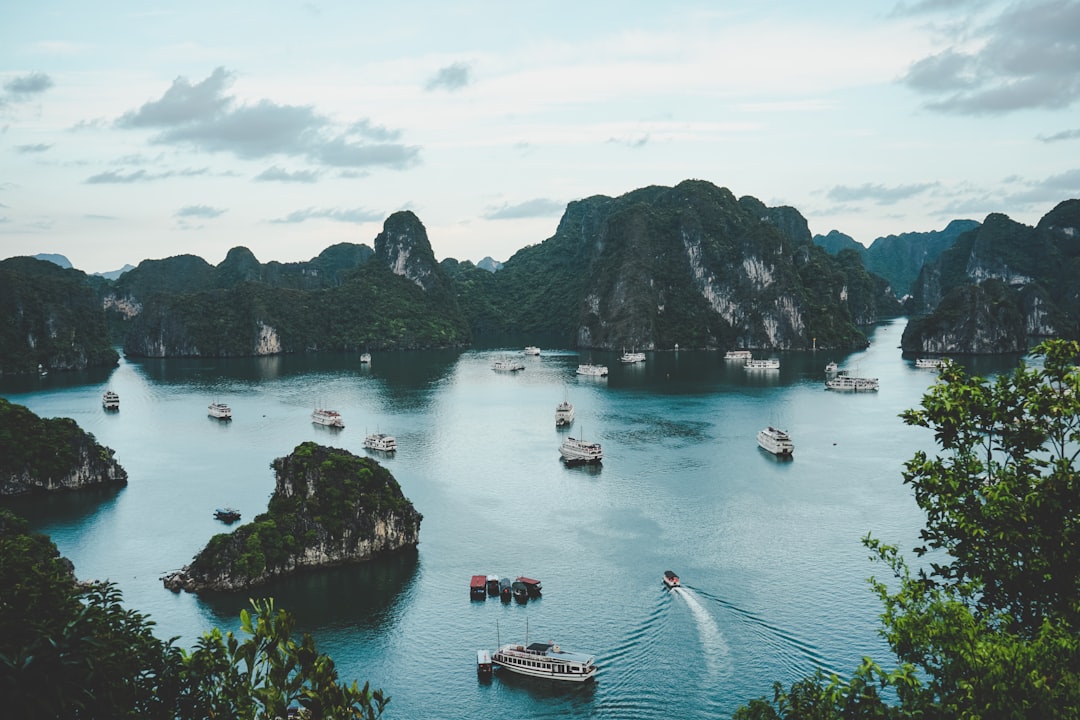
Vietnam stretches 1,650 km from north to south along the eastern edge of mainland Southeast Asia, home to over 91.7 million people and bordering China, Laos, and Cambodia. Founded as a unified socialist republic in 1976 after decades of conflict, it has transformed into one of Southeast Asia’s fastest-growing tourism destinations, welcoming over 12.6 million international visitors in 2023. From the 3,143-metre peak of Fansipan to the UNESCO-listed limestone karsts of Ha Long Bay, the geographic and cultural range packed into 331,000 square kilometres is extraordinary.
Top 3 Highlights at a Glance
- Ha Long Bay — Over 1,600 limestone islands rise from emerald water — a UNESCO World Heritage Site unlike anything in Southeast Asia.
- Hoi An Ancient Town — A lantern-lit trading port frozen in the 15th century, with tailors who can custom-make clothes in under 24 hours.
- Sapa Rice Terraces — Stacked terraces carved by Hmong and Dao tribes cascade down valleys at 1,600 metres elevation year-round.
Scroll down for our complete travel guide with tips on getting there, where to stay, costs and more.
Getting There & Transport
Which airports are the best entry points into Vietnam?
Noi Bai International (HAN) in Hanoi and Tan Son Nhat (SGN) in Ho Chi Minh City are Vietnam’s two primary gateways. In my experience, SGN handles more international routes and is ideal if you plan to start in the south and travel north. HAN is better for northern itineraries focusing on Ha Long Bay and Sapa. Da Nang (DAD) is a strong third option — it puts you within 30 minutes of Hoi An and 2 hours of Hue, making it perfect for central Vietnam entry. My tip: avoid routing through SGN during Tet (late January/February) when the airport reaches absolute capacity and domestic connections collapse.
How do I get from the airport to my first accommodation in Vietnam?
Skip the unmarked taxis and use the Grab app from day one — it’s Vietnam’s dominant ride-hailing platform and fully metered. From Noi Bai to Hanoi Old Quarter, a Grab car costs around $8–12 USD and takes 40–50 minutes. From Tan Son Nhat to District 1 in Ho Chi Minh City, expect $5–8 USD and 20–40 minutes depending on traffic — HCMC’s congestion is brutal at rush hour. The 86 Airport Bus from Noi Bai costs only $1.50 USD and drops directly at Hoan Kiem Lake, which I used on my last trip without issues. What surprised me: metered taxis outside the airport often quote flat rates triple the Grab price — decline them.
What transport options are there within Vietnam?
Vietnam offers a genuinely impressive range. The Reunification Express train runs the full 1,726 km from Hanoi to Ho Chi Minh City in roughly 33 hours — I recommend it at least once for the scenery. Budget flights with VietJet and Bamboo Airways connect major cities in under 2 hours for as little as $15–40 USD booked ahead. Open-tour sleeper buses (around $15–25 USD per leg) are the backpacker backbone and cover most tourist routes. Within cities, Grab bike (xe om) costs under $2 USD for short hops. My tip: book trains via 12go.asia to avoid the Vietnamese rail website’s payment failures. Renting a motorbike for rural areas is cheap — $5–10 USD/day — but only if you’re an experienced rider.
Do I need a rental car in Vietnam?
No — a rental car is unnecessary and often impractical in Vietnam. Traffic in cities like Ho Chi Minh City and Hanoi is chaotic beyond description, and international driving licences are not universally accepted at police checkpoints. In my experience, the combination of Grab, sleeper buses, domestic flights, and trains covers 95% of tourist routes without a car. The exception: the Ha Giang Loop in far northern Vietnam, where hiring a motorbike or booking a guided jeep tour is the only viable way to experience the mountain roads. Renting a motorbike at $8–12 USD/day in places like Hoi An or Mui Ne makes genuine sense for day trips — but stick to automatic bikes if you’re not experienced. Car hire with a driver (around $60–80 USD/day) is an underrated option for families.
How good is the public transport network between regions of Vietnam?
Between major cities, it’s solid. Domestic flights are affordable and frequent — VietJet alone operates over 60 routes domestically. The Reunification Express connects north to south reliably, though it’s slow. What’s genuinely poor is rural and inter-provincial bus infrastructure outside the tourist trail. Getting from Ninh Binh to Phong Nha, for example, requires multiple changes and 8+ hours — a direct sleeper bus doesn’t exist. My tip: treat the tourist bus network (The Sinh Tourist, Hanh Cafe) as a parallel system that’s faster and more practical for the Hanoi–Hue–Hoi An–HCMC corridor. The honest caveat: Vietnam’s national train has limited seats on popular routes like Hanoi to Da Nang, so book at least 3–4 weeks ahead during peak season.
Accommodation
Which regions of Vietnam should I stay in?
Vietnam divides naturally into three zones. The North (Hanoi, Ha Long Bay, Sapa, Ha Giang) offers mountains, karsts, and the country’s cultural heartland — base in Hanoi’s Old Quarter for urban access. Central Vietnam (Hue, Da Nang, Hoi An, Phong Nha) delivers the most historic density per kilometre — I recommend Hoi An as the single best base in the country. The South (Ho Chi Minh City, Mekong Delta, Phu Quoc) is hotter, flatter, and more commercial. If your time is limited to 10 days, focus on just one or two zones — rushing all three means you absorb nothing. What surprised me: Phong Nha-Ke Bang in central Vietnam is dramatically undervisited despite containing the world’s largest cave system.
What does good accommodation cost per night in Vietnam?
Vietnam offers exceptional value at every level. A clean, well-reviewed guesthouse or mini-hotel in Hoi An or Hanoi costs $20–40 USD/night. Mid-range boutique hotels in the Old Quarter of Hoi An or Hoan Kiem area of Hanoi run $50–90 USD/night and frequently include breakfast. High-end resorts — particularly in Da Nang’s My Khe Beach strip or on Phu Quoc island — start at $120–200 USD/night. My tip: Vietnamese ‘mini-hotels’ (nha nghi) rated 3 stars locally often outperform international 4-star equivalents on service and cleanliness at half the price. The trade-off: cheap hostels in Hanoi’s Old Quarter are frequently on noisy streets — check the specific alley (ngõ) address before booking, not just the neighbourhood.
When should I book hotels in Vietnam — how far in advance?
For standard travel periods, 4–6 weeks ahead is sufficient in most destinations. However, two windows demand much earlier action: Tet (Vietnamese Lunar New Year, late January/early February) and the Christmas–New Year period. During Tet, Hoi An and Ha Long Bay fully sell out up to 3 months in advance, and domestic flights disappear even earlier. For Ha Long Bay overnight cruises — the good ones like Paradise Elegance or Indochine Cruise — I recommend booking 6–8 weeks ahead regardless of season, as quality boats have limited cabins. In my experience, booking direct with Vietnamese hotels via email often unlocks 10–15% discounts over Booking.com rates, and they’ll frequently upgrade you on arrival if you’ve paid in full.
When is the best time to travel to Vietnam?
The verified best months are May, June, July, and August — but Vietnam’s length makes this complicated. For northern Vietnam (Hanoi, Sapa, Ha Giang), September–November offers clear skies and post-monsoon green landscapes — genuinely my favourite window. Central Vietnam (Hoi An, Hue, Da Nang) is best February–April before the heat peaks and before typhoon season hits in October. Southern Vietnam (HCMC, Mekong Delta) is ideal November–April during the dry season. The honest trade-off: there is no single month when all three regions are simultaneously ideal. I recommend building your itinerary around your priority zone and accepting the trade-offs elsewhere. March–April is the closest to a national sweet spot.
How does peak season affect prices in Vietnam?
Peak season (December–January and Tet) drives accommodation prices up 30–60% across popular destinations. Ha Long Bay overnight cruises that cost $120 USD/person in October can jump to $180+ USD in December. Domestic flights during Tet week routinely quadruple in price — I’ve seen Hanoi-to-HCMC routes hit $150 USD one-way on routes that normally cost $25 USD. Hoi An during the full moon lantern festival (monthly) adds a 10–20% premium to nearby accommodation. My tip: travelling in May–June hits a genuine sweet spot — the north and south are entering or exiting their best seasons, crowds thin noticeably, and prices drop. The caveat: June–August in Hanoi and HCMC is genuinely brutal heat (38°C+), so plan outdoor activities for early mornings only.
Best Time to Visit
Which regions of Vietnam have different climate zones?
Vietnam spans three distinct climate zones. Northern Vietnam (Hanoi and above) has four seasons — including a genuine winter from December–February where Sapa drops below 5°C and occasionally sees snow at altitude. Central Vietnam has a reversed monsoon calendar — its rainy season peaks October–December when the south is dry. Southern Vietnam (below Da Lat) has a tropical climate with only two seasons: dry (November–April) and wet (May–October). Da Lat at 1,500 metres altitude is an anomaly — it stays around 18–22°C year-round while coastal towns bake. What surprised me: the Mekong Delta floods visibly September–November, which is actually a beautiful and authentic time to visit if you embrace it.
What are the rainy seasons in Vietnam?
Rainy seasons differ dramatically by region — this is Vietnam’s most misunderstood weather fact. Northern Vietnam receives monsoon rain from May–September, with Hanoi’s wettest months being July–August. Central Vietnam gets its heaviest rainfall October–December, meaning Hoi An and Hue flood seriously — I’ve seen Hoi An’s Ancient Town submerged knee-deep in October. Southern Vietnam monsoon runs May–October, but rain typically falls in short afternoon bursts rather than all-day downpours — Ho Chi Minh City remains visitable. My honest warning: typhoons can hit central Vietnam between September–November with little notice, potentially shutting down boat tours and flooding accommodation — buy travel insurance that explicitly covers weather disruption. Phong Nha caves close for up to 3 months during flood season.
What does a trip to Vietnam cost per person per day?
Vietnam remains one of Southeast Asia’s best-value destinations. A budget traveller staying in hostels, eating pho for breakfast and bun cha for lunch, and using sleeper buses can live on $30–40 USD/day. A mid-range traveller in a boutique hotel, eating at sit-down restaurants and taking occasional taxis, should budget $70–100 USD/day. A comfort traveller with a quality hotel, guided excursions, and Ha Long Bay cruises should plan $150–200 USD/day. In my experience, the biggest daily variable is transport — a domestic flight adds $30–60 to your day’s budget instantly. My tip: eating exclusively at local Vietnamese restaurants (com binh dan) rather than tourist-facing restaurants cuts your food budget by 50–60% with absolutely no quality loss.
How expensive is food in Vietnam?
Food in Vietnam is spectacularly affordable if you eat where locals eat. A bowl of pho at a street stall costs $1–2 USD. A full banh mi sandwich is $0.80–1.50 USD. Sit-down local restaurants (com binh dan) serve complete meals for $2–4 USD. Mid-range restaurants in Hoi An or Hanoi Old Quarter charge $6–15 USD per main. A craft beer at Ta Hien Street in Hanoi (the famous ‘Beer Street’) runs $1–2 USD. The price cliff happens the moment you enter a tourist-facing restaurant with an English menu on the main street — the same dish costs 3–4x more. My tip: look for places with plastic stools, no English signage, and a queue of locals. Bun bo Hue in Hue and cao lau in Hoi An are region-specific dishes worth budgeting an extra sit-down meal for.
What hidden costs should I expect in Vietnam?
Several costs catch travellers off guard. Visa fees: most nationalities now get 90-day e-visa for $25 USD, but the application system occasionally glitches. Ha Long Bay cruises always list a base price that excludes kayaking, cave entry, and tips — add $20–30 USD per person to any quoted price. ATM withdrawal fees: Vietnamese ATMs typically charge 20,000–50,000 VND ($0.80–2 USD) per transaction plus your home bank’s fee — withdraw larger amounts less frequently. Motorbike rental damage claims: rental shops in Mui Ne and Hoi An frequently photograph bikes post-return and claim pre-existing scratches — photograph every scratch before you ride. My warning: tourist restaurants in Hoi An’s Ancient Town add 5–10% service charges that aren’t always visible on menus. Always ask for the full bill breakdown.
Budget & Costs
How much cash should I bring to Vietnam?
Bring $100–200 USD in cash as an emergency buffer, but rely primarily on ATM withdrawals in Vietnamese Dong (VND). The exchange rate at airport money changers is poor — wait until you reach a Vietcombank or VietinBank ATM in the city, which give competitive rates. Daily cash needs vary: a budget day might require only 200,000–400,000 VND ($8–16 USD); a day with a boat trip or guided tour could need 1,000,000+ VND ($40 USD). My tip: Grab payments can be made via card in the app, reducing your cash dependency significantly in cities. The honest caveat: rural areas like Ha Giang and small Mekong Delta towns are still overwhelmingly cash-only, so always leave cities with a buffer of at least 500,000 VND ($20 USD) when heading into the countryside.
Which credit cards are accepted in Vietnam?
Visa and Mastercard are accepted at hotels, larger restaurants, and supermarkets in major cities — but don’t assume this outside Hanoi, HCMC, Da Nang, and Hoi An. Street food vendors, local markets, motorbike taxis, and small guesthouses are cash-only without exception. Amex is accepted at upscale hotels and international chains but almost nowhere else — I wouldn’t rely on it. Wise card is my personal recommendation for Vietnam: it withdraws VND at the mid-market rate with minimal fees, outperforming every other card I’ve tested here. Many Vietnamese businesses add a 2–3% card surcharge that they don’t advertise — always ask before paying. In my experience, having both a Wise card and a backup Visa covers all scenarios without carrying excessive cash.
Which regions of Vietnam must I not miss?
Four regions stand out as genuinely non-negotiable. Hanoi’s Old Quarter — 36 ancient trade streets within 1 square km — is the cultural anchor of the north and unlike any other Asian capital. Ha Long Bay with its 1,600+ limestone islands is a cliché for good reason — experiencing it overnight on a junk boat is transformative. Hoi An Ancient Town is the most photogenic and culinarily rich town in Vietnam, and I’d argue Southeast Asia. The Mekong Delta, specifically the floating markets around Cai Rang near Can Tho, shows a way of life disappearing in real time. If you have extra days, Ha Giang Province in the far north is Vietnam’s most dramatic landscape — the Dong Van Karst Plateau Geopark is UNESCO-listed and sees a fraction of Ha Long Bay’s visitors.
What are the tourist highlights of Vietnam?
Beyond the obvious three (Ha Long Bay, Hoi An, HCMC), Vietnam’s highlights run deep. Phong Nha-Ke Bang National Park contains Son Doong Cave — the world’s largest cave at 9 km long and 200 m high — with permits for just 1,000 visitors per year at $3,000 USD. The more accessible Paradise Cave entrance costs only $15 USD and is still jaw-dropping. Hue’s Imperial Citadel — modelled on Beijing’s Forbidden City and completed in 1833 — takes a full day. Sa Pa’s Muong Hoa Valley rice terraces are best viewed from September–October after harvest season turns the paddies golden. Ninh Binh’s Trang An (often called ‘Ha Long Bay on land’) offers boat tours through limestone caves for under $5 USD. What surprised me: Ninh Binh is only 90 minutes from Hanoi and dramatically underrated.
What experiences in Vietnam are found nowhere else on earth?
Three experiences are genuinely irreplaceable. First: a sleeper train on the Hanoi–Da Nang Hai Van Pass section at dawn — the tracks cling to cliffs above the South China Sea for 20 km in a sequence that no flight can replicate. Second: attending the Hoi An Full Moon Lantern Festival (14th of each lunar month) when electric lights are turned off and the ancient town glows with thousands of silk lanterns — it costs nothing and feels like stepping into a different century. Third: motorbike riding the Ha Giang Loop — 350 km of mountain switchbacks through ethnic minority villages where tourism is still raw and unpackaged. In my experience, the Ha Giang Loop produces more ‘this changed my perspective’ moments per kilometre than anywhere else in Southeast Asia.
Regions & Highlights
Which areas of Vietnam are overcrowded — and what are the quieter alternatives?
Ha Long Bay’s main tourist zone (Bai Chay port area) is genuinely overwhelmed — hundreds of boats depart simultaneously at 8am creating an industrial spectacle. Alternative: Lan Ha Bay, accessible from Cat Ba Island, has identical karst scenery with a fraction of the boats and permits kayaking in areas Ha Long Bay restricts. Hoi An’s Ancient Town on weekend evenings is wall-to-wall tourists — stay in the quieter An Bang Beach area ($15–20 USD cheaper per night) and visit the town on weekday mornings before 9am. Sapa town itself has been developed aggressively since 2015 — the villages of Ta Van and Lao Chai, reachable by a 2-hour trek, feel far more authentic. My tip: Pu Luong Nature Reserve in Thanh Hoa province offers Sapa-quality rice terraces with almost no crowds and guesthouse prices under $25 USD/night.
How many days do I need for Vietnam?
Minimum 10 days to see one region properly; 3 weeks to cover north-to-south meaningfully. In my experience, the classic Hanoi → Ha Long Bay → Hoi An → Ho Chi Minh City route needs at least 14 days to avoid feeling like a highlight reel with no depth. A focused 10-day northern itinerary covering Hanoi, Ha Long Bay, Ninh Binh, and Sapa is far more satisfying than rushing south. If you only have 7 days, base entirely in central Vietnam — Da Nang, Hoi An, Hue, and a day trip to Phong Nha — and you’ll leave with a complete experience rather than a series of airport transfers. The honest trade-off: Vietnam is long and transport connections eat time — domestic flights solve this but add $30–60 USD per leg.
Do I need a visa to visit Vietnam?
Most nationalities need a visa, but it’s straightforward. Citizens of 45+ countries — including the UK, EU, Australia, Canada, and the US — can obtain a 90-day e-visa online for $25 USD at evisa.xuatnhapcanh.gov.vn. Processing takes 3 business days. Citizens of 24 countries including Germany, France, Italy, and Spain receive visa-free entry for 45 days as of 2023. My tip: apply for the e-visa at least 1 week before departure — the official site occasionally experiences processing delays, and there’s no expedited option. The caveat most travellers miss: the e-visa is single-entry by default — if you plan to cross into Laos or Cambodia and return to Vietnam, you need to explicitly request a multiple-entry visa at the time of application. It costs the same $25 USD.
What languages are spoken in Vietnam?
Vietnamese (Tiếng Việt) is the official language, spoken by over 85% of the population as a first language. It’s a tonal language with 6 tones — mispronunciation changes meaning entirely, making basic learning harder than in Thai or Malay. In tourist zones (Hoi An, Hanoi Old Quarter, Da Nang, Phu Quoc), English is functional for most travel needs. Outside tourist corridors, English comprehension drops sharply — Google Translate’s camera function pointed at menus is genuinely essential. In northern highlands (Ha Giang, Sapa), ethnic minority communities speak languages like Hmong and Dao that differ entirely from Vietnamese. My tip: learn five Vietnamese phrases — cam on (thank you), bao nhieu (how much), ngon qua (delicious), khong (no), and xin chao (hello) — and Vietnamese people respond with extraordinary warmth.
What cultural rules do I need to know in Vietnam?
Several rules matter practically. Temple and pagoda dress codes are enforced — shoulders and knees must be covered; many sites provide sarongs for 5,000–10,000 VND. Remove shoes at all temple entrances and many traditional homestays — look for the shoe pile at the door. Photographing people, especially ethnic minority women in northern villages, requires genuine permission — paying for a photo opportunity without asking first is disrespectful and increasingly resented. Public displays of affection are frowned upon in traditional communities though tolerated in cities. The political rule most travellers ignore: criticising the Vietnamese government publicly or on social media while in-country carries real legal risk — Vietnam actively monitors foreign social media accounts. My tip: bargaining is expected at markets but not in restaurants — attempting to haggle over food prices is genuinely offensive.
Practical Tips
How safe is Vietnam for travellers?
Vietnam is one of Southeast Asia’s safer destinations for tourists. Violent crime against foreigners is rare — in 10+ years of visits, I’ve never felt physically threatened. The real risks are specific and avoidable. Motorbike bag snatching is serious in Ho Chi Minh City’s District 1 and parts of Hanoi — keep bags on your inside shoulder, away from the road. Taxi scams from unmarked cabs at Noi Bai and Tan Son Nhat airports are consistent — use only Grab or official Mai Linh/Vinasun taxis. Cyclo (rickshaw) drivers in Hanoi quote one price and demand 10x on arrival — always agree in writing or skip them entirely. The political environment is stable but authoritarian — avoid any activity that could be interpreted as politically motivated. Travel insurance covering motorbike riding is essential; hospital quality outside Hanoi and HCMC is limited.
What health precautions should I take before visiting Vietnam?
See a travel health clinic 6–8 weeks before departure — this is the single most important step. Recommended vaccinations include Hepatitis A, Typhoid, Japanese Encephalitis (for rural areas), and Rabies (if trekking or visiting caves). Malaria risk is low in major tourist areas but exists in remote border regions near Cambodia and Laos — consult your doctor about prophylaxis if heading there. Dengue fever has no vaccine and is present year-round — use DEET repellent consistently, especially at dawn and dusk. Tap water is not safe to drink anywhere in Vietnam — use bottled or filtered water only, including for brushing teeth in budget accommodation. My honest warning: food poisoning from ice at street stalls is the most common traveller illness — stick to ice served in bags (factory ice, cylindrical shape) rather than crushed ice of unknown origin.
What SIM card or eSIM options are available in Vietnam?
Physical SIM cards are cheap and excellent. Viettel is the most reliable network with the best rural and mountain coverage — critical if you’re doing Ha Giang or Sapa trekking. A Viettel tourist SIM with 20–30GB data costs $5–8 USD and is available at the airport on arrival or at any Viettel store in the city. eSIM options: Airalo and Holafly both offer Vietnam eSIMs from $5–12 USD for 7–30 days — activate before you land to have data immediately at the airport. My tip: buy the physical Viettel SIM at the Noi Bai or SGN airport Viettel counter (not third-party kiosks beside it) to guarantee authenticity. The honest trade-off: eSIMs are convenient but their Vietnam data speeds are occasionally slower than a locally purchased physical SIM, particularly in northern highlands.
Which apps do you recommend for travelling Vietnam?
Grab is non-negotiable — handles taxis, bike rides, and food delivery across all major cities. Google Maps works well in cities but has notable gaps in rural northern Vietnam — download offline maps before leaving Hanoi. Google Translate with camera mode is essential for menus and street signs. 12go.asia is the most reliable platform for booking trains, buses, and ferries with English-language support. Agoda consistently beats Booking.com on Vietnamese hotel prices in my testing — cross-reference both. XE Currency for real-time VND conversion. For Ha Long Bay, the app VinPearl is useful if staying at their resort. My tip: download Zalo — Vietnam’s dominant messaging app — as many local guesthouses, tour operators, and guides communicate almost exclusively through it and respond to Zalo messages 3–4x faster than email.
What are the most common traveller mistakes in Vietnam?
Seven mistakes I see repeatedly. Underestimating distances: Hanoi to Ho Chi Minh City looks manageable on a map but covers 1,726 km — budget flights are essential for time-limited trips. Ignoring regional climate differences: booking central Vietnam in October without knowing it’s typhoon season. Overpaying at tourist restaurants: sitting anywhere with a laminated English photo menu adds 200–300% markup instantly. Taking unmarked airport taxis: costs 3–4x Grab prices. Booking Ha Long Bay on the cheapest cruise ($45/night budget boats are genuinely awful — cramped, poorly maintained, and in the most crowded zones). Not bargaining at markets: Ben Thanh Market in HCMC is notorious for starting at 5x the fair price. Rushing the itinerary: Vietnam rewards slow travel — travellers who stay 3–4 nights in Hoi An consistently rate it higher than those who pass through in 24 hours.
Vietnam at a Glance
| Population | 96,208,984 |
|---|---|
| Currency | Vietnamese đồng (₫) |
| Official language | Vietnamese |
| Time zone | UTC+07:00 |
Source: Wikidata, retrieved October 2026.
Essential Resources for Planning Your Trip to Vietnam
- Visit Vietnam: The Official Tourism Website of Vietnam — official visitor information, passes & events
- Wikipedia: Vietnam — history, geography & background
- Wikivoyage: Vietnam — community travel guide & practical tips
- Vietnam Travel 2026 – Lonely Planet | Asia — expert itineraries & travel inspiration
- THE 15 BEST Things to Do in Vietnam (2026) — hotels, restaurants & traveller reviews
- 10 day Vietnam highlights tour | UNESCO sites & cultural … — how to get around
- Numbeo: Cost of Living in Vietnam — current prices & cost comparison
- Timeanddate: Vietnam Weather & Climate — forecasts & climate statistics
- Reducing waste and improving visitor experience in Viet …
More Perspectives on Vietnam
- Travel tips and advice in Vietnam for first time traveler.
- Vietnam Travel Tips: 15 Things You Need to Know
- Where to Go (& NOT Go) In Vietnam
Vietnam Travel Videos
Watch these videos for a visual preview before your trip:
- Vietnam Travel Guide: Best Things To Do in Vietnam 2026 4K
- Don’t Visit VIETNAM… Before Watching This! (Expenses & Travel Tips)
- 10 Days in Vietnam 2026 – A Travel Documentary
Vietnam Travel Discussions on Reddit
Real traveller experiences and community advice:
- For those who’ve traveled to Vietnam, what’s your honest …
- Travel tips and advice in Vietnam for first time traveler.
- r/Vietnam_Tourism
Data Sources
This page was compiled using data from Wikipedia, Wikidata, Open-Meteo (climate), Numbeo (cost of living) and REST Countries. Information is updated regularly.