
Korsika: The Complete Travel Guide (2026)
Korsika Travel Guide: Everything You Need to Know (2026)
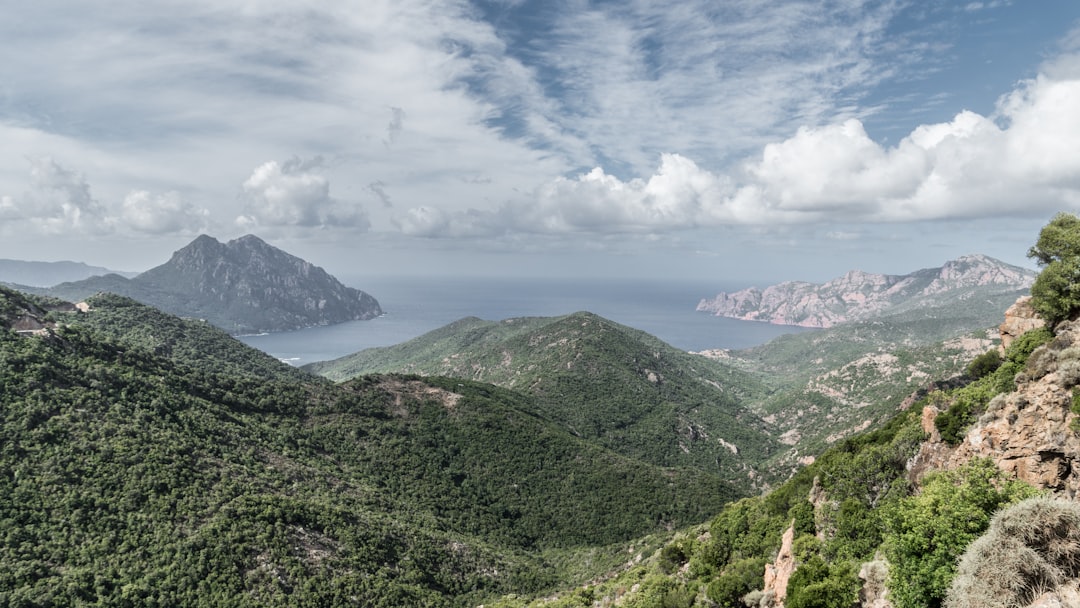
Corsica, France’s fourth-largest Mediterranean island with a population of 355,486, packs 1,000 km of coastline and a mountain spine reaching 2,706 m at Monte Cinto into a landmass roughly the size of Devon. Founded as a Genoese colony before France purchased it in 1768 — just one year before Napoleon was born in Ajaccio — it operates today as a single French administrative region with a fiercely distinct identity. July is the statistically optimal travel month, balancing warm seas, reliable sunshine, and trails that are snow-free all the way to the summit.
Top 3 Highlights at a Glance
- GR20 Trail — Europe’s toughest long-distance hike spans 180 km ridge-to-ridge through granite wilderness above 1,800 m.
- Calanques de Piana — UNESCO-listed rose-red granite sea cliffs dropping 300 m straight into turquoise Gulf of Porto water.
- Bonifacio Old Town — A medieval citadel perched on 70 m limestone cliffs directly above the Strait of Bonifacio — nowhere else looks like this.
Scroll down for our complete travel guide with tips on getting there, where to stay, costs and more.
Getting There
How do I best reach Korsika?
Fly into Ajaccio or Bastia — these are your two main entry points. In my experience, flying beats the ferry for most travellers because it saves 5–12 hours of sailing time. Air France, easyJet, and Air Corsica operate routes from Paris, Nice, and Marseille with flight times of roughly 1 hour 20 minutes from Nice. The honest caveat: summer flights book out weeks in advance and prices spike hard in July–August. My tip: arriving via Bastia opens the north and the Cap Corse peninsula immediately, while Ajaccio suits anyone targeting the west coast and the mountains around Corte.
Which airport is closest to my destination in Korsika?
Ajaccio Napoléon Bonaparte Airport (AJA) serves the south and west; Bastia Poretta Airport (BIA) serves the north and east. A third option, Figari Sud-Corse (FSC), sits just 20 km north of Bonifacio and is genuinely convenient if you’re targeting the south. What surprised me: Figari handles mostly charter and low-cost traffic in summer only — reliability drops in shoulder season. Calvi Sainte-Catherine (CLY) is useful for the Balagne region. I recommend choosing your airport based on your first night’s base, because driving across Corsica on mountain roads can add 2–3 hours to any journey.
How long is the journey from the mainland to Korsika?
By air, it’s 1 hour 20 minutes from Nice and roughly 1 hour 45 minutes from Paris. By ferry from Nice, expect 5 to 6 hours on a fast NGV vessel or up to 12 hours overnight from Marseille or Toulon. In my experience, the overnight ferry from Marseille is worth it exactly once — the experience of arriving at sunrise in Bastia harbour is genuinely beautiful. The trade-off: cabins on summer departures cost €80–€120 extra per person, and the boats run loud air conditioning all night. My tip: book the ferry with a vehicle to avoid car hire costs on the island.
Are there direct bus connections within Korsika?
Direct buses exist but are limited. Rapides-Bleus and regional operators run routes between Ajaccio, Bastia, Corte, and Porto-Vecchio, with tickets costing roughly €10–€25 depending on route. The honest warning most guides omit: services drop to 1–2 departures per day outside summer, and on Sundays some routes disappear entirely. In my experience, buses work acceptably for the Ajaccio–Corte–Bastia corridor because the train roughly parallels it. For anywhere off that spine — Bonifacio, Calvi, Porto — you effectively need your own wheels. My tip: check Corsicabus.com at least 48 hours before travel to confirm current schedules.
Is a rental car necessary to explore Korsika?
Yes, a rental car is essential for 90% of itineraries. In my experience, without a car you’ll miss the Calanques de Piana, the Niolo valley, the Alta Rocca, and every coastal road that makes Corsica extraordinary. Budget €35–€60 per day for a small car booked in advance through Europcar or Sixt at Ajaccio or Bastia airport. The caveat nobody mentions loudly enough: Corsican mountain roads are narrow, steep, and shared with oncoming coaches — an automatic gearbox is worth the extra €10/day for anyone not used to hairpin switchbacks. My tip: book at least 3 weeks ahead in July–August or every affordable car disappears.
Accommodation
Which towns make good bases when exploring Korsika?
Ajaccio suits first-timers — it has Napoleon’s birthplace, a proper restaurant scene, and good road connections west and south. Corte is my personal favourite for mountain access: sitting at 396 m altitude in the geographic centre, it puts you within 45 minutes of the GR20 and the Restonica Gorge. Calvi in the Balagne region gives you a Genoese citadel, a sandy bay, and the Revellata peninsula. Porto-Vecchio is the upscale south coast base near Palombaggia beach. The honest trade-off: Corte has limited accommodation and modest dining; Ajaccio and Calvi offer more comfort but more tourist noise.
Where should I stay in Korsika?
My top recommendation is to split your stay: 2 nights in Ajaccio to orient yourself, then move to a village rental or bergerie-style gîte in the interior. In my experience, staying in Évisa or Zonza in the mountains gives you completely different Corsica — chestnut forests, wild boar on the menu, and zero beach-resort crowds. For beach-focused travellers, Pinarello and Palombaggia near Porto-Vecchio have boutique hotels directly on the water. The caveat: genuine village accommodation goes fast — I’ve seen Gîtes de France listings fully booked by February for peak July weeks. Book the interior stays first.
What does accommodation cost in Korsika?
Budget €80–€120 per night for a solid mid-range hotel double room in shoulder season. In July–August, the same room costs €150–€250. A well-equipped apartment in Porto-Vecchio sleeps four for €200–€350/night in peak season. At the budget end, Camping Arinella Bianca near Ghisonaccia charges roughly €25–€35 per pitch — Corsican campsites are genuinely good quality. The honest number most articles skip: a refuges on the GR20 costs €18–€22 per bunk per night including dinner and breakfast, which is exceptional value given the altitude and remoteness. My tip: apartments almost always beat hotels for value when staying 5+ nights.
How far in advance should I book accommodation in Korsika?
Book at least 3 months ahead for any July–August travel — I mean that literally. In my experience, the best-value rentals in Bonifacio, Calvi, and Porto-Vecchio disappear by April for summer. GR20 refuges managed by Parc Naturel Régional de Corse open bookings in January and popular sections like the Refuge de Ciottulu di i Mori fill within days. The caveat: cancellation policies are strict on Corsica — many rentals take a 30% non-refundable deposit immediately. My tip: for May–June or September travel, 4–6 weeks ahead is usually sufficient and you’ll pay prices 20–40% lower than peak season rates.
When is the best time to visit Korsika?
July is the statistically optimal month based on climate analysis — warm seas around 24°C, reliable sunshine, and all mountain refuges open. In my personal experience, mid-June and September are better practical choices: crowds drop by roughly half, prices fall significantly, and hiking conditions are superb. Late May is genuinely underrated — the maquis (Corsican scrubland) is in full fragrant bloom and you can sunbathe at Palombaggia without fighting for space. The honest warning: August is genuinely overcrowded, with Porto-Vecchio traffic backing up for kilometres and beach parking lots full by 9 AM. I avoid August entirely.
Best Time to Visit
How does weather affect activities in Korsika?
Weather shapes everything here. In my experience, the GR20 is safely hikeable from mid-June to early October — snow lingers above 2,000 m into late May. Beach season runs May to October, with sea temperatures peaking at 25°C in August. The mountain interior sees afternoon thunderstorms in July–August, so I always start hikes by 7 AM. The caveat: the libecciu (southwest wind) can make the west coast rough for swimming even in summer — if Ajaccio’s beach is choppy, drive 40 minutes north to Sagone which faces a different angle. Winter brings snow to the peaks but the coast stays mild at 12–15°C — great for cycling.
Are there local festivals in Korsika worth attending?
Absolutely — and they’re deeply authentic. A Fiera di u Casgiu (Venaco Cheese Fair) in May draws cheesemakers from across the island — admission is free and tasting is the point. Calvi on the Rocks electronic music festival runs in July on the citadel beach and costs roughly €25 per day. The Estivales de Musique in Corte in July showcases traditional Corsican polyphonic singing — I found this genuinely moving and unlike any folk music experience elsewhere. The honest caveat: the Ajaccio Napoleon Festival in mid-August is colourful but extremely touristy. My tip: the Easter Catenacciu procession in Sartène is one of the most intense religious ceremonies in Western Europe — arrive early for a position.
When does Korsika get crowded?
August is brutally crowded. The island’s permanent population of 320,208 is overwhelmed by roughly 3 million tourist arrivals annually, most concentrated in an 8-week summer window. In my experience, Bonifacio is the worst bottleneck — the old town streets become single-file shuffles past 11 AM. Porto-Vecchio’s D568 road to Palombaggia backs up every morning in August. The honest reality: even ‘hidden’ beaches like Cala di l’Albitru near Pianottoli appear on Instagram and get discovered fast. My tip: arrive at any popular beach before 9 AM or after 5 PM — the midday crush is avoidable with basic timing discipline.
What does a daily budget cost in Korsika?
Budget travellers camping and self-catering can manage €60–€80 per person per day. A comfortable mid-range day — decent hotel, two restaurant meals, one paid attraction — runs €130–€180 per person. Add a rental car split between two people (€20–€30 each) and you’re at €150–€210 comfortably. What surprised me: picnic supplies from a Corsican market — charcuterie, brocciu cheese, bread, wine — cost €15–€20 per person and beat most restaurant lunches in quality. The honest caveat: fuel is expensive at roughly €1.90–€2.10 per litre and mountain distances eat tanks faster than flat driving — budget €30–€40 per day for the car including fuel.
Is Korsika cheaper or more expensive than other French regions?
More expensive than most French mainland regions, cheaper than the Côte d’Azur. In my experience, restaurant prices in Ajaccio run 10–20% higher than equivalent provincial French cities — a two-course lunch with wine costs €25–€35 per person at a decent restaurant. The honest reason: almost everything is shipped or flown in, and the island has limited economies of scale. The upside: local products — Corsican charcuterie, brocciu, AOP wines — are priced fairly at producers and markets. My tip: shopping at the Ajaccio covered market on Place du Maréchal Foch every morning saves meaningful money on food versus buying the same products in tourist shops near the harbour.
Budget
What free highlights are there in Korsika?
More free experiences than most Mediterranean destinations. In my experience, the Calanques de Piana viewpoints along the D81 road are entirely free — park the car and walk the marked coastal trail for 2 hours without paying anything. Cap Corse — the 40 km northern peninsula — offers Genoese towers, fishing villages, and cliff roads with zero entry fees. The Restonica Gorge near Corte charges €5 parking but the gorge walk itself is free. Every Corsican beach is legally public. The honest caveat: the Musée Fesch in Ajaccio (€8 entry) houses the second-largest Italian painting collection in France — that one is genuinely worth paying for.
What do local specialities cost in Korsika?
At producers and markets, prices are fair. A 200g pack of figatellu (liver sausage) costs €6–€8; a wheel of brocciu cheese is €4–€7; a bottle of Nielluccio red wine from Patrimonio AOC runs €12–€18. In restaurants, a plate of charcuterie sharing board for two costs €18–€25. The honest mark-up warning: the same figatellu sold in a harbour tourist shop in Bonifacio costs 40–60% more than buying it 5 km inland at a farm roadside stall. My tip: the U Paese delicatessen chain in Ajaccio and Bastia sells authenticated Corsican products at fair prices with clear provenance labelling.
Which route do you recommend for 5–7 days in Korsika?
My recommended loop: Day 1 — Arrive Ajaccio, explore the old port and Maison Bonaparte (€7 entry). Day 2 — Drive the D81 to the Calanques de Piana, continue to Calvi (2.5 hours total). Day 3 — Calvi and Cap Corse drive north. Day 4 — Cross to Bastia (45 minutes), then south via the east coast to Corte for a night. Day 5 — Restonica Gorge hike in the morning, drive south to Zonza through the Alta Rocca. Day 6 — Bonifacio and boat trip to the sea caves (€18). Day 7 — Palombaggia beach, evening flight from Figari (FSC). The honest caveat: this loop works only with a rental car — don’t attempt it by bus.
What are the must-see sights in Korsika?
In my experience, these are non-negotiable: Bonifacio clifftop citadel — walk the Escalier du Roi d’Aragon (187 steps cut into the cliff face). Calanques de Piana — pink granite formations in the UNESCO-listed Gulf of Porto. Corte Citadel and Musée de la Corse (€8 entry) — the island’s intellectual and political heart. Cap Corse coastal drive — the D80 ring road around the peninsula takes half a day and passes 15 Genoese towers. The Restonica Gorge near Corte for mountain scenery. What surprised me: the Gorges du Tavignano west of Corte is wilder and less visited than Restonica but equally spectacular — park at the football pitch on the Rue de Tavignano.
What natural highlights does Korsika offer?
Corsica’s natural range is extraordinary for an island of this size. The GR20 traverses 180 km of granite ridges above 1,800 m — Europe’s hardest long-distance trail. Monte Cinto at 2,706 m is the highest summit, reachable in a hard 7-hour round trip from the Haut-Asco ski station. The Réserve Naturelle de Scandola — accessible only by boat from Porto — is a UNESCO World Heritage Site with volcanic cliffs and osprey colonies. Lac de Nino at 1,760 m altitude is a glacial lake surrounded by pozzines (marshy meadows) that feels genuinely otherworldly. My tip: the boat trip from Porto to Scandola costs €35–€45 and is one of the best-value experiences on the island.
Routes & Highlights
What local specialities should I try in Korsika?
Start with brocciu — a fresh whey cheese unique to Corsica with AOP status, eaten on its own or stuffed into cannelloni. Figatellu is a smoked liver sausage traditionally grilled over chestnut wood — order it at any mountain restaurant in Corte. Chestnut is everywhere: chestnut flour pasta (pulenta), chestnut beer (Pietra, brewed in Furiani since 1996), and chestnut honey. Veal with olives (vitello in umido) is the Sunday dish in the Alta Rocca. Drink Patrimonio whites or Ajaccio AOC reds. The honest caveat: restaurants in Bonifacio’s lower town charge tourist prices — walk up into the citadel streets and the quality-to-price ratio improves immediately.
What activities are available in Korsika?
The activity range is genuinely exceptional. Hiking: 3,000 km of marked trails including the GR20. Sea kayaking: full-day rentals at €45–€60 from Porto or Calvi into otherwise inaccessible coves. Canyoning: the Gorges de Spelunca near Évisa offers entry-level canyon descents for €40–€60 with a guide. Diving: Ajaccio and Propriano have dive centres offering dives to 25–40 m depth in crystal-clear water for €45–€65. Paragliding launches from Figari plateau. Cycling: the Strada di l’Artigiani craft route through the Balagne is perfect for e-bike. The honest caveat: most canyoning and guided mountain activities are seasonal — operators run June to September only.
What distinguishes Korsika from other French regions?
Corsica is the only French region with a recognised minority language (Corsican, spoken by roughly 30% of residents), its own nationalist political movement, and a geography that feels more like the Alps dropped into the Mediterranean. In my experience, the cultural atmosphere is closer to rural Sardinia than to Provence — people are proud, occasionally reserved with strangers, and deeply attached to place. The maquis shrubland produces a perfume of wild herbs that genuinely scents the air when you step off the plane — nothing else in France smells like this. The honest truth: Corsica has its own pace and rules; pushing, rushing, or arriving with mainland French assumptions is the fastest way to have a frustrating trip.
Which day trips are possible from bases in Korsika?
From Ajaccio: the Calanches de Piana road trip is 75 km each way and fully doable in a day. From Bastia: Cap Corse circular drive is 110 km and takes a full day at a relaxed pace. From Corte: Restonica Gorge is 15 km away — pair it with Lac de Melo (2.5 hours hiking). From Porto-Vecchio: the Lavezzi Islands boat trip (€35 return) to turquoise lagoons takes a half-day. From Calvi: the Île Rousse market town is 25 km east by train — the Corsican railway along the coast takes 40 minutes and is one of the most scenic short rail journeys in France. My tip: the Calvi–Île Rousse train costs just €4 one way.
Are there language barriers in Korsika?
French is the official language and sufficient everywhere. In my experience, English is spoken comfortably at hotels, dive centres, and tourist offices in Ajaccio, Bonifacio, and Calvi — less reliably in mountain villages like Évisa or Zonza. Corsican (Corsu) appears on road signs alongside French — road sign spellings sometimes differ dramatically, which can confuse sat-nav. The honest caveat: attempting a few words of French rather than defaulting to English immediately makes a real difference in how locals receive you — Corsicans appreciate the effort more noticeably than most French regions. My tip: download an offline French dictionary on Google Translate before arriving; remote areas have poor data coverage.
Practical Tips
Which apps do you recommend for travelling in Korsika?
IGN Rando (French topo maps) is essential for hiking — download the Haute-Corse and Corse-du-Sud layers offline before arriving. Parc de Corse official app has GR20 refuge booking links and trail alerts. Maps.me with offline Corsica map covers roads better than Google Maps in mountain zones where signal drops. Météo-France for hyperlocal mountain weather — critical before any summit attempt. Too Good To Go operates in Ajaccio and Bastia for cheap end-of-day restaurant meals. The honest caveat: mobile data is unreliable above 800 m altitude on most operators — download everything offline before leaving your base. A local SFR or Orange SIM outperforms roaming contracts significantly in rural areas.
Are there medical facilities in Korsika?
Adequate in towns, limited in the mountains. Ajaccio and Bastia have full hospitals — Centre Hospitalier d’Ajaccio on the Route Imperiale handles emergencies 24 hours. Corte has a medical centre but no full hospital. The honest and important caveat: if you’re hiking the GR20 and have a serious accident above 2,000 m, helicopter rescue is the only realistic option — it costs €1,500–€3,000 without adequate travel insurance. In my experience, European Health Insurance Card (EHIC) works for EU citizens, but specific mountain rescue coverage is non-negotiable for hikers. Pharmacies in Bonifacio, Porto-Vecchio, and Calvi are well-stocked for minor issues. The emergency number in France is 15 (SAMU) or 18 (fire/rescue).
How safe is Korsika?
Corsica is safe for tourists. Violent crime targeting visitors is extremely rare. In my experience, the main genuine risks are driving on mountain roads (narrow, unlit, shared with oncoming traffic and free-roaming cattle), hiking without preparation (the GR20 sees helicopter rescues every summer from underequipped walkers), and swimming at unguarded beaches (currents at Arinella and some west coast spots are genuinely dangerous). The honest local reality: Corsica has a history of political separatist activity, but this never targets tourists and hasn’t involved tourist areas for decades. Petty theft is low compared to mainland French cities. My tip: lock your car at trailhead parking lots — gear theft from unattended vehicles at GR20 access points does occasionally happen.
What are common traveller mistakes in Korsika?
The biggest mistake: underestimating driving distances and road difficulty. Corsican roads show 60 km on the map but take 90–120 minutes in reality. Second: arriving in August without bookings expecting to find accommodation — you won’t. Third: attempting the GR20 without training — this trail has 10,000 m of cumulative elevation gain over 16 stages and hospitalises underprepared hikers every season. Fourth: eating exclusively in harbour-front restaurants — the worst value on the island by a significant margin. Fifth: ignoring Cap Corse entirely because it’s not on the postcard circuit — it’s the most authentically Corsican experience available. In my experience, the travellers who love Corsica most are those who leave the coast and spend at least 2 nights in the interior.
Which accommodation types suit Korsika best?
For the interior and mountain experience: Gîtes d’étape (trail huts, €18–€35 per person half-board) and chambres d’hôtes (Corsican B&Bs, €70–€110 per room) — these give authentic contact with local families. For the coast: rental apartments and villas booked through Abritel or Airbnb beat hotels on price and give kitchen access for self-catering. Luxury travellers should look at Hotel Casadelmar near Porto-Vecchio — a design hotel with direct sea access at €350–€700 per night in season. The honest caveat: Corsican campsites are genuinely excellent — Camping Pertamina Village near Porto-Vecchio has a beach, pool, and restaurant and represents outstanding value at €30–€45 per pitch. My tip: book chambres d’hôtes directly by phone — owners often hold back rooms from booking platforms.
More Destinations in Europe
Explore our complete travel guides for more Europe destinations: Île Rouzic Travel Guide (2026), Île Molène Travel Guide (2026), Aveyron Travel Guide (2026), Huesca Travel Guide (2026), Bordeaux Travel Guide (2026).
Korsika at a Glance
| Population | 355,486 |
|---|---|
| Currency | EUR (€) |
| Official language | French |
| Time zone | UTC+01:00 |
Source: Wikidata, retrieved August 2026.
Useful Resources for Planning Your Trip to Korsika
- Wikipedia: Korsika — history, geography and background
- Lonely Planet: Korsika — itineraries and travel inspiration
- TripAdvisor: Korsika — hotels, restaurants and traveller reviews
🎥 Korsika Travel Videos
Top 10 Places To Visit in Corsica – Travel Guide
Ryan Shirley
ULTIMATE CORSICA Travel Guide | 15 Most Important …
januslog
5 Day Corsica Itinerary on a Bugdet in 5 Minutes
Anyone Can Travel
You are currently viewing a placeholder content from Vimeo. To access the actual content, click the button below. Please note that doing so will share data with third-party providers.
More InformationYou are currently viewing a placeholder content from YouTube. To access the actual content, click the button below. Please note that doing so will share data with third-party providers.
More InformationYou need to load content from reCAPTCHA to submit the form. Please note that doing so will share data with third-party providers.
More InformationYou are currently viewing a placeholder content from GetYourGuide. To access the actual content, click the button below. Please note that doing so will share data with third-party providers.
More Information