
Herzegovina: The Complete Travel Guide (2026)
Herzegovina Travel Guide: Everything You Need to Know (2026)
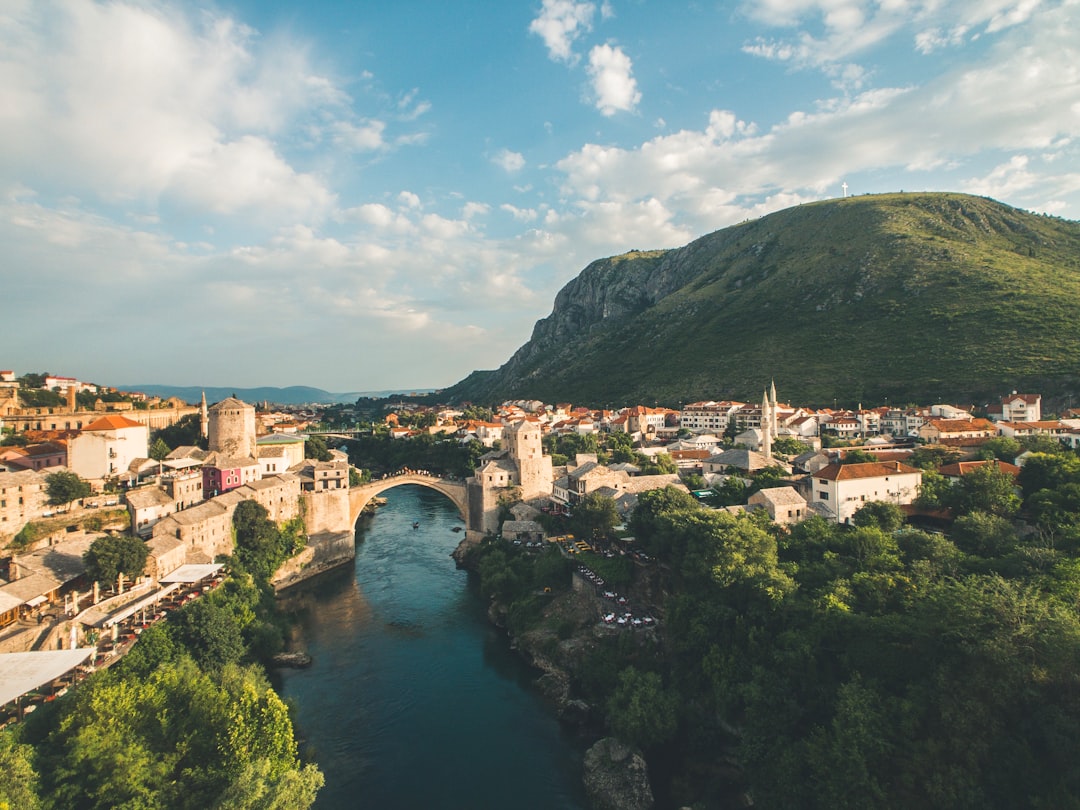
Herzegovina is the sun-drenched southern region of Bosnia and Herzegovina, a land of limestone karst plateaus, turquoise rivers, and medieval towns that sits at an average altitude of around 500 metres above sea level. The region’s unofficial capital, Mostar, was founded in the 15th century and draws over a million visitors annually to its iconic Stari Most bridge. Bordering Croatia and Montenegro, Herzegovina packs extraordinary diversity — from the wine-growing Neretva Valley to the pilgrimage town of Međugorje — into an area roughly 10,000 square kilometres.
Three Things Not to Miss in Herzegovina
- Stari Most, Mostar — The 16th-century Ottoman bridge rebuilt in 2004 arches 21 metres above the emerald Neretva — utterly unmissable.
- Kravice Waterfalls — A 25-metre-high travertine cascade draining into a turquoise swimming lagoon just 40 km from Mostar.
- Blagaj Tekke — A 16th-century Dervish monastery built directly into a cliff face at the source of the Buna river spring.
Scroll down for our complete travel guide with tips on getting there, where to stay, costs and more.
How to Reach Herzegovina
How do I best reach Herzegovina?
Fly into **Mostar Airport (OMO)** or use **Split Airport (SPU)** in Croatia, roughly **60 km** away. In my experience, Split is by far the more practical entry point — it has daily connections from across Europe, while Mostar Airport handles only seasonal charter flights. From Split, a direct bus or rental car gets you to Mostar in about **1.5 hours**. The honest trade-off: entering via Split means crossing an international border, which adds 20–30 minutes and requires a valid passport, not just an EU ID card.
Which airport is closest to Herzegovina?
**Mostar Airport (OMO)** is the closest at just **8 km** from Mostar city centre, but it is largely irrelevant for most travellers. In 2025 it served only a handful of seasonal routes from Germany and Austria. **Split Airport (SPU)** in Croatia, **60 km** southwest, is the real gateway — it connects to over 100 destinations including budget carriers like Ryanair and Wizz Air. My tip: book Split and arrange onward transport; you will save money and have far more flight options. Sarajevo Airport (SJJ) is another option, about **130 km** north, if you plan to combine both regions.
How long is the journey from a major city to Herzegovina?
From **Sarajevo** to Mostar the journey takes **2.5 hours** by road — a scenic but winding route through the Neretva canyon. The daily train connection covers the same distance in about **2 hours 20 minutes** for roughly **BAD 20** (around 10 EUR). From **Split** in Croatia it is **1.5 hours** by car or the twice-daily GlobalBus coach. What surprised me: the official bus timetables between Sarajevo and Mostar are unreliable in winter — services thin out dramatically between November and March, so verify departure times within 48 hours of travel.
Are there direct bus connections to and within Herzegovina?
Yes — direct buses connect **Mostar Bus Station** to Sarajevo, Split, Dubrovnik, and Zagreb daily. Within Herzegovina, local buses link Mostar to **Čapljina**, **Ljubuški**, and **Trebinje**, but frequencies drop to 2–3 departures per day on most routes. I recommend using the **Getbybus** app to check real-time schedules. The honest caveat: there is no direct bus from Mostar to **Međugorje** — you must change at **Čitluk**, adding 45 minutes. Intercity fares are genuinely cheap at **BAD 10–25** (5–12 EUR) for most internal routes.
Is a rental car necessary to explore Herzegovina properly?
Yes, a rental car is strongly recommended for Herzegovina beyond Mostar. The **Kravice Waterfalls**, **Hutovo Blato nature park**, **Počitelj**, and the wine villages of the **Trebižat Valley** are essentially inaccessible without private transport. In my experience, you miss roughly 60% of the region’s highlights relying on buses alone. Expect to pay **BAD 80–150 per day** (40–75 EUR) for a compact car hired in Mostar. The caveat most guides omit: some rental contracts prohibit crossing into Croatia or Montenegro — always check the fine print, as many Herzegovina day trips involve border crossings.
Sleeping in Herzegovina
Which towns make good bases in Herzegovina?
**Mostar** is the undisputed base for most travellers — it sits centrally, has the widest accommodation range, and puts Stari Most, Blagaj, Kravice, and Počitelj all within **40 km**. For a quieter alternative, **Trebinje** in the east is a lovely Baroque-inflected town with far fewer tourists and excellent local wine. I recommend Trebinje as a 2-night add-on rather than a primary base, as it sits **130 km** from the main sights. Budget travellers doing the Dalmatian Coast circuit often base in **Čapljina** — it is cheaper and has good motorway access.
Where should I stay in Herzegovina?
Stay in **Mostar’s Old Town (Stari Grad)** district for atmosphere — waking up to the sound of the muezzin and stepping directly onto cobbled Ottoman streets is worth the slight premium. The streets around **Kujundžiluk bazaar** have guesthouses in restored Ottoman houses starting at **BAD 80 per night** (40 EUR). For comfort and a pool, the **Hotel Mostar** near the Spanish Square is a reliable mid-range choice. What surprised me: the cheapest and most characterful stays are in family-run konobas that have added upstairs rooms — these rarely appear on Booking.com and require direct contact via Facebook.
What does accommodation cost in Herzegovina?
Budget travellers pay **BAD 40–60 per night** (20–30 EUR) in a hostel dorm in Mostar. A solid private room in a family guesthouse runs **BAD 80–140** (40–70 EUR). Mid-range hotels like **Villa Anri** or **Hotel Pellegrino** in Mostar cost **BAD 140–240** (70–120 EUR) per night. In **Trebinje**, prices run about 20% cheaper than Mostar for equivalent quality. The caveat: during the peak weeks of **July and August**, prices in Old Town Mostar jump by 30–40% and supply is tight — do not expect to walk in without a booking.
How far in advance should I book accommodation in Herzegovina?
For **July and August**, book at least **6–8 weeks ahead** for Old Town Mostar, especially for anything with a bridge view. For the shoulder months of **May, June, and September**, 2–3 weeks is usually enough. I recommend booking Old Town guesthouses directly by email to avoid the **15% Booking.com markup** that many smaller properties quietly pass on to guests. The honest warning: Međugorje accommodation books out **12 months in advance** around major Catholic feast days — particularly the **Feast of the Assumption on 15 August** — so plan accordingly if your dates overlap.
When is the best time to visit Herzegovina?
**June and September** are my personal top picks — warm, sunny, and noticeably less crowded than peak July–August. Climate data confirms July is the statistically warmest month, but Mostar regularly hits **40°C** in July, which makes sightseeing genuinely gruelling between 11:00 and 16:00. Spring (April–May) is excellent for the Neretva Valley wildflowers and green karst landscapes. The honest caveat: Herzegovina has one of the highest sunshine hours in the Balkans — over **2,700 hours annually** — so even October visits are often warm and pleasant, with almost no other tourists and lower prices.
When to Travel to Herzegovina
How does the weather in Herzegovina affect activities?
In summer (**June–August**), heat above **38°C** in the Neretva Valley makes midday hiking inadvisable — plan outdoor activities before **10:00** or after **18:00**. The **Kravice Waterfalls** swimming is best in June when water flow is highest; by August the lagoon becomes crowded with up to 3,000 daily visitors. **Rafting on the Neretva** runs from April through October. Winter brings snow to the **Prenj and Čvrsnica mountains** above 1,500 metres, creating a short but genuine ski season around **Čvrsnica**. The honest trade-off: Herzegovina’s limestone karst drains rain fast, so even rainy spring days clear quickly.
Are there local festivals in Herzegovina worth attending?
**Mostar Summer Festival** runs through **July and August** with open-air concerts on the old bridge plaza — entry to most events is free. The **Mostar Bridge Diving Championship** (Red Bull Cliff Diving stop) draws huge crowds in late July; divers leap from **21 metres** which is genuinely spectacular to witness. **Trebinje’s Wine and Culture Festival** in September celebrates local Žilavka white wine with tastings from **BAD 10** entry. The caveat most guides omit: **Međugorje** draws over **2 million pilgrims annually**, and during major feast days the entire region’s roads, restaurants, and accommodation are overwhelmed — factor this in even if you are not a pilgrim.
When does Herzegovina get crowded?
Old Town Mostar is genuinely overcrowded from **mid-June to mid-August**, with Stari Most plaza reaching uncomfortable densities between **10:00 and 18:00** — I counted over 500 people on the bridge deck at noon in July. Tour buses from Dubrovnik and Split arrive daily by **09:30**, so being on the bridge at **07:00** for sunrise means you will have it almost entirely to yourself. **Kravice Waterfalls** becomes a beach party scene with thousands of visitors on July weekends. Međugorje is crowded year-round by pilgrims. The honest relief: **Trebinje**, **Počitelj**, and the **Hutovo Blato** wetlands see a fraction of the visitor numbers even in peak season.
What does a daily budget cost in Herzegovina?
A genuine budget traveller spends **BAD 80–100 per day** (40–50 EUR) covering a hostel dorm, local restaurant meals, and public transport. A comfortable mid-range day — private guesthouse, sit-down meals, one paid attraction — runs **BAD 180–260** (90–130 EUR). In my experience, Herzegovina is one of the most affordable destinations in Europe — a three-course dinner with local wine in Mostar costs around **BAD 30–50** (15–25 EUR) per person. The hidden cost most guides omit: car hire pushes daily budgets up significantly — add **BAD 100–150** per day to any figure if you plan to drive independently.
Is Herzegovina cheaper or more expensive than other Balkan regions?
Herzegovina is cheaper than **Croatia’s Dalmatian Coast** by roughly 30–40% for equivalent meals and accommodation, making it outstanding value by Western European standards. It is broadly comparable to **North Macedonia** and **Albania**, and slightly more expensive than rural Serbia. In my experience, the price-to-quality ratio at local konoba restaurants is exceptional — a grilled lamb platter (jagnjetina) with bread and salad costs **BAD 20–25** (10–12 EUR). The honest caveat: the Old Town tourist strip in Mostar has shifted toward **Croatian kuna** and euro pricing at some souvenir stalls, so always confirm currency before ordering.
Daily Costs in Herzegovina
What free highlights does Herzegovina offer?
Walking **Stari Most** itself is free — there is no entry fee to cross the bridge. The **Kujundžiluk bazaar** street, the **Franciscan bell tower view** (free from outside), and the scenic **Neretva riverbanks** cost nothing. **Počitelj**, a UNESCO-nominated medieval fortified town, charges no entry for the village itself, only **BAD 4** for the citadel tower. In Trebinje, the entire old town (Stari Grad) and the hilltop **Hercegovačka Gračanica monastery** are free to visit. My tip: the most rewarding free experience is simply hiring a local guide for a **3-hour walking tour of Mostar** through the city tourist office for **BAD 20** — cheap for the insight gained.
What do local specialities cost in Herzegovina?
A portion of **ćevapi** (grilled minced meat in flatbread) at a local place like **Tima-Irma** in Mostar costs **BAD 8–12** (4–6 EUR). A glass of local **Žilavka** white wine (Herzegovina’s indigenous grape) runs **BAD 4–8** at a konoba. A full lunch of grilled trout from the Neretva, salad, and bread at a riverside restaurant costs **BAD 20–30** (10–15 EUR). The honest caveat: the tourist strip restaurants immediately adjacent to Stari Most charge 40–60% more than places just **3 streets back** — walk away from the bridge before sitting down, and you immediately eat better and cheaper.
Which route do you recommend for 5–7 days in Herzegovina?
**Day 1–2: Mostar** — arrive, walk Stari Most at dawn, explore Kujundžiluk, visit Koski Mehmed-Paša Mosque. **Day 3: Blagaj and Počitelj** — the Dervish tekke at Blagaj source (**8 km** from Mostar) in the morning, then medieval Počitelj walled town in the afternoon. **Day 4: Kravice Waterfalls and Hutovo Blato** — swim at Kravice, then birdwatch at the wetlands. **Day 5: Trebinje day trip or overnight** — Žilavka winery visits around **Vukoje** or **Čitluk** en route. **Day 6–7: Međugorje + Čapljina region** for wine valley drives. I recommend ending in Trebinje for a quieter final night before heading to Dubrovnik, just **30 km** away.
What are the must-see sights in Herzegovina?
**Stari Most in Mostar** is non-negotiable — the 16th-century bridge is the emotional heart of the entire region and of the country. **Blagaj Tekke**, built in 1520 at the base of a 200-metre cliff beside the Buna spring, is genuinely one of the most atmospheric spots in the Balkans. **Kravice Waterfalls** — a 25-metre travertine horseshoe cascade — is unmissable in spring. **Počitelj** gives you a goosebump-inducing medieval fortified village almost intact. In **Trebinje**, the **Tvrdoš Monastery** (founded in the 4th century) and its wine-producing monks deserve 2 hours. These five cover the essential Herzegovina.
What natural highlights does Herzegovina offer?
Herzegovina’s karst landscape produces some of Europe’s most striking natural scenery. The **Neretva Canyon** between Jablanica and Mostar is a **30-km** drive through sheer limestone walls dropping to an emerald river. **Hutovo Blato** is a 7,411-hectare wetland nature reserve hosting over 240 bird species — one of Europe’s most important migratory bird staging posts. The **Vjetrenica Cave** near Ravno is the longest cave system in Bosnia and Herzegovina at **6.7 km** of mapped passages. For hikers, **Mount Prenj** (peak at 2,102 metres) offers serious multi-day ridge walking with zero crowds. What surprised me: Herzegovina gets significantly more sunshine than the Adriatic coast directly west.
What Not to Miss in Herzegovina
What local specialities should I try in Herzegovina?
**Jagnjetina ispod sača** — lamb slow-roasted under an iron bell-lid buried in embers — is the defining dish of Herzegovina and tastes unlike any other lamb preparation I have eaten. **Žilavka** is the local white grape variety producing mineral, slightly acidic wine grown on limestone around **Mostar and Čitluk** — try it at **Vukoje winery** in Trebinje. **Bregava trout**, farmed in the crystal Bregava river, is served whole, grilled with garlic and herbs. For sweets, **tufahija** (walnut-stuffed poached apple in syrup) is the Ottoman dessert you will find everywhere. Avoid the tourist-trap baklava sold in Kujundžiluk — walk to **Aščinica Tima-Irma** for the real thing.
What activities are available in Herzegovina?
**Rafting on the Neretva** runs April–October; the **Neretva Rafting** company in Konjic offers **18-km full-day trips** from **BAD 80–100** per person. Rock climbing is world-class on the **Čvrsnica limestone walls** near Diva Grabovica. **Mostar Diving Club** runs cliff diving courses from the old bridge platform for brave beginners at **BAD 60 per session**. Wine tourism through the **Neretva Valley** vineyards is increasingly organised. Birdwatching at Hutovo Blato is best in **November–February** for winter migratory species. The honest caveat: adventure tourism infrastructure is improving rapidly but remains less polished than Croatia — always check guide certification before booking outdoor activities.
What distinguishes Herzegovina from other Balkan regions?
Herzegovina’s unique identity comes from its layered heritage: **Illyrian, Roman, medieval Bosnian, Ottoman, and Austro-Hungarian** layers coexist within a few kilometres. It is the only region in Europe where you can visit a working Dervish tekke, a Franciscan monastery, an Orthodox winery, and a UNESCO bridge all within **20 km**. The **karstic Mediterranean microclimate** means figs, pomegranates, and oleanders grow alongside Alpine mountain scenery. In my experience, the hospitality culture here is extraordinary — being invited for home-made rakija within an hour of arriving is not unusual. The honest trade-off: post-war political complexity means infrastructure investment has lagged, and some roads and signage remain frustratingly underdeveloped.
Which day trips are possible from Herzegovina?
**Dubrovnik, Croatia** is just **120 km** from Mostar — doable in **2 hours** by car via the Neum corridor (bring your passport). **Konjic**, with its WWII-era Tito’s nuclear bunker (ARK D-0), is **55 km** north of Mostar and one of the most bizarre Cold War relics in Europe — entry costs **BAD 50** (25 EUR). **Stolac**, with its ancient Illyrian hillfort **Daorson** dating to 400 BC, is **35 km** southeast and barely visited. From Trebinje, **Perast and Kotor in Montenegro** are just **80 km** away. My tip: the Neum coastal strip gives Bosnia its only **9 km** of Adriatic coastline — worth a quick stop even if just for the symbolism.
Are there language barriers in Herzegovina?
Bosnian, Croatian, and Serbian are all official languages in Bosnia and Herzegovina — and they are mutually intelligible; functionally one language with political distinctions. English is spoken well by anyone under **35** in Mostar’s tourist industry, at hotels, and in cafes. Outside Mostar — in villages, at petrol stations, at smaller konobas — expect very little English; German is more useful among the older generation, partly due to the large Herzegovina diaspora in Germany and Austria. In my experience, learning **5 Bosnian words** (hvala = thank you, molim = please, dobar dan = good day) produces a warmth from locals that transforms interactions. Road signs are in Latin and Cyrillic script in some areas.
Before You Go to Herzegovina
Which apps do you recommend for travelling Herzegovina?
**Getbybus** is essential for checking bus routes and times between Mostar, Sarajevo, and Split. **Maps.me** (downloaded offline) is more reliable than Google Maps in rural karst areas with poor signal — I used it daily. **Google Translate** with Bosnian offline pack handles menus and signage. **iOverlander** is useful for wild camping spots on the Prenj plateau. **Booking.com** covers urban hotels but misses the best family guesthouses — supplement with **Facebook groups** like ‟Visit Mostar” where owners post directly. The honest caveat: mobile data coverage drops to zero in multiple valleys — **BH Telecom** has the best rural coverage, so buy their SIM at the airport.
Are there medical facilities in Herzegovina?
Mostar has the **University Clinical Hospital Mostar** — the main referral hospital for all of Herzegovina, capable of handling serious emergencies including trauma surgery. For minor issues, **Dom zdravlja** (health centres) exist in every town including Čapljina, Trebinje, and Konjic. Private clinics in Mostar offer shorter waits; a consultation costs **BAD 60–100** (30–50 EUR). The honest warning: EU citizens cannot use their European Health Insurance Card here — **Bosnia and Herzegovina is not an EU member** — so private travel insurance covering medical evacuation is non-negotiable. The nearest hospital with consistent specialist capacity beyond Mostar is in **Sarajevo, 130 km** north.
How safe is Herzegovina for travellers?
Herzegovina is very safe for tourists by any objective measure — violent crime targeting visitors is essentially unheard of. Mostar’s Old Town is busy enough to be safe even late at night during summer. The primary risks are practical: **landmines remain in mountainous areas** outside marked trails — the BH Mine Action Centre estimates over **1,100 sq km** of Bosnia and Herzegovina remain mine-contaminated as of 2024. Never hike off marked paths on **Prenj, Čvrsnica, or Velež** mountains without a local guide who knows cleared routes. Traffic accidents are statistically the main risk — driving standards on mountain roads are aggressive and road markings are often faded.
What are common traveller mistakes in Herzegovina?
The biggest mistake: **only visiting Mostar** and skipping the rest of the region. Most visitors spend 4 hours on a day trip from Dubrovnik and see nothing beyond Stari Most. The second mistake: **visiting Kravice Waterfalls on a summer weekend afternoon** — arrive before **09:00** or after **17:00** to avoid the peak crowd of thousands. The third mistake: **not carrying convertible marks (BAM)** — despite Herzegovina’s Croatian cultural connections, the KM is the legal currency and many local businesses do not accept euros or Croatian kuna. A fourth mistake: booking only accommodation visible on international platforms, missing the best family guesthouses. Finally, underestimating drive times on mountain roads — **50 km can take 90 minutes**.
Which accommodation types suit Herzegovina best?
**Family-run pansions (guesthouses)** are the definitive Herzegovina accommodation — they typically include a home-cooked breakfast, a terrace with mountain or river views, and hosts who genuinely know the region. In Mostar, look in the **Bulevar and Lučki Most** neighbourhoods for guesthouses away from the noisy tourist core but still walkable to Stari Most in **10 minutes**. **Agrotourism farms** in the Neretva Valley and around **Hutovo** offer an increasingly popular farm-stay format from **BAD 100–160** per night including meals. **Glamping** has arrived at the **Kravice area** with riverside tent camps. The honest caveat: international chain hotels are virtually absent — if you need a guaranteed standard, **Hotel Mepas** in Mostar is the most reliable mid-market option at **BAD 200–280** per night.
Herzegovina at a Glance
| Currency | Bosnia and Herzegovina dinar (BAD) |
|---|---|
| Official language | Bosnian, Croatian, Serbian |
| Time zone | Central European Time |
Source: Wikidata, retrieved September 2026.
Bosnia and Herzegovina › Herzegovina
Essential Resources for Planning Your Trip to Herzegovina
- Exploring Bosnia and Herzegovina’s history and beauty — official visitor information, passes & events
- Wikipedia: Herzegovina — history, geography & background
- Wikivoyage: Herzegovina — community travel guide & practical tips
- Bosnia & Hercegovina travel – Lonely Planet | Europe — expert itineraries & travel inspiration
- Top 30 Things to Do in Bosnia and Herzegovina — hotels, restaurants & traveller reviews
- Exploring Bosnia and Herzegovina’s history and beauty — how to get around
- Numbeo: Cost of Living in Herzegovina — current prices & cost comparison
- Timeanddate: Herzegovina Weather & Climate — forecasts & climate statistics
- Travel without leaving a trace – how to tackle overtourism I …
More Perspectives on Herzegovina
- Bosnia-Herzegovina
- 17 Bosnia & Herzegovina Travel Tips: What to Know …
- Bosnia and Herzegovina Travel Guide
Herzegovina Travel Videos
Watch these videos for a visual preview before your trip:
- 5 PERFECT Days in BOSNIA | Why This Balkan Gem Beats Europe’s Crowded Capitals Blueprint
- Trebinje, Bosnia-Herzegovina: Yugloslavian Diversity – Rick Steves’ Europe Travel Guide
- Best Things to See & Do in Sarajevo | City Guide 🇧🇦
Herzegovina Travel Discussions on Reddit
Real traveller experiences and community advice:
- How is Bosnia as a tourist destination in Europe? : r/travel
- Bosnia – Herzegovina Visit Recommended : r/travel
- Advice for travel to Bosnia and Herzegovina – February 2025
Data Sources
This page was compiled using data from Wikipedia, Wikidata, Open-Meteo (climate), Numbeo (cost of living) and REST Countries. Information is updated regularly.