
Bosnia and Herzegovina: The Complete Travel Guide (2026)
Last reviewed: August 2026 · key facts checked against Wikidata
Bosnia and Herzegovina Travel Guide: Everything You Need to Know (2026)
Bosnia and Herzegovina, home to 3,816,459 people, sits at the crossroads of the Balkans where Ottoman, Austro-Hungarian, and Slavic cultures collided for centuries — and the scars and splendors of that collision are visible on every street corner. Sarajevo, the capital, sits in a valley at roughly 500 meters altitude and was famously the site of the 1984 Winter Olympics. The country shares borders with Serbia, Montenegro, and Croatia, and squeezes in a tiny 20-kilometer Adriatic coastline at Neum — one of Europe’s most surprising geographic quirks.
Three Things Not to Miss in Bosnia and Herzegovina
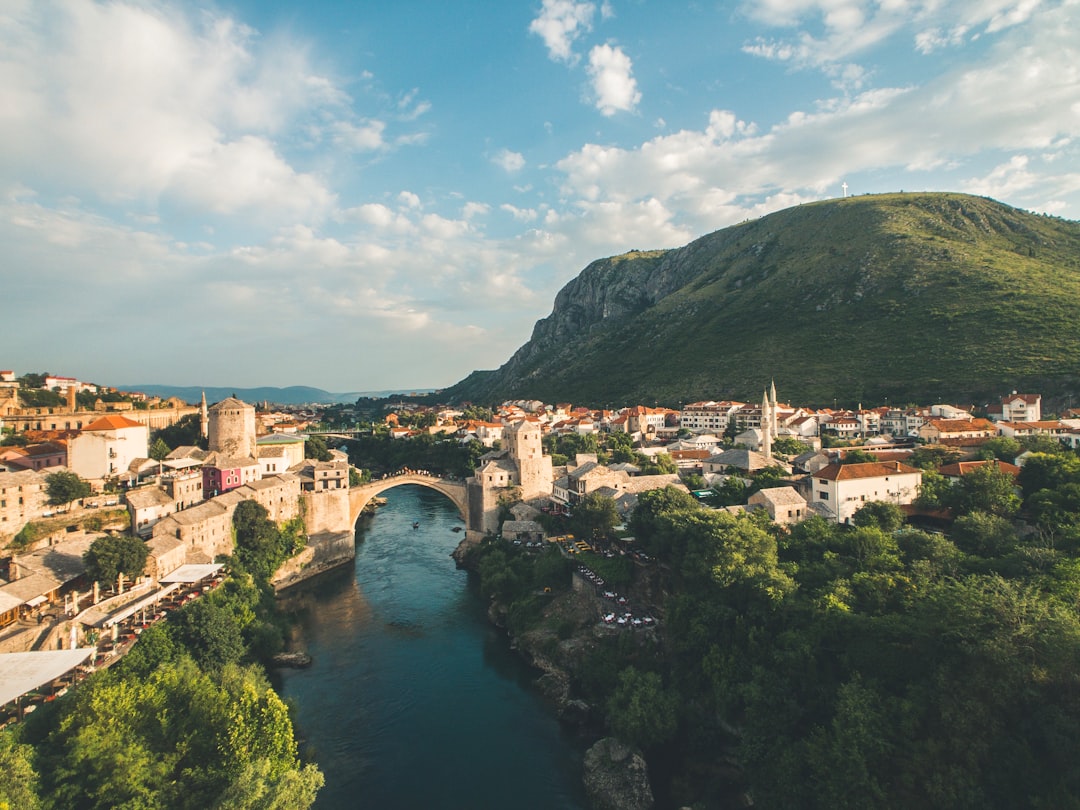
- Stari Most, Mostar — The 16th-century Ottoman bridge rebuilt in 2004 spans the Neretva at 21 meters — divers still leap from it daily.
- Sarajevo’s Baščaršija Bazaar — A 15th-century Ottoman marketplace where coppersmiths still hammer by hand in the same workshops as 500 years ago.
- Kravice Waterfalls — A 25-meter-tall travertine waterfall cascade just 40 km from Mostar that most visitors to Croatia’s Plitvice never discover.
Scroll down for our complete travel guide with tips on getting there, where to stay, costs and more.
Getting to Bosnia and Herzegovina & Getting Around
Which airports are the best entry points into Bosnia and Herzegovina?
Sarajevo International Airport (SJJ) is the primary gateway, sitting just 7 km from the city center. In my experience, it handles the widest range of international connections including Wizz Air, Turkish Airlines, and Austrian Airlines. For southern Bosnia and Mostar, Split Airport (SPU) in Croatia — roughly 140 km away — is a practical alternative, especially if you plan to start your trip on the Dalmatian coast. Dubrovnik Airport (DBV) is another option at about 180 km from Mostar. The caveat most guides omit: Tuzla Airport (TZL) receives budget flights from the Bosnian diaspora in Europe and can be surprisingly cheap — I recommend checking it if you are flexible on arrival city.
How do I get from the airport to my first accommodation in Bosnia and Herzegovina?
The fastest option from Sarajevo Airport (SJJ) is a taxi — expect to pay 15–20 BAM (roughly $8–11 USD) for the 10-minute drive to Baščaršija in the old town. My tip: use the official airport taxi rank or the Bolt app, which operates in Sarajevo and is significantly cheaper than random cabs. There is also a public bus — route 36 — running to the city for under 2 BAM, taking about 30 minutes. What surprised me: there is no dedicated airport train or tram, unlike many European capitals, so do not count on rail. The honest caveat is that unlicensed drivers at arrivals will quote double the fair rate — walk past them.
What transport options are there within Bosnia and Herzegovina?
Bosnia and Herzegovina has three main internal transport modes: intercity buses, a limited rail network, and rental cars. The bus network is the backbone — private companies run frequent routes between Sarajevo, Mostar, Banja Luka, and Tuzla, with tickets typically costing 10–25 BAM ($5–14 USD) depending on distance. Trains exist but are slow and infrequent; the Sarajevo–Mostar rail route (about 2.5 hours) is scenic but runs only a few times daily. In my experience, renting a car is the single best decision for anyone wanting to reach waterfalls, canyons, and villages beyond the main cities. The caveat: road quality varies dramatically — mountain roads near Jablanica can be narrow and poorly signed.
Do I need a rental car in Bosnia and Herzegovina?
Yes, for most itineraries a rental car is essential. Major cities like Sarajevo and Mostar are walkable and connected by bus, but 90% of the country’s best scenery — including Sutjeska National Park, the Rakitnica Canyon, and the village of Lukomir — is unreachable without private transport. I recommend hiring from Sarajevo Airport where local agencies like Europcar and Sixt operate; expect to pay 40–70 BAM ($22–39 USD) per day for a compact car. The honest warning most guides skip: Green Card insurance is mandatory and some budget agencies sell inadequate coverage — verify you have full third-party liability before driving across borders into Montenegro or Croatia. Fuel is currently around 2.80 BAM per liter.
How good is the public transport network between regions in Bosnia and Herzegovina?
The intercity bus network is functional but not seamless. Sarajevo’s East Bus Station connects to most major towns with departures every 1–2 hours on popular routes. The Sarajevo–Mostar bus takes 2.5 hours and costs around 20 BAM ($11 USD). Regional rail is largely a disappointment — the Sarajevo–Banja Luka rail journey takes over 5 hours for a distance of 250 km, making bus the clear winner. What surprised me: there is virtually no direct public transport to destinations like Blagaj, Počitelj, or Kravice Falls — you either join a tour or rent a car. My tip: book bus tickets at the station the day before during summer, as popular routes to Mostar sell out by mid-morning.
Where to Stay in Bosnia and Herzegovina
Which regions should I stay in while visiting Bosnia and Herzegovina?
Sarajevo is the non-negotiable base for first-time visitors — the Baščaršija old town district puts you within walking distance of the city’s most important historic sites. Mostar in Herzegovina is the second essential base, particularly for exploring the Neretva Valley, Blagaj Tekke, and day trips to Kravice. I recommend splitting a week roughly 4 nights Sarajevo, 3 nights Mostar. For adventure travelers, Bihać in the Una-Sana Canton is superb for rafting the Una River and accessing Una National Park. The honest caveat: Banja Luka in Republika Srpska is Bosnia’s second-largest city but sees a fraction of tourists and has less tourist infrastructure — rewarding for the independent traveler but challenging without Serbian-language skills.
What does good accommodation cost per night in Bosnia and Herzegovina?
Bosnia and Herzegovina remains one of Europe’s best-value destinations for accommodation. A well-reviewed mid-range hotel in central Sarajevo — such as those near Ferhadija Street — runs 80–130 BAM ($44–72 USD) per night. Boutique guesthouses in Mostar’s old town cost 60–100 BAM ($33–55 USD). Budget hostels in Baščaršija offer dorm beds for as little as 20–30 BAM ($11–17 USD). In my experience, family-run pansions (B&Bs) offer exceptional value — home-cooked breakfast included — for around 50–70 BAM. The caveat most booking sites hide: the top-rated properties in Mostar’s old town have steep stairs and no elevator — a real problem if you have heavy luggage or mobility issues.
When should I book hotels in Bosnia and Herzegovina — how far in advance?
For July and August, book at least 6–8 weeks in advance for Mostar’s old town hotels — the best 15–20 properties fill completely. Sarajevo is slightly more forgiving, but I recommend booking 4 weeks ahead for summer. Shoulder season (May, June, September) requires 2–3 weeks notice for most properties. The honest warning: Mostar sees day-tripping tour groups from Dubrovnik arriving between 10am and 3pm daily in peak season — if you want the bridge and the old town to yourself, staying overnight is the move, and those overnight spots go fast. For winter travel, same-week booking is usually fine, though some guesthouses in smaller towns close November through March.
When is the best time to travel to Bosnia and Herzegovina?
Based on climate analysis, June, July, August, and September are the optimal travel months. My personal preference is early June or September — temperatures in Sarajevo sit around a comfortable 22–26°C, crowds are lighter than peak July, and the landscape is lush or golden. July and August are the hottest and busiest, with Mostar regularly hitting 38°C in the valley — brutal for sightseeing midday. Winter in Sarajevo can be spectacular — the city hosted the 1984 Winter Olympics, and ski resorts Jahorina and Bjelašnica are just 30 km away. The caveat: January–February sees heavy snowfall that can close mountain passes entirely, so plan road trips conservatively.
How does peak season affect prices in Bosnia and Herzegovina?
Peak season (July–August) drives hotel prices in Mostar up by 30–50% compared to May or October. A guesthouse costing 60 BAM in April may charge 90 BAM in August for the same room. Restaurant prices in the Mostar old town tourist zone inflate noticeably — a grilled trout that costs 12 BAM on a side street costs 22 BAM facing the bridge. In my experience, Sarajevo is more price-stable year-round because it draws business travelers not just tourists. The honest trade-off: traveling in peak season means the country is at its most alive — outdoor festivals, packed café terraces, evening atmosphere — so the premium can be worth it if you book well ahead.
Best Time to Visit Bosnia and Herzegovina
Which regions of Bosnia and Herzegovina have different climate zones?
Bosnia and Herzegovina has three distinct climate zones in a surprisingly compact area. Central and northern Bosnia (including Sarajevo at 500m altitude) has a continental climate — cold winters with heavy snow and warm summers. Herzegovina (Mostar, Trebinje) has a Mediterranean-influenced climate — hot, dry summers reaching 38–40°C and mild winters. The Dinaric Alps corridor — covering Sutjeska National Park and areas around Foča — is subalpine with heavy snowfall from November to April and cool summers even in July. What surprised me: you can sunbathe in Trebinje in November while Sarajevo sits under 10cm of snow just 120 km away. Pack layers if crossing regions.
What are the rainy seasons in Bosnia and Herzegovina?
Bosnia and Herzegovina does not have a single rainy season — patterns differ sharply by region. Central Bosnia and Sarajevo receive the most precipitation in May–June and October–November, with spring rains often lasting days at a time. Herzegovina (Mostar, Trebinje) is generally drier, with most rain falling in November through January and dry summers. The mountain zones — particularly around Sutjeska — receive heavy snowfall rather than rain from December through March. My tip: spring rain in the countryside turns the landscape a vivid green and fills the waterfalls at Kravice to full power — if you do not mind a shower, May is genuinely beautiful. Carry a compact waterproof jacket regardless of season.
What does a trip to Bosnia and Herzegovina cost per person per day?
Bosnia and Herzegovina is one of Europe’s most affordable countries. A budget traveler staying in hostels, eating at local ćevabdžinice (kebab joints), and using buses can get by on 50–70 BAM ($28–39 USD) per day. A mid-range traveler in a guesthouse, eating two restaurant meals, and doing one paid attraction should budget 130–180 BAM ($72–100 USD). A comfort traveler in a boutique hotel with guided tours and dinners with wine should plan for 250–350 BAM ($140–195 USD). What surprised me: entrance fees are minimal — Baščaršija, the War Tunnel, and most mosques cost under 10 BAM combined — so activities rarely blow the budget. Food and drink are where Bosnia genuinely undercuts every Western European destination.
How expensive is food in Bosnia and Herzegovina?
Food in Bosnia and Herzegovina is remarkably affordable. A portion of ćevapi (grilled minced-meat sausages) with bread and onion — the national street food — costs 5–8 BAM ($3–4.50 USD) at a local spot. A full sit-down lunch with soup, main course, and a local beer at a non-tourist restaurant runs 15–25 BAM ($8–14 USD). In my experience, Sarajevo’s Ferhadija area and Mostar’s old town have tourist-priced menus at 30–50 BAM per head — walk two streets away and prices halve. A Bosnian coffee costs 1.50–2 BAM; a 0.5L draught beer is 3–5 BAM. The honest caveat: fish and seafood in landlocked Sarajevo is flown in and priced accordingly — stick to meat and dairy dishes for the best value.
What hidden costs should I expect in Bosnia and Herzegovina?
Several costs catch travelers off guard. Tourist tax (boravišna taksa) of 1–2 BAM per person per night is often added at checkout and not shown in online prices. Road tolls on the A1 motorway between Sarajevo and Mostar add up to 10–15 BAM each way if you drive. Many ATM machines in rural areas charge a 3–5 BAM flat withdrawal fee on top of your bank’s foreign exchange fee — I recommend withdrawing larger amounts in Sarajevo or Banja Luka where bank-owned ATMs (Raiffeisen, UniCredit) are free or cheaper. Guided tours to sensitive war-era sites like the Srebrenica Memorial typically cost 50–100 BAM but are worth every pfennig for the context they provide.
What a Trip to Bosnia and Herzegovina Costs
How much cash should I bring to Bosnia and Herzegovina?
Bring enough cash to cover your first 48 hours, roughly 100–150 BAM ($55–83 USD). ATMs are plentiful in Sarajevo, Mostar, and Banja Luka but sparse in rural areas like Sutjeska National Park or the village of Lukomir — there are literally no ATMs there. The currency is the Bosnian Convertible Mark (BAM), pegged to the euro at 1 EUR = 1.956 BAM — a rate that has not changed in decades. My tip: exchange euros directly; the rate is fixed and transparent at any bank or exchange office. The caveat: Croatian kuna and Serbian dinar are not accepted, so sort your currency at the border or airport if crossing from neighboring countries.
Which credit cards are accepted in Bosnia and Herzegovina?
Visa and Mastercard are widely accepted in hotels, mid-range restaurants, and larger shops in Sarajevo and Mostar. In my experience, smaller ćevabdžinice, market stalls, and rural guesthouses are cash-only — do not assume card payment is possible outside main cities. American Express is accepted at fewer than 20% of card-accepting venues and I would not rely on it. Contactless payment is available at supermarkets like BH Pošta-affiliated shops and Konzum but is not universal. The honest warning: Bosnia and Herzegovina has a strong cash culture — even some mid-range restaurants in the old town of Mostar will apologize and ask for cash. Always carry at least 30–50 BAM on your person.
Which regions of Bosnia and Herzegovina must I not miss?
Three regions are genuinely unmissable. Sarajevo Canton — the capital valley — delivers the most concentrated cultural depth in the Balkans: Ottoman mosques, Austro-Hungarian architecture, and war-era sites within 2 km of each other. Herzegovina, centered on Mostar and the Neretva Valley, is visually spectacular — limestone canyons, emerald rivers, and the medieval Počitelj fortress. Una-Sana Canton in the northwest is Bosnia’s outdoor adventure jewel: Una National Park covers 198 km² of cascading rivers where rafting and kayaking operate May through September. What surprised me: Sutjeska National Park in eastern Bosnia — home to Perućica, one of Europe’s last primeval forests — rivals anything in Croatia or Slovenia but receives a fraction of the visitors.
What are the tourist highlights of Bosnia and Herzegovina?
The absolute highlights are: Stari Most (Old Bridge) in Mostar — the 16th-century Ottoman arch rebuilt in 2004 after wartime destruction; Sarajevo’s Baščaršija — a 15th-century bazaar district where you can drink coffee, buy copperware, and visit the Gazi Husrev-beg Mosque built in 1531; the War Tunnel Museum (Tunel D-B) — a preserved section of the 800-meter tunnel that saved Sarajevo during the 1992–1995 siege; Blagaj Tekke — a 16th-century Dervish monastery built into a cliff face above a spring outputting 43 cubic meters of water per second; and Jajce — a medieval royal capital with a waterfall literally inside the town center. Each site has genuine emotional and historical weight.
What experiences in Bosnia and Herzegovina are found nowhere else?
Bosnia and Herzegovina offers experiences that are genuinely unreplicable. Bosnian coffee (bosanska kafa) — served in a džezva with a sugar cube and a sweet — is not Turkish coffee; it is a slower, more social ritual, and drinking it correctly in a Baščaršija kafana is a cultural rite of passage. The bridge-diving tradition at Stari Most has been practiced for over 450 years — the Mostari diving club trains divers for up to a year before their first jump from 21 meters. Visiting the Srebrenica-Potočari Memorial and Cemetery — where 8,372 genocide victims are buried — is one of the most profoundly moving experiences in all of Europe. Nothing compares. My honest warning: do not treat it as a tourist tick — come with time, silence, and respect.
Regions & Highlights of Bosnia and Herzegovina
Which areas of Bosnia and Herzegovina are overcrowded — and what are quieter alternatives?
Stari Most and the Mostar old town are genuinely heaving between 10am and 4pm in July–August, with thousands of day-trippers from Dubrovnik and Split arriving by bus. My alternative: base yourself in Mostar overnight and visit the bridge at 7am or after 8pm when the light is magical and the crowds are gone. Sarajevo’s Baščaršija also gets congested at midday in summer. The quieter alternative: the Yellow Fortress (Žuta tabija) above the old town offers panoramic views and is rarely crowded even in peak season. For completely off-track Bosnia, head to Trebinje in southern Herzegovina — a beautiful small city with a 17th-century old town, vineyards, and monasteries that sees a fraction of Mostar’s traffic.
How many days do I need in Bosnia and Herzegovina?
7 days is the minimum to do Bosnia and Herzegovina meaningful justice. I recommend: 3–4 days in Sarajevo (war history, Ottoman quarter, day trip to Jahorina or Lukomir village), 2–3 days in Mostar and Herzegovina (Stari Most, Blagaj, Kravice, Počitelj), and 1–2 days in Una National Park or Jajce if time allows. A 10–12 day trip lets you add Sutjeska National Park and Trebinje without rushing. The honest caveat: Bosnia is deceptively large for its size — mountain roads between regions take 2–3 hours for distances that look short on a map. I have met travelers who planned 3 days thinking it was like a city break and deeply regretted not staying longer.
Do I need a visa to enter Bosnia and Herzegovina?
Citizens of the EU, USA, UK, Canada, Australia, and most European countries do not need a visa for stays up to 90 days within a 180-day period. Bosnia and Herzegovina is not an EU or Schengen member, so your Schengen days are counted separately — useful if combining Bosnia with Croatia or Montenegro. My tip: register with local police within 24 hours of arrival if staying in private accommodation — hotels do this automatically, but private apartment hosts sometimes forget, and technically you are responsible. The honest warning: passport control at Sarajevo Airport can be slow — I have waited 45 minutes in the non-EU queue during busy summer arrivals. Check entry requirements at mvp.gov.ba for your specific nationality before 2026.
What languages are spoken in Bosnia and Herzegovina?
Bosnia and Herzegovina has three official languages — Bosnian, Croatian, and Serbian — which are mutually intelligible and nearly identical in practice, written in both Latin and Cyrillic scripts depending on the region. English is spoken well in Sarajevo and Mostar, especially by anyone under 40 in the tourism and hospitality industry. In my experience, asking for directions in rural Una-Sana Canton or eastern Bosnia without any Slavic language knowledge can be genuinely challenging — older locals rarely speak English. German is surprisingly useful in Federation areas due to the large Bosnian diaspora in Germany and Austria. My tip: learn five phrases — hvala (thank you), molim (please), dobar dan (good day), koliko košta (how much), and izvini (excuse me) — they open extraordinary warmth.
What cultural rules do I need to know before visiting Bosnia and Herzegovina?
Bosnia and Herzegovina is a predominantly Muslim-majority country in the Federation entity, though practice varies widely from secular to devout. Dress modestly when entering mosques — cover your head (women), remove shoes, and cover knees and shoulders (all genders). The Gazi Husrev-beg Mosque in Sarajevo provides coverings at the door. During Ramadan (dates shift annually — check for 2026), eating or drinking in public during daylight hours in more conservative areas is disrespectful. The honest caveat most guides omit: Bosnia has two entities — the Federation of Bosnia and Herzegovina and Republika Srpska — with distinct political identities and sensitivities. Avoid casually making political statements about the 1990s war; emotions remain raw and personal for almost every local family.
Practical Tips for Bosnia and Herzegovina
How safe is Bosnia and Herzegovina?
Bosnia and Herzegovina is very safe for tourists — petty crime rates are low even by European standards. Sarajevo and Mostar are safer than most Western European capitals for street crime. In my experience, the main genuine safety risk is unexploded landmines in forested mountain areas — an estimated 67,000 mines still contaminate rural land post-war. Stick to marked paths in national parks and never walk off-trail in unfamiliar countryside. The BHMAC (Bosnia and Herzegovina Mine Action Centre) marks danger areas with red-and-yellow signs — take these seriously. Traffic is the other real risk — local driving is aggressive by Nordic or UK standards, and mountain roads demand full attention. Do not hike unmarked terrain near the Serbian or Montenegrin border regions.
What health precautions should I take before visiting Bosnia and Herzegovina?
No vaccinations are mandatory, but hepatitis A and typhoid are recommended if you plan to eat at rural market stalls or drink from springs. Tap water is safe in Sarajevo and Mostar — I drink it without issue. In mountain areas, spring water from marked community fountains is generally safe, but treat it if the source is unknown. Tick-borne encephalitis is a real risk if hiking in forested areas — the Sutjeska and Una National Parks have tick populations from April through October; use repellent and check yourself daily. EHIC cards from EU countries are accepted at public hospitals, but coverage is partial — travel insurance with €50,000 medical evacuation cover is strongly recommended. The nearest trauma center to Sutjeska National Park is over 90 minutes away.
What SIM card or eSIM options are available in Bosnia and Herzegovina?
Bosnia and Herzegovina is not in the EU roaming zone, meaning your EU free-roaming SIM will likely charge extra here — check with your provider before arrival. Local SIM cards from BH Telecom (strongest coverage in Federation areas) and m:tel (better in Republika Srpska) are available at Sarajevo Airport and major city shops for around 10–15 BAM ($6–8 USD) including starter credit. eSIM options from providers like Airalo work well — I recommend buying before arrival for convenience, with a 1GB plan costing around $4.50 USD. The honest caveat: coverage in Sutjeska National Park, Lukomir village, and the Una canyon is patchy to nonexistent — download offline Maps.me or Google Maps before heading rural. WhatsApp calling over WiFi is your backup.
Which apps do you recommend for traveling in Bosnia and Herzegovina?
My essential app stack for Bosnia and Herzegovina: Bolt for ride-hailing in Sarajevo and Mostar — significantly cheaper than taxis; Maps.me for offline navigation, especially on mountain roads where Google Maps loses signal; Google Translate with Bosnian/Serbian downloaded offline for menus and signs; Booking.com for accommodation (widest selection of local pansions); and GetByBus for booking intercity bus tickets in advance online. What surprised me: Wikivoyage has unusually detailed Bosnia coverage for a free resource — bookmark it for regional itinerary planning. For the war-history context, the audio guide app from Sarajevo War Tours is outstanding and covers 22 locations in the city at your own pace for 15 BAM.
What are the most common traveller mistakes in Bosnia and Herzegovina?
The biggest mistake: underestimating travel times between regions — the 130 km from Sarajevo to Mostar takes 2.5 hours by road due to mountain passes, not 90 minutes as a glance at the map suggests. Second: only visiting Mostar for 2 hours as a Dubrovnik day trip — the city deserves an overnight stay minimum. Third: ignoring Republika Srpska entirely — travelers who skip Banja Luka, Trebinje, or Višegrad miss half the country’s complexity. Fourth: exchanging currency at hotel desks — rates are 5–8% worse than bank offices. Fifth: hiking off marked trails without checking mine clearance status — this is not a theoretical risk. My tip: always tell your guesthouse host your hiking plans; local knowledge about safe trail conditions is invaluable and freely given.
Bosnia and Herzegovina at a Glance
| Population | 3,816,459 |
|---|---|
| Currency | convertible mark (KM) |
| Official language | Bosnian, Croatian, Serbian |
| Time zone | Central European Time |
Source: Wikidata, retrieved August 2026.
Essential Resources for Planning Your Trip to Bosnia and Herzegovina
- Exploring Bosnia and Herzegovina’s history and beauty — official visitor information, passes & events
- Wikipedia: Bosnia and Herzegovina — history, geography & background
- Wikivoyage: Bosnia and Herzegovina — community travel guide & practical tips
- Bosnia & Hercegovina travel – Lonely Planet | Europe — expert itineraries & travel inspiration
- Top 30 Things to Do in Bosnia and Herzegovina — hotels, restaurants & traveller reviews
- Exploring Bosnia and Herzegovina’s history and beauty — how to get around
- Numbeo: Cost of Living in Bosnia and Herzegovina — current prices & cost comparison
- Timeanddate: Bosnia and Herzegovina Weather & Climate — forecasts & climate statistics
- Supporting local tourism in the Old City of Mostar, Bosnia …
More Perspectives on Bosnia and Herzegovina
- Bosnia Travel Guide: What I Wish I Knew (2024)
- A one week Bosnia and Herzegovina itinerary
- How is Bosnia as a tourist destination in Europe? : r/travel
Bosnia and Herzegovina Travel Videos
Watch these videos for a visual preview before your trip:
- BOSNIA & HERZEGOVINA TRAVEL (2024) | 15 Beautiful Places To Visit In Bosnia & Herzegovina
- Best Places to Visit in Bosnia and Herzegovina – Travel Guide
- The Don’ts of Bosnia & Herzegovina – What to Know about Bosnia
Bosnia and Herzegovina Travel Discussions on Reddit
Real traveller experiences and community advice:
- How is Bosnia as a tourist destination in Europe? : r/travel
- Bosnia – Herzegovina Visit Recommended : r/travel
- Advice for travel to Bosnia and Herzegovina – February 2025
Data Sources
This page was compiled using data from Wikipedia, Wikidata, Open-Meteo (climate), Numbeo (cost of living) and REST Countries. Information is updated regularly.