
Alghero: The Complete Travel Guide (2026)
Alghero Travel Guide: Everything You Need to Know (2026)
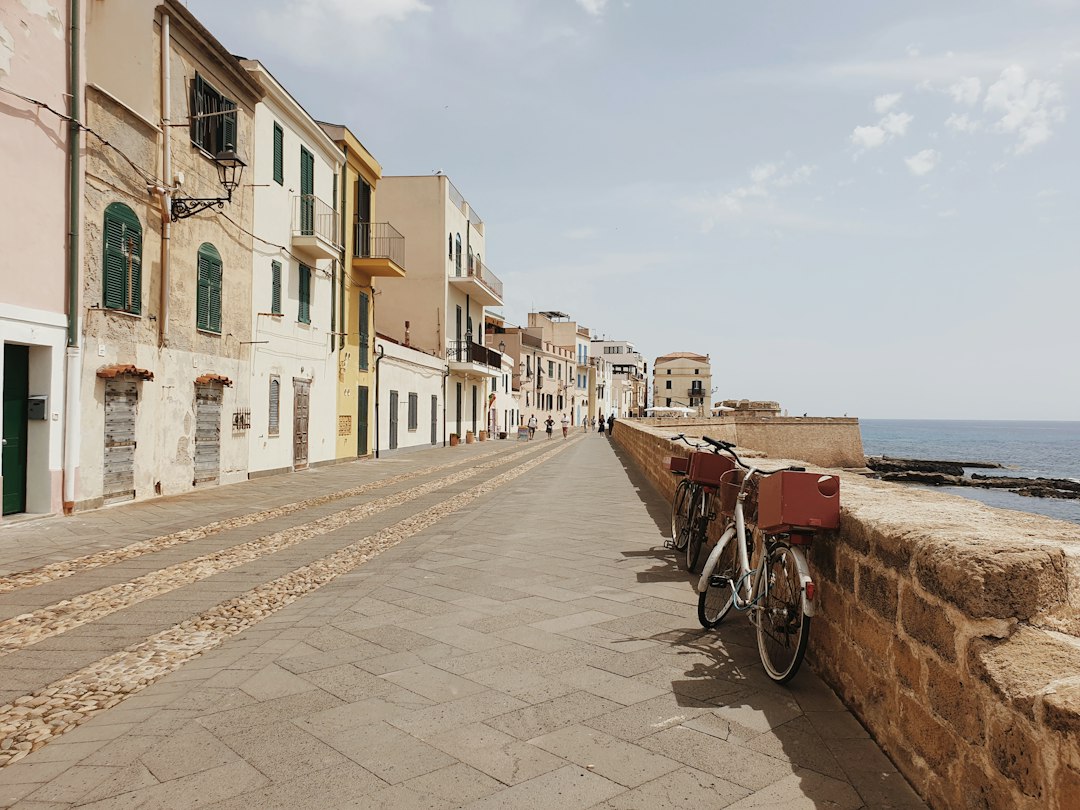
Alghero sits on the northwest coast of Sardinia at just 7 metres above sea level, a walled medieval city of 42,281 residents where Catalan — not just Italian — is still spoken on the streets. Founded by the Doria family of Genoa in the 12th century and later seized by Aragon in 1353, it remains one of the most distinctively Catalan cities outside Spain. The old town juts into the Mediterranean on a small limestone promontory, making it one of the best-preserved coral-fishing ports in the entire western Mediterranean.
Three Things Not to Miss in Alghero
- Alghero’s Walled Old Town (Centro Storico) — Seven intact Aragonese towers and coral-pink sandstone ramparts encircle a car-free labyrinth dating to the 14th century.
- Grotta di Nettuno (Neptune’s Grotto) — A 4-km-deep sea cave system accessible only by boat or 654 steep steps, hiding a stalactite cathedral 110 metres underground.
- Spiaggia delle Bombarde — Three kilometres of white-sand beach backed by juniper scrub, just 7 km from the old town and rated among Sardinia’s finest.
Scroll down for our complete travel guide with tips on getting there, where to stay, costs and more.
Arriving in Alghero: Airport & Transfers
How do I best get to Alghero?
Fly directly into **Alghero-Fertilia Airport (AHO)**, just **11 km** from the old town — it handles direct flights from across Europe, especially on Ryanair. In my experience, this is by far the easiest entry point. **Bus line AF** (ARST/ATP) runs from AHO to the city centre in **25 minutes** for around **€1.30**. Taxis cost **€25–€30** for the same journey. Alternatively, fly into **Cagliari Elmas (CAG)**, 220 km south, then take a **3.5-hour bus or train** — viable but tiring. My tip: book AHO flights 6–8 weeks out as summer routes sell out fast and prices spike above €150 each way.
Which airport is closest to Alghero?
**Alghero-Fertilia Airport (AHO)** is the closest, at just **11 km** from Alghero’s Porta Terra city gate — roughly a **15-minute taxi ride**. What surprised me is how international this small airport actually is: Ryanair, easyJet, and Volotea all fly direct from London, Barcelona, Milan, and Frankfurt. The terminal is compact, so arrivals are fast. The honest caveat: AHO has limited winter routes, so if you travel between **November and March**, you may be forced to route via **Cagliari (CAG)** or **Olbia Costa Smeralda (OLB)**, adding 2–4 hours to your journey.
How long does the journey to Alghero take from major Italian cities?
From **Rome**, the fastest option is a direct flight to **AHO** in approximately **1 hour 20 minutes**, with fares from **€40–€80** booked in advance. From **Milan Malpensa**, expect **1 hour 10 minutes** by air. Overland from the Italian mainland is not realistic — you’d need a ferry from Civitavecchia or Genova to Olbia or Porto Torres, then 1.5–2 hours of driving. The **Genova–Porto Torres** overnight ferry takes **11 hours** and is a genuinely scenic experience. My tip: Porto Torres is only **35 km** from Alghero, making it a smart ferry entry point if you’re bringing a car.
Do I need a rental car to explore Alghero?
For the old town itself, absolutely not — **Alghero centro storico is entirely walkable** within 20 minutes end-to-end. But I strongly recommend renting a car if you plan to visit beaches like **Spiaggia di Porto Ferro** (22 km north) or the **Bosa coastal road** (45 km south), because bus connections are infrequent outside summer. Car rental from AHO starts at **€35–€50 per day** for a small vehicle in shoulder season, rising to **€70–€100+ in July–August**. The honest caveat: parking inside the old town is nearly impossible in summer. Use the free **Parcheggio La Pace** lot and walk 5 minutes in.
Getting Around Alghero
What are the best areas to stay in Alghero?
I recommend staying in or immediately adjacent to the **centro storico** (old town) for atmosphere — narrow coral-stone alleys, sea views from the ramparts, and every restaurant within walking distance. For families or beach-focused trips, the **Lido district** (1.5 km north along Lungomare Valencia) puts you steps from the main town beach. Budget travellers often base themselves in **Fertilia**, 6 km away — a quieter planned village from the Fascist era with cheaper hotels and direct bus access. Avoid booking along the **SS291 highway corridor**; the accommodation is cheaper but you’ll need a car for everything and the noise is constant.
What does accommodation cost per night in Alghero?
A clean, centrally located **3-star hotel in the old town** costs **€80–€130 per night** in shoulder season (May, October). Peak summer (July–August) pushes the same rooms to **€160–€220**. Self-catering apartments — which I personally prefer in Alghero — run **€60–€110 per night** for a one-bedroom in spring, and **€130–€180** in August. Budget options like **B&Bs near Via Cavour** can be found for **€50–€70** outside peak season. The honest caveat: Alghero has very limited true budget hostel accommodation — the single hostel in town books out by March for summer, so dorm beds at **€25–€35** disappear early.
How far in advance should I book accommodation in Alghero during high season?
Book **at least 3–4 months ahead** for July and August — this is non-negotiable for Alghero. What surprised me is that the real pinch point is not just hotels but the entire accommodation stock: apartments on **Booking.com and Airbnb** in the old town often show zero availability by April for peak summer weeks. For **June and September** (excellent weather, fewer crowds), **6–8 weeks** ahead is usually sufficient. I recommend: lock in accommodation before buying flights, because last-minute options in August shrink to overpriced rooms in **Fertilia** or **Olmedo** (10 km inland). October and May? You can book **2 weeks out** comfortably.
Are there special or unique accommodation types in Alghero worth considering?
Yes — **masseria stays** (Sardinian farmhouses) within 15–25 km of Alghero offer an authentic alternative. Properties around **Villanova Monteleone** and the **Nurra plateau** combine olive groves, sea views, and home-cooked Sardinian dinners for **€90–€150 per night** including breakfast. Inside the old town, several **historic palazzi** have been converted into boutique hotels — **Hotel Angedras** on the ramparts is a standout for its sea-facing terrace. My tip: search for **agriturismo** listings on **Agriturismo.it** rather than generic booking platforms — you’ll get better prices and direct contact with owners who can arrange cooking classes and winery tours.
Where to Stay in Alghero
What are the absolute must-sees in Alghero?
Three sights I consider unmissable: First, **Neptune’s Grotto (Grotta di Nettuno)** at Capo Caccia — a sea cave of extraordinary scale, reached by boat from the port (**€15 return, 1 hour**) or via 654 steps called the **Escala del Cabirol**. Second, the **Aragonese city walls and towers**, especially at sunset when the sandstone glows orange — Torre di Sulis and Torre dello Sperone are the finest viewpoints. Third, the **nuraghe ruins of Palmavera**, just 11 km from town — a Bronze Age megalithic village dating to **1500 BC** that most visitors walk straight past. Entry costs just **€5** and you’ll likely have it nearly to yourself outside summer.
What can I experience for free in Alghero?
Quite a lot, actually. Walking the **full circuit of the medieval ramparts** (about 1.5 km) costs nothing and delivers the best sea panoramas in Alghero. The **Cattedrale di Santa Maria** on Piazza Duomo is free to enter outside mass times — the Gothic-Aragonese apse from 1510 is genuinely stunning. **Spiaggia del Lido** (the main town beach) has no entry charge. The weekly **Wednesday market at Piazza del Mercato Civico** is free to browse and the best place to find local coral jewellery at non-tourist prices. My tip: the sunset walk along **Lungomare Dante** from the port to the Lido costs nothing and beats any paid viewpoint in town.
What day trips are possible from Alghero?
The **Bosa day trip** (45 km south, 1 hour by car) is my top recommendation — a pastel-painted medieval river town with a Malaspina castle and one of Sardinia’s last **griffon vulture colonies**. Drive the coastal SS291 and you’ll pass some of the island’s most dramatic cliff scenery. **Sassari** (35 km northeast) is Sardinia’s second city and worth 4 hours for its baroque cathedral and **Museo Nazionale Sardo**. For nature, **Lago Baratz** (20 km north) is Sardinia’s only natural freshwater lake, backed by **Porto Ferro beach** — a wild, crowd-free alternative to busier spots. All three are comfortable as day trips without overnight stays.
What local specialities should I eat in Alghero?
Alghero’s signature dish is **aragosta alla catalana** — Catalan-style lobster served cold with tomato, onion, and olive oil. It costs **€40–€60 per portion** at restaurants near the port, and yes, it is worth it at least once. More affordable is **bottarga** (dried mullet roe, grated over pasta) at **€12–€16 per plate**. I also recommend **maialetto** (Sardinian roast suckling pig) at inland agriturismi, and **seadas** — deep-fried pastry filled with pecorino and drizzled with bitter honey — as dessert for **€4–€6**. Honest caveat: restaurants directly on the harbour wall charge a **20–30% premium** for the view. Walk one block inland to **Via Fratelli Kennedy** and prices drop noticeably.
Alghero Highlights & Must-Sees
What makes Alghero unique compared to other Sardinian cities?
Alghero is the only place in the world outside Catalonia where **Algherese Catalan** is an officially co-recognised language — you’ll see bilingual street signs and hear it spoken by older residents. This linguistic and cultural identity, dating to the Aragonese conquest of **1353**, gives the city an atmosphere unlike anywhere else in Italy or Sardinia. The **coral-fishing tradition** is another distinguishing marker: Alghero’s red coral has been harvested and crafted here for centuries, and the workshops along **Via Carlo Alberto** still produce jewellery sold nowhere else. Add a walled old town on a sea promontory and you have a place that genuinely cannot be replicated.
How many days should I spend in Alghero?
**3 full days** is the minimum to see the old town properly, visit Neptune’s Grotto, and spend time on a beach. I recommend **5 days** to add the Bosa day trip, explore nuragic sites like **Palmavera and Anghelu Ruju**, and have an unrushed evening on the ramparts. Beach-focused travellers might want **7 days** to work through the coastline from **Porto Ferro** to **Le Bombarde** to **Spiaggia di Maria Pia**. The honest caveat: Alghero is small enough that you’ll feel you’ve covered the centre in 48 hours — the magic is in slowing down, eating well, and using it as a base for the surrounding **Riviera del Corallo** coastline.
When is the best time to visit Alghero?
**June, September, and early October** are my top picks based on Alghero’s verified best travel months of June through October. June delivers warm sea temperatures (around **22°C**), full beach infrastructure, and crowds that are manageable. September is arguably the sweet spot: sea temperatures peak at **25–26°C**, accommodation prices drop **20–30%** after August, and the old town regains its local character. July and August are the most popular — beaches are packed and restaurants require reservations days ahead. I personally avoid the **last two weeks of August** when Italian domestic tourism peaks. October still offers pleasant walking weather and near-empty nuragic sites, though some beach bars close by mid-month.
What local festivals in Alghero are worth timing a visit around?
The **Festivity of Our Lady of Mercy (La Mercè)**, celebrated in late September, includes processions through the old town in Catalan-influenced costume and is one of the few places in Italy where you’ll hear Catalan spoken ceremonially. **Alghero Estate** runs all summer — a programme of concerts, open-air cinema, and cultural events centred on the **bastioni** (ramparts). The **Corallo d’Argento** craft fair in August showcases local coral jewellery in **Piazza Civica**. My tip: the **Sant’Antoni de Padova** festival on 13 June features a procession and free food stalls near the cathedral — genuinely local and completely missed by most itineraries. Check the Comune di Alghero official calendar before booking dates.
Eating & Drinking in Alghero
How does Alghero’s weather affect what I can actually do there?
From **June through September**, you can do everything: beach days, boat trips to Neptune’s Grotto, evening walks on the ramparts, and outdoor dining until midnight. October is excellent for walking and cycling — temperatures around **20°C** with no heat stress — but boat services to Capo Caccia reduce to **2 departures daily**. November to March brings occasional tramontane winds and **10–15°C** temperatures — the old town is atmospheric and nearly tourist-free, but most beach infrastructure closes entirely. The **Grotta di Nettuno** remains open year-round but the boat route is weather-dependent; the **Escala del Cabirol staircase** is always accessible regardless. My honest caveat: winter Alghero is quiet to the point of some restaurants closing Monday–Thursday.
How crowded does Alghero get in peak season and how should I handle it?
**July and August transform Alghero dramatically** — the old town’s narrow streets become genuinely congested by 11am, parking is a daily ordeal, and restaurants near the port fill by 7:30pm. The **Spiaggia del Lido** is so packed in August that you’ll struggle to find space on the free sections. My strategy: visit beaches **before 9am or after 5pm**, book restaurants at **lunch rather than dinner** (same food, 30% cheaper, half the wait), and use **Spiaggia delle Bombarde** on weekdays rather than weekends when locals arrive from Sassari. Neptune’s Grotto boat tickets **sell out by 10am at the port kiosk** in August — buy online at **algherotour.it** the evening before.
How safe is Alghero for travellers?
Alghero is very safe by any European benchmark — **petty theft is the primary concern**, not violent crime. The old town is active until late at night and I’ve walked it solo at 1am without any issue. The main risk is **bag-snatching near the port and beach areas** in August, when opportunists target tourists distracted by the view. Keep bags zipped, don’t leave valuables on the beach, and use the hotel safe for passports. The **car park at Capo Caccia** (Neptune’s Grotto trailhead) has a persistent problem with **break-ins** — leave absolutely nothing visible in your car. Emergency number across Italy: **112**. The local **Polizia Municipale** office is on Via Mazzini in the old town.
Is English widely spoken in Alghero?
**English is spoken adequately in tourist-facing businesses** — hotels, main restaurants, tour operators, and airport staff. What surprised me is that older locals in the centro storico often prefer **Catalan or Italian** and appreciate even a few words in Italian enormously. In the evening, staff at **aperitivo bars along the bastioni** typically speak functional English from dealing with British and German tourists all summer. However, at the **Wednesday market**, the **Farmacia**, and smaller family-run trattorie, Italian is essential. My tip: download **Google Translate** with Italian offline and learn 10 key phrases — it transforms interactions at agriturismi and local shops where no English is spoken at all.
Practical Tips for Alghero
What is a realistic daily budget for Alghero?
**Budget traveller: €60–€75 per day** — hostel or B&B bed (€25–€35), groceries and one trattoria meal (€15–€20), bus transport, and one paid sight. **Mid-range: €130–€180 per day** — a 3-star hotel (€90–€120), two restaurant meals (€35–€50 total), and a boat trip or site entry (€15–€20). **Comfort level: €250+ per day** — boutique hotel in the old town, lobster dinner, and a private boat charter to Capo Caccia. The honest caveat: accommodation is the variable that destroys budgets in August, when mid-range hotels charge comfort-tier prices. Food and transport stay reasonable year-round. A **€10 grocery shop at Eurospin on Via Catalogna** plus a €14 trattoria pasta lunch is genuinely how locals eat.
How does Alghero’s public transport work within the city and region?
Within Alghero itself, the **old town is walkable** and buses are largely unnecessary. **ATP Sassari** runs urban lines connecting the centre to **Fertilia**, the **Lido**, and **AHO airport** — single tickets cost **€1.30**, day passes **€3.50**. Regional buses to **Sassari** (35 km, **€3.50**, 50 minutes) run frequently. To **Bosa** (45 km south), ARST operates **2–3 buses daily**, which I find inconveniently timed for a day trip — a car is better. The **summer tourist bus** (line AF Espresso) to the **Capo Caccia** parking area runs **July–September** only. What surprised me: there is no train station in Alghero — the nearest rail connection is **Sassari**, so inter-island rail travel always requires that detour first.
Which apps do you recommend for getting the most out of Alghero?
**Maps.me or MAPS.ME** (download Sardinia offline) is my first install — OSM data is more accurate than Google Maps for coastal tracks and nuragic sites. **Algherotour.it** (not an app but a mobile site) is where you book Neptune’s Grotto boat tickets — essential in summer. **Trenitalia app** for booking the train leg from Sassari onward across Sardinia. **TheFork (ElTenedor)** lists Alghero restaurants with real reviews and occasional **50% lunch discounts** at otherwise expensive harbour restaurants — I’ve used this to get a €45 meal for €22. **Windy.com** is genuinely useful: Alghero gets strong **tramontane winds** that cancel Neptune’s Grotto boats with no warning, and Windy gives 5-day forecasts accurate enough to plan boat trip timing.
Alghero at a Glance
| Population | 42,281 |
|---|---|
| Currency | EUR (€) |
| Official language | Italian, Catalan |
| Time zone | Europe/Rome |
Source: Wikidata, retrieved September 2026.
Italy › Alghero
More Destinations in Italy
Essential Resources for Planning Your Trip to Alghero
- Tips for Visiting Alghero, Sardinia — official visitor information, passes & events
- Wikipedia: Alghero — history, geography & background
- Wikivoyage: Alghero — community travel guide & practical tips
- Alghero travel – Lonely Planet | Italy, Europe — expert itineraries & travel inspiration
- THE 15 BEST Things to Do in Alghero (2026) — hotels, restaurants & traveller reviews
- 2026 Alghero Travel Guide: must-see attractions, popular … — how to get around
- Numbeo: Cost of Living in Alghero — current prices & cost comparison
- Timeanddate: Alghero Weather & Climate — forecasts & climate statistics
More Perspectives on Alghero
- Things to Do in Alghero, Sardinia: A Complete Travel Guide
- 14 Best Things to Do in Alghero, Italy
- Just returned from 9 days in the Alghero area and have tips
Alghero Travel Videos
Watch these videos for a visual preview before your trip:
- Alghero in two Days: The Ultimate Sardinia Travel Guide
- SARDINIA Travel Guide, Top things to do in ALGHERO, Travel Vlog Italy
- Where to Stay in Sardinia? My Favourite Areas (Alghero vs Olbia)
Alghero Travel Discussions on Reddit
Real traveller experiences and community advice:
- Mistake to stay in Alghero? : r/Sardinia
- Alghero: Beaches and must-do things? : r/Sardinia
- Alghero Area Tips? : r/Sardinia
Data Sources
This page was compiled using data from Wikipedia, Wikidata, Open-Meteo (climate), Numbeo (cost of living) and REST Countries. Information is updated regularly.