
São Jorge: The Complete Travel Guide (2026)
Last reviewed: October 2026 · key facts checked against Wikidata
São Jorge Weather by Month: When to Go
| Month | Day | Night | Sea | Rain days | Rain mm | Wind km/h | Good for |
|---|---|---|---|---|---|---|---|
| Jan | 17° | 14° | 17° | 15 | 136 | 31 | – |
| Feb | 16° | 13° | 16° | 13 | 84 | 28 | – |
| Mar | 16° | 13° | 16° | 15 | 84 | 29 | – |
| Apr | 17° | 14° | 16° | 17 | 96 | 28 | – |
| May | 18° | 15° | 18° | 16 | 91 | 23 | – |
| Jun | 21° | 18° | 20° | 12 | 60 | 20 | Hike |
| Jul | 23° | 20° | 22° | 13 | 44 | 18 | SwimHike |
| Aug | 25° | 21° | 24° | 13 | 61 | 17 | Swim |
| Sep | 24° | 20° | 23° | 13 | 64 | 21 | Swim |
| Oct | 21° | 19° | 22° | 16 | 105 | 26 | – |
| Nov | 19° | 16° | 20° | 16 | 115 | 28 | – |
| Dec | 18° | 15° | 18° | 15 | 128 | 30 | – |
Sources: ERA5 reanalysis via Open-Meteo, 2016–2025 (10-year average) for air temperature, rain and wind (average daily maximum); Open-Meteo Marine API, 2023–2025 for sea surface temperature. A rain day has at least 1 mm. Area averages; individual years vary.
São Jorge Travel Guide: Everything You Need to Know (2026)
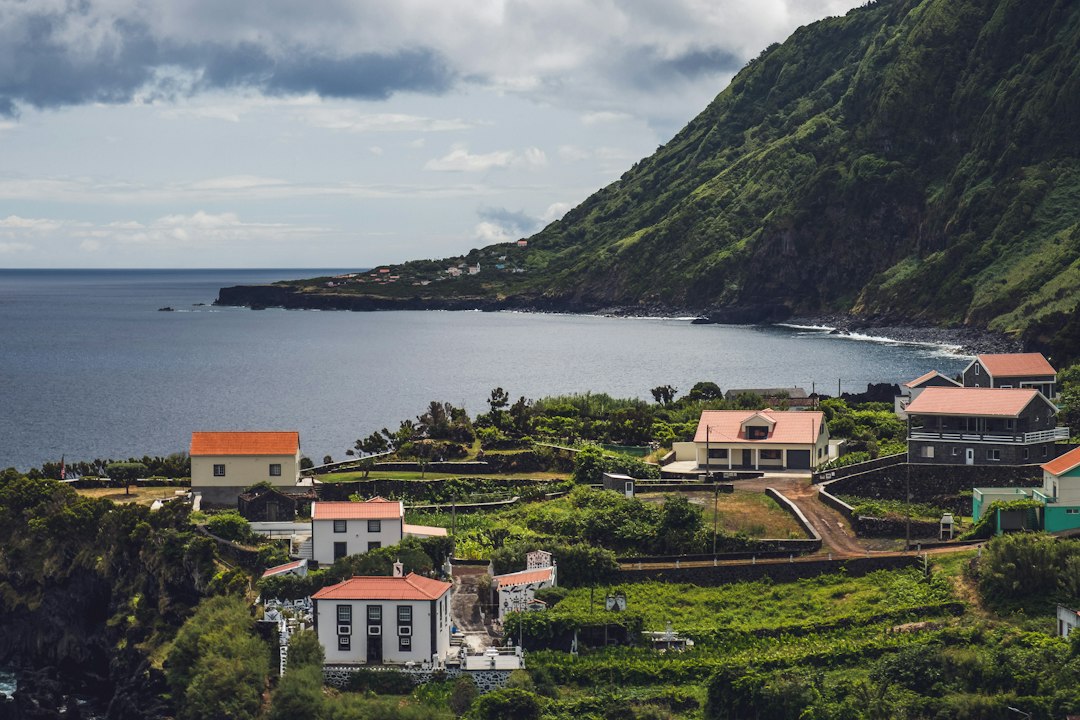
São Jorge is a narrow, elongated island in the central group of the Azores archipelago, stretching roughly 55 km long but rarely more than 8 km wide, sitting at an altitude that peaks at 1,053 metres at Pico da Esperança. The island holds approximately 8,400 residents and is governed from the town of Velas, founded during the 15th-century Portuguese settlement of the Azores. São Jorge is internationally recognised for its unique fajãs — flat coastal ledges formed by ancient lava flows — of which the island has over 40, more than any other Azorean island.
Three Things Not to Miss in São Jorge
- Fajã dos Cubres & Lagoa dos Cubres — A UNESCO-recognised lagoon fajã that shelters one of the Azores’ only wild limpet and barnacle ecosystems, accessible via a short trail.
- Fajã de Santo Cristo — Remote coastal fajã reachable only on foot or by boat, famed for the only natural lagoon in the Azores that produces surf-grade waves.
- Pico da Esperança — São Jorge’s highest point at 1,053 metres offers panoramic views of five Azorean islands on a clear day.
Scroll down for our complete travel guide with tips on getting there, where to stay, costs and more.
Getting to São Jorge: Ferry or Flight
How do I get to São Jorge — by flight or ferry?
Both options exist, but flights are faster and more reliable year-round. SATA Air Açores (brand name Azores Airlines’ inter-island subsidiary) operates propeller flights from Terceira (TER) and São Miguel (PDL) to São Jorge Airport (SJZ), with flight times of roughly 30–40 minutes. Ferries operated by Atlânticoline connect São Jorge to Pico and Faial, with crossings taking approximately 1–2 hours depending on the route. Worth knowing: ferry schedules are reduced outside summer and can be cancelled due to Atlantic swells — always have a flight as a backup plan if your schedule is tight.
Which airport or port is the best starting point for São Jorge?
São Jorge Airport (IATA: SJZ), located about 3 km east of Velas, is the most convenient entry point for air travellers. The port of Velas serves as the main ferry terminal for Atlânticoline services from Faial (Horta) and Pico (Madalena). Most inter-island visitors arriving from mainland Portugal or internationally first land at Ponta Delgada (PDL) on São Miguel or Angra do Heroísmo (TER) on Terceira, then connect onward. Tip: if you plan to island-hop across the central triangle of Faial, Pico, and São Jorge, Horta on Faial is a practical secondary hub.
How long does the ferry crossing to São Jorge take?
The Faial (Horta) to São Jorge (Velas) ferry takes approximately 1 hour 45 minutes with Atlânticoline. The Pico (Madalena) to São Jorge (Velas) crossing is shorter at around 1 hour. Both routes run more frequently in summer (June–September), with reduced schedules from October to May. Worth knowing: the open Atlantic between these islands can produce significant swells, and crossings are occasionally cancelled on short notice — always check Atlânticoline’s website the morning of travel and build flexibility into your itinerary, especially in autumn and winter.
What does a flight or ferry to São Jorge cost?
Inter-island SATA Air Açores flights to SJZ typically cost €40–€90 one way, depending on availability and how far in advance you book; check flysata.com for current fares. Atlânticoline ferry tickets from Faial or Pico to São Jorge cost approximately €15–€25 per person one way; check atlanticolinesmc.pt for exact prices. Bringing a car on the ferry adds a significant surcharge — roughly €50–€80 per vehicle — which is worth calculating against renting locally. Tip: resident fares for Azorean islanders are heavily subsidised and do not apply to tourists.
Are overnight ferries to São Jorge worth it?
Overnight ferries are not a standard option on São Jorge routes. Atlânticoline operates daytime passenger and vehicle ferries between the central group islands (Faial, Pico, São Jorge), and crossings are short enough — under 2 hours — that overnight service is not offered on these routes. The longer inter-group seasonal ferries that occasionally connect São Miguel to the central and western groups do exist, but they are slow (over 8 hours) and run infrequently. For São Jorge specifically, a daytime flight from Terceira or São Miguel is the most practical approach and avoids the uncertainty of Atlantic weather delays.
Getting Around São Jorge
Do I need a rental car or scooter on São Jorge?
Yes — a rental car is strongly recommended on São Jorge. The island’s fajãs, viewpoints, and villages are spread across 55 km of rugged terrain, and public bus service is infrequent and does not cover trailheads or coastal fajãs. Scooters are available but the island’s steep, narrow roads with frequent mist and rain make a small 4×4 or hatchback safer. Rental agencies including Autatlantis and Ilha Verde Rent a Car operate on the island; book in advance for summer. Worth knowing: roads to fajãs like Fajã do Ouvidor are unpaved and steep — check your rental agreement for off-road coverage before driving.
Are there buses between towns on São Jorge?
Yes, but services are sparse and not suited to sightseeing. The municipal bus network connects Velas, Calheta, and Topo — the three main population centres — but runs only a few departures per day, primarily timed for school and work commutes. There is no direct bus to the most visited fajãs or hiking trailheads. Tip: the bus is practical for travelling between Velas and Calheta (roughly 25 km) if you are basing yourself in one town and want to explore the other without driving, but for any serious hiking or fajã exploration, a rental car or a guided tour with transport included is necessary.
What does a rental car on São Jorge cost — and where do I hire one?
Rental cars on São Jorge typically cost €35–€65 per day for a small hatchback in summer; prices drop to €25–€45 in the shoulder season (April–June and October). Local agencies such as Autatlantis and Ilha Verde Rent a Car operate near Velas and at the airport (SJZ). International platforms like Rentalcars.com also list São Jorge suppliers but inventory is limited — the island has a small fleet. Worth knowing: book at least 4–6 weeks in advance for July and August, as vehicles sell out completely. Fuel costs are broadly similar to mainland Portugal; check current pump prices at the single petrol station in Velas.
Which parts of São Jorge are accessible by public transport?
Only the main corridor between Velas and Calheta is realistically served by public transport. Buses run along the EN1-1A road that links the island’s western and central settlements. The village of Topo in the east has limited connections. Fajã dos Cubres, Fajã de Santo Cristo, and virtually all hiking trailheads are inaccessible without private transport. Tip: the ferry port in Velas is within walking distance of the town centre, so if you arrive by boat and plan to stay only in Velas for a day, you can manage without a car — but you will miss the island’s best natural features.
Can I cycle around São Jorge?
Cycling is possible but demanding — only for experienced cyclists. São Jorge’s terrain is steep, with elevation changes of several hundred metres between the ridge road and the fajãs below. The main EN1-1A road connecting Velas to Calheta spans roughly 25 km and is manageable on an e-bike; a growing number of visitors rent e-bikes from operators in Velas. Standard road cycling is feasible along the coast for fit riders, but the unpaved fajã descent tracks are better suited to mountain bikes. Worth knowing: mist frequently descends on the central ridge, reducing visibility on descents — always carry lights and a waterproof jacket regardless of how sunny it looks at sea level.
Where to Stay on São Jorge
Which town on São Jorge should I base myself in?
Velas is the best base for most visitors. As the island’s administrative capital, it has the highest concentration of accommodation, restaurants, the ferry port, the nearest fuel station, and easy access to western fajãs. Calheta, about 25 km east, is quieter and suits travellers prioritising the central island trails and Caldeira de Santo Cristo hikes. Topo, at the eastern tip, is very remote with minimal services but rewards those seeking complete isolation. Compared to the nearby island of Pico — which has more accommodation density in Madalena — São Jorge feels more rural and less set up for mass tourism, which is part of its appeal.
What does accommodation cost per night on São Jorge?
Expect to pay €70–€120 per night for a double room in a guesthouse or rural tourism unit (turismo rural) in high season. Budget options like shared rooms in the few hostels in Velas run approximately €25–€40 per person. Self-catering cottages and Alojamento Local apartments typically cost €80–€150 per night for a full unit in July and August. Unlike nearby Faial, São Jorge has no large hotel chains — accommodation is almost entirely family-run guesthouses and rural houses. Worth knowing: options are genuinely limited in number; the island’s small size means total bed capacity is low, making early booking critical.
Which area of São Jorge suits which travel style?
Velas suits first-timers and those wanting convenience; it has cafés, the ferry port, and several tour operators within walking distance. Calheta suits hikers and surfers, positioned closer to Fajã de Santo Cristo (about 6 km on foot via the GR São Jorge trail) and with a small black-sand beach. Fajã dos Cubres and surrounding areas suit wildlife and birdwatching enthusiasts. Rural quintas scattered across the central ridgeline suit those wanting complete immersion in Azorean agricultural landscapes. Worth knowing: São Jorge as a whole is significantly less developed for tourism than Terceira or São Miguel — visitors seeking nightlife, spas, or resort pools should adjust expectations accordingly.
How far in advance do I need to book accommodation on São Jorge?
Book at least 3–4 months in advance for July and August. São Jorge has a very limited accommodation stock — likely fewer than 500 beds island-wide — and summer demand now regularly outstrips supply, driven by growth in Azores tourism post-2015. Shoulder months (May, June, September, October) allow 4–6 weeks of lead time for most options, though the best rural cottages still go early. Worth knowing: unlike São Miguel, São Jorge has no large hotel inventory that sits unsold — when the guesthouses and rural rentals are full, the island is genuinely full. Platforms like Booking.com and Airbnb cover most of the available stock.
Are there good apartments or villas with sea views on São Jorge?
Yes — rural tourism houses (casas de campo) with Atlantic views are the island’s signature accommodation type. Several restored stone farmhouses on the central ridge offer panoramic views of the ocean and neighbouring islands Pico and Faial, often visible simultaneously on clear days. Properties listed on Airbnb and RNET (Portugal’s official short-term rental registry) cluster around Velas, Calheta, and the Urzelina parish. Nightly rates for a full cottage with sea views run €100–€180 in peak season. Worth knowing: “sea view” in São Jorge often means a view through vegetation or from a hillside terrace — request photos or ask hosts directly about sightlines before booking.
Best Time to Visit São Jorge
When is the best time to visit São Jorge?
July through October offers the most stable weather and the longest daylight hours. July and August bring the warmest temperatures and the most reliable sunshine, ideal for fajã hiking and swimming. September and October are excellent for fewer crowds, lower accommodation prices, and still-warm sea temperatures (around 22°C in September). The Azores climate data supports this window as the optimal travel period. Worth knowing: the Azores are famously changeable at any time of year — the local saying is that you can experience four seasons in one day. Even in July, pack a waterproof layer for ridge hikes, where mist is common regardless of sea-level conditions.
What is the weather on São Jorge like throughout the year?
São Jorge has a mild oceanic climate with no dry season — rain is possible in any month. Winter (December–February) brings temperatures of roughly 12–15°C with frequent Atlantic storms and reduced ferry services. Spring (March–May) is mild at 14–18°C but unsettled. Summer (June–August) averages 20–25°C at sea level with lower humidity. Autumn (September–October) remains warm and is arguably the most pleasant for hiking, with temperatures staying above 18°C well into October. The island’s elevation means the central ridge is almost always 3–5°C cooler and cloudier than coastal fajãs. Tip: always check weather.gov or IPMA.pt the morning of any hike.
When does São Jorge get overcrowded?
July and August see the island at capacity, particularly on weekends when day-trippers arrive from Faial and Pico by ferry. The trail to Fajã de Santo Cristo — roughly 6 km one way — can have 50–100 hikers on peak August days, which degrades both the trail experience and the fragile fajã ecosystem. The village of Topo and the eastern caldeiras remain quieter even in August. Compared to São Miguel’s Sete Cidades, São Jorge never reaches mass-tourism levels, but its small carrying capacity means even moderate visitor numbers feel significant. Worth knowing: the Azorean government has discussed access limits for certain fajãs — check with the Câmara Municipal de Velas before visiting in 2026.
Is there a worthwhile shoulder season on São Jorge?
Yes — May–June and September–October are excellent shoulder periods. In May and June, the island is at its greenest, hydrangeas begin blooming along the roads, accommodation is available without advance booking pressure, and prices run roughly 20–30% lower than peak. September and October offer warm sea temperatures, quieter trails, and the harvest season for the island’s famous Queijo de São Jorge DOP cheese, with some farms welcoming visitors. Worth knowing: ferry frequencies from Faial and Pico drop in October, so plan crossings carefully. The shoulder season also brings a higher chance of overcast days on the ridge, but fajã-level weather often remains pleasant.
When does the beach and watersports season on São Jorge begin?
The practical beach and watersports season runs from late June through September. São Jorge’s “beaches” are primarily black volcanic pebble and rock platforms at fajãs rather than sandy beaches — the most swimmable natural pools are at Fajã dos Cubres and the lava pools near Velas harbour. Sea temperature reaches a comfortable 21–23°C between July and September. Surfing at Fajã de Santo Cristo is possible year-round but best in autumn when Atlantic swells increase; the lagoon there is the only spot in the Azores with consistent lagoon surf. Snorkelling and diving with local operator Nautigest in Velas typically opens from May onwards.
What São Jorge Costs
What does a daily budget cost on São Jorge?
Budget travellers can manage on €60–€80 per day; mid-range visitors typically spend €120–€160. A hostel bed in Velas costs roughly €30–€40; a restaurant meal at a local tasca runs €10–€15 for a full lunch with drink. A rental car adds €40–€55 per day split between travellers. Entrance fees are minimal — most fajã trails and viewpoints are free. A comfortable mid-range day (guesthouse + car + meals + one activity) lands around €130–€150 per person assuming two people sharing costs. Worth knowing: São Jorge is not a cheap destination by Azorean standards — its limited supply of accommodation and food options keeps prices firm even outside peak season.
Is São Jorge more expensive than mainland Portugal?
Yes — São Jorge runs roughly 10–20% more expensive than equivalent mainland rural Portugal destinations. Supply constraints on a small island mean groceries, fuel, and restaurant meals carry a transport surcharge. A standard prato do dia (dish of the day) in a Velas tasca costs approximately €8–€12, comparable to Lisbon’s cheaper neighbourhoods but higher than rural Alentejo. Supermarket prices are broadly similar to mainland Portugal following EU island logistics subsidies, but selection is limited. Compared to nearby Faial (Horta) — a larger island with more competition — São Jorge accommodation and dining prices are slightly higher due to lower inventory. Tip: self-catering in a rented cottage cuts food costs significantly.
What expenses on São Jorge are unavoidable?
Rental car, ferry or flight transfer, and accommodation are the three non-negotiable costs. Unlike urban destinations, São Jorge has no hop-on transport, so a car (€35–€65/day) is effectively mandatory for any meaningful exploration. The inter-island flight or ferry adds €15–€90 per person depending on mode and booking timing. Accommodation, with limited budget options, rarely falls below €30 per person per night even in hostels. Beyond these, hiking boots or sturdy footwear are a practical necessity given the rocky fajã terrain — bringing your own saves the cost and hassle of sourcing on the island. Tip: pack snacks and water before leaving Velas, as fajã trails have no kiosks or vending points.
What does food cost on São Jorge — local vs tourist prices?
A full lunch at a local tasca in Velas or Calheta costs €9–€13 including soup, main, bread, and a drink. Dinner at the same establishments runs €12–€20 per person. The distinction between “tourist” and “local” pricing is less pronounced than on larger Azorean islands — São Jorge has few overtly tourist-facing restaurants and most places serve the same menu to everyone. A slice of the island’s famous Queijo de São Jorge DOP cheese at a local shop costs approximately €3–€5 per 200g. Coffee costs the standard Portuguese €0.80–€1.20. Worth knowing: the island has a very small number of restaurants — perhaps fewer than 15 proper sit-down establishments island-wide — so dinner reservations in summer are advisable.
What are the best beaches on São Jorge?
**São Jorge’s “beaches” are volcanic fajã platforms rather than sand — Fajã dos Cubres and the Velas lava pools are the top spots. The natural tidal pools at Piscinas Naturais de Velas** near the harbour are the most accessible swimming point, with calm water suitable for families. Fajã do Ouvidor has a small pebble cove reachable by a rough track. Fajã de Santo Cristo has the island’s most dramatic coastal setting, with a lagoon that allows swimming in calm conditions. Worth knowing: the island has no traditional golden-sand beaches — visitors expecting conventional beach holidays should consider Faial’s Praia do Almoxarife or Santa Maria island instead, which has sandy beaches.
Beaches & Experiences on São Jorge
What are the top sights on São Jorge beyond the beaches?
Fajã de Santo Cristo, Pico da Esperança, and the Caldeira do Topo are the island’s top inland and coastal highlights. Fajã de Santo Cristo is a 6 km hike from the nearest road and rewards with a surf lagoon, endemic flora, and near-total isolation. Pico da Esperança at 1,053 metres is São Jorge’s rooftop, with views across five islands. The Caldeira do Santo Cristo and surrounding volcanic landscape near Calheta offers dramatic geology. The wine cellar and heritage buildings in Urzelina parish, partially buried by an 1808 volcanic eruption, provide striking historical context. Tip: the Velas ethnographic museum gives a grounded introduction to island history and cheese-making traditions before you start exploring.
What watersports activities are available on São Jorge?
Diving, snorkelling, whale watching, and surfing are the main watersports on São Jorge. Nautigest in Velas operates diving excursions to volcanic underwater formations and wreck sites, with dives typically priced at €50–€70 per person including equipment. Whale watching trips depart from Velas harbour between April and October, costing approximately €50–€60 per adult; the waters around São Jorge are part of the Azores’ prime cetacean corridor with sperm whales present year-round. Surfing at Fajã de Santo Cristo is self-guided — no surf school operates there due to access difficulty. Worth knowing: jet ski and parasailing rental common on other islands does not exist on São Jorge, reflecting its more nature-focused tourism profile.
What is the culinary highlight of São Jorge?
Queijo de São Jorge DOP is the island’s defining culinary product — a raw cow’s milk cheese aged minimum 3 months, with a sharp, semi-hard character unlike any other Portuguese cheese. Produced at the Cooperativa de Lacticínios de São Jorge (CLSJ) in Beira, the dairy welcomes visits by appointment where you can see the ageing caves and taste cheeses at different maturity stages (3, 6, and 12 months). The cheese pairs with the island’s local bread and Vinho de Cheiro — a distinctive regional wine made from Isabela grapes, technically illegal to export to the EU mainland under EU wine regulations, making it a genuinely exclusive local experience. Tip: buy directly from the cooperative or local shops; airport-purchased cheese is more expensive.
Which parts of São Jorge are still off the beaten track?
The eastern end of the island around Topo and Norte Pequeno remains the least visited area. The hamlet of Topo, at the island’s eastern tip, sees a fraction of the visitors that reach Fajã de Santo Cristo or Velas, yet offers volcanic islet views, a historic lighthouse, and untouched fajã platforms. The fajã trail network north of Norte Grande is almost entirely unwaymarked and requires local guidance. Compared to São Miguel’s Furnas valley — visited by thousands daily — São Jorge’s northern coast between Urzelina and Rosais is empty on most days. Worth knowing: the island’s network of levadas and calçada (stone-paved) paths through agricultural interior landscapes remains largely undocumented online and rewards explorers willing to ask locals for directions.
How many days do I need on São Jorge?
Three to four full days allow you to cover São Jorge’s main highlights without rushing. Day 1: arrive, settle in Velas, explore the town and lava pools. Day 2: hike to Fajã de Santo Cristo (allow 6–7 hours return including time at the lagoon). Day 3: drive the ridge road, visit Pico da Esperança, descend to Fajã dos Cubres, and explore Calheta. Day 4: eastern Topo peninsula and the CLSJ cheese cooperative. A fifth day comfortably absorbs a whale watching trip or a day trip by ferry to Pico island (roughly 1 hour crossing), where the UNESCO-listed vineyard landscape and Pico volcano (2,351 m) add a strong contrast to São Jorge’s fajã character.
São Jorge at a Glance
| Currency | euro (€) |
|---|---|
| Official language | Portuguese |
| Time zone | UTC+00:00 |
Source: Wikidata, retrieved October 2026.
Portugal › São Jorge
More Destinations in Portugal
Related Travel Guides
Essential Resources for Planning Your Trip to São Jorge
- Castelo De São Jorge Visiting Information — official visitor information
- Wikivoyage: São Jorge — community travel guide & practical tips
- Wikipedia: São Jorge — history, geography & background
- How to Enter Castelo De São Jorge — how to get there and around
- Castelo de São Jorge | Lisbon, Portugal | Attractions — itineraries & inspiration
Data Sources
Key facts on this page (population, currency, language, time zone) come from Wikidata, climate figures from Open-Meteo. The retrieval date is shown next to the facts table.