
Amfissa: The Complete Travel Guide (2026)
Last reviewed: September 2026 · key facts checked against Wikidata
Amfissa Travel Guide: Everything You Need to Know (2026)
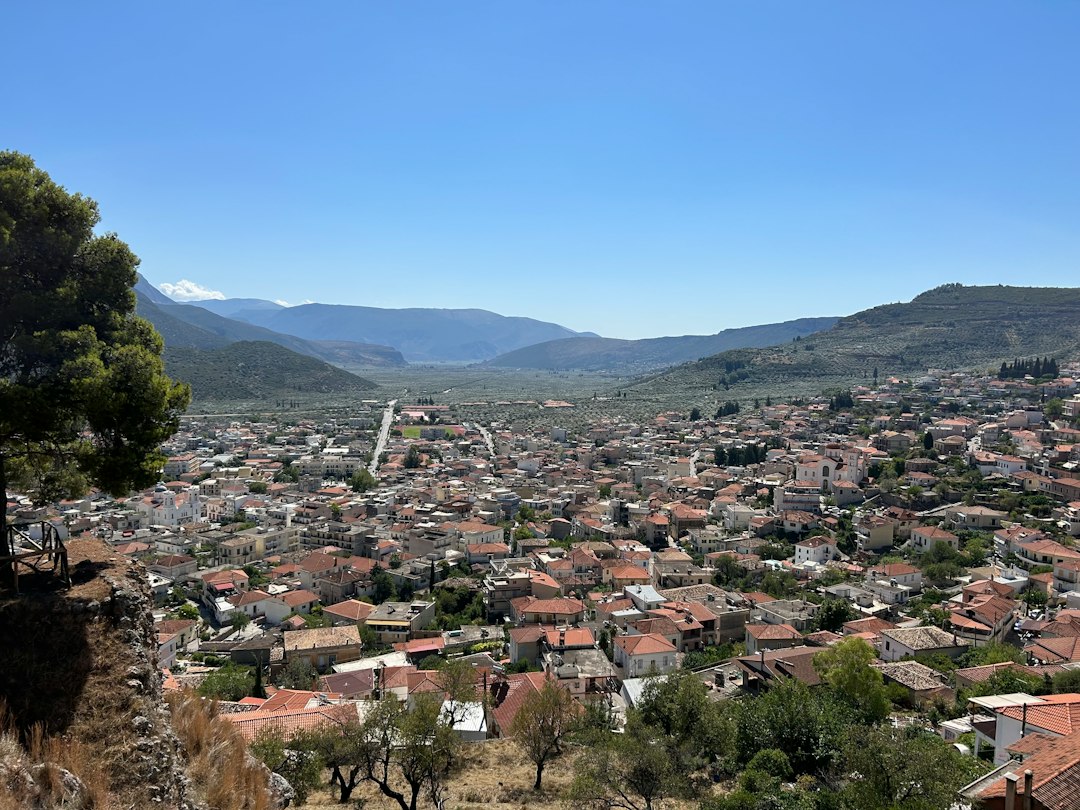
Amfissa is a market town of 6,334 residents in Phocis, central Greece, sitting at 180 m above sea level between Mount Giona and Mount Parnassus, roughly 200 km northwest of Athens. It serves as the administrative seat of the Delphi municipality and is surrounded by one of Greece’s largest olive groves — the Crissaean plain, home to a protected PDO olive variety. Founded on the site of ancient Amphissa, the town carries 3,000 years of continuous habitation and remains almost entirely off the international tourist radar.
Three Things Not to Miss in Amfissa
- Salona Castle (Kastro) — A Frankish-Byzantine fortress crowning the hilltop with panoramic views over 300,000 olive trees of the Crissaean plain.
- Amfissa Olive Grove & Oil Museum — One of the densest contiguous olive forests in Europe, with trees documented as over 1,000 years old still in production.
- Amfissa Carnival (Apokries) — A raucous pre-Lent street carnival dating back centuries, drawing costumed crowds from across Phocis every February.
Scroll down for our complete travel guide with tips on getting there, where to stay, costs and more.
How to Reach Amfissa
How do I get to Amfissa from Athens or other Greek cities?
The fastest route is by car or KTEL bus from Athens, covering the 200 km in about 2.5 hours via the E65 motorway. In my experience, the KTEL Fokidas bus from Athens’ Liosion terminal (Terminal B) is the most practical option for non-drivers, running 3–4 departures daily at roughly €14–16 per ticket. A honest caveat most guides omit: there is no direct train to Amfissa — the nearest rail hub is Lianokladi, about 35 km away, and connecting onward transport is infrequent. My tip: book the KTEL ticket online or arrive early, as seats fill on Friday afternoons.
Which airport is closest to Amfissa?
Athens Eleftherios Venizelos International Airport (ATH) is your primary entry point, approximately 210 km southeast of Amfissa. I recommend renting a car at ATH — the drive takes roughly 2.5 hours on the E65 and gives you flexibility to stop at Delphi, only 20 km from Amfissa. A closer but far smaller option is Actium Airport (PVK) near Preveza, about 130 km west, though it handles mainly seasonal charter flights. What surprised me: there is no shuttle or airport bus connecting ATH directly to Amfissa, so you either rent a car or take a taxi to Kifissos bus station first.
How long does the journey to Amfissa take from Athens?
By car from central Athens, expect 2.5 to 3 hours depending on traffic. The KTEL bus takes approximately 3 hours including stops. In my experience, leaving Athens before 7:00 AM on weekdays cuts the trip to the lower end of that range — the E65 motorway past Itea junction is fast and scenic. The honest trade-off: Amfissa is not connected to Greece’s intercity rail network at all, so there is no train option. If you are coming from Thessaloniki, the drive is about 3.5 hours via the PATHE motorway and E65 — a perfectly manageable road trip.
Do I need a rental car to explore Amfissa and its surroundings?
Yes — a rental car is strongly recommended for Amfissa. The town itself is compact and walkable, but the surrounding region’s best assets — Delphi (20 km), the Giona mountain trails, and the coastal town of Itea (18 km) — are inaccessible without wheels. My tip: rent at Athens Airport (ATH) where competition keeps daily rates around €35–55 for a compact car in 2026. The honest warning most guides skip: rural petrol stations around Amfissa sometimes close on Sunday afternoons, so fill up on Saturday evening. KTEL buses link Amfissa to Lamia and Athens, but frequency drops to 2 departures daily on weekends.
Amfissa Public Transport Explained
What are the best areas to stay in Amfissa?
Amfissa is a small town, so neighbourhood distinctions are minor — but I recommend staying in the town centre near Plateia Salona, the main square. You are within a 5-minute walk of the central market, the castle trailhead, and the best tavernas. The upper old quarter below the kastro is quieter and has more character, though parking there is tricky on narrow streets. What surprised me: there are almost no international chain hotels here — accommodation is entirely local guesthouses and small hotels, which is genuinely charming. Avoid booking anything labelled simply ‘Delphi area’ — some listings are actually 20 km away and misleading.
What does accommodation cost per night in Amfissa?
Budget options in Amfissa run €35–50 per night for a clean double room in a family-run guesthouse. Mid-range hotels with private bathrooms and breakfast charge €60–85. There are no luxury properties in town — if you want a boutique hotel experience, nearby Arachova (35 km) has upscale mountain lodges at €120–200. In my experience, the best-value option is a self-catering apartment near the central square at around €50–65 per night, giving you a kitchen and more space. The honest caveat: breakfast is rarely included in the base rate at smaller guesthouses — always confirm before booking.
How far in advance should I book accommodation in Amfissa during high season?
For August, book at least 6–8 weeks in advance — Amfissa fills up because visitors use it as a base for Delphi while escaping Delphi’s inflated hotel prices. The Amfissa Carnival in February is the other crunch period; local rooms book out within 2–3 weeks of the dates announced. My tip: use Booking.com rather than local phone bookings for English-speaking visitors, as most guesthouse owners have limited English. The honest trade-off: because accommodation supply is small, even moderate demand creates scarcity — there are probably fewer than 15 bookable properties in the entire town, so early action matters disproportionately here.
Are there special or unique accommodation types in Amfissa?
Amfissa’s most distinctive sleep option is staying in an agrotourism guesthouse on the olive grove fringe, where you wake surrounded by ancient trees and can buy oil directly from the owner. One category worth seeking is stone-built village houses in the upper old quarter that have been converted into holiday rentals — authentically Greek, with timber ceilings and flagstone floors. In my experience, these rent for €55–70 per night and offer far more atmosphere than standard hotel rooms. The honest caveat: ‘rustic’ sometimes means unreliable hot water or slow Wi-Fi — read recent reviews carefully. For families, a villa rental sleeping 4–6 people in the olive countryside can cost as little as €90–110 total per night.
Neighbourhoods of Amfissa
What are the must-see sights in Amfissa?
Three things are non-negotiable. First, Salona Castle (Kastro tis Salonas) — the Frankish-Byzantine hilltop fortress with walls dating to the 13th century, offering a 360-degree panorama over the entire Crissaean olive plain; entry is free. Second, the Archaeological Museum of Amfissa, a small but well-curated collection of local finds including Mycenaean pottery. Third, the Crissaean Olive Grove itself — walking or driving through 30,000 hectares of protected olive trees is an extraordinary experience, especially at harvest time in October–November. My tip: combine the kastro at sunset with dinner on the main square — this sequence costs you nothing extra and is genuinely memorable.
What can I experience for free in Amfissa?
Quite a lot. Salona Castle has no entry fee and rewards the 15-minute uphill walk from the town centre with sweeping views. The old quarter streets around the kastro are a free open-air museum of Byzantine-era architecture. Walking into the Crissaean olive grove on any of the dirt tracks leading out from the south side of town costs nothing and immerses you in a landscape that has barely changed in centuries. In my experience, sitting at a kafeneio on Plateia Salona with a Greek coffee for €1.50 and watching market day unfold on Wednesday mornings is one of the most authentic free experiences left in central Greece. The honest caveat: the Archaeological Museum charges a small fee of around €2–3.
Which day trips from Amfissa are most worthwhile?
Delphi is the obvious first choice — only 20 km away, it is a UNESCO World Heritage Site and one of Greece’s top archaeological sites; entry costs €12 and I recommend arriving by 8:00 AM before tour buses arrive. The port town of Itea (18 km) offers waterfront seafood tavernas and a relaxed Corinthian Gulf atmosphere. For hikers, the Giona massif directly west hosts the third-highest peak in Greece at 2,510 m and serious gorge trails accessible within 40 minutes by car. What surprised me: the village of Galaxidi (35 km) on the gulf coast is a beautifully preserved neoclassical sea-captain’s town that most Delphi visitors entirely miss.
What local specialities should I try in Amfissa?
Start with Amfissa olives — the town’s PDO-protected Konservolia variety is one of Greece’s finest table olives, plump and briny, sold directly from barrel at market stalls for around €3–4 per kg. The local olive oil is equally exceptional — a bottle of cold-pressed extra virgin oil from the Crissaean plain costs €8–12 at farm shops. In my experience, the best food experience is a simple mezedes spread at a central taverna: grilled local lamb chops (€10–13), horiatiki salad with barrel feta (€5–7), and a carafe of local red wine (€4–6). The honest tip most guides omit: the best olives are sold at Wednesday’s street market, not in tourist shops — bring cash.
What to See in Amfissa
What makes Amfissa unique compared to other Greek towns?
Amfissa is one of the few Greek market towns of its size that receives almost zero international tourism despite sitting 20 km from one of the world’s most visited archaeological sites. That paradox is its greatest asset — it is genuinely, un-performatively Greek. The Crissaean Olive Grove surrounding it is a UNESCO-nominated landscape of extraordinary scale: a single contiguous forest of olive trees, some over 1,000 years old, still commercially harvested. In my experience, the Amfissa Carnival (Apokries) — one of the oldest in mainland Greece — delivers an authentic street celebration that makes Patras’ famous carnival look commercialised by comparison. This is daily Greek life, not a curated version of it.
How many days should I spend in Amfissa?
2 nights is the sweet spot for Amfissa itself — enough to explore the kastro, walk the olive grove, visit the market, and eat well without rushing. If you are using Amfissa as a regional base, 3–4 nights lets you cover Delphi, Itea, Galaxidi, and a Giona hike comfortably without daily long drives. In my experience, most visitors who come for one night end up wishing they had booked a second — the town reveals itself slowly over a long taverna dinner and an early morning walk. The honest trade-off: Amfissa has limited evening entertainment beyond tavernas and kafeneions, so if you need nightlife, stay in Arachova (35 km) instead and day-trip here.
When is the best time to visit Amfissa?
August and October are the optimal months based on Amfissa’s climate data. August delivers reliable sunshine and warm evenings ideal for outdoor dining and kastro walks. October is my personal preference — the olive harvest begins, temperatures cool to a pleasant 18–22°C, the crowds around Delphi thin dramatically, and the countryside turns golden. In my experience, October combines the best weather, the most authentic local activity (harvesting), and the lowest accommodation prices. The honest caveat: August can feel dry and dusty in the olive grove, and midday heat reaches 32–35°C — plan physical activities for before 10:00 AM or after 5:00 PM.
Are there local festivals in Amfissa worth attending?
The Amfissa Carnival (Apokries) is the headline event — held in February, roughly 2–3 weeks before Orthodox Easter, it fills the streets with costumed revellers, brass bands, and mock battles. It is one of the most deeply traditional carnival celebrations in mainland Greece and largely unknown to foreign visitors. The Olive Harvest Festival in late October to early November is a lower-key but genuinely atmospheric celebration with tastings, mill tours, and folk music in the Crissaean grove. In my experience, the Easter (Pascha) celebrations in Amfissa are also exceptional — the Saturday midnight Resurrection liturgy at the main church draws the entire town and is profoundly moving. Book accommodation for all three events at least 4–6 weeks ahead.
Amfissa Food Scene
How does the weather in Amfissa affect activities?
At 180 m elevation between two mountain ranges, Amfissa has a continental-Mediterranean hybrid climate — hotter and drier in summer than coastal towns, and noticeably cooler in winter. Summer afternoons (July–August) regularly hit 35°C, making midday sightseeing uncomfortable; the kastro walk is best done at 7:00–9:00 AM or 6:00–8:00 PM. Spring (April–May) is ideal for hiking into the Giona mountains and driving through the green olive grove. Winter brings cold nights and occasional frost, but the town functions fully year-round. My tip: always carry a light layer even in August — evenings at 180 m drop to a refreshing 16–18°C, which surprises visitors from coastal resorts.
How crowded does Amfissa get in peak season?
Amfissa is genuinely uncrowded by Greek standards — even in August, you will not encounter tour groups or queues at town sights. The overflow effect from nearby Delphi (which receives over 500,000 visitors annually) barely reaches Amfissa, as most tourists visit Delphi as a day trip from Athens. The main square gets lively on Wednesday market mornings and weekend evenings, but this is local crowd, not tourist crowd. The honest warning: the Carnival period in February is the one genuine crunch point — accommodation sells out and the town population effectively doubles for 2–3 days. Outside of Carnival, Amfissa is one of the most crowd-free towns in central Greece.
How safe is Amfissa for travellers?
Amfissa is extremely safe — petty crime is rare in a town of 6,334 people where everyone knows each other. In my experience, leaving a camera on a taverna table while you visit the bathroom raises zero anxiety here; the social fabric of a Greek market town is its own security system. The practical risks are different: mountain roads around Giona have sharp bends and limited guardrails, so drive carefully especially after rain. The kastro path is uneven and has no lighting after dark — wear shoes with grip. The honest caveat for female solo travellers: the old-school kafeneio culture means some establishments are implicitly male spaces, though this is changing and you will never be refused service.
Is English widely spoken in Amfissa?
Less so than in Athens or the islands. In my experience, younger Greeks under 35 in Amfissa speak functional to good English, while older residents often have none. Hotel staff and central taverna owners typically manage well in English. The honest trade-off: unlike Delphi village (which has been tourist-facing for decades), Amfissa is a working Greek town where Greek is simply the operating language — learning 10 basic phrases will earn you disproportionate warmth and better service. Download Google Translate with the Greek language pack offline before you arrive — it handles menus, signs, and bus schedules reliably. My tip: the word ’Parakaló’ (please/you’re welcome) opens more doors than any other.
Local Know-How for Amfissa
What is the daily budget for travelling in Amfissa?
A comfortable daily budget in Amfissa runs €65–90 per person, covering a mid-range guesthouse room split between two people (€30–42 per person), three meals (€20–25), coffee and snacks (€5–8), and petrol or incidentals (€10–15). Budget travellers sharing costs can manage on €45–55 per day by self-catering breakfast and choosing lunch at a working-class estiatorio rather than the tourist-facing square tavernas. What surprised me: Amfissa is 15–20% cheaper than Arachova and 30–40% cheaper than staying in Delphi village for equivalent accommodation quality. My tip: Wednesday market is the single best value day — fresh produce, olives, and local honey for almost nothing.
How does public transport work in and around Amfissa?
Amfissa is served by KTEL Fokidas buses connecting it to Athens (€14–16, 3 hours, 3–4 daily), Lamia (€6, 1 hour), and Itea (€2.50, 25 minutes). Within Amfissa itself, the town is small enough that everything is walkable — the castle, museum, market, and main square are all within a 10-minute walk of each other. The honest limitation: there is no bus service to Delphi’s archaeological site from Amfissa — the Delphi KTEL stop is 2 km uphill from the ruins, and services are infrequent. In my experience, a rental car eliminates all frustration and costs roughly €35–45 per day from agencies in Lamia or at Athens Airport.
Which apps do you recommend for visiting Amfissa?
Google Maps works reliably for Amfissa navigation and shows most local businesses, though some rural olive grove tracks appear only on Maps.me (download the Greece offline map — it is free and precise on unpaved paths). For KTEL bus schedules, the KTEL Fokidas website (ktel-fokidas.gr) is the authoritative source — no dedicated app exists, so bookmark it. Google Translate with Greek offline pack is essential given limited English in town. For hiking around Giona, download Wikiloc or Komoot and search for the Giona trails in advance — cell signal is unreliable above 1,200 m. My tip: Skyscanner for flights into ATH and Booking.com for Amfissa accommodation are your two most important pre-trip tools.
Amfissa at a Glance
| Population | 6,334 |
|---|---|
| Currency | EUR (€) |
| Official language | Greek |
| Time zone | UTC+02:00 |
Source: Wikidata, retrieved September 2026.
Greece › Amfissa
More Destinations in Greece
Essential Resources for Planning Your Trip to Amfissa
- Transportation — official visitor information, passes & events
- Wikipedia: Amfissa — history, geography & background
- Wikivoyage: Amfissa — community travel guide & practical tips
- Amfissa Castle | Greece | Attractions — expert itineraries & travel inspiration
- THE 5 BEST Things to Do in Amfissa (2026) — hotels, restaurants & traveller reviews
- Transportation — how to get around
- Numbeo: Cost of Living in Amfissa — current prices & cost comparison
- Timeanddate: Amfissa Weather & Climate — forecasts & climate statistics
- Greece – UNESCO World Heritage Convention
More Perspectives on Amfissa
- DELPHI Greece | Travel guide | Discover the magical region of …
- Seeking Greece travel advice and information
- Amfissa Travel Guide 2026: Top Attractions, Things to Do & …
Amfissa Travel Videos
Watch these videos for a visual preview before your trip:
- DELPHI Greece | Travel guide | Discover the magical region of Amfissa
- Amfissa Castle, Greece
- AMFISSA
Amfissa Travel Discussions on Reddit
Real traveller experiences and community advice:
- Delphi-Amfissa on foot and bus tickets. : r/GreeceTravel
- Is this the correct bus route from Athens to Delphi?
- I will be 3 nights in Athens + 1 in Delfi. Where to spend 2 …
Data Sources
This page was compiled using data from Wikipedia, Wikidata, Open-Meteo (climate), Numbeo (cost of living) and REST Countries. Information is updated regularly.