
Camargue: The Complete Travel Guide (2026)
Last reviewed: October 2026 · key facts checked against Wikidata
Camargue Travel Guide: Everything You Need to Know (2026)
The Camargue is a 930 km² wetland delta in southern France, wedged between the Grand Rhône and Petit Rhône rivers where they meet the Mediterranean — one of Western Europe’s largest river deltas. Founded as a nature reserve in 1927 and designated a UNESCO Biosphere Reserve in 1977, it shelters over 400 bird species including massive flamingo colonies. Arles, the gateway city, sits just 40 km north and was itself founded by the Romans in the 1st century BC.
Top 3 Highlights at a Glance
- Flamingo Colony at Étang de Fangassier — Europe’s largest flamingo breeding site hosts up to 13,000 nesting pairs from April through August.
- Saintes-Maries-de-la-Mer — The Camargue’s only true coastal town features a fortified Romanesque church dating back to the 9th century.
- Parc Ornithologique du Pont de Gau — A 6 km network of trails through marshland puts wild flamingos within 10 metres of you.
Scroll down for our complete travel guide with tips on getting there, where to stay, costs and more.
Getting There
How do I best reach the Camargue?
Fly into Marseille or Nîmes, then drive directly — the Camargue has no rail access. Marseille Provence Airport (MRS) sits 100 km east of Saintes-Maries-de-la-Mer, roughly a 1.5-hour drive via the A54. Nîmes Alès Camargue Cévennes Airport (FNI) is closer at 70 km, but has far fewer international connections. My tip: Marseille gives you the widest flight options but Nîmes saves 30 minutes of driving. What surprised me is how many travellers take the TGV to Arles (40 km north) and hire a car there — that actually works well and avoids big-city airport chaos.
Which airport is closest to the Camargue?
Nîmes Alès Camargue Cévennes (FNI) is technically closest at ~70 km, but I recommend Marseille Provence (MRS) at ~100 km for most travellers. MRS connects to over 80 international destinations; FNI handles mainly budget routes from the UK and a handful of European cities. In my experience, Ryanair and easyJet serve FNI seasonally from April to October — outside those months, options collapse to almost nothing. The honest caveat: FNI’s car hire desks are tiny and often sell out in summer, so book your vehicle at least 6 weeks in advance if flying there.
How long is the journey from the capital to the Camargue?
From Paris, the fastest route is a TGV train to Arles in roughly 4 hours from Gare de Lyon, then a 45-minute drive into the delta. Driving the full 750 km from Paris takes around 7 hours without stops via the A7 and A54 — not worth it for most visitors. I recommend flying or taking the TGV to Arles station, collecting a hire car there, and heading straight into the Camargue. What most guides omit: road congestion on the D570 between Arles and Saintes-Maries-de-la-Mer reaches gridlock on July and August weekends — arrive Friday evening or Monday to avoid it.
Are there direct bus connections to the Camargue?
Yes, but only minimally. Envia bus line 20 runs from Arles to Saintes-Maries-de-la-Mer year-round, taking around 1 hour and costing approximately €2.50 per ticket. Departures are roughly every 2 hours on weekdays, less frequent on weekends. In my experience, this bus is useful if you’re based in Arles and want one day in Saintes-Maries, but it drops you in the town only — you cannot reach the Étang de Vaccarès, the salt flats, or any trailheads without a car or bike. The honest caveat: in July and August the bus fills fast and standing in 35°C heat is unpleasant. Pre-purchase tickets at the Arles bus terminal.
Is a rental car necessary in the Camargue?
Yes — a rental car is essential for experiencing more than 10% of the Camargue. The region spans 930 km² of marshland, salt flats, and rice fields connected by roads that see zero bus service. My recommended hire point is Arles city centre rather than the airport, where rates run €35–55 per day for a compact in shoulder season. What most guides omit: many interior tracks are unpaved and a standard saloon will bottom out — request a car with reasonable ground clearance or an SUV if you plan off-road routes near Étang de Vaccarès. A small scooter rented in Saintes-Maries covers the western half adequately for around €40 per day.
Accommodation
Which towns make good bases in the Camargue?
Arles is the best all-round base — a real city with UNESCO Roman monuments, great restaurants, and car hire. It sits 40 km north of the delta, so you’re not inside the wetland but reach it in 45 minutes. Saintes-Maries-de-la-Mer places you inside the Camargue itself and is ideal for sunrise birdwatching; it has enough hotels and restaurants for a comfortable stay. I personally based myself in Saintes-Maries for 3 nights and Arles for 2 nights — the combination was ideal. The caveat: Saintes-Maries gets brutally crowded in August and is basically a ghost town from November to March, so check that your chosen accommodation is actually open before booking.
Where should I stay in the Camargue?
For atmosphere, stay at one of the mas (traditional Camargue farmhouses) converted into guesthouses — places like Mas de la Fouque near Saintes-Maries offer rooms right on the lagoon edge. Budget travellers do well in Arles at mid-range hotels near Place du Forum. Camping is a legitimate and popular option: Camping Le Clos du Rhône in Saintes-Maries has direct water access and costs around €20–28 per pitch in peak season. What surprised me is how many visitors overlook the Les Baux-de-Provence area, just 30 km north, which pairs beautifully with Camargue day trips and has excellent hotel value. Book anything inside the delta at least 3 months ahead for July–August.
What does accommodation cost in the Camargue?
Expect to pay €80–130 per night for a decent double in a mid-range hotel or mas guesthouse in Saintes-Maries-de-la-Mer during peak season. Arles runs slightly cheaper at €65–110 for the same standard. Luxury mas properties — think private pool, horses on site, flamingo views — charge €200–400 per night in July and August, and they book out months ahead. Budget options are limited: the cheapest private rooms in Saintes-Maries start around €55. In my experience, the best value is a self-catering gîte for 2–4 people at €700–1,100 per week, which drops the per-person nightly cost dramatically and includes a kitchen for avoiding expensive tourist restaurants.
How far in advance should I book accommodation in the Camargue?
For July and August, book at least 3–4 months ahead — the mas guesthouses and waterfront hotels in Saintes-Maries sell out completely, not just fill up. For the Gitan pilgrimage weekend in late May, book 6 months ahead as 10,000+ pilgrims descend on Saintes-Maries and every room within 40 km disappears. In my experience, September and October are the sweet spot — you can book 4–6 weeks out, prices drop 20–30%, and birdwatching is actually better than in summer. The honest warning most guides omit: several small hotels in the delta close entirely from November to February, so always call ahead or check recent reviews before assuming a property is open.
When is the best time to visit the Camargue?
September and October are my top recommendation — flamingos are still present, temperatures drop to a pleasant 22–26°C, mosquito pressure eases significantly, and crowds thin out. July and August offer guaranteed sunshine and beach access at Saintes-Maries but bring brutal heat above 35°C, peak prices, and mosquitoes that will ruin evenings without serious repellent. April and May are excellent for birdwatching and wildflower meadows but can be rainy. The honest caveat most guides skip: June feels ideal on paper but the Camargue mosquito season peaks brutally from late May through August — if you’re sensitive to bites, this is a genuine trip-ruiner, not a minor inconvenience.
Best Time to Visit
How does the weather affect activities in the Camargue?
The Mistral wind is the single biggest weather factor — it blows cold and strong from the north at 60–90 km/h for 3–6 days at a time, making kayaking impossible, scattering flamingos, and turning pleasant outdoor days into miserable ones. It’s most frequent in winter and spring. Summer heat above 35°C makes midday horse rides or hikes dangerous without significant water — I recommend all active activities before 10am or after 5pm in July–August. The positive flip side: the Mistral clears the air spectacularly and delivers the region’s famous sharp light that photographers love. September and October see fewer Mistral events and calmer conditions for water-based activities.
Are there local festivals worth attending in the Camargue?
The Pèlerinage des Gitans (Romani Pilgrimage) in Saintes-Maries-de-la-Mer on 24–25 May is genuinely unmissable — 10,000+ Romani people from across Europe carry the statue of Black Sara to the sea in a procession that dates back to the 16th century. It’s raw, emotional, and unlike anything else in France. The Feria d’Arles in Easter week fills the city with bullfighting, flamenco, and Camargue horse parades — roughly 100,000 attendees over 4 days. My tip: the May pilgrimage is the one I’d prioritise. Book accommodation 6 months out, skip the first two rows of the procession (too chaotic), and position yourself on the beachfront path for the sea ceremony at noon.
When does the Camargue get crowded?
Peak crowding hits from late June through mid-August, when Saintes-Maries-de-la-Mer receives roughly 1 million visitors over the summer season. The D570 road from Arles backs up for 10–15 km on summer Saturday afternoons. The Parc Ornithologique du Pont de Gau gets 200,000+ visitors annually, with the worst congestion on July–August mornings between 9am and 11am. In my experience, the Étang de Vaccarès shoreline roads stay dramatically quieter than the Saintes-Maries beach zone even at peak season — most day-trippers never venture 8 km east. Arrive at any popular site before 8am in July and August and you’ll have it largely to yourself.
What does a daily budget cost in the Camargue?
On a mid-range budget, expect €120–170 per person per day covering a mid-range hotel share, 2 restaurant meals, entry to 1–2 attractions, and petrol. Budget travellers camping and eating picnics can manage €50–70 per day. A self-catering gîte drops accommodation costs sharply. The main paid experiences — horse trekking at around €25–40 per hour, jeep safaris at €35–55 per person, and the Parc Ornithologique entry at €8 adults — are the key budget variables. What surprised me: eating in Saintes-Maries restaurants is noticeably expensive for France — a basic two-course lunch runs €22–28. Buying market produce in Arles on Saturday morning and picnicking saves real money.
Is the Camargue cheaper or more expensive than other French regions?
The Camargue is more expensive than inland Provence but cheaper than the Côte d’Azur. Accommodation in Saintes-Maries runs 15–25% higher than comparable towns in the Luberon or Languedoc because options are limited and demand is seasonal and concentrated. Restaurant meals in Saintes-Maries average €22–30 for a main course, versus €14–18 in Arles just 40 km north. The honest caveat: many activities — horse riding, jeep safaris, boat tours — don’t exist elsewhere in France, so you’ll likely spend on experiences you wouldn’t budget for in other regions. My tip: base yourself in Arles to cut costs by 20–30% and day-trip into the delta.
Budget
What free highlights are there in the Camargue?
The Digue à la Mer is a 20 km coastal path running from the Saintes-Maries beachfront to Plage de Piémanson — completely free, walkable or cyclable, and flanked by flamingos in the lagoons on one side and Mediterranean surf on the other. The salt flats (salins) near Aigues-Mortes can be viewed from roadside pullouts at no cost — the pink colour from halophilic bacteria peaks in August and September. Watching the Camargue white horses roam along the D85b road between Saintes-Maries and Pont de Gau costs nothing and happens daily. In my experience, arriving at Plage de Beauduc by 7am in September gives you a deserted wild beach that feels like the end of the earth — and it’s free.
What do local specialities cost in the Camargue?
Camargue red rice is the signature dish — a risotto-style preparation using the region’s own AOC red rice, typically priced at €14–18 as a starter in sit-down restaurants. Gardiane de taureau (slow-braised Camargue bull stew) runs €18–24 as a main. Fresh tellines (tiny local clams) go for €12–16 per portion and are worth every euro. Fleur de sel from the Camargue saltpans costs €4–6 for a 250g bag at local markets — excellent value and the best souvenir. My tip: eat gardiane at Le Brûleur de Loups in Saintes-Maries rather than the waterfront tourist traps. The honest caveat: portions can be small relative to the price compared to other French regional cuisines.
Which route do you recommend for 5–7 days in the Camargue?
Day 1: Arrive Arles, walk Roman amphitheatre and Alyscamps. Day 2: Drive to Pont de Gau ornithological park at 8am, continue to Saintes-Maries-de-la-Mer for lunch and the church. Day 3: Sunrise horse trek departing 7am, afternoon at Plage de Beauduc. Day 4: Jeep safari around Étang de Vaccarès, evening in Arles. Day 5: Aigues-Mortes medieval walled city (1,300-year-old ramparts, 45 min drive west), saltpan viewpoints. Day 6: Bike the Digue à la Mer coastal path (20 km round trip). Day 7: Slow morning market in Arles, depart. What surprised me: most itineraries skip Aigues-Mortes entirely — it’s one of the best-preserved medieval towns in France and takes only half a day.
What are the must-see sights in the Camargue?
The Parc Ornithologique du Pont de Gau is non-negotiable — 6 km of boardwalk trails through open marshland with flamingos at arm’s length for €8 entry. The fortified Église des Saintes-Maries-de-la-Mer, dating to the 9th century, has a rooftop terrace with panoramic delta views. The Étang de Vaccarès — a 6,500-hectare lagoon at the heart of the Réserve Naturelle — is where you’ll spot the greatest biodiversity including greater flamingos, white egrets, and Camargue bulls in their natural territory. In my experience, the salt flats near Aigues-Mortes turning bright pink in late August are as visually striking as anything I’ve seen in Europe — and most visitors drive straight past them.
What natural highlights does the Camargue offer?
The flamingo colonies are the headline — up to 13,000 breeding pairs nest at Étang de Fangassier, and you’ll see hundreds wading in virtually any lagoon from April through October. The Camargue white horses (a semi-wild breed estimated at 5,000–6,000 animals in the region) are genuinely wild-looking, especially at dawn along the D85b. Plage de Beauduc, a remote 8 km stretch accessible only via sand track, has a raw, wind-battered beauty unlike any managed French beach. The salins de Giraud salt flats cover 11,000 hectares and turn extraordinary shades of pink and orange in late summer. What surprised me: the birdlife in October migration season rivals April–May, yet almost no one comes for it.
Routes & Highlights
What local specialities should I try in the Camargue?
Gardiane de taureau — braised Camargue bull with red rice and olives — is the dish that defines the region and I recommend it as your first sit-down meal. Tellines (tiny native clams) sautéed in garlic and parsley are served in almost every restaurant in Saintes-Maries and cost €12–16. Camargue red rice (Riz Rouge de Camargue, AOC-protected) has a nutty, slightly chewy texture completely different from standard rice — try it as a side. Fleur de sel de Camargue is hand-harvested and sold at the Salin de Giraud visitor shop for €5–7. My honest caveat: avoid restaurants directly on the Saintes-Maries beachfront promenade — most serve tourist versions of these dishes at inflated prices with inferior ingredients.
What activities are available in the Camargue?
Horseback riding is the iconic activity — half-day trail rides through marshland start at €40–60 per person at ranches like Domaine de Méjanes. Jeep or 4WD safaris into restricted wetland zones cost €35–55 per person for a 2-hour guided tour. Kayaking on the Petit Rhône is possible from Saintes-Maries between April and October — rental from €15–20 per hour. Birdwatching with a licensed guide (book via the Centre d’Information de Ginès) runs €25–40 per person for a 3-hour dawn session. Cycling the Digue à la Mer is free once you hire a bike at €12–15 per day in Saintes-Maries. The caveat: Mistral wind cancels water activities with no refund at most operators — check their cancellation policy before booking.
What distinguishes the Camargue from other French regions?
The Camargue is the only place in France — and one of very few in Western Europe — where you encounter semi-wild horses, fighting bulls, flamingos, and cowboys (guardians) in a single landscape. The gardian culture, a horseback cattle-herding tradition dating to the 15th century, still operates as a working practice, not a tourist performance. The flatness is total and surreal — the highest point in the entire delta is barely 4 metres above sea level. In my experience, the light quality at dawn and dusk is extraordinary in a way that genuinely differs from the rest of Provence — the water reflects the sky in every direction and you lose all sense of horizon. This is a wilderness destination wearing a French accent, which is rare.
Which day trips are possible from the Camargue?
Arles (40 km north, 45 minutes) offers Roman ruins, the Fondation Van Gogh, and arguably Provence’s best Saturday market. Aigues-Mortes (45 km west, 45 minutes) has intact 13th-century ramparts and is one of France’s best-preserved medieval towns. Montpellier (75 km west, 1 hour) works for a city day with excellent museums and a lively historic centre. Les Baux-de-Provence (50 km northeast, 1 hour) pairs dramatically with a Camargue stay — the clifftop village and Carrières de Lumières light show are superb. My tip: combine Arles + Les Baux in a single day — they’re just 20 km apart and complement each other perfectly. What most guides miss: the Abbaye de Montmajour just 5 km from Arles is spectacular and almost always empty.
Are there language barriers in the Camargue?
French is the only working language — English is spoken at hotels and major tourist sites but expect minimal English at ranch operators, local markets, and smaller restaurants. In my experience, Saintes-Maries-de-la-Mer has better English than most small French towns thanks to British and Dutch tourist traffic, but venturing into the delta interior means French-only interactions. The honest caveat: the Romani community during the May pilgrimage speaks Romani, Spanish, and French — not English — and navigation in that crowd requires basic French. Google Translate’s camera mode handles menus and signs well offline. Learning 5–6 French food terms before you arrive transforms restaurant experiences dramatically — no app replaces being able to order confidently.
Practical Tips
Which apps do you recommend for the Camargue?
Ornitho.fr is essential for birdwatching — it shows real-time sightings submitted by local ornithologists across the entire delta, updated daily. Maps.me or Organic Maps for offline navigation is critical because mobile data drops completely in the interior marsh areas. Météo-France (not generic weather apps) gives accurate Mistral wind forecasts — a 3-day Mistral alert should change your entire activity plan. La Mobilité en Région Sud handles bus timetables including the Arles–Saintes-Maries line. In my experience, iNaturalist adds a satisfying layer to nature walks — photograph any plant or animal and get an ID within seconds. Download all maps offline before leaving your accommodation; 4G disappears on the Digue à la Mer and around Étang de Vaccarès.
Are there medical facilities in the Camargue?
The nearest full hospital is Centre Hospitalier d’Arles, located 40 km north of Saintes-Maries — in a serious emergency, that distance matters. Saintes-Maries itself has a small Cabinet Médical and a pharmacy on the main street, adequate for minor issues. In my experience, the most common medical issues in the Camargue are mosquito-related reactions, sun stroke, and Mistral-related eye irritation from windblown salt particles — none requiring hospitalisation but all requiring preparation. My mandatory advice: bring strong DEET repellent (at least 30% concentration), high-SPF sunscreen, and antihistamines from home. French pharmacies are genuinely excellent if you need advice — the pharmacist in Saintes-Maries speaks basic English and is accustomed to tourist queries.
How safe is the Camargue?
The Camargue is very safe by any European standard — violent crime is essentially non-existent. The real risks are environmental: getting stuck on unmaintained sand tracks (Plage de Beauduc road has stranded dozens of standard cars), heatstroke above 35°C without adequate water, and the Mistral creating hypothermia risk if you’re on the water unprepared. Mosquito-borne disease is not a medical concern, but the sheer volume of bites can cause serious allergic reactions in sensitive individuals. Car break-ins at remote beach parking areas (Beauduc, Cacharel) are the one genuine crime risk — take all valuables with you. In my experience, the Camargue is safer than any French city, but demands more environmental respect than most tourist destinations.
What are common traveller mistakes in the Camargue?
The biggest mistake: visiting only Saintes-Maries-de-la-Mer and calling it the Camargue — the town is the least representative part of the region. Second: driving a standard saloon to Plage de Beauduc — the 8 km sand track deflates tyres and strands cars annually. Third: underestimating mosquitoes — arriving in July without DEET repellent is a serious error, not a minor inconvenience. Fourth: booking activities for midday in summer — horse rides and hikes at noon in August are genuinely dangerous. In my experience, the worst mistake is ignoring Arles to save time — spending 2 nights there instead of 1 night in Saintes-Maries transforms a nature trip into a culturally complete Provence experience. Skip the beach promenade restaurants in Saintes-Maries entirely.
Which accommodation types suit the Camargue best?
Mas guesthouses (converted Camargue farmhouses) are the defining accommodation experience — properties like Mas de Cacharel or Mas du Petit Rhône place you inside working horse ranches with flamingo views from breakfast. Expect €100–200 per night for a double with breakfast. Camping is a strong option — the Camargue has well-maintained sites and the flat landscape makes tent camping comfortable; budget €18–30 per pitch at sites like Camping La Brise near Saintes-Maries. Gîtes ruraux (rural self-catering cottages) suit families or groups and offer real value at €700–1,200 per week. The honest caveat: boutique hotels are essentially absent — if you want design-hotel aesthetics, base yourself in Arles and day-trip. The delta rewards atmosphere-seekers, not luxury-chasers.
More Destinations in Europe
Explore our complete travel guides for more Europe destinations: Île des Embiez Travel Guide (2026), Copenhagen Travel Guide (2026), Annecy Travel Guide (2026), Île Rousse Travel Guide (2026), Castellón de la Plana Travel Guide (2026).
Camargue at a Glance
| Currency | EUR (€) |
|---|---|
| Official language | French |
| Time zone | UTC+01:00 |
Source: Wikidata, retrieved October 2026.
Useful Resources for Planning Your Trip to Camargue
- Wikipedia: Camargue — history, geography and background
- Lonely Planet: Camargue — itineraries and travel inspiration
- TripAdvisor: Camargue — hotels, restaurants and traveller reviews
🎥 Camargue Travel Videos
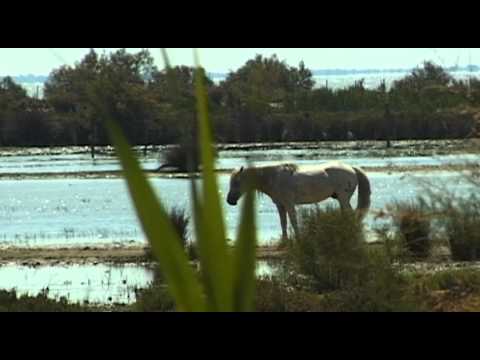
Camargue Vacation Travel Video Guide
Expoza Travel
Camargue (France) Vacation Travel Video Guide
Expoza Travel
Camargue (France) Vacation Travel Video Guide
Expoza Travel
You are currently viewing a placeholder content from Vimeo. To access the actual content, click the button below. Please note that doing so will share data with third-party providers.
More InformationYou are currently viewing a placeholder content from YouTube. To access the actual content, click the button below. Please note that doing so will share data with third-party providers.
More InformationYou need to load content from reCAPTCHA to submit the form. Please note that doing so will share data with third-party providers.
More InformationYou are currently viewing a placeholder content from GetYourGuide. To access the actual content, click the button below. Please note that doing so will share data with third-party providers.
More Information