
Georgian Military Highway: The Complete Travel Guide (2026)
Last updated: September 2026
Georgian Military Highway Travel Guide: Everything You Need to Know (2026)
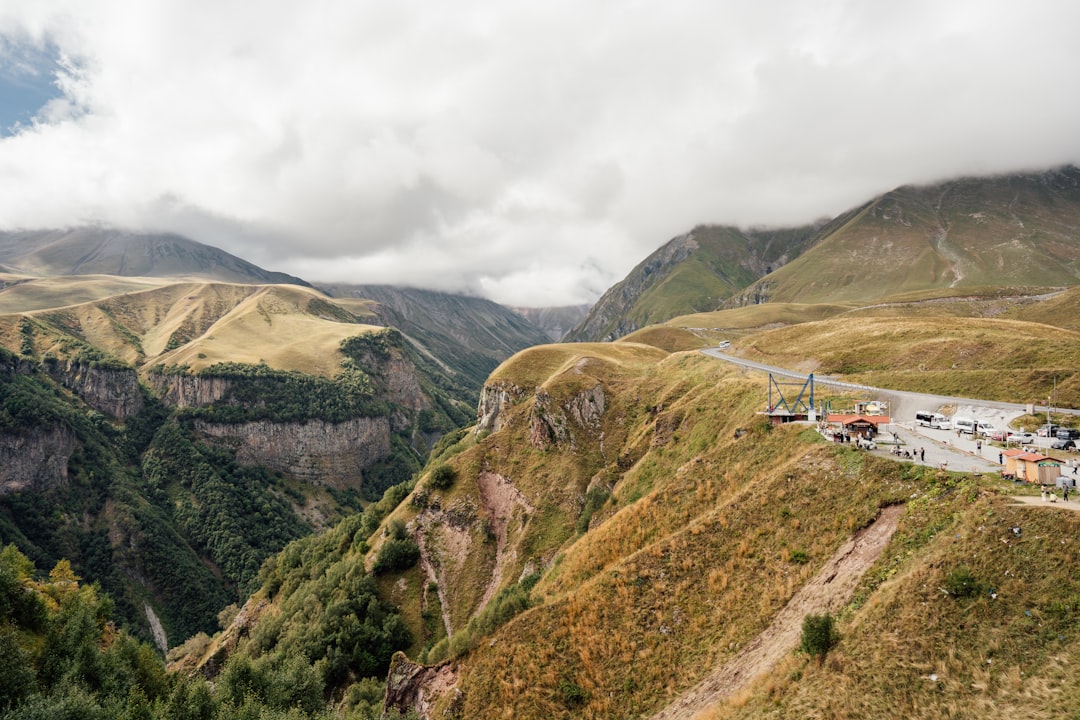
The Georgian Military Highway stretches roughly 212 km from Tbilisi north through the Greater Caucasus to the Russian border at Zemo Larsi (Kazbegi checkpoint), crossing the Jvari Pass at 2,395 metres altitude. Built by Imperial Russia in the early 19th century — the route was formalised by 1799 — it remains the only year-round road connection between Georgia and Russia, though closures during snowstorms are common between November and April. The highway passes through some of the most dramatic mountain scenery on Earth, with the iconic Gergeti Trinity Church sitting at 2,170 metres above the town of Kazbegi (Stepantsminda).
Three Things Not to Miss in Georgian Military Highway
- Gergeti Trinity Church (Tsminda Sameba) — 14th-century church perched at 2,170 m with Mount Kazbek’s 5,047 m peak as backdrop — Georgia’s most photographed sight.
- Gudauri Ski Resort — Georgia’s top ski destination sits at 2,196 m base elevation, offering 57 km of runs at a fraction of Alpine prices.
- Ananuri Fortress Complex — 16th-century castle and twin churches reflected in the turquoise Zhinvali Reservoir, just 72 km from Tbilisi.
Scroll down for our complete travel guide with tips on getting there, where to stay, costs and more.
Arriving in Georgian Military Highway
How do I best reach the Georgian Military Highway?
Fly into Tbilisi International Airport (TBS) — it is the undisputed gateway. The highway begins at the northern edge of Tbilisi in the Mtatsminda district and heads directly north through the Caucasus. From the city centre, marshrutkas (minibuses) to Stepantsminda (Kazbegi) depart daily from Didube Bus Terminal for roughly 15 GEL (about $6). In my experience, hiring a private driver from Tbilisi for a full-day or multi-day trip costs 80–150 GEL and gives you the flexibility to stop at Ananuri, Gudauri, and Jvari Pass — stops marshrutkas skip entirely. My tip: avoid travelling in winter without checking road conditions, as the Jvari Pass closes with zero warning during heavy snowfall.
Which airport is closest to the Georgian Military Highway?
Tbilisi International Airport (TBS) is the closest and most practical entry point, located approximately 18 km southeast of central Tbilisi. The highway’s southern terminus begins within the city itself. What surprised me is that Kutaisi International Airport (KUT), about 220 km west, is served by Wizz Air and Ryanair with cheaper European connections — worth considering if you plan to combine the highway with western Georgia. However, the transfer from Kutaisi to the highway adds 2.5 hours of driving. For the highway itself, TBS wins every time. The caveat most guides omit: TBS can have significant fog delays in winter months, which may cascade into ruined mountain itineraries if you’ve booked tight.
How long is the journey from Tbilisi to key points along the Georgian Military Highway?
Ananuri Fortress: 72 km, roughly 1 hour by car from central Tbilisi. Gudauri ski resort: 120 km, approximately 2 hours. Stepantsminda (Kazbegi): 157 km, 2.5–3 hours in good conditions. The marshrutka from Didube Terminal to Kazbegi takes 3–4 hours and runs once or twice daily. I recommend the morning departure around 9:00 to arrive with daylight for the Gergeti hike. The honest trade-off: the road through the Dariali Gorge near the Russian border is genuinely spectacular but the final 20 km to Stepantsminda involves sharp switchbacks that cause car sickness in sensitive travellers — sit in the front seat.
Are there direct bus connections along the Georgian Military Highway?
Yes — marshrutkas run daily from Didube Bus Terminal in Tbilisi to Stepantsminda for 15 GEL per seat. There is no fixed timetable in the Western sense; buses depart when full, typically between 8:00 and 10:00. They stop in Gudauri on request. What most guides omit: there is no reliable direct bus to Ananuri Fortress — you must either rent a car, join a tour, or flag down a passing marshrutka on the highway and risk being stranded. My tip: the Maxim taxi app and Bolt work in Tbilisi for the first stretch, but you will need a private arrangement beyond Mtskheta. Book a private driver for 80–120 GEL for a full Kazbegi day trip — it is worth every tetri.
Is a rental car necessary to explore the Georgian Military Highway?
A rental car is strongly recommended for full flexibility, though not strictly necessary for Kazbegi alone. In my experience, renting at Tbilisi Airport costs 40–80 GEL ($15–30) per day for a basic hatchback, but here is the critical caveat most guides skip: many rental contracts prohibit driving on unpaved roads, and the track up to Gergeti Trinity Church is exactly that — a rough dirt road requiring a 4×4 in wet or winter conditions. Either hire a local UAZ jeep in Stepantsminda for 50–80 GEL for the summit climb, or hike 3 hours on foot. Paved highway driving to Kazbegi is perfectly manageable in a standard car during summer months from June through September.
Bases & Accommodation in Georgian Military Highway
Which towns make good bases along the Georgian Military Highway?
Stepantsminda (Kazbegi) is the clear base for the northern section — a small mountain town of roughly 1,500 residents with guesthouses, cafes, and direct access to Gergeti. Gudauri is the best base in winter for skiing but is essentially a resort village with no authentic local life. Mtskheta, just 20 km north of Tbilisi and a UNESCO World Heritage Site, makes an excellent base if you want a cultural anchor close to the highway’s southern start. What surprised me: Sno Valley, a side valley 8 km east of Stepantsminda, offers quieter guesthouse stays with almost identical Kazbek views but 20–30% lower prices than the main town. My recommendation: base in Stepantsminda for 2 nights minimum.
Where should I stay along the Georgian Military Highway?
In Stepantsminda, the standout mid-range option is Rooms Hotel Kazbegi, offering floor-to-ceiling Kazbek mountain views for around 250–400 GEL per night — it is genuinely spectacular but books out fast. Budget travellers do well at local family guesthouses on the main street for 40–70 GEL per person including dinner. In Gudauri, ski-season apartments run 150–300 GEL per night. My honest trade-off: Rooms Hotel Kazbegi is worth the splurge for one night if you get a mountain-view room, but the budget guesthouses in town give a far more authentic experience of Georgian hospitality — think homemade khinkali and chacha at breakfast. Book Rooms Hotel at least 6–8 weeks ahead in July and August.
What does accommodation cost along the Georgian Military Highway?
Costs range dramatically by tier. Budget guesthouses in Stepantsminda: 40–70 GEL ($15–26) per person, often including dinner. Mid-range guesthouses with private bathrooms: 100–180 GEL ($37–67) per room. Rooms Hotel Kazbegi: 250–450 GEL ($93–167) per night for a standard double. In Gudauri, ski-season apartment rentals via Booking.com average 150–250 GEL ($56–93). The hidden cost most guides omit: Georgian family guesthouses often quote per-person rates that include meals — declining meals to save money is considered rude and may make your host uncomfortable. Budget an extra 20–30 GEL per day for full-board if staying with local families. This is genuinely the best food you will eat in the mountains.
How far in advance should I book accommodation on the Georgian Military Highway?
For Rooms Hotel Kazbegi in July and August, book 6–8 weeks ahead minimum — it sells out consistently. Budget guesthouses in Stepantsminda can usually be booked 1–2 weeks ahead in summer, but calling ahead is essential since many are not reliably listed on Booking.com. For the Gudauri ski season (January–March), book apartment-style accommodation 4–6 weeks ahead as Georgian and Russian skiers fill the resort early. What surprised me: during the Georgian Orthodox Easter weekend (date shifts annually), the entire highway corridor — especially Mtskheta — becomes completely booked by Tbilisi residents doing pilgrimage day trips. Check the Orthodox calendar before finalising dates. My tip: message guesthouses directly on Facebook — response is faster than any OTA.
When is the best time to visit the Georgian Military Highway?
June through September is unambiguously the best window based on verified climate data, with July and August offering the most stable conditions for hiking and Gergeti summit attempts. June is my personal favourite: wildflowers blanket the Truso and Sno valleys, crowds are lighter than July, and daylight stretches past 21:00. September brings golden-toned foliage and cooler temperatures ideal for hiking without the August midday heat. The honest caveat: even in summer, afternoon thunderstorms are common above 2,000 metres — start any hike before 08:00 and be below the ridge by 14:00. Winter offers a completely different appeal around Gudauri’s ski slopes, but the Jvari Pass can close suddenly between November and April.
Georgian Military Highway Through the Year
How does weather affect activities on the Georgian Military Highway?
Weather dictates everything above 2,000 metres. In summer (June–September), mornings are typically clear with clouds building after noon — I recommend starting the Gergeti Trinity Church hike by 07:00 to catch clear Kazbek views before cloud cover. The Jvari Pass (2,395 m) is frequently socked in by afternoon fog. In winter, the highway between Gudauri and Stepantsminda closes without warning during blizzards — sometimes for 24–48 hours. Skiing at Gudauri runs reliably January through March, with the resort sitting at a base elevation of 2,196 m ensuring good snow. My honest warning: spring (April–May) brings avalanche risk and muddy unpaved tracks — the Gergeti jeep road can become impassable, making it the worst season to visit.
Are there local festivals worth attending along the Georgian Military Highway?
Ananuroba — a festival held at Ananuri Fortress in late August — is the most distinctive local celebration, drawing Georgians for music, folk dancing, and communal feasting with the fortress as backdrop. It is genuinely festive and not yet heavily touristic. In Stepantsminda, the feast day of Lomisi in late May involves a procession of men carrying a heavy silver cross from Mtskheta to the Lomisi sanctuary near Mleta — one of the most physically dramatic Georgian religious traditions I have witnessed. Tbilisoba in October spills visitors northward along the highway. What most guides omit: Georgian religious feasts (rtveli grape harvest in September) affect guesthouse availability in Mtskheta heavily — book around these dates or well ahead.
When does the Georgian Military Highway get crowded?
July and August are peak months, particularly weekends when Tbilisi residents drive north en masse. The Gergeti Trinity Church area sees the highest concentration — on a Saturday in August, expect 50–100 tourists at the church simultaneously. The Ananuri Fortress parking lot fills by 11:00 on summer weekends. My tip: arrive at Ananuri before 09:30 or after 17:00 for near-solitude. Gudauri gets crowded during Georgian school holidays in January and the New Year period (December 31–January 3) when lift queues stretch to 30 minutes. What surprised me: the Truso Valley, just 8 km east of Stepantsminda, sees a fraction of Gergeti’s visitor numbers despite offering comparable scenery — a legitimate crowd-free alternative in peak summer.
What does a daily budget cost on the Georgian Military Highway?
Budget traveller: 60–90 GEL ($22–34) per day covering a guesthouse bed with meals, a marshrutka leg, and basic snacks. Mid-range: 150–250 GEL ($56–93) per day covering a private guesthouse room, a hired driver for one excursion, restaurant meals, and a coffee at Rooms Hotel’s terrace (worth it for the view alone at 6 GEL per coffee). Comfort level including Rooms Hotel: 350–500 GEL ($130–186) per day. The unavoidable hidden cost: the UAZ jeep to Gergeti costs 50–80 GEL return and is nearly non-negotiable unless you hike — budget this in. My experience: the highway is genuinely affordable by European standards, but Rooms Hotel’s restaurant inflates meal costs to 40–60 GEL per main course.
Is the Georgian Military Highway cheaper or more expensive than other Georgian regions?
The northern highway corridor is 15–25% more expensive than Tbilisi for accommodation due to limited supply and high demand, but 30–40% cheaper than Gudauri’s ski-season prices compared to the same Gudauri properties in summer. Compared to the wine region of Kakheti, Kazbegi guesthouses charge similar rates but with far fewer cheap guesthouse options in the surrounding villages. The honest trade-off: food costs along the highway are higher than Georgia’s average because everything must be transported up the mountain — a plate of khinkali that costs 8 GEL in Tbilisi costs 14–18 GEL in Stepantsminda. My recommendation: buy snacks and water in Tbilisi before departure. Petrol stations between Gudauri and Kazbegi are unreliable — fill up in Pasanauri.
Budgeting for Georgian Military Highway
What free highlights can I experience on the Georgian Military Highway?
Hiking to Gergeti Trinity Church on foot is free — the 3-hour return trail from Stepantsminda costs nothing and rewards you with the finest Caucasus panorama I have seen anywhere. The Dariali Gorge viewpoint near the Russian border is a roadside stop with no fee. Ananuri Fortress exterior can be viewed and photographed without paying the 3 GEL entry fee for the inner church. The Jvari Pass viewpoint at 2,395 m is free and genuinely spectacular. My tip: the Truso Valley walk from Kobi village (free entry) offers travertine terraces and a ruined Ossetian fortress with almost no other tourists. What surprised me: even the dramatic pull-offs along the Dariali cliff road with waterfall views are completely accessible without cost — just find safe parking.
What local specialities should I try along the Georgian Military Highway?
Khinkali — Georgian meat dumplings — are the defining dish of the mountain region and taste best in the Kazbegi area where pork-and-beef filling is traditional. At Stepantsminda’s local canteens, 5 khinkali cost roughly 8–10 GEL. Kubdari is a Svan-style meat-filled bread from the neighbouring Svaneti region, available at some Kazbegi guesthouses — do not miss it if offered. Churchkhela (walnut-and-grape-juice candy) is sold at every roadside stop for 3–5 GEL per strand and makes an excellent hiking snack. My honest warning: the Rooms Hotel restaurant serves sophisticated takes on Georgian cuisine but at prices (40–60 GEL per main) that match Tbilisi’s finest restaurants — the family guesthouse next door serves superior khinkali for a quarter of the price.
Which route do you recommend for 5–7 days on the Georgian Military Highway?
Day 1: Tbilisi base, evening walk through Mtskheta (UNESCO, 20 km from Tbilisi). Day 2: Drive north, stop 1.5 hours at Ananuri Fortress (09:30 arrival to beat crowds), continue to Gudauri viewpoint, arrive Stepantsminda by afternoon. Day 3: Early start (07:00) hike to Gergeti Trinity Church, afternoon rest. Day 4: Full day in Truso Valley — hire a local driver for 80 GEL, see the travertine terraces and ghost village of Ketrisi. Day 5: Drive to Dariali Gorge, cross toward the Russian checkpoint viewpoint (do not cross), return to Tbilisi via Ananuri sunset stop. For 7 days, add a night in Mtskheta and a side trip to Sno Valley. My tip: do not rush — the highway rewards slow travel.
What are the must-see sights on the Georgian Military Highway?
Gergeti Trinity Church (Tsminda Sameba) at 2,170 m is the single unmissable sight — a 14th-century church with Mount Kazbek’s 5,047 m summit directly behind it. Ananuri Fortress, 72 km from Tbilisi, is a perfectly preserved 16th-century castle above the turquoise Zhinvali Reservoir. The Dariali Gorge near the Russian border is a sheer-walled canyon that feels genuinely primeval — the road narrows to single-lane sections. Gudauri’s paragliding launch point offers tandem flights over the Greater Caucasus ridge for around 150–200 GEL in summer. What most guides omit: the Metekhi viewpoint above Stepantsminda (not the church) is reached in a 10-minute walk from town and gives the classic Gergeti composition — I prefer it to the crowded church summit itself.
What natural highlights does the Georgian Military Highway offer?
The highway passes through four distinct elevation zones across 212 km, from Tbilisi’s semi-arid plateau at 490 m to sub-alpine meadows near 2,395 m at the Jvari Pass. Mount Kazbek (5,047 m) dominates the northern section — a glaciated volcano and one of the Caucasus’s most iconic peaks. The Truso Valley features natural travertine mineral springs and turquoise pools comparable to Pamukkale but visited by a fraction of the tourists. The Gveleti Waterfall, 6 km north of Stepantsminda, is a powerful cascade accessible via a 45-minute walk from the main road. What surprised me: the Sno Valley in October turns extraordinary shades of amber and gold — autumn colour on the highway rivals anything in the Alps, completely undiscovered by mass tourism.
Driving & Walking Routes in Georgian Military Highway
What local specialities should I try along the Georgian Military Highway?
See answer 17 above — the culinary answer is covered in the specialities question. Additionally: Guda cheese, an aged sheep’s milk cheese made in the highlands, is named after the goat-bladder vessels once used to cure it and is available fresh from roadside sellers near Gudauri for 10–15 GEL per kilogram. Georgian mountain honey from beekeepers along the Aragvi River valley is extraordinary — one jar (500g) costs around 15–20 GEL and it makes a superior gift. My tip: the guesthouse breakfasts in Stepantsminda — typically eggs, fresh bread, local cheese, honey, and preserves — are included in most room rates and are genuinely filling. Skip the overpriced hotel breakfast and eat at your guesthouse every morning.
What activities are available on the Georgian Military Highway?
Hiking is the dominant activity — the Gergeti trail (3 hours return), Truso Valley (full day), and Chaukhi Pass route (overnight, technical) are the top options in summer. Skiing and snowboarding at Gudauri operates from December through March with a day lift pass costing 70–90 GEL ($26–34). Paragliding above Gudauri in summer costs 150–200 GEL for a tandem flight. Rafting on the Aragvi River near Pasanauri runs from May through September for around 80–120 GEL. What most guides omit: horse trekking from Stepantsminda through the surrounding valleys costs 60–100 GEL for a half-day with local guides — it is how shepherds still navigate these mountains and gives access to terrain impossible by any other means.
What distinguishes the Georgian Military Highway from other Georgian regions?
The highway is Georgia’s only region where imperial Russian history, Caucasian mountain culture, and extreme altitude scenery converge in a single 212 km corridor. Unlike the wine-saturated Kakheti or the beach-focused Adjara coast, the highway rewards physically active travellers willing to hike at altitude. The road itself is historically significant — formalised in 1799 as Russia’s strategic military route through the Caucasus, it changed the geopolitical fate of the entire region. What truly distinguishes it: the Vainakh tower architecture (defensive stone towers built by ancient Caucasian peoples) appears nowhere else in Georgia at this concentration. The view of Gergeti Church against Kazbek is Georgia’s most reproduced image and rightfully so — it earns its reputation, which is rare for a country’s signature postcard.
Which day trips are possible from the Georgian Military Highway?
From Stepantsminda: the Truso Valley (8 km east) is a full-day 4×4 excursion for 80–100 GEL with a local driver. The Sno Valley (8 km south) takes half a day on foot or by car. From Gudauri: the road south to Zhinvali Reservoir viewpoints takes under an hour. From Mtskheta at the highway’s southern end: Tbilisi is 20 km away (30 minutes) — easily combined. A day trip from Tbilisi covering Mtskheta, Ananuri, and Gudauri viewpoint without sleeping on the highway is possible in 10–12 hours — genuinely rewarding but exhausting. My honest trade-off: attempting Kazbegi as a Tbilisi day trip means 6+ hours of driving for perhaps 2 hours at the destination — a poor ratio. Stay at least one night.
Are there language barriers on the Georgian Military Highway?
English is spoken at Rooms Hotel Kazbegi and most Gudauri ski facilities — no barrier there. In local Stepantsminda guesthouses and village eateries, Russian is far more useful than English among the 50+ age group, though younger Georgians (under 35) increasingly speak serviceable English. The Georgian script (Mkhedruli) is completely unique and unrelated to any other alphabet — reading menus or road signs without the Cyrillic or Latin transliteration is impossible without prep. My tip: download the Georgian keyboard on Google Translate and learn 5 words: madloba (thank you), gamarjoba (hello), ara (no), ki (yes), ramdeni ghirs (how much). What surprised me: most highway marshrutka drivers speak only Georgian and Russian — communicate your stop in advance or show it on a map.
Local Know-How for Georgian Military Highway
Which apps do you recommend for travelling the Georgian Military Highway?
Maps.me or OsmAnd with offline Georgia maps downloaded — essential because mobile signal drops to zero in the Dariali Gorge and Truso Valley. Google Translate with Georgian downloaded offline for guesthouse communication. Windy.com for real-time mountain weather — check the 2,000 m elevation layer for the Jvari Pass conditions before driving. Bolt works in Tbilisi for reaching Didube marshrutka terminal. Weather.ge is the Georgian national forecast service and more accurate than international apps for Kazbegi-specific conditions. My honest addition: WhatsApp is how Georgian guesthouse owners communicate — message them directly with your arrival time rather than using OTA booking platforms. Response within 1–2 hours is typical, and you can often negotiate a slightly better rate than listed online.
Are there medical facilities along the Georgian Military Highway?
Stepantsminda has a small medical point — adequate for basic first aid but not equipped for serious mountain emergencies. The nearest hospital with surgical capacity is in Tbilisi, 157 km south. Gudauri has a ski patrol with basic trauma capability during the winter season. The critical caveat most guides omit: altitude sickness is a real risk above 2,000 m for travellers arriving directly from sea level — acclimatise in Tbilisi (490 m) for at least one night before sleeping in Stepantsminda (1,750 m). Carry ibuprofen and acetazolamide (Diamox) if you plan ridge hikes above 3,000 m. My tip: helicopter evacuation insurance is non-negotiable if attempting Kazbek summit climbs — a rescue flight costs upwards of $3,000 without coverage. Get proper mountain rescue travel insurance before departure.
How safe is the Georgian Military Highway?
The highway is safe for tourists — Georgia ranks as one of the Caucasus’s lowest crime-rate countries. The Russian border at Zemo Larsi is a functioning crossing but the area immediately south of it has seen occasional tension — do not attempt to cross into South Ossetia under any circumstances, as it is a separatist region unrecognised by Georgia and legally off-limits. Road safety is the genuine risk: Georgian drivers on the mountain switchbacks between Gudauri and Stepantsminda drive aggressively, and winter road ice combined with sheer drops makes self-driving genuinely dangerous without winter tyre experience. What surprised me: petty theft is virtually unknown along the highway — I have left bags unattended at Gergeti for hours without incident. The primary safety issue is mountain weather, not people.
What are common traveller mistakes on the Georgian Military Highway?
Attempting Kazbegi as a same-day return from Tbilisi is the single most common error — you spend more time in the car than at the destination. Not checking Jvari Pass road conditions before driving in shoulder seasons (October, May) results in travellers stranded on the wrong side of a closure. Hiring a standard rental car and attempting the Gergeti jeep track — the track destroys standard car undercarriages and voids insurance. Underestimating the afternoon thunderstorm risk above 2,000 m leads to lightning exposure on exposed ridges. My personal mistake on my first visit: I skipped Truso Valley to save time and regretted it for years — it is better than Gergeti for scenery and has a fraction of the visitors. Budget one full day for Truso. Do not rush the highway.
Which accommodation types suit the Georgian Military Highway best?
Family-run guesthouses in Stepantsminda are the definitive accommodation type for the highway — typically 40–70 GEL per person including dinner and breakfast, run by locals who have lived here for generations and can arrange drivers, horses, and guides. For the ski season in Gudauri, self-catering apartments (available on Booking.com for 150–250 GEL per night) suit groups of 3–4 sharing costs. Rooms Hotel Kazbegi is a design hotel experience worth one night for the views alone, but at 250–400 GEL it is a treat, not a base. What most guides omit: camping is legally possible in the national park areas around Stepantsminda and is free — but carry all water and food as no services exist above the treeline. The guesthouse experience wins for authenticity every single time.
Georgia › Georgian Military Highway
Destinations in Georgian Military Highway
Essential Resources for Planning Your Trip to Georgian Military Highway
- Georgian Military Highway: the Ultimate Road Trip Guide — official visitor information, passes & events
- Wikipedia: Georgian Military Highway — history, geography & background
- Wikivoyage: Georgian Military Highway — community travel guide & practical tips
- A first-time guide to Georgia – Lonely … — expert itineraries & travel inspiration
- Georgian Military Highway — TripAdvisor — hotels, restaurants & traveller reviews
- Discover Georgia and Armenia – Princeton Alumni — how to get around
- Numbeo: Cost of Living in Georgian Military Highway — current prices & cost comparison
- Timeanddate: Georgian Military Highway Weather & Climate — forecasts & climate statistics
More Perspectives on Georgian Military Highway
- Georgian Military Highway: the Ultimate Road Trip Guide
- 12 Places to Visit on a Georgian Military Highway Road Trip
- Guide to a Georgian Military Road: 18 Best Things to Do & …
Georgian Military Highway Travel Videos
Watch these videos for a visual preview before your trip:
- Places to Visit on a Georgian Military Highway Road
- The Most Beautiful Road in The World (Georgian Military Highway)
- The Spectacular Georgian Military Highway to Kazbegi (Stepantsminda) – A Dream Road Trip!!
Georgian Military Highway Travel Discussions on Reddit
Real traveller experiences and community advice:
- Do you need a 4×4 to drive the Georgian Military Highway?
- We drove the legendary Georgian Military Highway from …
- Georgian military road – safe to drive through? : r/tbilisi
Data Sources
This page was compiled using data from Wikipedia, Wikidata, Open-Meteo (climate), Numbeo (cost of living) and REST Countries. Information is updated regularly.