
Kazbegi: The Complete Travel Guide (2026)
Last reviewed: August 2026 · key facts checked against Wikidata
Kazbegi Travel Guide: Everything You Need to Know (2026)
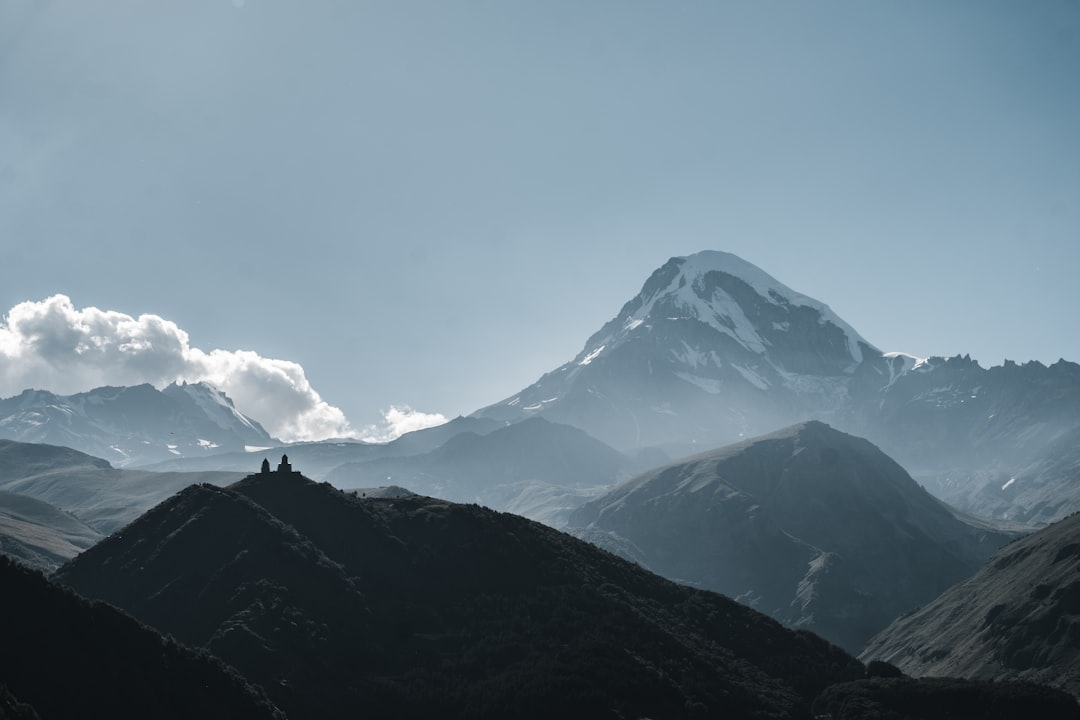
Kazbegi — officially called Stepantsminda — sits at 1,740m above sea level in the Greater Caucasus mountains of north-eastern Georgia, just 10km from the Russian border. The townlet of 1,326 residents has become Georgia’s most dramatic highland destination, anchored by the iconic Gergeti Trinity Church perched at 2,170m above a glacial valley. The surrounding Kazbegi National Park protects 87,000 hectares of alpine wilderness, making this one of the Caucasus’s premier mountain destinations for 2026.
Three Things Not to Miss in Kazbegi
- Gergeti Trinity Church — A 14th-century Georgian Orthodox church at 2,170m with Mount Kazbek’s 5,047m glaciated summit as backdrop — unmissable.
- Mount Kazbek Glacier Trek — A full-day hike to Meteo Station base camp at 3,657m rewards with crevasse views no road in Georgia replicates.
- Georgian Military Highway — The 212km road from Tbilisi cuts through Dariali Gorge with sheer 1,000m canyon walls — one of the Caucasus’s most dramatic drives.
Scroll down for our complete travel guide with tips on getting there, where to stay, costs and more.
How to Reach Kazbegi
How do I get to Kazbegi from Tbilisi or elsewhere in Georgia?
Take a marshrutka from Tbilisi’s Didube bus station — it’s the fastest, cheapest option. Marshrutkas depart daily from around 8:00 AM, cost roughly 5 GEL (≈ $2), and cover the 148km Georgian Military Highway in approximately 2.5 hours. My tip: sit on the left side for Dariali Gorge views. Private taxis from Tbilisi run 80–120 GEL and offer door-to-door convenience. What surprised me: the road closes temporarily in winter after heavy snowfall, sometimes without warning, so check Georgian road authority updates before departing November through March.
Which airport is closest to Kazbegi?
Tbilisi International Airport (TBS) is your only practical entry point, located 160km south of Kazbegi. No regional airport serves the Kazbegi area. From TBS, take the Tbilisi Metro to Didube station (0.50 GEL), then a marshrutka north — total travel time airport to Kazbegi is around 4 hours door to door. In my experience, booking an overnight in Tbilisi first makes more sense than rushing straight to Kazbegi after a long-haul flight, especially if you arrive past noon.
How long does the journey to Kazbegi take from Tbilisi?
The marshrutka ride takes 2.5 hours in summer with clear roads. In my experience, this extends to 3.5 hours in winter when the Jvari Pass section, which peaks at 2,395m, gets icy and drivers slow significantly. Private transfers with a stop at Ananuri Fortress — absolutely worth a 30-minute detour — push total journey time to around 3 hours. The caveat most travel blogs omit: the final stretch into Kazbegi town involves sharp switchbacks, and anyone prone to motion sickness should take medication before departure from Tbilisi.
Do I need a rental car in Kazbegi?
No rental car is needed for Kazbegi itself — the town is walkable in 15 minutes end to end. However, renting a local 4WD jeep with driver is essential for reaching side valleys like Truso Gorge or Sno Valley. These local jeep hire deals cost 80–150 GEL per day arranged through guesthouses. I recommend this over self-drive because mountain tracks deteriorate fast and a local driver knows which creek crossings are passable. The honest caveat: self-drive car rental companies in Tbilisi typically prohibit their vehicles on unpaved mountain roads, voiding your insurance.
Kazbegi Public Transport Explained
What are the best areas to stay in Kazbegi?
Stay in Stepantsminda town centre for easy access to marshrutka connections and the main trail to Gergeti Church. The Betlemi Street area near the Aragvi River offers guesthouses with direct mountain views at lower prices. Upscale travellers should target the Rooms Hotel Kazbegi on the northern hill — it has panoramic Kazbek views but costs 3–4 times more than local guesthouses. My tip: avoid the cluster of budget places immediately beside the main highway as truck noise starts from 5:30 AM and genuinely disrupts sleep.
What does accommodation cost per night in Kazbegi?
Budget guesthouses with breakfast in Stepantsminda run 30–50 GEL (≈ $11–18) per person. Mid-range private rooms with en-suite bathroom cost 80–150 GEL (≈ $29–54) per night. The Rooms Hotel Kazbegi, the landmark luxury property, charges 400–700 GEL (≈ $145–255) per night in peak summer. What surprised me: several family guesthouses include a generous Georgian breakfast — churchkhela, cheese bread, eggs — that alone is worth 15–20 GEL at a café, making budget stays even better value than the sticker price suggests.
How far in advance should I book accommodation in Kazbegi during high season?
Book at least 6–8 weeks ahead for July and August — Kazbegi’s peak season. The Rooms Hotel Kazbegi sells out 3–4 months in advance for summer weekends. In my experience, Georgian long weekends in August are the single most brutal booking crunch, when Tbilisi residents flood the mountains. The honest warning most guides skip: many family guesthouses don’t appear on Booking.com — check Facebook groups like ‘Georgia Travel’ or message guesthouses directly via WhatsApp for the best availability and prices.
Are there special or unique accommodation types in Kazbegi?
Yes — shepherd camp stays in the high pastures above 2,500m are genuinely unlike anything else in Georgia. Local herding families accept guests from June to September for roughly 40–60 GEL per night including meals. Gergeti village, the hamlet directly below the famous church, has two small guesthouses where you wake to the church framed in your window at dawn — a view no hotel lobby replicates. My tip: ask at the Kazbegi National Park office on the main square to connect with vetted shepherd families for overnight stays in Juta valley, 15km east.
Neighbourhoods of Kazbegi
What are the absolute must-sees in Kazbegi?
Three experiences are non-negotiable. First, Gergeti Trinity Church at 2,170m — hike the 3km trail from Stepantsminda in about 90 minutes or hire a jeep for 30 GEL. Second, the Dariali Gorge, accessible in 20 minutes by jeep north toward the Russian border, where walls rise vertically over 1,000m. Third, the Juta Valley hike: a 22km circuit through alpine meadows touching 2,800m that has no equivalent in the South Caucasus. The caveat: Gergeti Church interior photography is restricted — dress modestly or you will be turned away at the door.
What can I experience for free in Kazbegi?
Most of Kazbegi’s best experiences cost nothing. The Georgian Military Highway viewpoints are freely accessible and the Dariali Gorge pull-off 8km north of town is one of the Caucasus’s great free panoramas. The hike to Gergeti Trinity Church on the marked trail costs 0 GEL — only the jeep ride up charges. Kazbegi National Park entry itself is free for individual hikers. What surprised me: the small Kazbegi History and Ethnography Museum on the main square charges just 3 GEL and contains genuine Khevi province artefacts most visitors walk past entirely.
Which day trips from Kazbegi are most worthwhile?
Truso Gorge is my top recommendation — a 30km drive west plus a 10km hike through travertine mineral springs and ruined medieval towers, with a jeep hire costing roughly 100 GEL. Sno Valley to the east takes 45 minutes by 4WD and leads to the fortified tower village of Sno — almost no tourists reach it. Gveleti Waterfalls, just 6km south of Stepantsminda, require only a 40-minute walk and entry is free. The honest caveat: guided day trips sold in Tbilisi to ‘Kazbegi’ often rush all three into one day, which is genuinely exhausting and shortchanges every site.
What local specialities should I try in Kazbegi?
Order Kubdari first — a Svan meat-stuffed bread specific to Georgia’s mountain regions, costing 8–12 GEL at local canteens. Khinkhali (Georgian soup dumplings) in Kazbegi are filled with mountain herb mixtures you won’t find in Tbilisi versions, running 1–1.50 GEL each. Wash everything down with Kazbegi beer, brewed in the town itself since the Soviet era. My tip: the small family kitchen beside the Stepantsminda church in the lower town serves the most honest local food — no English menu, point and gesture, and you will spend under 20 GEL for a full mountain lunch.
What to See in Kazbegi
What makes Kazbegi unique compared to other Georgian destinations?
Kazbegi delivers the rarest combination in the Caucasus: a 5,047m glaciated volcano (Mount Kazbek), a medieval church that appears to float above the clouds, and a living highland culture — the Khevi people — with distinct traditions still practised by the 1,326 residents. No other Georgian town sits this close to the Russian border and remains freely accessible. What surprised me: Kazbegi is the only place in Georgia where you can hike to a permanent glacier (the Gergeti Glacier at 3,200m) without technical climbing equipment, on a marked path.
How many days should I plan for Kazbegi?
I recommend 3 full days minimum: Day 1 for acclimatisation and Gergeti Church, Day 2 for Truso Gorge or Juta Valley, Day 3 for Dariali Gorge and the ethnography museum. Serious hikers targeting the Kazbek summit base camp at 3,657m need 4–5 days. The honest warning: one-day Kazbegi trips from Tbilisi — incredibly popular — leave you with rushed Gergeti photos and no real sense of the mountains. Even one overnight stay transforms the experience, especially watching alpenglow turn Kazbek’s glacier pink at 6:30 AM.
When is the best time to visit Kazbegi?
June through September are the optimal months based on verified climate analysis. July and August offer the most stable weather for high-altitude hikes. June is my personal favourite — trails are open, wildflowers blanket the Juta Valley, and crowds are 40% lighter than August. September brings golden larches and the clearest mountain visibility of the year. The caveat: October turns Kazbegi beautiful with autumn colour but the Jvari Pass can close with early snow after mid-October, potentially stranding travellers. Winter visits are possible but require serious cold-weather gear and flexible schedules.
How does local festival life affect a visit to Kazbegi?
Kvirikoba, the ancient Khevi mountain festival at Gergeti Trinity Church, falls in late July — exact dates shift annually by the Orthodox calendar, so verify before booking. It draws local shepherds, horse riders, and families in traditional dress and is genuinely not staged for tourists. Mariamoba in mid-August, Georgia’s national holiday, causes a massive influx from Tbilisi — prices spike 20–30% and guesthouses sell out. My tip: arriving two days before Kvirikoba and leaving before the weekend peak gives you the festival atmosphere without the accommodation crunch.
Kazbegi Food Scene
How does weather affect activities in Kazbegi across seasons?
At 1,740m elevation, Kazbegi’s weather changes fast. Summer afternoons regularly produce thunderstorms after 2:00 PM, so start all major hikes by 7:00 AM. The Gergeti Church trail becomes genuinely dangerous in lightning — turn back immediately if clouds build over Kazbek’s summit. Winter temperatures drop to -15°C and below, the Georgian Military Highway closes temporarily after heavy snowfall, and most guesthouses shut between December and February. Spring (April–May) brings snowmelt that makes lower trails muddy but wildflowers are exceptional — the tradeoff most guides skip is that Juta Valley road often stays closed until late May.
How crowded does Kazbegi get in peak season?
August is brutal for crowds by Kazbegi standards — the Gergeti Church trail sees 300–500 hikers daily and jeep queues at the trailhead form from 9:00 AM. The Rooms Hotel Kazbegi terrace becomes a social media scrum by mid-morning. In my experience, arriving at Gergeti by 7:00 AM means near-solitude with the church and mountain to yourself. The honest fact most influencers omit: those famous empty-trail photos of Gergeti are shot in early morning in June, not in August, and require genuine effort to replicate in high season.
How safe is Kazbegi for travellers?
Kazbegi is extremely safe by any international standard — petty crime is nearly nonexistent in a community of 1,326 people where everyone knows everyone. The real safety risks are environmental: altitude sickness above 3,000m, sudden mountain weather, and unmarked trail sections toward Kazbek base camp. I recommend downloading maps.me with offline Kazbegi maps before hiking above 2,500m. The honest caveat: proximity to Russia (10km) means the border zone requires no special permit for tourists, but approaching the actual border fence triggers a Georgian border guard response — stay on marked trails.
Is English widely spoken in Kazbegi?
English is spoken at a basic level in most guesthouses and the handful of tourist-facing restaurants. Younger Georgians working in hospitality often speak functional English. However, local marshrutka drivers, market vendors, and shepherd families speak only Georgian and often Russian. My tip: download the Google Translate Georgian offline pack — the camera translation feature works remarkably well on Georgian script menus. The honest reality: a few words of Georgian — ‘madloba’ (thank you), ‘gamarjoba’ (hello) — open extraordinary warmth from Khevi locals who genuinely appreciate the effort.
Local Know-How for Kazbegi
What is a realistic daily budget for Kazbegi?
Budget travellers staying in guesthouses and eating at local canteens can manage 50–70 GEL (≈ $18–25) per day including accommodation, food, and one short hike. Mid-range travellers wanting a private room, restaurant dinners, and a jeep excursion should budget 150–220 GEL (≈ $54–80) per day. The Rooms Hotel Kazbegi experience with meals and activities pushes daily spend to 600 GEL+ (≈ $218+). The hidden cost most budgets miss: jeep hire for off-road valleys adds 80–150 GEL per excursion and is genuinely necessary for Truso Gorge and Juta — budget for at least two jeep days.
How does public transport work in and around Kazbegi?
Public transport within Kazbegi town is non-existent — you walk, hike, or hire a jeep. Between Kazbegi and Tbilisi, marshrutkas depart from the main square daily at approximately 8:00 AM and 3:00 PM, costing 5 GEL (≈ $2). The return marshrutka from Didube station in Tbilisi leaves at 10:00 AM and 3:00 PM. No public buses serve side valleys like Truso or Juta. My honest warning: marshrutka schedules are not posted online and change seasonally — confirm departure times at your guesthouse the night before, or you risk missing the only morning connection.
Which apps do you recommend for visiting Kazbegi?
Maps.me with downloaded offline Georgia maps is non-negotiable — Google Maps trail data in Kazbegi National Park is unreliable above 2,000m. Windy.com gives reliable mountain weather forecasting for summit and high-trail conditions, showing wind and precipitation at specific altitudes. Yandex.Taxi works for Tbilisi transfers but has no coverage in Kazbegi itself. For the hike to Gergeti Church, the AllTrails app has the most accurate elevation profile and user photos showing current trail conditions. My tip: download everything in Tbilisi — mobile data in the upper Kazbegi valleys drops to 2G speeds or disappears entirely above 2,200m.
Kazbegi at a Glance
| Population | 1,326 |
|---|---|
| Official language | Georgian |
| Time zone | UTC+04:00 |
Source: Wikidata, retrieved August 2026.
Georgia › Kazbegi
More Destinations in Georgian Military Highway
More Destinations in Georgia
Essential Resources for Planning Your Trip to Kazbegi
- Wikipedia: Kazbegi — history, geography & background
- Wikivoyage: Kazbegi — community travel guide & practical tips
- Stepantsminda travel – Lonely Planet | Georgia, Europe — expert itineraries & travel inspiration
- THE 15 BEST Things to Do in Stepantsminda (2026) — hotels, restaurants & traveller reviews
- The Chronicle of Georgia 🇬🇪 One of the beautiful destination … — how to get around
- Numbeo: Cost of Living in Kazbegi — current prices & cost comparison
- Timeanddate: Kazbegi Weather & Climate — forecasts & climate statistics
More Perspectives on Kazbegi
- Visit Kazbegi, Georgia in 2026:The Ultimate Kazbegi Guide
- Kazbegi Travel Guide 2026: Best Things To Do, Hiking …
- Georgia travel tips and recommendations
Kazbegi Travel Videos
Watch these videos for a visual preview before your trip:
- Georgia Travel Guide: Best Things to do in Tbilisi, Kazbegi and Kakheti
- Beyond Tbilisi – Is Kazbegi REALLY Georgia’s Winter Paradise
- Kazbegi Day Trip from Tbilisi 🇬🇪 Northern Georgia & Caucasus
Kazbegi Travel Discussions on Reddit
Real traveller experiences and community advice:
- Tbilisi and Kazbegi in one week, some questions?
- Travel to Kazbegi : r/tbilisi
- Is it safe to travel to Mkinvartsveri/Kazbegi as it’s near …
Data Sources
This page was compiled using data from Wikipedia, Wikidata, Open-Meteo (climate), Numbeo (cost of living) and REST Countries. Information is updated regularly.