
Jordan: The Complete Travel Guide (2026)
Last reviewed: August 2026 · key facts checked against Wikidata
Jordan Travel Guide: Everything You Need to Know (2026)
Jordan, the Hashemite Kingdom with a population of 10,428,241, packs an extraordinary density of world-class history into an area roughly the size of Portugal — from Petra, carved by the Nabataeans around 300 BCE, to the Dead Sea at 430 metres below sea level, the lowest point on Earth. The country sits at a crossroads between Syria, Iraq, Saudi Arabia, Israel, and Palestine, making it one of the most geopolitically fascinating destinations in the Middle East. In my experience, Jordan consistently surprises first-time visitors with its hospitality, safety relative to neighbours, and sheer diversity of landscapes within a 90-minute drive.
Top 3 Highlights at a Glance
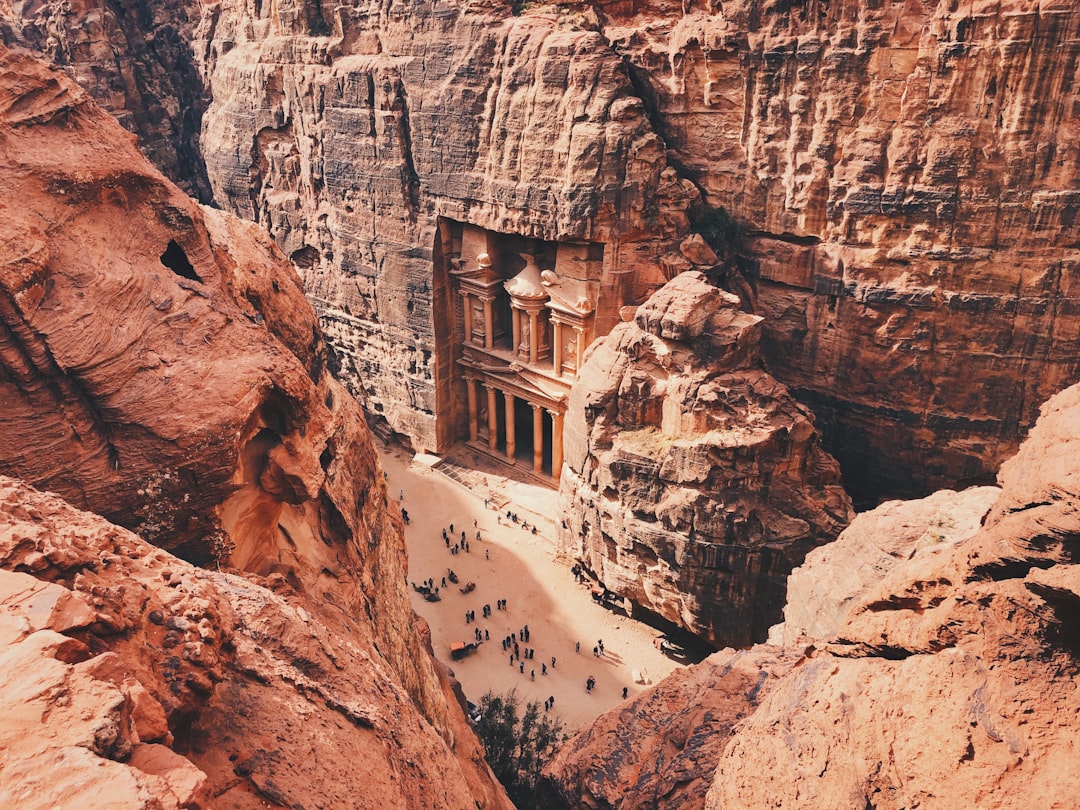
- Petra — The Rose-Red City — The Nabataean capital carved into sandstone cliffs, with the iconic Treasury façade standing 43 metres tall.
- Dead Sea Float — Float effortlessly at 430 metres below sea level — the lowest accessible point on Earth.
- Wadi Rum Desert Camp — Sleep under the stars in a Bedouin camp inside a UNESCO-protected desert of red sandstone and granite.
Scroll down for our complete travel guide with tips on getting there, where to stay, costs and more.
Getting There & Transport
Which airports are the best entry points into Jordan?
Queen Alia International Airport (AMM) in Amman is Jordan’s main gateway and handles the overwhelming majority of international traffic. In my experience, flying into AMM gives you the best onward connections to Petra, the Dead Sea, and Aqaba. Aqaba King Hussein International Airport (AQJ) is the smart alternative if you’re starting in the south — it sits just 6 km from the city centre and is perfect for Red Sea diving or a Wadi Rum-first itinerary. My tip: budget carriers including Ryanair and Wizz Air serve AMM from Europe, but AQJ has far fewer connections and limited baggage handling. What surprised me: AQJ is tiny — one carousel, zero food options airside, so eat before you land.
How do I get from Amman’s Queen Alia Airport to my first accommodation in Jordan?
The Airport Express Bus (Line AB) runs to 7th Circle and Abdali in central Amman for JOD 3.3 (roughly USD 4.65) and takes 45–60 minutes. In my experience, this is the best value option and the bus is clean and air-conditioned. Taxis from the official rank outside arrivals cost a fixed JOD 20–25 (USD 28–35) to central Amman — always use the metered official taxis, not touts inside the terminal. My tip: book a ChangeGroup currency exchange inside arrivals before exiting — rates are reasonable and you’ll need dinars immediately for the bus. The honest caveat: the bus drops you at Abdali Bus Station, which requires a short taxi onward if your hotel is in Jabal Amman or Weibdeh — budget an extra JOD 3.
What transport options are there within Jordan?
Jordan’s inter-city public transport relies on JETT buses (the national carrier) and shared minibuses (service taxis). JETT runs comfortable coaches from Amman’s Abdali station to Aqaba for JOD 9 (USD 12.70), taking 4 hours. Service taxis depart when full from Muhajireen or Wihdat stations in Amman — cheaper but unpredictable timing. In my experience, renting a car unlocks Jordan’s best landscapes most efficiently. What surprised me: there is no passenger train network — Jordan’s rail infrastructure is cargo-only. My tip: for the King’s Highway route between Amman and Petra, no bus follows that road — you need a private car or organised tour. Rideshare app Careem works reliably within Amman but is useless outside the capital.
Do I need a rental car to explore Jordan properly?
Yes — for anything beyond Amman, a rental car transforms your trip. In my experience, the King’s Highway, Dana Biosphere Reserve, Karak Castle, and Wadi Rum are nearly inaccessible without private transport. Rental starts at JOD 25–35 per day (USD 35–50) for a compact car from Europcar or Budget at AMM. The honest trade-off: Jordan’s roads are generally excellent but signage is inconsistent in remote areas — download Maps.me offline maps before leaving Amman. My tip: a 4WD is unnecessary unless you plan deep desert driving in Wadi Rum itself — the main roads are paved. Fuel costs roughly JOD 0.88 per litre (USD 1.24), so a week of driving adds roughly JOD 60–80 to your budget. Book the car in advance online — airport desks often charge 30% more walk-in.
How good is the public transport network between regions of Jordan?
Bluntly: Jordan’s inter-regional public transport is functional but frustrating. JETT buses cover the Amman–Aqaba corridor reliably, and minibuses connect major towns like Madaba, Irbid, and Zarqa. The critical gap: there is no direct public bus to Petra (Wadi Musa) — the closest you get is a minibus to Ma’an (JOD 4) followed by another to Wadi Musa (45 minutes, JOD 1.5). In my experience, this two-stage journey takes 5–6 hours total from Amman versus 2.5 hours by car. What surprised me: the Jordan Pass tourist product includes transport discounts but doesn’t fix the connectivity gaps. My honest warning: if you’re relying solely on public transport, budget an extra day per destination for transfer time.
Accommodation
Which regions should I stay in when travelling Jordan?
I recommend anchoring your Jordan trip across three zones. Amman (Jabal Amman / Rainbow Street area) is the cultural and logistical hub — stay here for citadel access and excellent restaurants. Wadi Musa is the only sensible base for Petra — staying inside this village saves you the crushing early morning commute and lets you catch Petra by candlelight on Tuesday, Thursday, or Wednesday evenings. Aqaba suits those combining Jordan with Red Sea snorkelling or wanting a relaxed final night before flying home from AQJ. My tip: avoid staying solely at Dead Sea resort hotels — they’re excellent for one night but overpriced for longer stays and isolated from everything. In my experience, Madaba makes an underrated base for the north, combining mosaic culture with cheaper hotels than Amman.
What does good accommodation cost per night in Jordan?
Budget well: accommodation in Jordan spans a dramatic price range. A clean guesthouse in Wadi Musa near Petra costs JOD 25–40 (USD 35–56) per night. Mid-range hotels in Jabal Amman run JOD 60–100 (USD 85–141). The Dead Sea resort strip (properties like Kempinski Ishtar) charges JOD 200–350 (USD 282–494) per night — that’s the honest sticker shock most travel blogs omit. In my experience, the sweet spot is a 3-star property in Wadi Musa for JOD 35 with breakfast included — far better value than Amman equivalents. My tip: the Jordan Valley Marriott near the Dead Sea occasionally drops to JOD 120 on off-peak weekdays via direct booking, undercutting OTA prices by 20%.
When should I book hotels in Jordan — how far in advance?
For travel in May, June, September, or October — Jordan’s peak pleasant-weather months — book Petra accommodation 6–8 weeks ahead. The Wadi Musa area has fewer than 40 worthwhile hotels and Chinese and European group tours block large properties from March onward. Dead Sea resorts sell out weekends year-round because Jordanian and Gulf weekenders fill them. In my experience, booking Amman hotels 2 weeks ahead is usually sufficient except during Eid al-Fitr and Eid al-Adha, when the entire country moves and prices spike 40–60%. My honest tip: for a Wadi Rum Bedouin camp, book 3 months ahead for the best bubble tents and stargazing camps — the iconic Memories Aicha Panoramic Lodge fills fast.
When is the best time to travel to Jordan?
Based on verified climate analysis, May, June, September, and October are Jordan’s optimal travel months. In my experience, October is the single best month — Petra is warm without being brutal, the Dead Sea is swimmable at 31°C water temperature, and tourist crowds drop sharply after the European summer exodus. May offers lush green landscapes in the north — rare in the Middle East — and wildflowers across Dana Reserve. Avoid July and August: Petra temperatures regularly hit 38°C by 11am and the heat makes the 2.4 km Siq walk genuinely unpleasant. My honest caveat: Wadi Rum in winter (December–January) is surprisingly cold at night — below 5°C — and Bedouin camp heating is minimal, so pack layers even for a desert trip.
How does peak season affect prices in Jordan?
Peak season in Jordan runs March through May and September through November, driven by European tour groups. During peak weeks, Petra entry (JOD 50 for a 1-day pass, USD 70.50) stays fixed — unlike most destinations, Jordan’s attractions don’t do dynamic pricing. What does surge is accommodation: Wadi Musa hotels increase rates by 30–50% in March–April versus January. The Jordan Pass (from JOD 70 / USD 98.70) is the smart hedge — it locks in Petra entry and 40+ site access regardless of season. In my experience, the most overlooked pricing trap: Dead Sea day passes at resort hotels jump from JOD 40 to JOD 75 during Jordanian public holidays when locals flood the shoreline. My tip: visit the Dead Sea on a Tuesday or Wednesday for the lowest day-use rates.
Best Time to Visit
Which regions of Jordan have different climate zones?
Jordan compresses four distinct climate zones into a compact geography. The Jordan Valley and Dead Sea area (−430m altitude) is sub-tropical — warm and mild in winter, oppressively hot in summer exceeding 42°C. Amman and the northern highlands sit at 850–1,000m and experience genuine seasons including snow in January and February. Wadi Rum desert has extreme diurnal swings — 38°C days and 10°C nights in summer, freezing nights in winter. Aqaba on the Red Sea enjoys the most stable climate, rarely dropping below 20°C in winter, making it Jordan’s year-round beach destination. In my experience, the most shocking microclimate surprise: it can snow in Petra in January — the Treasury looks stunning but the trails become dangerously slippery and periodically close.
What are the rainy seasons in Jordan?
Jordan’s rainy season runs November through March, concentrated in the northern highlands and Amman. Amman receives roughly 270mm annually, almost entirely in these months. The Dead Sea basin and Wadi Rum are near-desert and may receive fewer than 50mm per year. In my experience, November rain in Jordan is not a deal-breaker — showers are typically short, dramatic, and followed by clear skies. The genuine risk is Wadi Rum and Petra flash floods: the Siq (Petra’s entrance gorge) has a documented flood history — the 1963 flood killed 23 tourists — and authorities close it within minutes of upstream rain. My honest warning: if you visit October through December, check the Jordan Meteorological Department app daily when near wadis. Travel insurance covering activity cancellation is worth adding.
What does a trip to Jordan cost per person per day?
Budget honestly: Jordan is not a cheap destination. A backpacker daily budget (dorm bed, falafel meals, public transport, one paid site) runs JOD 35–50 (USD 49–70) per day. A mid-range independent traveller spending nights in decent hotels, eating at local restaurants, and renting a shared car should budget JOD 90–130 (USD 127–183) per day. The largest single-day expense is Petra entry at JOD 50 (USD 70.50) — buy the Jordan Pass (JOD 70 / USD 98.70) if you’re staying more than 3 nights in Jordan, as it includes Petra and visa cost. In my experience, food and transport are cheaper than Western Europe, but site admission fees are disproportionately high — Petra alone equals a night’s accommodation. Factor JOD 15–20 per day for entrance fees across multiple sites.
How expensive is food in Jordan?
Food in Jordan is excellent value if you eat local. A falafel wrap from a Amman street stall costs JOD 0.5–1 (USD 0.70–1.41). A full mansaf (Jordan’s national dish — lamb in fermented yoghurt) at a local restaurant in Hashem Restaurant in downtown Amman costs JOD 5–8 (USD 7–11) per person. Mid-range sit-down meals at Rainbow Street restaurants run JOD 12–20 (USD 17–28) including mezze and a soft drink. In my experience, the honest trap is the tourist restaurants near Petra’s Wadi Musa — identical hummus costs 3x the Amman price because there’s no competition. My tip: buy groceries from Carrefour in Amman before long drives — snacks and water are 60% cheaper than roadside stops near tourist sites.
What hidden costs should I expect when travelling Jordan?
Jordan’s hidden costs catch nearly every first-timer. Petra’s Little Petra (Siq al-Barid) is free, but horse rides inside Petra start at JOD 10 (USD 14) and guides pressure you constantly. Wadi Rum jeep tours from official visitor centres cost JOD 35–60 (USD 49–85) for a 2-hour tour and are near-mandatory for seeing the interior. The Dead Sea resort day-pass to access the beach if you’re not a hotel guest runs JOD 40–75 (USD 56–106). In my experience, the most consistently overlooked cost: Jordan’s visa on arrival is JOD 40 (USD 56.50) unless you buy the Jordan Pass, which waives the visa fee — saving money only if you visit Petra for 2+ days. My tip: budget a contingency JOD 30 per person for tips, site extras, and Jordan’s ubiquitous tea-and-sell carpet shop culture.
Budget & Costs
How much cash should I bring to Jordan?
Bring enough Jordanian Dinars (JOD) to cover your first 48 hours — roughly JOD 100–150 (USD 141–212) per person. ATMs are widely available in Amman and Aqaba but scarce in Wadi Rum village and along the King’s Highway. In my experience, the single worst moment to need cash is arriving at a Bedouin camp in Wadi Rum at night with no ATM within 30 km. Exchange at Cairo Amman Bank branches in Amman — rates beat airport counters by 4–6%. USD is accepted as a secondary currency at major tourist sites and hotels but at unfavourable rates. My honest warning: the JOD is pegged to the USD at approximately 0.709, making it one of the world’s highest-value currencies — don’t confuse face-value with what you’re actually spending. Carry small bills: vendors rarely break a JOD 20 note.
Which credit cards are accepted in Jordan?
Visa and Mastercard are accepted at hotels, larger restaurants, and tourist sites in Amman and Aqaba. In my experience, anything outside these two cities is effectively cash-only — Petra’s ticket office accepts cards but most Wadi Musa restaurants don’t. American Express is accepted only at 5-star properties like the Kempinski Dead Sea. What surprised me: many petrol stations outside Amman still take cash only, which matters if you’re driving the King’s Highway. My tip: inform your bank before travel — Jordan’s banking system occasionally triggers fraud alerts on foreign cards. A Revolut or Wise card with no foreign transaction fees saves roughly 3% per transaction versus standard debit cards. Always ask before assuming card payment works — even some mid-range Amman hotels prefer cash.
Which regions of Jordan must I not miss?
Five regions are non-negotiable for a complete Jordan picture. Petra and Wadi Musa (Aqaba Governorate south) — the core reason most visitors come. Wadi Rum — 74,000 hectares of protected desert, UNESCO-listed since 2011. The Dead Sea shoreline between Amman and the Baptism Site of Jesus at Bethany Beyond the Jordan — a genuinely moving historical corridor. Madaba and Mount Nebo in the north — the 6th-century Byzantine mosaic map of Jerusalem in St. George’s Church is one of the oldest cartographic records in existence. Aqaba for Red Sea access and a relaxed final night. In my experience, most travellers skip Dana Biosphere Reserve — Jordan’s largest nature reserve at 320 km² — which is a genuine mistake: it offers trekking through four climate zones in a single day.
What are the tourist highlights of Jordan?
Jordan’s headline sights are world-class and deliver. Petra — the Nabataean city with the 43-metre-high Treasury façade — is legitimately one of the world’s great archaeological sites. Wadi Rum turns every visitor into a photographer — the Seven Pillars of Wisdom rock formation and silence of the desert at dawn are hard to overstate. The Dead Sea float at −430m is a bucket-list physical experience. Jerash — one of the best-preserved Roman provincial cities outside Italy, with a colonnaded street stretching 600 metres — is only 48 km north of Amman. In my experience, Aqaba’s coral reef is Jordan’s most underrated highlight: the Japanese Gardens reef starts just 200m offshore and ranks among the Red Sea’s healthiest reef systems outside Egypt. Karak Crusader Castle (12th century) adds a compelling medieval layer.
What experiences in Jordan are found nowhere else on Earth?
Three experiences exist only in Jordan. Floating in the Dead Sea — the saltiest large body of water on Earth at 34% salinity — is literally impossible to replicate. Watching the Petra Treasury emerge after a 1.2 km walk through the Siq at dawn when the first group is inside is a theatrical reveal found nowhere else in archaeology. A Bedouin dinner under Wadi Rum’s desert sky — served in a goat-hair tent by a Bedouin family in a valley unchanged for 2,000 years — is culturally specific to this corner of southern Jordan. In my experience, the most overlooked unique experience: Petra by Night (Tuesday, Wednesday, Thursday, cost JOD 17 / USD 24) — walking the Siq in darkness lit only by 1,500 candles to Bedouin music at the Treasury is one of the most atmospheric events I’ve witnessed anywhere in the world.
Regions & Highlights
Which areas of Jordan are overcrowded, and what are quieter alternatives?
Petra’s Treasury area between 9am and 2pm is genuinely overcrowded from March to May — hundreds of tourists, camel touts, and selfie sticks competing for the same photograph. My solution: arrive at gate opening (6am) and walk to the Treasury in 35 minutes with near-zero crowds — the light is also dramatically better. The Dead Sea public beach at Amman Beach gets packed with Jordanian families on Fridays — the quieter alternative is the Dead Sea Panoramic Complex near Madaba road, which has a smaller, calmer access point. Jerash is crowd-free before 9am on weekdays. In my experience, Little Petra (Siq al-Barid) — a free Nabataean mini-site 8 km north of Wadi Musa — is almost always empty and equally impressive in craftsmanship. Wadi Mujib canyon north of the Dead Sea sees a fraction of Petra’s visitors despite being equally spectacular.
How many days do I need to see Jordan properly?
A minimum of 7 days is required to cover Jordan’s essential sites without rushing. My recommended structure: 2 nights Amman (Jerash day trip, citadel, Roman theatre), 1 night Dead Sea, 1 night Wadi Rum (essential — don’t make it a day trip), 2 nights Wadi Musa/Petra (2 full days: main Petra circuit day one, Petra’s Back Trail and Monastery (Ad Deir at 890 steps) day two), 1 night Aqaba. In my experience, rushing Petra into one day is the single biggest Jordan mistake — the Monastery alone is a 45-minute walk from the Treasury and most visitors miss it entirely. 10–12 days lets you add Dana Reserve, Madaba, and Karak. What surprised me: Jordan is compact — Amman to Aqaba is only 335 km — so distances are manageable even with limited time.
Do I need a visa to visit Jordan?
Most Western passport holders get a visa on arrival at AMM airport or Aqaba’s Sheikh Hussein bridge for JOD 40 (USD 56.50), valid for 30 days single entry. The critical money-saving fact: the Jordan Pass (from JOD 70 / USD 98.70) waives this visa fee entirely — making it cost-neutral the moment you visit Petra once. Citizens of the GCC, USA, UK, EU, Australia, Canada, and Japan are all visa-on-arrival eligible. In my experience, the process takes 10 minutes at AMM and officials are efficient. The honest trade-off: if you’re crossing from Israel via the Allenby/King Hussein Bridge, the visa-on-arrival system does not apply — you must arrange a visa in advance or use Jordan Pass. Entry stamps in your passport from Israel don’t cause problems entering Jordan, but check the reverse before planning your itinerary.
What languages are spoken in Jordan?
Arabic is the official language, with Levantine Arabic (distinct from Egyptian or Gulf dialects) spoken daily. In my experience, English is widely understood in Amman, Petra, Wadi Rum, and Aqaba — tourist infrastructure is well-adapted for English speakers. Hotel staff, tour guides, and major restaurant menus in tourist zones are reliably English-language. What surprised me: in small towns like Tafilah or Ma’an, English comprehension drops significantly — basic Arabic phrases (shukran = thank you, bikam = how much, yalla = let’s go) earn genuine warmth and better prices. French is spoken by some older Jordanians due to historical Francophone education influences. My tip: download Google Translate Arabic offline pack before arriving — the camera translation feature is genuinely useful for reading menus and signage outside tourist zones.
What cultural rules do I need to know before visiting Jordan?
Jordan is moderate and tolerant by regional standards but respect matters. Dress modestly outside tourist resorts — women should cover shoulders and knees in towns like Madaba, Karak, and Wadi Musa’s souks; beachwear is fine in Aqaba and Dead Sea resorts. Ramadan affects Jordan significantly — restaurants close during daylight hours, and eating or drinking in public is offensive; schedule your Jordan trip to avoid Ramadan unless you specifically want the cultural experience. In my experience, the most commonly violated rule: photography of local women without explicit permission — always ask first. Right hand for food, handshakes, and receiving items — the left hand is considered unclean. Alcohol is legal and available in restaurants and hotels, but don’t carry an open bottle through a traditional neighbourhood. My honest tip: accepting tea in a shop obligates you to nothing — drink it, chat, and leave politely.
Practical Tips
How safe is Jordan for travellers?
Jordan is among the safest countries in the Middle East for tourists — the Global Peace Index 2024 ranks Jordan 79th globally, ahead of several EU countries. Petty crime against tourists is uncommon. In my experience, the main safety concern is aggressive touting at Petra — horse handlers, souvenir sellers, and informal ‘guides’ apply persistent pressure but are not dangerous. Road safety is a genuine risk: Jordan’s traffic fatality rate is 17.4 per 100,000 people annually (WHO data) — drive defensively and avoid driving after dark on unfamiliar routes. The borders with Syria (north) and Iraq (east) have buffer zones — do not approach. Aqaba and Amman feel as safe as any Southern European city at night. My honest caveat: Jordan hosts 750,000+ registered Syrian refugees — this is a humanitarian context to be aware of, not a safety threat.
What health precautions should I take before travelling to Jordan?
No mandatory vaccinations are required for Jordan, but I recommend confirming Hepatitis A, Typhoid, and routine vaccinations (MMR, Tdap) are current before departure. In my experience, traveller’s diarrhoea is the most common health issue — drink only bottled water, avoid raw vegetables washed in tap water at budget restaurants, and carry oral rehydration salts. The Dead Sea sun is deceptively brutal at −430m altitude — UV levels are lower than sea level but the white salt flats reflect light intensely; apply SPF 50 generously. Don’t shave 24 hours before entering the Dead Sea — the salt content causes intense burning on nicks. Amman has excellent private hospitals — Jordan Hospital on Queen Nour Street is the best private facility. Travel insurance covering medical evacuation is strongly recommended. Malaria is not a risk in Jordan.
What SIM card or eSIM options are available in Jordan?
Zain, Orange, and Umniah are Jordan’s three main carriers. In my experience, Zain offers the best tourist SIM deal: a 30-day package with 25GB data for JOD 10 (USD 14.10), available at AMM airport arrivals immediately after customs. The process takes 5 minutes with passport presentation. eSIM options via Airalo or Holafly work well for short visits — a 7-day 10GB Jordan eSIM costs approximately USD 12 and activates before you land. My honest trade-off: physical Zain SIMs have better coverage in Wadi Rum and Dead Sea basin than most eSIM providers, which use wholesale network agreements with variable rural reach. My tip: buy your SIM at the airport Zain desk rather than in Amman city — same price, saves you the hunt. Coverage in Wadi Rum interior is patchy regardless of carrier — download your offline maps before entering.
Which apps do you recommend for travelling Jordan?
Six apps genuinely improve a Jordan trip. Jordan Pass app — manages your pass, entry tickets, and site list. Careem — reliable rideshare within Amman, 20–30% cheaper than street taxis. Maps.me — download Jordan offline maps; better rural coverage than Google Maps for the King’s Highway and Dana Reserve trails. Google Translate with Arabic offline pack — essential outside Amman. Booking.com — deepest Jordan hotel inventory, though always cross-check with the hotel direct for better rates. Weather Underground — more granular forecast than generic apps for wadi flash flood risk assessment. In my experience, the app most travellers miss: VisitJordan (official tourism board app) lists lesser-known sites with GPS coordinates including Umm Qais ruins and Ajloun Castle — two north Jordan sites most guidebooks undercover. Carry a portable power bank: Jordan’s sites have zero charging facilities.
What are the most common traveller mistakes made in Jordan?
After visiting Jordan multiple times, I’ve catalogued five consistent mistakes. First: spending only 1 day in Petra — the Ad Deir Monastery trail alone takes 2 hours return and most people miss it entirely. Second: skipping the Jordan Pass — at JOD 70 (USD 98.70), it covers the JOD 40 visa fee plus JOD 50 Petra entry, saving money the moment you use it. Third: booking only Dead Sea resorts and missing the cultural interior. Fourth: driving the Desert Highway instead of the King’s Highway between Amman and Petra — the Desert Highway is faster but featureless; the King’s Highway passes Karak Castle, Wadi Mujib, and Dana in a single scenic day. Fifth: underestimating Jordan’s heat — carrying only 0.5 litres of water into Petra on a summer day when the round trip to the Monastery and back is 10 km is genuinely dangerous. Carry 3 litres minimum.
Jordan at a Glance
| Population | 10,428,241 |
|---|---|
| Currency | Jordanian dinar (JD) |
| Official language | Arabic |
| Time zone | UTC+02:00 |
Source: Wikidata, retrieved August 2026.
Essential Resources for Planning Your Trip to Jordan
- Practical Information — official visitor information, passes & events
- Wikipedia: Jordan — history, geography & background
- Wikivoyage: Jordan — community travel guide & practical tips
- Jordan travel – Lonely Planet | Middle East — expert itineraries & travel inspiration
- THE 15 BEST Things to Do in Jordan (2026) — hotels, restaurants & traveller reviews
- Practical Information — how to get around
- Numbeo: Cost of Living in Jordan — current prices & cost comparison
- Timeanddate: Jordan Weather & Climate — forecasts & climate statistics
- Practical Information
More Perspectives on Jordan
- The Ultimate Jordan Travel Guide
- What to Expect on Your First Trip to Jordan
- What I Wish I Knew Before Visiting Jordan
Jordan Travel Videos
Watch these videos for a visual preview before your trip:
- Jordan Vacation Travel Guide | Expedia
- WATCH THIS BEFORE YOU GO TO JORDAN | JORDAN TRAVEL GUIDE (Petra, Wadi Rum, Dead Sea & Amman)
- The PERFECT 7-Day Travel Guide for visiting JORDAN: Petra, Wadi Rum, Dead Sea & MORE!
Jordan Travel Discussions on Reddit
Real traveller experiences and community advice:
- r/travel – Jordan is one of my absolute favourite countries
- Traveling to Jordan : r/traveladvice
- r/travel – Jordan Travel
Data Sources
This page was compiled using data from Wikipedia, Wikidata, Open-Meteo (climate), Numbeo (cost of living) and REST Countries. Information is updated regularly.