
Korčula: The Complete Travel Guide (2026)
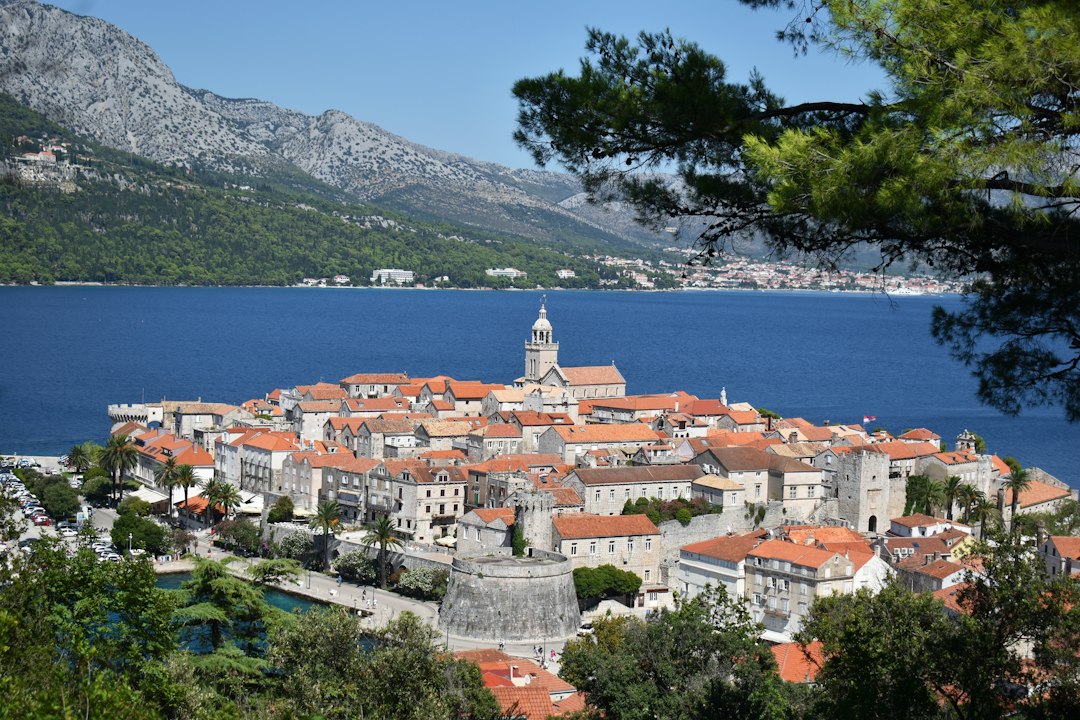
Last reviewed: November 2026 · key facts checked against Wikidata
Korčula Weather by Month: When to Go
| Month | Day | Night | Sea | Rain days | Rain mm | Wind km/h | Good for |
|---|---|---|---|---|---|---|---|
| Jan | 11° | 6° | 15° | 11 | 96 | 23 | – |
| Feb | 13° | 7° | 15° | 10 | 78 | 23 | – |
| Mar | 14° | 9° | 15° | 11 | 91 | 23 | – |
| Apr | 17° | 11° | 16° | 9 | 63 | 21 | – |
| May | 21° | 15° | 19° | 10 | 73 | 21 | – |
| Jun | 26° | 20° | 23° | 4 | 32 | 19 | Swim |
| Jul | 29° | 22° | 26° | 3 | 16 | 19 | Swim |
| Aug | 29° | 22° | 26° | 4 | 38 | 18 | Swim |
| Sep | 25° | 19° | 25° | 7 | 67 | 19 | Swim |
| Oct | 21° | 15° | 22° | 7 | 68 | 20 | – |
| Nov | 16° | 12° | 20° | 15 | 184 | 23 | – |
| Dec | 13° | 9° | 17° | 11 | 134 | 22 | – |
Sources: ERA5 reanalysis via Open-Meteo, 2016–2025 (10-year average) for air temperature, rain and wind (average daily maximum); Open-Meteo Marine API, 2023–2025 for sea surface temperature. A rain day has at least 1 mm. Area averages; individual years vary.
Korčula Travel Guide: Everything You Need to Know (2026)
Korčula is a 279 km² Dalmatian island sitting just off the Croatian mainland, home to 15,522 inhabitants (2011 census) and ranking as the second most populous Adriatic island after Krk. The medieval walled town of Korčula Town, perched on a small peninsula at 569 m above sea level in its highest interior reaches, is traditionally claimed as the birthplace of Marco Polo. The island stretches 46.8 km from west to east, making it one of the longest islands in the Adriatic.
Three Things Not to Miss in Korčula
- Korčula Old Town — A fortified medieval town on a peninsula, with a 15th-century Cathedral of St Mark at its core.
- Moreška Sword Dance — A living theatrical battle tradition performed weekly in summer — unique to Korčula among all Croatian islands.
- Lumbarda Beach and Vineyards — Sandy Pržina Beach combined with Grk white wine grown only in this single village’s sandy soil.
Scroll down for our complete travel guide with tips on getting there, where to stay, costs and more.
Ferries & Flights to Korčula
How do I get to Korčula — by flight or ferry?
Ferry from Split or Dubrovnik is the standard approach — no commercial airport exists on Korčula itself. The closest airports are Split Airport (SPU), roughly 85 km by road and sea from Korčula Town, and Dubrovnik Airport (DBV), about 90 km away. From Split, Jadrolinija and Krilo Jet both operate services; the fast catamaran takes approximately 3 hours. Tip: flying into Split gives more flight options and cheaper fares than Dubrovnik in most booking windows. Worth knowing: direct seasonal fast-boat services from Dubrovnik run roughly 2.5 hours to Korčula Town but typically operate only May–October.
Which airport or port is the best starting point for Korčula?
Split Airport (SPU) is the most practical starting point for most travellers. It handles far more international routes year-round than Dubrovnik Airport (DBV) and connects directly to Split’s main ferry terminal, from which Jadrolinija car ferries depart for Vela Luka (the island’s western port) in about 2.5–3 hours, with onward local bus to Korčula Town. Dubrovnik is a valid alternative if you plan to explore southern Dalmatia afterward — the Krilo catamaran covers the Dubrovnik–Korčula run seasonally in around 2.5 hours. Worth knowing: car ferries to Vela Luka carry vehicles; the faster catamarans are passenger-only.
How long does the ferry crossing to Korčula take?
Journey time varies by route and vessel type. The Jadrolinija car ferry from Split to Vela Luka takes approximately 2.5–3 hours. The Krilo Jet or similar fast catamaran from Split to Korčula Town via intermediate stops runs around 3–3.5 hours total. From Orebić on the Pelješac peninsula, the small car ferry to Korčula Town crosses in just 15 minutes — the shortest option if you are driving down the coast. Worth knowing: the Orebić–Korčula Town crossing is the key connection if you have a rental car, since most fast catamarans do not carry vehicles. Check current Jadrolinija timetables at jadrolinija.hr before booking.
What does a flight or ferry to Korčula cost?
Ferry fares are the main transport cost. A passenger ticket on the Jadrolinija car ferry from Split to Vela Luka costs approximately €8–€12 per person in 2025; adding a standard car costs roughly €40–€60 depending on vehicle size — verify exact fares at jadrolinija.hr. The seasonal Krilo fast catamaran from Split to Korčula Town runs approximately €20–€30 per passenger. Flights into Split (SPU) from Western Europe vary enormously but budget carriers such as Ryanair or easyJet often offer fares under €100 return in shoulder season. Worth knowing: ferry prices rise roughly 20–30% during July and August, and vehicle space books up fast — reserve well ahead.
Are overnight ferries to Korčula worth it?
Overnight ferry options to Korčula specifically are limited. Jadrolinija operates longer coastal routes that pass through the Dalmatian islands, but a true overnight sleeper service direct to Vela Luka or Korčula Town is not consistently scheduled as a standalone product — check the current Jadrolinija coastal route for cabin availability. Travellers coming from the north (Zagreb, Rijeka) sometimes combine an overnight coastal Jadrolinija sailing with a connection in Split. Worth knowing: sleeping aboard saves a hotel night in theory, but cabin berths on these routes book out months ahead in summer. For most visitors flying into Split, an afternoon fast catamaran followed by arrival in Korčula Town by early evening is the more reliable and comfortable option.
Moving Around Korčula
Do I need a rental car or scooter on Korčula?
A rental car adds freedom but is not essential if you plan to stay primarily in Korčula Town or Lumbarda. Local buses connect the main settlements, and the old town itself is pedestrianised. However, reaching quiet coves on the south coast — such as those near Pupnat or Prižba — independently requires wheels. Scooters can be rented in Korčula Town for approximately €35–€55 per day (verify with local operators). A compact rental car from mainland Split costs roughly €40–€80 per day in peak season, plus the ferry surcharge. Worth knowing: parking inside Korčula Town walls is impossible; the car park just outside the Land Gate fills by 9 a.m. in July and August.
Are there buses between towns on Korčula?
Yes — a local bus service links the main settlements. The main line runs between Vela Luka in the west and Korčula Town in the east, stopping at villages including Blato, Smokvica, and Čara along the way. Journey time from Vela Luka to Korčula Town is approximately 1 hour. A second short route connects Korčula Town to Lumbarda, roughly 5 km away, with fares around €1–€2. Schedules are reduced outside the summer season and on Sundays. Tip: the bus timetable is available at the Korčula Town bus station, but we recommend confirming current schedules with the local tourist board or at arriva.com.hr, as operators and timetables shift between seasons.
What does a rental car on Korčula cost — and where do I hire one?
Expect to pay roughly €45–€90 per day for a compact car in July and August 2026; shoulder season (May–June, September–October) typically runs €35–€60 per day. International brokers such as Europcar, Budget, and local agencies operate out of Korčula Town and Vela Luka. Booking through a comparison platform (e.g. Discover Cars or Rentalcars.com) often undercuts walk-in rates. Worth knowing: if you are bringing a car from the mainland via the Orebić car ferry, factor in the vehicle ferry surcharge of approximately €40–€60 each way. Fuel on the island costs roughly the same as mainland Croatia; the island’s sole main road makes navigation straightforward, but narrow village lanes require a small vehicle.
Which parts of Korčula are accessible by public transport?
The main east–west spine of the island is well covered. The bus between Vela Luka and Korčula Town serves all large interior villages. Lumbarda is reachable by a short local bus from Korčula Town. However, the south-coast settlements — including Prižba, Brna, and Račišće — have minimal or no regular public bus service in 2025; reaching them independently requires a rental car, scooter, or taxi. Water taxis from Korčula Town serve some beaches seasonally for approximately €5–€15 per trip. Worth knowing: Vela Luka, not Korčula Town, is where the car ferry from Split arrives — travellers without a car need to connect via local bus (about 1 hour) or a waiting taxi.
Can I cycle around Korčula?
Cycling parts of Korčula is realistic; a full circuit is demanding. The island is 46.8 km long with a hilly interior peaking well above sea level in places, making coast-to-coast cycling physically challenging in summer heat. However, the route between Korčula Town and Lumbarda (roughly 6 km, mostly flat) is a popular and enjoyable ride. Bicycle rental shops in Korčula Town charge approximately €10–€20 per day for a standard bike, more for e-bikes (verify locally). Marked cycling routes exist around the island’s eastern end. Worth knowing: the main road carries fast traffic between Vela Luka and Korčula Town with limited cycling infrastructure, so off-road or quieter side-road routes are safer and more scenic.
Choosing a Base on Korčula
Which town should I base myself in on Korčula?
Korčula Town is the best base for most visitors. Its medieval walled centre, concentrated restaurant scene, ferry connections to Split and Dubrovnik, and the weekly Moreška sword dance performance make it the island’s cultural and logistical hub. Lumbarda, just 6 km east, suits travellers prioritising beaches — particularly Pržina, a rare sandy beach for the Dalmatian coast. Vela Luka in the west is quieter, with a natural harbour and less tourist infrastructure, appealing to those seeking local pace. Compared to Hvar Town (reachable in roughly 2 hours by catamaran), Korčula Town is noticeably less crowded and commercialised, which is a meaningful trade-off if nightlife is not a priority.
What does accommodation on Korčula cost per night?
Budget varies sharply by season and type. In Korčula Town, a mid-range double room in a guesthouse or three-star hotel runs approximately €80–€150 per night in July–August 2026. Private apartments (sobe) start around €50–€90 per night for a double in peak season. Boutique hotels within or immediately beside the Old Town walls command a premium of €150–€250+. In shoulder season (May–June, September), the same rooms typically drop 30–40%. Worth knowing: accommodation directly inside the walled old town is scarce — most hotels sit just outside. Booking platforms like Booking.com and Airbnb carry the broadest selection; local agency Korkyra.net is also worth checking for apartments.
Which area of Korčula suits which travel style?
Korčula Town suits culture-focused travellers: medieval architecture, the Cathedral of St Mark, the alleged Marco Polo birthplace house, and live traditional events. Lumbarda suits beach-first visitors: sandy Pržina Beach and the local Grk white wine from vineyards lining the bay. Vela Luka suits slow-travel enthusiasts wanting an authentic, tourist-light harbour town — the Vela Spila prehistoric cave nearby adds a cultural layer. The south-coast villages (Brna, Prižba) suit those willing to hire a car for isolated coves and minimal crowds. Worth knowing: visitors who based themselves in Hvar or Split and expected a similar nightlife scene on Korčula will find the island significantly quieter — that is its defining appeal.
How far in advance do I need to book accommodation on Korčula?
Book at least 3–4 months ahead for July and August. Korčula Town has a limited accommodation stock — particularly within or adjacent to the walled old town — and quality properties in the €80–€150 range typically fill by April for peak summer. The Moreška performance nights (Thursdays and Mondays in summer) create short-term demand spikes. Shoulder season (May–June, September–October) allows booking 4–6 weeks ahead without major risk of missing out. Worth knowing: cancellation policies tighten in summer — many owners and small hotels in Korčula Town require non-refundable deposits of 30–50% for July–August bookings. Read terms carefully before confirming.
Are there good apartments or villas with sea views on Korčula?
Yes — sea-view apartments are a strong option and often better value than hotels. The hillside approaches to Korčula Town and the bay-facing slopes above Lumbarda offer apartments with genuine Adriatic panoramas. Expect to pay approximately €90–€180 per night for a two-person sea-view apartment in peak season. Larger villas with pools on the south coast (near Prižba or Žrnovo) typically start around €150–€300 per night and require advance booking of 5–6 months for July. Platforms such as Airbnb, Booking.com, and local operator Korkyra.net list the widest choice. Worth knowing: “sea view” is loosely used by some listings — filter specifically for waterfront or check exact GPS location before booking.
When to Come to Korčula
When is the best time to visit Korčula?
July and September are the best travel months based on verified climate analysis. July delivers peak sunshine and warm Adriatic water temperatures (approximately 26°C), ideal for swimming. September offers nearly identical beach conditions with noticeably fewer tourists, lower prices, and a more relaxed atmosphere — we recommend September for travellers who want the full Dalmatian experience without peak crowds. June is a strong runner-up: warm, uncrowded, and with full ferry timetables operating. Worth knowing: August is the absolute peak — Croatian domestic tourism fills the island alongside international visitors, accommodation prices hit their ceiling, and Korčula Town can feel congested. The Moreška sword dance season runs roughly June–October, which matters if that is a travel priority.
What is the weather on Korčula like throughout the year?
Korčula has a Mediterranean climate: hot dry summers, mild wet winters. June through September is reliably sunny and warm, with July–August air temperatures regularly exceeding 30°C. The Adriatic water temperature peaks around 25–27°C in August. October brings the first rain and cooler evenings but remains pleasant for walking and sightseeing. November through February is mild by northern European standards but sees significant rainfall and limited tourism infrastructure. March and April are transitional — green, quiet, and increasingly warm. Worth knowing: the bura (cold northeast wind) can arrive suddenly in winter and occasionally disrupts ferry schedules; this is rarely a concern between May and September.
When does Korčula get overcrowded?
August is the peak congestion month. Croatian school holidays align with much of European summer, and Korčula Town — with its narrow medieval lanes — can feel genuinely packed between approximately 10 July and 20 August. The Land Gate area and the Cathedral of St Mark are the tightest pinch points. Day-tripper boats from Hvar and Dubrovnik (roughly 2–2.5 hours away by fast catamaran) add lunchtime surges on top of overnight visitors. Worth knowing: arriving or departing on a Friday or Saturday in August brings the longest queues at the Orebić car ferry. Choosing a Tuesday–Thursday travel day within the island significantly eases the experience.
Is there a worthwhile shoulder season on Korčula?
Yes — May–June and September–October are excellent. In September, sea temperatures remain above 23°C, the Moreška performances continue, restaurants are still open, and accommodation prices drop roughly 25–35% versus August peaks. May and June are ideal for hiking the island’s interior, cycling to Lumbarda, and enjoying Korčula Town’s old town without queues. The Vela Luka Summer Festival typically runs through July and August, but quieter cultural programming continues into September. Worth knowing: some smaller beach bars and water-taxi services begin winding down after mid-September, and ferry frequency to Split reduces from the October timetable change — always check the current Jadrolinija schedule before travelling in shoulder season.
When does the beach and watersports season begin on Korčula?
Swimming season opens practically from late May. Adriatic water temperatures around Korčula reach roughly 19–20°C by late May — comfortable for most active swimmers. By mid-June the water is around 22°C and watersports operators in Korčula Town and Lumbarda are fully open. Kayak rental, stand-up paddleboarding, snorkelling, and diving with operators such as those based at Korčula Town harbour run approximately June–October. Sandy Pržina Beach in Lumbarda becomes swimmable and staffed from mid-June. Worth knowing: the best snorkelling spots — including reefs off the south coast near Pupnat — require a boat or kayak to reach, as they are not accessible directly from main public beaches.
Costs on Korčula
What does a daily budget cost on Korčula?
A realistic mid-range daily budget is approximately €80–€130 per person. Breakdown: accommodation €40–€75 (half of a double room), meals €25–€40 (one restaurant dinner, one café lunch), transport within the island €5–€15, and entry fees or activities €10–€20. A budget traveller in a private room or hostel-style accommodation in Vela Luka or Lumbarda can manage on around €55–€70 per day. A traveller in a boutique hotel in Korčula Town with daily boat trips should budget €150–€200+. Worth knowing: dining one step away from the old town walls — for instance along Šetalište Petra Kanavelića rather than inside the gate — saves roughly €5–€8 per main course without sacrificing quality.
Is Korčula more expensive than the Croatian mainland?
Yes, marginally — especially for food and transport. Ferry costs, scooter rentals, and restaurant prices in Korčula Town run roughly 10–20% higher than comparable mainland towns like Split or Makarska. A sit-down dinner main course in the old town averages €15–€22; the same meal in central Split runs approximately €12–€18. Grocery prices in Korčula Town’s local supermarket (Tommy is the main chain) are close to mainland levels. Worth knowing: Vela Luka and Blato offer noticeably cheaper dining and accommodation than Korčula Town — the island’s tourist price premium is concentrated around the walled town, not island-wide.
What expenses are unavoidable when visiting Korčula?
Ferry tickets, accommodation, and food are the three unavoidable costs. The ferry from Split to Vela Luka costs approximately €8–€12 per passenger each way; a car adds €40–€60. Accommodation is non-negotiable — budget a minimum of €50 per night for a private double in low season. Dining out is practically unavoidable given the limited self-catering infrastructure in Korčula Town. Optional but near-universal extras: Moreška ticket (approximately €15–€20 per person, check with the Moreška Cultural Society), a boat excursion to nearby islets (roughly €30–€50), and a wine tasting of local Grk or Pošip wines. Worth knowing: there are no compulsory tourist taxes beyond the standard Croatian overnight sojourn fee of roughly €1–€2.65 per person per night.
What does food cost on Korčula — local vs tourist prices?
Local dining costs roughly half of old-town tourist restaurant prices. Inside Korčula Town’s walls, a grilled fish main course runs approximately €18–€28; a pizza or pasta averages €12–€16. At a konoba (traditional tavern) in Lumbarda or Blato, a three-course meal with local wine can be had for €20–€30 per person total. A coffee at a café in the old town costs approximately €2–€3. The local market near Korčula Town harbour sells fresh produce cheaply. Worth knowing: fresh fish is priced by weight in most konobas — always ask the gram price before ordering to avoid a surprise bill. A typical portion of sea bass or bream for two runs €25–€40 depending on the day’s catch.
What are the best beaches on Korčula?
Pržina in Lumbarda is Korčula’s standout sandy beach — rare on a coast dominated by pebble and rock. It sits about 6 km east of Korčula Town, accessible by bus or taxi. Vela Przina, the longer stretch nearby, is quieter. For crystal-clear pebble swimming, Pupnatska Luka on the south coast (reachable by car or scooter in about 25 minutes from Korčula Town) offers exceptional water clarity with minimal facilities — bring your own supplies. Žitna near Čara is another south-coast pebble beach with calm water. Worth knowing: the north coast beaches are rockier and more exposed to wind; the sheltered south-coast bays consistently offer calmer swimming conditions in summer.
Beaches, Coves & Highlights of Korčula
What are the top sights on Korčula beyond the beaches?
Korčula Old Town is the island’s defining cultural sight. The Cathedral of St Mark (Katedrala sv. Marka), with its 15th-century Dalmatian-Gothic façade, dominates the town square. The Marco Polo Museum (house claimed as his birthplace) charges approximately €5 entry and provides historical context. The prehistoric Vela Spila cave near Vela Luka — occupied over 20,000 years ago — is one of Croatia’s most significant archaeological sites; entry is approximately €3–€5. The Moreška sword dance performance (Mondays and Thursdays in season) is a living tradition unique to this island. Worth knowing: the old town’s herringbone street layout was designed to deflect both wind and summer sun — look up at the roofline details as you walk.
What watersports activities are available on Korčula?
Sea kayaking, stand-up paddleboarding, snorkelling, and scuba diving are all available. Several operators in Korčula Town harbour rent kayaks for approximately €15–€25 per half-day and run guided kayaking tours to the uninhabited Korčulanski islands nearby. Scuba diving with local dive centres (such as those based in Korčula Town) costs approximately €45–€65 per dive including equipment — verify current pricing with operators such as Korčula Diving. Sailing charter is also popular: the island sits on the central Dalmatian sailing route between Split and Dubrovnik. Worth knowing: the narrow Pelješac Channel off Korčula Town’s north shore creates strong currents in places — check with local operators before independent open-water swimming or paddling.
What is the culinary highlight of Korčula?
Pošip and Grk white wines are Korčula’s most distinctive culinary export. Pošip, grown primarily around Čara and Smokvica, is a full-bodied indigenous white variety increasingly recognised by international critics; a bottle at a local winery costs approximately €8–€15. Grk is grown exclusively in the sandy soils of Lumbarda — its geographic restriction makes it genuinely unique. Food-wise, black risotto (crni rižot, made with cuttlefish ink) and grilled fresh Adriatic fish are the island’s table staples. Worth knowing: several Pošip producers — including Bire winery near Čara — offer cellar door tastings; visiting one is far better value than ordering the same wine in an old-town restaurant at a significant markup.
Which parts of Korčula are still off the beaten track?
The south coast and the island’s interior villages see a fraction of visitor numbers. Villages such as Prižba, Brna, and Žrnovo receive day-trippers rarely and maintain a working Croatian village character. The Račišće cove on the northeast tip — about 12 km from Korčula Town by road — has a small harbour, no tourist shops, and a handful of local konobas. Blato, the island’s most populous inland town (roughly 3,700 residents), has a shaded central promenade and the Roko Arneri Heritage Collection but barely features on standard itineraries. Worth knowing: compared to Hvar, where even the “quiet” side has been discovered, Korčula’s off-track spots genuinely remain low-footfall — but they all require a rental car or scooter to reach independently.
How many days do I need on Korčula?
Three to four full days covers Korčula thoroughly. Day 1: Korčula Town old town, Cathedral of St Mark, Marco Polo museum, and an evening Moreška performance. Day 2: drive or scooter the south coast — Pupnatska Luka beach, wine tasting at a Čara Pošip producer, konoba lunch in Blato. Day 3: Lumbarda beaches and Grk wine. Day 4: Vela Spila cave and a relaxed afternoon in Vela Luka before a return ferry. Travellers combining Korčula with Hvar (roughly 2 hours away by catamaran) or Dubrovnik (about 2.5 hours by fast boat) typically allocate 2–3 nights on the island as part of a wider Dalmatian itinerary. Worth knowing: one rushed day-trip from Dubrovnik is possible but gives you only a surface-level impression of Korčula Town.
Korčula at a Glance
| Currency | euro (€) |
|---|---|
| Official language | Croatian |
| Time zone | UTC+01:00 |
Source: Wikidata, retrieved November 2026.
Croatia › Korčula
More Destinations in Croatia
Essential Resources for Planning Your Trip to Korčula
- Have you ever wondered what would it be like to visit … — official visitor information
- Wikivoyage: Korčula — community travel guide & practical tips
- Wikipedia: Korčula — history, geography & background
- What to do in Korcula, Croatia without a car? — how to get there and around
- Top Korčula Island Attractions — itineraries & inspiration
Data Sources
Key facts on this page (population, currency, language, time zone) come from Wikidata, climate figures from Open-Meteo. The retrieval date is shown next to the facts table.