
Laos: The Complete Travel Guide (2026)
Last reviewed: August 2026 · key facts checked against Wikidata
Laos Travel Guide: Everything You Need to Know (2026)
Laos is Southeast Asia’s only landlocked country, sharing borders with 5 nations and home to over 7.5 million people spread across a largely forested, mountainous interior. The former royal capital Luang Prabang sits at roughly 300 meters altitude along the Mekong River and was designated a UNESCO World Heritage city in 1995. Despite being one of the least-visited countries in the region, Laos rewards slow travelers with intact Buddhist culture, dramatic karst scenery, and some of the most affordable travel experiences in Asia.
Top 3 Highlights at a Glance
- Luang Prabang’s Alms-Giving Ceremony — Hundreds of saffron-robed monks collect offerings at dawn daily — a living tradition unchanged for over 600 years.
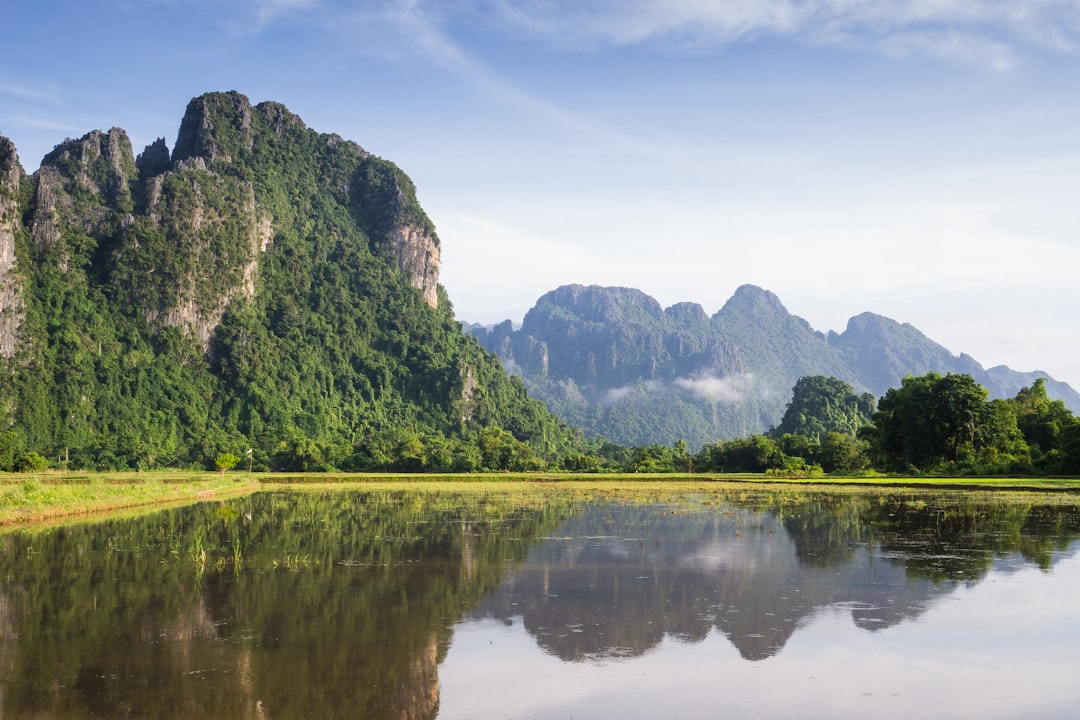
- Vang Vieng Karst Landscape — Towering limestone karst formations rise directly above the Nam Song River, best seen by kayak in a 3-hour circuit.
- 4,000 Islands (Si Phan Don) — The Mekong splits into dozens of jungle islands near the Cambodian border, home to endangered Irrawaddy dolphins.
Scroll down for our complete travel guide with tips on getting there, where to stay, costs and more.
Getting There & Transport
Which airports are the best entry points into Laos?
Vientiane’s Wattay International Airport (VTE) is the main gateway, handling the most international routes. In my experience, flying into Luang Prabang International Airport (LPQ) is far superior if you’re starting in the north — it saves a 10-hour overland journey. Bangkok’s Suvarnabhumi (BKK) is the dominant hub for connections, with Lao Airlines and Bangkok Airways operating direct routes. A third option is Pakse International Airport (PKZ) in the south, useful if you’re entering from Cambodia or Vietnam. Warning most guides omit: Wattay has very limited international connections beyond Bangkok, Hanoi, Kunming, and Singapore — expect a stopover almost anywhere you fly from.
How do I get from the airport to my first accommodation in Laos?
Take a fixed-price airport taxi from Wattay — the official desk charges $7–10 USD for the 4 km ride into central Vientiane. In my experience, the tuk-tuk touts outside arrivals charge the same or more and with less reliability. At Luang Prabang Airport, tuk-tuks to the old town are $5–7 USD for a 3 km trip. My tip: pre-arrange a hotel pickup if you arrive after dark, as metered taxis don’t exist in either city. Caveat nobody mentions: ride-hailing apps like Grab do not operate in Laos, so you’re entirely dependent on fixed-rate vehicles or your hotel’s shuttle.
What transport options are there within Laos?
Domestic Lao Airlines flights connect Vientiane, Luang Prabang, Pakse, and Savannakhet — tickets run $60–120 USD one-way. Slow boats on the Mekong River between Huay Xai and Luang Prabang take 2 days and cost around $35–45 USD including a night in Pakbeng. VIP buses between major towns are cheap at $10–20 USD but cover long distances slowly on mountain roads. The Boten–Vientiane high-speed rail line, opened in December 2021, now connects the Chinese border to Vientiane in under 4 hours for roughly $35 USD — a genuine game-changer. What surprised me: the train is dramatically more comfortable and punctual than anything else in the country.
Do I need a rental car in Laos?
No — a rental car is impractical for most travelers in Laos. Roads outside the Vientiane–Vang Vieng–Luang Prabang corridor are rough, signage is poor, and international driving licenses are technically required but enforcement is inconsistent. In my experience, renting a motorbike for $10–15 USD per day in towns like Vang Vieng or 4,000 Islands gives you far more flexibility than a car. I recommend cars only if you’re exploring remote provinces like Xieng Khouang or Phongsali where minibus connections are infrequent. Honest caveat: accidents on mountain roads are genuinely dangerous — travel insurance that covers motorbike riding is non-negotiable.
How good is the public transport network between regions in Laos?
It’s functional but slow — budget extra time for every overland journey in Laos. The China–Laos Railway now makes the Vientiane to Luang Prabang corridor efficient at under 2 hours for $23 USD. Beyond that spine, long-distance VIP buses cover the main routes but the Luang Prabang to Vang Vieng road, though paved, still takes 6 hours by bus. Southern routes toward Pakse and Si Phan Don involve 8–12 hour overnight journeys. My tip: use 12Go.asia to book tickets in advance — it aggregates buses, trains, and slow boats. Warning most guides omit: local buses stop frequently and can take twice as long as VIP services.
Accommodation
Which regions of Laos should I stay in?
Luang Prabang is unmissable for first-timers — the UNESCO old town is walkable and has the best accommodation infrastructure in Laos. Vang Vieng, 160 km north of Vientiane, suits active travelers and has evolved beyond its party reputation into a genuine adventure base. Vientiane itself warrants 2 nights — it’s a calm, undersized capital worth experiencing but not lingering in. For depth, I recommend Luang Namtha in the north for trekking into ethnic minority villages, and Champasak province in the south for Wat Phou and river island life. What surprised me: the northeast around Phonsavan and the Plain of Jars is historically fascinating but rarely visited.
What does good accommodation cost per night in Laos?
A solid mid-range guesthouse runs $25–45 USD per night in most towns, including Luang Prabang and Vientiane. Boutique hotels with river views and breakfast in Luang Prabang’s UNESCO zone run $60–100 USD. Budget dorm beds at reputable hostels like Spicy Lao Backpackers cost $6–10 USD. Luxury properties — think Amantaka or Rosewood Luang Prabang — start at $350 USD per night. In my experience, the sweet spot is a family-run guesthouse at $30–40 USD — you get air-conditioning, reliable Wi-Fi, and a hot shower. Caveat: water pressure and electricity reliability outside main towns can be inconsistent regardless of price.
When should I book hotels in Laos — how far in advance?
Book Luang Prabang accommodation at least 6–8 weeks ahead for peak season travel between November and February — the best guesthouses in the UNESCO heritage zone sell out fast. For Vientiane and Vang Vieng, 2–3 weeks is usually sufficient outside major Lao holidays. My tip: the Lao New Year (Pi Mai) in mid-April causes a total blackout of rooms across the country — book 3 months ahead for that window. What surprised me: a surprising number of excellent guesthouses in smaller towns like Nong Khiaw don’t appear on Booking.com — email direct or use Agoda which has better Laos coverage.
When is the best time to travel to Laos?
February, March, and November are the optimal months based on climate analysis. November sits at the sweet spot — the rains have ended, landscapes are lush and green, and temperatures hover around 25–28°C before the dry-season heat builds. February and March offer reliably dry skies and comfortable temperatures ideal for trekking. In my experience, November through early February is the single best window for Luang Prabang. Honest caveat: March and April bring smoke from agricultural burning across the north, which can significantly reduce visibility and air quality — a fact most glossy travel guides completely ignore. Check IQAir readings before booking those months.
How does peak season affect prices in Laos?
Peak season (November–February) pushes Luang Prabang hotel prices up 40–60% compared to low season. A guesthouse that costs $30 USD in September will run $45–50 USD in December. Slow boat tickets between Huay Xai and Luang Prabang sell out days in advance during Christmas and New Year week. My tip: book the train on the Boten–Vientiane line at least 1 week ahead in peak months — seats go fast among Chinese tourists crossing the border. What surprised me: Vientiane barely feels the price surge — it’s genuinely a good base during peak season when Luang Prabang feels overcrowded and overpriced.
Best Time to Visit
Which regions of Laos have different climate zones?
The mountainous north — including Luang Namtha, Phongsali, and the areas bordering Yunnan — experiences cooler temperatures, sometimes dropping to 5–10°C in January nights at elevations above 1,000 m. The central and southern lowlands along the Mekong, including Vientiane and Savannakhet, are hot and humid year-round with a pronounced monsoon. The Bolaven Plateau in Champasak province sits at 1,200 m altitude, stays cooler than the surrounding lowlands, and receives far more rainfall — making it ideal for coffee cultivation but misty from June through October. In my experience, packing layers is essential even for a dry-season trip once you leave the Mekong valley.
What are the rainy seasons in Laos?
The monsoon runs from May through October across virtually all of Laos, with peak rainfall in July and August. The south, particularly around Pakse and Si Phan Don, receives the heaviest downpours — up to 300 mm in a single August month. In my experience, the rains come as afternoon thunderstorms rather than all-day drizzle in June, making morning travel perfectly viable. Honest caveat most guides omit: mountain roads in Luang Namtha and Phongsali provinces genuinely become impassable by landslide during heavy rain — check conditions locally before heading north. The Bolaven Plateau stays damp well into November due to its elevation.
What does a trip to Laos cost per person per day?
A comfortable mid-range day runs $50–75 USD per person covering accommodation, 3 meals, transport, and one paid activity. Budget backpackers can manage on $25–35 USD staying in dorms and eating exclusively at local noodle shops. I recommend budgeting $70–90 USD if you want air-conditioned rooms, occasional restaurant meals, and guided excursions. Luang Prabang is the most expensive city — factor in 10–15% higher costs there versus Vientiane or Vang Vieng. What surprised me: alcohol is cheap (a Beer Lao costs $1–1.50 USD), but organized tours and activities like zip-lining in Vang Vieng run $25–50 USD and inflate daily budgets fast.
How expensive is food in Laos?
Food in Laos is remarkably affordable by any standard. A bowl of khao piak sen (rice noodle soup) at a local market stall costs $1–1.50 USD. A sit-down meal at a proper Lao restaurant — think Tamarind Restaurant in Luang Prabang — runs $8–15 USD. Street food skewers of grilled meat or sticky rice with papaya salad cost $0.50–1 USD per item. In my experience, eating one meal per day at a tourist-facing restaurant and two at local spots keeps food costs under $15 USD per day easily. Caveat: Western breakfast menus in Luang Prabang cafes are priced at $5–8 USD — a significant premium for eggs and toast.
What hidden costs should I expect in Laos?
Visa fees are the first surprise — most nationalities pay $30–42 USD for a visa on arrival. Border crossing fees, particularly at land borders like Nong Khai–Vientiane, include unofficial ‘overtime fees’ of $1–2 USD outside business hours — expect to pay them without a receipt. Tuk-tuk drivers at tourist sites routinely quote 3–4x the fair price — always negotiate. ATM withdrawal fees run $3–5 USD per transaction at most machines in Vientiane and Luang Prabang. My tip: bring USD cash and exchange at banks for better rates. What surprised me: entrance fees to temples are rarely posted — locals pay nothing while foreigners pay $1–3 USD per site.
Budget & Costs
How much cash should I bring to Laos?
Bring $200–300 USD in cash as a baseline for a 10-day trip, supplementing with ATM withdrawals in major towns. The Lao Kip (LAK) is the official currency but USD is widely accepted at hotels, tour operators, and larger restaurants, particularly in Luang Prabang and Vientiane. Thai Baht is also accepted near the Thai border. ATMs exist in Vientiane, Luang Prabang, Vang Vieng, and Pakse — but are scarce in smaller towns like Nong Khiaw or Muang Ngoi. In my experience, carrying small USD bills ($1, $5, $10) is more useful than large denominations since change in Kip can be cumbersome — the largest common note is 100,000 Kip, worth about $5 USD.
Which credit cards are accepted in Laos?
Credit card acceptance in Laos is limited — expect to use cash for 80% of transactions. Visa and Mastercard work at upscale hotels, larger restaurants, and some tour operators in Luang Prabang and Vientiane. A 3–5% surcharge is routinely added for card payments — often not disclosed upfront. American Express is rarely accepted outside luxury properties like Amantaka. In my experience, even mid-range guesthouses that display Visa logos sometimes have broken terminals — always carry enough Kip or USD as backup. My tip: notify your bank before travel and withdraw larger amounts per transaction to minimize the $3–5 USD per-withdrawal ATM fee charged by Lao banks.
Which regions of Laos must I not miss?
Luang Prabang is non-negotiable — the UNESCO old town, the alms-giving ceremony, and Kuang Si Waterfall alone justify the trip. The Vang Vieng valley is second on my list for its karst scenery, even if you avoid the party scene. In the south, Champasak province with Wat Phou (a pre-Angkor Khmer temple) and the 4,000 Islands is profoundly beautiful and sees far fewer visitors than the north. My strong recommendation for travelers with 10+ days: add Nong Khiaw in northern Laos — a small river town framed by dramatic limestone cliffs that remains genuinely undiscovered. What surprised me: Vientiane is often skipped, but its COPE Centre (UXO rehabilitation museum) is one of the most affecting experiences in Southeast Asia.
What are the tourist highlights of Laos?
Kuang Si Waterfall, 29 km southwest of Luang Prabang, produces cascading turquoise pools and draws hundreds of visitors daily. The Plain of Jars in Xieng Khouang — a landscape of over 2,000 ancient stone burial jars, some over 2,000 years old — is genuinely prehistoric and atmospheric. The Pak Ou Caves on the Mekong River, reachable by a 2-hour boat ride from Luang Prabang, house thousands of Buddha images. In my experience, the Bolaven Plateau coffee trail around Paksong offers some of the best single-origin coffee in Asia with almost no tourist infrastructure — in a good way. Pha That Luang in Vientiane, a gold-covered stupa from 1566, is the national symbol and underrated.
What experiences in Laos are found nowhere else on earth?
The tak bat alms-giving ceremony in Luang Prabang — monks walking silently through pre-dawn streets collecting sticky rice — exists elsewhere in Southeast Asia but nowhere with this concentration, continuity, and cultural weight. Navigating the 4,000 Islands (Si Phan Don) by bicycle to spot Irrawaddy dolphins at Khon Phapheng Falls — the largest waterfall by volume in Southeast Asia — is singular. The 2-day slow boat journey from Huay Xai to Luang Prabang through uninterrupted jungle along the Mekong has no real equivalent. In my experience, sitting in a village in Luang Namtha sharing lao-lao rice whiskey with an Akha family after a full-day jungle trek is the kind of encounter that’s genuinely disappearing from Southeast Asia.
Regions & Highlights
Which areas of Laos are overcrowded and what are the quieter alternatives?
Luang Prabang’s main street (Sakkaline Road) is visibly overcrowded November through January — tour groups flood Kuang Si Waterfall by 10am. My alternative: visit Kuang Si at 7am when it opens and swap the main pools for the upper trail. Replace Luang Prabang’s busiest days with a night in Nong Khiaw, 4 hours north by road, where the same limestone scenery exists with a fraction of the visitors. Vang Vieng’s town center is chaotic — base yourself in Ban Sabai on the river’s eastern bank instead. In the south, skip the popular Don Det island in peak season and take a boat to Don Khon — same landscape, dramatically fewer people.
How many days do I need in Laos?
10–14 days is the minimum to experience Laos properly. A 7-day trip covering only Luang Prabang and Vang Vieng is feasible but leaves the south and remote north untouched. I recommend: 3 nights Luang Prabang, 2 nights Vang Vieng, 2 nights Vientiane, 3 nights Champasak/4,000 Islands as a solid 10-day framework. If you have 14 days, add 2 nights in Nong Khiaw between Luang Prabang and Vang Vieng — it’s the most visually dramatic spot in the country. Honest caveat: travel days between destinations are long — budget half a day for any overland journey exceeding 200 km, even on the new railway.
Do I need a visa to enter Laos?
Most nationalities need a visa — the Visa on Arrival costs $30–42 USD depending on nationality and is available at major land borders and Vientiane’s Wattay Airport. Citizens of ASEAN countries, Japan, Russia, and Switzerland get visa-free entry for 15–30 days. The e-Visa ($35–42 USD) can be processed online at laoevisa.gov.la and takes 3 business days — I strongly recommend this over the VOA queue. Bring a passport photo and exact USD cash for the VOA counter; credit cards are not accepted there. Honest warning: border crossing queues at Nong Khai–Vientiane and Huay Xai can take 1–2 hours during peak periods — factor this into your day’s travel plan.
What languages are spoken in Laos?
Lao is the official language, spoken by the ethnic Lao majority along the Mekong corridor. In my experience, English is functional in tourist hubs — Luang Prabang guesthouse staff, tour guides, and restaurant workers communicate well enough. Outside those zones, expect very limited English. French lingers from the colonial era — some older officials and restaurant menus in Vientiane still use it. The mountainous north is home to over 49 ethnic groups including Hmong and Khmu communities, each with distinct languages. My tip: download Google Translate’s Lao offline pack and learn a handful of phrases — ‘sabaidee’ (hello) and ‘khob jai’ (thank you) go a long way and visibly delight locals.
What cultural rules do I need to know before visiting Laos?
Cover shoulders and knees at every temple — this is enforced at major sites including Pha That Luang and Wat Xieng Thong; sarongs are sometimes available at entrances. Do not touch monks or hand objects directly to them if you’re a woman. During the tak bat alms ceremony, stand back and observe quietly — flash photography and getting too close is genuinely disrespectful and increasingly ruins the experience for local participants. In my experience, removing shoes before entering homes and some small temples is expected — watch for the pile at the entrance. Honest note: public displays of affection are frowned upon, and loud behavior draws disapproval — Lao culture is quieter and more reserved than Thailand’s.
Practical Tips
How safe is Laos for travelers?
Laos is one of Southeast Asia’s safer destinations for travelers — violent crime against tourists is rare. The primary danger is traffic: motorbike accidents are the leading cause of tourist injury and death, particularly on mountain roads around Vang Vieng. The second major hazard is unexploded ordnance (UXO) — Laos remains the most heavily bombed country per capita in history, and rural areas especially in Xieng Khouang and Savannakhet provinces still contain live bombs. Stick to marked trails and heed warning signs. Water safety at river activities in Vang Vieng has improved but still deserves respect. In my experience, petty theft is minimal but don’t leave valuables in tuk-tuks or unattended at hostel dorms.
What health precautions should I take before visiting Laos?
Get vaccinated for Hepatitis A and Typhoid before arrival — both are food and water-borne risks in Laos. Malaria prophylaxis is recommended for rural areas, particularly Attapeu and Phongsali provinces, but not for Luang Prabang or Vientiane. Dengue fever is present year-round — use DEET-based repellent especially at dawn and dusk. In my experience, the standard of medical care in Vientiane’s Mahosot Hospital or the French-run Clinique Settahak is adequate for basic issues, but serious illness requires evacuation to Bangkok’s Bumrungrad Hospital — medical evacuation insurance is essential. Tap water is not safe to drink anywhere — budget $0.50 USD per day for bottled water as a baseline.
What SIM card or eSIM options are available in Laos?
Buy a local SIM at Wattay Airport arrivals — it takes under 10 minutes. Unitel and Lao Telecom are the two dominant carriers; both offer tourist SIMs with 15–30 GB of data for $5–10 USD. Coverage is solid in Luang Prabang, Vientiane, and Vang Vieng, but drops to 2G or nothing in remote mountain areas like Phongsali or Muang Ngoi. In my experience, Unitel has slightly better rural coverage. eSIM options via Airalo work in Laos and are worth considering if you want to avoid the airport counter — plans start around $8 USD for 1 GB which is less value than local SIMs. My tip: download offline maps via Maps.me before losing data signal in rural areas.
Which apps do you recommend for traveling in Laos?
12Go.asia is essential for booking trains, buses, and slow boat tickets in advance — it’s the most reliable aggregator for Laos transport. Maps.me with offline Laos maps downloaded is more accurate than Google Maps in rural areas. XE Currency for quick Kip conversions — the exchange rate fluctuates and mental math with 20,000 Kip = $1 USD gets confusing fast. iOverlander is invaluable for finding fuel, guesthouses, and road conditions in remote provinces. In my experience, Lao Airlines’ own app is barely functional — book their flights via the website or 12Go instead. Download Google Translate with Lao offline pack. Warning: WhatsApp and Messenger work fine, but VPN use is technically restricted in Laos.
What are the most common traveller mistakes in Laos?
Underestimating travel times between destinations is the single biggest mistake — a 150 km road journey can take 5 hours on mountain switchbacks. Tourists rush Luang Prabang in 2 days and miss the slower pace that makes it extraordinary. Many skip Vientiane entirely, which means missing the COPE Centre and the surprisingly excellent restaurant scene around Rue Setthathirat. Renting a motorbike without experience on unsealed roads leads to preventable accidents annually. In my experience, exchanging money at hotel desks loses you 10–15% versus bank rates. Final warning: booking the cheapest slow boat tickets lands you on overcrowded, uncomfortable local vessels — pay the $10 extra for the designated tourist slow boat on the Mekong.
Laos at a Glance
| Population | 6,858,160 |
|---|---|
| Currency | Lao kip (₭) |
| Official language | Lao |
| Time zone | UTC+07:00 |
Source: Wikidata, retrieved August 2026.
Essential Resources for Planning Your Trip to Laos
- 9 Things you Should know BEFORE Visiting LAOS — official visitor information, passes & events
- Wikipedia: Laos — history, geography & background
- Wikivoyage: Laos — community travel guide & practical tips
- Laos Travel 2026 – Lonely Planet | Asia — expert itineraries & travel inspiration
- THE 15 BEST Things to Do in Laos (2026) — hotels, restaurants & traveller reviews
- Laos Travel Guide – Daniel McBane — how to get around
- Numbeo: Cost of Living in Laos — current prices & cost comparison
- Timeanddate: Laos Weather & Climate — forecasts & climate statistics
More Perspectives on Laos
- Travelling in Laos Guide for Beginners
- Everything You Need to Know on How to Travel to Laos
- Laos Travel Tips (2026) – Smart Advice for a Safe, Cultural …
Laos Travel Videos
Watch these videos for a visual preview before your trip:
- Asia’s BEST Overlooked Country: 10 Days in LAOS | Luang Prabang, Vang Vieng, Vientiane | 2026
- 15 Things You Should Know BEFORE Visiting Laos
- 16 Things Nobody Tells You Before Visiting Laos
Laos Travel Discussions on Reddit
Real traveller experiences and community advice:
- r/travel – Laos is severely underrated
- r/laos
- Is going to Laos worth it with our itinerary, or is it too …
Data Sources
This page was compiled using data from Wikipedia, Wikidata, Open-Meteo (climate), Numbeo (cost of living) and REST Countries. Information is updated regularly.