
Île Cézembre: The Complete Travel Guide (2026)

Île Cézembre Travel Guide: Everything You Need to Know (2026)
Île Cézembre is a tiny uninhabited island of just 18 hectares lying 4 km off the coast of Saint-Malo in Brittany, France, reachable only by seasonal boat. Heavily fortified during World War II and subjected to one of the most intensive Allied bombardments of the French coast in August 1944, it remained littered with unexploded ordnance for decades. Today it draws day-trippers with its pristine beaches and wartime bunkers, yet has zero permanent residents and zero overnight accommodation.
Top 3 Highlights at a Glance
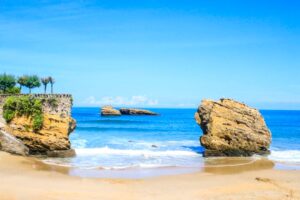
- Grande Plage Beach — The island’s main beach offers crystal-clear Atlantic water in a car-free, crowd-light setting just 4 km from Saint-Malo.
- WWII German Bunkers — Remarkably intact fortifications from the brutal August 1944 siege give a raw, unmediated glimpse of Atlantic Wall defenses.
- Panoramic Coastal Views — From the island’s 28-metre high point you see the full sweep of the Emerald Coast, Mont Saint-Michel Bay, and the Channel Islands.
Scroll down for our complete travel guide with tips on getting there, where to stay, costs and more.
Arrival & Airport
How do I get to Île Cézembre?
You reach Île Cézembre exclusively by boat from Saint-Malo — there is no bridge, no causeway, no flight. In my experience, the fastest option is the Compagnie Corsaire ferry departing from the Gare Maritime de la Bourse in Saint-Malo’s walled city, taking roughly 20 minutes each way. The service runs June through mid-September only — outside that window, the island is completely inaccessible to the public. My tip: buy your return ticket the same morning at the quayside kiosk, as the last boat back typically departs around 17:30, and missing it leaves you genuinely stranded. What surprised me is that no private water taxi service reliably fills the gap when Corsaire isn’t running.
Which airport is closest to Île Cézembre?
Dinard–Pleurtuit–Saint-Malo Airport (DNR) is the closest airport, located 14 km from Saint-Malo’s ferry terminal. In my experience, flight options into DNR are limited — Ryanair operates seasonal UK routes, but connections from Paris or other European hubs are sparse. The realistic alternative is flying into Rennes Bretagne Airport (RNS), 70 km away, which has far better connections including Air France flights from Paris Charles de Gaulle. From Rennes, a direct train to Saint-Malo takes 1 hour. My honest caveat: DNR has no rail link, so you’ll need a taxi or rental car for that final stretch regardless of which airport you use.
How long does the journey to Île Cézembre take from major cities?
From Paris, the total door-to-island journey takes roughly 4.5 hours. The TGV from Paris Montparnasse to Rennes takes 1 hour 25 minutes, then a regional TER train covers Rennes to Saint-Malo in 1 hour, and the ferry adds another 20 minutes. I recommend building in 45 minutes of buffer at Saint-Malo for queuing at the boat terminal during July and August. From London, add Eurostar travel to Paris, making it a full 7-hour journey. What most guides omit: the last ferry back from Cézembre is non-negotiable, so plan your Paris departure for no earlier than 20:00 on the same day.
Do I need a car to visit Île Cézembre?
No — a car is entirely unnecessary for Île Cézembre itself, and counterproductive in Saint-Malo. The island is 18 hectares and completely car-free; everything is walkable within 15 minutes. I recommend arriving in Saint-Malo by train, walking the 800 metres from the station to the Gare Maritime, and boarding the ferry on foot. The honest caveat: if you plan to combine Cézembre with road-trip stops like Mont Saint-Michel (50 km) or Cap Fréhel (40 km), then renting a car from Saint-Malo city centre — not the airport — makes sense and typically costs €45–€65 per day with major providers like Europcar or Hertz.
City Transport
What are the best areas to stay when visiting Île Cézembre?
Stay in Saint-Malo Intra-Muros — the historic walled city — for the most convenient Cézembre access. The ferry terminal is a 5-minute walk from any hotel inside the walls. My top pick zone is the streets around Rue de Dinan and Place Chateaubriand, where you’ll find mid-range hotels within 300 metres of the quay. The budget-conscious alternative is Saint-Malo Paramé, the beach suburb 2 km east, where hotel prices drop by roughly 20% but you’ll need a 12-minute bus ride on line 4 to reach the ferry. What most guides skip: avoid booking in Saint-Servan for a Cézembre-focused trip — it’s a pleasant neighborhood but adds unnecessary transit time.
What does accommodation cost per night near Île Cézembre?
Expect to pay €90–€140 per night for a clean, well-located double room in Saint-Malo Intra-Muros during July and August. Budget options in Paramé or Rothéneuf start around €65 per night. The standout mid-range hotel I recommend is Hôtel Le Nautilus, steps from the ferry terminal, averaging €110 per night in peak season. The caveat most booking sites hide: Saint-Malo adds a tourist tax of €1.65–€3.30 per person per night depending on hotel category, always charged separately at checkout. Campsites at Camping municipal de la Cité d’Alet in Saint-Servan cost around €22 per pitch per night and are a legitimate budget workaround.
How far in advance should I book accommodation for Île Cézembre in high season?
Book Saint-Malo accommodation at least 3 months ahead for July and August visits — ideally by April for prime Intra-Muros hotels. In my experience, the walled city has fewer than 600 hotel beds total, and they fill fast because Saint-Malo hosts the Route du Rhum sailing race preparation crowds in even-numbered years. The honest warning most guides skip: the Quai Saint-Vincent properties facing the ferry terminal sell out first and are rarely available on last-minute platforms. For shoulder season — June or September — 4–6 weeks ahead is workable. I always book directly with the hotel in Brittany; rates are typically 5–10% lower than OTA platforms, and cancellation terms are more flexible.
Are there special or unique accommodation types for visiting Île Cézembre?
Île Cézembre itself has zero accommodation — no camping, no gîtes, no overnight stays of any kind are permitted on the island. In Saint-Malo, the most characterful stay is a malouinière — the distinctive granite manor houses built by 17th and 18th-century privateers — several of which now operate as chambres d’hôtes (B&Bs) in the Paramé and Saint-Coulomb areas, typically charging €95–€135 per night including breakfast. My tip: La Maison des Armateurs inside the walls is a restored shipowner’s house with period details and superb location. What surprised me: glamping options have recently appeared at Camping Le Vieux Chêne in Cancale, 20 km west, offering sea-view safari tents for around €85 per night.
Accommodation & Neighbourhoods
What are the must-see sights on and around Île Cézembre?
On the island itself, the German Atlantic Wall bunkers are the standout — particularly the command post near the island’s summit, which survived the 1944 bombardment with its interior largely intact. The Grande Plage on the southern shore is genuinely one of Brittany’s cleanest beaches, with water clarity that rivals the Mediterranean in calm conditions. Back in Saint-Malo, Fort National (accessible on foot at low tide, €8 entry) and the Ramparts walk circling the entire walled city in 50 minutes are unmissable. My honest opinion: the Musée d’Histoire de Saint-Malo inside the castle is worth 1.5 hours for context before visiting Cézembre’s WWII fortifications — it dramatically sharpens what you’re seeing on the island.
What can I experience for free on Île Cézembre?
The island itself charges no entry fee — once you’ve paid the ferry fare, you walk the entire island freely. The coastal footpath circling Cézembre’s perimeter takes about 40 minutes and is free, passing bunkers, cliff edges, and both beaches. In Saint-Malo, the Ramparts walk is completely free and offers the best views of Cézembre from the mainland. Low-tide walks to the Île du Grand Bé — where writer Chateaubriand is buried — cost nothing and take 20 minutes round trip from the north gate. My caveat: the free bunker access on Cézembre is increasingly restricted zone by zone due to ongoing UXO (unexploded ordnance) surveys, so don’t assume every structure you see is safe to enter.
Which day trips from Île Cézembre and Saint-Malo are possible?
Mont Saint-Michel is the non-negotiable day trip — 56 km southeast, reachable in 1 hour by car or 1 hour 20 minutes by direct bus from Saint-Malo bus station for around €15 return. Cancale, the oyster capital of Brittany, is just 15 km east — a 25-minute drive or 45 minutes by bus line 2 — and I’d spend a morning there eating €1 oysters at the market. Cap Fréhel and Fort La Latte, 40 km west, require a car or organized tour but reward with the most dramatic coastal cliffs in northern Brittany. The honest caveat: combining a Cézembre ferry day with any of these day trips is logistically very tight — I recommend dedicating separate days to each.
What are the local specialities to try near Île Cézembre?
Galettes de sarrasin (buckwheat crêpes) filled with local andouille sausage or emmental and egg are the defining meal — expect to pay €7–€11 per galette at any crêperie in Saint-Malo’s old town. Cancale oysters at €6–€8 per dozen at the Marché de la Houle are arguably the best in France and just 15 km away. On Cézembre, the island’s sole seasonal snack bar — open June to August only — sells crêpes, sandwiches, and cold Breton cider (cidre) at café-standard prices. My honest tip: the kouign-amann pastry from Boulangerie Épi de Blé on Rue de Dinan in Saint-Malo is worth derailing any itinerary — it’s one of the finest I’ve found in Brittany.
Highlights & Must-Sees
What makes Île Cézembre unique compared to other French islands?
Cézembre is unique because it combines a legally protected WWII battlefield, pristine beaches, and a complete absence of permanent human settlement in a package reachable in 20 minutes from a major city. Unlike Île de Ré or Belle-Île, there are no roads, no hotels, no villages, and no cars — it’s one of very few French coastal islands where nature and wartime history coexist without commercial infrastructure. In my experience, the intensity of the 1944 siege — the US Army fired tens of thousands of shells at a garrison of just 300 men over 2 months — is palpable in the landscape in a way that a museum never replicates. What surprised me most: the island’s soil remains officially partially restricted due to unexploded ordnance — that’s not theatrical, it’s a real ongoing survey.
How many days should I plan to visit Île Cézembre?
Île Cézembre itself warrants one full day — the island is exhaustively walkable in 3–4 hours, and the last ferry forces your return by early evening. My recommendation is to base yourself in Saint-Malo for 3 nights minimum: Day 1 for the Cézembre crossing, Day 2 for Saint-Malo’s ramparts, Fort National, and old town, Day 3 for a day trip to Mont Saint-Michel or Cancale. If you add Cap Fréhel or Dinan (30 km south) to your itinerary, 4 nights is more comfortable. The honest caveat: if the weather is bad — Brittany gets Atlantic storms even in summer — the Cézembre ferry can be cancelled with no refund guarantee, so build flexibility into your schedule.
When is the best time to visit Île Cézembre?
July and August offer the most reliable weather and guaranteed daily ferry service, but also the highest crowds and prices. In my experience, mid-June and September are the sweet spots — the ferry still runs, temperatures average 19–22°C, beaches are far less crowded, and Saint-Malo hotel rates drop by 15–25%. The ferry season typically runs from late May to mid-September, with frequency dropping sharply outside July–August. The honest warning: Brittany’s Atlantic weather is unpredictable even in summer — I’ve had a perfectly sunny Saint-Malo morning turn into a force-6 wind by afternoon that cancelled the return Cézembre ferry, stranding day-trippers briefly. Always check the Compagnie Corsaire website the morning of your visit.
Are there local festivals near Île Cézembre worth attending?
La Route du Rhum — when it departs from Saint-Malo every 4 years (next edition November 2028) — transforms the entire city into one of France’s great maritime spectacles, but it’s outside Cézembre season. More relevant is the Quai des Bulles comic festival in Saint-Malo in October, France’s largest comic-arts festival drawing 70,000 visitors — good for extending a shoulder-season trip but too late for Cézembre ferries. In July, the Festival du Film Britannique de Dinard runs 20 km away and pairs well with a Cézembre day. My honest tip: Saint-Malo’s Saint-Malo Plage beach volleyball events in August draw local crowds to the Sillon beach strip — fun atmosphere but they push accommodation prices up an additional 10–15% that week.
Food & Drink
How does the weather affect activities on Île Cézembre?
Wind is the defining factor — Cézembre sits fully exposed in the Baie de Saint-Malo with no natural windbreak, and the Compagnie Corsaire cancels crossings when winds exceed Beaufort 5 (30 km/h). In my experience, this happens 8–12 days per month even in July and August. Rain is less of a problem than wind — the island’s bunkers offer shelter, and a wet Cézembre is atmospheric rather than miserable. Tidal range is dramatic: the bay has one of Europe’s largest tidal swings at up to 13 metres, which affects beach access and the visual drama of the island’s rocky perimeter entirely. My tip: check Météo-France and the Compagnie Corsaire social channels simultaneously the morning of your planned crossing.
How crowded does Île Cézembre get in peak season?
At peak, the island receives roughly 800–1,000 visitors per day in August — concentrated onto 18 hectares with a single beach and one snack bar. That creates genuine crowding on the Grande Plage between 11:00 and 15:00. I recommend taking the first ferry of the day, typically departing Saint-Malo at 08:30 or 09:00, to get 2 hours of near-empty beach before the main crowds arrive. The northern cliff path and the bunker zone behind the summit remain significantly less crowded throughout the day. The honest trade-off: going in September reduces crowds by roughly 60% but also cuts ferry frequency to 2 crossings per day instead of 6, so timing becomes critical and flexibility shrinks.
How safe is Île Cézembre?
The island is safe for general visitors with one specific and non-trivial exception: unexploded WWII ordnance. French authorities have conducted periodic UXO clearance operations since 1944, but the island’s soil has never been declared entirely clean. Signage marks restricted zones — do not cross them. In my experience, the marked walking paths and beach areas are safe and well-maintained, but wandering off-trail into scrubby inland terrain is genuinely not advisable. Personal crime risk is essentially zero — there’s no permanent population and the day-trip crowd is family-oriented. The practical safety issue is the sea: the tidal currents around the island are powerful, and swimming outside the supervised Grande Plage area in August carries real risk. Children should be watched closely near cliff edges on the north side.
Is English widely spoken on Île Cézembre and in Saint-Malo?
English is spoken adequately but not fluently in most Saint-Malo tourism contexts — ferry ticket staff, hotel receptionists, and restaurant servers in the Intra-Muros area will manage basic English transactions without difficulty. In my experience, the Compagnie Corsaire ticket booth has at least one English-speaking staff member during July–August, which matters when weather cancellations need explaining. On Cézembre itself, the seasonal snack bar staff speak minimal English. Away from the tourist core — in Paramé supermarkets or local boulangeries — French is expected and appreciated. My honest tip: learning 5 phrases (bonjour, merci, une place pour Cézembre s’il vous plaît, une galette complète, l’addition) will transform how locals interact with you and is not optional in smaller establishments.
Practical Tips
What is the daily budget for visiting Île Cézembre?
A realistic mid-range daily budget for a Cézembre day trip from Saint-Malo is €80–€110 per person. Breakdown: ferry return €18–€22, hotel share €55–€70 (mid-range Intra-Muros), lunch on the island or in Saint-Malo €14–€18, one coffee and one Breton cider €6–€8, snacks €5. Budget travelers staying in Paramé hostels or Airbnbs and picnicking on the island can do the same day for €45–€55. The honest hidden cost: parking in Saint-Malo Intra-Muros runs €2.50 per hour at surface lots and €18 per day at the covered Parking Intra-Muros — relevant if you drove. A day in Saint-Malo without the ferry crossing costs less: the ramparts, beaches, and market are all free.
How does public transport work for getting to Île Cézembre?
Public transport handles the mainland portion well — SNCF trains connect Rennes to Saint-Malo Gare with 8 daily departures taking 1 hour, costing €14–€22 depending on booking timing. From the train station, Kéolis Emeraude bus line 4 reaches the Gare Maritime in 12 minutes for €1.70. The island-crossing itself is operated by Compagnie Corsaire, a private company, not public transport — tickets cost €18–€22 return and must be bought directly. What no aggregator app tells you: SNCF Connect handles the train portion but has zero information about the Corsaire ferry — you must book that separately at compagniecorsaire.com or at the quayside kiosk. There is no integrated ticket covering train plus ferry.
Which apps do you recommend for visiting Île Cézembre?
SNCF Connect is non-negotiable for train booking from any French city to Saint-Malo — book at least 2 weeks ahead for the cheapest fares. Météo-France (free) gives the most accurate Atlantic coast wind and sea-state forecasts — far more reliable than generic weather apps for predicting ferry cancellations. Maps.me with offline Brittany maps is useful because Cézembre and Saint-Malo’s coastal paths have limited mobile coverage. For the island itself, download the Histovery app before leaving — it has augmented-reality overlays for the Saint-Malo fortifications that add real depth to the bunker exploration on Cézembre. My honest caveat: Google Maps consistently misrepresents ferry timetables for Cézembre — always cross-check against the Compagnie Corsaire website directly.
More Destinations in Europe
Explore our complete travel guides for more Europe destinations: Nantes Travel Guide (2026), Île Rouzic Travel Guide (2026), Languedoc-Roussillon Travel Guide (2026), Barcelona Travel Guide (2026), Le Havre Travel Guide (2026).
Useful Resources for Planning Your Trip to Île Cézembre
- Wikipedia: Île Cézembre — history, geography and background
- Lonely Planet: Île Cézembre — itineraries and travel inspiration
- TripAdvisor: Île Cézembre — hotels, restaurants and traveller reviews
💬 Travelers Ask About Île Cézembre on Reddit
You can take a boat there that will take you to St Malo, Cézembre and other sweet islands! Also there is wonderful balades along the beach ……
Is this a good weekend in Paris? : r/france
Bonjour! A few weeks ago my husband and I decided to visit Paris because we found a great deal on airfare, and neither of us have been to Europe.…
B-24J Liberators of the 565th Bomb Squadron, 389th BG …
Of 466 B-24s, 347 hit battle area targets, 69 hit Ile de Cezembre and 34 hit St Malo; 5 B-24s are lost; 1 airman is KIA, 4 WIA and 50 MIA.…
Community discussions from Reddit travel communities
🌍 More Destinations to Explore






Written by Roman Lange
Founder of 1001TravelTips and Managing Director at Argo.berlin. 15+ years in digital marketing, SEO, and tourism strategy. Based in Berlin. LinkedIn
More Perspectives on Île Cézembre
- Île de Cézembre (2026) – Best of TikTok, Instagram & …
- Cézembre, Saint-Malo, France – Reviews, Ratings, Tips and Why …
- CEZEMBRE – All You SHOULD Know Before You Go 2026 …
Île Cézembre Travel Videos
Watch these videos for a visual preview before your trip:
- Plein Ouest : la petite île de Cézembre en face de Saint-Malo
- #STANDUP4OCEANS – Balade à Cézembre
- 10 Best Places to Visit in Brittany 4K HD Travel Exposure
Île Cézembre Travel Discussions on Reddit
Real traveller experiences and community advice:
- r/pics – St. Malo, France
- Is this a good weekend in Paris? : r/france
- B-24J Liberators of the 565th Bomb Squadron, 389th BG …
Data Sources
This page was compiled using data from Wikipedia, Wikidata, Open-Meteo (climate), Numbeo (cost of living) and REST Countries. Information is updated regularly.