
Île de Cavallo: The Complete Travel Guide (2026)
Île de Cavallo Travel Guide: Everything You Need to Know (2026)
Île de Cavallo is a tiny private island off the southern tip of Corsica, France, covering just 1.5 km² and sitting roughly 1 km from the Sardinian coast in the Strait of Bonifacio. The island has been a discreet retreat for European billionaires and celebrities since the 1950s, with property ownership restricted to a select few hundred private estates. No hotels, no public roads, and no tourists without an invitation make this one of the most exclusive inhabited islands in the Mediterranean.
Top 3 Highlights at a Glance
- Strait of Bonifacio Waters — One of the Mediterranean’s most dramatic straits, with turquoise depths reaching 100 metres between Corsica and Sardinia.
- Private Villa Architecture — Mid-century modernist villas hidden among maquis scrubland, designed by architects commissioned by 1960s European elite.
- Surrounding Marine Reserve — The Bouches de Bonifacio nature reserve protects 80,000 hectares of some of France’s clearest and most biodiverse coastal waters.
Scroll down for our complete travel guide with tips on getting there, where to stay, costs and more.
Arrival & Airport
How do I get to Île de Cavallo?
Access to Île de Cavallo is by private boat only — there is no public ferry service. My tip: the nearest departure point is Bonifacio, the clifftop town on Corsica’s southern tip, approximately 25 km by road from Figari Airport (FSC). Private water taxis and yacht charters operate from Bonifacio’s marina, with crossings taking roughly 20 minutes. What surprised me is that the island has no public dock — you must be invited by a property owner or arrive on a chartered yacht. Without a personal connection or a high-end charter, you simply cannot land on Île de Cavallo.
Which airport is closest to Île de Cavallo?
Figari–Sud Corse Airport (FSC) is the closest airport, approximately 25 km from Bonifacio where boats depart for the island. In my experience, FSC operates seasonal flights from April to October, with connections from Paris, Lyon, and several European hubs. Outside that window, Bastia Poretta Airport (BIA), about 170 km north, handles year-round traffic. I recommend flying into FSC in summer to avoid the long Corsican road journey. The caveat most guides omit: FSC has no rental car desks open late at night, so pre-book your vehicle well before arrival.
How long does the journey to Île de Cavallo take from the mainland?
From Paris, expect a total travel time of roughly 3 to 4 hours door-to-dock. A direct flight from Paris Orly to Figari (FSC) takes about 1 hour 45 minutes, followed by a 25-minute drive to Bonifacio marina and a 20-minute private boat crossing. What most guides omit: summer road traffic on the D858 between Figari and Bonifacio can add 30 to 45 minutes in July and August. I recommend scheduling an afternoon arrival to avoid the midday traffic peak on Corsica’s southern coastal roads.
Do I need a car to visit Île de Cavallo?
On the island itself, no car is needed — Île de Cavallo has no public roads and residents use golf carts. However, I strongly recommend hiring a car at Figari Airport (FSC) to reach Bonifacio marina, as there is no reliable public bus service covering that 25 km stretch. My tip: book with Europcar or Hertz at FSC at least 6 weeks in advance for July and August, as the Figari fleet sells out completely. The honest trade-off: renting a car adds roughly €60–€90 per day to your budget but gives you freedom to explore southern Corsica’s extraordinary coastline while waiting for your boat.
City Transport
What are the best areas to stay near Île de Cavallo?
Since Île de Cavallo has no public accommodation, I recommend basing yourself in Bonifacio, one of Corsica’s most dramatic towns, built on chalk cliffs above the strait. The Haute Ville (upper town) offers boutique hotels within medieval walls, while the Marina district keeps you steps from boat departures. Alternatively, Santa Teresa Gallura on the Sardinian side is just 12 km away across the strait and offers more affordable lodging. What surprised me: Bonifacio’s hotel quality is genuinely excellent for a town of only 3,000 residents, with several four-star properties overlooking the strait.
What does accommodation cost near Île de Cavallo?
In Bonifacio, a solid three-star hotel costs €120–€180 per night in summer, while four-star properties like Hôtel du Roy d’Aragon at the marina charge €200–€280 per night in July. Privately rented villas on the island itself — if you have the right connections — start at €5,000 per week and climb well beyond €50,000 per week for flagship estates. My tip: renting an apartment in Bonifacio’s marina area via direct booking sites rather than OTAs saves roughly 15–20%. The trade-off: accommodation fills entirely by late May for peak July–August dates, so book no later than March.
How far in advance should I book accommodation for Île de Cavallo’s peak season?
Book at least 4 months in advance for any July or August stay in Bonifacio — I cannot stress this enough. What most guides omit: Bonifacio has fewer than 20 hotels for the entire town, and the premium marina-facing rooms sell out by February for peak season. My tip: if you miss the window, check Santa Teresa Gallura on the Sardinian side or the village of Pianottoli-Caldarello, about 15 km north of Figari, which has smaller guesthouses that go unnoticed. For shoulder season — June or September — booking 6–8 weeks ahead is generally sufficient.
What special accommodation types exist near Île de Cavallo?
The most memorable option near Île de Cavallo is mooring a yacht overnight in the Strait of Bonifacio, which puts you directly between Corsica and Sardinia with views of the island at sunrise. Liveaboard yacht charters from Bonifacio marina cost roughly €1,500–€4,000 per day depending on vessel size. On the Corsican mainland side, chambres d’hôtes (French B&Bs) in the maquis scrubland around Figari offer an authentic and affordable contrast at €80–€120 per night. The caveat: anchor positions near Île de Cavallo are strictly regulated within the Bouches de Bonifacio Marine Reserve, and fines for violations are steep.
Accommodation & Neighbourhoods
What are the must-sees on and around Île de Cavallo?
The island itself is off-limits without invitation, but the surrounding area delivers extraordinary experiences. Bonifacio’s sea caves (Grottes Marines) are accessible by boat tour for roughly €20 per person and rank among Corsica’s top natural attractions. The Lavezzi Islands, just 5 km east of Île de Cavallo within the marine reserve, are reachable by public boat from Bonifacio for €25 return and offer some of the Mediterranean’s clearest snorkelling water. My tip: the view of Île de Cavallo from the Ermitage de la Trinité cliff path above Bonifacio costs nothing and reveals the island’s full scale within the strait.
What can I experience for free around Île de Cavallo?
The GR20 Sud coastal path above Bonifacio offers spectacular free walking with direct views down to Île de Cavallo and the Sardinian coast — no entry fee, no booking required. The Pertusato Lighthouse trail, a 4 km round walk from Bonifacio’s southern edge, sits at the closest public land point to the island and is entirely free. What surprised me: Bonifacio’s upper town ramparts are walkable at no charge and provide dramatic photography angles over the strait. The one trade-off: the Lavezzi boat tours, which get you closest to Île de Cavallo by sea, cost €25 per person — not free, but genuinely worth every cent.
Which day trips are possible from the Île de Cavallo area?
From Bonifacio, a 30-minute ferry crossing to Santa Teresa Gallura, Sardinia runs multiple times daily in summer for roughly €15 each way, making northern Sardinia an excellent day trip. The Lavezzi Islands boat excursion takes 3–4 hours and passes within sight of Île de Cavallo. Inland, the prehistoric standing stones at Filitosa are 60 km north of Bonifacio and warrant a half-day drive. My tip: the Capo Pertusato lighthouse loop walk paired with a boat tour of Bonifacio’s sea caves makes a perfect full-day combination without ever leaving the immediate area.
What local specialities should I try near Île de Cavallo?
Corsican cuisine around Bonifacio is genuinely distinct from mainland France. I recommend ordering charcuterie from free-range Corsican black pigs (porcu neru) — the lonzu (cured loin) and figatellu (liver sausage) are exceptional and found nowhere else in France. Brocciu cheese, a fresh sheep’s milk cheese protected by AOC status, is served in every serious restaurant in the region. At Bonifacio’s marina restaurants, the sea urchin pasta (oursins) harvested from the strait is outstanding from October to April. My tip: buy charcuterie at U Fragnu market in Bonifacio rather than marina restaurants — prices are 40–50% lower for the same quality product.
Highlights & Must-Sees
What makes Île de Cavallo unique compared to other Mediterranean destinations?
Île de Cavallo is one of the last genuinely private inhabited islands in the western Mediterranean — no hotel has ever been built there, and property transfers require approval from the island’s owners’ association. What surprised me: the island has its own private airstrip used exclusively by residents, making it the only sub-2 km² French island with its own runway. The combination of extreme exclusivity, extraordinary marine biodiversity in the surrounding reserve, and mid-century architectural heritage hidden in the maquis creates a mystique that money alone cannot fully unlock — which is precisely why it attracts the ultra-wealthy who already have everything else.
How many days should I spend exploring the Île de Cavallo area?
I recommend 4 to 5 days based in Bonifacio to fully experience the strait and its surroundings. Day 1: Arrive, settle, walk Bonifacio’s ramparts and Haute Ville. Day 2: Full-day Lavezzi Islands boat tour passing Île de Cavallo. Day 3: Day trip to Santa Teresa Gallura, Sardinia by ferry. Day 4: Corsican interior drive to Filitosa prehistoric site and back. Day 5: Sea cave kayak tour and final evening at the marina. The caveat: if you only have 2 days, skip the inland excursion and focus entirely on the marine reserve — the Strait of Bonifacio is what makes this corner of France genuinely irreplaceable.
When is the best time to visit Île de Cavallo?
June and September are the optimal months — warm enough for swimming, boat tours fully operational, and noticeably fewer crowds than peak July–August. Water temperatures reach 24–26°C in both months, ideal for snorkelling the Lavezzi reserve. My tip: late September is arguably the single best week of the year — the summer crowds have gone, Bonifacio’s restaurants are still open, and the light on the chalk cliffs is extraordinary. The honest warning: July 14 to August 20 brings extreme overcrowding in Bonifacio — the town’s marina accommodates over 300 yachts simultaneously during this window, and restaurant queues stretch 45 minutes even mid-week.
What local festivals near Île de Cavallo are worth attending?
Bonifacio’s Procession of Catenacciu on Good Friday is one of Corsica’s most striking religious traditions — a robed penitent carries a heavy cross through the medieval streets at night, drawing crowds from across the island. In June, the Festival des Nuits de la Guitare in Patrimonio, about 90 km north, attracts international artists and is worth the drive. My tip: 15 August (Assumption Day) brings a boat procession in Bonifacio’s harbour that is genuinely atmospheric, though the town is at peak capacity that week. What most guides omit: book restaurant tables 2 days in advance during any festival period in Bonifacio — the town has fewer than 30 restaurants total.
Food & Drink
How does weather affect activities around Île de Cavallo?
The Strait of Bonifacio is notorious for violent winds — the Tramontane and Libeccio winds regularly reach force 7–8, shutting down all boat services with zero notice. In my experience, June and September have the most stable weather windows, while July and August can see 2–3 days per week where boat tours are cancelled due to strait conditions. My tip: always book flexible boat excursions that offer full refunds for wind cancellations — reputable Bonifacio operators like Nave Va clearly state this policy. The practical upside: when the wind drops after a Tramontane, the sea clarity in the marine reserve reaches extraordinary visibility of 30–40 metres.
How crowded does Île de Cavallo’s surrounding area get in peak season?
Bonifacio in August is genuinely overwhelming — the town of 3,000 residents absorbs an estimated 15,000 visitors per day at peak, and the marina area becomes nearly impassable by 11am. What surprised me: the Lavezzi Islands boat tours sell out 4–5 days in advance in July, not hours. My tip: arrive at Bonifacio’s boat departure dock before 8am if you want same-day Lavezzi tickets — operators release returns early morning. The honest trade-off: the crowds validate the destination’s quality, and Île de Cavallo’s private status means it never suffers the overtourism that damages comparable Mediterranean destinations like Capri or Formentera.
How safe is the Île de Cavallo area?
The Bonifacio and southern Corsica region is very safe for tourists — petty crime is rare by French Mediterranean standards. The real safety concern around Île de Cavallo is maritime: the Strait of Bonifacio has one of the highest densities of shipwrecks in the Mediterranean due to its violent and unpredictable winds. My tip: never attempt to approach the island in a small hired boat or kayak independently — Force 7 winds can build within 20 minutes in the strait, and rescue services are stretched in high season. Use only licensed, insured operators from Bonifacio marina for any water-based activity near the island.
Is English widely spoken near Île de Cavallo?
In Bonifacio’s marina and tourist areas, English is spoken competently at most hotels, boat tour operators, and restaurants — the international yacht crowd ensures English is a practical daily language there. What surprised me: venture 500 metres inland into the Haute Ville and English drops off sharply; French and the Corsican language dominate. My tip: learn 10 words of French — even basic effort is warmly received by Corsicans, who have a strong regional identity and appreciate visitors who acknowledge that this is French soil with a distinct culture, not just a generic Mediterranean resort. Google Translate’s offline French pack covers everything else you’ll need.
Practical Tips
What is the daily budget for visiting the Île de Cavallo area?
A realistic daily budget for a mid-range traveller based in Bonifacio runs to approximately €150–€200 per person per day. Breakdown: accommodation €70–€100 (shared double room), breakfast €10–€15 at a marina café, lunch €20–€30 at a sit-down restaurant, a boat excursion €25–€40, dinner €40–€55 at a proper Bonifacio restaurant, and miscellaneous €10–€20. My tip: eating your main meal at lunch instead of dinner saves 30–40% at identical restaurants — Corsican lunch menus (formules) are exceptional value. The honest caveat: a single Lavezzi Islands boat tour adds €25 per person and is essentially unavoidable — factor it in from day one.
How does public transport work when visiting the Île de Cavallo area?
Public transport in southern Corsica is genuinely limited and should not be relied upon as a primary strategy. A seasonal bus (Autocars Ricci, line Porto Vecchio–Bonifacio) runs roughly 3 times daily in summer, connecting to Ajaccio via Porto Vecchio, but no direct bus links Figari Airport (FSC) to Bonifacio — the 25 km gap is taxi or rental car territory. My tip: a taxi from FSC to Bonifacio costs approximately €45–€55 and is bookable through Bonifacio Taxi (pre-book by WhatsApp). The honest trade-off: southern Corsica’s most spectacular coastal scenery — the white beaches around Pianterella and Cala Longa — is completely inaccessible without a car.
Which apps do you recommend for visiting the Île de Cavallo area?
I recommend Windy.com as the single most important app for this trip — it gives real-time and 48-hour wind forecasts for the Strait of Bonifacio specifically, telling you exactly when boat tours will and won’t run. Navionics is essential if you’re arriving or navigating by yacht, with accurate charts of the strait’s hazards. For navigation on Corsica’s roads, Maps.me with offline Corsica maps outperforms Google Maps in areas with poor signal — and southern Corsica has plenty of those. Google Translate with the French offline pack covers all communication gaps. My tip: download all maps and forecasts while on Bonifacio marina WiFi before heading out — mobile data drops to near-zero in the Lavezzi reserve.
What are common traveller mistakes when visiting the Île de Cavallo area?
The most common mistake is attempting to visit Île de Cavallo without an invitation or prior arrangement — tourists regularly hire small boats from Bonifacio and attempt to land, only to be turned away by private security. The second mistake: underestimating the Strait of Bonifacio’s weather — I have watched entire days of boat plans collapse by 9am due to wind. Third mistake: arriving in Bonifacio in August without restaurant reservations and spending the evening unable to eat anywhere decent. My tip: book your Lavezzi Islands boat tour the moment you arrive in Bonifacio, not the morning you want to go. Finally, don’t skip the Haute Ville in favour of marina restaurants — the clifftop old town is what makes Bonifacio genuinely extraordinary.
More Destinations in Europe
Explore our complete travel guides for more Europe destinations: Provence Travel Guide (2026), Strasbourg Travel Guide (2026), Île Vierge Travel Guide (2026), Budapest Travel Guide (2026), Copenhagen Travel Guide (2026).
Useful Resources for Planning Your Trip to Île de Cavallo
- Wikipedia: Île de Cavallo — history, geography and background
- Lonely Planet: Île de Cavallo — itineraries and travel inspiration
- TripAdvisor: Île de Cavallo — hotels, restaurants and traveller reviews
🎥 Île de Cavallo Travel Videos
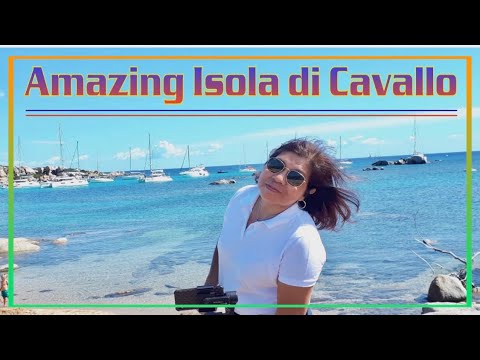
Let’s tour Isola di Cavallo (Cavallo Island) in 15mins
Tess de Guzman
You are currently viewing a placeholder content from Vimeo. To access the actual content, click the button below. Please note that doing so will share data with third-party providers.
More InformationYou are currently viewing a placeholder content from YouTube. To access the actual content, click the button below. Please note that doing so will share data with third-party providers.
More InformationYou need to load content from reCAPTCHA to submit the form. Please note that doing so will share data with third-party providers.
More InformationYou are currently viewing a placeholder content from GetYourGuide. To access the actual content, click the button below. Please note that doing so will share data with third-party providers.
More Information