
Île Rousse: The Complete Travel Guide (2026)
Île Rousse Travel Guide: Everything You Need to Know (2026)
Île Rousse is a charming port town of roughly 3,500 residents on Corsica’s northwest coast, founded in 1758 by Pasquale Paoli as a rival to Genoese-controlled Calvi just 25 km to the southwest. The town sits at sea level and is named after the distinctive reddish granite islets — the Îles Rousses — that shelter its harbour. Its covered market, built in 1844, and direct rail connection along one of France’s most scenic narrow-gauge lines make it a genuinely underrated base for exploring the Balagne region.
Top 3 Highlights at a Glance
- Covered Market (Marché Couvert) — An 1844 iron-and-glass hall where local vendors sell Corsican charcuterie and cheese every morning from 8 am.
- Île de la Pietra & Lighthouse — A 10-minute walk across a causeway leads to a Genoese tower and working lighthouse on red-granite islets.
- Train des Plages (Tramway de la Balagne) — A narrow-gauge scenic railway stopping at 18 beaches between Île Rousse and Calvi, running from June to September.
Scroll down for our complete travel guide with tips on getting there, where to stay, costs and more.
Arrival & Airport
How do I get to Île Rousse?
Fly into Calvi – Sainte-Catherine Airport (CLY), then take a 25-minute taxi or bus to Île Rousse. In my experience, the most scenic option is the Tramway de la Balagne narrow-gauge train, which runs June–September and costs around €7 one-way from Calvi. Alternatively, ferries from Marseille, Nice, or Toulon dock directly at Île Rousse’s port — a crossing takes 5–8 hours overnight from Nice with Corsica Ferries or La Méridionale. What surprised me is how many travellers overlook the ferry; it’s slower but eliminates the Calvi transfer entirely. My tip: the ferry route saves a separate taxi fare and lets you arrive rested.
Which airport is closest to Île Rousse?
Calvi – Sainte-Catherine Airport (CLY) is the closest, sitting just 25 km southwest of Île Rousse. In my experience, flights here are mostly seasonal (April–October) on Air France and easyJet from Paris Orly and London Gatwick. A taxi from CLY to Île Rousse costs approximately €50–60. The honest caveat most guides omit: CLY has very limited year-round flights, so if you’re travelling November–March, you’ll likely land at Bastia Poretta Airport (BIA), which is 95 km away and requires a 1.5-hour drive or bus connection. I recommend booking CLY flights at least 8 weeks in advance in summer — they sell out fast.
How long does the journey to Île Rousse take from the mainland?
From Paris, the total journey takes roughly 3.5–4 hours door-to-door: a 1h 50min flight to Calvi CLY plus the transfer. From Nice by ferry, expect 5–7 hours on a daytime crossing or 8–10 hours overnight. My tip: the overnight ferry from Nice’s port (Port de Nice) departs around 20:00 and arrives in Île Rousse by 06:00–08:00, letting you skip a hotel night entirely. What surprised me is that even from Marseille, the ferry crossing runs around 12 hours, so the Nice route wins on time. I recommend the overnight option for families — you save on accommodation and arrive refreshed in June–September.
Do I need a car in Île Rousse?
For the town itself, absolutely not — Île Rousse’s centre is walkable in under 20 minutes end-to-end. My tip: rely on the Tramway de la Balagne (June–September, €7/trip) to reach beaches from Bodri to Calvi. However, for inland Balagne villages like Pigna, Sant’Antonino, or Speloncato, a car is essential — buses are infrequent and often run just once daily. I recommend renting at Calvi Airport rather than in town, where choice is limited. Expect to pay around €60–80/day for a compact in peak July. The honest warning: Corsican mountain roads are genuinely narrow — if you’re not comfortable with switchbacks, stick to the coast by train.
City Transport
What are the best areas to stay in Île Rousse?
In my experience, staying within the old town grid around Place Paoli puts you within 5 minutes of the market, beach, and ferry port — ideal for first-timers. The Plage d’Île Rousse beachfront strip suits sun-seekers who want sand at their doorstep, though it’s slightly noisier. For more privacy, the Santa Reparata bay area — 3 km east — offers quieter apartments with sea views. My honest caveat: avoid booking right on the port quay during summer; ferry horns at 06:00 will wake you. I recommend Place Paoli as the sweet spot for walkability, dining access, and the Wednesday and Saturday morning market atmosphere.
What does accommodation cost per night in Île Rousse?
Expect to pay €80–130/night for a solid 3-star hotel in July–August, with options like Hôtel Splendid averaging around €110/night. Budget rooms in small family guesthouses start at €60/night in shoulder season (May, June, September). Self-catering apartments near the beach run €700–1,100/week in peak season — good value for groups of 4. What surprised me is that Île Rousse is 15–20% cheaper than nearby Calvi for equivalent accommodation. My tip: a studio apartment on Rue Notre-Dame gives market access and costs around €85/night in July. The honest trade-off: cheaper rooms are inland and require a 10-minute walk to the beach.
How far in advance should I book accommodation in Île Rousse during high season?
For July and August, book at least 3–4 months in advance — good rooms at places like Hôtel Splendid or A Siesta are gone by April. In my experience, the last two weeks of July coincide with French school holidays, pushing demand to its absolute peak; I’ve seen prices jump 30% overnight after May. For June and September, 6–8 weeks ahead is usually sufficient. My honest warning: Île Rousse has fewer than 20 hotels total — inventory is genuinely small, unlike larger Corsican resorts. I recommend using Booking.com with free cancellation to lock in rates in March, then reassess closer to the date. Don’t wait for last-minute deals — they rarely appear here.
Are there special or unique accommodation types in Île Rousse?
Yes — the most distinctive option is staying aboard a boat moored in the marina, available through local rental platforms from around €150/night for a catamaran berth in peak season. Several bergeries (traditional Corsican farmhouses) sit in the Balagne hills 10–15 km inland near villages like Pigna and offer half-board with homemade charcuterie and wine. In my experience, a bergerie stay around Speloncato for €90–110/night including dinner is genuinely one of Corsica’s most authentic experiences. The honest trade-off: you’ll need a car for every outing. My tip: Airbnb-listed village houses in Sant’Antonino — a 20-minute drive — offer jaw-dropping views and cost €80–100/night with far less tourist footfall.
Accommodation & Neighbourhoods
What are the must-sees in Île Rousse?
Three non-negotiables: first, the Marché Couvert (1844 covered market) open every morning — arrive before 09:30 for the best charcuterie and brocciu cheese. Second, walk the causeway to Île de la Pietra for the Genoese tower and lighthouse; the round trip takes 45 minutes and costs nothing. Third, ride the Tramway de la Balagne at least one stop to Bodri beach, Corsica’s finest undeveloped stretch of white sand. In my experience, the market alone justifies a morning in town. My honest caveat: Place Paoli is the social heart but looks better at dusk over a pastis than midday under tourist-coach pressure. Budget half a day to cover all three comfortably.
What can I experience for free in Île Rousse?
Île Rousse punches well above its weight for free experiences. The Île de la Pietra walk — across the causeway to the Genoese tower and lighthouse — costs nothing and takes 45 minutes. The covered market (open daily until noon, free to browse) is a genuine local institution. Swimming at Plage d’Île Rousse, the main town beach, is completely free with no lounger rental required. In my experience, the most underrated free experience is watching the pétanque players on Place Paoli at 18:00 — pure Corsican small-town life. My tip: the coastal footpath north toward Bodri offers dramatic red-rock scenery with zero crowds before 09:00. Honest caveat: free parking in town disappears by 10:00 in July.
Which day trips from Île Rousse are worth doing?
Three day trips I recommend without hesitation: Calvi (25 km, 35 minutes by car or train) for its 15th-century Genoese citadel — one of Corsica’s best. Sant’Antonino (20 km inland, 30-minute drive), a perched village voted one of France’s most beautiful, with views across the entire Balagne. The Niolo Valley (65 km, 1.5 hours) via the Scala di Santa Regina gorge is an extraordinary drive with near-vertical granite walls dropping 300 metres to the river below. My honest caveat: Sant’Antonino has only 1 access road and parking fills by 11:00 in August — go at 09:00 or after 17:00. In my experience, the Niolo trip requires a full day and a confident driver on mountain roads.
What local specialities should I try in Île Rousse?
Start with brocciu — a fresh Corsican ewe’s milk cheese, best eaten at the covered market at €4–6 per piece and available only November–June (the fresh version). Lonzu and coppa (Corsican charcuterie) are non-negotiable — look for AOC-certified product at the market stalls. In the evening, order veal with olives or aziminu (Corsican fish stew similar to bouillabaisse) at a restaurant on Place Paoli. What surprised me is the quality of Nielluccio and Vermentino wines from local Balagne vineyards — a bottle of Domaine Orenga de Gaffory costs around €12–18 at a wine shop. My tip: avoid restaurants on the port quay which inflate prices by 25% for tourist traffic.
Highlights & Must-Sees
What makes Île Rousse unique compared to other Corsican towns?
Three things genuinely set Île Rousse apart. First, it was purpose-built in 1758 by Pasquale Paoli — Corsica’s national hero — as a planned city with a rational grid, giving it a more open, elegant layout than medieval rivals. Second, the Tramway de la Balagne connects the town directly to 18 beaches between here and Calvi — no other Corsican town has this car-free coastal access. Third, the 1844 covered market is the best preserved and most authentically local market hall on the island. In my experience, Île Rousse feels like a real working town — less performatively touristic than Porto-Vecchio or Bonifacio — while still offering excellent beaches within walking distance. Its population of just 3,500 keeps it human-scaled.
How many days in Île Rousse are worthwhile?
3 nights minimum to do the town and its immediate surroundings justice; 5–6 nights if you want to use it as a base for the wider Balagne region. In my experience, Day 1 covers the market, Île de la Pietra, and town beach; Day 2 is a full Tramway de la Balagne beach day toward Bodri or Lozari; Day 3 works perfectly for a day trip to Sant’Antonino and Calvi. For a 5-night stay, add the Niolo Valley and a bergerie lunch near Pigna. My honest caveat: after 6 days, the town itself will feel exhausted — Île Rousse works best as a hub, not a destination where you plant yourself and stay put. I recommend pairing it with 2 nights in Corte or Bonifacio on a longer Corsica itinerary.
When is the best time to visit Île Rousse?
June and September are the sweet spot — warm enough for swimming (sea temperature 22–24°C), far fewer crowds than July–August, and the Tramway de la Balagne still running. July and August are peak season: hot (28–32°C daily), busy, and expensive. In my experience, the first two weeks of June offer the best ratio of value to weather — markets are stocked with fresh brocciu, the beach is uncrowded, and hotel rates are 20–30% lower than August. October sees some rain and most restaurants closing by mid-month. My honest warning: the Tramway shuts down in late September, which cuts off car-free beach access entirely. I recommend 15 June – 15 September as the ideal window.
Are there local festivals in Île Rousse worth attending?
The Festival du Vent in late October in nearby Calvi (25 km) draws international kite artists and performers and is one of Corsica’s most original events. In Île Rousse itself, the Fête de la Saint-Pierre in late June celebrates the patron saint of fishermen with a boat procession and harbour festivities. August brings the Fiera di u Vinu wine fair to Luri (90 km east), worth the drive for Corsican wine producers in one place. What surprised me is how lively Île Rousse’s market square becomes on Bastille Day (14 July) — free concerts, fireworks over the harbour, and the entire town out until midnight. My tip: book accommodation 6 months ahead for any August festival weekend.
Food & Drink
How does the weather affect activities in Île Rousse?
Summer (June–September) is almost entirely dry — expect fewer than 15 mm of rain in July — making beach and outdoor activities risk-free. The Tramway de la Balagne only operates June–September, so rain is rarely a factor during its season. The Libecciu (southwest wind) can make the main town beach choppy 3–4 days a month in July; when it does, the sheltered Santa Reparata bay (3 km east) stays calm. In my experience, hiking inland to the Balagne villages is best done before 10:00 in July and August to avoid 35°C+ heat on exposed paths. My honest caveat: October onwards brings the Tramontane wind and increasing rain — water sports and ferry services become unreliable after mid-October.
How crowded does Île Rousse get in peak season?
In July and August, the population swells from 3,500 to an estimated 15,000–20,000 — restaurants queue from 20:00, the town beach fills by 10:00, and the Tramway de la Balagne sells out on popular afternoons. In my experience, the crunch is most severe during French school holidays (late July to late August) when French mainland families dominate. The Île de la Pietra causeway walk stays manageable even in peak season because most tourists never bother. My honest caveat: parking in the centre becomes genuinely impossible by 09:30 in August — if you have a car, use the free parking lot on Route de Monticello (10-minute walk from centre) and leave the car there all day. June remains the best escape from the crowds.
How safe is Île Rousse?
Île Rousse is very safe by any standard — petty crime is rare and violent crime essentially unheard of for tourists. In my experience, the biggest genuine risk is car break-ins at beach parking areas (particularly at Bodri and Lozari) in July–August; never leave valuables visible in a parked car. The sea itself demands respect: the Libecciu wind creates sudden rip currents off the main beach, and 3 drowning incidents per summer on average are recorded across Balagne beaches — always swim where the flag is green. My honest warning: the coastal rocks around Île de la Pietra are slippery after rain and have caused ankle injuries. Overall, I’d describe Île Rousse as one of the safest places I’ve traveled in the entire Mediterranean basin.
Is English widely spoken in Île Rousse?
English is spoken at a functional level in most hotels, ferry ticket offices, and tourist-facing restaurants — enough to order, book, and navigate. In my experience, the covered market vendors and older café owners speak French and Corsican only, so a few basic French phrases go a long way. The town is predominantly a French domestic tourist destination, meaning English-language menus are the exception, not the rule. My tip: download Google Translate with offline French before you go — it handles menu translation perfectly. Honest caveat: British and American tourists are a minority here; don’t expect the English-language infrastructure you’d find in Sardinia or the Balearics. A phrasebook approach to French will genuinely improve your experience beyond what any app delivers.
Practical Tips
What is the daily budget for Île Rousse?
A realistic mid-range daily budget is €120–160 per person including accommodation, meals, and transport. Breakdown: hotel €60–80 (shared double room), lunch at a market café €12–16, dinner at a Place Paoli restaurant €28–38, Tramway ticket €7, and a wine or pastis €4–6. Budget travellers sleeping in a hostel dorm (€30–40/night, limited options) and eating market produce can manage €70–85/day. In my experience, the single biggest budget drain is restaurant wine — a bottle that costs €12 in a shop becomes €32–40 at table. My tip: buy Balagne wine at the market or a local cave and enjoy it on the beach. Île Rousse is 20–25% cheaper than Saint-Tropez or Porto-Vecchio for equivalent quality.
How does public transport work in and around Île Rousse?
In my experience, public transport in Île Rousse is excellent June–September and limited the rest of the year. The Tramway de la Balagne narrow-gauge train runs between Île Rousse and Calvi with 18 beach stops — trains run 6–8 times daily, tickets cost €7 one-way or €17 day pass. The SNCF regional train connects Île Rousse to Bastia (2.5 hours, €13) and Ajaccio (4 hours, €25) year-round. Local Balagne bus routes serve inland villages like Pigna and Corbara once daily — useful but not flexible. My honest warning: no local bus serves the town itself; everything within Île Rousse is on foot. Outside summer, check the SNCF Corse app for real-time cancellations — the mountain line is prone to delays after storms.
Which apps do you recommend for visiting Île Rousse?
Five apps I rely on personally for Île Rousse: SNCF Connect (train and Tramway de la Balagne timetables and tickets — buy before you board to avoid queues), Corsica Ferries app (ferry booking from Nice or Marseille, includes real-time departure status), Maps.me (offline OSM maps covering every Balagne trail and village road), Windy (essential for checking the Libecciu and Tramontane wind forecasts before a beach day), and Google Translate offline French for market and menu navigation. My tip: download Maps.me offline Corsica pack before leaving home — mobile data in the Balagne hills is patchy on the Free and Bouygues networks. Orange gives the best signal inland if you’re buying a French SIM.
More Destinations in Europe
Explore our complete travel guides for more Europe destinations: Saint-Étienne Travel Guide (2026), Caen Travel Guide (2026), Provence Travel Guide (2026), Côte dAzur Travel Guide (2026), Mulhouse Travel Guide (2026).
Useful Resources for Planning Your Trip to Île Rousse
- Wikipedia: Île Rousse — history, geography and background
- Lonely Planet: Île Rousse — itineraries and travel inspiration
- TripAdvisor: Île Rousse — hotels, restaurants and traveller reviews
🎥 Île Rousse Travel Videos
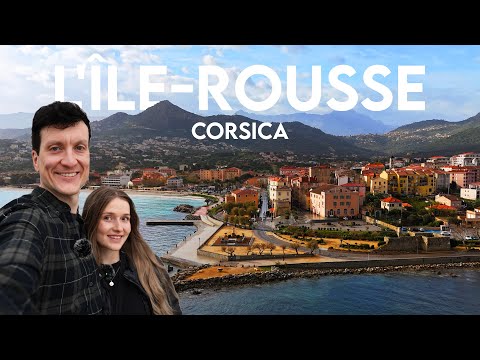
Corsica Road Trip: Discovering L’Île-Rousse
Sean and Emily
You are currently viewing a placeholder content from Vimeo. To access the actual content, click the button below. Please note that doing so will share data with third-party providers.
More InformationYou are currently viewing a placeholder content from YouTube. To access the actual content, click the button below. Please note that doing so will share data with third-party providers.
More InformationYou need to load content from reCAPTCHA to submit the form. Please note that doing so will share data with third-party providers.
More InformationYou are currently viewing a placeholder content from GetYourGuide. To access the actual content, click the button below. Please note that doing so will share data with third-party providers.
More Information