
Maldives: The Complete Travel Guide (2026)
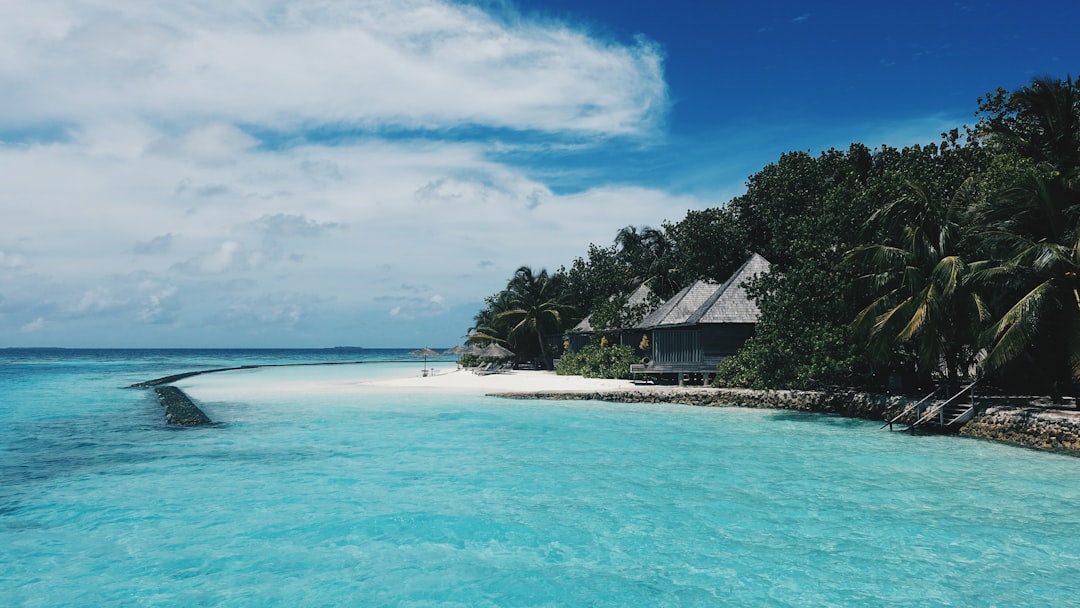
Last reviewed: August 2026 · key facts checked against Wikidata
Maldives Travel Guide: Everything You Need to Know (2026)
The Maldives is an archipelago of 1,192 coral islands grouped into 26 atolls, sitting about 750 kilometres southwest of Sri Lanka in the Indian Ocean, with a resident population of 436,330. The country holds the record as the world’s lowest-lying nation, with a maximum natural ground level of just 2.4 metres above sea level. First settled around 500 BC and formerly a British protectorate until independence in 1965, the Maldives has transformed into one of the most sought-after luxury destinations on the planet.
Three Things Not to Miss in Maldives
- Bioluminescent Beach, Vaadhoo Island — Neon-blue phytoplankton lights up the shoreline after dark — a natural phenomenon unlike anywhere else on Earth.
- Hanifaru Bay Biosphere Reserve — Snorkel alongside up to 200 manta rays feeding in a single bay during the southwest monsoon season.
- Male Fish Market — A chaotic, aromatic tuna auction starting at 6 AM that reveals the real economic backbone of the Maldives.
Scroll down for our complete travel guide with tips on getting there, where to stay, costs and more.
How to Reach Maldives
Which airports are the best entry points into the Maldives?
Velana International Airport (MLE) in Malé is the only realistic international entry point for the Maldives. In my experience, virtually every international flight lands here — it handles over 1.8 million passengers annually. Emirates, Qatar Airways, and Singapore Airlines operate the most reliable connections from Europe, the Gulf, and Asia respectively. A second airport, Gan International Airport (GAN) in Addu Atoll, accepts a handful of regional flights from India and Sri Lanka, but scheduling is erratic. My tip: book MLE and plan your onward speedboat or domestic flight from there. Avoid banking on GAN unless your resort specifically recommends it — cancelled flights there have stranded travellers for days.
How do I get from Velana International Airport in the Maldives to my first accommodation?
Your transfer method depends entirely on which atoll your resort sits in. From Velana International Airport (MLE), resorts within North Malé Atoll — such as those near Kaafu Atoll — offer speedboat transfers costing $30–$80 per person for a 20–45-minute ride. Resorts in distant atolls require a domestic seaplane flight from MACS Terminal, costing $250–$600 return and operating only in daylight hours between roughly 6 AM and 5 PM. What surprised me: if your international flight lands after 4 PM, you will be forced to stay a night in Malé before your seaplane departs the next morning — budget for this extra night near Hulhumalé rather than central Malé, where hotels are cheaper and quieter.
What transport options are there within the Maldives?
Three options cover the Maldives: seaplanes, domestic flights, and speedboats. Trans Maldivian Airways operates the world’s largest seaplane fleet, connecting resorts across 26 atolls — flights take 15–45 minutes but cost $300–$700 return. Maldivian airline and Flyme run domestic prop-plane routes to 13 inhabited atolls for $80–$200 one way, landing at small atoll airports like Dharavandhoo (DRV) in Baa Atoll. Public ferries run between inhabited islands for as little as $1–$3, but schedules are infrequent — often just one departure per day. My honest warning: the ferry network is genuinely useful only if you are staying in local guesthouses rather than mid-ocean resorts. Inter-atoll travel is expensive and unavoidable — factor it into your total budget from day one.
Do I need a rental car in the Maldives?
No — a rental car is completely irrelevant in the Maldives. The islands are tiny; Malé itself measures just 2.2 square kilometres, and most resort islands are even smaller. On Malé and Hulhumalé, taxis cost a flat $3–$5 per ride and cover the entire island in under 10 minutes. On resort islands, you walk, cycle on complimentary bikes, or take a buggy. I recommend renting a bicycle on Hulhumalé for $5 per day if you want to explore freely — it covers the whole island in 30 minutes. The only partial exception is Addu Atoll (Seenu), where a causeway links several islands and local motorbike rentals exist for around $15 per day, but even there a car is unnecessary.
How good is the public transport network between regions of the Maldives?
Frankly, the public transport network is functional but limited for tourists. State-run ferries operated by the Maldives Transport and Contracting Company (MTCC) connect inhabited islands within atolls, with fares as low as $1 per journey, but they run on government schedules — typically once or twice daily — and do not stop at private resort islands. For travel between atolls, you depend on domestic flights or resort-arranged speedboats. What most guides omit: inter-atoll public ferries do exist but take 10–16 hours and are used almost exclusively by locals. In my experience, travellers staying at local guesthouses in places like Maafushi Island or Thulusdhoo find the ferry network genuinely usable and economical, while resort guests are locked into resort-priced transfers.
Finding a Base in Maldives
Which regions should I stay in when visiting the Maldives?
Your choice hinges on budget and priorities. North Malé Atoll (Kaafu) offers the most accessible resorts and local guesthouse islands like Maafushi — ideal for budget to mid-range travellers. Baa Atoll is the crown jewel for marine life, designated a UNESCO Biosphere Reserve, home to Hanifaru Bay and world-class manta ray encounters — expect premium resort prices. South Malé Atoll suits divers chasing channel dives and sharks. Ari Atoll (Alifu) is the best base for whale shark encounters year-round near Maamigili Island. My tip: first-timers wanting overwater bungalows within budget should target South Malé or Ari Atoll guesthouses rather than splurging on North Malé luxury resorts — you get 80% of the experience at 30% of the cost.
What does good accommodation cost per night in the Maldives?
Budget ranges vary more dramatically here than almost anywhere on Earth. A local guesthouse on Maafushi or Guraidhoo costs $60–$120 per night for a clean en-suite double — genuinely good value. Mid-range resorts on their own islands start at $300–$600 per night with meals often excluded. Iconic overwater bungalows at properties like Gili Lankanfushi or Soneva Jani run $1,500–$5,000+ per night. What most guides omit: even mid-range resort prices rarely include meals — a full-board supplement adds $80–$150 per person per day because there are no restaurants to walk to on a private island. In my experience, the guesthouse islands provide the best value-to-experience ratio and local culture, which the hermetically sealed luxury resorts cannot offer.
When should I book hotels in the Maldives — how far in advance?
Book at least 3–6 months ahead for peak season travel. Peak season runs December through April, and top-tier overwater villas at resorts like Baros or One&Only Reethi Rah sell out by August for Christmas-New Year weeks. For budget guesthouses on Maafushi, 2–4 weeks advance booking is usually sufficient outside peak periods. My honest caveat: luxury resorts frequently offer their best rates through direct booking or early-bird packages released 9–12 months in advance — the closer to travel date, the worse the price. What surprised me: last-minute deals almost never exist here the way they do in Europe or Southeast Asia because demand consistently outstrips capacity. For February travel specifically, book by October at the latest.
When is the best time to travel to the Maldives?
February is the single best month to visit the Maldives, based on climate data — combining minimal rainfall, low humidity, calm seas, and excellent visibility for diving. The dry northeast monsoon season runs November through April, delivering sunny skies and gentle breezes. January and March are also excellent. My tip: late November through early December offers a sweet spot of dry weather with prices 20–30% lower than Christmas peak. The southwest monsoon (May through October) brings rain but also triggers the manta ray aggregations at Hanifaru Bay in Baa Atoll, making July–August compelling for divers despite the weather. Avoid late April and early May — the transition period brings unpredictable storms and rough seas that cancel snorkelling excursions without refunds.
How does peak season affect prices in the Maldives?
Peak season inflates prices by 50–150% compared to low season. Christmas and New Year weeks (December 24 – January 3) see the most extreme premiums — a resort charging $400 per night in October may charge $900–$1,200 for the same room during Christmas week. Flights also spike: a London–Malé return that costs $650 in September can reach $1,400 in December. What most guides omit: many resorts enforce mandatory Christmas gala dinner charges of $200–$350 per person on December 24 and 31, which are non-negotiable and rarely advertised upfront. In my experience, travelling in late January or February gives you peak-quality weather at 20–30% lower accommodation rates than Christmas — the best practical compromise between conditions and cost.
When to Travel to Maldives
Which regions of the Maldives have different climate zones?
The Maldives spans 820 kilometres north to south, and the climate does shift meaningfully across this distance. Northern atolls (Haa Alifu, Haa Dhaalu) receive the southwest monsoon later and exit it earlier — offering a longer dry window. Southern atolls like Addu (Seenu) and Gaafu Dhaalu near the equator experience heavier rainfall year-round and stronger currents, making them better for advanced diving but rougher for casual snorkelling during monsoon. Central atolls — Malé, Ari, Baa — follow the classic pattern most guides describe. My tip: if you travel during the shoulder season of May–June, head north toward Noonu or Raa Atoll where you are more likely to find dry mornings even as southern atolls receive rain. The difference is 3–4 degrees of latitude but practically noticeable.
What are the rainy seasons in the Maldives?
The southwest monsoon (Hulhangu) from May through October is the Maldives rainy season, with June and July receiving the heaviest rainfall. Rain typically arrives as short intense squalls rather than all-day downpours — most mornings remain usable even in June. October is transitional and often produces surprising sunshine. What most guides omit: the rainy season does not mean the Maldives is closed — resort occupancy drops to 50–60%, prices fall significantly, and Baa Atoll manta ray season peaks in July–August precisely because of the monsoon’s nutrient-rich currents. I recommend embracing the shoulder season if your budget is tight; just book a resort with an indoor spa and covered dining. Avoid booking non-refundable watersports excursions in advance during June–August — weather cancellations are common.
What does a trip to the Maldives cost per person per day?
Daily costs vary enormously by accommodation choice. Budget traveller at a local guesthouse on Maafushi: $80–$130 per day covering accommodation, three meals, and a snorkelling trip. Mid-range resort with half-board: $350–$600 per person per day. Luxury overwater bungalow fully inclusive: $800–$2,000+ per person per day. My honest caveat: the Maldives is almost impossible to visit cheaply once you factor in seaplane transfers adding $300–$600 return before you even reach your resort. In my experience, the most realistic budget for a decent 7-night experience — combining a guesthouse stay with one night at a mid-range resort — is around $1,800–$2,500 total per person including flights from Europe, excluding luxury extras. Anything below that requires very careful planning around guesthouse islands exclusively.
How expensive is food in the Maldives?
Food costs split sharply between local and resort environments. On local islands like Maafushi or Thulusdhoo, a full meal at a local café costs $5–$12 — rice, tuna curry, and roshi flatbread are the staples and genuinely delicious. A coffee costs $1–$2. On resort islands, expect $25–$45 for a main course, $10–$18 for a cocktail, and $60–$120 for a set dinner. What surprised me: many resorts operate on a full-board or all-inclusive model not because they are generous but because there is literally nowhere else to eat — the pricing reflects a captive audience. My tip: if staying at a resort, always negotiate the meal plan into your room rate rather than paying à la carte — you will save 30–40% versus paying per dish.
What hidden costs should I expect when visiting the Maldives?
Several costs blindside first-time visitors to the Maldives. Seaplane transfers: resorts quote room rates but bury the $300–$600 return seaplane fee in fine print — always ask before booking. Tourism goods and services tax (TGST) of 16% plus a green tax of $6 per night are added to every resort bill. Water sports and diving are almost never included even in all-inclusive packages — a single dive costs $60–$90, a PADI Open Water course runs $500–$700. Mandatory Christmas gala surcharges of $200–$350 per person apply at most resorts in late December. In my experience, the final resort bill routinely runs 25–40% higher than the quoted room rate once taxes, transfers, and activities are added. Build a $200–$400 buffer per person into your planning beyond the advertised price.
Daily Costs in Maldives
How much cash should I bring to the Maldives?
Bring $200–$300 USD cash as a practical emergency reserve. Resort islands are almost entirely cashless — your room charges everything to a tab settled by card at checkout. However, local guesthouse islands and public ferries operate primarily in Maldivian Rufiyaa (MVR), and the exchange rate is fixed at roughly MVR 15.42 per USD. ATMs exist in Malé and Hulhumalé but are unreliable on outer atolls. My honest warning: do not rely on exchanging money at resort front desks — rates are poor and they often only accept USD anyway. USD is widely accepted across the Maldives at a functional level, but small local shops and ferries prefer Rufiyaa. I recommend withdrawing MVR 500–1,000 (roughly $32–$65) from an ATM in Malé for incidental local spending.
Which credit cards are accepted in the Maldives?
Visa and Mastercard are accepted at virtually every resort and most guesthouses. American Express is accepted at around 70% of upscale resorts but rejected at smaller properties — confirm before travel. Discover and UnionPay have patchy acceptance outside Chinese-operated resorts. What most guides omit: resorts routinely add a 2–3.5% foreign transaction surcharge on card payments, which is disclosed only in the fine print — on a $5,000 bill, that is an invisible $100–$175 extra. My tip: use a fee-free travel card like Revolut, Wise, or a Charles Schwab debit card to avoid both foreign transaction fees and ATM withdrawal charges. In my experience, carrying a backup Mastercard from a second bank is essential — card readers at remote resort islands occasionally lose satellite connectivity for hours at a time.
Which regions of the Maldives must I not miss?
Baa Atoll is non-negotiable if you have any interest in marine life — the UNESCO Biosphere Reserve contains Hanifaru Bay, the world’s most concentrated manta ray feeding site. Ari Atoll is essential for whale shark encounters, consistently sighted near Maamigili (Rangali) Island year-round. Malé itself is underrated — the Old Friday Mosque (Hukuru Miskiy), built in 1658 from coral stone, and the chaotic Malé Fish Market reveal a Maldivian reality entirely absent from resort bubbles. My honest caveat: most visitors never leave their resort island and genuinely miss the soul of the country. I recommend at least one full day in Malé and a ferry trip to a local island like Hulhumalé or Maafushi — these experiences cost almost nothing and reframe the entire trip.
What are the tourist highlights of the Maldives?
The classic highlights are well-earned. Overwater bungalows — pioneered here and still the gold standard globally — offer direct lagoon access from your private deck. Snorkelling and diving the house reef: most resort islands have a living coral reef within 50 metres of the beach, accessible without a boat. Sandbanks (faru): uninhabited white-sand strips that emerge at low tide for private picnics — your resort can arrange them for $50–$150 as a half-day trip. Dolphin-watching cruises at sunset operate from virtually every resort for $30–$60 per person. What surprised me: the National Museum in Malé is an undervisited gem housing pre-Islamic Buddhist artefacts from the 6th–12th centuries that document a forgotten chapter of Maldivian history — admission is just $2 and it takes 45 minutes.
What experiences in the Maldives are found nowhere else on Earth?
Three experiences are genuinely unique to the Maldives. First, bioluminescent beach nights on Vaadhoo Island — neon-blue phytoplankton lighting up breaking waves after dark is one of the most otherworldly natural phenomena I have witnessed anywhere. Second, sleeping in an underwater bedroom — The Muraka villa at Conrad Maldives Rangali Island sits 5 metres below sea level with a glass bedroom surrounded by reef fish; it costs $50,000 per night but can be viewed by non-guests on a dive. Third, the manta ray aggregation at Hanifaru Bay from July–October — up to 200 mantas feeding in a single bay simultaneously is a spectacle with no equivalent on the planet. My tip: the bioluminescence is free and accessible by a short boat trip from several guesthouses on Raa or Lhaviyani Atoll — no luxury resort required.
Maldives Region by Region
Which areas of the Maldives are overcrowded — and what are quieter alternatives?
Maafushi Island has become genuinely overcrowded — what was once a quiet local island now hosts over 50 guesthouses and feels like a budget resort strip. North Malé Atoll resorts like Baros and Kurumba are perpetually full during peak season. My recommended alternatives: Fuvahmulah Island in Gnaviyani Atoll remains almost completely off the tourist radar despite offering the world’s only land-locked diving site — a freshwater lake that connects to the sea, home to tiger sharks. Addu Atoll (Seenu) in the far south has a British wartime history, a 14-kilometre causeway between islands, and guesthouses charging $50–$80 per night with barely a Western tourist in sight. In my experience, travelling to these outer atolls adds $150–$250 in domestic flight costs but delivers an authenticity that no overpriced Malé-atoll resort can match.
How many days do I need to experience the Maldives properly?
7 nights is the practical minimum for a worthwhile Maldives trip given the high cost of getting there. Anything shorter makes the international flight economically brutal — a 12–14 hour journey from Europe for 4 nights is poor value. In my experience, the ideal trip structure is 2 nights in Malé or Hulhumalé exploring the real capital, followed by 5 nights on a resort or guesthouse island. For divers, 10–14 nights allows coverage of two distinct atolls — Ari for whale sharks and Baa for mantas. What most guides omit: after day 4 or 5 on a private resort island, many travellers feel isolated and understimulated regardless of the price they paid — the novelty of a private island wears faster than the brochures suggest. Combining a resort stay with local island time prevents this.
Do I need a visa to visit the Maldives?
No advance visa is required — citizens of all countries receive a free 30-day tourist visa on arrival at Velana International Airport. Extension to 90 days is possible by applying at the Department of Immigration in Malé for a fee of approximately $50. What most guides omit: you must show proof of onward travel and sufficient funds — immigration officers occasionally ask budget travellers to demonstrate $100 per day of stay in accessible funds. A valid passport with at least 6 months remaining validity is mandatory. In my experience, immigration is fast and friendly — the queue at MLE clears within 20–30 minutes even on a full A380 arrival. Israeli passport holders were historically refused entry, but diplomatic relations normalised in 2023 — confirm current status before travel if applicable.
What languages are spoken in the Maldives?
Dhivehi is the official national language, written in a unique script called Thaana that reads right to left. However, English is the de facto second language at virtually every level of the tourism industry — resort staff, taxi drivers in Malé, guesthouse owners, and ferry ticket sellers all speak functional to excellent English. In my experience, communication in English is easier in the Maldives than in most of Southeast Asia. Arabic is understood by many due to Islamic education. My honest caveat: on remote outer atolls and small fishing villages, English proficiency drops sharply — locals appreciate a few Dhivehi phrases. Learning ”Shukuriyya” (thank you) and ”Kihineh?” (how are you?) earns genuine warmth. French and German are spoken at a basic level by staff at European-market resorts like Soneva and Club Med Kani.
What cultural rules do I need to know before visiting the Maldives?
The Maldives is a 100% Muslim country — the only one in the world where all citizens are legally required to be Muslim. This shapes several practical rules. Alcohol is prohibited on inhabited local islands — it is only served at licensed resort islands and live-aboard boats. Bikinis and swimwear are forbidden on local islands — cover up with a sarong or shorts the moment you leave the beach. Pork is unavailable on local islands. Public displays of affection are frowned upon in Malé and local island communities. During Ramadan (dates shift annually), eating, drinking, and smoking in public during daylight hours is illegal even for tourists on local islands. My tip: carry a lightweight long-sleeve top whenever visiting Malé — the Hukuru Miskiy mosque requires shoulders and knees covered, and the dress code is enforced.
Local Know-How for Maldives
How safe is the Maldives for travellers?
The Maldives is extremely safe for tourists — violent crime against visitors is virtually unknown and the 2024 Global Peace Index ranks it among the safer Asian nations. Resort islands are effectively private and security-controlled. What most guides understate: political instability in Malé occasionally flares — protests and opposition demonstrations have occurred, and in 2023 anti-government tensions escalated near Republic Square. Avoid large gatherings in central Malé during politically sensitive periods. Petty theft is rare but not absent on budget guesthouse islands like Maafushi where backpacker density has risen. The genuine safety risk is water-based: rip currents around channels between atolls are powerful and have caused fatalities — never swim outside designated areas regardless of how calm the water looks. I recommend purchasing comprehensive travel insurance that specifically covers water sports and medical evacuation, which costs $200+ in the Maldives due to the remoteness of hospitals.
What health precautions should I take before visiting the Maldives?
No mandatory vaccinations are required for the Maldives, but I recommend being current on Hepatitis A, Typhoid, and Tetanus. Malaria risk is classified as very low and prophylactics are generally not recommended by WHO for tourist visits. Dengue fever is the primary mosquito-borne risk — use DEET-based repellent at dusk on local islands. The most critical health issue is medical infrastructure: the only properly equipped hospital is ADK Hospital in Malé, and serious cases require medical evacuation to Sri Lanka or India, costing $10,000–$40,000 without insurance. My non-negotiable recommendation: buy travel insurance that explicitly covers emergency seaplane medical evacuation before you travel. Dehydration is common — the heat and snorkelling exertion surprise visitors; drink 3 litres of water daily and pack oral rehydration salts. Reef cuts from coral are slow to heal in tropical humidity — treat immediately with antiseptic.
What SIM card or eSIM options are available in the Maldives?
Dhiraagu and Ooredoo are the two mobile operators in the Maldives. A Dhiraagu tourist SIM costs $10–$15 at the airport arrivals hall and includes 5–10GB of data — I recommend buying it immediately after clearing customs before leaving MLE. Coverage is excellent on Malé, Hulhumalé, and local guesthouse islands. My honest caveat: on private resort islands and outer atolls, coverage is patchy to non-existent — most resorts offer their own Wi-Fi (sometimes at a daily charge of $10–$25) which is more reliable than cellular. eSIM options from providers like Airalo or Holafly cover the Maldives for $8–$18 for 1GB–5GB — convenient if you want connectivity before landing. In my experience, Dhiraagu’s physical SIM outperforms eSIM providers on outer atoll coverage by a meaningful margin.
Which apps do you recommend for travelling in the Maldives?
Six apps make a genuine difference. Google Maps works for Malé navigation but has blank spots on resort islands — download Maps.me as a backup with offline atoll maps. Uber does not operate here — use PickMe (Sri Lanka-based but functional in Malé) or simply flag taxis on the street for $3–$5 flat. WhatsApp is the universal communication tool — every guesthouse, boat captain, and local guide communicates via WhatsApp; save numbers before arrival. XE Currency for Rufiyaa–USD conversions. Tides Near Me is essential for planning snorkelling — Maldivian tidal shifts of 0.8–1.2 metres dramatically affect reef visibility and sandbank access. DAN Diver for divers tracking nitrogen loading across multiple dives. My tip: download all offline maps before departure — resort Wi-Fi is often throttled and downloading maps mid-trip costs you precious data.
What are common traveller mistakes when visiting the Maldives?
Five mistakes I witness repeatedly. First, not budgeting for transfers — booking a cheap resort then discovering a $500 seaplane transfer not included in the price. Second, packing beach clothes only — Malé has a dress code and visits without appropriate clothing result in awkward cover-up scrambles at the mosque or market. Third, booking non-refundable rates during monsoon without travel insurance — June squalls cancel excursions without compensation. Fourth, expecting resort hopping to be easy — moving between two atolls requires seaplane rescheduling that costs $300+ extra and depends on daylight-only flight windows. Fifth, neglecting the local island experience entirely — spending $3,000–$5,000 on a hermetically sealed luxury resort and missing the living culture of a place like Fuvahmulah or Addu is the most common regret I hear from repeat visitors. Always build one local island day into any Maldives itinerary.
Maldives at a Glance
| Population | 436,330 |
|---|---|
| Currency | Maldivian rufiyaa (Rf) |
| Official language | Maldivian |
| Time zone | UTC+05:00 |
Source: Wikidata, retrieved August 2026.
Essential Resources for Planning Your Trip to Maldives
- Ministry of Tourism Maldives — official visitor information, passes & events
- Wikipedia: Maldives — history, geography & background
- Wikivoyage: Maldives — community travel guide & practical tips
- Maldives travel – Lonely Planet | Asia — expert itineraries & travel inspiration
- THE 15 BEST Things to Do in The Maldives (2026) — hotels, restaurants & traveller reviews
- Alternative transport to Maldives? — how to get around
- Numbeo: Cost of Living in Maldives — current prices & cost comparison
- Timeanddate: Maldives Weather & Climate — forecasts & climate statistics
More Perspectives on Maldives
Maldives Travel Videos
Watch these videos for a visual preview before your trip:
- Maldives Travel Guide 2026 4K
- Maldives Travel Guide | Everything You Need to Know Before You Go
- We Stayed at a 5-STAR Maldives Resort For FREE! Milaidhoo Resort
Maldives Travel Discussions on Reddit
Real traveller experiences and community advice:
- Are the Maldives really that cool as they said? : r/travel
- Travelling to the Maldives for 10 days and feel so lost & …
- Maldives – travel agent, or book myself? : r/LuxuryTravel
Diving in the Maldives
For many travellers the Maldives is a diving destination first and a beach destination second — manta rays, whale sharks and channel dives are the draw. If you want to compare operators before you commit to a resort or liveaboard, our diving directory lists more than 40 dive centres across the Maldives with ratings, certification agencies and locations.
Data Sources
This page was compiled using data from Wikipedia, Wikidata, Open-Meteo (climate), Numbeo (cost of living) and REST Countries. Information is updated regularly.