
Sarajevo: The Complete Travel Guide (2026)
Last reviewed: September 2026 · key facts checked against Wikidata
Sarajevo Travel Guide: Everything You Need to Know (2026)
Sarajevo, the capital of Bosnia and Herzegovina, sits at 527 metres above sea level in a valley ringed by the Dinaric Alps, home to 275,524 residents within city limits. Founded in 1461 by the Ottoman governor Isa-Beg Ishaković, it became the first city in Europe to have a full tram network, launched in 1885. Today it is one of the most culturally layered cities on the continent — Ottoman bazaars, Austro-Hungarian boulevards, and socialist-era architecture coexist within walking distance of each other.
Three Things Not to Miss in Sarajevo
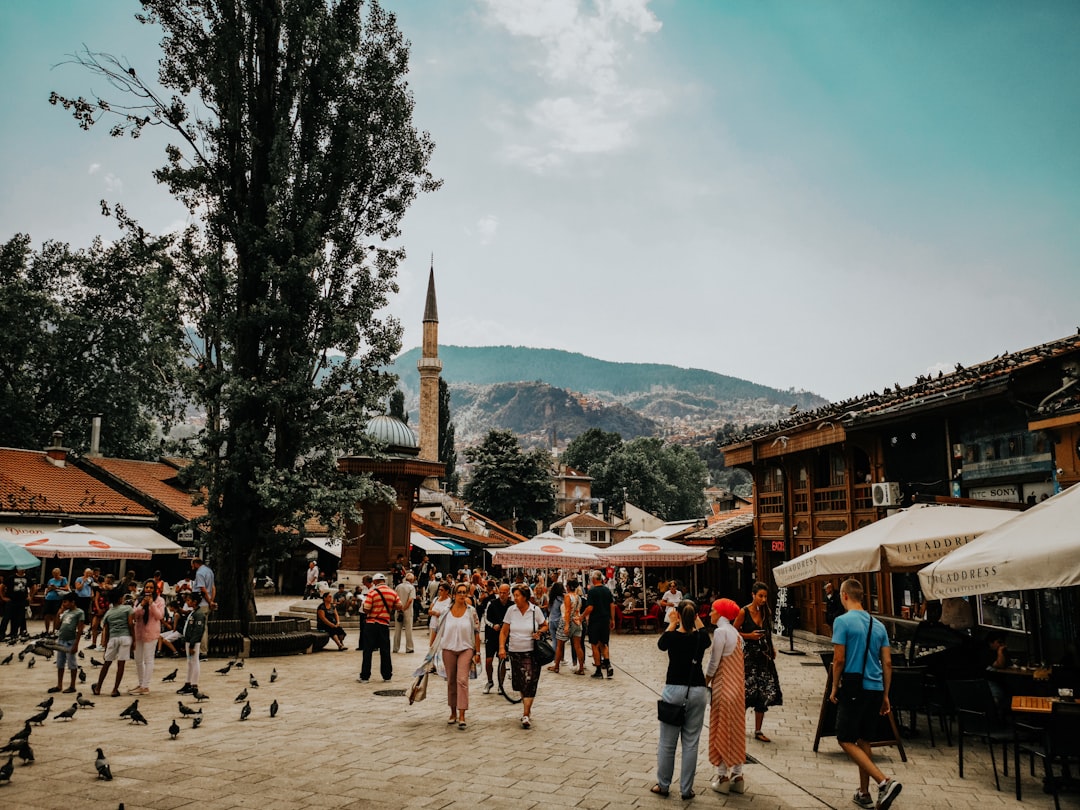
- Baščaršija Bazaar — The 15th-century Ottoman heart of Sarajevo, where copper craftsmen still hammer trays by hand in Kazandžiluk Street.
- Tunnel of Hope (Tunel spasa) — The 800-metre underground tunnel that kept Sarajevo alive during the 1,425-day siege — the longest of any capital city in modern warfare.
- Yellow Fortress (Žuta Tabija) — A 17th-century Ottoman citadel offering a 360-degree panorama of the entire Sarajevo valley, free to enter at any hour.
Scroll down for our complete travel guide with tips on getting there, where to stay, costs and more.
Arriving in Sarajevo: Airport & Transfers
How do I get to Sarajevo?
Fly into Sarajevo International Airport (SJJ), located 9 km southwest of the city centre. Direct flights operate from Vienna, Istanbul, Frankfurt, Ljubljana, and Zurich, with Austrian Airlines, Turkish Airlines, and Wizz Air covering most routes. In my experience, connecting through Vienna (VIE) gives the widest choice of onward timings. The caveat most travellers miss: budget carriers sometimes route through Tuzla Airport (TZL), which is 130 km away — always double-check your airport before booking. From neighbouring countries, FlixBus and Eurolines connect Sarajevo to Zagreb, Belgrade, and Split for under $20 USD.
Which airport is closest to Sarajevo?
Sarajevo International Airport (SJJ) is the only commercial airport serving the city, sitting 9 km from the old town in the Butmir district. It is a small but functional airport — only one terminal — which means baggage claim is fast, typically under 20 minutes. What surprised me: the airport has almost no food options airside, so eat before you board. A second option used by some budget travellers is Mostar Airport (OMO), roughly 130 km south, but ground transfers from there are inconvenient without a private car. I always recommend flying directly into SJJ.
How long does the journey from the airport to central Sarajevo take?
The journey from SJJ airport to Baščaršija takes 15–25 minutes by taxi or ride-share with no traffic. A metered taxi costs roughly BAD 15–20 (around $8–11 USD), while Bolt typically runs cheaper at BAD 8–12. Tram line 1 stops near the airport perimeter but requires a 10-minute walk to the tram stop at Stup — manageable with a daypack, impractical with large luggage. The honest trade-off: Bolt is cheaper but surge pricing hits during early morning arrivals when drivers are scarce. My tip is to book a Bolt the moment you land, before exiting arrivals, to lock in the base fare.
Do I need a rental car to explore Sarajevo?
No — you do not need a car for Sarajevo itself. The city centre, Baščaršija, Grbavica, and Ilidža, are all linked by tram and trolleybus. A single tram ticket costs BAD 1.80 (around $1.29 USD). Where a car genuinely helps is for day trips: Vrelo Bosne springs, Jahorina ski resort (28 km), and Lukomir village (60 km) are all awkward or expensive to reach by public transport. In my experience, renting a car for just two or three days mid-trip from EuroCar or Budget at the airport gives you the best of both worlds without daily parking headaches in the old town.
Getting Around Sarajevo
What are the best areas to stay in Sarajevo?
Baščaršija (the old Ottoman quarter) is my top pick for first-time visitors — you wake up 2 minutes from the main sights and the city’s best breakfast spots. Ferhadija Street and the surrounding Austro-Hungarian district suits travellers who prefer wider pavements, cafés, and a slightly quieter evening atmosphere. The neighbourhood of Grbavica is where locals live and is noticeably cheaper without feeling remote. I recommend avoiding accommodation in Ilidža unless you specifically want spa access — it adds 30 minutes of tram travel to every single sightseeing day. Stick within the 3 km corridor between Baščaršija and the Eternal Flame and you will walk almost everywhere.
What does accommodation cost per night in Sarajevo?
Budget travellers can find clean hostel dorm beds from $12 USD per night in Baščaršija. Economy private hotel rooms average around $40 USD per night — confirmed by current Numbeo data. A solid mid-range boutique hotel like Hotel Astra or Hotel Michele runs $65–90 USD, often including breakfast. Design hotels or the top-tier Hotel Europe (opened 1882) push to $130–180 USD. The honest warning: Sarajevo’s hotel stock is still modernising after decades of post-war underinvestment — a $50 room here does not always match the standard of a $50 room in Prague. Read recent reviews on Booking.com specifically for water pressure and room heating.
How far in advance should I book accommodation in Sarajevo during high season?
For July and August — the hottest and busiest months — book at least 6–8 weeks ahead, especially for Baščaršija-area hotels with fewer than 20 rooms. The Sarajevo Film Festival, held every August, fills virtually every decent property within the old town for its 10-day run — if your dates overlap, book 3 months ahead or prepare to stay in Ilidža and commute. September, which I consider the best month to visit, books up fast with conference groups. The honest caveat: last-minute deals in Sarajevo do exist in October–November when occupancy drops sharply, and I have secured 30% discounts walking in off the street in late October.
Are there special or unique accommodation types in Sarajevo?
Yes — traditional Bosnian guesthouses called ‘pansioni’ in Baščaršija offer the most characterful stays, often in converted Ottoman-era merchant houses with low wooden ceilings and copper details. Han (caravanserai) conversions are also worth seeking out, though only a handful have been restored. For a genuinely local experience, I recommend Muslibegović House in Mostar if you day-trip there, but in Sarajevo itself, Sartaj Guest House on the old bazaar edge offers a similar aesthetic. The trade-off: these historic properties rarely have lifts, soundproofing is basic, and Wi-Fi can be inconsistent. If you sleep lightly, opt for a modern boutique instead.
Where to Stay in Sarajevo
What are the must-see sights in Sarajevo?
My non-negotiable three: Baščaršija bazaar (explore before 10 AM to beat group tours), the Tunnel of Hope Museum in Butmir (the 800-metre siege tunnel that kept the city alive from 1992–1995), and the Latin Bridge where Archduke Franz Ferdinand was assassinated on 28 June 1914 — arguably the single most consequential street corner of the 20th century. Beyond those, the Gazi Husrev-beg Mosque (1531) is the finest Ottoman mosque in the Balkans. The War Childhood Museum on Logavina Street wins every visitor over — allow 90 minutes minimum. What surprised me: the Sarajevo roses (mortar-blast scars filled with red resin) scattered across pavements tell the siege story more viscerally than any museum.
What can I experience for free in Sarajevo?
More than most European capitals. The Yellow Fortress (Žuta Tabija) panorama costs nothing and beats any paid viewpoint. Walking the Miljacka riverbank from Latin Bridge to the Vijećnica (City Hall) is free and historically dense. The Eternal Flame memorial near Ferhadija is open 24 hours. Baščaršija itself — the bazaar — is free to wander; just do not feel obligated to buy. The Sarajevo Cathedral (1889) and Old Orthodox Church both welcome visitors without entry fees. My tip: the free walking tour departing daily from Sebilj Fountain at 10 AM (tip-based, guide quality is excellent) covers more real history in 2.5 hours than most guidebooks cover in 200 pages.
Which day trips from Sarajevo are worth taking?
Mostar (130 km, 2.5 hours by bus) is the obvious choice — the Stari Most bridge (rebuilt 2004) is genuinely stunning and worth the full-day trip. A return bus ticket costs around BAD 25 ($14 USD). Vrelo Bosne (spring source of the Bosna River, 12 km west in Ilidža) is a lovely half-day by tram — tram line 3 goes directly there. Jahorina ski resort (28 km) works October–April. The honest caveat most guides skip: doing Mostar as a day trip means arriving at peak crowd time — go on a Tuesday or Wednesday and take the 7 AM bus to beat the tour groups by 2 hours. Travnik (90 km, birthplace of Nobel laureate Ivo Andrić) is an underrated half-day for history enthusiasts.
What local specialities should I eat in Sarajevo?
Start with ćevapi — small grilled minced-meat sausages served in a somun flatbread with raw onion. The best in the city are at Ćevabdžinica Petica Hadžimuratović on Bravadžiluk Street — order the 10-piece portion for BAD 6 ($3.50 USD). Burek (flaky pastry filled with minced meat) from any Baščaršija bakery at breakfast for under BAD 3 is non-negotiable. Bosanski lonac (slow-cooked meat and vegetable stew) at a traditional restaurant like Inat Kuća runs around BAD 12. For sweets, try tufahija — a whole poached apple stuffed with walnut cream. Wash everything down with Bosnian coffee, served in a džezva with a sugar cube and Turkish delight — never rush it.
Sarajevo Highlights & Must-Sees
What makes Sarajevo unique compared to other Balkan cities?
Sarajevo is the only European capital where a mosque, Orthodox church, Catholic cathedral, and Sephardic synagogue stand within 500 metres of each other — a layout that physically maps 500 years of coexistence. It is also the only city that hosted the 1984 Winter Olympics and later endured a 1,425-day siege — the longest of any capital in modern warfare. What surprised me most: the city processes its own trauma publicly and without sentimentality, which makes it more emotionally honest than any war-themed tourism I have encountered elsewhere. The food is Ottoman, the architecture is Austro-Hungarian, the music is Slavic — nowhere else in the Balkans stacks these layers so tightly.
How many days do I need to see Sarajevo properly?
3 full days cover the essential city sights without rushing. Day 1: Baščaršija, Gazi Husrev-beg Mosque, Latin Bridge, War Childhood Museum. Day 2: Tunnel of Hope Museum, Yellow Fortress, Eternal Flame, evening in the old town. Day 3: day trip to Mostar or Vrelo Bosne. Add a 4th day if you want to hike above the city — the trails above Trebević Mountain (cable car restored in 2018, BAD 10 return) are outstanding and barely visited by international tourists. The honest trade-off: Sarajevo is not a city you speed through — the history is dense and rewards slower travel. Visitors who rush through in 1.5 days consistently tell me they wish they had stayed longer.
When is the best time to visit Sarajevo?
July and September are the best months based on climate analysis. July offers the longest days and warmest temperatures — ideal for the Trebević trails and open-air café culture on Ferhadija. September is my personal preference: temperatures are warm but not exhausting, the Sarajevo Film Festival crowds have cleared, and hotel rates dip slightly. Spring (April–May) is beautiful for the green valley but comes with unpredictable rain. The honest warning about winter: December–February at 527 metres altitude brings genuine cold and frequent fog that traps in the valley for days — atmospheric but limiting if sightseeing is your priority. Skiing at Jahorina makes January–February worthwhile for that specific purpose.
Are there local festivals in Sarajevo worth attending?
The Sarajevo Film Festival (SFF), held every August for 10 days, is one of the most respected film festivals in Europe — screenings happen in open-air venues across the old town and tickets cost BAD 8–15 per film. In my experience, attending even one outdoor screening at Baščaršija Nights (a parallel summer arts festival running June–August) is a highlight that no guidebook sells adequately. Baščaršija Noći features free and ticketed concerts of traditional Bosnian music, jazz, and contemporary acts. New Year’s Eve on Ferhadija Street draws enormous local crowds and is genuinely festive. The trade-off: August festival weeks compress accommodation availability sharply — book 3 months ahead if your dates overlap.
Eating & Drinking in Sarajevo
How does the weather in Sarajevo affect what I can do?
Sarajevo’s valley position at 527 metres creates its own microclimate — summers are warm and sunny (25–30°C in July), but the valley funnels fog and cold air in winter, sometimes leaving the city grey for a week straight. Rain is most frequent in May and November. Outdoor activities like hiking Trebević or the Via Dinarica trail work best June–September. The cable car to Trebević operates year-round, but mountain paths are icy December–March. What surprised me: even a rainy Sarajevo day is manageable because the indoor sights — War Childhood Museum, National Museum, Vijećnica — are genuinely absorbing and can fill a full day. Pack a waterproof layer regardless of season.
How crowded does Sarajevo get in peak season?
Baščaršija fills noticeably in July and August, particularly between 10 AM and 3 PM when cruise-style group tours arrive from Mostar and Dubrovnik. The crowds are manageable by Dubrovnik or Prague standards — Sarajevo has not yet hit mass-tourism saturation. The Sarajevo Film Festival week is the single most congested period. My tip: visit Baščaršija before 9 AM — you will have the cobblestones almost entirely to yourself and the light is better for photography. Bravadžiluk Street (the ćevap restaurant strip) queues at lunch can be long in August — go at 11:30 AM before the rush. Outside the old town, Grbavica and Kovači neighbourhoods remain uncrowded year-round.
How safe is Sarajevo for travellers?
Sarajevo is safe for travellers — violent crime targeting tourists is rare. The city centre, Baščaršija, and Grbavica are comfortable to walk at night. The main practical risk is traffic: drivers treat pedestrian crossings as suggestions, so cross carefully. Pickpocketing exists in crowded Baščaršija but is not aggressive. The honest caveat most guides skip: landmines from the 1992–1995 war still exist in marked areas on hillsides above the city — stick to established hiking trails on Trebević and do not leave marked paths. The yellow hazard signs are real. Street harassment is minimal. Solo female travellers I know who have visited rate it among the safest cities in the Balkans, which matches my own assessment.
Is English widely spoken in Sarajevo?
In the city centre, Baščaršija, Ferhadija, and hotel districts, English is spoken well — particularly by anyone under 40. Restaurant staff in tourist-facing areas handle English menus and orders without difficulty. The challenge appears at local markets, bus stations, and outer-city tram stops, where Bosnian or Serbian is essential. My tip: download Google Translate with the Bosnian language pack offline — it handles menus and signs reliably. Learning three phrases unlocks significant goodwill: ’Hvala’ (thank you), ’Molim’ (please), and ’Koliko košta?’ (how much?). What surprised me: Sarajevans go out of their way to help confused tourists even without a shared language — I have been personally walked three blocks to a tram stop by a stranger.
Practical Tips for Sarajevo
What is the daily budget for travelling in Sarajevo?
A budget traveller spending smartly can manage $35–45 USD per day: hostel dorm at $12, ćevapi lunch at $3.50, tram transport at $1.29 per ride, a sit-down dinner at $8.86 (current Numbeo verified price), and free sightseeing. A mid-range traveller — private hotel room, two restaurant meals, one museum entry, one Bolt ride — lands at $70–95 USD per day. A comfortable traveller at boutique hotels with a day trip to Mostar and wine at dinner should budget $130–160 USD. What surprised me: Sarajevo is meaningfully cheaper than Dubrovnik, Ljubljana, or Kotor — your money goes roughly 40% further here for an equivalent quality of experience. The one budget-breaker: private taxis from the airport can sting if you do not use Bolt.
How does public transport work in Sarajevo?
Sarajevo’s network consists of trams, trolleybuses, and regular buses. A single ticket costs BAD 1.80 ($1.29 USD) and must be bought from a kiosk or the driver — you cannot tap a card on most vehicles yet. Tram line 1 runs the full length of the city east-west, connecting the airport area at Stup through the centre to Baščaršija and beyond to Ilidža — it is the backbone of city movement. In my experience, the trams run every 8–12 minutes during daytime and are reliable for a post-socialist system. The honest trade-off: the network is not intuitive for first-time visitors — the GRAS Sarajevo app helps but is in Bosnian only. Google Maps handles Sarajevo public transport routing accurately and I recommend using it from day one.
Which apps do you recommend for getting around Sarajevo?
Bolt is essential — cheaper and more transparent than street taxis, widely available, and drivers respond within 3–5 minutes in central areas. Google Maps handles tram, trolleybus, and bus routing accurately for Sarajevo and I use it as my primary navigation tool there. Maps.me with an offline Bosnia download is my backup when data fails — it covers trails above the city including Trebević routes where mobile signal drops. For dining, TripAdvisor is more useful in Sarajevo than in most cities because the local restaurant scene does not yet have strong presence on Google reviews. The honest trade-off: no dedicated Sarajevo city transport app works seamlessly in English — rely on Google Maps for routes and Bolt for taxis and you will cover 95% of your movement needs.
Sarajevo at a Glance
| Population | 275,524 |
|---|---|
| Currency | Bosnia and Herzegovina dinar (BAD) |
| Official language | Bosnian, Croatian, Serbian |
| Time zone | Central European Time |
Source: Wikidata, retrieved September 2026.
Bosnia and Herzegovina › Sarajevo
More Destinations in Bosnia and Herzegovina
Essential Resources for Planning Your Trip to Sarajevo
- Travel recommendations for Bosnia and Herzegovina in … — official visitor information, passes & events
- Wikipedia: Sarajevo — history, geography & background
- Wikivoyage: Sarajevo — community travel guide & practical tips
- Sarajevo travel – Bosnia & Hercegovina, Europe — expert itineraries & travel inspiration
- THE 15 BEST Things to Do in Sarajevo (2026) — hotels, restaurants & traveller reviews
- Sarajevo Travel Guide: What to Know Before You Go (and … — how to get around
- Numbeo: Cost of Living in Sarajevo — current prices & cost comparison
- Timeanddate: Sarajevo Weather & Climate — forecasts & climate statistics
More Perspectives on Sarajevo
- Sarajevo – Camerons Travels | Rick Steves Europe
- Short guide & tips for visiting Sarajevo : r/bih
- The Best Things to do in Sarajevo, Bosnia Herzegovina
Sarajevo Travel Videos
Watch these videos for a visual preview before your trip:
- Best Things to See & Do in Sarajevo | City Guide 🇧🇦
- SARAJEVO UNVEILED | Complete City Guide with Top 20 Highlights
- Sarajevo Bosnia Travel Guide: BEST Things To Do in Sarajevo Vlog 4K
Sarajevo Travel Discussions on Reddit
Real traveller experiences and community advice:
- Thinking about paying Sarajevo a visit but a bit worried
- Short guide & tips for visiting Sarajevo!? : r/askbosnia
- 2 nights in Sarajevo, Bosnia : r/travel
Data Sources
This page was compiled using data from Wikipedia, Wikidata, Open-Meteo (climate), Numbeo (cost of living) and REST Countries. Information is updated regularly.