
Sudan: The Complete Travel Guide (2026)
Last reviewed: August 2026 · key facts checked against Wikidata
Sudan Travel Guide: Everything You Need to Know (2026)
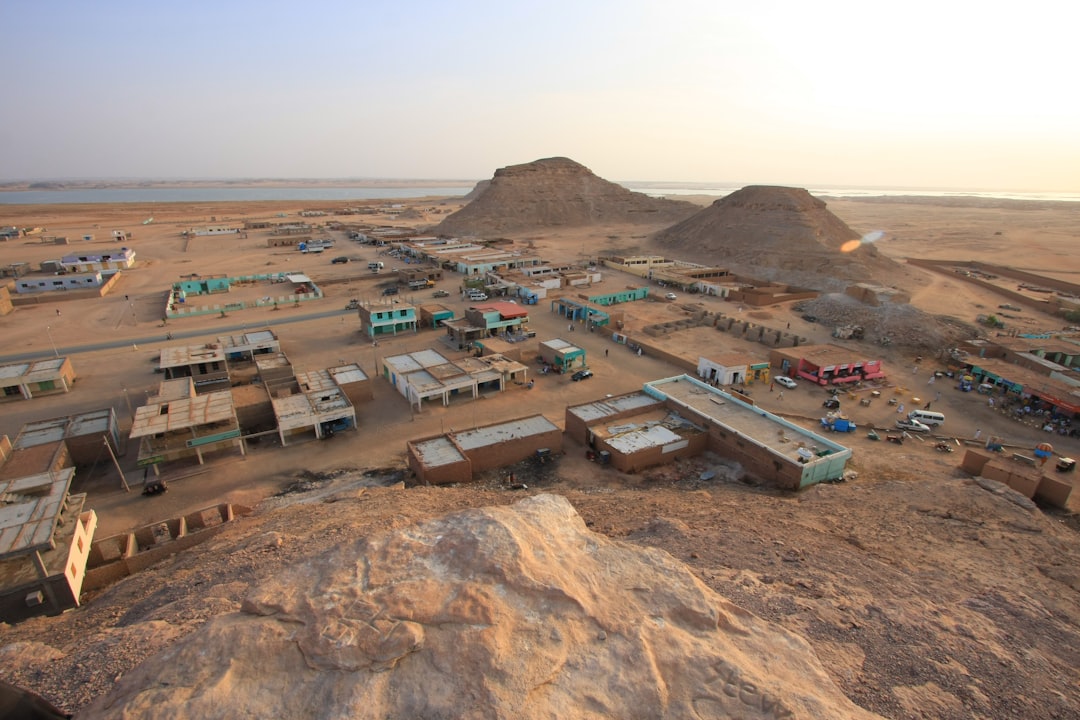
Sudan, officially the Republic of the Sudan, covers 1.86 million square kilometers in Northeast Africa and borders 7 countries plus the Red Sea coastline — making it one of the largest nations on the continent. Home to more ancient pyramids than Egypt, with over 200 Nubian pyramids at sites like Meroë, Sudan remains one of the world’s most undervisited archaeological destinations. With a population of approximately 40.2 million concentrated around Khartoum and the Nile Valley, the country is emerging cautiously for adventurous travelers willing to navigate its current instability.
Top 3 Highlights at a Glance
- Pyramids of Meroë — Sudan’s royal Nubian pyramids — over 200 of them — dwarf Egypt’s count and receive a fraction of the visitors.
- Nubian Villages along the Nile — Colorful painted houses and ancient culture survive intact in villages like Kerma, untouched by mass tourism.
- Red Sea Coast at Port Sudan — Virtually pristine coral reefs at Sanganeb Atoll offer world-class diving with almost no crowds.
Scroll down for our complete travel guide with tips on getting there, where to stay, costs and more.
Getting There & Transport
Which airports are the best entry points into Sudan?
Khartoum International Airport (KRT) is the primary entry point for Sudan. In my experience, virtually all international connections route through KRT, which handles flights from Cairo, Dubai, Istanbul, Addis Ababa, and Doha. Port Sudan New International Airport (PZU) serves the Red Sea coast but has extremely limited international connections. My warning: KRT has suffered severe damage during the 2023–2025 conflict, and flight schedules are highly disrupted. Always verify your carrier’s operational status within 72 hours of departure. Ethiopian Airlines and Flynas have been among the more reliable operators maintaining some service.
How do I get from the airport to my first accommodation in Sudan?
Take a pre-arranged hotel transfer or a trusted taxi from Khartoum International Airport to central Khartoum — the distance is roughly 4 km, normally a 10–15 minute drive. My tip: negotiate the fare before entering any vehicle; expect to pay the equivalent of $5–10 USD for the city center. Ride-hailing apps like Careem have operated in Khartoum but reliability is severely reduced during the ongoing conflict. What surprised me: there is no official airport bus service, and unlicensed operators are common. Always arrange your pickup through your hotel in advance and never accept unsolicited offers at arrivals.
What transport options are there within Sudan?
Within Sudan, your realistic options are private car hire with driver, minibuses (locally called ‘box cars’), and domestic flights. In my experience, the Nile Valley road linking Khartoum north to Atbara and Meroë is the most traveled overland route, covering roughly 200 km in about 3 hours by hired vehicle. Long-distance buses connect major cities but comfort is basic and schedules are unreliable. Domestic flights between Khartoum and Port Sudan exist but are sporadic. My honest warning: rail infrastructure exists historically but is largely non-functional for passengers. For archaeological sites like Meroë or Meroe Pyramids, hiring a 4WD with a local driver is the only practical option.
Do I need a rental car to travel around Sudan?
Yes — self-drive rental is not recommended in Sudan under current conditions. I recommend hiring a private driver with 4WD vehicle, which costs approximately $80–150 USD per day depending on distance and fuel. International car rental agencies have minimal presence; local operators in Khartoum are your only realistic option. Roads outside the Nile Valley corridor deteriorate rapidly, and desert navigation between sites like Meroë and Naqa requires experience. My honest caveat: travel permits for sites outside Khartoum are legally required and your driver or local guide must organize these — self-driving foreigners without permits face checkpoints and potential detention.
How good is the public transport network between regions in Sudan?
Public transport between regions in Sudan is functional but unreliable. Minibus routes connect Khartoum to Omdurman, Atbara, Kassala, and Port Sudan, but journey times are unpredictable — the 841 km Khartoum–Port Sudan route can take 12–18 hours by bus. In my experience, buses depart when full, not on fixed schedules. Kassala in the east is reachable by road but currently sits in a conflict-affected zone. My warning: as of 2025–2026, large parts of Sudan’s transport network are disrupted by the ongoing civil conflict between the SAF and RSF forces. Always check the FCO, US State Department, or equivalent advisory for your nationality before planning any regional travel.
Accommodation
Which regions of Sudan should I stay in?
The Northern (Nubian) region centered on the Nile Valley between Khartoum and Wadi Halfa is historically the most rewarding for travelers. Towns like Karima, Atbara, and Shendi serve as bases for pyramid and temple sites. Port Sudan on the Red Sea coast suits divers and beach travelers. In my experience, Khartoum’s Khartoum 2 and Amarat neighborhoods offer the most foreigner-friendly accommodation. My strong caveat: as of 2026, Darfur, Kordofan, and parts of Khartoum itself are active conflict zones. The northern Nile Valley remains relatively more accessible, but this situation changes rapidly — check current advisories before booking any accommodation outside the capital.
What does good accommodation cost per night in Sudan?
Good accommodation in Sudan costs $40–80 USD per night for a mid-range hotel in Khartoum, and $25–50 USD in smaller towns like Karima or Atbara. The Corinthia Hotel Khartoum was the city’s flagship five-star property at $150+ USD per night before recent disruptions. Budget guesthouses run $10–20 USD per night. In my experience, the value-to-quality ratio in the northern Nile towns is surprisingly good — basic but clean rooms with meals included. My warning: hotel booking platforms like Booking.com have very limited Sudanese inventory; most reservations must be made by direct email or through a local tour operator, and credit card payments are often impossible.
When should I book hotels in Sudan — how far in advance?
Book at least 4–6 weeks in advance for Khartoum, and 2–3 months ahead if traveling with a tour group to archaeological sites. Sudan’s limited formal accommodation stock means the handful of quality hotels fill quickly when tour groups arrive. In my experience, the Nubian Resthouse near Meroë and similar niche properties have only 10–20 rooms total and are booked through specialist operators. My honest tip: securing accommodation is secondary to securing your travel permits and visa, which can take 4–8 weeks — start those processes before worrying about room availability. Always confirm reservations by phone or WhatsApp within 48 hours of arrival.
When is the best time to travel to Sudan?
Travel to Sudan between November and March, when daytime temperatures in Khartoum drop to a manageable 28–35°C instead of the punishing 42–48°C of summer. December and January are the coolest months for exploring northern archaeological sites like Meroë and Naqa on foot. The Red Sea diving season peaks between October and April when visibility reaches 30+ meters. My warning: avoid May through September entirely — heat is dangerous for outdoor exploration, and the July–September rainy season floods desert tracks making site access impossible. Based on verified climate analysis, January, February, March, and December are the optimal travel months for Sudan.
How does peak season affect prices in Sudan?
Peak season in Sudan runs November through February and price increases are modest by international standards — roughly 20–30% above low-season rates. Unlike mass-tourism destinations, Sudan’s limited infrastructure means prices rise less from demand and more from scarcity. In my experience, hiring a private driver during December costs about $20–30 more per day than in September. My honest observation: the bigger price driver is tour operator packages — joining an organized group tour from the UK or Germany costs $2,500–4,000 USD per person for 10 days, while independent travelers who navigate permits spend significantly less. The genuine constraint is not price but paperwork and security logistics.
Best Time to Visit
Which regions of Sudan have different climate zones?
Sudan spans three distinct climate zones across its vast territory. The northern desert region around Wadi Halfa and the Nubian Desert sees virtually zero rainfall and temperatures exceeding 45°C in summer. The central savanna belt around Khartoum and Kordofan has a wet season July–September with moderate rainfall. The Red Sea Hills and coast around Port Sudan have a different micro-climate with humidity year-round and occasional winter rains. The southwest Darfur and Blue Nile regions receive the most rainfall — over 600mm annually — approaching a semi-tropical climate. My tip: the Nile Valley creates its own cooler corridor that makes northern Sudan 5–8°C cooler than surrounding desert in winter mornings.
What are the rainy seasons in Sudan?
Sudan’s main rainy season runs July through September, driven by the West African monsoon system moving north. Khartoum receives most of its annual 170mm of rain during these 3 months. The northern desert receives effectively zero rainfall year-round — Wadi Halfa averages under 2mm annually. Port Sudan and the Red Sea coast experience a different pattern with occasional winter rains between December and February. My practical warning: the July–September rains in central Sudan are not gentle — they cause flash flooding that cuts desert tracks to sites like Meroë and can strand vehicles. Traveling during this period is strongly discouraged, both for weather and because summer heat compounds the danger significantly.
What does a trip to Sudan cost per person per day?
Budget travelers in Sudan can manage on $30–50 USD per day covering basic guesthouses, local food, and shared transport. Mid-range independent travelers spending on a private driver and better accommodation should budget $80–120 USD per day. My honest breakdown: a private driver/guide for archaeological sites costs $80–150/day alone, making budget travel to Meroë genuinely difficult without a group. Organized tour packages average $250–350 USD per person per day all-inclusive. What surprised me: the biggest cost item is not accommodation or food but transport and mandatory permit fees, which can add $50–100 USD per site visit when organized through official channels.
How expensive is food in Sudan?
Food in Sudan is genuinely cheap by any international standard. A full meal at a local Sudanese restaurant — ful medames, kisra bread, and stewed meat — costs $1–3 USD. Sit-down restaurants in Khartoum’s Amarat district charge $8–15 USD for a main course. Street food like shiyya (grilled meat) and salata aswad (aubergine salad) runs under $1 USD per portion. In my experience, eating like a local Sudanese person is extraordinarily affordable — a full day of street meals costs under $5 USD. My tip: fresh Nile tilapia at restaurants near Omdurman is exceptional and costs under $4 USD for a whole fish with sides.
What hidden costs should I expect when visiting Sudan?
Expect significant hidden costs that most travel guides omit. Travel permits for archaeological sites outside Khartoum cost $20–50 USD per site and require bureaucratic processing through the National Corporation for Antiquities and Museums (NCAM). Mandatory registration with local police in each town adds administrative fees and time. Photography permits at major sites like Meroë cost an additional $10–20 USD. My warning: unofficial fees and ‘facilitation payments’ at checkpoints outside major cities are a reality — budget $20–30 USD in cash for these across a 10-day trip. Currency exchange outside official banks often carries a 10–15% spread. Bringing USD cash in small denominations is essential as change for large bills is scarce.
Budget & Costs
How much cash should I bring to Sudan?
Bring all the cash you need for your entire trip in USD — Sudan is essentially a cash-only economy for foreign travelers. I recommend carrying $100–150 USD per day of your planned stay, plus a $300 emergency reserve. ATMs that accept international cards are extremely rare even in Khartoum, and US sanctions historically block most card transactions. Exchange USD at Bank of Khartoum in the city center for the best official rates. My strong warning: never exchange money on the street despite better-seeming rates — counterfeit Sudanese pounds circulate widely and you have no recourse. Bring USD in $20, $50, and $100 bills — $100 bills from 2013 onward are preferred as older notes are often refused.
Which credit cards are accepted in Sudan?
Credit cards are effectively non-functional for most foreign visitors in Sudan. Visa and Mastercard are nominally accepted at a handful of five-star hotels in Khartoum like the Corinthia, but US sanctions on Sudan’s banking system mean most transactions fail at the point of payment. In my experience, even confirmed hotel reservations paid by card online are sometimes rejected on checkout and cash demanded. American Express has no practical acceptance anywhere in the country. My honest warning: do not rely on any card payment in Sudan under current conditions — this is a 100% cash economy for international travelers. Inform your bank you’re traveling but expect your card to be useless regardless of their approval.
Which regions of Sudan must I not miss?
The Northern Nile Valley corridor from Khartoum north to Wadi Halfa is non-negotiable — this 900 km stretch contains the densest concentration of ancient Nubian civilization on Earth. Specifically: Meroë pyramids, Musawwarat es-Sufra, Naqa temples, and Kerma are all within this corridor. The Red Sea coast around Port Sudan is essential for divers — Sanganeb Marine National Park is a UNESCO-listed coral atoll with vertical walls dropping 800 meters. My caveat: Kassala in the east, famous for its Taka Mountains and Rashaida nomad culture, is spectacular but currently inaccessible due to conflict proximity. Skip Darfur and Kordofan entirely under current security conditions.
What are the tourist highlights of Sudan?
Sudan’s undisputed highlights center on Nubian archaeology and Red Sea nature. The Pyramids of Meroë — a field of over 200 steep-sided royal pyramids — is Sudan’s single most iconic image. Musawwarat es-Sufra, a vast Meroitic temple complex dating to 300 BCE, rewards hours of exploration. Karima’s Jebel Barkal is a flat-topped mountain considered sacred since 1500 BCE with temples carved into its base. In Khartoum, the National Museum of Sudan houses relocated Nubian temples including the intact Temple of Buhen. What surprised me: the Whirling Dervishes ceremony at Omdurman’s Hamed el-Nil mosque every Friday at 5pm is one of Africa’s most extraordinary spiritual experiences — and completely free.
What experiences in Sudan are found nowhere else on Earth?
Riding a camel at sunrise among the Meroë pyramids with zero other tourists present is genuinely unrepeatable — no roped-off areas, no crowds, just ancient royal tombs in open desert. The Friday Sufi dhikr ceremony at Hamed el-Nil tomb in Omdurman — where dozens of dervishes spin in green robes for hours — exists in this specific form nowhere else. Staying with Nubian families in villages between Karima and Abu Hamed offers cultural immersion that organized tourism has not yet commodified. In my experience, visiting Naqa’s Lion Temple — where a lion-headed god temple sits completely alone in open savanna — produces a feeling of discovery that Egypt’s overcrowded sites cannot replicate. These experiences depend entirely on current access conditions.
Regions & Highlights
Which areas of Sudan are overcrowded — and what are quieter alternatives?
Sudan has the opposite problem from most destinations — almost nowhere is overcrowded. Even at Meroë, Sudan’s most-visited site, you might encounter fewer than 20 tourists on a given day in peak season. The National Museum in Khartoum sees the heaviest foot traffic among cultural sites. My honest observation: ‘crowds’ in Sudan means a single tour group of 15–20 people at a pyramid field. If you specifically want complete solitude, visit Musawwarat es-Sufra or Naqa on weekdays when tour groups cluster at Meroë. The Red Sea reefs around Suakin south of Port Sudan receive fewer divers than Sanganeb and offer comparable coral quality. Sudan’s primary travel barrier is not crowds — it’s access, safety, and bureaucracy.
How many days do I need for Sudan?
Plan a minimum of 10–14 days to do Sudan meaningful justice. A logical itinerary: 3 days in Khartoum and Omdurman, then 4–5 days traveling the Northern Nile Valley (Meroë, Musawwarat, Naqa, Karima, Jebel Barkal), then 3–4 days on the Red Sea at Port Sudan. Attempting Sudan in under 7 days means spending disproportionate time on the Khartoum–Meroë–Khartoum loop and missing the coast entirely. In my experience, the permit and logistics overhead means the first and last days are largely administrative — build this into your timeline. My tip: if you only have 5 days, focus exclusively on the Northern Nile archaeological corridor and skip Port Sudan for a dedicated second trip.
Do I need a visa to enter Sudan?
Yes — almost all nationalities require a visa to enter Sudan, and the process is non-trivial. As of 2026, visas must be obtained from a Sudanese embassy or consulate in your home country; there is no visa-on-arrival for most nationalities. Processing takes 2–4 weeks and requires an invitation letter from a registered Sudanese tour operator or a local contact. Citizens of Egypt, Syria, and a small number of Arab League states have easier entry. My honest warning: US citizens face additional scrutiny due to sanctions history. Once in-country, you must register with the Aliens Registration Office within 3 days of arrival — your hotel can assist, but failure to register carries legal consequences. Budget $50–100 USD for visa fees depending on nationality.
What languages are spoken in Sudan?
Arabic is Sudan’s official language and the universal lingua franca across all regions. Modern Standard Arabic is used in government and education; Sudanese Arabic dialect is spoken daily and differs noticeably from Egyptian or Gulf Arabic. Over 100 indigenous languages exist, including Nubian languages in the north, Beja in the Red Sea Hills, and Fur in Darfur. English is spoken by educated professionals in Khartoum — hotel staff, tour guides, and university-educated contacts — but is unreliable outside the capital. In my experience, learning 10–15 Arabic phrases (greetings, directions, numbers) transforms interactions with Sudanese people who are extraordinarily hospitable toward foreign visitors attempting their language. French is not useful here at all.
What cultural rules do I need to know before visiting Sudan?
Sudan is a Muslim-majority country and Islamic customs govern public behavior strictly. Dress modestly everywhere — women must cover shoulders, arms, and legs; men should avoid shorts in towns and villages. Alcohol is completely illegal under Sudanese law with penalties including flogging for non-Muslims caught consuming it. During Ramadan, eating, drinking, or smoking in public during daylight hours is illegal and deeply offensive. Photography requires care — never photograph military installations, bridges, or government buildings, which is illegal and results in detention. My warning most guides omit: photographing Sudanese people without explicit permission is culturally disrespectful; always ask first. Friday is the day of rest — most businesses close by midday, plan accordingly.
Practical Tips
How safe is Sudan for travelers in 2026?
Sudan is currently one of the world’s most complex security environments for travelers. Since April 2023, a civil war between the Sudanese Armed Forces (SAF) and Rapid Support Forces (RSF) has displaced over 8 million people and made large portions of the country — including parts of Khartoum itself — genuinely dangerous. As of 2026, the Northern Nile Valley archaeological corridor and Port Sudan are comparatively more stable, and a small number of specialist tour operators are running monitored visits there. My unequivocal warning: do not travel to Sudan without checking your government’s current travel advisory within 72 hours of departure. Most Western governments have issued Do Not Travel advisories. This is not a destination for independent backpackers in 2026 — organized tours with security-aware operators are the only responsible approach.
What health precautions should I take before visiting Sudan?
Consult a travel medicine clinic at least 6 weeks before departure. Recommended vaccinations include hepatitis A, hepatitis B, typhoid, yellow fever, meningitis (ACWY), and rabies for extended stays. Malaria prophylaxis is essential — Sudan has high malaria transmission, particularly in the Nile Valley and south; start your chosen medication (doxycycline or Malarone) before arrival. Water from any tap is unsafe — drink only sealed bottled water and avoid ice. In my experience, heat illness is a genuine danger in summer: carry oral rehydration salts and drink 3–4 liters of water daily when visiting desert sites. Medical facilities in Khartoum are limited; outside the capital they are critically inadequate. Bring a comprehensive personal first-aid kit and sufficient prescription medications for your entire trip plus a 5-day buffer.
What SIM card or eSIM options are available in Sudan?
Sudan has 3 main mobile operators: MTN Sudan, Zain Sudan, and Sudani (Sudatel). Zain Sudan offers the most consistent data coverage along the Nile Valley corridor. SIM cards are available at the airport and in Khartoum markets for approximately $2–5 USD plus data top-ups. Data speeds are 3G in most areas; 4G exists in Khartoum but is unreliable during network stress. My honest warning: international eSIM providers (Airalo, Holafly) have limited or no genuine coverage in Sudan as of 2026 — do not rely on them. Buy a local Zain or MTN physical SIM upon arrival. Be aware that internet is subject to government-controlled shutdowns during political events, which have occurred repeatedly since 2019 and remain a practical reality.
Which apps do you recommend for traveling in Sudan?
Download these before you arrive: Maps.me with offline Sudan maps is essential as Google Maps coverage is poor outside Khartoum. WhatsApp is the universal communication tool — every hotel, guide, and fixer uses it; have your contacts’ numbers saved before landing. XE Currency for tracking the Sudanese pound exchange rate, which fluctuates significantly. iOverlander is invaluable for finding guesthouses and camps in the northern desert that don’t appear anywhere else online. In my experience, a VPN app (ProtonVPN or ExpressVPN) should be installed and tested at home before arrival — internet restrictions make it necessary, and VPN app stores are sometimes blocked within Sudan, making in-country downloads impossible. Offline translation apps with Arabic are essential.
What are common traveller mistakes when visiting Sudan?
The most costly mistake is arriving without pre-arranged travel permits for archaeological sites — you will be turned back at checkpoints and lose days. Second: bringing insufficient USD cash and assuming ATMs or cards will work — they won’t. Third: underestimating distances — Meroë to Karima is 300 km of mostly unpaved road taking 5–6 hours. Fourth: neglecting the mandatory Aliens Registration within 3 days of arrival, which creates legal complications at exit. My personal warning: travelers who book Sudan trips through generic adventure tour operators rather than Sudan-specialist agencies (like Nile Valley Tours or specialist UK-based operators) often find permits delayed or itineraries impossible to execute. Finally, never photograph military checkpoints — this mistake has resulted in camera confiscation and temporary detention of tourists even in stable years.
Sudan at a Glance
| Population | 40,533,330 |
|---|---|
| Currency | Sudanese pound (ج.س) |
| Official language | Arabic, English |
| Time zone | UTC+02:00 |
Source: Wikidata, retrieved August 2026.
Essential Resources for Planning Your Trip to Sudan
- Wikipedia: Sudan — history, geography & background
- Wikivoyage: Sudan — community travel guide & practical tips
- Sudan — Lonely Planet — expert itineraries & travel inspiration
- Sudan — TripAdvisor — hotels, restaurants & traveller reviews
- Numbeo: Cost of Living in Sudan — current prices & cost comparison
- Timeanddate: Sudan Weather & Climate — forecasts & climate statistics
Data Sources
This page was compiled using data from Wikipedia, Wikidata, Open-Meteo (climate), Numbeo (cost of living) and REST Countries. Information is updated regularly.
More Perspectives on Sudan
- A guide for traveling to Sudan: Itinerary + Travel tips
- South Sudan Travel Advisory | Travel.State.gov
- South Sudan Travel Guide
Sudan Travel Videos
Watch these videos for a visual preview before your trip:
- Wonders of Sudan | The Most Amazing Places in Sudan | Travel Video 4K
- What Can $10 Get in SUDAN?
- Why SUDAN is #1 NON-TOURIST COUNTRY
Sudan Travel Discussions on Reddit
Real traveller experiences and community advice: