
Saudi Arabia: The Complete Travel Guide (2026)
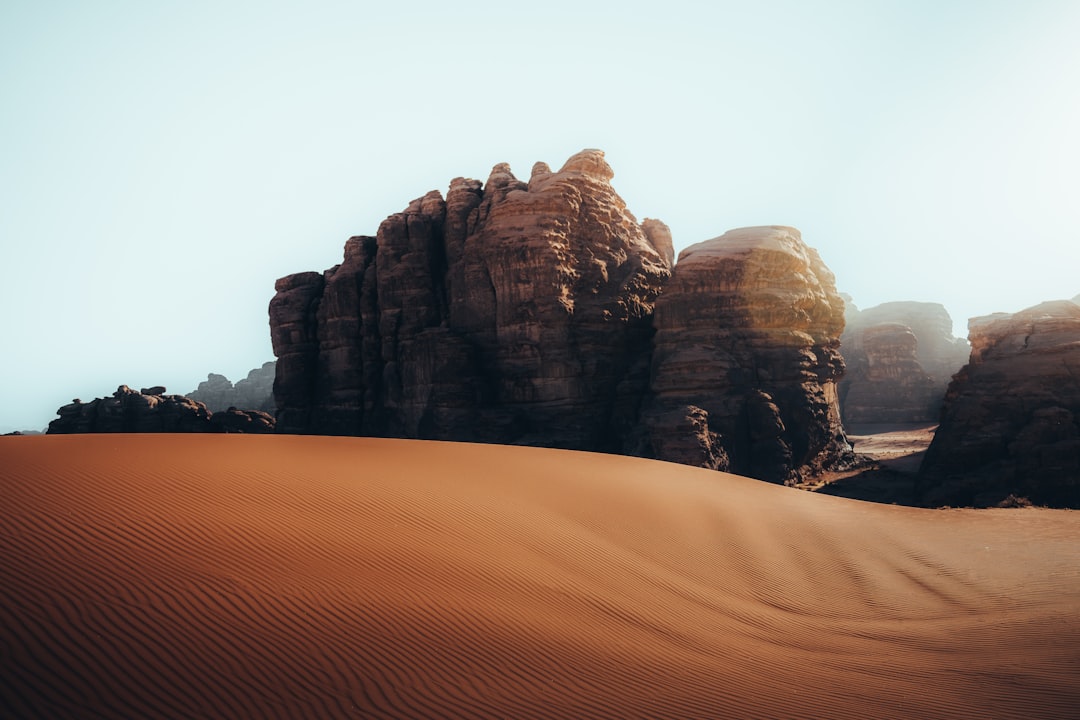
Last reviewed: August 2026 · key facts checked against Wikidata
Saudi Arabia Travel Guide: Everything You Need to Know (2026)
Saudi Arabia, covering 2,150,000 km² of the Arabian Peninsula, is the largest country in the Middle East and the 12th-largest in the world, with a population of 4,072,110 in its capital Riyadh alone. Founded as a unified kingdom in 1932 by Abdulaziz ibn Saud, it has transformed dramatically since launching Vision 2030, opening its doors to international tourists in 2019. From the UNESCO-listed rock city of AlUla to the coral reefs of the Red Sea, I found it one of the most surprisingly diverse destinations I have visited in a decade.
Top 3 Highlights at a Glance
- AlUla & Hegra — Saudi Arabia’s first UNESCO World Heritage Site contains over 100 Nabataean tombs carved directly into 50-metre sandstone cliffs.
- Edge of the World (Jebel Fihrayn) — A dramatic 300-metre escarpment dropping into an endless plateau, located just 90 km northwest of Riyadh with no entry fee.
- Al-Balad Historic District, Jeddah — UNESCO-listed coral-brick towers dating to the 7th century line narrow souqs still selling frankincense and handmade textiles.
Scroll down for our complete travel guide with tips on getting there, where to stay, costs and more.
Getting There & Transport
Which airports are the best entry points into Saudi Arabia?
King Abdulaziz International Airport (JED) in Jeddah and King Khalid International Airport (RUH) in Riyadh are your two primary gateways. In my experience, JED is the better entry point if you plan to explore the Red Sea coast, AlUla, and the historic Hejaz region, while RUH suits the central plateau and desert itineraries. NEOM Bay Airport (NUM) opened in 2024 and now serves the Tabuk and Magna region for Red Sea diving trips. What most guides omit: connecting through Jeddah is often 30–40% cheaper than routing through Riyadh because JED handles more international carriers including budget airlines like flynas and flydubai.
How do I get from the airport to my first accommodation in Saudi Arabia?
Take the Haramain High-Speed Railway directly from JED airport into central Jeddah in 12 minutes for SAR 15 (~$4). In Riyadh, the Riyadh Metro Line 3 connects King Khalid Airport to the city centre in under 40 minutes for SAR 4 (~$1.06) — my tip: buy a Darb card at the airport kiosk on arrival. Uber and Careem both operate officially at both airports; expect SAR 60–100 ($16–27) to central districts. What surprises most arrivals: taxis without meters still exist outside arrivals halls and will quote inflated fares — walk past them to the designated ride-hailing zone and use the app instead.
What transport options are there within Saudi Arabia?
Saudi Arabia is primarily a fly-drive country. Domestic flights with Saudia, flynas, or flyadeal connect Riyadh, Jeddah, AlUla, Abha, Dammam, and Tabuk — fares start at SAR 99 ($26) booked in advance. The Haramain Railway links Jeddah, Makkah, Madinah, and King Abdullah Economic City at speeds up to 300 km/h. Riyadh now has a 6-line metro covering 176 km. My honest warning: outside major cities, public transport essentially does not exist — a bus from Riyadh to Abha takes 12 hours versus a 1.5-hour flight for SAR 150. I recommend flying between regions and renting a car on arrival.
Do I need a rental car in Saudi Arabia?
Yes, for any itinerary beyond a single city, a rental car is essential in Saudi Arabia. The desert highways are excellent — 6-lane divided roads connect most major cities — and fuel costs just SAR 1.33 per litre ($0.35), the cheapest I have encountered anywhere. Budget SAR 120–180 per day ($32–48) for a standard SUV from Thrifty, Budget, or Lumi at RUH or JED. My tip: book online before arrival — walk-in rates at the counter are often 40% higher. The key caveat most guides skip: Saudi speed cameras are everywhere and fines are linked to your rental — a single 20 km/h overspeed costs SAR 300 ($80). Set cruise control religiously.
How good is the public transport network between regions of Saudi Arabia?
Between major cities, domestic aviation is excellent and affordable, making it the de facto inter-regional transport. The Haramain Railway is genuinely world-class — punctual, air-conditioned, and fast. However, the SAPTCO inter-city bus network connecting smaller towns is slow, infrequent, and uses ageing coaches. In my experience, the bus from Jeddah to Taif (75 km) runs only 4 times daily and takes 2.5 hours due to mountain roads. Between AlUla, Tabuk, and Neom, there is virtually no public transport at all. My honest assessment: Saudi Arabia’s regional transport gets a 7/10 if you fly, and a 3/10 if you rely on ground connections outside the Haramain corridor.
Accommodation
Which regions should I stay in when visiting Saudi Arabia?
I recommend structuring your stay around three distinct zones. Base yourself in Al-Balad, Jeddah for the Red Sea coast and historic Hejaz — it is the most walkable and characterful urban district in the country. Use Al-Malqa or Hittin in Riyadh for the central Arabian experience and desert day trips. For the north, AlUla town is the only sensible base for Hegra and the surrounding canyon landscape, with lodges ranging from SAR 400–2,500 per night ($107–667). The caveat: Abha in the Asir highlands is stunning but frequently foggy from June through August, so time that region visit for March or November instead.
What does good accommodation cost per night in Saudi Arabia?
A solid mid-range hotel in Riyadh or Jeddah — think a 4-star Movenpick or Radisson — runs SAR 350–550 per night ($93–147). Boutique heritage stays in Al-Balad Jeddah cost SAR 280–420 ($75–112). At the luxury end, the Shaden Resort in AlUla starts at SAR 1,800 ($480) per night. Budget travellers can find clean 3-star options in Riyadh’s Olaya district for SAR 180–250 ($48–67). What most guides omit: during Ramadan, hotel prices in Jeddah and Makkah surge 60–80% due to domestic religious tourism — book months ahead or adjust your travel dates entirely.
When should I book hotels in Saudi Arabia — how far in advance?
For Riyadh and Jeddah outside major events, 2–3 weeks ahead is sufficient. For AlUla’s Winter at Tantora festival (December–March), I recommend booking 3–4 months in advance — accommodation within the heritage area sells out entirely. During Eid Al-Fitr and Eid Al-Adha, every hotel across the country fills up with domestic travellers; book 6 months ahead or skip those weeks altogether. My concrete tip: the Diriyah season events in Riyadh (October–March) coincide with F1 and boxing events that trigger hotel price spikes of 200–300% — check the Saudi Tourism Authority calendar before finalising dates.
When is the best time to travel to Saudi Arabia?
February, March, and November are the optimal months, confirmed by climate analysis. Temperatures in Riyadh sit at a comfortable 18–24°C in February and March, while AlUla’s canyon landscape glows in winter light. Jeddah remains pleasant at 26–29°C in November. I personally visited AlUla in February during the Winter at Tantora festival and found it perfect — warm days, cool nights, no crowds by 9 AM. Avoid June through August when Riyadh regularly hits 45°C and outdoor sightseeing becomes dangerous. The honest caveat: Ramadan timing shifts annually — in 2026 it falls in late February to late March, which creates a unique cultural atmosphere but restricts daytime dining options significantly.
How does peak season affect prices in Saudi Arabia?
Saudi Arabia has two distinct peak seasons. The winter cultural season (December–March) drives up AlUla and Riyadh prices by 40–70% due to festivals and cooler weather. Hajj season (June 2026) causes Jeddah and Makkah-adjacent hotels to spike 150–300% — non-Muslims cannot enter Makkah but still feel the pricing impact across the Hejaz. In my experience, shoulder season in April offers the best value: post-festival pricing at AlUla but still pleasant temperatures at 28–32°C. The overlooked upside of travelling in summer: Abha and the Asir mountains at 2,200 m altitude stay at 22–26°C and see almost no foreign tourists, with hotel prices 30% lower than winter rates.
Best Time to Visit
Which regions of Saudi Arabia have different climate zones?
Saudi Arabia contains five distinct climate zones in one country. The Najd plateau around Riyadh is arid continental — scorching summers above 45°C, cold desert winters dropping to 8°C at night. Jeddah and the Hejaz coast are humid sub-tropical, with muggy summers and mild winters. The Asir Mountains around Abha receive 300 mm of annual rainfall, the highest in the kingdom, and sit at 2,200 m altitude — genuinely green and cool. AlUla and Tabuk in the northwest are desert but moderated by altitude at 900 m. The Empty Quarter (Rub’ al Khali) in the south is hyper-arid and averages 50°C in summer — I do not recommend visiting without an experienced desert guide.
What are the rainy seasons in Saudi Arabia?
Saudi Arabia has no traditional rainy season in the conventional sense. Jeddah receives 54 mm of annual rainfall, almost all of it falling unpredictably between November and January in brief, intense flash floods — these have historically caused casualties because drainage infrastructure struggles with sudden downpours. The Asir Mountains receive most of their 300 mm annual rain during June–September from the Indian Ocean monsoon edge, which is why Abha feels lush in summer. Riyadh and the central plateau average just 100 mm per year, mostly in sporadic March and April showers. My caveat: even 20 minutes of rain in Jeddah can flood King Road to 60 cm depth — avoid driving during downpours and check Jeddah Municipality alerts via the Balady app.
What does a trip to Saudi Arabia cost per person per day?
Budget travel in Saudi Arabia costs SAR 250–350 per day ($67–93) covering a 3-star hotel, local restaurant meals, and a hire car shared between two people. A comfortable mid-range day — 4-star hotel, sit-down restaurants, entry fees — runs SAR 600–900 ($160–240). Luxury itineraries anchored in AlUla or NEOM can easily exceed SAR 2,500 ($667) per day. What surprises most visitors: alcohol is completely unavailable legally, which removes an entire category of expense that inflates budgets elsewhere in the region. Petrol at SAR 1.33/litre ($0.35) means driving 500 km costs under $15 — significantly cheaper than Europe or North America.
How expensive is food in Saudi Arabia?
Food is genuinely affordable if you eat where Saudis eat. A full kabsa or mandi meal at a local restaurant costs SAR 20–35 ($5.33–9.33) per person. A shawarma from a street counter in Jeddah’s Al-Balad runs SAR 8–12 ($2.13–3.20). Mid-range restaurants in Riyadh’s Salmiya district charge SAR 60–120 ($16–32) for two. International fine dining at venues like Zuma Riyadh costs SAR 400–700 ($107–187) per couple. My tip: the Haraj street markets in Jeddah serve roasted corn, foul medames, and fresh juices for under SAR 15 ($4) — far better value and flavour than hotel buffets charging SAR 120 for the same ingredients repackaged.
What hidden costs should I expect in Saudi Arabia?
The biggest hidden cost is guided access to heritage sites. Hegra (Madain Saleh) requires a ticket booked through the AlUla Royal Commission website at SAR 95 ($25) — you cannot enter independently. Desert safari companies near the Empty Quarter charge SAR 500–900 ($133–240) per person for day trips. VAT is 15% in Saudi Arabia — higher than most visitors expect — and it applies to hotel bills, restaurants, and car hire. Roaming charges catch many visitors: a local STC eSIM avoids this entirely at SAR 35 ($9.33) for 10 GB. What surprised me most: entry to most national museums is free, but the obligatory parking fees in Riyadh’s King Abdullah Financial District add SAR 20–40 per visit.
Budget & Costs
How much cash should I bring to Saudi Arabia?
Bring SAR 200–300 ($53–80) in cash for arrival expenses — small markets, tips, and rural fuel stations that occasionally have card reader issues. Saudi Arabia is overwhelmingly cashless: Apple Pay, Mada (local debit), and Visa work in virtually every urban venue including souqs in Al-Balad Jeddah. I used cash on fewer than 5 occasions during a 10-day trip. ATMs are abundant; Al Rajhi Bank and Saudi National Bank machines accept international Visa and Mastercard with a typical SAR 15 ($4) withdrawal fee. The honest caveat: in remote Asir villages or Farasan Islands ferry terminals, cash is still king — withdraw before leaving the nearest city rather than assuming connectivity.
Which credit cards are accepted in Saudi Arabia?
Visa and Mastercard are universally accepted in hotels, malls, restaurants, and petrol stations across Saudi Arabia. American Express works at 5-star properties and international chains but fails at local restaurants and smaller shops — I would not rely on it as your primary card. Apple Pay and Google Pay are widely accepted and actually preferred by younger Saudi merchants; I found contactless payments worked at over 90% of venues in Riyadh and Jeddah. My top tip: use a zero-foreign-transaction-fee card such as Revolut or Wise — Saudi Arabia’s 15% VAT already adds a significant premium without your bank adding another 2–3% currency fee on every transaction.
Which regions of Saudi Arabia must I not miss?
Three regions are non-negotiable. AlUla and the Hejaz highlands in the northwest contain Hegra, Dadan, and Jabal Ikmah — a concentration of ancient civilisation found nowhere else in the Arab world. Jeddah’s Al-Balad is a 7th-century coral-brick city that feels genuinely different from any other Middle Eastern medina. The Asir region around Abha and Rijal Almaa offers terraced mountain villages at 2,200 m altitude, traditional Asiri face-painted women, and a cultural identity entirely distinct from Riyadh. My honest caveat: Riyadh is the most accessible destination but architecturally the least rewarding — budget 2 days there for Diriyah and the National Museum, then head to the regions for the substance of the country.
What are the tourist highlights of Saudi Arabia?
Hegra (Madain Saleh) near AlUla — 111 Nabataean rock tombs, the largest preserved Nabataean site outside Petra, Jordan. Diriyah in Riyadh — the 15th-century mud-brick birthplace of the Saudi state, now a UNESCO-listed restored heritage district with a SAR 39 ($10.40) entry fee. Edge of the World (Jebel Fihrayn) — a 300-metre escarpment 90 km northwest of Riyadh, completely free and genuinely breathtaking. Al-Ula Old Town — an abandoned mud-brick city of 900 houses you can walk through for free. Farasan Islands off Jizan — Saudi Arabia’s least-visited coral archipelago with Ottoman ruins and no cars. In my experience, Hegra alone justifies the entire trip — the scale and preservation quality rivals Petra at a fraction of the visitor numbers.
What experiences in Saudi Arabia are found nowhere else?
Sleeping in a mirror-ceilinged Maraya Concert Hall bubble tent in AlUla — the Maraya building is the world’s largest mirrored structure at 9,740 m² and hosts concerts against a canyon backdrop that exists nowhere else on earth. Attending a traditional Al-Ardah sword dance at a tribal festival in the Najd — performed by hundreds of men simultaneously, it is a hypnotic UNESCO-recognised tradition. Exploring Madain Saleh at sunrise with virtually no other tourists present — unlike Petra which sees 5,000 visitors daily, Hegra averages under 500 per day. Driving across the Rub’ al Khali on the Shaybah road through dunes topping 250 metres — the largest continuous sand desert on earth, accessible by sealed road.
Regions & Highlights
Which areas of Saudi Arabia are overcrowded — and what are quieter alternatives?
Diriyah in Riyadh gets heavily congested on Thursday and Friday evenings when domestic visitors fill the At-Turaif district — visit on a Tuesday or Wednesday morning before 10 AM to have the mud-brick alleys almost entirely to yourself. Jeddah Corniche during national holidays draws enormous local crowds — the Old Al-Balad souqs two kilometres inland are simultaneously quieter and more historically interesting. AlUla at the Winter at Tantora festival (January–February) is increasingly busy with tour groups — book the Harrat Viewpoint dawn hike instead, accessible with your own car and free of groups. My honest tip: Farasan Islands off Jizan receive under 5,000 foreign visitors annually and offer Red Sea reefs, flamingos, and Ottoman ruins with zero tourist infrastructure pressure.
How many days do I need for Saudi Arabia?
A meaningful Saudi Arabia itinerary requires a minimum of 10 days. I recommend this breakdown: 3 days in AlUla and Hegra, 2 days in Jeddah and Al-Balad, 1 day driving the Hejaz mountains, 2 days in Riyadh and Diriyah, 2 days in the Asir region around Abha. This covers the three distinct cultural and geographic identities of the kingdom. A 7-day trip forces painful cuts — I would drop Abha and Riyadh and focus exclusively on the AlUla-Jeddah axis. For a 14-day trip, add the Farasan Islands by ferry from Jizan and a night at the Edge of the World. What most short itineraries miss: travel distances are enormous — Jeddah to AlUla is 700 km, so fly rather than drive between anchor points.
Do I need a visa for Saudi Arabia?
Citizens of 49 countries — including the USA, UK, EU members, Australia, and Japan — can obtain a Saudi e-Visa online in under 10 minutes at visa.visitsaudi.com for SAR 440 ($117), valid for 1 year with multiple entries and a 90-day maximum stay. Citizens of GCC countries (UAE, Kuwait, Bahrain, Oman, Qatar) enter visa-free. Pakistani and Indian passport holders must apply through a Saudi embassy and processing takes 5–10 business days with additional documentation. The caveat most guides skip: the e-Visa includes mandatory medical insurance bundled in the fee — this covers emergency hospitalisation up to SAR 500,000 but excludes adventure sports like off-road desert driving, which requires separate coverage.
What languages are spoken in Saudi Arabia?
Arabic is the official language, with the Hejazi Arabic dialect spoken in Jeddah and the Najdi dialect dominant in Riyadh — these differ substantially from Egyptian or Levantine Arabic. In my experience, English is widely spoken in hotels, malls, tourist sites, and among people under 40 in urban areas — Riyadh and Jeddah manage fine on English alone. Urdu and Tagalog are effectively second languages in service industries given the large Pakistani and Filipino expatriate populations. Outside cities — in Asir villages or remote Najd towns — English becomes scarce. My tip: download Google Translate with Arabic offline and learn 10 basic phrases: Saudis react with genuine warmth when visitors attempt even minimal Arabic, far more so than in more heavily touristed Arab countries.
What cultural rules do I need to know before visiting Saudi Arabia?
Saudi Arabia has liberalised dramatically since 2017 but core rules remain. Dress modestly: women no longer must wear abaya in public, but covering shoulders and knees is expected outside malls and resorts — in Al-Balad Jeddah and conservative Najd towns, a loose linen shirt and trousers draws no attention. Public displays of affection between unmarried couples remain illegal — holding hands is tolerated in tourist areas, kissing is not. Alcohol is completely prohibited with no exceptions — even in private. Photography of government buildings, mosques during prayer, and local women without consent is prohibited and can result in detention. During prayer times (5 per day, each lasting 20–30 minutes), many smaller shops close — plan accordingly and use the pause for a coffee break.
Practical Tips
How safe is Saudi Arabia for tourists?
Saudi Arabia is one of the safest countries I have visited for personal security — petty crime rates are extremely low and violent crime against tourists is virtually unheard of. The 2024 Global Peace Index ranks it 119th overall, but risks are concentrated in the Yemen border region (Jizan, Najran, Asir border areas) where drone and missile incidents have occurred — avoid overnight stays within 50 km of the Yemen border. Road safety is the genuine risk: Saudi Arabia has one of the world’s highest road fatality rates at 28.8 per 100,000 people — overtaking on mountain roads and speeding are common. My tip: drive defensively, avoid highways after midnight when racing is more common, and never assume a driver will yield.
What health precautions should I take before visiting Saudi Arabia?
No vaccinations are mandatory for most nationalities visiting Saudi Arabia, but the Saudi Ministry of Health recommends Hepatitis A, Typhoid, and Meningococcal ACWY — the latter is mandatory for Hajj and Umrah pilgrims and worth getting regardless. Heat illness is the primary medical risk: in summer, Riyadh temperatures exceed 45°C and heat stroke can develop within 20 minutes of outdoor exposure without shade and hydration. Carry a minimum of 2 litres of water per person for any outdoor activity. The e-Visa includes emergency medical insurance but check it excludes adventure activities. Pharmacies (Al-Dawaa, Nahdi) are excellent and widely stocked — I found prescription-equivalent medications available over the counter for common ailments. Tap water is technically potable but tastes of desalination; bottled water is SAR 1–2 ($0.27–0.53).
What SIM card or eSIM options are available in Saudi Arabia?
Buy an STC, Mobily, or Zain SIM at the airport on arrival — all three carriers have counters at JED and RUH arrivals. STC Tourist SIM gives 50 GB data for SAR 75 ($20) valid for 30 days and includes a local number, making Uber and Careem registration seamless. For eSIM users, Airalo’s Saudi Arabia STC eSIM costs $9 for 3 GB or $19 for 10 GB and can be activated before departure — I recommend activating it in the air so it is ready on landing. The caveat: STC has the best rural coverage across the Asir mountains and desert highways — Mobily drops signal between Jeddah and Madinah on the coastal road, which caught me by surprise on a night drive.
Which apps do you recommend for travelling Saudi Arabia?
These 6 apps are non-negotiable: Careem (ride-hailing, more reliable than Uber for airport pickups in Jeddah), Darb (Riyadh Metro card top-up and journey planner), AlUla app (official booking platform for Hegra tickets — you cannot buy on-site), Balady (municipal services including flash flood alerts in Jeddah), Jahez (food delivery faster than Talabat in Saudi cities), and Hayya (the official Saudi Tourism app with attraction maps and festival schedules). My tip: Google Maps works well in Riyadh and Jeddah but has notable gaps in AlUla’s canyon roads — download Maps.me offline for the northwest region before you leave mobile coverage. WhatsApp is essential as most hotel and tour operators communicate exclusively through it.
What are the most common traveller mistakes in Saudi Arabia?
The five mistakes I see most often: First, underestimating distances — tourists book AlUla and Abha in consecutive nights without realising they are 1,400 km apart. Second, visiting Hegra without pre-booking — tickets on the AlUla app sell out 2–3 weeks ahead during peak season. Third, ignoring prayer times — arriving at a restaurant at 12:15 PM (Dhuhr prayer) to find it closed for 25 minutes with no warning. Fourth, wearing shorts in Asir and Najd towns outside resort areas — technically legal but causes genuine discomfort to locals and occasionally tense interactions. Fifth, renting economy sedans for desert itineraries — the access track to Edge of the World requires 4WD clearance and a compact car will ground out, leaving you stranded 90 km from the nearest paved road.
Saudi Arabia at a Glance
| Population | 33,000,000 |
|---|---|
| Currency | Saudi riyal (SR) |
| Official language | Arabic |
| Time zone | UTC+03:00 |
Source: Wikidata, retrieved August 2026.
Essential Resources for Planning Your Trip to Saudi Arabia
- Wikipedia: Saudi Arabia — history, geography & background
- Wikivoyage: Saudi Arabia — community travel guide & practical tips
- Saudi Arabia — Lonely Planet — expert itineraries & travel inspiration
- Saudi Arabia — TripAdvisor — hotels, restaurants & traveller reviews
- Numbeo: Cost of Living in Saudi Arabia — current prices & cost comparison
- Timeanddate: Saudi Arabia Weather & Climate — forecasts & climate statistics
Data Sources
This page was compiled using data from Wikipedia, Wikidata, Open-Meteo (climate), Numbeo (cost of living) and REST Countries. Information is updated regularly.
More Perspectives on Saudi Arabia
Saudi Arabia Travel Videos
Watch these videos for a visual preview before your trip:
- Saudi Arabia Travel Guide – 10 Things you Must know
- Top 10 Places to Visit in Saudi Arabia – Travel Guide
- 9 BEST Places To Visit In Saudi Arabia (& Top Things to Do) | Saudi Arabia Travel Guide
Saudi Arabia Travel Discussions on Reddit
Real traveller experiences and community advice: