
Tajikistan: The Complete Travel Guide (2026)
Last reviewed: August 2026 · key facts checked against Wikidata
Tajikistan Travel Guide: Everything You Need to Know (2026)
Tajikistan is a landlocked Central Asian nation of 8,610,000 people, where over 93% of the territory is covered by mountains — including peaks exceeding 7,000 metres in the Pamir range. The country shares borders with Afghanistan, Uzbekistan, Kyrgyzstan, and China, making it one of the most geopolitically fascinating crossroads on earth. Founded as a Soviet republic in 1929 and gaining independence in 1991, Tajikistan remains one of the least-visited yet most dramatically beautiful destinations in Asia.
Top 3 Highlights at a Glance
- Pamir Highway (M41) — One of the world’s highest roads at 4,655 metres altitude, stretching over 2,000 km through jaw-dropping mountain scenery.
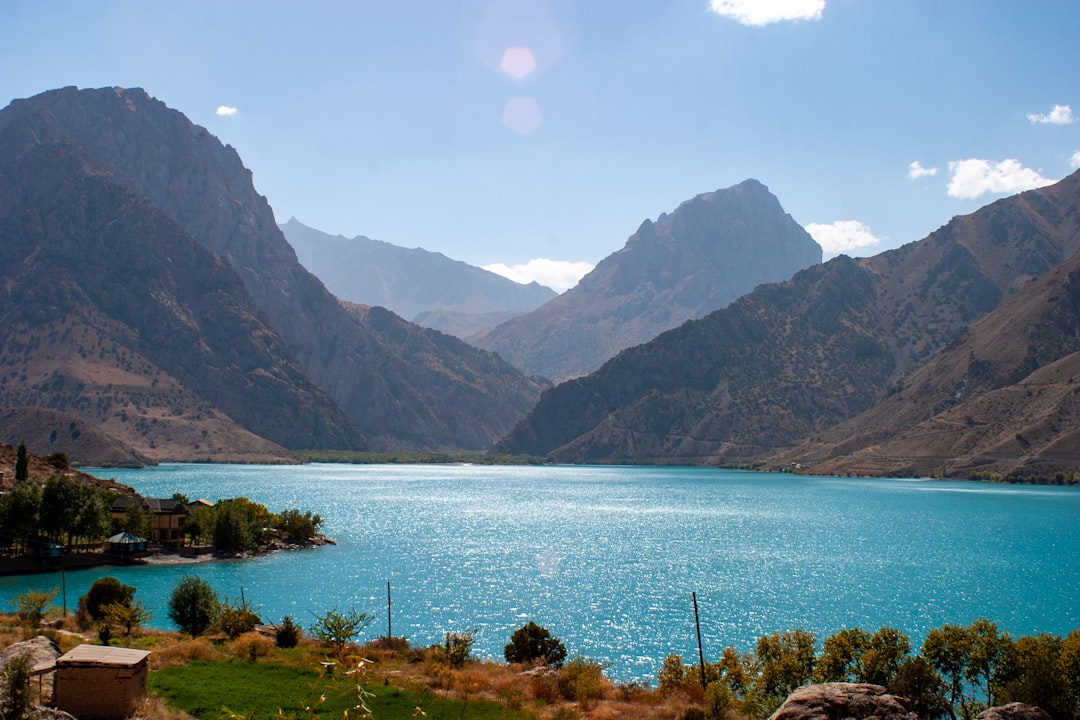
- Iskanderkul Lake — A turquoise glacial lake at 2,195 metres, named after Alexander the Great, ringed by snow-capped peaks.
- Wakhan Corridor — A narrow strip of land bordering Afghanistan offering ancient Silk Road forts and near-zero tourist crowds.
Scroll down for our complete travel guide with tips on getting there, where to stay, costs and more.
Getting There & Transport
Which airports are the best entry points into Tajikistan?
Dushanbe International Airport (DYU) is the main gateway — use it. It handles the overwhelming majority of international arrivals into Tajikistan and is located just 5 km from the city centre. My tip: Turkish Airlines via Istanbul, FlyDubai via Dubai, and Air Manas via Bishkek are the most reliable routing options in 2026. A secondary entry point is Khujand Airport (LBD) in the north, useful if you’re starting your trip in the Fergana Valley region. What surprised me: there are no direct flights from Western Europe or North America — expect at least one connection, typically adding 4–8 hours to your total travel time. Book early as seat availability on Dushanbe routes is genuinely limited.
How do I get from the airport to my first accommodation in Tajikistan?
Take a registered taxi directly from Dushanbe International Airport (DYU) to the city centre. In my experience, the fixed taxi fare runs approximately $5–8 USD and the ride takes under 15 minutes outside rush hour. My tip: agree on the price before getting in — meters are rarely used. There is no airport bus or metro connection, so taxis are the only practical option. Ride-hailing app Yandex Go works in Dushanbe and gives you a price upfront, which I strongly recommend for solo travellers. The honest caveat: airport taxi touts will try to charge $20+ — walk past them to the official rank or open Yandex Go before you exit arrivals.
What transport options are there within Tajikistan?
Shared taxis (called marshrutkas and private taxis) dominate all regional travel in Tajikistan. In my experience, the most important routes — Dushanbe to Khorog on the Pamir Highway — take 12–16 hours by shared 4WD and cost roughly $20–30 USD per seat. Domestic flights exist between Dushanbe and Khorog Airport (KQT), operated by Somon Air, taking just 1 hour but seats fill weeks in advance. Buses connect major northern cities like Khujand to Dushanbe in about 7 hours. The honest warning most guides omit: mountain roads are frequently closed due to landslides, especially in spring — always build a buffer day into your itinerary when travelling between regions.
Do I need a rental car in Tajikistan?
For the Pamir Highway and remote regions, yes — but not a standard car. You need a 4WD vehicle, specifically something like a Toyota Land Cruiser or Russian UAZ. I recommend hiring a car with an experienced local driver rather than self-driving, especially on the Pamir Highway (M41), where fuel stations are scarce for stretches exceeding 200 km. Driver hire with a 4WD runs approximately $80–120 USD per day including fuel. International car rental agencies barely exist in Tajikistan — you’ll book through local operators in Dushanbe, often via guesthouses. The caveat: your standard international driving licence is technically required but road rules enforcement is inconsistent; insurance for remote mountain driving is essentially unavailable.
How good is the public transport network between regions of Tajikistan?
It is functional but slow and unpredictable — set expectations accordingly. Shared taxis from Dushanbe’s Korvon Bus Station reach most regional cities but departure times depend on the car filling up with passengers, not a fixed schedule. The Dushanbe–Khujand route has reasonably regular departures taking about 7 hours for around $8–10 USD. The honest trade-off: once you leave the main corridor and head into the Pamirs or Wakhan Corridor, public transport essentially disappears — you’re relying entirely on hired vehicles or hitching with truck drivers. In my experience, for any trip beyond Dushanbe and Khujand, budget at least $150–200 USD for private transport arrangements as a baseline.
Accommodation
Which regions should I stay in when visiting Tajikistan?
Stay in Dushanbe first to acclimatise and arrange permits, then prioritise Gorno-Badakhshan (GBAO) for the Pamir experience. Dushanbe’s Shohmansur district has the best concentration of guesthouses and restaurants. For the Pamirs, Khorog is the regional capital and the best base — a compact city of roughly 28,000 people with welcoming homestays. The Fan Mountains near Penjikent offer spectacular trekking with far easier access than the Pamirs. What surprised me: the northern Sughd region around Khujand is often skipped by Western travellers but has genuinely impressive Silk Road bazaars and a warmer, more agricultural landscape completely different from the south. Each region requires a different pace — don’t try to rush between them.
What does good accommodation cost per night in Tajikistan?
Budget guesthouses and homestays run $10–20 USD per night, and these are often the most authentic option. In Dushanbe, a solid mid-range hotel like Hotel Serena or Dushanbe Marriott costs $80–150 USD per night. My tip: in remote areas like the Wakhan Corridor and along the Pamir Highway, homestays are your only option — they typically cost $15–25 USD including dinner and breakfast, which is genuinely excellent value. The honest caveat: ‘budget’ accommodation in Tajikistan means squat toilets, cold water showers, and shared rooms — hot water is a premium feature even in mid-range guesthouses outside Dushanbe. Always confirm shower availability when booking mountain homestays.
When should I book hotels in Tajikistan — how far in advance?
Book Dushanbe hotels at least 4–6 weeks ahead for summer travel; book Pamir homestays 2–3 weeks in advance via email or WhatsApp directly with guesthouse owners. The honest reality: Tajikistan receives a relatively small number of adventure tourists but accommodation capacity is also tiny — Khorog has fewer than 15 functioning guesthouses, so they fill up fast in July and August. My tip: the Pamir Homestay Network and Muhamedali Guesthouse in Langar are bookable directly and typically respond within 24 hours. What surprised me: even in peak season, last-minute bookings are sometimes possible in villages simply by asking locals — hospitality culture here is exceptional. But don’t rely on that strategy.
When is the best time to travel to Tajikistan?
June through September is definitively the best window, and I would narrow that to late June through August for the Pamirs specifically. At 4,655 metres on the Wakhjir Pass, snow can persist until mid-June and return by October, making roads impassable. Dushanbe in July averages around 36°C — hot but manageable. The Fan Mountains are ideal in July and August for trekking when lakes are at their most vivid blue. My honest warning: September is beautiful but mountain weather deteriorates quickly — I’ve seen roads close from unexpected snowfall as early as September 20th. If you’re planning the full Pamir Highway circuit, allocate at least 3 weeks between June 20 and September 10 as your ideal travel window.
How does peak season affect prices in Tajikistan?
Peak season — July and August — pushes Dushanbe hotel prices up by roughly 30–50% versus the shoulder months of May and October. Shared taxi prices on the Pamir Highway also inflate as demand from overlanders and trekkers spikes. In my experience, a Dushanbe mid-range hotel that costs $60 in May will easily hit $90–100 in August. The honest trade-off: peak season brings more overlanders on the M41, which is actually a safety advantage in remote areas — you’re less likely to be stranded alone. My tip: book your Dushanbe Marriott or Hyatt Regency at least 6 weeks ahead for July departures. Outside Dushanbe, price inflation is noticeable but less dramatic — most homestays stick to their standard $20–25 rate year-round.
Best Time to Visit
Which regions of Tajikistan have different climate zones?
Tajikistan’s climate varies dramatically by altitude across its 4 distinct zones. The Fergana Valley and Sughd region around Khujand has a continental climate with summers hitting 40°C and mild winters. Dushanbe and the western lowlands sit at around 800 metres with hot summers and cold but snow-light winters. The Pamir Plateau (GBAO) at 3,500–4,500 metres is a cold desert — sunny and dry but bitterly cold at night even in summer, dropping to -5°C on August nights. The Wakhan Corridor at lower Pamir elevations is slightly warmer but still harsh. What surprised me: you can experience four seasons in a single day driving from Khorog up to the Wakhan — pack layers regardless of the month.
What are the rainy seasons in Tajikistan?
The western lowlands including Dushanbe receive most precipitation between March and May, which is technically spring but feels wet and cool. The Pamirs receive very little rain — the plateau is a cold desert with under 200mm annually — but snowfall can occur in any month above 3,000 metres. The Fan Mountains see afternoon thunderstorms in July and August that can make trekking genuinely dangerous on exposed ridges. My honest caveat: ‘rainy season’ in the Western sense doesn’t really apply to Tajikistan — the bigger risk is spring flooding and landslides in April and May that close key mountain roads for days at a time. I recommend avoiding the Anzob Tunnel area in April specifically, as the road above it is a notorious landslide zone.
What does a trip to Tajikistan cost per person per day?
Budget travellers doing homestays and shared taxis spend $30–45 USD per day. A comfortable mid-range traveller hiring private 4WDs and staying in decent guesthouses should budget $80–120 USD per day including transport. My honest breakdown: food is cheap at $5–10 USD per day, but transport is the budget killer — a hired 4WD Dushanbe to Khorog costs $150–200 total split between passengers. The GBAO permit costs $20 USD and is mandatory for the Pamirs. What surprised me: tipping is not culturally embedded but is deeply appreciated — adding $2–3 USD per meal goes a very long way. For a 14-day trip including flights, budget a realistic $1,500–2,500 USD per person all-in from most European hubs.
How expensive is food in Tajikistan?
Food is genuinely affordable — one of the cheapest aspects of visiting Tajikistan. A full meal at a local oshkhona (traditional canteen) in Dushanbe costs $2–4 USD. A sit-down restaurant meal with drinks runs $8–15 USD per person. The national dish plov (rice with meat and carrots) costs around $1.50–2 USD at street stalls. My tip: Green Bazaar in Dushanbe has incredible fresh produce, flatbreads, and dried fruits for almost nothing. The honest caveat: in remote Pamir villages, you eat what’s available — usually bread, tea, eggs, and whatever the family grows — variety is limited but the hospitality makes up for it. Western-style cafes in Dushanbe have expanded significantly and a coffee now costs around $2–3 USD.
What hidden costs should I expect in Tajikistan?
The GBAO permit ($20 USD) is mandatory for the Pamirs and catches many travellers off guard — get it at the OVIR office in Dushanbe before heading east. Border crossing fees, vehicle permits for the Wakhan ($10–15 USD), and national park entrance fees add up. In my experience, road checkpoints in GBAO occasionally levy informal ‘fees’ of $1–5 USD — having small bills ready avoids lengthy delays. Travel insurance with helicopter evacuation cover is essential and costs $100–200+ depending on your provider — the nearest decent hospital to the Pamirs is in Dushanbe, hours away. What surprised me: sim cards and data are very cheap, but international calls via local numbers can incur unexpected roaming charges on your home plan.
Budget & Costs
How much cash should I bring to Tajikistan?
Bring $300–500 USD in cash as a minimum, and consider $700–800 for a 2-week Pamir trip. Tajikistan is largely a cash economy outside Dushanbe. The local currency is the Tajikistani Somoni (TJS) — exchange USD at authorised exchange booths in Dushanbe’s Sino district for the best rates. My tip: bring crisp, undamaged USD bills printed after 2013 — older or torn notes are routinely refused. ATMs exist in Dushanbe and Khujand but are unreliable and regularly run out of cash. There is effectively no ATM access in Khorog, Murghab, or along the Pamir Highway — I cannot stress this enough. Running out of cash in the Pamirs is a serious problem, not an inconvenience.
Which credit cards are accepted in Tajikistan?
Credit card acceptance in Tajikistan is limited to a handful of establishments. Visa is accepted at major Dushanbe hotels including the Hyatt Regency and Marriott, and at a small number of upscale restaurants. Mastercard has slightly less coverage. The honest reality: outside Dushanbe, assume zero card acceptance — it simply doesn’t exist at guesthouses, petrol stations, or bazaars in the Pamirs. In my experience, even hotels that claim to accept cards sometimes have broken terminals or connectivity issues. My tip: treat your credit card as an emergency backup only and rely entirely on cash in Somoni once you leave the capital. Some hotels price in USD but accept Somoni at the day’s exchange rate — always clarify before checking in.
Which regions of Tajikistan must I not miss?
Three regions are non-negotiable. First, Gorno-Badakhshan (GBAO) — the Pamir Plateau — is why most serious travellers come to Tajikistan at all; the landscape at 4,500 metres is unlike anywhere on earth. Second, the Fan Mountains near Penjikent offer 7 stunning glacial lakes called the Marguzor Lakes within a day’s drive of Dushanbe — accessible without heavy equipment. Third, the Wakhan Corridor along the Afghan border gives you ancient Yamchun Fort and Silk Road history with almost zero other tourists. What surprised me: Dushanbe itself deserves 2 full days — the National Museum and Rudaki Park area are genuinely impressive and the food scene has improved dramatically since 2022.
What are the tourist highlights of Tajikistan?
The Pamir Highway (M41) is the centrepiece — one of the world’s great road journeys at altitudes above 4,000 metres for hundreds of kilometres. Iskanderkul Lake at 2,195 metres is Tajikistan’s most photographed natural landmark. Yamchun Fort in the Wakhan Corridor dates to the 1st century BC and sits dramatically above the Panj River with views into Afghanistan. The Seven Lakes (Haft Kul) in the Fan Mountains draw trekkers from across Europe. My tip: don’t overlook Penjikent’s Sogdian ruins, considered among the best-preserved pre-Islamic archaeological sites in Central Asia, dating to the 5th–8th centuries. The Norak Reservoir near Dushanbe is also genuinely beautiful and takes only 1.5 hours from the capital.
What experiences in Tajikistan are found nowhere else on earth?
Driving the full Pamir Highway from Dushanbe to Osh across the roof of the world — passing yurts, yak herders, and Marco Polo sheep — is genuinely irreplaceable. Staying the night in a Pamiri wooden house (traditional architecture with the distinctive skylight called a ‘chorkona’) and eating with a local family at 3,600 metres elevation is something no hotel stay replicates. The Wakhan Corridor lets you wave to Afghan shepherds across a river 50 metres wide — the border that separates two completely different worlds. What surprised me most: soaking in natural hot springs at Garm Chashma near Khorog while looking across at the Hindu Kush in winter — one of the most surreal experiences of my 10 years of travel.
Regions & Highlights
Which areas of Tajikistan are overcrowded — what are quieter alternatives?
The Pamir Highway’s main M41 corridor between Khorog and Murghab is the most trafficked route in summer — expect overlander convoys in July. The quieter alternative is the Wakhan Valley road, which runs parallel to the south through the Afghan border zone — equally spectacular, with 80% fewer vehicles. The Seven Lakes near Penjikent get genuinely busy on weekends with domestic tourists from Dushanbe. My alternative: the Marguzor Lakes further into the Hissar Mountains see almost no foreign visitors. In Dushanbe, the central Rudaki Avenue is the obvious tourist drag — for a more local experience, spend time at Mehrgon Market or the teahouses of the Old Town area instead.
How many days do I need in Tajikistan?
Minimum 14 days to do Tajikistan any justice; 21 days for the full Pamir experience. My breakdown: spend 2 days in Dushanbe, 1 day at Norak and the Fan Mountains approach, then 3–4 days driving the Pamir Highway to Khorog with stops, 2–3 days in the Wakhan Corridor, and 2 days returning or continuing to Osh (Kyrgyzstan). The honest caveat: this is not a destination you can rush — road journeys of 12–16 hours are normal, weather delays are real, and your body needs time to acclimatise to altitude above 3,500 metres. In my experience, travellers who budget only 7–10 days leave feeling they only scratched the surface and are frustrated by how much they missed.
Do I need a visa for Tajikistan?
Most nationalities can get an e-Visa online in 3–5 business days via the official Tajikistan e-Visa portal, costing $50 USD for a 45-day single-entry tourist visa. Citizens of around 60 countries including the US, EU, UK, and Australia are eligible. Crucially: the standard tourist visa does not include the Pamirs (GBAO) — you must add the GBAO permit ($20 USD) separately, either during the e-Visa application or at the OVIR office at 8 Bokhtar Street, Dushanbe. My honest warning: apply at least 2 weeks before departure — processing times occasionally stretch longer without explanation. Citizens of some countries including Pakistan and a few others have different visa rules; check the official portal for your passport specifically.
What languages are spoken in Tajikistan?
Tajik (a Persian dialect) is the official language; Russian is widely spoken in Dushanbe and among the educated urban population as a legacy of the Soviet era. In my experience, Russian gets you further than English in Tajikistan — even basic phrases open doors dramatically. English is spoken at major Dushanbe hotels and by younger urban Tajiks, but expect essentially zero English outside the capital. In the Pamirs and Wakhan, the dominant language shifts to Shugni and Wakhi (regional Pamiri languages) — Tajik itself is a second language for many locals there. My tip: download a Tajik phrasebook on Google Translate offline and learn 10 basic greetings — the goodwill it generates is remarkable and Tajik speakers genuinely appreciate the effort.
What cultural rules do I need to know before visiting Tajikistan?
Tajikistan is a Muslim-majority country — dress modestly, especially women covering shoulders and knees when visiting mosques or rural areas. Remove shoes before entering homes and mosques — you’ll be invited inside frequently. Accept tea when offered in a homestay; refusing is genuinely rude. Don’t photograph military installations, border posts, or police — this is enforced and confiscation of cameras has happened. My honest caveat most guides omit: during Ramadan, eating or drinking publicly in rural areas during daylight hours draws strong disapproval even though Tajikistan is relatively moderate. Alcohol is available in Dushanbe restaurants but keep consumption discreet in conservative areas. The left hand is considered unclean — always use your right hand for eating, giving, and receiving items.
Practical Tips
How safe is Tajikistan for travellers?
Tajikistan is generally safe for travellers — petty crime against tourists is genuinely rare. The Afghan border regions including the Wakhan Corridor are considered safe to visit (the violence is on the Afghan side of the river) but check your government’s travel advisory within 2 weeks of departure as situations shift. The 2022 border conflict with Kyrgyzstan in the Batken region is a real concern — avoid the Kyrgyz-Tajik border crossing at Isfara and check current status before any northern travel. The most realistic dangers are road accidents on mountain passes — driving standards are poor and roads are genuinely treacherous. In my experience, I felt personally safe throughout Tajikistan but I would not travel the Pamir Highway solo without a satellite communicator device.
What health precautions should I take before visiting Tajikistan?
See a travel doctor at least 6 weeks before departure. Recommended vaccinations include Hepatitis A, Typhoid, and Rabies — stray dogs are common in villages and rabies is present. Altitude sickness is a genuine risk above 3,000 metres — the Pamir Highway regularly crosses 4,000+ metre passes. Carry Acetazolamide (Diamox) and get a prescription before you travel. Tap water is not safe to drink outside Dushanbe — use a Lifestraw or iodine tablets in the Pamirs. Medical facilities in Tajikistan are severely limited — the only reasonably equipped hospital is in Dushanbe. My non-negotiable recommendation: purchase travel insurance with helicopter evacuation cover for at least $500,000 USD before arriving; a rescue from the Pamirs can cost $15,000–30,000 USD without coverage.
What SIM card or eSIM options are available in Tajikistan?
Buy a local SIM card at Dushanbe International Airport immediately on arrival. The two best networks are Tcell and Babilon-Mobile, with Tcell having marginally better mountain coverage. A SIM with 5GB data costs roughly $3–5 USD. In my experience, 4G coverage exists in Dushanbe and Khujand but drops to 2G or zero signal for most of the Pamir Highway — don’t rely on data for navigation above 2,500 metres. Download offline maps (Maps.me) with the full Tajikistan dataset before leaving Dushanbe. International eSIMs like Airalo work for Dushanbe but have virtually no rural mountain coverage — the local Tcell SIM genuinely outperforms them in GBAO. A satellite communicator like a Garmin inReach Mini is worth the $30/month rental for Pamir travel.
Which apps do you recommend for travelling Tajikistan?
Maps.me with offline Tajikistan download is the single most important app — download it before leaving Dushanbe as GPS works without signal. Yandex Go for taxis within Dushanbe replaces the need to negotiate fares. Google Translate with Tajik and Russian downloaded offline is essential — carry it everywhere. WhatsApp is how guesthouses, drivers, and tour operators in Tajikistan communicate — create a local number immediately upon arrival. For the Pamirs, join the Pamir Highway Facebook group — it has real-time road condition updates from travellers currently on the route, which I found more reliable than any guidebook. XE Currency for quick Somoni conversions and iOverlander for community-sourced campsite and guesthouse locations in remote areas round out the essential toolkit.
What are the most common traveller mistakes in Tajikistan?
The biggest mistake: not getting the GBAO permit before leaving Dushanbe — you will be turned back at the checkpoint without it. Second: carrying insufficient cash — running out of USD or Somoni in Murghab with no ATM for 200 km in any direction is a real emergency. Third: severely underestimating journey times — the Pamir Highway is not a road you drive at highway speeds; landslides, military checks, and altitude add hours. Fourth: ignoring altitude acclimatisation — I have seen travellers helicopter-evacuated from the Wakhan for altitude sickness that was entirely preventable with one extra day at Khorog (2,200m) before ascending. Fifth: booking only 2 weeks for Tajikistan when the logistics realistically demand 3 — half the frustration I hear from travellers comes from self-imposed schedule pressure.
Tajikistan at a Glance
| Population | 9,504,000 |
|---|---|
| Currency | Tajikistani somoni (SM) |
| Official language | Tajik |
| Time zone | UTC+05:00 |
Source: Wikidata, retrieved August 2026.
Essential Resources for Planning Your Trip to Tajikistan
- The tourism sector in Tajikistan — official visitor information, passes & events
- Wikipedia: Tajikistan — history, geography & background
- Wikivoyage: Tajikistan — community travel guide & practical tips
- Tajikistan travel – Lonely Planet | Asia — expert itineraries & travel inspiration
- THE 15 BEST Things to Do in Tajikistan (2026) — hotels, restaurants & traveller reviews
- The tourism sector in Tajikistan — how to get around
- Numbeo: Cost of Living in Tajikistan — current prices & cost comparison
- Timeanddate: Tajikistan Weather & Climate — forecasts & climate statistics
More Perspectives on Tajikistan
- A guide for traveling to Tajikistan (Tips + 3-week itinerary)
- The Complete Tajikistan Travel Guide – 18 Useful Things …
- Tajikistan Travel Advice & Safety
Tajikistan Travel Videos
Watch these videos for a visual preview before your trip:
- Tajikistan Travel: 11 SURREAL Places to Visit in Tajikistan (& Best Things to Do)
- Where to Stay Tajikistan | Complete Travel Guide and Tajikistan Travel Tips
- How To Spend 3 Days In DUSHANBE Tajikistan | Travel Itinerary
Tajikistan Travel Discussions on Reddit
Real traveller experiences and community advice:
- Is Tajikistan worth it? : r/travel
- Tajikistan travel recommendations : r/AskCentralAsia
- Is Tajikistan a good country to visit/live in?
Data Sources
This page was compiled using data from Wikipedia, Wikidata, Open-Meteo (climate), Numbeo (cost of living) and REST Countries. Information is updated regularly.