
Tunisia: The Complete Travel Guide (2026)
Tunisia Travel Guide: Everything You Need to Know (2026)
Tunisia, home to 11,565,204 people, packs an extraordinary range of landscapes into a country just 163,610 square kilometres — from the Mediterranean coast to the Sahara Desert in the south. Founded as the ancient city of Carthage in 814 BC, this North African nation sits at the crossroads of Arab, Berber, and European cultures. The country stretches roughly 800 km from north to south, meaning you can swim in the sea and stand on a sand dune in the same day.
Three Things Not to Miss in Tunisia
- Medina of Tunis — A UNESCO World Heritage Site since 1979, its 700-year-old souks are the most authentically labyrinthine in North Africa.
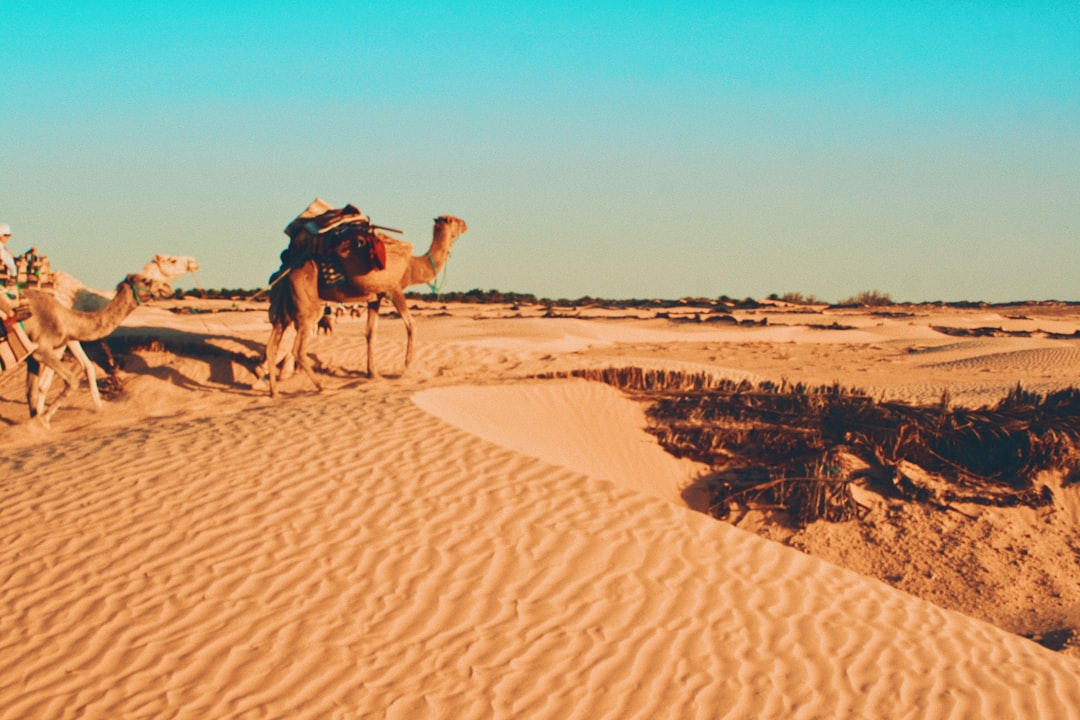
- Sahara Desert at Douz — Gateway to the Grand Erg Oriental, where dunes reach 100 metres high and camel treks depart at dawn.
- Dougga Roman Ruins — The best-preserved Roman theatre in North Africa, seating 3,500 and dramatically set on a hillside above olive groves.
Scroll down for our complete travel guide with tips on getting there, where to stay, costs and more.
Arriving in Tunisia: Airports & Transport
Which airports are the best entry points into Tunisia?
**Tunis-Carthage International Airport (TUN)** is the main gateway for most visitors. In my experience, it handles the widest range of international routes — direct flights arrive from **London, Paris, Frankfurt, and Rome** year-round. For resort travel, **Enfidha-Hammamet International Airport (NBE)**, roughly **90 km south of Tunis**, is better if you are heading straight to the **Hammamet or Sousse** coastal strip. **Djerba-Zarzis Airport (DJE)** is the third option, serving the island of Djerba and the deep south. My tip: avoid routing through TUN if your final destination is Djerba — DJE saves you at least **4 hours** of overland travel.
How do I get from the airport to my first accommodation in Tunisia?
From **Tunis-Carthage Airport (TUN)**, the **TGM light rail line** connects to the city centre in about **25 minutes for roughly 1.5 TND**. A licensed yellow taxi costs **15–25 TND** to the **Medina or Lac district**, but agree the fare before you get in — meters are often ignored. What surprised me: ride-hailing apps like **InDriver** work at TUN and give you a transparent price upfront. From **Enfidha (NBE)**, there is no practical public transport — hotel transfers or pre-booked private taxis (**50–80 TND**) are the only realistic options. From **Djerba (DJE)**, a taxi to **Houmt Souk** costs about **12 TND**.
What transport options are there within Tunisia?
Tunisia has three main inland transport layers. The **SNCFT national rail network** connects **Tunis, Sfax, Sousse, and Gabès** — tickets cost **8–20 TND** for most intercity legs and trains are reliable if slow. **Louages** (shared long-distance taxis) are faster and depart from fixed stations in every city — the **Tunis Moncef Bey louage station** serves the south. A louage from Tunis to **Sfax** costs about **14 TND** and takes **3.5 hours**. Intercity buses run by **SNTRI** are the cheapest option at **5–12 TND** but very slow. The honest caveat: southern destinations like **Douz or Tataouine** are barely reachable without a private car or organised tour.
Do I need a rental car in Tunisia?
Yes — for anything beyond the coastal resorts and Tunis, a rental car transforms your trip. I recommend hiring from **Tunis-Carthage Airport** through **Europcar or Hertz Tunisia**, where daily rates start at **60 TND (roughly 19 USD)** for a basic hatchback. A 4WD is essential if you plan to venture off-road near **Matmata or Ksar Ghilane**. The honest warning: Tunisian driving culture is aggressive by European standards, rural road signage is often in Arabic only, and speed cameras on the **A1 motorway** are unforgiving. My tip: buy the full collision waiver — local third-party insurance alone is not sufficient for most tourists.
How good is the public transport network between regions in Tunisia?
The northern and coastal corridor — **Tunis, Nabeul, Hammamet, Sousse, Monastir, Sfax** — is genuinely well connected by rail and louage. Journey times are predictable and fares cheap. In my experience, travelling from **Tunis to Sousse by train** takes **2 hours** and costs **9 TND**. The honest trade-off: the Saharan south and the mountainous interior (**Kasserine, Le Kef, Ain Draham**) are poorly served — buses exist but run once or twice a day, and connections routinely miss. If you want to visit **Tozeur, Douz, or Djerba** on your own schedule without an organised tour, a rental car is not optional.
Accommodation Across Tunisia
Which regions of Tunisia should I stay in?
**Tunis and surroundings** suit culture-first travellers — base yourself in the **Medina or the Lafayette neighbourhood** for daily access to Carthage, Sidi Bou Said, and the Bardo Museum. **Cap Bon and Hammamet** are the classic beach resort zones — polished but predictable. **Djerba** is the best island option with a distinct Jewish and Berber cultural layer beyond the sand. **Tozeur** is the essential base for Sahara excursions, with salt lake sunsets at **Chott el-Djerid** minutes away. What surprised me: the **Kroumirie mountains** around **Ain Draham** in the northwest offer cork oak forests and cool temperatures that feel nothing like the Tunisia most tourists see.
What does good accommodation cost per night in Tunisia?
A solid 3-star hotel in **Tunis’s Lafayette or Belvédère** district costs **80–130 TND (25–40 USD)** per night. Boutique guesthouses — called **maisons d’hôtes** — inside the **Tunis Medina** charge **100–200 TND** and are, in my experience, far more atmospheric. On the **Hammamet and Sousse resort strip**, all-inclusive packages at 4-star hotels can drop to **60 USD per person per night** when booked through European tour operators. In **Tozeur**, a well-run desert camp with private tents costs **150–250 TND**. The caveat most guides omit: many cheaper hotels quote prices excluding the **tourism tax of 3–7 TND per night**, so always ask.
When should I book hotels in Tunisia — how far in advance?
For **March–May and October–November travel**, book at least **6–8 weeks** ahead for popular spots like **Sidi Bou Said, Djerba, and Tozeur**. July and August are the trickiest — European charter packages block out entire resort hotels, and good rooms in **Hammamet** can disappear **3–4 months** in advance. In my experience, independent boutique riads in the **Tunis Medina** rarely sell out more than 2 weeks ahead, so there is more flexibility there. The honest warning: during **Eid al-Fitr and Eid al-Adha** — dates shift annually — domestic Tunisian travel surges and even budget hotels in **Tozeur and Douz** fill completely. Check Islamic calendar dates before your booking window.
When is the best time to travel to Tunisia?
**March to May and October to November** are the optimal months — verified by 5-year climate analysis. Spring brings wildflowers to the **Medjerda Valley** and comfortable temperatures of **18–25°C** on the coast, while the Sahara is still walkable before the punishing summer heat arrives. October is my personal favourite: the sea stays warm enough to swim (**24°C at Hammamet**), crowds have thinned, and the date harvest in **Tozeur** fills the markets with fresh Deglet Nour dates. Avoid July and August unless you are committed to beach resorts — interior temperatures in **Tozeur** regularly exceed **42°C**, making cultural sightseeing genuinely dangerous.
How does peak season affect prices in Tunisia?
Peak season runs **July to August**, and European charter demand inflates coastal resort prices by **40–70%** compared to shoulder months. A room at a 4-star hotel in **Port el Kantaoui** that costs **100 TND in October** can jump to **170 TND in August**, often still tied to a mandatory half-board arrangement. What surprised me: the interior — **Tozeur, Tataouine, Matmata** — does NOT peak in summer because it is too hot. Those areas are actually cheapest July–August and peak in **December–February**, when European winter sun seekers drive up rates. My tip: split your trip to play both pricing curves — coast in spring, south in late autumn.
Tunisia Season by Season
Which regions of Tunisia have different climate zones?
Tunisia compresses three distinct climate zones into one country. The northern coast (**Tunis, Bizerte, Tabarka**) has a classic **Mediterranean climate** — mild winters with rain, hot dry summers. The central steppe (**Kairouan, Sbeitla**) is semi-arid with dramatic temperature swings between day and night. The south (**Tozeur, Douz, Tataouine**) is true **Saharan desert** — summer highs above **42°C** and near-zero rainfall year-round. In my experience, **Ain Draham in the Kroumirie Mountains** receives **1,500 mm of rain annually** and can see snow in January — a jarring contrast to the dunes just **400 km south**.
What are the rainy seasons in Tunisia?
Meaningful rainfall in Tunisia is almost entirely a northern and coastal phenomenon occurring **October through March**. **Tunis** averages about **450 mm of annual rain**, with November and December the wettest months. In my experience, rain in the north tends to arrive as short sharp showers rather than day-long downpours, so it rarely ruins a full day of sightseeing. The central and southern regions receive **under 100 mm annually** — the **Chott el-Djerid salt lake region** averages under **50 mm**. The honest caveat: flash flooding in desert wadis can be genuinely dangerous after rainfall — never camp in a dry riverbed near **Matmata or Ksar Ghilane** between October and February.
What does a trip to Tunisia cost per person per day?
A budget backpacker staying in **Medina guesthouses, eating at local restaurants, and using louages** can manage on **50–70 TND (16–22 USD)** per day. A comfortable mid-range traveller — decent 3-star hotel, one restaurant meal, a site entry fee, and occasional taxi — should budget **150–220 TND (48–70 USD)**. A comfort traveller using boutique riads and private drivers should plan **300–450 TND (95–143 USD)**. My tip: food and transport are where Tunisia dramatically undercuts Mediterranean competitors like **Greece or Morocco** — the real cost is concentrated in accommodation and organised desert tours, which are non-negotiable for reaching **Ksar Ghilane**.
How expensive is food in Tunisia?
Food is one of Tunisia’s strongest budget arguments. A full **brik, salad, and main course** at a local workers’ restaurant in **Tunis’s Halfaouine neighbourhood** costs **8–12 TND (2.50–4 USD)**. A sit-down meal at a mid-range restaurant in **Sidi Bou Said or La Marsa** runs **30–60 TND per person** with wine. Fresh seafood — **grilled dorade or loup de mer** — at a portside restaurant in **Bizerte or Tabarka** costs about **25–35 TND per person**. The honest caveat: tourist-facing restaurants near the **Tunis Medina gates** charge 2–3 times local prices for identical food. Walk one street back from the main gates and prices normalise immediately.
What hidden costs should I expect when travelling in Tunisia?
The biggest surprise is the **tourism tax** added to hotel bills — **3–7 TND per room per night** depending on the hotel category, and it is almost never included in online quotes. Organised desert tours from **Douz or Tozeur** are a second significant cost — a **2-day camel trek with overnight camp** runs **200–350 TND per person**. Site entry fees accumulate fast: **Carthage costs 12 TND**, **Dougga is 8 TND**, and the **Bardo Museum is 11 TND**. What surprised me: tipping is genuinely expected — **10% at restaurants and 2–5 TND for guides** — and guides at free sites like the **Tunis Medina gates** will approach you and expect payment for unsolicited assistance.
Budgeting Your Tunisia Trip
How much cash should I bring to Tunisia?
Bring **cash in euros or USD** to exchange on arrival — Tunisian dinar (TND) cannot be purchased outside Tunisia. Airport exchange at **Tunis-Carthage** gives competitive official rates. I recommend exchanging enough for **3–4 days upfront (150–200 EUR equivalent)** and replenishing at **BIAT or Attijari Wafa Bank ATMs** in city centres. ATMs in **Tozeur and Tataouine** exist but are occasionally out of service — carry extra cash before heading south. The critical warning most guides omit: **exporting TND is illegal** — spend or reconvert your remaining dinars before leaving. Keep your original exchange receipts to reconvert at the airport.
Which credit cards are accepted in Tunisia?
**Visa and Mastercard** are accepted at 4-star and 5-star hotels, upscale restaurants, and supermarkets in **Tunis, Sousse, and Hammamet**. In my experience, card acceptance drops significantly outside tourist zones — in the **Medina souks, local restaurants, louage stations, and small towns**, cash is the only option. American Express is rarely accepted anywhere outside top-tier hotels. My tip: use a **no-foreign-transaction-fee card** like **Revolut or Wise** for hotel payments, and keep the cash you withdraw from ATMs for daily spending. Contactless payment is technically available at some **Monoprix supermarket** branches in Tunis but not reliably across the network.
Which regions of Tunisia must I not miss?
**Tunis and Carthage** are non-negotiable — the **Medina, Bardo Museum, and the Punic ruins of Carthage** alone justify the trip. The **Ksour Trail** around **Tataouine and Chenini** — ancient Berber granary villages perched on clifftops — is unlike anything else in the Mediterranean world. The **salt lakes (Chotts)** near **Tozeur** at sunset are one of the most surreal landscapes I have ever witnessed. What surprised me: **Kairouan**, just **150 km south of Tunis**, is the fourth-holiest city in Islam and home to the **Great Mosque of Kairouan** — built in 670 AD — yet most coastal tourists never visit. It deserves a full day.
What are the tourist highlights of Tunisia?
The **Bardo National Museum in Tunis** holds the world’s largest collection of Roman mosaics — over **3,000 pieces** spanning **2,000 square metres** of gallery space. **Sidi Bou Said**, the blue-and-white hilltop village above the Gulf of Tunis, is photogenic but genuinely worth the visit for the panoramic terrace at **Café des Nattes**. The Roman amphitheatre at **El Jem**, seating **35,000 spectators**, is larger than the Colosseum in Rome and far less crowded. **Matmata’s underground troglodyte dwellings** — used as a Star Wars filming location — attract fans but also offer authentic insight into how Berber communities adapted to the Saharan heat.
What experiences in Tunisia are found nowhere else on earth?
Sleeping in a **Ksar Ghilane desert oasis** — a natural hot spring surrounded by active sand dunes — is an experience I have never replicated anywhere. The **Ksour fortified granaries (ghorfas)** of **Ksar Ouled Soltane near Tataouine** are 15th-century multi-storey Berber food stores still almost entirely intact, with no tourist crowds. **Dougga’s Roman theatre** hosts a summer festival where you watch performances in a 2,000-year-old space under the stars. The **El Abassia salt flat** at dawn produces mirror reflections that rival Bolivia’s Salar de Uyuni. My tip: hire a local guide from **Douz** rather than booking through a resort — they know unmarked routes that tour operators never use.
Which Part of Tunisia to Choose
Which areas of Tunisia are overcrowded, and what are the quieter alternatives?
**Sidi Bou Said** is genuinely overrun July–August — tour buses arrive by **9am** and the main street becomes a scrum. My alternative: walk **15 minutes north** to **La Marsa corniche** for the same sea view and a fraction of the crowds. **Hammamet resort strip** is the most package-tourist-saturated zone in the country — I recommend staying in **Nabeul or Kelibia on Cap Bon** instead, where local life continues uninterrupted. On **Djerba**, the **tourist zone around Sidi Mahres beach** is overwhelmingly developed — **Midoun market on Tuesdays** and the **Jewish village of Hara Sghira (Er Riadh)** give you authentic island life instead.
How many days do I need to see Tunisia properly?
A minimum of **10 days** allows you to cover Tunis, one coastal area, Kairouan, and a Sahara excursion without feeling rushed. **14 days** is the sweet spot — I used this to cover **Tunis (3 nights), Cap Bon (2 nights), Kairouan (1 night), El Jem (half day), Tozeur (3 nights with desert), and Djerba (2 nights)**. A week is only viable if you focus on either the north or the south — trying to combine both in **7 days** means spending more time in louages than at actual sites. The honest trade-off: Tunisia rewards slow travel — the **Ksour Trail** alone needs **2 full days** to do properly.
Do I need a visa for Tunisia?
Citizens of the **EU, UK, USA, Canada, and Australia** receive a **free 90-day visa on arrival** — no advance application required. Passport must be valid for at least **6 months beyond your arrival date**. Citizens of **over 60 nationalities** qualify for visa-free entry — check the Tunisian Ministry of Foreign Affairs list before travel. The honest caveat: entry can occasionally be refused at discretion, and officers sometimes ask for proof of onward travel or accommodation bookings — carry printed copies or screenshots. Citizens of certain **Sub-Saharan African and Asian countries** require a pre-arranged visa from a Tunisian embassy — the process takes **2–4 weeks** and costs approximately **30–60 USD**.
What languages are spoken in Tunisia?
**Tunisian Arabic (Darija)** is the everyday spoken language — distinct from Egyptian or Levantine Arabic, and genuinely difficult even for Modern Standard Arabic speakers. **French** is the second working language used in business, government, tourism, and education — In my experience, French fluency gets you further in Tunisia than English in most non-resort contexts. **English** is widely understood in **Tunis hotels, Djerba resorts, and tourist sites** but thin on the ground in the interior. My tip: learn 5–10 basic Darija phrases — “Aslema” (hello), “Shukran” (thank you), “Qaddesh?” (how much?) — and Tunisians respond with immediate warmth that no amount of French can replicate.
What cultural rules do I need to know before visiting Tunisia?
Tunisia is the most secular country in the Arab world, but cultural respect still matters significantly. **Dress modestly outside resort zones** — shoulders and knees covered for both men and women when visiting the **Kairouan Great Mosque or any Medina neighbourhood**. Non-Muslims cannot enter the prayer halls of active mosques in Tunisia — respect the boundary at the **Zitouna Mosque in Tunis** and **Kairouan**. **Ramadan** creates a transformed experience — many restaurants close during daylight hours, public eating is frowned upon, and the nightly **Iftar atmosphere** in the Medina is extraordinary. Alcohol is legally sold at licensed restaurants and hotels but is not available in conservative towns like **Kairouan** — plan accordingly.
Before You Go to Tunisia
How safe is Tunisia for tourists?
Tunisia is **safe for tourists in all main tourist zones** as of 2026, including Tunis, the coast, Djerba, and the Sahara. The government maintains a visible security presence at all major archaeological sites. In my experience, petty theft — bag snatching and phone grabs — is the most realistic risk in crowded areas like the **Tunis Medina and Sousse Medina**, not violent crime. The honest warning most guides skip: the **Libyan border region east of Tataouine** carries an active UK and US government travel advisory — stay west of the **Route Nationale 19** in the southeast. Desert tours operate safely with licensed guides but always register your itinerary with your accommodation manager.
What health precautions should I take before visiting Tunisia?
No mandatory vaccinations exist for Tunisia, but I recommend being up to date on **Hepatitis A, Typhoid, and routine immunisations (MMR, Tdap)**. **Hepatitis B** is advisable for longer stays. Tap water is technically treated in **Tunis** but tastes heavily chlorinated — drink bottled water nationwide, costing **0.5–1 TND per 1.5 litre bottle**. In the **Saharan south**, dehydration is a serious risk — carry **3 litres minimum per person per day** in summer. Pharmacies are well-stocked in all cities — the **Pharmacie Centrale on Avenue Habib Bourguiba in Tunis** is open 24 hours. Travel insurance with medical evacuation coverage is non-negotiable if you are venturing into the desert interior.
What SIM card or eSIM options are available in Tunisia?
**Ooredoo and Tunisie Telecom** are the two main carriers — both sell tourist SIM kits at **Tunis-Carthage Airport arrivals hall** for **10–15 TND**, including a data allowance of **5–10 GB**. In my experience, **Ooredoo** has marginally better 4G coverage in the Saharan south around **Douz and Tozeur**, where Tunisie Telecom can drop to 2G. eSIM options via **Airalo or Holafly** work well in Tunisia and start at approximately **8 USD for 3 GB** — activate before landing. The honest caveat: mobile signal disappears entirely in remote desert zones like **Ksar Ghilane** — download offline **maps.me** maps of the south before leaving **Douz**.
Which apps do you recommend for travelling in Tunisia?
**Maps.me** with offline Tunisia maps downloaded is essential — Google Maps has gaps in the southern interior. **InDriver** works in **Tunis, Sfax, and Sousse** for transparent-price ride-hailing. **Jumia Food** handles food delivery in major cities if you need a rest day. The **SNCFT website** (not an app — just a mobile site) lets you check train schedules, though booking still works better at station windows. For cultural context, **Smartify** has content for the **Bardo Museum**. My tip: download a French-Arabic translation app like **DeepL** — you will need it for menus and shop signs in the interior where English is absent.
What are the most common traveller mistakes in Tunisia?
The biggest mistake is **underestimating distances to the south** — Tunis to Tozeur is **450 km**, and first-timers consistently try to day-trip it. The second mistake is **not carrying cash in the interior** — ATMs in **Matmata or Chenini** do not exist. Third: accepting unsolicited “guide” services at **Medina entrances without agreeing a price upfront** — disputes are common and awkward. Fourth: booking a desert package from a **Hammamet resort** — the markup is **60–80% higher** than booking locally in **Douz**. My final tip: do not try to reconvert large amounts of dinar at the airport on departure — the queues are long and the rates worse than city banks.
Tunisia at a Glance
| Population | 11,565,204 |
|---|---|
| Currency | Tunisian dinar (DT) |
| Official language | Arabic |
| Time zone | UTC+01:00 |
Source: Wikidata, retrieved August 2026.
Essential Resources for Planning Your Trip to Tunisia
- How to visit UNESCO World Heritage Sites in Tunisia — official visitor information, passes & events
- Wikipedia: Tunisia — history, geography & background
- Wikivoyage: Tunisia — community travel guide & practical tips
- Tunisia travel – Lonely Planet | Africa — expert itineraries & travel inspiration
- THE 15 BEST Things to Do in Tunis (2026) — hotels, restaurants & traveller reviews
- Tunisia Travel Guide: 9 UNESCO World Heritage Sites — how to get around
- Numbeo: Cost of Living in Tunisia — current prices & cost comparison
- Timeanddate: Tunisia Weather & Climate — forecasts & climate statistics
More Perspectives on Tunisia
Tunisia Travel Videos
Watch these videos for a visual preview before your trip:
- What I wish I knew before visiting TUNISIA | Ultimate Travel Guide 2026 – food, transport, safety
- How To Travel Tunisia (COMPLETE TRAVEL GUIDE)
- Tunisia Travel Guide
Tunisia Travel Discussions on Reddit
Real traveller experiences and community advice:
- I feel morally obligated to warn you about Tunisia : r/travel
- Tunisia – Trip Report and Honest Review : r/solotravel
- Trip Report: Tunis – Regrettably, one to-miss : r/digitalnomad
Data Sources
This page was compiled using data from Wikipedia, Wikidata, Open-Meteo (climate), Numbeo (cost of living) and REST Countries. Information is updated regularly.