
Saranda: The Complete Travel Guide (2026)
Saranda Travel Guide: Everything You Need to Know (2026)
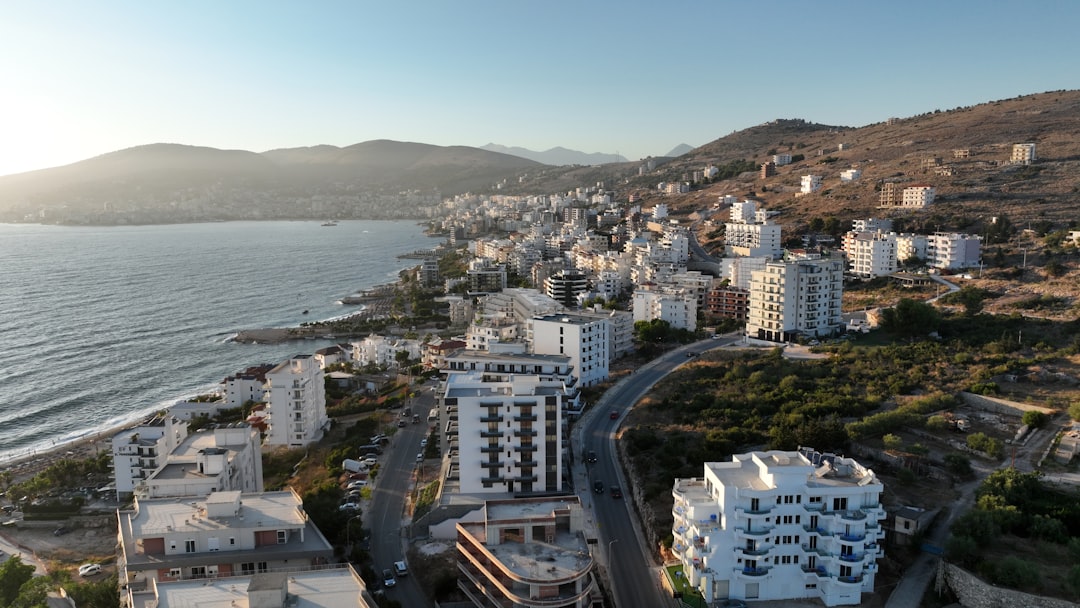
Saranda sits on a horseshoe bay of the Ionian Sea in southern Albania, just 14 km from the Greek island of Corfu, and has grown from a sleepy town of 22,613 residents into one of the Balkans’ fastest-rising coastal hotspots. Founded as an ancient port called Onchesmos, it receives over 300 sunny days per year — one of the highest tallies in the entire Mediterranean. In 2026, it remains one of the last Ionian destinations where a quality seafront meal still costs a fraction of what you’d pay in Greece.
Three Things Not to Miss in Saranda
- Butrint National Park — A UNESCO World Heritage Site with 2,500 years of layered civilizations just 18 km south of Saranda.
- Ksamil Beach — Four turquoise islets you can swim to, with water clarity rivalling the Maldives, only 17 km from Saranda.
- Lëkurësi Castle Sunset — A 16th-century Ottoman hilltop fortress with a 360° panorama over Saranda bay and Corfu.
Scroll down for our complete travel guide with tips on getting there, where to stay, costs and more.
How to Reach Saranda
How do I get to Saranda?
The fastest option is a ferry from Corfu, taking only **35 minutes**. I recommend this over flying directly. The Ionian Seaways and Finikas Lines run **3–5 daily crossings** in summer, costing roughly **L2,200–3,300 (€20–30)** one way. If flying, the nearest airports are **Corfu International (CFU)** in Greece or **Tirana International (TIA)** in Albania — Tirana is **280 km north**, meaning a **4-hour drive or bus ride**. What most guides skip: the Tirana bus is cheap but gruelling on mountain roads. My tip: fly into Corfu and ferry across — it’s faster, scenic, and genuinely enjoyable.
Which airport is closest to Saranda?
**Corfu International Airport (CFU)** is the closest functional gateway, just a short taxi ride to the Corfu ferry port, then **35 minutes by fast ferry** to Saranda’s waterfront. **Tirana International Airport (TIA)** is the nearest Albanian airport at roughly **280 km**, but the journey takes **4+ hours** by road due to mountain terrain. In my experience, CFU is far superior as an entry point — flights from Western Europe are frequent and fares are competitive, especially on Ryanair and easyJet. The honest caveat: Albanian domestic air connections to Saranda don’t exist, so overland from Tirana is your only Albania-internal option.
How long does the journey to Saranda take from major hubs?
From **Corfu Town ferry terminal** it’s just **35 minutes** by fast catamaran — the easiest inter-country crossing in the region. From **Tirana**, expect **4–4.5 hours** by bus or car via the SH4 road through Gjirokastër. From **Shkodër** in northern Albania, budget a full **6+ hours**. The furgon minibus network runs daily from Tirana’s Kombinat bus station, departing at **06:00**, and costs around **L1,100 (€10)**. What surprised me: the Gjirokastër bypass has improved the Tirana road noticeably since 2023, but the final stretch into Saranda is still a winding coastal descent — spectacular but slow.
Do I need a rental car in Saranda?
No — for Saranda itself and its immediate surroundings, you don’t need one. The **Ksamil shuttle and local taxis** cover the 17 km to Ksamil beach for around **L500 (€4.50)**. Butrint National Park is reachable by bus from the main terminal for **L100 (€0.90)**. However, if you want to explore the **Blue Eye spring (Syri i Kaltër)** independently or reach Gjirokastër comfortably, a rental car transforms the trip. Expect to pay **L4,400–6,600 (€40–60) per day** from local agencies on the seafront promenade. My tip: rent for just **2 days** mid-trip rather than for your full stay — it’s the sweet spot.
Saranda Public Transport Explained
What are the best areas to stay in Saranda?
I recommend the **seafront promenade (Bulevardi Ismail Qemali)** for first-time visitors — you’re within walking distance of restaurants, the ferry terminal, and the beach. **Ksamil village**, 17 km south, suits couples wanting quieter, more natural surroundings with direct beach access. The area around **Shën Vasil hill** offers budget guesthouses with views above the harbour chaos. Avoid booking anything listed as ‘Saranda centre’ on booking platforms that turns out to be 3 km uphill — always check the map pin. My honest caveat: the promenade is noisy until **02:00** in July and August, so pack earplugs or choose a room one block back.
What does accommodation cost per night in Saranda?
In my experience, a clean **mid-range hotel or apartment** on or near the seafront costs **L7,700–13,200 (€70–120)** per night in peak season (July–August). Budget guesthouses in the hillside streets run **L3,300–5,500 (€30–50)**. Boutique sea-view apartments in **Ksamil** peak at **L16,500–22,000 (€150–200)** in August. Shoulder season (June, September) drops prices by **30–40%** across the board. What most guides omit: many Saranda properties don’t have air conditioning in older buildings, and summer temperatures push **34°C** — always confirm AC before booking, not just ‘fan.’
How far in advance should I book accommodation in Saranda during high season?
Book **at least 3 months ahead** for July and August — this is non-negotiable. Saranda’s hotel stock is still growing but demand from Italian, Greek, and German tourists now far outpaces supply in peak weeks. The **first two weeks of August** are the tightest, with quality seafront apartments selling out by **April**. For June and September travel, **4–6 weeks** ahead is usually sufficient. My tip: Booking.com has the widest Saranda inventory, but direct WhatsApp bookings with guesthouses often save you **10–15%** — owners actively post numbers on their listings. The caveat: cancellation policies can be rigid with direct bookings.
Are there special or unique accommodation types in Saranda?
Yes — the most distinctive option is renting a **converted stone village house** in the hills above Saranda or in nearby **Çukë village**, where you get panoramic Ionian views and total quiet for **L5,500–8,800 (€50–80) per night**. Several **eco-guesthouses** have opened around the **Butrint lagoon**, placing you inside the national park buffer zone — extraordinary for birdwatching at dawn. For something genuinely rare, liveaboard sailboat rentals depart from **Saranda marina** for week-long Riviera circuits. What surprised me: Albania has no large international hotel chains in Saranda yet — every property is independently run, which means wildly variable quality but also genuinely personal service.
Neighbourhoods of Saranda
What are the must-see sights in Saranda?
Three are non-negotiable: **Butrint National Park** (18 km south, entry **L1,100/€10**), one of the most atmospheric UNESCO ruins in Europe; **Ksamil Beach** with its four swimmable islets; and **Lëkurësi Castle** above the city for sunset. Don’t skip the **Synagogue of Saranda ruins** in the city centre — a 5th-century mosaic floor hidden behind a fence that most visitors walk past completely. The **Blue Eye (Syri i Kaltër)** spring, 25 km northeast, is a hypnotic natural pool of impossible turquoise — arrive before **10:00** to beat the tour buses. In my experience, Butrint alone justifies the entire trip to Saranda.
What can I experience for free in Saranda?
Saranda’s **seafront promenade** is free and genuinely beautiful for an evening passeggiata. The **old city hill** above the centre offers views without any entry fee. **Ksamil beach** itself has no admission charge, though sunbed rental runs **L550–880 (€5–8) per pair**. The ancient **Synagogue mosaic ruins** in the town centre are viewable through the fence at no cost. Hiking the trail to **Lëkurësi Castle** is free — only the restaurant inside charges. My honest note: Albania is unusual in that most natural sites remain free or very low cost, unlike Croatia or Greece. The **Butrint lagoon walking path** outside the main park gate costs nothing and delivers real wildlife encounters.
Which day trips from Saranda are most worthwhile?
**Corfu, Greece** is the most surprising day trip — just **35 minutes by fast ferry**, giving you a completely different cultural and architectural experience for the price of a **L2,200–3,300 (€20–30)** return ticket. **Gjirokastër** (the UNESCO Ottoman city, **60 km north**, **1.5-hour drive**) is my personal favourite inland day trip. **Blue Eye spring** (25 km, **40 minutes**) pairs perfectly with a stop at **Mesopotam village** for lunch. The caveat most guides ignore: **Butrint is always listed as a day trip but deserves a half-day minimum** — rushing it in 1 hour means missing the theatre, the Byzantine baptistery, and the lagoon trail entirely.
What local specialities should I try in Saranda?
Start with **tavë kosi** — slow-baked lamb and rice in yoghurt sauce — the Albanian comfort dish that costs **L550–880 (€5–8)** at inland restaurants. On the coast, order **grilled octopus** fresh from the Ionian: the seafront restaurants near **Rruga Skënderbeu** do this well for **L1,100–1,650 (€10–15)**. **Fërgesë** (a pepper, tomato, and cottage cheese stew) is a must. Locally produced **Skrapar raki** is the traditional spirit — a shot costs **L110–165 (€1–1.50)**. What surprised me: Albanian **byrek (cheese or spinach pastry)** from a bakery at breakfast costs just **L110–165 (€1–1.50)** and is one of the best value-for-flavour experiences in the entire Mediterranean.
What to See in Saranda
What makes Saranda unique compared to other coastal towns?
Saranda is the only Ionian resort town where you can wake up in Albania, swim at a world-class beach by morning, visit **2,500 years of UNESCO ruins** by afternoon, and have dinner in Corfu — all in a single day. It combines the affordability of an emerging destination with proximity to Greek island culture. The population of just **22,613 permanent residents** means the town retains a genuine local rhythm that **Durrës** or **Vlorë** have partly lost. In my experience, nowhere else on the Albanian Riviera offers this density of things within a **30 km radius**: antiquity, nature, beaches, and an international ferry link. The honest caveat: construction is relentless and the skyline changes every season.
How many days should I spend in Saranda?
**4 full days** is the sweet spot. Day 1: arrive, promenade walk, Lëkurësi Castle sunset. Day 2: full Butrint National Park morning plus Blue Eye afternoon. Day 3: Ksamil beach and islet swimming. Day 4: day trip to Gjirokastër or Corfu. Less than 3 days means you’ll feel rushed between Butrint and Ksamil. More than 6 days can feel repetitive unless you’re explicitly beach-holidaying. My tip: if combining Saranda with the **Albanian Riviera route from Vlorë**, allocate Saranda **2–3 days** as your southern anchor. The honest caveat: bad weather in Saranda (rare but possible in June) can wipe out beach days, so having Butrint and Gjirokastër as indoor-adjacent backups is smart planning.
When is the best time to visit Saranda?
**June and September** are the optimal months — warm sea temperatures (**24–26°C**), long sunshine hours, fewer crowds than July–August, and prices **30–40% lower**. July and August deliver guaranteed heat and a buzzing atmosphere but bring Italian and Greek tourist peaks, noisy promenades until **02:00**, and scarce accommodation. October is underrated — still **22°C sea temperature**, almost no tourists, and golden light for photography. I visited in **late September** and found it close to perfect: every restaurant open, empty Ksamil islets, and a relaxed local vibe. Avoid November to March unless you enjoy a quiet town where half the restaurants are shuttered.
Are there local festivals in Saranda worth attending?
The **Saranda International Festival** typically runs in **late July** and brings folk music, traditional dance, and street food stalls along the promenade — free to attend and genuinely colourful. **National Flag Day on November 28** sees Albanian flags covering every building in town with a patriotic energy unlike anywhere else I’ve experienced. The **Butrint Foundation** occasionally hosts evening cultural events inside the archaeological park in summer — check their site before travelling. My honest caveat: Albanian festival scheduling changes annually and rarely appears on international event calendars. I recommend joining the **Visit Saranda** Facebook group 4–6 weeks before travel — locals post real-time event updates there far faster than any official tourism website.
Saranda Food Scene
How does the weather in Saranda affect activities throughout the year?
Saranda’s **300+ sunny days annually** make it one of the Mediterranean’s most reliable destinations. Beach activities are comfortable from **mid-May through October**. Hiking to Lëkurësi or the Butrint lagoon trail is best in **April–May** and **September–October** when heat is moderate — July hiking above the coast means **35°C+ exposed sun** which is genuinely punishing. Winter (December–February) brings mild temperatures around **12–14°C** but some rain and strong bora wind off the Ionian. What surprised me: even in peak summer, mornings are comfortable for sightseeing before **10:00** — the heat peaks between **13:00–16:00**, making a siesta genuinely practical rather than just cultural.
How crowded does Saranda get in peak season?
**August is extremely crowded** — the promenade becomes a gridlock of Italian, Greek, and Kosovo Albanian tourists, beach sunbeds at Ksamil are booked from **08:00**, and restaurant wait times stretch to **45+ minutes** without reservations. The ferry queue from Corfu can mean **2-hour waits** if you haven’t pre-booked. **Ksamil beach** in August feels more like Rimini than Albania. My strong recommendation: visit in **June or September** and you’ll experience the same water, sights, and restaurants with **60% fewer people**. The honest caveat most guides skip: Kosovo Albanian domestic tourism now rivals Greek and Italian arrivals in August — a cultural context that surprises many Western European visitors.
How safe is Saranda for travellers?
Saranda is very safe by any objective measure — I’ve walked the promenade alone at **midnight** without concern. Petty theft exists (pickpocketing near the **busy ferry terminal** in August) but violent crime targeting tourists is essentially unheard of. Albania’s EU candidate status and significant tourism investment have professionalised the hospitality sector noticeably since 2020. The main genuine risk is **traffic**: Saranda’s roads are chaotic, zebra crossings are routinely ignored, and rental scooter accidents hospitalise tourists every summer. My tip: always negotiate rental car damage waivers carefully — local agencies have been known to claim pre-existing scratches on return. US, EU, and UK citizens enter visa-free.
Is English widely spoken in Saranda?
In the **tourist zone along the promenade and in Ksamil**, English is spoken well enough for all practical needs — menus are bilingual, hotel staff typically speak English and often Italian or Greek too. Move inland or into local bakeries and pharmacies and you’ll hit a language barrier fairly quickly. **Italian** is often more useful than English in Saranda due to decades of Italian TV influence — a few words of Italian will surprise locals and open doors. Greek is also handy near the ferry terminal. My tip: download **Albanian on Google Translate offline** before arrival — even basic attempts at Albanian (‘faleminderit’ = thank you) generate extraordinary warmth from locals who genuinely don’t expect tourists to try.
Local Know-How for Saranda
What is the daily budget for travelling in Saranda?
A realistic **mid-range daily budget** is **L8,800–13,200 (€80–120)** per person covering accommodation, 3 meals, local transport, and one paid attraction. Budget travellers staying in hillside guesthouses and eating byrek and local restaurants can manage **L4,400–6,600 (€40–60)** per day. A comfortable day with a seafront apartment, fresh seafood lunch, cocktails at sunset, and Butrint entry runs **L16,500–22,000 (€150–200)**. Food and transport are Albania’s great value advantages — it’s accommodation that eats the budget in August. What surprised me: a **3-course seafood dinner with local wine** for 2 people costs **L4,400–6,600 (€40–60)** at good restaurants — the equivalent meal in Corfu would cost 3 times that.
What public transport options are available in and around Saranda?
Local **furgon minibuses** (shared vans) are the backbone of Saranda’s transport network and run to **Ksamil (L100/€0.90)**, **Butrint (L100/€0.90)**, and **Gjirokastër (L550/€5)** from the main bus terminal on **Rruga Vangjel Pandi**. City taxis are metered in theory but always negotiate a price first — **L550–880 (€5–8)** covers most in-town trips. There is no formal city bus system within Saranda itself. The **Corfu ferry** operates multiple daily crossings. My honest caveat: furgon schedules are not published online and departure times are approximate — the van leaves when full, not at a fixed time. For Butrint, the **09:00 morning furgon** is reliable; anything later becomes uncertain.
Which apps do you recommend for visiting Saranda?
**Google Maps** works well for Saranda navigation, though some smaller roads appear unmapped — download the offline area before arriving. **Maps.me** has better offline trail coverage for hiking to **Lëkurësi Castle** and the Butrint lagoon path. **Booking.com** dominates local accommodation. For ferries, use **Finikas Lines** or **Ionian Seaways** websites directly — no aggregator app reliably covers the Corfu–Saranda route. **Google Translate with Albanian offline pack** is essential for menus and pharmacies. **Revolut or Wise** are invaluable for fee-free Albanian lek withdrawals from local ATMs. My tip: install **WhatsApp** with a local number — it’s the primary communication tool for guesthouses, taxi drivers, and tour guides throughout Albania.
Saranda at a Glance
| Population | 22,613 |
|---|---|
| Currency | Albanian lek (L) |
| Official language | Albanian |
| Time zone | UTC+01:00 |
Source: Wikidata, retrieved September 2026.
Albania › Saranda
More Destinations in Albanian Riviera
More Destinations in Albania
Essential Resources for Planning Your Trip to Saranda
- The best tours to Sarande, explore the ‘Jewel of Albania’. — official visitor information, passes & events
- Wikipedia: Saranda — history, geography & background
- Wikivoyage: Saranda — community travel guide & practical tips
- Saranda travel – Albania, Europe — expert itineraries & travel inspiration
- THE 15 BEST Things to Do in Saranda (2026) — hotels, restaurants & traveller reviews
- What’s It Like To Travel in Albania? An Honest Guide. — how to get around
- Numbeo: Cost of Living in Saranda — current prices & cost comparison
- Timeanddate: Saranda Weather & Climate — forecasts & climate statistics
More Perspectives on Saranda
- The Backpacker’s Travel Guide To Saranda, Albania
- Top Things to do in Saranda, Albania for First Timers
- The Best Solo Travel Guide To Saranda, Albania (2026)
Saranda Travel Videos
Watch these videos for a visual preview before your trip:
- SARANDA, ALBANIA | 10 BEST Things To Do In & Around Saranda
- Sarande, Albania: A No-Fluff Travel Guide
- Top 10 Best Things to Do in Saranda, Albania [Saranda Travel Guide 2024]
Saranda Travel Discussions on Reddit
Real traveller experiences and community advice:
- Saranda, Albania (maybe corfu too) – what to do and how …
- r/VisitSaranda
- Sarandë as of today : r/travel
Data Sources
This page was compiled using data from Wikipedia, Wikidata, Open-Meteo (climate), Numbeo (cost of living) and REST Countries. Information is updated regularly.