
Évora: The Complete Travel Guide (2026)
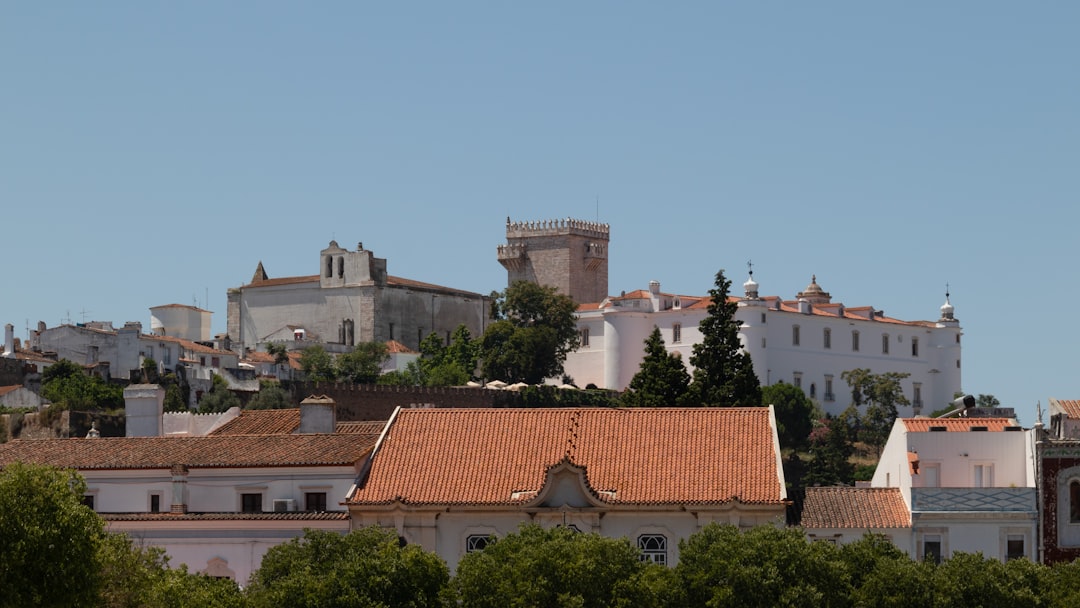
Évora Travel Guide: Everything You Need to Know (2026)
Évora is a UNESCO World Heritage city of 53,577 inhabitants perched at 295m above sea level in Portugal’s vast Alentejo plain, founded as the Roman city of Liberalitas Iulia over 2,000 years ago. The entire historic centre is a living museum, where a 1st-century Roman temple stands within walking distance of a 16th-century chapel lined floor-to-ceiling with human skulls. Few cities of this size anywhere in Europe pack this density of monuments into a walled medieval core you can walk across in under 20 minutes.
Three Things Not to Miss in Évora
- Roman Temple of Évora — One of Iberia’s best-preserved Roman structures, 14 Corinthian columns still standing after 2,000 years.
- Chapel of Bones (Capela dos Ossos) — A 16th-century Franciscan chapel whose walls are decorated with the bones of over 5,000 monks.
- Évora Cathedral (Sé de Évora) — Portugal’s largest medieval cathedral, built in 1186, with rooftop terraces offering panoramic Alentejo views.
Scroll down for our complete travel guide with tips on getting there, where to stay, costs and more.
Getting to Évora from the Airport
How do I get to Évora from Lisbon or other major cities?
The fastest option is the direct bus from Lisbon’s **Sete Rios terminal**, taking roughly **90 minutes** and costing around **€12–€15** one way with Rede Expressos. I recommend this over the train — the rail connection from **Lisbon’s Oriente station** via Casa Branca takes over **2 hours** with a mandatory change, which surprises most travellers. Driving from Lisbon on the **A6 motorway** takes about **1 hour 15 minutes** but tolls add roughly **€5–€7** each way. From Porto, budget at least **4 hours** by bus or car. My tip: the bus drops you at the edge of the walled centre — far more convenient than the train station, which sits a 15-minute uphill walk from the historic core.
Which airport is closest to Évora?
**Lisbon Humberto Delgado Airport (LIS)** is your gateway, sitting approximately **130km west** of Évora. No regional airport serves the city directly — a fact that catches visitors off guard when planning connections. From **LIS**, I recommend taking the Aerobus or Metro to **Sete Rios bus terminal** (about **30 minutes**, €2–€5) and then boarding the direct Rede Expressos coach to Évora. Total door-to-door time from LIS arrivals hall to Évora city centre: allow **2 hours 30 minutes** realistically. Renting a car directly at the airport is also practical if you plan to explore the broader **Alentejo** region during your stay — the flat, straight roads are genuinely enjoyable to drive.
How long does the journey to Évora take from Lisbon?
Direct bus from **Sete Rios** to Évora takes **90 minutes** on a good day — this is the benchmark. What guides rarely mention is that the bus runs frequently, roughly every **1–2 hours** throughout the day, so you can be spontaneous without pre-booking if you travel outside July and August. The train via **Casa Branca** takes closer to **2 hours 15 minutes** total including the transfer wait, and the timetable is thin — sometimes only **3–4 departures daily**. By car on the **A6**, expect **75 minutes** in light traffic, but Friday afternoon departures from Lisbon can add **30–40 minutes** in congestion. I always take the bus: it is faster, cheaper, and drops you closest to the sights.
Do I need a rental car to explore Évora properly?
No — the walled historic centre of Évora is entirely walkable within **20 minutes** end to end. Every major monument sits within this compact core, and a car is genuinely more hindrance than help inside the walls, where parking is scarce and streets are narrow. However, if you want to explore the surrounding **Alentejo** countryside — megaliths at **Cromeleque dos Almendres** (15km away), cork oak estates, or wineries near **Borba** — a rental car becomes essential. No reliable public transport serves these rural sites. Budget roughly **€35–€55 per day** for a compact car from agencies like **Europcar** or **Sixt** in Évora. My honest caveat: rent for just 1 day mid-trip rather than for your entire stay.
Moving Around Évora
What are the best neighbourhoods to stay in Évora?
Stay inside the **medieval walled centre (intramuros)** without question — this is where the atmosphere is, and the walkability is unmatched. The area around **Praça do Giraldo**, the main square, puts you within 5 minutes of every monument. The streets near the **Roman Temple** and the **Cathedral** are particularly atmospheric at night when day-trippers from Lisbon have gone home. A secondary option is the neighbourhood just outside **Porta de Avis** to the north, which offers quieter guesthouses at slightly lower prices. I actively avoid hotels near the **bus terminal** on Rua da República — convenient for arrival, but lacking character. What surprised me: even the most central Évora streets are genuinely quiet after 10pm, nothing like Lisbon or Porto.
What does accommodation cost per night in Évora?
Expect to pay **€70–€120 per night** for a solid 3-star guesthouse or boutique hotel inside the walls. Properties like **M’AR De AR Aqueduto** or **Albergaria do Calvário** sit in the **€100–€140** range and offer genuinely special converted historic buildings worth the premium. Budget travellers can find clean private rooms in small guesthouses for **€45–€65** — look along **Rua 5 de Outubro** and side streets near **Praça do Giraldo**. The honest caveat: Évora has limited accommodation stock for a UNESCO city, which means prices spike sharply during the **Feira de São João** in late June and over Easter weekend. A **€90** room in March can cost **€150+** during those peaks — book early or the city simply sells out.
How far in advance should I book accommodation in Évora during high season?
Book at least **6–8 weeks ahead** for July and August visits — Évora’s accommodation inventory is genuinely small for a UNESCO destination, and quality guesthouses inside the walls sell out fast. For the **Feira de São João** festival in late June and for Easter weekend, I recommend booking **3–4 months** in advance, no exaggeration. What catches travellers off guard: Évora is only **130km from Lisbon**, making it a popular weekend escape for Portuguese city dwellers year-round, not just for international tourists. Even a random October weekend can see **Praça do Giraldo** overrun with domestic visitors. In shoulder months like **April or November**, 2–3 weeks’ notice is usually fine, and you will often find better rates negotiating directly with smaller **guesthouses (pensões)**.
Are there special or unique accommodation types in Évora?
Yes — **rural tourism estates (Herdades)** just outside Évora are genuinely unlike anything in Portugal’s cities. Within **20–30km**, properties like **Herdade dos Grous** or **Monte da Ravasqueira** offer rooms on working cork oak and wine estates with private pools, farm dinners, and near-total silence. Prices range from **€120–€250 per night** but include access to landscapes you simply cannot experience in the city. Inside Évora itself, several 16th- and 17th-century townhouses have been converted into boutique stays with original stone walls and azulejo tile details. My honest caveat: these rural Herdades require a rental car — without one, you are effectively marooned in the countryside 25km from the nearest restaurant outside the estate.
Choosing a Neighbourhood in Évora
What are the absolute must-sees in Évora?
Three non-negotiables: the **Roman Temple of Diana** (free from outside, 2,000-year-old Corinthian columns), the **Chapel of Bones** at **Igreja de São Francisco** (€5 entry, and genuinely one of the most unsettling rooms in Europe), and the **Évora Cathedral (Sé)** including its rooftop terrace (€4.50 extra but mandatory). Beyond these, walk the full circuit of the **Roman walls** and visit the **Praça do Giraldo** early morning when the light hits the 16th-century **São Antão church** portico perfectly. What I always add: the **Jardim Público** below the cathedral walls is an underused gem — locals eat lunch under centuries-old trees while tourists queue elsewhere. Total entry fees for the full monument circuit: budget around **€15–€20 per person**.
What can I experience for free in Évora?
Quite a lot, honestly. The **Roman Temple** exterior, the entire circuit of the **medieval walls**, and the atmospheric lanes of the **Jewish Quarter (Judaria)** cost nothing. **Praça do Giraldo** with its 16th-century marble fountain is free to absorb for as long as you like. The **Jardim Público** (public garden) is free entry and contains fragments of the old **Royal Palace of Évora** walls. On the first Sunday of each month, the **Museu de Évora** (normally **€3**) offers free admission. My tip: simply wandering the walled city at dusk after the day-trippers leave is the single best free experience — the golden light on Roman and Moorish stonework is extraordinary, and the streets genuinely empty out after 6pm outside peak season.
Which day trips from Évora are most rewarding?
The **Cromeleque dos Almendres**, a megalithic stone circle predating Stonehenge by 2,000 years, sits just **15km west** of Évora and is jaw-droppingly undervisited — I have been there alone on a weekday morning. You need a car, as no bus serves it. The medieval fortified village of **Monsaraz**, perched above the **Alqueva reservoir**, is **60km east** (about 45 minutes by car) and makes a perfect half-day: intact medieval castle, whitewashed streets, zero tourists outside summer weekends. **Estremoz** (**45km north**, with its marble-clad Saturday market) and **Arraiolos** (**22km north**, world-famous for hand-sewn rugs) are compact enough for 2-hour visits. My caveat: all these destinations require a rental car — Évora’s regional bus network is sparse and slow.
What local specialities should I eat in Évora?
**Sopa Alentejana** (bread-based garlic and coriander soup with a poached egg, around **€4–€5**) is the essential first order at any local restaurant. Follow it with **migas** (fried bread with pork) or **carne de porco à Alentejana** (pork and clams, **€12–€16**). The region’s **black pig (porco preto)** products — especially presunto and chouriço — are genuinely exceptional; buy vacuum-packed slices at **Mercearia Gadanha** near **Praça do Giraldo** to take home. Alentejo **wines** (especially from the **Vidigueira** and **Borba** sub-regions) are outstanding and underpriced: a full bottle at a local restaurant runs **€8–€14**. What surprised me: Évora’s **queijo de ovelha** (sheep’s cheese) served warm with honey and walnuts as a starter is one of the great overlooked pleasures of Portuguese cuisine.
Top Sights in Évora
What makes Évora unique compared to other Portuguese cities?
Évora is one of Europe’s only cities where you can walk from a **Roman temple** to a medieval cathedral to a bone chapel to a Moorish-era aqueduct — all within **1km** — and still feel like you are in a living, working city of 53,000 people rather than an open-air museum. Unlike Sintra or Óbidos, it has not been hollowed out by tourism: real students from the **University of Évora** (founded **1559**, one of Portugal’s oldest) fill the cafes, real markets sell local produce, and locals outnumber tourists at many restaurants year-round. The flat, amber Alentejo landscape surrounding the city — cork oaks, olive groves, megaliths — gives it a sense of ancient, almost prehistoric continuity that coastal Portugal entirely lacks.
How many days should I spend in Évora?
**2 full days** covers the walled city thoroughly; **3 days** is ideal if you add 1–2 day trips into the Alentejo countryside. Day 1: **Roman Temple**, **Cathedral rooftop**, **Chapel of Bones**, **Museu de Évora**, evening at a local restaurant near **Praça do Giraldo**. Day 2: **Jardim Público**, **São Francisco church**, **aqueduct walk**, and the university’s historic **library and anatomy theatre**. Day 3: rent a car and drive to **Cromeleque dos Almendres** and **Monsaraz**. What most people get wrong is doing Évora as a single day trip from Lisbon — technically possible, but you miss the city entirely after dark, which is when the Roman temple is lit up and the restaurants fill with locals rather than tour groups. Stay at least 1 night.
When is the best time to visit Évora?
**April, May, and June** are the sweet spot — wildflowers carpet the Alentejo countryside, temperatures sit at a comfortable **18–25°C**, and crowds are manageable. **September and October** are my personal preference: harvest season fills local markets with produce, wine estates open for tastings, and daytime heat drops to a bearable **22–26°C** after the brutal summer. Avoid **July and August** unless you are specifically heat-tolerant — Évora regularly hits **38–42°C** during summer heatwaves, the cobblestoned city centre offers almost no shade, and tourist numbers peak. The honest warning most guides omit: **Évora in August** feels like walking across a sun-baked terracotta plate — it is genuinely exhausting before 10am and after 4pm.
Are there local festivals in Évora worth timing a visit around?
The **Feira de São João** in late June is Évora’s biggest annual event — a week of music, craft markets, and Alentejo folk culture centred on **Praça do Giraldo** and the surrounding streets. It draws large domestic crowds and gives the city genuine energy. The **IBER OPERA Festival** brings international opera productions to historic venues including the **Évora Cathedral** in spring — check the programme, as single performances sell out. The **Ovibeja sheep fair** in early May is held **75km south in Beja**, but many Évora guesthouses use it as an excursion. My honest caveat: the São João festival means accommodation prices rise **30–50%** and book out **months** in advance — unless the festival is specifically your goal, the week immediately before or after offers the same warm weather without the premium.
Where to Eat in Évora
How does the weather in Évora affect what I can do there?
Évora at **295m elevation** is slightly cooler than the lower Alentejo plain but shares the same extremes: scorching dry summers and mild, sometimes rainy winters. Sightseeing is entirely outdoor-heavy — the **Roman Temple**, **aqueduct walks**, **Jardim Público**, and most of the memorable experiences are outside. In July and August, I structure visits around the **10am–12pm** and **5pm–7pm** windows to avoid peak heat. Winter (**December–February**) is quiet and atmospheric, with temperatures around **8–13°C** and occasional rain — all monuments remain open, crowds are minimal, and accommodation prices drop **20–30%**. The biggest weather risk most guides miss: spring (March–April) can bring unexpected wind and cold nights, so pack a layer even if daytime is warm.
How crowded does Évora get in peak season?
July and August bring serious pressure for a city of 53,000 — **Praça do Giraldo** can feel overwhelmed by noon, **Chapel of Bones** queues stretch to **30–40 minutes**, and restaurant waits without reservations become common. Day-trippers from Lisbon on organised coach tours arrive in waves between **10am and 3pm**, turning the Roman Temple area into a camera scrum. My strategy: arrive at monuments when they open at **9am**, finish the main sights by noon, retreat to a shaded lunch, then re-emerge after 4pm. What surprised me: even at peak summer, the streets inside the walls **200 metres** away from Praça do Giraldo are remarkably quiet — the tourist density is concentrated in a surprisingly small zone. September cuts crowds roughly in half while keeping warm weather.
How safe is Évora for travellers?
Évora is one of Portugal’s safest cities — petty crime rates are genuinely low by European standards. I have walked its lanes alone after midnight without any concern whatsoever. The main risks are the universal ones: pickpocketing around **Praça do Giraldo** in peak summer (use an inner pocket or money belt in crowds), and traffic on the narrow streets inside the walls where cars and pedestrians share the same medieval lanes. There are no no-go neighbourhoods in a city this size. The honest caveat most guides skip: heat is the real safety risk in summer — **38–42°C** without shade causes genuine heat exhaustion faster than most visitors expect, especially on monument visits with full sun exposure. Carry at least **1 litre of water** per person at all times in summer.
Is English widely spoken in Évora?
English is reliably spoken at hotels, major restaurants, and monument ticket offices throughout the **walled centre**. However, step into a local cafe on a backstreet or try ordering at a simple **tasca** frequented by university workers, and you will quickly find yourself communicating through pointing and goodwill. Staff at the **Museu de Évora** and **Cathedral** speak solid English. My tip: learning 5 words of Portuguese — *obrigado* (thank you), *por favor* (please), *uma mesa para dois* (a table for two), *a conta* (the bill), and *bom dia* (good morning) — unlocks immediate warmth from locals in a way that no other Portuguese city has matched in my experience. Évora is not linguistically difficult; it simply rewards a minimal effort more generously than tourist-saturated cities.
Before You Go to Évora
What is a realistic daily budget for visiting Évora?
Budget traveller: **€55–€75 per day** covering a guesthouse bunk or cheap private room (**€40–€50**), lunch at a local **tasca** (**€8–€12**), dinner (**€12–€16**), and 1–2 monument entries (**€5–€8**). Mid-range: **€120–€160 per day** per person for a boutique hotel room (**€90–€110** split between 2), sit-down lunches and dinners with Alentejo wine (**€25–€35 each**), and full monument access. The honest add-on most budgets miss: if you rent a car for even **1 day** to reach the megaliths or **Monsaraz**, add **€40–€55** plus **€10–€15** in fuel to your daily total. Food and monument prices in Évora run noticeably cheaper than Lisbon — budget roughly **20–25% less** for equivalent quality, which is one of the city’s most underrated advantages.
How does public transport work within Évora?
Inside the **walled historic centre**, public transport is irrelevant — the city is small enough to walk everywhere in under **20 minutes**. The municipal **TREVO bus network** serves the broader municipality but is designed for local commuters, not tourists, and runs infrequently outside rush hours. No urban tram or metro exists. Taxis and **Bolt** (rideshare, more reliable than Uber in smaller Portuguese cities) operate from **Praça do Giraldo** and via the app — a cross-town ride costs **€4–€7**. My honest assessment: Évora’s public transport is irrelevant for sightseeing within the walls, inadequate for reaching rural attractions like **Cromeleque dos Almendres**, and perfectly fine for getting from the bus terminal to your hotel upon arrival. Plan your transport needs around the rental car decision, not the bus timetable.
Which apps do you recommend for visiting Évora?
**Google Maps** works reliably within the walled centre and for driving routes to rural sites — download the offline **Alentejo region** map before you arrive as mobile coverage drops in the countryside. **Bolt** is the go-to rideshare app: more active than Uber in mid-sized Portuguese cities and consistently **10–20% cheaper** than taxis. **Rede Expressos** has a functional booking app for bus tickets from Lisbon — buy in advance in summer to guarantee a seat. For restaurants, **The Fork (ElTenedor)** lists Évora options and occasionally offers **50% discounts** on off-peak bookings at mid-range restaurants — I have used this successfully at a very good Alentejo cuisine spot near **Rua do Raimundo**. The **Visit Alentejo** regional tourism app provides walking route maps and monument audio content in English, genuinely useful at the **Roman Temple** and **Cathedral**.
Évora at a Glance
| Population | 53,577 |
|---|---|
| Currency | EUR (€) |
| Official language | Portuguese |
| Time zone | UTC±00:00 |
Source: Wikidata, retrieved September 2026.
Portugal › Évora
More Destinations in Alentejo
More Destinations in Portugal
Essential Resources for Planning Your Trip to Évora
- Visit Evora – Top 10 reasons to come to Alentejo, Portugal — official visitor information, passes & events
- Wikipedia: Évora — history, geography & background
- Wikivoyage: Évora — community travel guide & practical tips
- Évora travel – Lonely Planet | Portugal, Europe — expert itineraries & travel inspiration
- THE 15 BEST Things to Do in Evora (2026) — hotels, restaurants & traveller reviews
- 2026 Evora Travel Guide: must-see attractions, popular … — how to get around
- Numbeo: Cost of Living in Évora — current prices & cost comparison
- Timeanddate: Évora Weather & Climate — forecasts & climate statistics
- Historic Centre of Évora
More Perspectives on Évora
- A Local’s Guide to Évora, Portugal
- An inside guide to Évora, Portugal’s soulful university city
- 48 Hours in Évora: Two-Day Itinerary for the Alentejo Capital
Évora Travel Videos
Watch these videos for a visual preview before your trip:
- Evora Portugal Travel Guide: 12 BEST Things To Do In Évora
- Evora: The Don’ts of Visiting the Bone Chapel Town of Portugal
- In The Mood for Alentejo: Part 1 | Underrated Region in Portugal | Evora & Monsaraz
Évora Travel Discussions on Reddit
Real traveller experiences and community advice:
- Is Évora worth visiting? : r/SlowTravelEurope
- Trip to Évora : r/portugal
- Évora, Portugal : r/ExpatFIRE
Data Sources
This page was compiled using data from Wikipedia, Wikidata, Open-Meteo (climate), Numbeo (cost of living) and REST Countries. Information is updated regularly.