
Preveza: The Complete Travel Guide (2026)
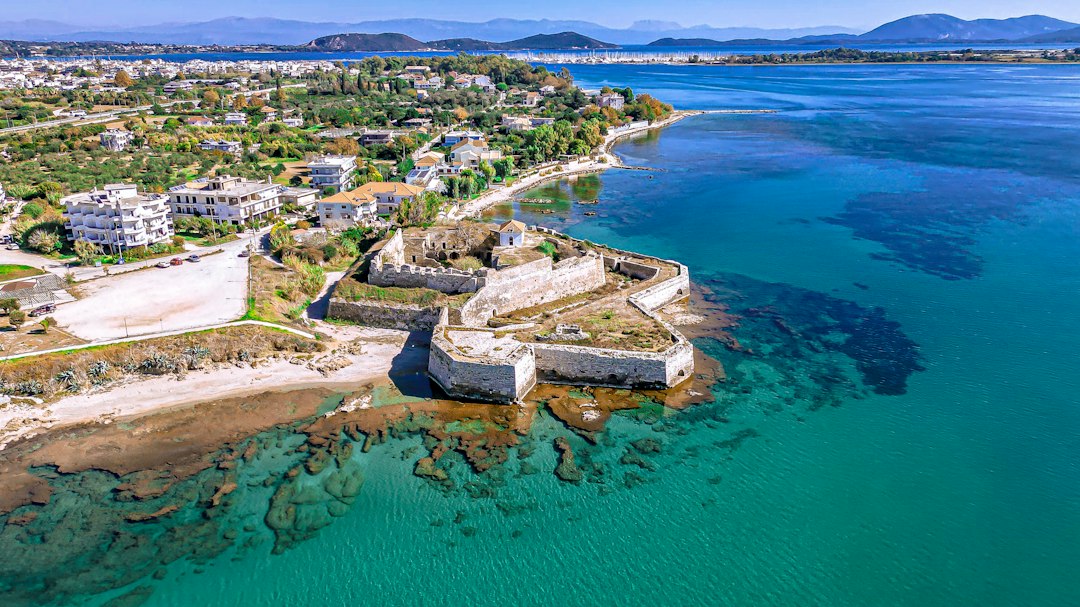
Preveza Travel Guide: Everything You Need to Know (2026)
Preveza is a coastal city of 19,309 residents in northwestern Greece, sitting at just 3 meters above sea level on the peninsula where the Ambracian Gulf meets the Ionian Sea. The city is home to Greece’s only undersea tunnel — the Aktio-Preveza Immersed Tunnel — connecting Epirus to Central Greece. Ancient Nikopolis, founded by Augustus in 31 BC to commemorate his victory at the Battle of Actium, lies just 7 km to the north.
Three Things Not to Miss in Preveza
- Ancient Nikopolis — Augustus founded this UNESCO-listed victory city in 31 BC — its walls and mosaics are remarkably intact.
- Preveza Old Town Waterfront — A 400-meter pedestrian promenade lined with tavernas and neoclassical facades facing the Ambracian Gulf.
- Aktio-Preveza Undersea Tunnel — Greece’s only immersed tunnel — a 1.6 km crossing used by locals daily and unique in the entire country.
Scroll down for our complete travel guide with tips on getting there, where to stay, costs and more.
Arriving in Preveza: Airport & Transfers
How do I get to Preveza?
Fly directly into **Aktion Airport (PVK)**, located **4 km** from the city centre — this is the easiest and fastest entry. In my experience, flying is far superior to overland travel here. Direct charter and seasonal flights connect PVK to London, Amsterdam, and Frankfurt, typically running **May through October**. Outside that window, you’ll route through **Athens (ATH)** with a connecting domestic flight on Sky Express or Olympic Air, adding **1.5–2 hours** to your journey. My warning: overland buses from Athens take over **5 hours** via Patras — only choose this if you enjoy scenic suffering.
Which airport is closest to Preveza?
**Aktion Airport (PVK)** is your airport — it sits just **4 km** from Preveza’s centre, one of the shortest airport-to-city distances in Greece. What surprised me is how underused this airport is outside summer; in winter it operates with minimal connections. The terminal is small and manageable — baggage claim takes under 10 minutes. A taxi from PVK to the Preveza waterfront costs approximately **€10–12**. Car hire desks from Europcar and Avis operate inside the terminal. My tip: book your taxi or rental in advance during **July and August** when arrivals surge.
How long does the journey from Athens to Preveza take?
By domestic flight from Athens, the journey takes roughly **50 minutes** in the air plus transfer time — total door-to-door around **3.5 hours**. Driving from Athens covers **385 km** and takes approximately **4.5 hours** via the **Ionia Odos motorway (E55)**, which is genuinely fast and scenic. The honest trade-off: the Ionia Odos tolls add up to roughly **€20–25** one way. Bus from **KTEL Athens** to Preveza runs daily but takes **5.5 hours** and costs around **€30**. In my experience, renting a car in Athens and driving the Ionia Odos is the most rewarding option — the mountain scenery through Epirus is spectacular.
Do I need a car to explore Preveza?
For Preveza’s old town and waterfront, no — you absolutely do not need a car. The city centre is fully walkable within **20 minutes** end to end. However, for reaching **Ancient Nikopolis (7 km)**, the beaches at **Monolithi (8 km)**, or the inland villages of the Zalongo area, a car is essential. I recommend hiring at **Aktion Airport (PVK)** upon arrival — daily rates start at **€35–45** for a compact car. The caveat most guides skip: parking in Preveza’s centre is genuinely difficult in August. My tip: stay central, hire a car for day trips only, and walk back each evening.
Getting Around Preveza
What are the best areas to stay in Preveza?
Stay in or directly adjacent to the **Old Town (Palio Preveza)** — this is the sweet spot. The pedestrian streets around **Ethnikis Antistaseos** put you within a 5-minute walk of the waterfront, the best tavernas, and the ferry dock to **Aktio**. The **waterfront promenade area** itself is slightly more expensive but unbeatable for atmosphere. I recommend avoiding the strip north of the main port — it’s noisier and dominated by package-tour infrastructure. What surprised me: the Old Town is compact enough that even its outermost streets are only **700 meters** from the sea. Budget travellers can find quieter rooms one block inland at noticeably lower prices.
What does accommodation cost per night in Preveza?
Budget guesthouses and studios in Preveza start at **€40–55** per night in shoulder season. A solid mid-range hotel in the Old Town runs **€70–100** in June and September. In peak **July–August**, expect those same rooms to hit **€110–140**. Boutique options on the waterfront — like the well-regarded **Dioni Hotel** — sit around **€120–150** in high season. Self-catering apartments, widely available on Booking.com, offer the best value for stays over **3 nights**, often dropping to **€50–70** per night. The caveat: Preveza has no large international chain hotels — accommodation is mostly family-run, which I consider a genuine advantage for authenticity.
How far in advance should I book accommodation in Preveza during high season?
Book at least **6–8 weeks** in advance for July and August. In my experience, the best waterfront apartments and rooms at properties like **Hotel Preveza City** disappear by late May for peak summer. The city’s accommodation stock is limited given its population of 19,309 — there are simply fewer options than in larger Greek cities. The warning most guides omit: Greek domestic tourists flood Preveza in August, making it harder to find last-minute deals than in more internationally known destinations. September bookings can often be made **2–3 weeks** out without issue and prices drop by roughly **25%**.
Are there special or unique accommodation types in Preveza?
Preveza’s most distinctive stays are **stone-built traditional houses** in the Old Town, several of which have been converted into small guesthouses with courtyard gardens — a far cry from generic Greek hotel boxes. I also recommend looking at **agrotourism stays** in the Zalongo and Kampi villages **20–30 km** inland, where rooms in working olive farms run as low as **€45** per night. For families, **self-catering studios** near **Monolithi Beach** offer direct beach access at around **€70–90** in peak season. What surprised me: a handful of sailing-oriented apartments near the **Preveza Marina** cater specifically to the Ionian yacht charter crowd — excellent quality and well-priced.
Where to Stay in Preveza
What are the must-sees in Preveza?
Three sites you cannot skip: **Ancient Nikopolis** (7 km north), with its 4th-century walls, Roman theatre, and Byzantine basilica mosaics — entry is **€6** and it takes a minimum of 2 hours to do it justice. The **Preveza Old Town**, particularly the **Agios Charalambos** clock tower square and the Venetian-era alleyways, is best walked without a map. Finally, the **Zalongo Monument** (28 km), commemorating the Souliote women who danced off a cliff in 1803 rather than surrender — one of the most moving sites in all of Epirus. In my experience, most visitors skip Zalongo entirely and deeply regret it when they learn the story.
What can I experience for free in Preveza?
Quite a lot, honestly. The **Preveza waterfront promenade** is free and best walked at sunset when the Ambracian Gulf turns gold — this costs nothing and rivals any paid experience in the city. The **Old Town alleyways** and their Venetian-era architecture are free to wander. **Monolithi Beach**, the city’s main sandy beach at **8 km**, has no entry fee though sunbed rental costs about **€8** for two. The exterior viewing of **Nikopolis walls** is free — only the interior archaeological site charges. My tip: the free **Municipal Market building** near the port is worth 20 minutes for local colour and the freshest catch in the region.
Which day trips from Preveza are worth doing?
My top recommendation is **Arta (65 km)**, home to a stunning 17th-century Ottoman bridge and a Byzantine castle that takes under 90 minutes to reach via the Ionia Odos. **Parga** (55 km up the coast) is the most scenic coastal town in Epirus — dramatically perched above turquoise water, though crowded in August. The **Acheron River** delta and springs at **Glyki (45 km)** allow a 2-hour river walk through one of the most mythologically charged landscapes in Greece — this is the legendary river of the underworld. What surprised me: crossing the **Aktio-Preveza Tunnel** to visit **Lefkada island (30 km total)** is effortless — a full day there and back is entirely realistic.
What local specialities should I eat in Preveza?
Preveza’s signature dish is **bourbouristi** — small fish (typically anchovies or picarel) fried in olive oil and vinegar, served as a meze you’ll find nowhere else prepared quite this way. The Ambracian Gulf supplies extraordinary **fresh eel (χέλι)** and **grey mullet (κέφαλος)**, best eaten grilled at the fish tavernas on **Paralia Street**. Local **Zalongo honey** from the inland hills is exceptional — buy it at the municipal market for around **€8 per jar**. In my experience, the best-value meal in Preveza is a full fish plate lunch at **Tzivaeri taverna** on the waterfront for around **€18–22 per person** including wine.
Preveza Highlights & Must-Sees
What makes Preveza unique compared to other Greek coastal towns?
Three things set Preveza apart decisively. First, it sits at the site of the **Battle of Actium (31 BC)** — the naval clash between Octavian and Antony and Cleopatra that shaped the entire Roman Empire — and the physical landscape still reflects this history. Second, the **Ambracian Gulf** is one of Greece’s most important wetland ecosystems, hosting flamingos and over 270 bird species — something you simply don’t find at typical beach destinations. Third, Preveza has almost no high-rise tourism infrastructure — the city’s population of **19,309** has kept development modest and the local character intact. In my experience, it’s one of the last Greek coastal towns where locals still outnumber tourists even in August.
How many days should I spend in Preveza?
**3 full days** covers Preveza comprehensively. Day 1: Old Town, waterfront, and evening fish dinner. Day 2: **Ancient Nikopolis** in the morning, **Zalongo Monument** in the afternoon. Day 3: **Monolithi Beach** followed by a day trip to **Lefkada** via the undersea tunnel. If you add **Parga** and **Arta** as day trips, extend to **5 days**. The honest caveat: Preveza is not a standalone week-long destination unless you are specifically there for sailing, birdwatching in the Ambracian Gulf wetlands, or slow-travel relaxation. I recommend pairing it with **Ioannina (90 km inland)** for a balanced Epirus itinerary.
When is the best time to visit Preveza?
**June and September** are the optimal months — warm enough for swimming (sea temperature around **24–26°C**), far fewer crowds than July–August, and accommodation prices **20–30% lower**. Based on 5-year climate analysis, the best travel months are June, July, August, and September. My personal preference is the first two weeks of **June**: the wildflowers around Nikopolis are still out, the beaches are uncrowded, and the evening waterfront buzz is already lively. What surprised me: **October** is genuinely underrated — the Ambracian Gulf wetlands are at peak birdwatching season and daytime temperatures stay around **20°C**, though most beach tavernas close by mid-October.
Are there local festivals in Preveza worth attending?
The **Nikopolis Festival**, held annually in **July and August**, stages theatrical performances and concerts at the ancient Roman theatre of Nikopolis — watching a Greek drama performed in a **2,000-year-old** venue at sunset is genuinely extraordinary. The **Preveza Carnival (Apokries)** in February or March — timing shifts with Orthodox Easter — fills the Old Town alleyways with local costume parades that feel authentically Greek rather than tourist-facing. The **Feast of Agios Charalambos** on **February 10th** is the city’s patron saint celebration, with a full Orthodox liturgy and street food stalls around the central square. My tip: book accommodation **3 months ahead** if the Nikopolis Festival dates align with your trip.
Eating & Drinking in Preveza
How does the weather in Preveza affect what activities I can do?
Summer heat peaks in **July–August** at around **32–34°C**, making midday sightseeing at exposed sites like **Nikopolis** genuinely exhausting — I recommend those visits before **10:00 or after 17:00**. The Ambracian Gulf is almost always calm for swimming, unlike the exposed Ionian coasts that can get choppy Meltemi winds. Spring (**March–May**) is ideal for hiking the **Zalongo gorge** and visiting the wetlands, but the sea is too cold for swimming at around **17–18°C**. The warning most guides skip: Preveza’s winters are mild but rainy — **November through February** sees regular rainfall and most tourist infrastructure closes entirely.
How crowded does Preveza get in peak season?
Preveza in **August** is busy but never oppressively so — it lacks the mass-tourism saturation of Santorini or Mykonos. The main pressure points are **Monolithi Beach** on weekends, where parking becomes chaotic by **10:00**, and the waterfront tavernas, which fill by **21:00** and require reservations. Greek domestic tourists drive most of August’s crowds — you’ll hear far more Greek than English, which I find refreshing. The undersea tunnel queues can stretch to **20 minutes** on August Friday evenings heading toward Lefkada. My tip: visit the city’s Old Town streets before **09:00** in August — the light is extraordinary and you’ll have the Venetian alleys entirely to yourself.
How safe is Preveza for travellers?
Preveza is exceptionally safe — in my experience, it’s among the most relaxed small cities in Greece. Petty theft is rare given the tight-knit community of **19,309** residents where strangers are noticed. The main practical hazard is **traffic on the Nikopolis road (National Road 21)** — it has no cycle lane and drivers move fast, so walking or cycling it is not advisable. The port area and Old Town are safe at all hours, including late evenings. The waterfront promenade stays lively until midnight in summer with families and all age groups — this is not a nightlife-and-chaos destination. Standard EU travel safety precautions apply; no specific concerns beyond the usual.
Is English widely spoken in Preveza?
In tourist-facing businesses — hotels, waterfront tavernas, and the airport area — English is perfectly adequate and staff are genuinely helpful. However, Preveza is not an internationally oriented city; venture into the **municipal market**, neighbourhood bakeries, or inland villages and you’ll encounter Greek-only speakers routinely. What surprised me: younger residents under 35 typically speak solid English, often from working seasonally on Lefkada or Corfu. My tip: learning five basic Greek phrases — especially **’παρακαλώ’ (please)** and **’ευχαριστώ’ (thank you)** — opens doors here in a way that feels genuinely meaningful rather than performative. A translation app is useful for menus at non-waterfront tavernas.
Practical Tips for Preveza
What is the daily budget for travelling in Preveza?
Budget travellers staying in a studio apartment and eating at local tavernas can manage on **€60–75 per day**. A comfortable mid-range day — good hotel, two restaurant meals, one paid sight, and a coffee on the waterfront — runs **€110–140**. At the top end, a waterfront hotel, fish restaurant dinner, and car hire pushes toward **€180–200** per day. Entry to **Nikopolis** costs **€6**, a fresh fish lunch for two with wine runs **€40–50**, and a double espresso at a waterfront cafe is **€2.50**. In my experience, Preveza is noticeably cheaper than the Ionian islands **30 km** away — the same meal that costs **€60 in Lefkada** costs **€40 here**.
How does public transport work in and around Preveza?
Within central Preveza, everything is walkable — there is no city bus network worth relying on for a tourist. The **KTEL Preveza** regional bus station on **Leoforos Eirinis** connects to Arta (**€6, 1.5 hours**), Ioannina (**€9, 2 hours**), and Athens (**€30, 5.5 hours**) with daily departures. Local taxis are cheap by Greek standards — a ride anywhere within the city costs **€5–8**. The ferry across the Ambracian Gulf mouth to **Aktio** runs every **30 minutes** in summer for around **€1.50** per person. The honest limitation: there is no public bus to **Nikopolis**, **Zalongo**, or **Monolithi Beach** — a taxi or rental car is essential for those.
Which apps do you recommend for visiting Preveza?
**Google Maps** works reliably throughout Preveza and the surrounding road network — download the Epirus offline map before arriving. **Booking.com** has the best local accommodation selection, including the family-run studios that don’t appear on Airbnb. For the **KTEL bus timetables**, the official KTEL Prevezas website is functional but Greek-only — use **Google Translate** on it. **iNaturalist** is genuinely useful if you plan to explore the **Ambracian Gulf wetland** — it identifies the 270+ bird species you’ll encounter. My tip: download the **Anavasi digital map** of Epirus for offline hiking around Zalongo — it covers terrain that Google Maps renders as blank space. **Taxiplon** works for local taxi booking in a pinch.
Preveza at a Glance
| Population | 19,309 |
|---|---|
| Currency | EUR (€) |
| Official language | Greek |
| Time zone | UTC+02:00 |
Source: Wikidata, retrieved September 2026.
Greece › Preveza
More Destinations in Greece
Essential Resources for Planning Your Trip to Preveza
- Wikipedia: Preveza — history, geography & background
- Wikivoyage: Preveza — community travel guide & practical tips
- Lonely Planet | Preveza, Greece, Europe — expert itineraries & travel inspiration
- THE 15 BEST Things to Do in Preveza (2026) — hotels, restaurants & traveller reviews
- Athens Airport to Preveza Private Transfer – Daytrip — how to get around
- Numbeo: Cost of Living in Preveza — current prices & cost comparison
- Timeanddate: Preveza Weather & Climate — forecasts & climate statistics
More Perspectives on Preveza
- Things to Do in Preveza, Greece | Insider Travel Guide 2025
- Why Is Nobody Talking About Preveza, Greece? (2026 …
- Preveza, Travel guide – Epirus for all seasons
Preveza Travel Videos
Watch these videos for a visual preview before your trip:
- 🇬🇷 Preveza Greece | Exotic beaches | Top places | Epirus travel guide | Lefkada + Vonitsa
- Top Places in Epirus: Preveza Greece | Travel Guide
- Complete Guide to Preveza, Greece: What to See & Do by a Local
Preveza Travel Discussions on Reddit
Real traveller experiences and community advice:
- Itinerary for 6 night trip in Preveza : r/GreeceTravel
- Preveza area suggestions : r/GreeceTravel
- “Best way to travel from Preveza to Kefalonia: car rental vs …
Data Sources
This page was compiled using data from Wikipedia, Wikidata, Open-Meteo (climate), Numbeo (cost of living) and REST Countries. Information is updated regularly.